/proposal-and-anniversary
Proposal at Cat Cat Village: photographer guide & booking options
A proposal at Cat Cat village means shooting in the rice terraces above Sapa town, usually from sunrise (around 6:10 a.m.) through early morning mist, before tourists arrive. The best seasons are March–May (clear, cool mornings) and September–mid-October (golden harvest light, no monsoon rain). You'll hike 20–40 minutes from the village entrance to the terrace edges where light is directional and framing is intimate. Cáo Studio does not operate in Sapa—the high altitude, changeable weather and permit logistics require a local photographer. Choose between a Sapa-based solo photographer (faster booking, lower cost factors, less production control), a team (makeup artist, stylist, photographer together—better continuity, more coordination overhead), or planning it yourself with a local contact. Check your photographer's portfolio for real morning light, not noon backlit frames, and confirm they know the hike route and village etiquette before you commit.
Why does light matter more at Cat Cat than any other time you've proposed?
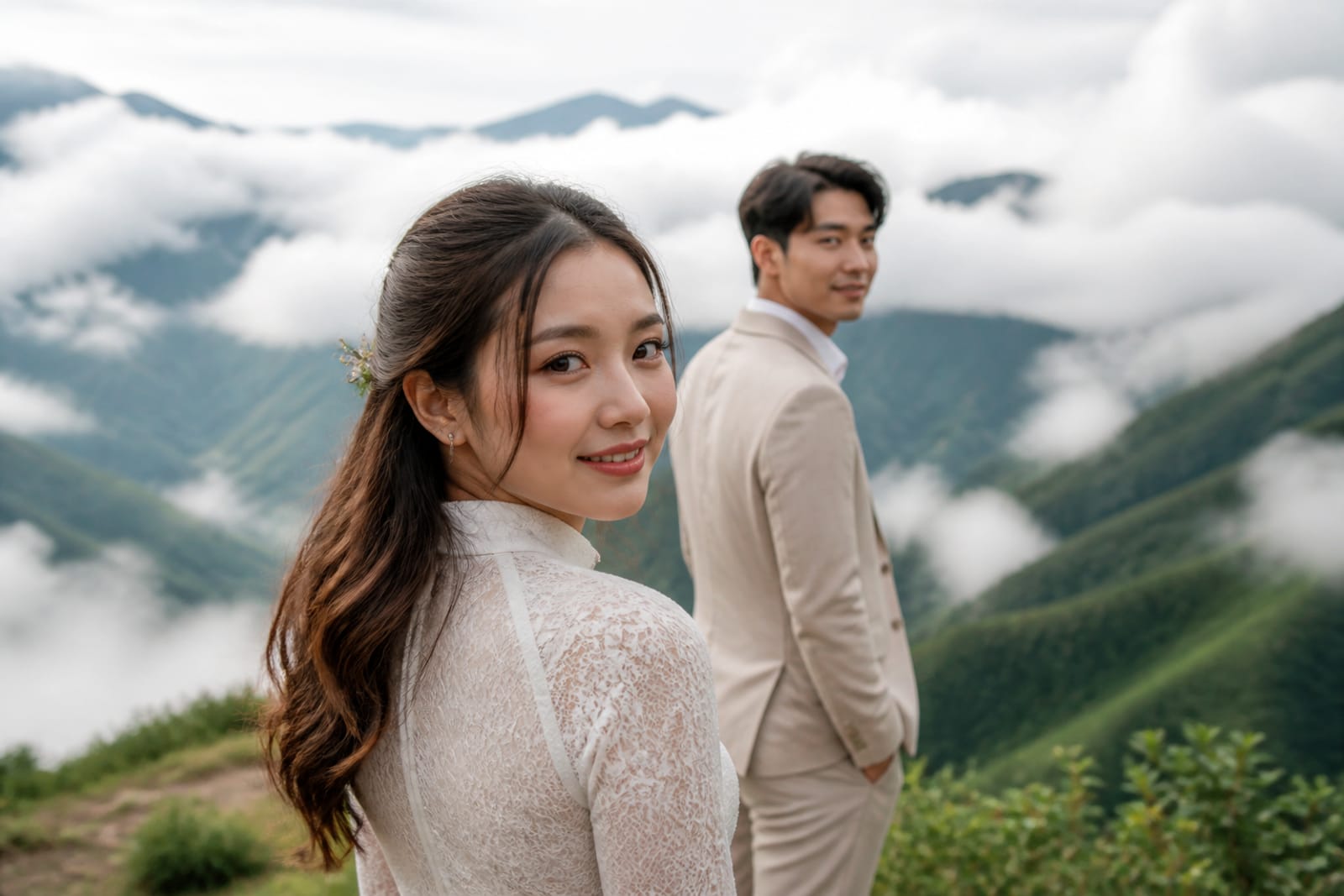
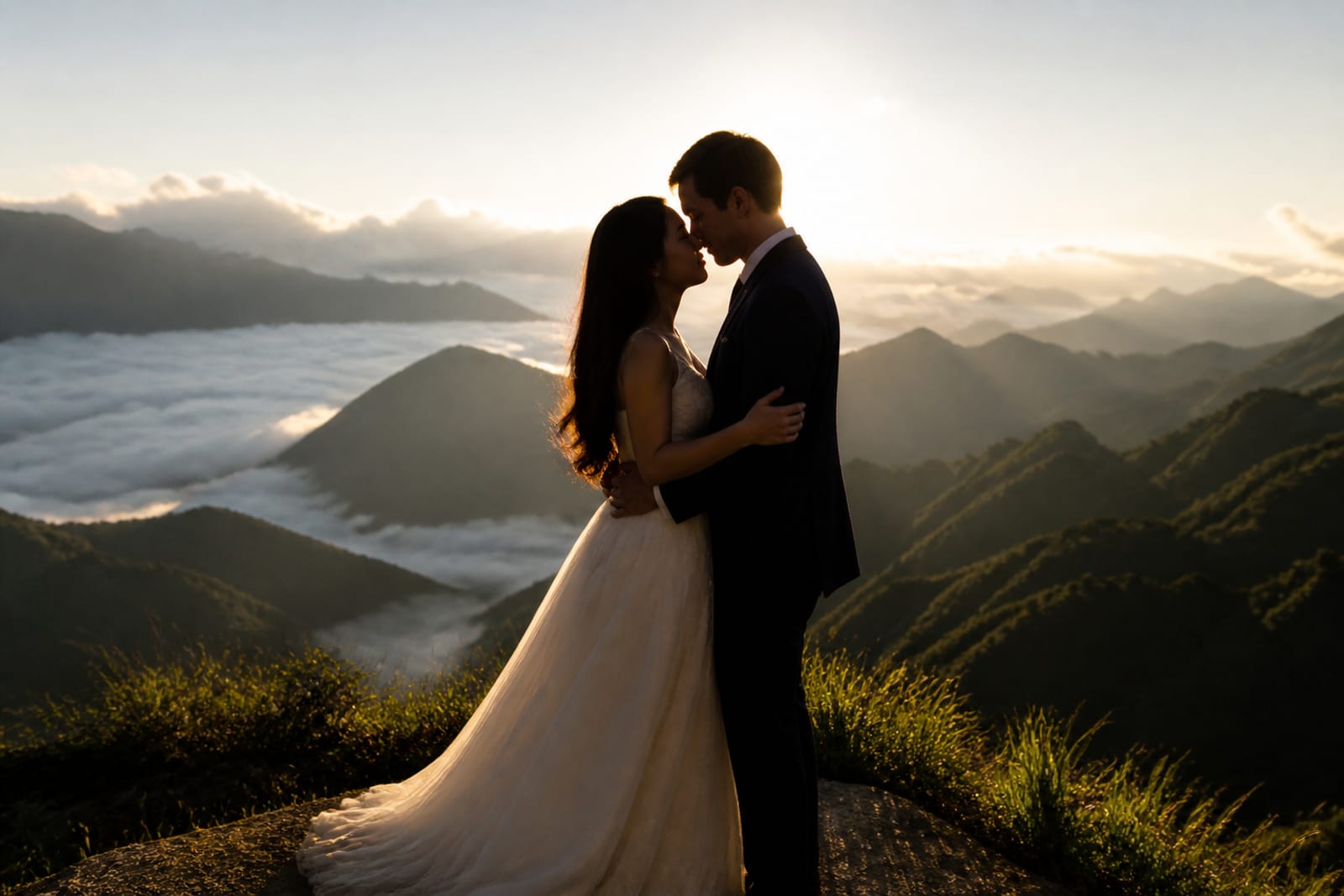
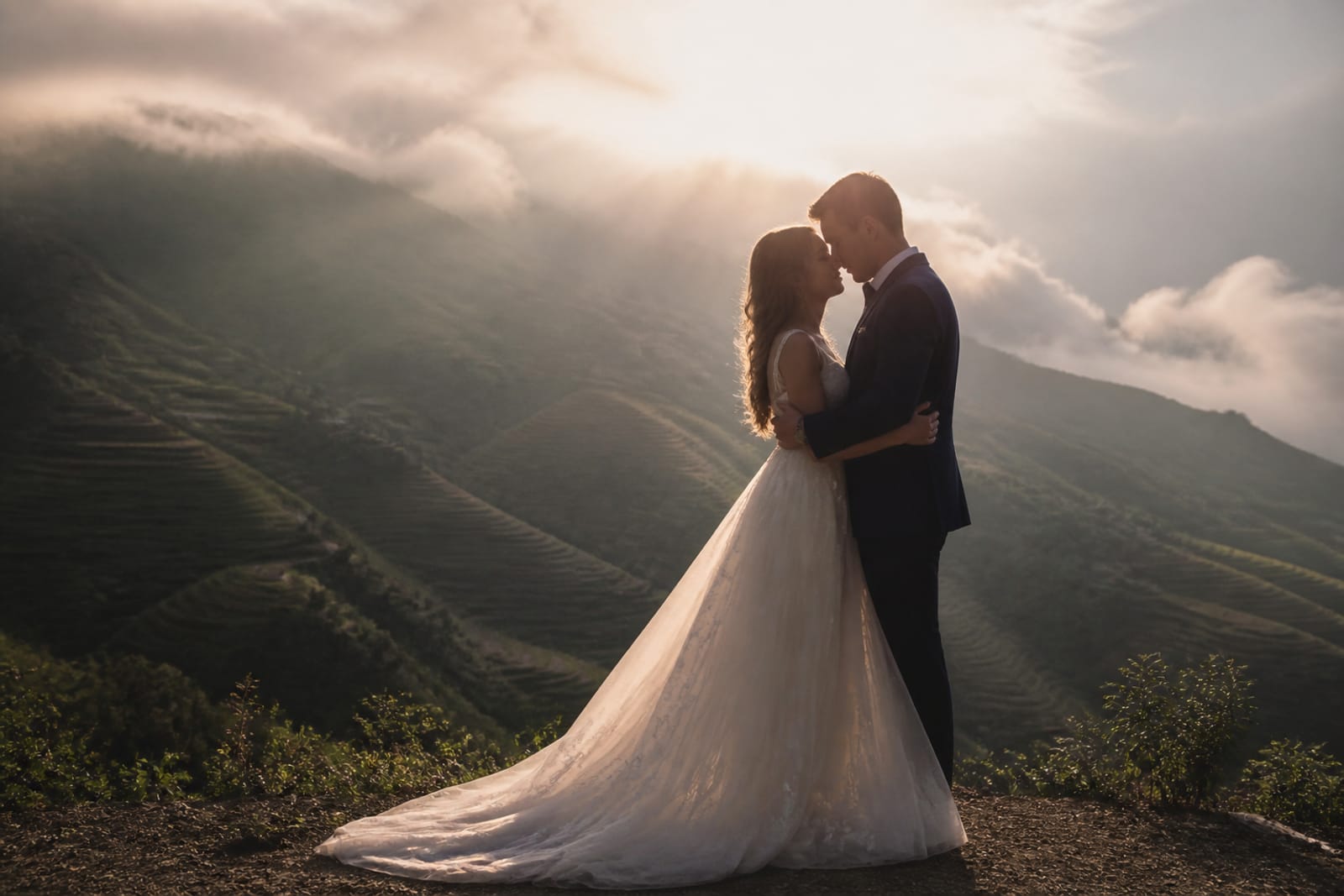
At Cat Cat village, the sun rises behind or beside the eastern ridges. At 6:10 a.m., side light skims the terrace edges and water, creating separation and texture—the frames look cinematic without posing. By 7:30 a.m., light hardens; by 9 a.m., you're shooting in flat, hazy overhead sun. The village is clouded by 10 a.m. most days March–May due to thermal inversion from the valley below. A photographer who knows this schedules the proposal moment—the kneel, the ring reveal, the embrace—within a 90-minute window, then captures walking shots and detail frames (her hands, the ring, the landscape behind) before light fades. The difference between a 6:00 a.m. start and an 8:00 a.m. start is the difference between frames you frame and frames you squint at.
📸 See how Cáo Studio uses morning light—lookbook
Should you hire a local Sapa photographer or bring a team from Hanoi?
| Option | Best for | Light control | Coordination | Outfit & makeup | Why it works |
|---|---|---|---|---|---|
| Local solo photographer | tight budget, simple frames | matches local dawn schedule | one person, flexible timing | bring your outfit, DIY hair/makeup or hire locally | knows village, fast booking, lower overhead |
| Sapa team (photographer + stylist + makeup) | full production, multiple outfits | same as solo but styled consistently | artist + photographer in sync, more moving parts | team brings or sources outfits locally, hair/makeup included | continuity across frames, outfit changes feel deliberate, less risk of mismatched hair/makeup mid-session |
| Hanoi team (Cáo Studio or similar) traveling to Sapa | premium direction, curated storytelling | full pre-planning, contingency timing | director + artist + photographer one message, travel logistics add lead time | bring or rent from Hanoi, hair/makeup done before hike | single creative vision, but requires 2–3-week lead time, travel costs factor into total investment |
A local photographer is fastest to book (1–2 weeks) and costs less in overhead; they know the village entrance fees, hike timing and which terraces photograph best. A Sapa-based team (photographer + makeup artist + stylist) adds coordination complexity but removes the risk of mismatched vision—the makeup artist knows how light will read skin tone at altitude, and the stylist ensures your outfit and her styling work together. Bringing a team from Hanoi or Ho Chi Minh City requires 3+ weeks' notice, involves travel logistics, but gives you a single creative director who has worked dozens of proposals and can pivot if weather shifts the light.
What weather window should you target—and how do you stay flexible?
Cat Cat's best light happens March–May (cool, stable mornings, rare rain) and September–mid-October (golden harvest, clear dawn). June–August is monsoon season; rain is frequent by 8 a.m., and clouds obscure the light you're counting on. October–November overlaps with the tail of monsoon and the start of fog; by late November, frost is possible at dawn, and visibility drops. December–February is cold (near freezing at dawn, occasional ice), but mornings can be clear if you catch a high-pressure window—book flexible dates, not a fixed day, and confirm with your photographer 48 hours before based on the forecast.
If you're flying from overseas, choose a 4–5 day window in your travel dates and tell your photographer "we're flexible on which day—weather first." Most skilled Sapa photographers have backup terraces (higher, lower, different aspect) if your first choice is too misty. A hard-booked single date in monsoon season is a gamble; a soft-booked window with a photographer who has alternatives is smarter.
💄 If you're traveling from Hanoi, book makeup & hair at your hotel first
How do you vet a local photographer's portfolio for real proposal frames?
Ask to see 10–15 proposal or couple frames shot at Cat Cat or similar Sapa terraces between 6 a.m. and 8 a.m. Look for: side or front light (not backlit silhouettes unless it's intentional); the proposal moment itself (not just posed smiles after); walking shots where the couple is talking or looking at each other, not at the camera; detail frames of hands, rings, landscape. Avoid portfolios heavy on noon or afternoon frames lit from above—that's not the light Cat Cat offers at dawn. Ask the photographer directly: "Walk me through a typical Cat Cat proposal. What time do we start? Where do we hike? What's your backup plan if it's misty?" If they give vague answers or show only heavily filtered images, look elsewhere. Real Sapa photographers describe hike duration, village entrance logistics, and specific terraces by name or aspect.
Request at least one reference from a couple who proposed there in the last 12 months. Ask that reference: Did the photographer know the light timing? Did the hike feel safe and guided? Were the final frames delivered promptly? Were there any surprises on the day (weather, access, unexpected costs)?
What logistics do you need to arrange yourself—and what should your photographer handle?
You arrange:
- Hike fitness and footwear (terraces are wet, muddy, steep; bring trail shoes, not sandals or heels)
- Ring (keep it secure in a waterproof pocket or pouch during the hike)
- Outfit (see below for fit on steep terrain)
- Accommodation in Sapa town the night before (gives you time to settle, rest for an early start)
- Transportation to the Cat Cat village entrance (taxi from Sapa town, roughly 20–30 minutes; confirm cost and pickup time with your photographer)
Your photographer should handle:
- Arrival time at the village entrance and guide to the best terrace for your date's light
- Pace and safety on the hike (they know the route, know which sections are slippery, carry backup memory cards and batteries)
- Light timing and moment direction (they watch the light shift, cue you to walk or stand, capture the proposal moment itself—not just the aftermath)
- Weather contingency (backup terraces, rescheduling protocol if conditions are unsafe)
- Delivery timeline (ask when edited frames are ready—3–7 days is typical for a Sapa photographer; confirm in writing)
A common mistake: couples assume the photographer will guide the hike. Local photographers know the route but may not carry a first-aid kit or stay paced with slower hikers. If either of you has mobility concerns, confirm with your photographer weeks ahead—some can arrange a guide or adjust the terrace selection to reduce hike duration.
🌸 Explore Cáo Studio's proposal and anniversary photoshoots
What should you wear—and how does altitude and wetness change your choices?
Terraces are terraced: you'll be standing on narrow earth banks, often wet from morning dew or overnight water. A long dress (traditional áo dài, or a western gown) drags in mud; narrow heels sink. If you're set on a dress, choose knee-length or shorter, and bring a second outfit (jeans and a sweater, or a shorter ceremonial dress) for movement shots. Áo dài is iconic for Sapa frames and works if styled with a long slip underneath and worn with flat shoes or soft-soled boots. Avoid white (mud shows, detail frames look dirty); cream, soft gold, or jewel tones photograph better in golden-hour light.
Your partner should wear layers (Sapa mornings are 8–15°C) and earth-tone or dark jeans, a sweater or jacket. Shoes matter: waterproof, slip-resistant, broken in. Both of you will be damp and muddy by the end—that's part of the authenticity.
Ask your photographer for outfit recommendations specific to their proposed terrace and the season's water level. Some terraces are drier in October (harvest time); others are still flooded if monsoon rains lingered.
---
What to check before you book
- Photographer's past work at Cat Cat or similar terraces. Insist on frames between 6–8 a.m. in your season.
- Hike duration and fitness level required. Confirm your photographer's expected pace and whether you need a separate guide.
- Weather cancellation or rescheduling terms. What happens if it's too foggy or rainy on the day? Can you move to another date?
- Delivery timeline. Will you receive edited frames before you leave Vietnam, or after you return home?
- Total cost factors. Ask what's included (photographer hours, travel to village, edits, print or digital delivery) and what costs extra (makeup and hair artist, second photographer, drone, album printing, rushed turnaround).
- Backup communication. Confirm phone number and WhatsApp contact for day-of coordination (timing confirmation, meeting point, last-minute weather calls).
If you're considering a full photoshoot beyond just the proposal—engagement frames, pre-wedding frames, or a Sapa elopement day—Cáo Studio does not operate in Sapa. Plan with a Sapa-based team or, if you're also doing frames in Hanoi, Ho Chi Minh City, or Hoi An, book Cáo Studio there and coordinate a local Sapa photographer for the proposal moment alone.
FAQ
Can I propose in Sapa without hiring a photographer—and just use my phone?
Yes, but you'll shoot yourself or ask a stranger, and you'll miss the proposal moment itself in the frame. A skilled photographer anticipates the light shift, knows when to capture your reaction, and can move to frame the landscape and ring detail without you thinking about composition. Phone frames at Cat Cat rarely have the directional light that makes proposals feel cinematic.
How early do I need to wake up for a Cat Cat proposal?
Plan to meet your photographer by 5:30 a.m. at Sapa town or 5:45 a.m. at the Cat Cat village entrance. The hike takes 20–40 minutes depending on your pace and the terrace chosen. This puts you shooting between 6:15 and 8:30 a.m.—the light window where frames separate from the background and feel intentional.
What if it's too foggy or rainy on the morning we booked?
Ask your photographer before you book: Do they offer a free reschedule if conditions are unsafe? Some photographers have backup terraces at different elevations that may be clearer. Others will shoot in mist if it's light enough (mist can add mood, but confirm that's your preference). Some require payment upfront and don't reschedule—avoid those. Get rescheduling terms in writing.
Should I hire a makeup artist in Sapa, or do my own makeup?
Sapa's altitude and cool temperature mean makeup applied in Hanoi or your hotel room will last through the hike and light wind. If you're hiring a makeup artist locally, book them for 5:00 a.m. at your accommodation, or book your photographer's recommendation. Most Sapa photographers work with 1–2 trusted makeup artists and can coordinate. Waterproof mascara and a setting spray are non-negotiable at altitude.
What happens if my photographer cancels the day before—how do I find a backup?
Contact your photographer 1–2 weeks before your date to establish a backup contact (a colleague or friend in their photography network in Sapa). Ask Sapa tourism or your hotel for local photographer referrals. If you're stuck, reach out to Cáo Studio on WhatsApp—we can advise on emergency coordination, though we don't operate in Sapa. A backup plan saves weeks of stress.
Do I need a permit to propose at Cat Cat village?
The village has an entrance fee payable on the day; check the current amount with your photographer or the village entrance directly. No special marriage permit is needed. Confirm etiquette with your photographer: some terraces are private land, and villagers are more welcoming if you're respectful of the space and don't obstruct working paths.
How long does a typical Cat Cat proposal photoshoot take?
Plan 3–4 hours from meeting your photographer to returning to Sapa town. This includes the hike up (30–40 minutes), the proposal moment and framing it (30–45 minutes), walking and detail shots (45–60 minutes), and the hike back (30–40 minutes). You'll be tired and muddy at the end—schedule a shower and rest before dinner.
FAQ
Can I propose in Sapa without hiring a photographer—and just use my phone?
Yes, but you'll shoot yourself or ask a stranger, and you'll miss the proposal moment itself in the frame. A skilled photographer anticipates the light shift, knows when to capture your reaction, and can move to frame the landscape and ring detail without you thinking about composition. Phone frames at Cat Cat rarely have the directional light that makes proposals feel cinematic.
How early do I need to wake up for a Cat Cat proposal?
Plan to meet your photographer by 5:30 a.m. at Sapa town or 5:45 a.m. at the Cat Cat village entrance. The hike takes 20–40 minutes depending on your pace and the terrace chosen. This puts you shooting between 6:15 and 8:30 a.m.—the light window where frames separate from the background and feel intentional.
What if it's too foggy or rainy on the morning we booked?
Ask your photographer before you book: Do they offer a free reschedule if conditions are unsafe? Some photographers have backup terraces at different elevations that may be clearer. Others will shoot in mist if it's light enough (mist can add mood, but confirm that's your preference). Some require payment upfront and don't reschedule—avoid those. Get rescheduling terms in writing.
Should I hire a makeup artist in Sapa, or do my own makeup?
Sapa's altitude and cool temperature mean makeup applied in Hanoi or your hotel room will last through the hike and light wind. If you're hiring a makeup artist locally, book them for 5:00 a.m. at your accommodation, or book your photographer's recommendation. Most Sapa photographers work with 1–2 trusted makeup artists and can coordinate. Waterproof mascara and a setting spray are non-negotiable at altitude.
What happens if my photographer cancels the day before—how do I find a backup?
Contact your photographer 1–2 weeks before your date to establish a backup contact (a colleague or friend in their photography network in Sapa). Ask Sapa tourism or your hotel for local photographer referrals. If you're stuck, reach out to [Cáo Studio on WhatsApp](/book)—we can advise on emergency coordination, though we don't operate in Sapa. A backup plan saves weeks of stress.
Do I need a permit to propose at Cat Cat village?
The village has an entrance fee payable on the day; check the current amount with your photographer or the village entrance directly. No special marriage permit is needed. Confirm etiquette with your photographer: some terraces are private land, and villagers are more welcoming if you're respectful of the space and don't obstruct working paths.
How long does a typical Cat Cat proposal photoshoot take?
Plan 3–4 hours from meeting your photographer to returning to Sapa town. This includes the hike up (30–40 minutes), the proposal moment and framing it (30–45 minutes), walking and detail shots (45–60 minutes), and the hike back (30–40 minutes). You'll be tired and muddy at the end—schedule a shower and rest before dinner.
Ao dai, makeup, hair and a local photographer in Hanoi or Saigon — one WhatsApp message.