/proposal-and-anniversary
Proposal at Hoa Lu: photographer guide & booking tips
A proposal at Hoa Lu ancient capital works best with a director-photographer team who know the light windows and can move between temple grounds, river views, and karst stone. Hoa Lu sits in Ninh Binh, north-central Vietnam, three hours from Hanoi by car — you'll need a driver, a photographer who reads the hour's light (temples face east; side light is strongest 6–10 am and 4–6 pm), and an outfit plan that works on uneven stone steps and narrow paths. Cáo Studio covers proposals in Hanoi with a team approach (director, photographer, makeup artist, outfit coordinated in one booking), but Hoa Lu is outside our base. A local Ninh Binh photographer or an independent Hanoi shooter experienced in temple and karst work is your best bet; avoid large tour-group booking sites that pair you with a generic guide-with-camera. Plan two to three hours on-site, scout weather three weeks prior, and confirm the photographer has liability and backup gear for humidity and dust. 📸 Book on WhatsApp — proposal & anniversary | 💄 Makeup & hair at your hotel | 🌸 See the lookbook ---
Why Hoa Lu's light is tricky—and how to work with it
Hoa Lu's temples sit on a north-facing slope with limestone cliffs to the west and east. At dawn (6–7 am), soft side light rakes across stone temple walls and catches the Hoang Long River below; by 9 am, the sun climbs high and shadows flatten. Late afternoon (4–6 pm) brings warm, directional light again, but crowds peak then and vendors close by 5:30 pm. Most casual visitors shoot midday in harsh, contrasty light and regret the images later.
A photographer who scouts Hoa Lu beforehand knows exactly where to stand for the ceremony moment—near the Temple of Dinh Tien Hoang's entrance courtyard, where overhanging eaves soften noon light—and where to move you both for portrait frames afterward (the river terrace catches clean backlighting; the stone steps leading up create layered composition). Expect to walk uneven terrain in whatever outfit you choose; wear shoes you've broken in, not new heels.
Conclusion: Book a photographer with first-hand Hoa Lu experience and plan arrival before 7 am or after 3:30 pm.
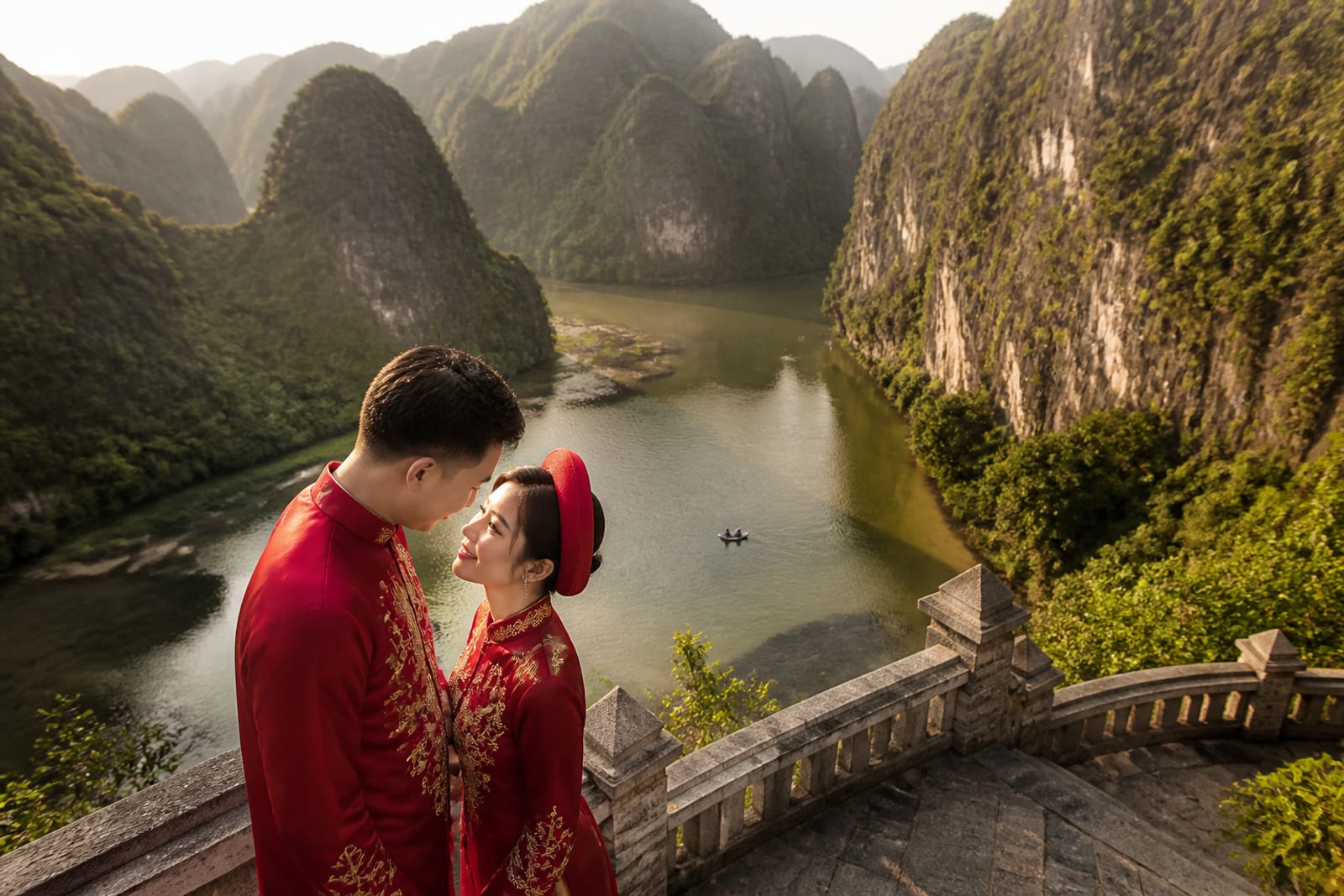
Hanoi-based vs. Ninh Binh local photographer—which suits your timeline?
| Photographer type | Best for | Logistics | Why it matters |
|---|---|---|---|
| Hanoi studio (e.g., Cáo) | Couples flying in, want makeup & outfit coordination | 3-hour drive; full team on-site; styled session | One director, one vision; photo delivery in 48 hours |
| Ninh Binh local | Budget-conscious; flexible on timeline; comfort with local communication | 30 min to Hoa Lu; smaller team; direct booking | Knows seasonal light, temple access, quiet hours |
| Independent Hanoi freelancer | Casual couples, open to improvisation | 3-hour drive; single photographer; no backup | Cheaper but no makeup/outfit design; rescheduling risk |
Hanoi-based studios (like Cáo) can deploy a full team—director, photographer, makeup artist, stylist—to Hoa Lu if booked in advance; the coordination ensures your outfit and hair survive the humidity and stone-climbing. Ninh Binh locals are faster to reach and cheaper, but communication may require Vietnamese or a translator. Independent freelancers offer flexibility but no backup if weather turns or equipment fails.
Conclusion: Choose based on whether you want one coordinated team or local convenience and cost savings.
📸 Book on WhatsApp — proposal & anniversary
When should you shoot—season, weather, and light windows?
Hoa Lu sits in the north's climate: cool and grey Dec–Feb, comfortable Mar–May, hot and humid Jun–Aug (with afternoon storms), and cool again Sep–Nov. Mar–May and Sep–Nov are the most reliable—low humidity, predictable light, minimal rain. Dec–Feb is cool (good for outfit comfort) but skies are often overcast, softening the dramatic stone-and-light contrast many couples want. Jun–Aug is hot, sticky, and afternoon thunderstorms can close the site to visitors by 2 pm.
Light shifts with the season: in March, sunrise is around 6:20 am and side light holds until 9:30 am. In September, sunrise is 6 am and the window is similar. In winter (Dec–Feb), sunrise is 7 am and side light is gone by 9 am, but overcast skies mean consistent, shadow-free light all day—less dramatic, but safer for a time-sensitive event.
Ask your photographer for a seasonal light timeline before you book: exact sunrise time for your date, which temple corners get direct light, and where to avoid harsh shadows during your ceremony window. Confirm temple opening hours (typically 7:30 am, closed during Tet Lunar New Year late Jan–mid Feb) and check if you need a guide permit for a private ceremony.
Conclusion: Book Mar–May or Sep–Nov for the best light and weather balance; confirm opening hours and light times with your photographer.
From booking to keepsake—what happens after the photoshoot?
Most Hanoi studios deliver edited photos and a short film within 48 hours; local freelancers may take 5–10 days. Ask upfront about the deliverables: number of edited frames, video format and length, print rights, and album or heirloom-box options.
After the shoot, consider how you'll preserve the images. A wedding photo album with leather binding and lay-flat printing outlasts phone backups; a custom photo print or frame hung in your home becomes a daily reminder. Some couples commission a star map print showing the night sky on their proposal date, paired with a favorite photograph—a keepsake detail that only works if the photographer captures the moment clearly.
If you're planning a formal wedding later, show your proposal images to your wedding photographer so they understand your aesthetic and the couple's dynamic. If Hoa Lu is your only photo session with a partner, order prints or an album immediately after delivery; digital files can disappear in hard-drive failures or cloud account closures.
Conclusion: Choose your delivery format and keepsake style before booking; order prints or albums within a month while the moment is fresh.
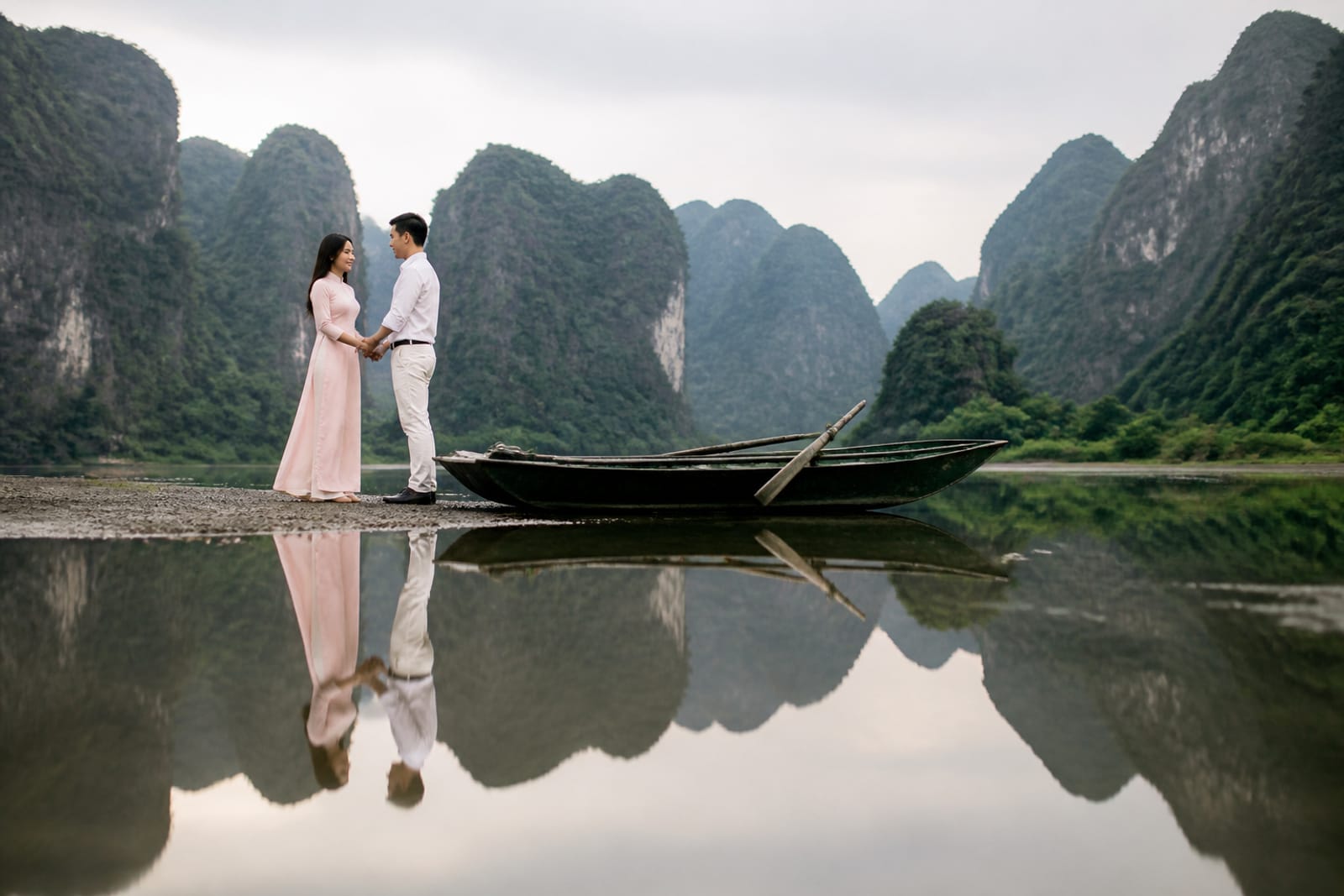
What to check before booking a Hoa Lu proposal photographer
- First-hand Hoa Lu experience. Ask to see a portfolio of at least three sessions shot at Hoa Lu temples or Ninh Binh karst—not just "temples in Vietnam." Light and composition are site-specific.
- Backup gear and contingency. Does the photographer carry a second camera and lens? What happens if it rains or a temple closes that day? (A clear rescheduling or alternative-site clause protects both of you.)
- Outfit and logistics planning. If you're not using a full studio team, have you chosen your outfit already? Can you move freely in it on uneven stone? Wear it to test before the shoot date.
- Light and timing confirmation. Ask the photographer to confirm sunrise time, the best 2–3 light windows on your date, and which temple areas they'll use. A vague "we'll see what the light looks like" is a red flag.
- Delivery timeline and format. How many edited images? When will you receive them? Is there a video? Can you print or use the images on your wedding invitations? Get it in writing (or screenshot the message on WhatsApp).
- Payment and rescheduling terms. Confirm the deposit amount, balance due date, and policy if weather or personal circumstances force a delay. Ask if there's a cancellation window without penalty.
- Communication channel. Is the photographer responsive on WhatsApp, email, or phone? Confirm one primary contact method before you commit.
Conclusion: A good proposal photographer communicates clearly, has documented experience at your location, and gives you a written timeline.
---
Cáo Studio alternative: why one team works better than three vendors
Cáo Studio (based in Hanoi and Saigon) specializes in one-team sessions: a director, photographer, makeup artist, and stylist arrive together, speak the same visual language, and coordinate outfit, hair, and framing in real time. Most travel couples book three vendors separately—a makeup artist, a dress rental shop, a photographer—and the photographer has to adapt to makeup that reads poorly in the light, or an outfit that photographs stiffer than it looked in person.
Hoa Lu is a 3-hour drive from Hanoi, so Cáo would be an investment; a local Ninh Binh photographer is faster and cheaper for logistics. But if you're flying in for a Hanoi base and want a proposal shoot plus a couple's session in the city afterward (e.g., ao dai photoshoot at Huc Bridge, makeup & hair at your hotel), a studio team eliminates coordination stress and ensures consistent, professional output.
💄 Makeup & hair at your hotel | 🌸 See the lookbook
---
Real scenario: a couple's Hoa Lu timeline from booking to keepsake
Week 1: Couple decides on mid-April for the proposal (post-monsoon, warm light). They book a Ninh Binh local photographer known for karst work, confirm Mar–May light windows via email, and receive a scouting report with two temple-and-river-view locations and exact timing.
Week 3: Outfit is finalized (a tailored áo dài in cream, paired with flat sandals for temple steps). Makeup artist in Hanoi is booked for the morning of the shoot; the couple drives to Ninh Binh the day before to rest and confirm weather.
Shoot day: Photographer meets them at the Dinh temple at 6:45 am. Soft side light hits the stone entrance; couple walks to the terrace, does a hand-in-hand moment looking at the river, and a close frame of exchanging rings. By 8:20 am, the light hardens; they move to a karst viewpoint with cooler limestone backdrop. Session ends by 9:30 am; couple explores Hoa Lu at leisure.
Week 4: Photographer delivers 60 edited images and a 90-second film showing the proposal moment, the surroundings, and a final frame of them walking away together. Couple orders a leather album with 25 favorite images and a 24×36 print of the ring exchange for their bedroom wall.
Conclusion: Plan arrival at dawn, choose a photographer who knows the site, and order prints or an album within one month.
---
FAQ
Can we do a Hoa Lu proposal ceremony without disrupting temple worship?
Yes. Temples are open to visitors 7:30 am–5:00 pm. Arrive before 7 am or after 4 pm for fewer worshippers. Dress modestly (shoulders and knees covered) and ask your photographer or a temple guide if a private moment is possible in a quiet courtyard.
What outfit works best for Hoa Lu—áo dài, Western dress, or casual wear?
Áo dài is culturally resonant and photographs beautifully on stone; it requires flat or low heels and practice walking on uneven steps. Western white dress or a tailored suit works if you're comfortable climbing; avoid long trains or delicate fabrics that snag on ancient stonework. Test your outfit on stairs before the shoot date.
How far in advance should we book a photographer?
Aim for 4–6 weeks if using a Hanoi studio (they coordinate travel and team scheduling). Local Ninh Binh photographers can often accommodate 2–3 weeks' notice. Always confirm availability for your preferred date and light window before paying a deposit.
Do we need a guide or permit to hold a proposal ceremony at Hoa Lu?
Hoa Lu temples are public sites; you don't need a permit for a personal moment. A guide (available through your photographer or temple staff) costs extra but helps explain historical context and knows quiet corners. Your photographer should clarify this when you book.
What if it rains or weather is bad on the shoot date?
Discuss rescheduling policy before booking—reputable photographers offer a rain date or alternative site (indoor temple chapels or nearby Tam Coc karst for different light). Confirm the policy in your booking message so there are no surprises.
How long does a proposal shoot usually take?
Plan 2–3 hours on-site, including travel between temple locations and brief portrait moments. Arrival at dawn (6:30 am) gives you the best light window and avoids peak tourist hours (9 am–4 pm).
FAQ
Can we do a Hoa Lu proposal ceremony without disrupting temple worship?
Yes. Temples are open to visitors 7:30 am–5:00 pm. Arrive before 7 am or after 4 pm for fewer worshippers. Dress modestly (shoulders and knees covered) and ask your photographer or a temple guide if a private moment is possible in a quiet courtyard.
What outfit works best for Hoa Lu—áo dài, Western dress, or casual wear?
Áo dài is culturally resonant and photographs beautifully on stone; it requires flat or low heels and practice walking on uneven steps. Western white dress or a tailored suit works if you're comfortable climbing; avoid long trains or delicate fabrics that snag on ancient stonework. Test your outfit on stairs before the shoot date.
How far in advance should we book a photographer?
Aim for 4–6 weeks if using a Hanoi studio (they coordinate travel and team scheduling). Local Ninh Binh photographers can often accommodate 2–3 weeks' notice. Always confirm availability for your preferred date and light window before paying a deposit.
Do we need a guide or permit to hold a proposal ceremony at Hoa Lu?
Hoa Lu temples are public sites; you don't need a permit for a personal moment. A guide (available through your photographer or temple staff) costs extra but helps explain historical context and knows quiet corners. Your photographer should clarify this when you book.
What if it rains or weather is bad on the shoot date?
Discuss rescheduling policy before booking—reputable photographers offer a rain date or alternative site (indoor temple chapels or nearby Tam Coc karst for different light). Confirm the policy in your booking message so there are no surprises.
How long does a proposal shoot usually take?
Plan 2–3 hours on-site, including travel between temple locations and brief portrait moments. Arrival at dawn (6:30 am) gives you the best light window and avoids peak tourist hours (9 am–4 pm).
Ao dai, makeup, hair and a local photographer in Hanoi or Saigon — one WhatsApp message.