/proposal-and-anniversary
Proposal at Japanese Covered Bridge: Planning Your Hoi An Photoshoot
A proposal photoshoot at the Japanese Covered Bridge combines the Ancient Town's heritage setting with intimate couple moments. The bridge sits within the ticketed Ancient Town, requiring an entrance ticket and early-morning or late-afternoon timing to avoid crowds. Sessions typically run 60–90 minutes, capturing the proposal moment, reactions and portraits in soft natural light. Best months are February–April (cool, dry, green rice fields) or May–August (hot but predictable light; plan for sunrise). Avoid September–December (rainy season, flooding risk in the Old Quarter, typhoon disruption). Work with Cáo Studio – Makeup & Photoshoot for pre-dawn coordination, permit navigation and edited files delivered within weeks—ask on WhatsApp to confirm Hoi An availability, dates and exact inclusions for your session.
The Japanese Covered Bridge is a 16th-century wooden landmark at the heart of Hoi An's Ancient Town. Its arched wooden frame, reflected lanterns at dusk and narrow pedestrian passage create a naturally framed proposal moment. But success depends on timing, preparation and understanding what a local photographer can and cannot deliver during the busiest tourism season in Vietnam.
Why is the Japanese Covered Bridge such a popular proposal location?
The bridge combines several layers of romanticism: history (over 400 years old), architectural symmetry, and the living backdrop of the Ancient Town's lantern-lit shophouses and river. At dusk, when lanterns are lit, the scene feels theatrical and intimate. The enclosed space and wood tones also naturally frame couples without wide-angle distortion. However, its popularity means you share the bridge with dozens of other visitors daily—especially 9 a.m. to 5 p.m.—which affects both the authenticity of the moment and photo quality.
The key trade-off: romantic light and fewer people come at 5:30–6:30 a.m. (sunrise) or 6:30–7:30 p.m. (dusk), but you'll also be shooting in transition light. Midday is bright, harsh and crowded. A photographer experienced in Hoi An timing knows this and will plan accordingly.
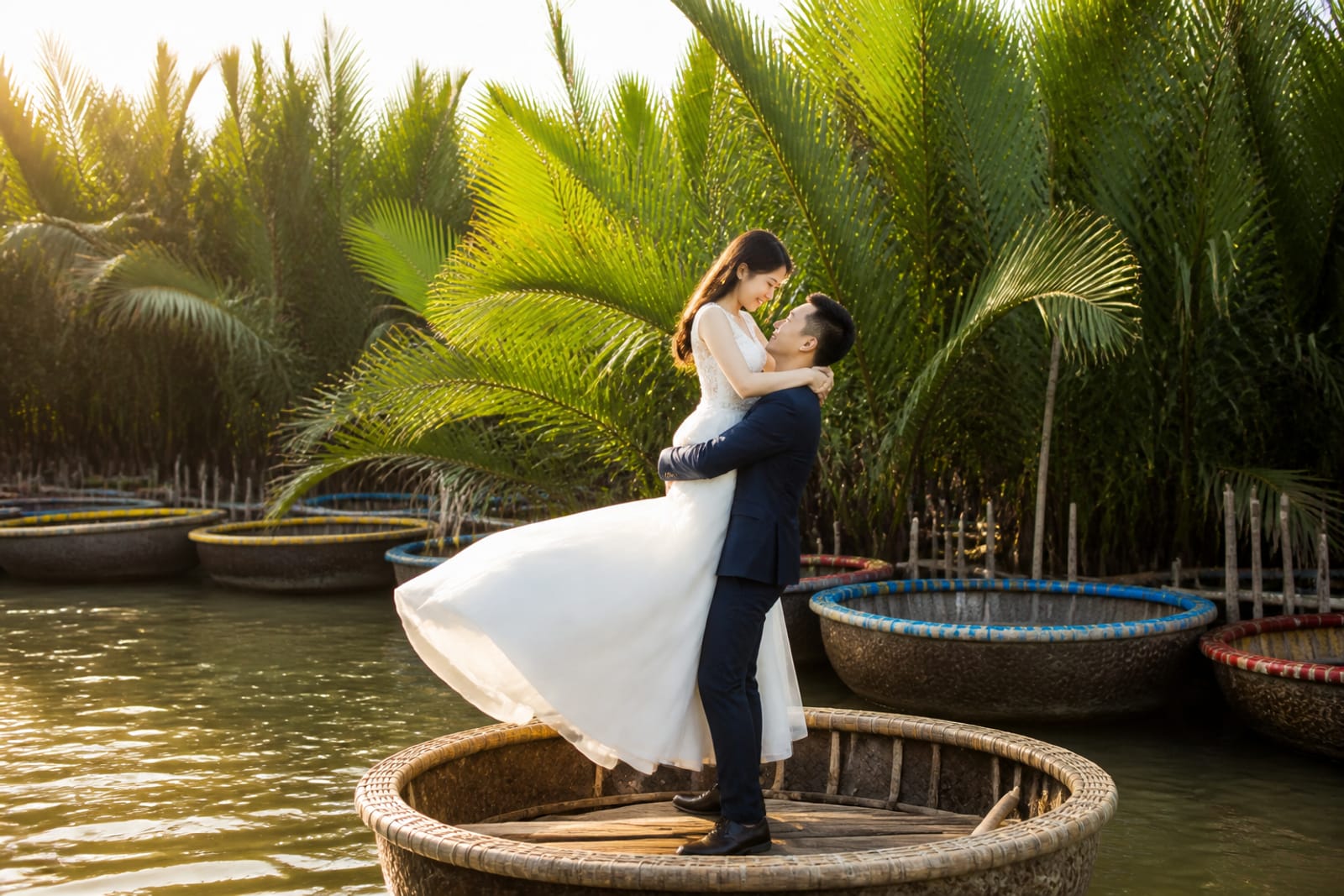
What are the best months to propose at the Japanese Covered Bridge?
February–April (cool 20–27°C, dry, morning dew on plants) offers green rice fields visible from nearby vantage points and soft overcast light ideal for skin tones. Crowds build toward Tet (late January–mid February), so post-Tet is quieter.
May–August (hot, 30–35°C+, consistent dry weather) delivers strong directional light—sunrise casts the bridge's shadow into the river, making the reflection dramatic. Plan pre-dawn (5:30 a.m. start) to finish before heat peaks. Afternoon light is harsh; avoid midday entirely.
September–December is rainy season (worst October–November) with typhoon risk, flooding in the Old Quarter and unpredictable light. The Ancient Town itself floods during heavy rains, making photos impossible and venues closed. Not recommended.
January (cool, often drizzly, post-Tet) offers fewer tourists but grey overcast skies and puddles—romantic if you embrace the mood, but requires careful footing on wet wooden bridges.
Plan 3–6 months ahead if February–April is your target; summer dates fill quickly because heat limits outdoor events in Hanoi and Ho Chi Minh City, so couples shift to Hoi An.
Do you need a permit to shoot a proposal at the Japanese Covered Bridge?
Yes. The bridge sits inside the ticketed Ancient Town (entrance required for all visitors; check the official Hoi An Town site for current ticket prices). You do not need a separate photography permit if you're carrying one camera or smartphone, but commercial video equipment, tripods, drones or large reflectors may trigger restrictions—check locally with the Ancient Town authority before your session.
A photographer familiar with Hoi An (like those at Cáo Studio – Makeup & Photoshoot) navigates these rules and helps you avoid setups that attract official attention. Arriving before 6:30 a.m. also means fewer staff on duty, reducing inquiries—a practical advantage many photographers use.
If you plan proposal & anniversary photoshoots, mention Hoi An upfront so the team can confirm current access conditions.
How do you compare DIY vs. hiring a professional photographer for a proposal shoot?
| Approach | Best for | Reality | Hidden costs |
|---|---|---|---|
| Smartphone (friend holds camera) | Budget-first, low-pressure moment | Blurry motion during proposal, unflattering angles, no backup shots | Emotional whiplash if photos fail; regret in years 2–5 |
| Local tourist guide + camera rental | Flexibility, budget under constraints | Hit-or-miss framing, no editing, time pressure on guide's tour schedule | Guide's inconsistent posing direction; rental equipment quality |
| Professional local photographer (Cáo Studio team or equivalent) | Proposal memory as a priority | Anticipatory framing, polished edits, guidance during moment, backup plans | Session booking lead time, travel to Hoi An, outfit/hair prep budget |
A professional photographer earns their role by anticipating the proposal moment (not just documenting it), guiding your poses without appearing in frames, managing light transitions as the sun rises, and editing files within a committed timeframe. They also know how to work in crowds—positioning you to minimize tourists in the background or timing shots between tour groups.
DIY works if the proposal moment itself matters more than images; hire a professional if the memory of how you looked, felt and were framed matters equally.
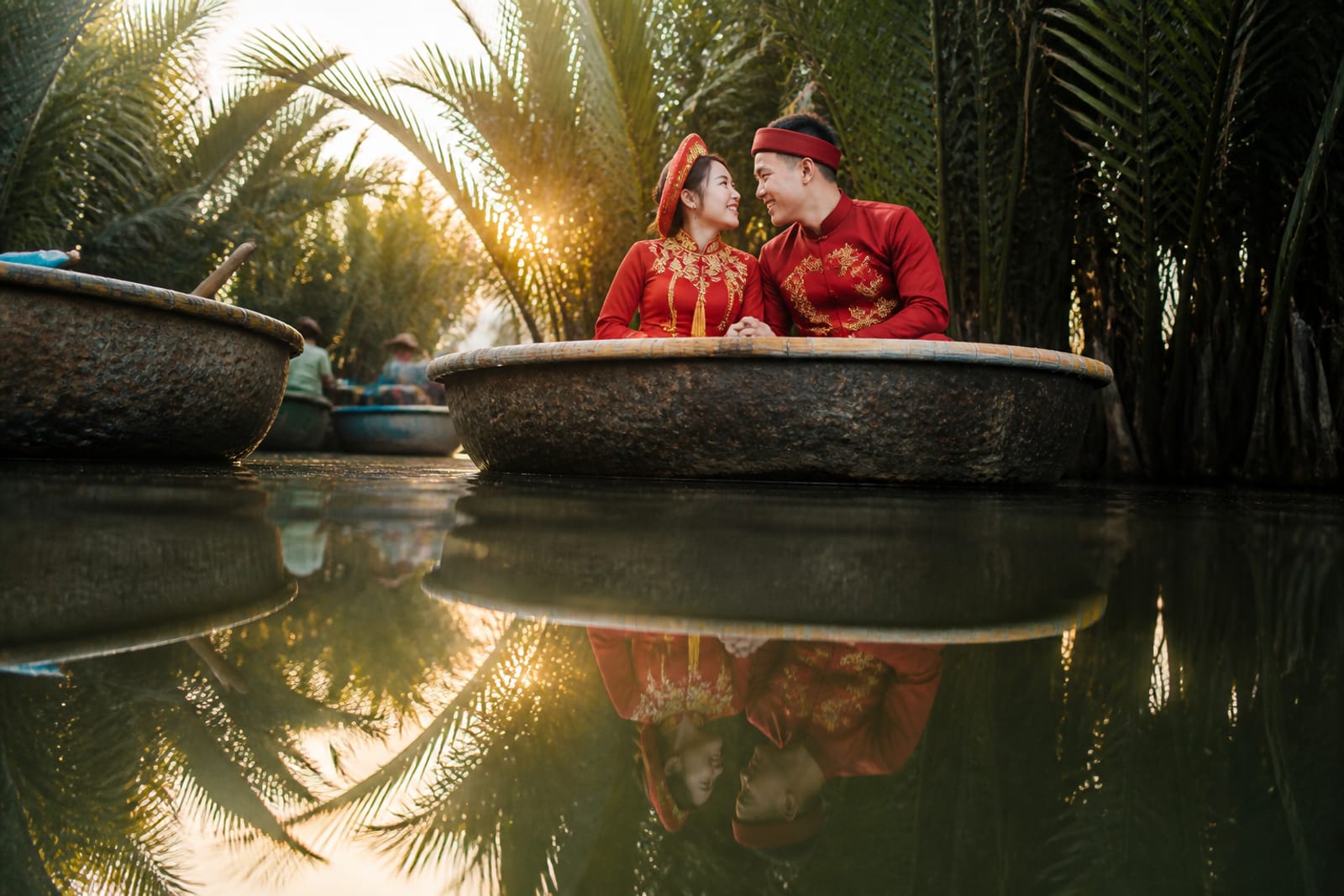
What do you wear under an áo dài for a proposal photoshoot at the bridge?
Wearing an áo dài—the traditional Vietnamese silk tunic over wide trousers—adds cultural depth to a proposal at Hoi An. The garment photographs beautifully in soft light and signals respect for the setting.
Undergarments:
- Wear a smooth, neutral slip or bodysuit under the tunic to prevent visible panty lines and ensure the silk drapes cleanly.
- Choose white or skin-tone undergarments; the silk is typically white, cream or jewel-toned, so darker slips show through.
- Avoid thick bras; opt for a thin underwire or seamless style. The tunic's high neckline means a bra strap shows from certain angles—many couples skip a bra entirely if the tunic provides enough structure (check the rental fit).
Trousers:
- Traditional áo dài pairs come with matching silk trousers. Wear neutral cotton or silk briefs underneath; thick seams or visible elastic creates unflattering shadows.
- Trousers should fit snugly at the waist but never so tight that bending or sitting becomes uncomfortable during a 90-minute shoot.
Footwear:
- Flat sandals or embroidered slippers are traditional and practical on the bridge's wooden deck (it's slippery when wet). Avoid heels; they catch on wood slats and slow movement.
If you plan to wear an áo dài, ask Cáo Studio about áo dài rental and makeup & hair at your hotel—hair and makeup styling for an áo dài differs from Western wedding wear, and the team can prep you in your hotel before the pre-dawn bridge session.
What's the step-by-step process of booking and shooting a proposal at the Japanese Covered Bridge?
Planning phase (8–12 weeks before):
- Choose your target month based on weather (February–April best; May–August second choice).
- Confirm your proposal date and whether you want to reveal the shoot to your partner or keep it secret.
- Decide on outfit: áo dài rental, Western dress, or both. If áo dài, order from Cáo Studio's rental collection or a local tailor.
- Check proposal & anniversary photoshoot details and message Cáo Studio on WhatsApp to confirm Hoi An team availability and exact inclusions (hours, number of edited photos, delivery timeline).
Preparation phase (4–6 weeks before):
- Book makeup & hair at your hotel—arrange for styling on the morning of your shoot; the team travels to Hoi An.
- Arrange hotel accommodation in or near Hoi An (proximity to the Ancient Town minimizes travel time at pre-dawn).
- Confirm the exact shoot start time (typically 5:30 a.m. to catch sunrise) and meeting point with your photographer.
- Arrange transport to the Ancient Town entrance; taxis or hotel shuttle are reliable options.
Day-of logistics:
- Wake 1–1.5 hours before the scheduled shoot to allow time for makeup, áo dài fitting and travel.
- Arrive at the Ancient Town entrance 10 minutes early; have your tickets ready (purchase in advance online or at the gate).
- Walk to the bridge with your photographer; the route through the Old Quarter is atmospheric even in half-light.
- Your photographer will scout positions, suggest poses and time the proposal moment for soft golden light (30–45 minutes after sunrise, depending on season).
- Shoot for 60–90 minutes, capturing the proposal, reactions, couple portraits and bridge details.
- Finish before 7:30 a.m. to avoid tourist crowds and midday heat.
Post-shoot:
- Receive edited files within the timeframe confirmed at booking (typically 2–4 weeks).
- Share behind-the-scenes or final images on social media or keep private—your choice.
This timeline ensures you're not shooting under time pressure or in poor light.
📸 Book on WhatsApp — proposal & anniversary photoshoot
What should you check before booking a proposal photoshoot at the Japanese Covered Bridge?
- Photographer's Hoi An experience: Ask how many proposal shoots they've done at the bridge and request a sample gallery. Hoi An's light, crowds and humidity differ significantly from Hanoi and Ho Chi Minh City.
- Early-morning availability: Confirm your photographer is willing to start at 5:30 a.m. and has transported to Hoi An before. Some studios rely on local partners; clarify the team composition.
- Weather contingency: Ask what happens if typhoons or heavy rain forecasted. Do you reschedule, pivot to an indoor location, or receive a refund or credit? Rainy-season bookings require clear fallback options.
- Edited delivery timeline: How long until you receive polished files? Two weeks is standard; some studios take 4+. Confirm the number of edited images included.
- Outfit logistics: If renting an áo dài, confirm the rental is part of your package or a separate cost factor. Ask about fitting appointments and whether the studio handles sizing or you arrange rental independently.
- Ancient Town entrance tickets: You pay for your own and your partner's entrance tickets; the photographer typically has a press or operator pass. Confirm who purchases tickets and when.
- Crowd management: Ask how your photographer handles unexpected tourist groups on the bridge. The best photographers know timing tricks (arriving earlier, shooting between tour guide schedules) but can't guarantee solitude.
Book only after these details are clarified. Misaligned expectations—especially on timing, outfit handling and delivery speed—often cause regret after a high-stakes moment like a proposal.
For a full proposal experience, combine your bridge photoshoot with pre-shoot styling. Cáo Studio's team travels to Hoi An for hair and makeup; ask on WhatsApp to add this to your booking.
---
How does Cáo Studio – Makeup & Photoshoot handle proposal photoshoots differently from standard couple sessions?
Proposal & anniversary photoshoots differ in pacing and emotional framing: the photographer anticipates and captures the proposal moment itself, not just poses after. This requires being camera-ready before the proposal happens, which means clarity on when the proposal occurs (does your partner know the time, or is it a surprise?). Cáo Studio's experience with high-emotion moments ensures natural, unguarded expressions during the actual proposal and steady hands during the adrenaline spike afterward. Confirm on WhatsApp how the team handles the surprise factor and whether they brief your partner beforehand to set a natural pose.
Also ask whether couple photoshoots vs. proposal & anniversary packages apply to your session, as inclusions and pricing factors differ. The pillar page will clarify the distinction.
🌸 See the lookbook to visualize Hoi An couple and proposal shoots in natural light.
---
FAQ
Can you have a proposal photoshoot at the Japanese Covered Bridge without booking with Cáo Studio?
Yes. Many independent photographers and international studios offer Hoi An sessions. Choose someone with Hoi An-specific experience, not just general Vietnam travel photography. Confirm they handle early-morning timing, Ancient Town logistics and rainy-season contingencies. Cáo Studio's team is available for Hoi An sessions by appointment—ask on WhatsApp for current dates and availability.
What time of day has the best light at the Japanese Covered Bridge?
Sunrise (5:30–6:30 a.m., depending on season) offers soft, warm golden light and minimal crowds. Dusk (6:30–7:30 p.m.) is romantic but shorter and less stable; light fades fast. Midday (10 a.m.–4 p.m.) is harsh, bright and very crowded. Early morning is the professional choice for proposal shoots.
Do you need to buy entrance tickets to the Ancient Town separately from your photoshoot booking?
Yes. Entrance tickets are your responsibility; ask the official Hoi An Town site for current prices. Your photographer typically has a press pass or operator exemption. Confirm this detail when booking to avoid surprises at the gate.
Can you wear Western wedding dress at the Japanese Covered Bridge instead of an áo dài?
Yes. A lightweight, shorter Western dress photographs beautifully in Hoi An's heritage setting. Avoid heavy fabric (humidity and heat make it uncomfortable for a pre-dawn shoot) and long trains (the bridge's wooden deck is narrow and uneven). Pair with flat sandals or embroidered slippers for safety. Cáo Studio offers wedding dress rental—ask if Hoi An delivery is available.
What happens if it rains the day of your proposal photoshoot?
Light rain often adds atmosphere and creates interesting reflections. Heavy rain or typhoons may force rescheduling or moving to sheltered locations within the Old Quarter (covered shop fronts, temples with courtyards). Confirm your photographer's weather contingency policy before booking, especially during rainy season (September–December).
How many edited photos do you typically receive from a proposal photoshoot?
Inclusions vary by studio and package. Cáo Studio confirms exact numbers (edited images, delivery timeline, formats) on WhatsApp before booking. Don't assume a standard count; ask for specifics.
Can you do both a proposal photoshoot and a separate pre-wedding session in Hoi An?
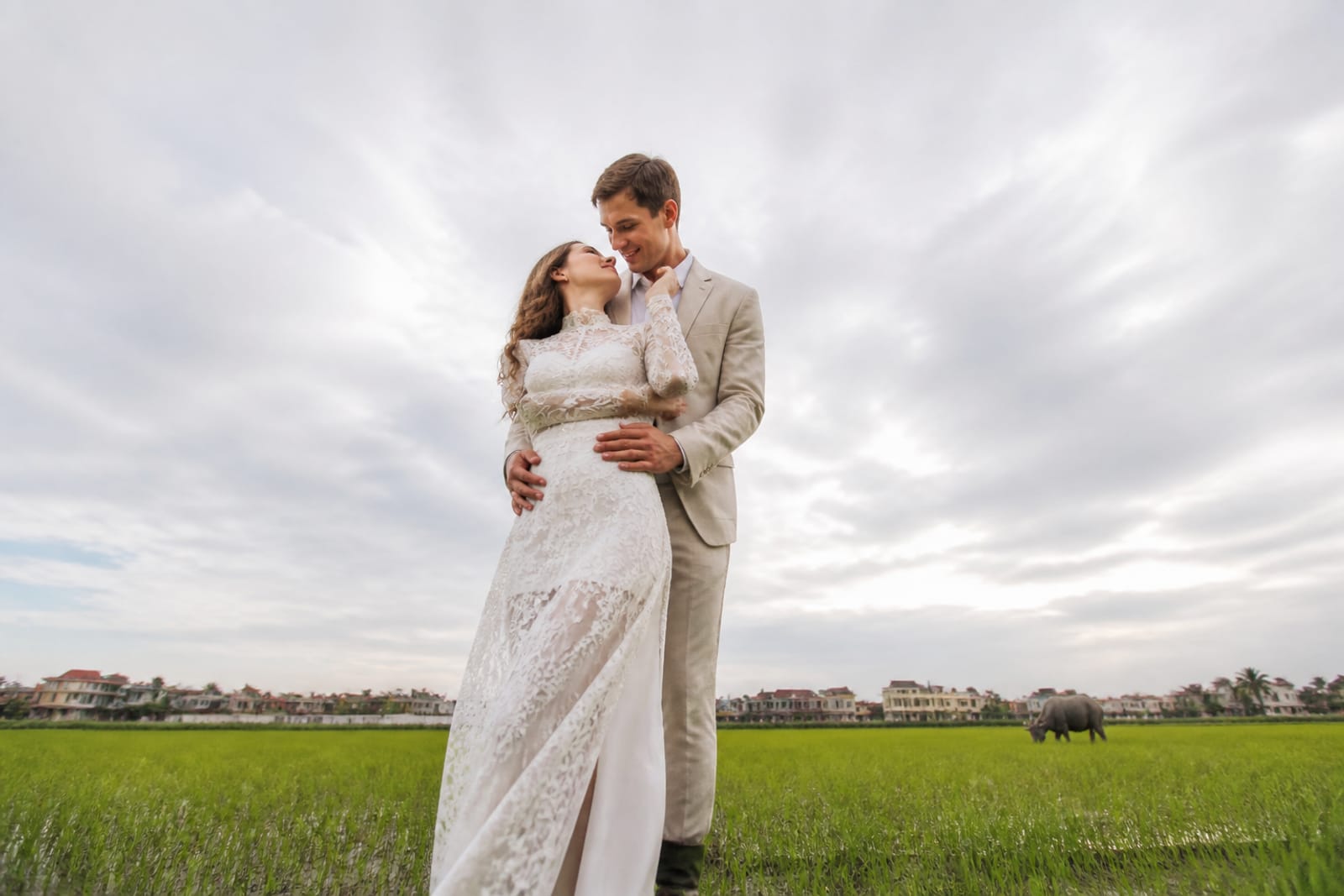
Yes. Many couples book a proposal shoot at the bridge, then return later for a pre-wedding & elopement session in the rice fields or at other Hoi An landmarks. Discuss multi-session options with Cáo Studio on WhatsApp to explore package options and scheduling.
FAQ
Can you have a proposal photoshoot at the Japanese Covered Bridge without booking with Cáo Studio?
Yes. Many independent photographers and international studios offer Hoi An sessions. Choose someone with Hoi An-specific experience, not just general Vietnam travel photography. Confirm they handle early-morning timing, Ancient Town logistics and rainy-season contingencies. Cáo Studio's team is available for Hoi An sessions by appointment—ask on WhatsApp for current dates and availability.
What time of day has the best light at the Japanese Covered Bridge?
Sunrise (5:30–6:30 a.m., depending on season) offers soft, warm golden light and minimal crowds. Dusk (6:30–7:30 p.m.) is romantic but shorter and less stable; light fades fast. Midday (10 a.m.–4 p.m.) is harsh, bright and very crowded. Early morning is the professional choice for proposal shoots.
Do you need to buy entrance tickets to the Ancient Town separately from your photoshoot booking?
Yes. Entrance tickets are your responsibility; ask the official Hoi An Town site for current prices. Your photographer typically has a press pass or operator exemption. Confirm this detail when booking to avoid surprises at the gate.
Can you wear Western wedding dress at the Japanese Covered Bridge instead of an áo dài?
Yes. A lightweight, shorter Western dress photographs beautifully in Hoi An's heritage setting. Avoid heavy fabric (humidity and heat make it uncomfortable for a pre-dawn shoot) and long trains (the bridge's wooden deck is narrow and uneven). Pair with flat sandals or embroidered slippers for safety. Cáo Studio offers [wedding dress rental](/wedding-dress-rental)—ask if Hoi An delivery is available.
What happens if it rains the day of your proposal photoshoot?
Light rain often adds atmosphere and creates interesting reflections. Heavy rain or typhoons may force rescheduling or moving to sheltered locations within the Old Quarter (covered shop fronts, temples with courtyards). Confirm your photographer's weather contingency policy before booking, especially during rainy season (September–December).
How many edited photos do you typically receive from a proposal photoshoot?
Inclusions vary by studio and package. Cáo Studio confirms exact numbers (edited images, delivery timeline, formats) on WhatsApp before booking. Don't assume a standard count; ask for specifics.
Can you do both a proposal photoshoot and a separate pre-wedding session in Hoi An?
Yes. Many couples book a proposal shoot at the bridge, then return later for a [pre-wedding & elopement session](/pre-wedding-photoshoot) in the rice fields or at other Hoi An landmarks. Discuss multi-session options with Cáo Studio on WhatsApp to explore package options and scheduling.
Ao dai, makeup, hair and a local photographer in Hanoi or Saigon — one WhatsApp message.