/proposal-and-anniversary
Proposal at Son Tra Peninsula & Linh Ung Pagoda: Photographer Planning
Son Tra Peninsula and Linh Ung Pagoda—a marble mountain shrine near Da Nang with 360° views—is a popular proposal backdrop, but success depends on timing and logistics. Arrive at first light (before 6:30 am) to avoid crowds and catch soft, directional light on the pagoda's white walls and the peninsula below. You'll need a permit from the pagoda office (confirm current rules on-site); cable-car opening is typically around 7:00 am. The shoot runs 2–3 hours: ascent, location scouting, outfit changes, and descent. Hire a photographer who knows Da Nang's central-coast season (driest Feb–Aug, rainy and typhoon-prone Sep–Dec). Cáo Studio – Makeup & Photoshoot operates in Ho Chi Minh City and Hanoi; for a Son Tra shoot, we'll advise on local partners via WhatsApp. 📸 Book on WhatsApp — proposal & anniversary ---
Why Son Tra Peninsula works for proposals—and when it doesn't
Son Tra Peninsula is visually striking: the white marble pagoda gleams against the sea, and the approach offers emotional framing (the climb itself mirrors commitment). The problem: it's one of Da Nang's most photographed sites. Between 8:00 am and 2:00 pm, you'll compete with tour groups, Instagram influencers and selfie sticks. Sunrise shoots (5:30–7:00 am) sidestep crowds but demand early travel from your hotel and cold, sometimes grey light in winter months. Feb–Aug offers clearer skies and stronger sun; Sep–Dec brings overcast conditions, afternoon rain and typhoon risk. The pagoda's marble surfaces and outdoor stairs are unforgiving if wet. If your proposal timing is flexible, choose a weekday in May–June or July–August for dry, warm light and fewer visitors.
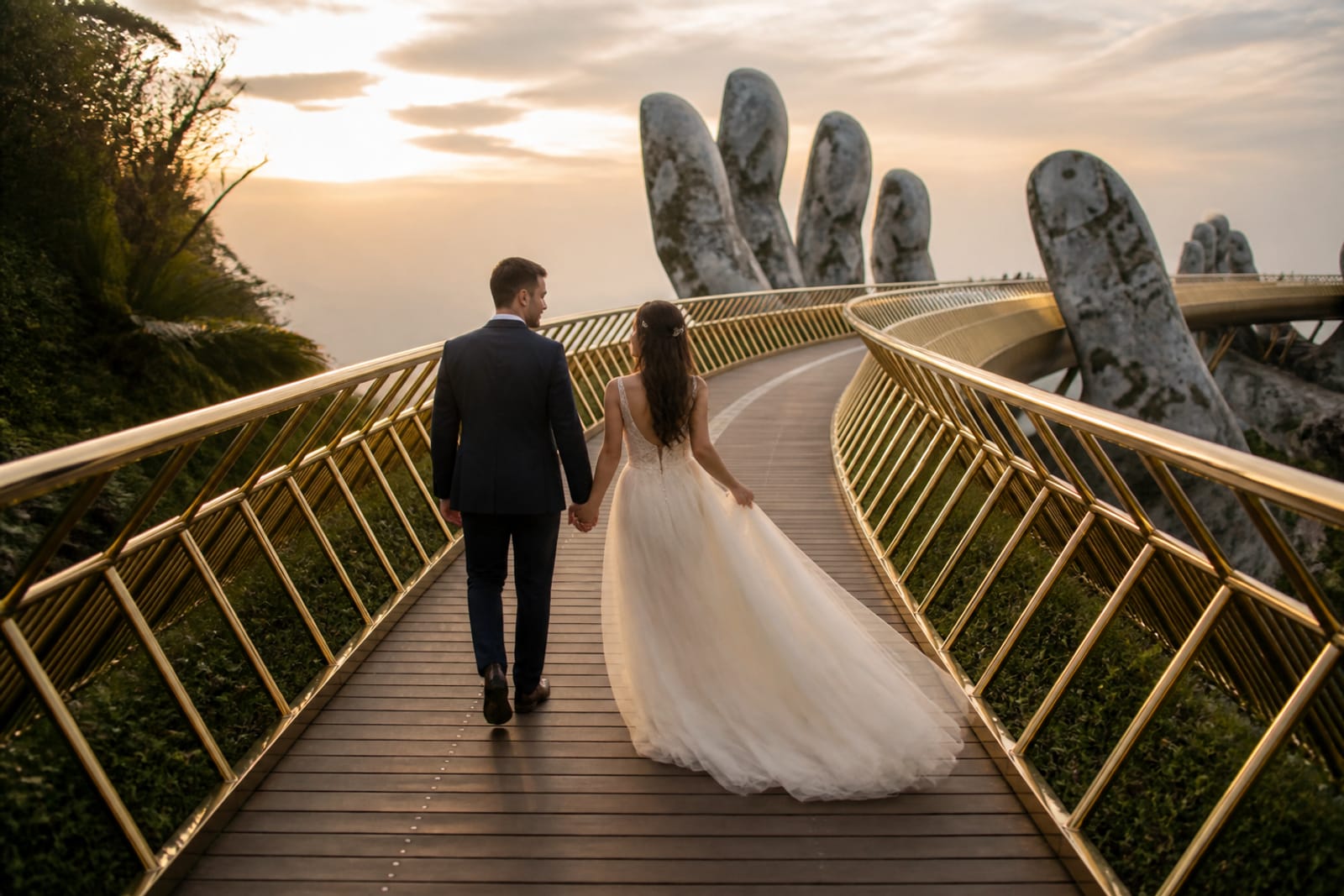
Location scouting: three zones and their photo potential
The cable-car approach and marble stairs offer the most dramatic framing—the ascent itself becomes narrative. Early light from the east rakes across steps and handrails. Midday sun is harsh; avoid 10:00 am–3:00 pm unless you're shooting silhouettes.
The upper pagoda terrace gives 360° views of the peninsula, coastline and Han River. Wind is common (hair, fabric movement—plan for it). Afternoon light (4:00–5:00 pm) from the west warms the marble and sea, but crowds peak then.
Sheltered corners and side shrines near the pagoda's base provide shade and intimacy without the backdrop chaos. Light is softer, less contrasty, and fewer cameras compete for angles. This zone suits couple's portraits and ring-detail shots. Scouting a site in person—or hiring a local photographer who has done so—saves hours of on-the-day fumbling.
| Zone | Best for | Light window | Crowd factor | Outfit risk |
|---|---|---|---|---|
| Cable-car & stairs | Arrival moment, emotional ascent | 5:30–7:30 am or 4:00–5:30 pm | Minimal before 7:00 am | Wind, sweat from climbing |
| Upper terrace & main pagoda | Grand backdrop, full-body portraits | 6:00–7:00 am or 4:00–5:00 pm | Heavy 9:00 am–2:00 pm | Wind, strong sun glare on marble |
| Side shrines & sheltered nooks | Close-ups, ring shots, soft-light portraits | All day (diffused shade) | Light throughout | Shade is forgiving; no heat stress |
---
Permits, logistics and the weather window you can't ignore
The pagoda does not require a formal entry ticket, but ask at the base office about current photography rules—some times restrict commercial or professional tripod use. Verify this before booking a photographer. The cable car has a standard operating window; confirm opening hours the morning of your shoot (weather can delay or close it). Descent typically closes around 5:00–5:30 pm in winter, later in summer; build extra margin so you're not racing downhill in fading light.
Da Nang's central-coast climate is clear and warm Feb–Aug; plan shoots in this window if possible. May–August is hottest (30–35°C), so dawn proposals are more comfortable. Sep–Dec sees afternoon rain, high humidity and typhoon risk (worst Oct–Nov); morning light is often grey. Winter (Dec–Feb) is cooler but can be overcast or misty—bad for the distant sea backdrop, good if you're after moody, intimate tones. Check the 5-day forecast 48 hours before; if heavy rain or wind is predicted, reschedule rather than push through. A wet marble pagoda is slippery and less photogenic.
---
Choosing a photographer: local partner vs. travel with your own
Local Da Nang photographer: knows the light patterns, permit nuances, cable-car timing and crowd rhythms. They can shoot at dawn and don't need to travel far. Cost factors include their experience (portfolio quality and proposal-specific work), whether they provide an assistant, and turnaround time for edited files. A good local keeps the couple moving smoothly through zones, anticipates wind moments and knows which angles sell the pagoda's scale without cliché framing.
Photographer from your home city or another region: adds cost (flights, accommodation, travel time) but may offer a familiar creative voice or a wedding-day/pre-wedding partner you've already vetted. They won't know Da Nang's specific timing; expect them to ask the same logistics questions a local would answer faster.
Cáo Studio – Makeup & Photoshoot (Hanoi and Ho Chi Minh City) does not operate a Da Nang branch. If you're staying in Hanoi or Saigon and want us as your photographer for a proposal there, visit our Hanoi page or Saigon page. For a Son Tra proposal, we advise on local photographer vetting and can coordinate with makeup & styling if you're flying into Da Nang from one of our cities.
Questions to ask any photographer before booking:
- How many proposal shoots have you photographed at Son Tra, and in which season?
- Do you have a scouting plan, or will you confirm it with me 48 hours before?
- How do you handle crowds and permit rules?
- What's the delivery timeline for edited images (files, print-ready), and are they digital only or printed keepsakes too?
---
Outfit, hair and makeup under Da Nang's coastal heat
An ao dai (traditional Vietnamese silk gown) is photogenic at Son Tra but demands care: silk is heavy, heat and humidity cause sweat marks, and coastal wind tangles the fabric. If you're wearing one, choose lightweight silk and have a cover-up or shawl for warmth before sunrise. Hair should be secured (ponytails or updos resist wind better than loose waves), and waterproof makeup is essential—sea spray and sweat will run regular products. A makeup artist trained for outdoor coastal shoots knows how to set foundation and choose brow/lip colors that survive 3–4 hours outdoors.
If you're flying into Da Nang for the proposal, consider booking makeup & hair at your hotel the morning of the shoot. A stylist can refresh you mid-session if needed. Western casual (clean jeans, fitted shirt, neutral tones) photographs well if you want to avoid costume; the pagoda's white marble and sea backdrop are strong enough that the couple's simplicity reads as intimacy, not underpreparation.
Footwear: marble is slippery when damp or dusty. Wear shoes with grip; avoid flip-flops or thin soles. A photographer who knows the terrain will cue you to areas where you can safely remove shoes for barefoot shots (sandy alcoves, less-trafficked steps).
---
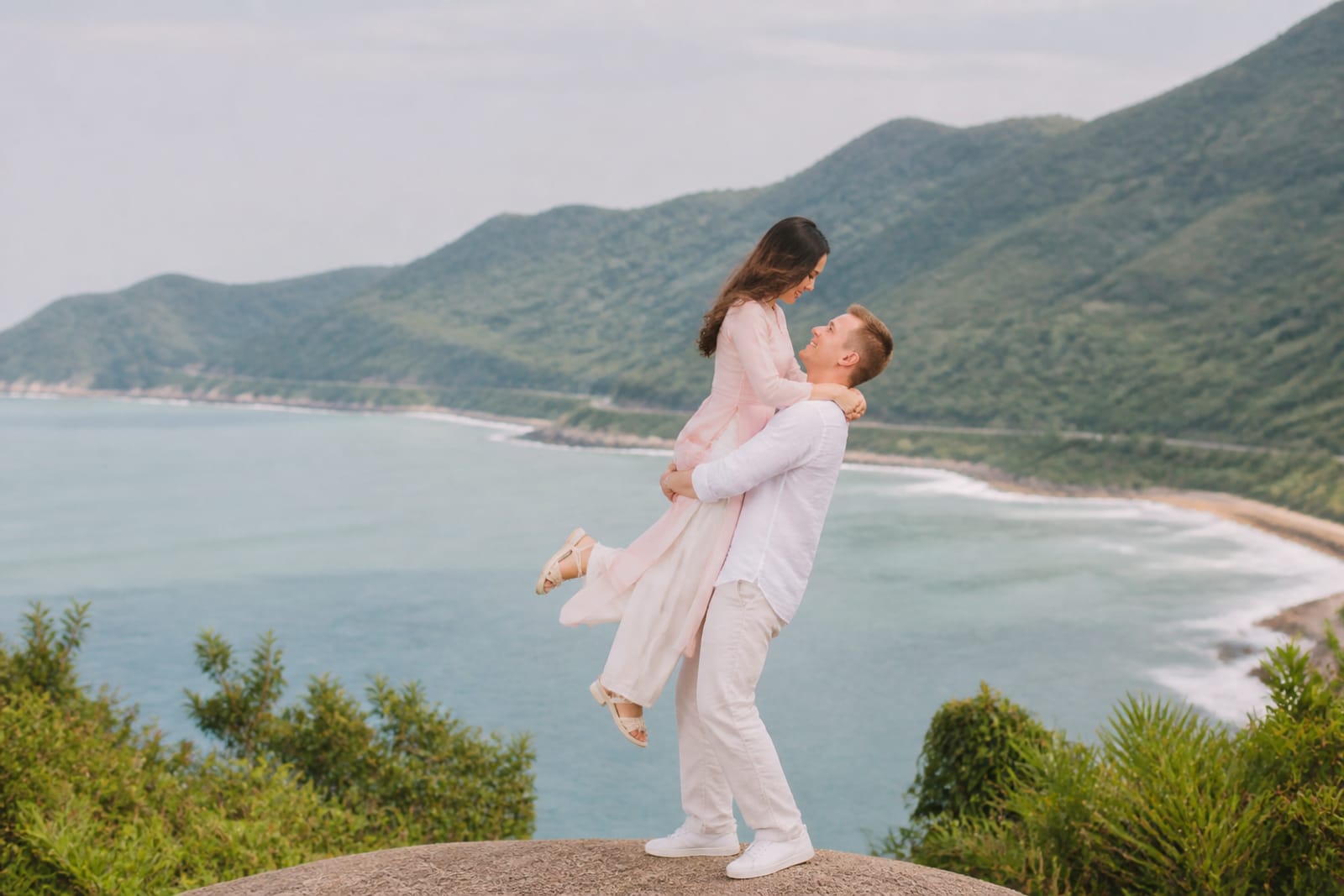
What to check before you book: a pre-proposal checklist
- Permit rules: Call or visit the Linh Ung Pagoda office; ask about photography restrictions and cable-car hours for your intended date.
- Weather forecast: Check 5–7 days out, confirm 48 hours before. If typhoon or heavy rain is forecast, reschedule; don't gamble on coastal weather in Sep–Dec.
- Photographer's portfolio: Look for at least 2–3 Son Tra proposals or similar coastal temple shoots. Ask for their best-light and worst-light examples—you want someone who adapts, not just who has had luck.
- Turnaround time: Confirm when you'll receive edited digital files and any prints or albums. Proposal moments are urgent; delays in delivery matter emotionally.
- Backup plan: If the cable car closes due to weather on the morning of your shoot, what's the reschedule policy? Will the photographer hold the date at no extra cost, or do you book a different location (e.g., My Khe beach at sunrise, a quieter shrine)?
- Outfit trial: If you're wearing an ao dai, test it for comfort and movement on stairs or steep ground before the shoot day. Same for makeup if it's a formal style.
---
A step-by-step timeline for the morning
- 4:30–5:00 am: Leave your hotel with photographer, makeup artist (if separate) and a small crew. Allow 30–45 minutes for travel to the cable-car base.
- 5:15–5:45 am: Arrive, check cable-car status, confirm permit with pagoda office staff. Have ID ready (staff may ask for foreign tourist IDs).
- 5:45–6:00 am: Wait for first cable car; if it runs early, go. If delayed, use the time for makeup touch-ups.
- 6:00–6:45 am: Cable-car ride up (approx. 15 min), outfit and hair final check at the top.
- 6:45–8:30 am: Shoot approach, stairs, arrival moment and upper-terrace portraits. Light is warmest 7:00–7:45 am.
- 8:30–9:00 am: Transition to side shrines or sheltered zones as crowds begin to arrive.
- 9:00–10:00 am: Final portraits, detail shots (rings, fabric, sea views). Plan to descend by 10:00 am if you want to avoid the main tour-group surge.
- 10:15 am onward: Cable-car descent, breakfast, rest and file backup (have photographer send proofs or a preview to your phone/cloud for peace of mind).
---
Cost factors and how to compare quotes
Photographer rates vary by experience, portfolio strength, whether they provide an assistant, and post-production speed. A solo photographer is cheaper than a two-person crew; a crew captures more angles and handles logistics faster (permits, crowd management, outfit changes). Whether they deliver digital files only or print keepsakes (albums, prints, frames) affects the total. Makeup & hair, if booked separately, is an additional cost factor.
Local Da Nang photographers may quote differently from those traveling from Hanoi or Ho Chi Minh City. Travel time, accommodation and flights are cost drivers if the photographer isn't based in Da Nang. Ask for a detailed quote that lists what's included: hours covered, number of locations, number of outfit changes, edited file delivery format and timeline, and whether prints or albums are an add-on.
For Hanoi or Ho Chi Minh City proposals, Cáo Studio – Makeup & Photoshoot can quote a package that includes photographer, makeup & hair, and keepsakes. WhatsApp us for specifics.
---
Related inspiration and next steps
A Son Tra proposal is the beginning; many couples follow with a pre-wedding or elopement shoot or an ao dai photoshoot in a different location. If you're planning both a proposal and future wedding-day coverage, coordinate with a photographer who understands your creative vision across sessions. Check our lookbook for style inspiration and real proposal moments—though note that Cáo Studio's work is based in Hanoi, Ho Chi Minh City and Hoi An, not Da Nang.
---
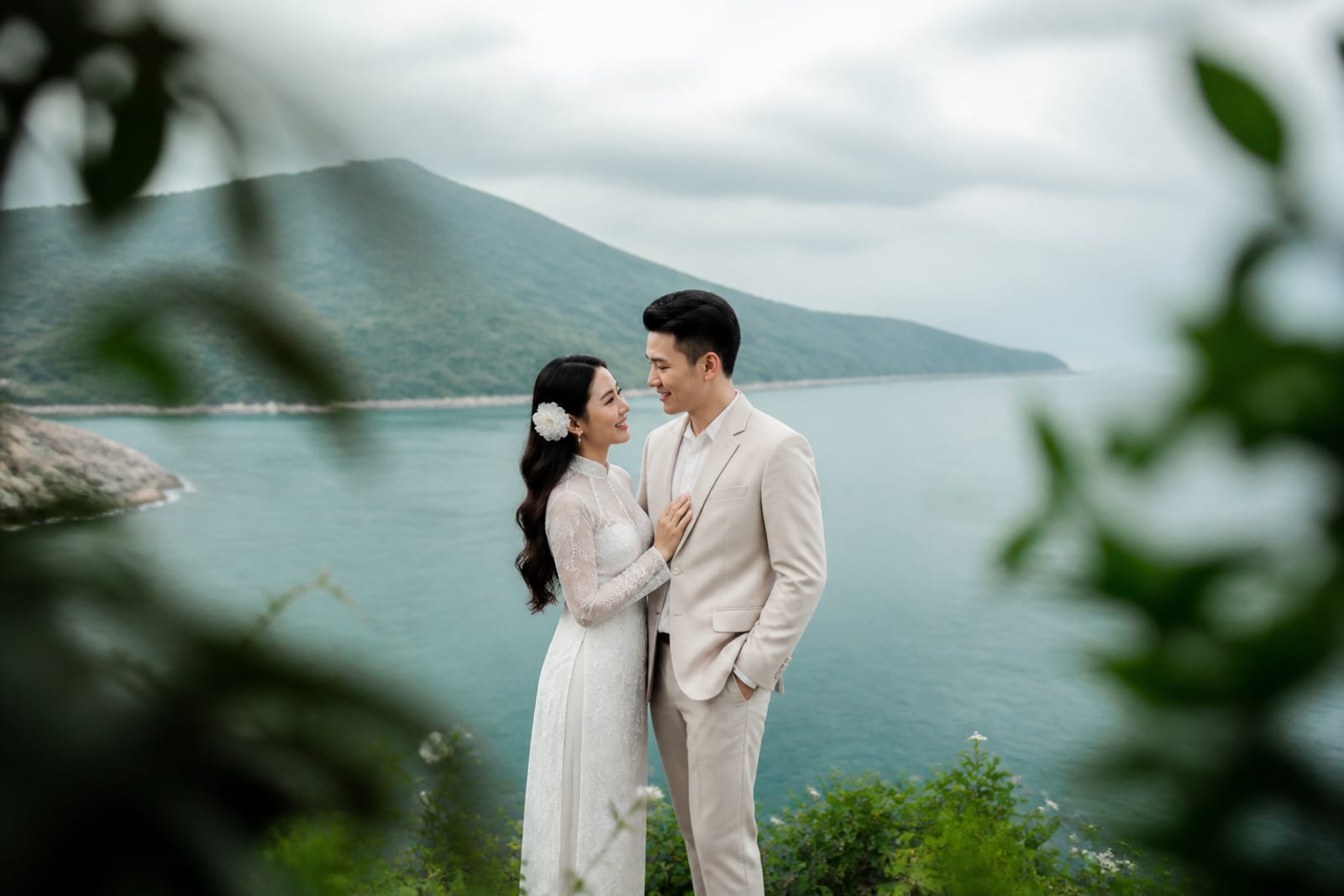
FAQ
Do I need a formal permit to photograph a proposal at Linh Ung Pagoda?
Entry itself is free, but the pagoda office may require advance notice for professional photography. Call ahead or ask on arrival. Confirm tripod and commercial-shoot rules with staff; policies vary by season and current temple activity.
What's the best time of year for a Son Tra proposal shoot?
Feb–Aug offers the clearest skies, warmest light and lowest rain risk. May–Aug is hot but predictable. Avoid Sep–Dec (rainy season, typhoon risk, grey light). If your date is fixed, plan for dawn to minimize crowds and beat afternoon weather deterioration.
Can I do a Son Tra shoot if I'm afraid of heights (cable car)?
The cable car is enclosed and safe, but if heights distress you, ask your photographer if an alternative arrival (hiking a back trail) or a lower zone (base shrines, water features) suits your comfort and creative vision.
How long does a typical Son Tra proposal shoot take?
2–3 hours is standard: travel to site, cable-car ride, outfit settling, 60–90 minutes of shooting across zones, and descent. Some couples extend to 4 hours if a makeup refresh or second outfit is planned.
Should I tell my partner about the proposal shoot, or keep it a surprise?
If your partner doesn't know you're proposing, don't mention the photographer. If they know the proposal is coming, tell them the shoot time and location so they can prepare emotionally and outfit-wise. Coordination avoids awkward surprises (fatigue, wrong shoes, stress).
What if the cable car is closed on my proposal day?
Confirm closure reasons with staff (weather, maintenance). Discuss a backup with your photographer: a different shrine, a coastal beach sunrise (My Khe or a quieter cove), or a Hanoi/Saigon shoot instead. Have a rescheduling clause in your booking contract.
FAQ
Do I need a formal permit to photograph a proposal at Linh Ung Pagoda?
Entry itself is free, but the pagoda office may require advance notice for professional photography. Call ahead or ask on arrival. Confirm tripod and commercial-shoot rules with staff; policies vary by season and current temple activity.
What's the best time of year for a Son Tra proposal shoot?
Feb–Aug offers the clearest skies, warmest light and lowest rain risk. May–Aug is hot but predictable. Avoid Sep–Dec (rainy season, typhoon risk, grey light). If your date is fixed, plan for dawn to minimize crowds and beat afternoon weather deterioration.
Can I do a Son Tra shoot if I'm afraid of heights (cable car)?
The cable car is enclosed and safe, but if heights distress you, ask your photographer if an alternative arrival (hiking a back trail) or a lower zone (base shrines, water features) suits your comfort and creative vision.
How long does a typical Son Tra proposal shoot take?
2–3 hours is standard: travel to site, cable-car ride, outfit settling, 60–90 minutes of shooting across zones, and descent. Some couples extend to 4 hours if a makeup refresh or second outfit is planned.
Should I tell my partner about the proposal shoot, or keep it a surprise?
If your partner doesn't know you're proposing, don't mention the photographer. If they know the proposal is coming, tell them the shoot time and location so they can prepare emotionally and outfit-wise. Coordination avoids awkward surprises (fatigue, wrong shoes, stress).
What if the cable car is closed on my proposal day?
Confirm closure reasons with staff (weather, maintenance). Discuss a backup with your photographer: a different shrine, a coastal beach sunrise (My Khe or a quieter cove), or a Hanoi/Saigon shoot instead. Have a rescheduling clause in your booking contract.
Ao dai, makeup, hair and a local photographer in Hanoi or Saigon — one WhatsApp message.