/proposal-and-anniversary
Proposal Ideas in Ha Giang: Hidden Photographer Guide
A proposal in Ha Giang works best on a multi-day trip: the roads are long, light shifts quickly at altitude, and you need a photographer who can stay hidden until the moment breaks. Choose October–November (cool, clear light, golden rice) or early December before cold settles in; avoid May–September (heat, afternoon storms, landslides risk). Scout your location one day before—light patterns change with the valley, and the best vantage points for the photographer are often not where you stand. Hire a local guide who knows the terrain and can position a photographer safely out of frame. Cáo Studio does not shoot in Ha Giang, but we coordinate pre-wedding shoots in Hanoi where couples plan proposals; ask us on WhatsApp for referrals to vetted Ha Giang photographers.
A proposal in Ha Giang hinges on three variables: the landscape's mood, the light's arrival time, and how discreetly the photographer vanishes into it. The remoteness that makes Ha Giang romantic also means no backup plan, no quick exit, no second take. Below is how real proposals here unfold—and what to verify before you book.
Why does Ha Giang light change so fast?
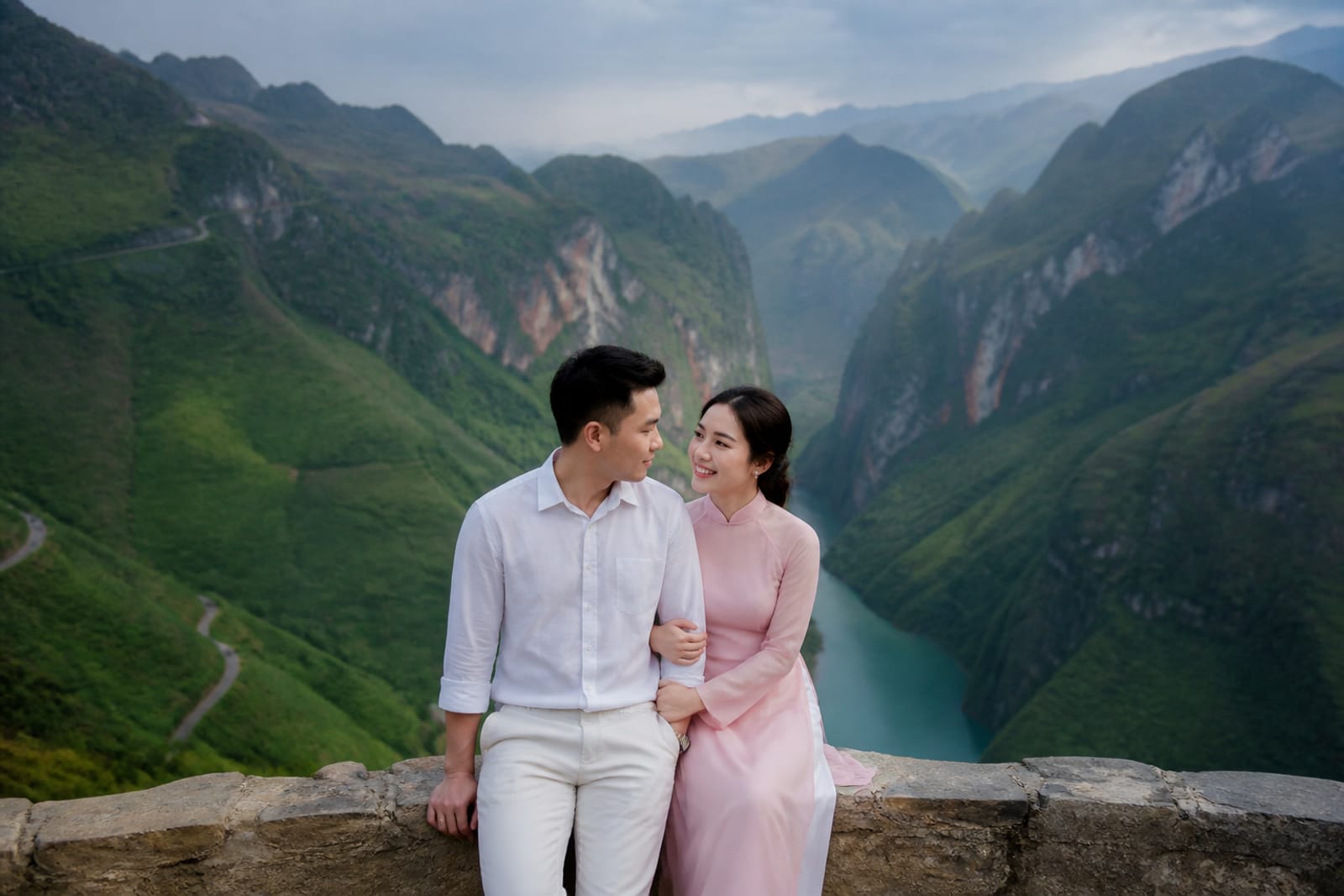
The Dong Van Plateau sits at elevation; clouds roll in from the valleys. Early morning (6:00–8:00 am) delivers side light across the rice terraces—gold or peach depending on season. By 10:00 am, the light flattens and haze rises. Late afternoon (4:00–5:30 pm) gives soft directional light again, but the window closes fast as the sun dips behind the ridges. Mid-day (11:00 am–3:00 pm) is harsh and unforgiving; it requires a shaded spot or you risk blown highlights and deep shadows under eyes. Plan your proposal for early morning or late afternoon, and arrive 30 minutes early so the photographer can scout sightlines and position themselves uphill or behind you, out of the frame until the moment matters.
What season gives you the clearest light and best terrain?
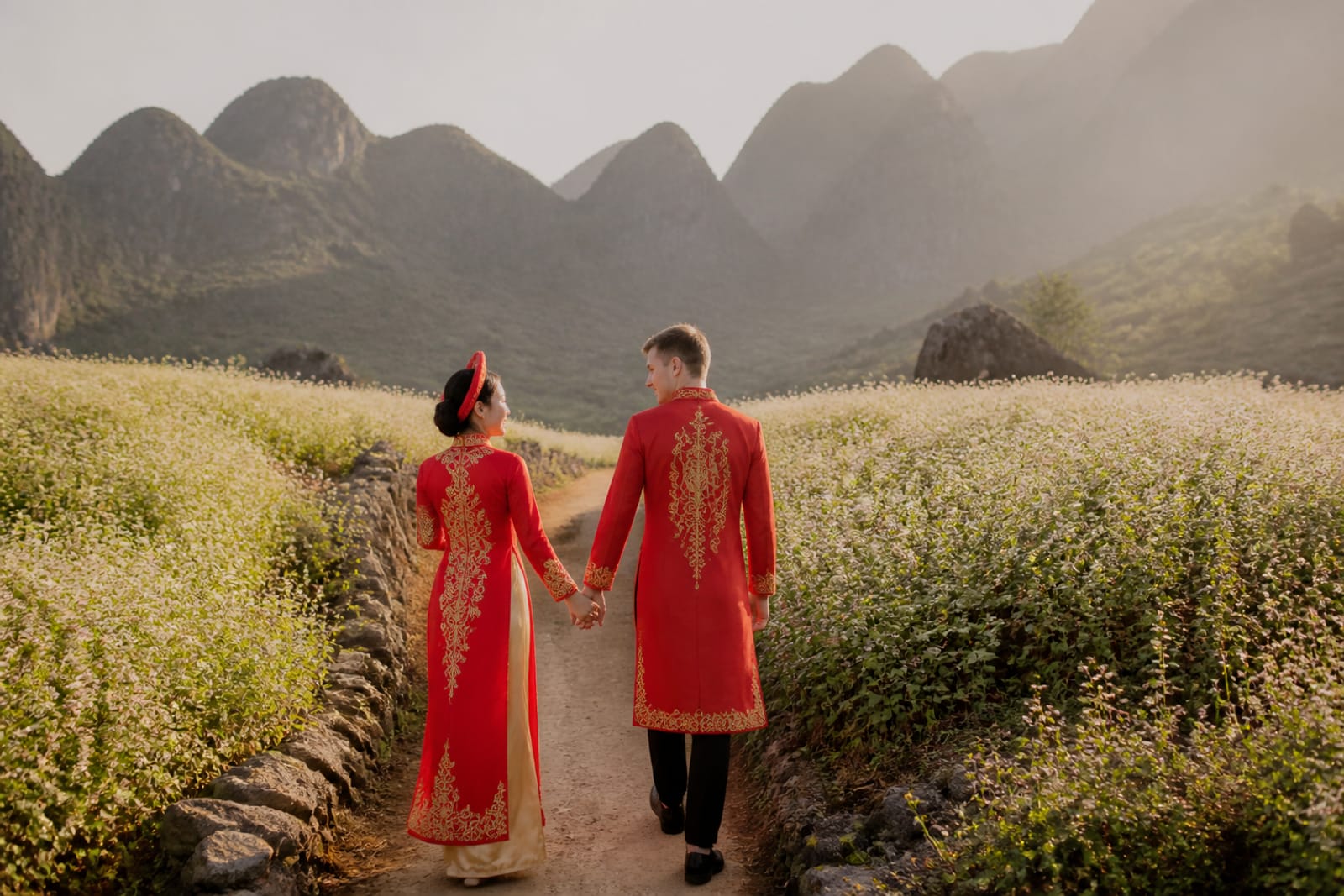
October through November: cool air, minimal rain, golden rice in the terraces below Tay Phuong valley, and the buckwheat flowers (late October–early November) framing the slopes in white and pink. Visibility stretches 10–15 km on clear mornings. December–early January remains dry and clear, but temperatures drop to 10–15°C at night; you'll need layers under an ao dai or formal wear. May–September brings afternoon thunderstorms (often 3:00–5:00 pm), landslide risk on narrow roads, and haze that kills contrast in photos. Tet (late January–mid-February) closes guest houses and restaurants for several days; avoid it. February onwards warms up but stays grey and drizzly until April.
How do you position a photographer to stay hidden?
The classic frame: you stand on a ridge or terrace facing a valley view. The photographer posts themselves upslope, 20–30 meters away and slightly behind you, using a longer lens (70–200 mm). They shoot wide first (your figure against the landscape), then closer details (your hands, faces, the ring). The guide walks with the photographer and helps them navigate the terrain safely—mountain paths are uneven, and a photographer carrying gear cannot look at both the ground and the viewfinder. If the landscape is the story, the photographer becomes part of the landscape, not the moment. Brief them: "Shoot while we walk, while we talk, but step back when they kneel." The hidden photographer approach works because it captures the moment naturally, not the performance of the moment.
What should you wear for a proposal in Ha Giang?
Option | Best for | Light/Season | Why it works ---|---|---|--- Ao dai (traditional Vietnamese formal dress) | Couples honoring heritage; cultural proposal | Oct–Nov (clear light, colors pop); Dec (cooler, dress structure holds) | Fabric catches side light beautifully; the silhouette reads clearly from a distance; honors the place you're proposing Western formal (dress, suit, blazer) | International couples; non-Vietnamese partners | All seasons except May–Sep (too hot, sweat visible) | Easier to move in mountain terrain; fewer layers needed; reads well in cool morning light Casual-formal hybrid (linen pants, silk blouse; no jacket) | Comfort-first couples; informal tone | Oct–Nov, Dec (cool enough to avoid wrinkles from sweat) | Moves freely on uneven ground; photographs naturally; blends with the landscape without looking overdressed Layers (thin sweater over dress/shirt) | Cold-season proposals (Dec–Feb) | Dec–Feb early mornings (5:00–8:00 am is coldest) | Keeps you comfortable so you're present, not shivering; layers photograph well in side light; you can remove the sweater for the moment itself
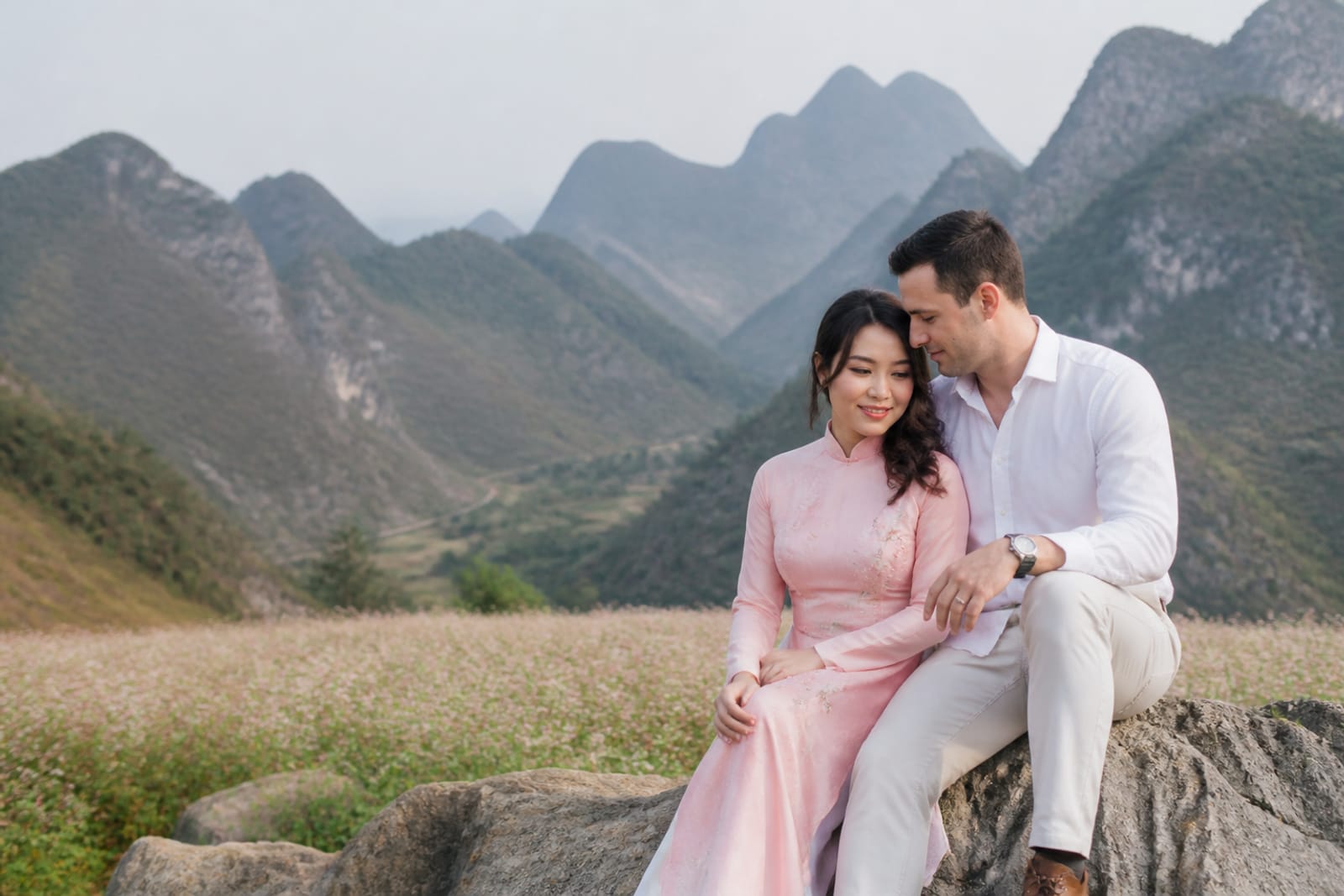
Ao dai is the strongest choice in Ha Giang because the fabric's drape and texture catch the directional morning light, and the tradition grounds the moment in place. If you choose ao dai, coordinate with a makeup artist who understands mountain light (less makeup reflects better in high-altitude sun). Non-Vietnamese partners sometimes wear matching formal dress or suits; this reads as intentional and respectful. Avoid busy patterns—plains and solids hold focus better from a distance.
📸 Book on WhatsApp — ao dai photoshoot
What logistics do you need to confirm with a local photographer?
Before you hire, ask directly:
- Insurance & terrain liability: Do they carry liability for mountain terrain? Do they know the specific trail you've chosen? Have they shot proposals in this valley before?
- Backup gear: If a lens or battery fails at altitude, what's the backup? (Repair shops are hours away.)
- Weather abort plan: If rain closes in, do you reshoot the next day, or is it a one-shot window? What's the refund or rescheduling policy?
- Travel time & fuel: How long is the drive from the town (Ha Giang city, Dong Van)? Does the cost include their transport, or do you cover fuel? Are they comfortable driving on the narrow roads, or will they need a local driver?
- Timing & location scouting: Will they visit your proposed location with you the day before to understand light angles, safe positioning and sightlines? Or do you send photos and they wing it?
- Delivery timeline: How many edited photos, and when? Will you get a digital gallery, prints, or a short film? (Editing in the mountains takes time; expect 1–2 weeks minimum.)
- The hidden-photographer style: Show them examples of the framing you want. Some photographers default to posed, frontal shots; others understand the "disappear and capture" approach. Confirm they're comfortable with both.
Cáo Studio coordinates pre-wedding shoots in Hanoi and can advise on proposal framing; for Ha Giang specifically, we work through local referrals. WhatsApp us your location and dates, and we'll connect you with a vetted photographer who knows the terrain and the light.
What can go wrong, and how do you avoid it?
Mistake: Booking the photographer remotely without scouting the location. Roads to remote proposal spots can change; a location that looked perfect in a summer photo might be muddy or inaccessible in October due to recent rain. Arrive 1–2 days early, walk the trail at the actual time of day you're proposing, and take photos of the light. Share them with your photographer so they know what they're working with. If the route is unsafe or light is worse than expected, change the plan rather than force a shoot.
Mistake: Choosing an unfamiliar outfit for the shoot. Wearing an ao dai for the first time in the mountains is risky; the fabric can tangle, the fit might shift as you move, and if you're uncomfortable, it reads in the photos. Try the outfit before the day, walk in it, sit in it, move in it. If you're hiring an ao dai, rent it 2–3 days early and practice.
Mistake: Timing the proposal for "golden hour" without accounting for cloud cover. Ha Giang's valleys trap clouds. "Golden hour" (6:00–7:30 am) might be completely overcast. Have a secondary time (late afternoon, 4:30–5:30 pm) as a backup, and brief the photographer on what to do if clouds steal the light—sometimes the softer, grey-light frame is actually more intimate than golden light.
Mistake: Not briefing the guide on the proposal plan. If the guide, photographer, and you are not aligned on the moment's timing, the photographer will miss it. 48 hours before, do a dry run: "At this point, I kneel. You step back. You shoot. This takes 2 minutes."
Checklist: Before you book a Ha Giang proposal photographer
- [ ] Confirm the photographer has shot proposals (or weddings) in this specific valley or district.
- [ ] Visit the location yourself 1–2 days before; photograph the light at your proposed time.
- [ ] Ask for backup plans: reschedule policy, weather abort, secondary location.
- [ ] Confirm outfit choice with the photographer; verify the terrain doesn't require special footwear.
- [ ] Check the photographer's insurance and whether they're comfortable on mountain terrain.
- [ ] Request a 30-minute pre-shoot scouting session the day before to position the hidden-camera setup.
- [ ] Agree on delivery: number of edited images, timeline, format (digital, prints, film).
- [ ] Provide the photographer with your phone number and your guide's; confirm they have offline maps (no signal in deep valleys).
- [ ] Schedule a 10-minute call 48 hours before the shoot to walkthrough timing, signals, and what "the moment" looks like.
---
If you're planning a proposal in Hanoi or would like to combine a Ha Giang trip with a couple photoshoot in the city before or after, Cáo Studio handles proposal and anniversary packages and can coordinate makeup and styling. Contact us on WhatsApp with your Ha Giang dates and we'll advise on timing and photographer referrals.
FAQ
Can Cáo Studio shoot my proposal in Ha Giang?
Cáo Studio does not operate in Ha Giang. We coordinate proposal shoots in Hanoi and pre-wedding sessions there. For Ha Giang, we provide referrals to vetted local photographers. Message us on WhatsApp and we'll connect you.
What's the best month for a Ha Giang proposal photo?
October–November: cool, clear light, golden rice terraces, minimal rain, and visibility up to 15 km. December is also dry and clear, but colder (10–15°C at night). Avoid May–September (heat, afternoon storms, landslides).
How much in advance should I book a Ha Giang photographer?
Book 4–6 weeks ahead if possible. Local photographers fill up in peak season (Oct–Nov). Confirm weather windows and scouting date at least 2 weeks before.
Do I need an ao dai, or can I wear a dress or suit?
Ao dai photographs beautifully in mountain light and honors the location's culture—it's the strongest choice. Western formal (dress, suit) works if you're comfortable; avoid busy patterns. Wear something you've moved in before, not something new on the day.
What happens if it rains on my proposal day?
Confirm the photographer's reschedule or refund policy before booking. Most professionals offer one reschedule within 1–2 weeks. Light rain can create moody, intimate frames; heavy rain that closes roads is the only true no-go.
How long does a proposal photoshoot take in Ha Giang?
Usually 2–3 hours from the moment you arrive at the location. This includes the photographer scouting (30 min), the proposal and capture (15–30 min), and additional frames walking, talking, and celebrating (60–90 min). Longer if the terrain requires careful movement.
FAQ
Can Cáo Studio shoot my proposal in Ha Giang?
Cáo Studio does not operate in Ha Giang. We coordinate [proposal shoots in Hanoi](/proposal-and-anniversary) and [pre-wedding sessions](/pre-wedding-photoshoot) there. For Ha Giang, we provide referrals to vetted local photographers. Message us on WhatsApp and we'll connect you.
What's the best month for a Ha Giang proposal photo?
October–November: cool, clear light, golden rice terraces, minimal rain, and visibility up to 15 km. December is also dry and clear, but colder (10–15°C at night). Avoid May–September (heat, afternoon storms, landslides).
How much in advance should I book a Ha Giang photographer?
Book 4–6 weeks ahead if possible. Local photographers fill up in peak season (Oct–Nov). Confirm weather windows and scouting date at least 2 weeks before.
Do I need an ao dai, or can I wear a dress or suit?
Ao dai photographs beautifully in mountain light and honors the location's culture—it's the strongest choice. Western formal (dress, suit) works if you're comfortable; avoid busy patterns. Wear something you've moved in before, not something new on the day.
What happens if it rains on my proposal day?
Confirm the photographer's reschedule or refund policy before booking. Most professionals offer one reschedule within 1–2 weeks. Light rain can create moody, intimate frames; heavy rain that closes roads is the only true no-go.
How long does a proposal photoshoot take in Ha Giang?
Usually 2–3 hours from the moment you arrive at the location. This includes the photographer scouting (30 min), the proposal and capture (15–30 min), and additional frames walking, talking, and celebrating (60–90 min). Longer if the terrain requires careful movement.
Ao dai, makeup, hair and a local photographer in Hanoi or Saigon — one WhatsApp message.