/proposal-and-anniversary
Proposal ideas in Mekong Delta with a hidden photographer
A hidden-photographer proposal in the Mekong Delta means a videographer or photographer stays in the background—on a boat, path, or hired position—while you propose to a real landscape: dawn at a floating market, a narrow canal at golden hour, or a quiet village dock. The Mekong is outside Cáo Studio's core service area (we shoot Hanoi, Ho Chi Minh City, and Hoi An), so you'll need to hire a local photographer and plan light, location, and timing yourself. Best seasons: December to April (cool, dry, clearer water reflections, no afternoon flooding). Worst: September to November (typhoons, rain, choppy water, murky channels). A session typically runs 2–4 hours (proposal moment, celebration shots, detail frames of you two on the boat). Key challenge: water glare and moving vessels require a photographer who knows the delta's light and current patterns—ask candidates for portfolio work shot on Mekong boats at dawn. Plan at least 4 weeks ahead so the photographer can scout your chosen spot and arrange boat or guide access.
Why the Mekong Delta is harder than a temple proposal
A temple or street corner in Ho Chi Minh City or Hanoi is a one-take, fixed-light scenario. The Mekong adds three variables: moving water (reflections shift with ripples and boat wake), floating markets that change from 5am to 7am, and narrow channels where a photographer's position directly affects whether they capture your face or the sky. If you propose on a boat and the boatman moves, the light changes. If you hide the camera in the cabin, the moment happens outside the frame. The upside: no crowds, no stiff backdrops, authentic movement. The downside: timing and positioning matter intensely. This is why hiring a photographer who has shot proposals or weddings on Mekong boats is non-negotiable—not a generalist who shoots family portraits on land.
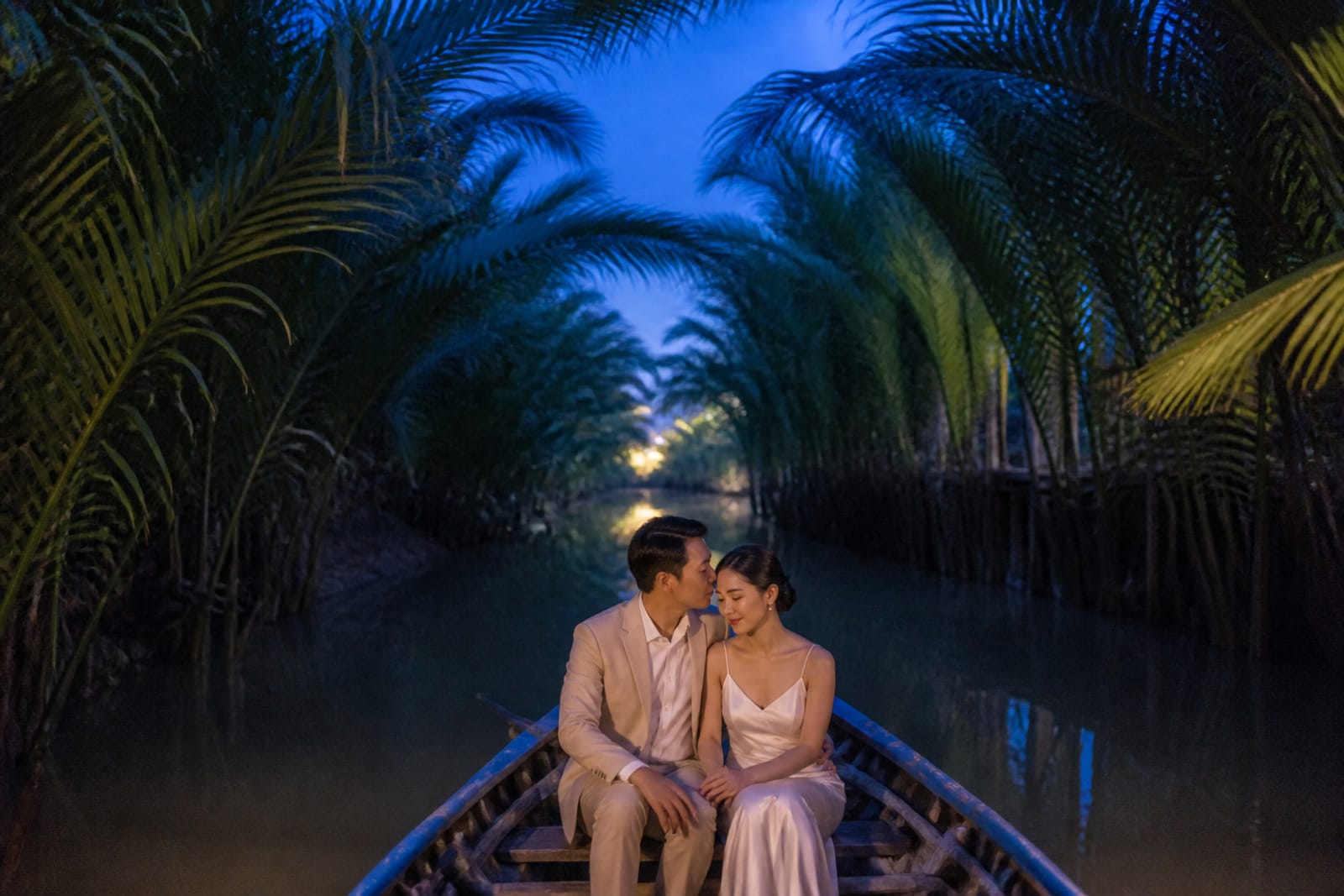
Which Mekong locations work best for a hidden-camera moment?
Can Tho floating market at 5:15 AM — arrival is before 50% of vendors arrive, so water reflections are mirror-clean and light is soft. Boatmen know the currents; photographer can position themselves on a parallel boat or dock without being obvious. Best for early risers; energy is quiet, intimate, not showtime. Tra On village channels — narrow waterways south of Can Tho, almost no tourist boats at dawn, wooden houses reflected in still water. Photographer can be on the same boat, framed as a "guide" or "videographer for content." Light holds longer (trees shade the water, diffusing harsh sun). Cai Be floating market — wider, busier, closer to Ho Chi Minh City, so more boatmen are available. Requires earlier scout to find the pocket of clear light without the crowds. Proposal moment is best at 6:00–6:30 AM. Vinh Long, Tien River — less-trafficked option; calm water, fruit orchards on banks, fewer vendors. Photographer can move freely without standing out.
| Location | Best for | Ideal light window | Photographer position | Why it works |
|---|---|---|---|---|
| Can Tho floating market | Authentic, quiet moment | 5:15–6:30 AM | Parallel boat, 50m away | Water mirrors light; vendors not yet crowded |
| Tra On channels | Intimate, no crowds | 6:00–7:00 AM | Same boat (framed as guide) | Narrow, reflected light; local boatmen discreet |
| Cai Be market | Accessible, close to HCMC | 5:45–6:15 AM | Moored boat or vendor stall | Familiar routes; more photographer options nearby |
| Vinh Long, Tien River | Peaceful, slow water | 6:30–8:00 AM | Same boat or tree-line shore | Calm reflections; fruit orchards add depth |
How to choose between a boat, a guide, or a stationary shore position
Boat-based (photographer on a second vessel or your boat, hidden in cabin/stern): Best if you want movement and reflections. Risk: wake from your boat rocks the photographer's frame; requires two boatmen who coordinate. Cost factor: double boat hire. Works for: couples who propose while walking toward each other on a wooden platform, or sitting in the prow watching sunrise. Guide-based (photographer poses as a local guide, walks ahead or behind you): Common in backpacker-heavy areas; photographer carries a small camera or phone. Risk: feels staged if the "guide" stops and points. Works for: narrow canal walks, village paths, proposal at a specific temple or house. Cost factor: one boat, one guide (photographer must speak basic Vietnamese to pass as local). Shore-based (photographer waits at a pre-scouted dock, village house, or tree line): Photographer frames you approaching or standing together. Risk: you walk toward the camera, so the "hidden" part is obvious in the finished film. Works for: a quiet wooden dock at dawn, you and your partner arriving by boat, he/she doesn't see the camera until playback. Cost factor: lowest (one photographer, no second boat). Best for: shy couples who don't want any visible crew.
Season and light: why December to April beats May to November
The Mekong's south-west monsoon (May–November) brings afternoon storms that shut down floating markets by 8:00 AM and flood the channels, turning water murky and darkening the sky. October–November is worst (typhoons risk, water choppy, visibility poor). December–April is the dry, cool season: water is clearer, morning mist lifts by 6:30 AM, and the light is golden without harsh shadows. If you're set on a May–September proposal, expect to shoot earlier (4:30 AM start), accept greyer light, and have a backup location (covered market, village house interior). Timing matters as much as season: golden hour on the Mekong is 6:00–7:30 AM (summer) and 6:30–7:45 AM (winter), before heat haze kicks in. Afternoon light (after 3:00 PM) is too harsh on water reflections. Early morning also means fewer boats and vendors, so the photographer can move without crowd cover.
What to check before you book a local Mekong photographer
Portfolio on Mekong boats specifically: Ask for 3–5 examples of proposals, weddings, or couple shoots shot on the delta—at dawn, on water, with moving subjects. Phone photos count if the light and timing are solid. Boatman network: Does the photographer have boatmen they already work with? First-time collaborations lead to miscommunication about positioning and wake. Scouting availability: Will they visit your chosen location (time of day, season) at least once before the shoot? A photographer who hasn't seen Can Tho market at 5:15 AM in January cannot predict light. Equipment for water: Do they use water-resistant camera gear, lens hoods (reflections glint off water), and a fast shutter (1/1000s minimum to freeze boat motion)? Backup plan: If the boat is late, mist doesn't lift, or water is choppy, what's their rescheduled date or alternative location? Language: Can they communicate with boatmen and village locals, or do you need to hire a translator as well? Edited timeline: How fast do they deliver raw frames and edited proposal video? Overnight or a week?
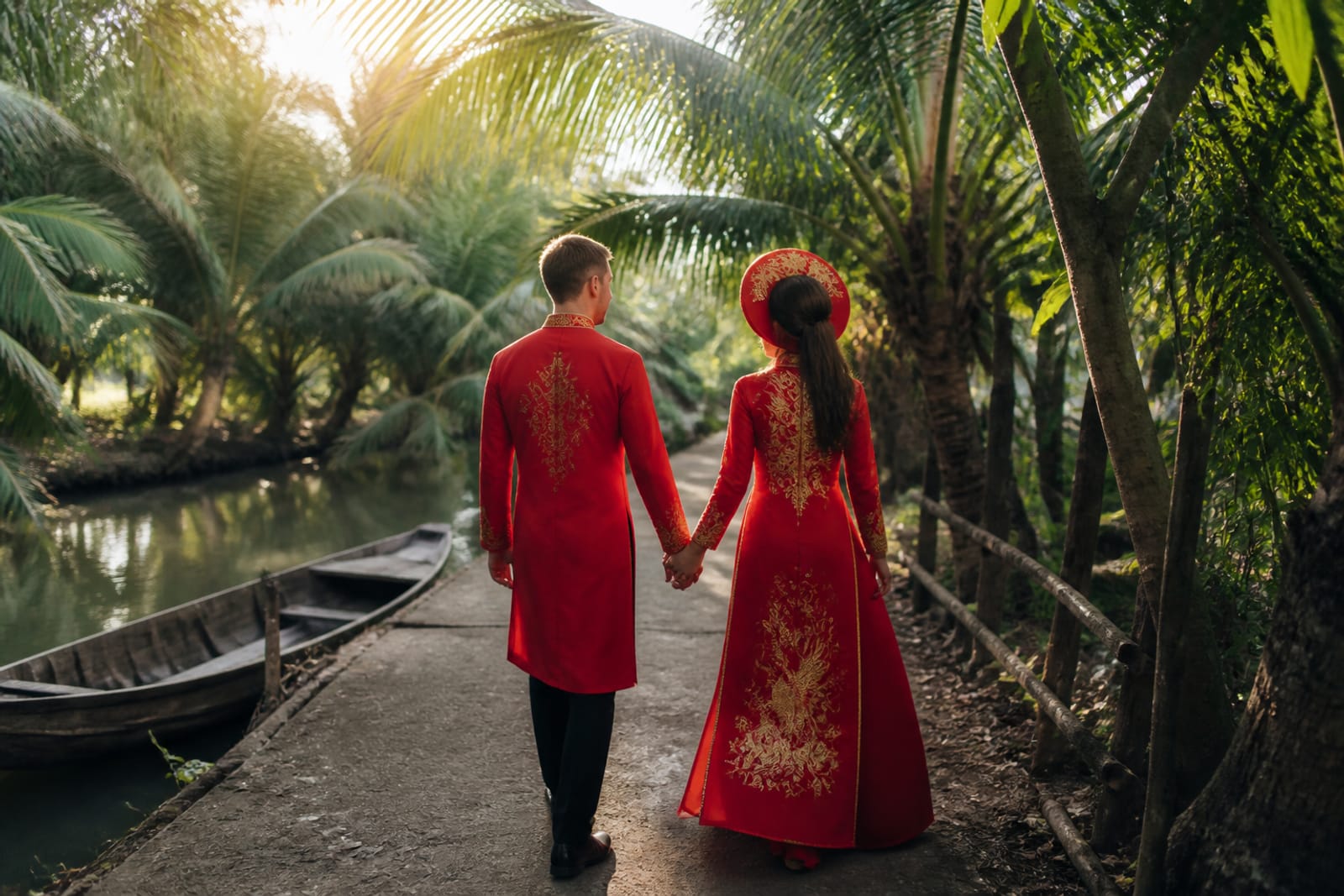
Why Cáo Studio doesn't shoot the Mekong (and what that means for you)
Cáo Studio operates in Hanoi, Ho Chi Minh City, and Hoi An—urban and coastal sites where our team controls light, outfits, hair and makeup in a single session. The Mekong Delta's boat logistics, boatman coordination, and early-dawn light require a photographer embedded in local networks we don't maintain. We could hire a subcontractor, but that violates our core belief: one team, one message. If you're proposing in Ho Chi Minh City and want the hidden-camera approach on the Saigon River or a nearby canal before a temple shoot in the city, Cáo Studio Saigon can build a proposal and anniversary package that pairs the river moment with formal studio or ao dai work. But for a full Mekong Delta proposal, hire a local photographer and use the guides below to brief them.
📸 Book on WhatsApp — proposal & anniversary package
How to brief a local photographer on the hidden-camera moment you want
Write a one-page brief with: Location and timing (e.g., "Can Tho floating market, 5:30 AM, January 15"); the moment (e.g., "I'll stand at the bow, she approaches from the cabin, I turn and propose"); light direction (e.g., "sunrise from the east, we want side light on her face, not backlit"); outfit (e.g., "casual dress, no formal wear, she's in a blue ao dai"); photographer position (e.g., "25 meters away, parallel boat, should she see the camera?"); props (e.g., "ring, flowers, no other); backup (e.g., "if mist doesn't lift by 6:15, move to Tra On village dock"). Share your lookbook or inspiration photos so they know the tone (cinematic, not posed; real movement, not stiff smiles). Ask for a signed agreement on delivery format (4K video, a minimum number of stills, edited timings, music sync if applicable) and payment terms (typically 50% deposit, 50% on delivery).
What to bring and what to wear on a Mekong proposal shoot
Outfit: Wear something you can move in (no heavy beading or long train that catches on boat railings). A lightweight ao dai or casual dress is ideal; change into formal wear for celebration shots onshore if you're doing a second location. Undergarments: If wearing an ao dai, wear neutral slip shorts (the fabric is lightweight and will cling in humidity). Shoes: Water sandals for the boat; formal shoes onshore. Accessories: A ring box that won't rust (wood or velvet-lined leather, not loose metal). Flowers in a waterproof wrap (mist and water splash are guaranteed). Backup outfit: If the shoot runs long, bring a change of shirt or scarf so you don't look wrinkled in celebration frames. Sunscreen and hat: Mekong reflections intensify UV exposure; apply before the shoot, not after (it shows on skin). Hydration: Small water bottle for the boat (photographer should have one too). Phone: On silent; the photographer may need to call boatmen.
The golden rule: if you can't sit on a wet wooden bench in it, don't wear it.
Comparing a hidden-camera proposal to a visible-crew approach
A visible-crew proposal (photographer openly posed on the boat, you aware they're filming) gives you more control—you can direct the moment, request retakes, and build rapport with the crew. A hidden-camera proposal feels more authentic in the moment but is harder to coordinate and leaves no safety net if the photographer misses the shot. Consider a hybrid: photographer is "visible but discreet"—you know they're there, but they stay far enough away that you forget they're filming. This requires a photographer skilled in observational work, not posed direction.
📸 Book on WhatsApp — couple photoshoot
Before you book: the Mekong proposal checklist
- [ ] Season and date: December–April? If not, accept greyer light and earlier start times (4:30 AM).
- [ ] Photographer portfolio: 3+ Mekong boat shoots at dawn, not studio or street work.
- [ ] Location scouted: Have they visited your spot at your intended time of day and season?
- [ ] Boatman confirmed: Is the photographer's boatman available and do they have a backup?
- [ ] Backup location: What happens if mist doesn't lift, water is choppy, or the boat is delayed?
- [ ] Equipment for water: Water-resistant gear, fast shutter (1/1000s+), lens hood?
- [ ] Edited timeline: How fast from shoot to delivered stills and video?
- [ ] Second location: Will you do outfit change, formal photos, or a temple shot after the proposal?
- [ ] Budget factors: Two boats, early start, boatman fees, photographer day rate—discuss these openly.
- [ ] Contract: Signed agreement on deliverables, payment terms, cancellation policy (weather-related rescheduling).
If you're planning a proposal in Ho Chi Minh City or a post-proposal ao dai session to celebrate, reach out on WhatsApp—Cáo Studio can handle the formal frames, makeup and hair, and edited album after your Mekong moment.
FAQ
Can Cáo Studio shoot a Mekong Delta proposal?
No. Cáo Studio operates in Hanoi, Ho Chi Minh City, and Hoi An. The Mekong Delta requires boatmen and local networks we don't maintain. We recommend hiring a local photographer and using this guide to brief them. If you're proposing in Ho Chi Minh City, we can do a river or temple shoot after your Mekong moment.
What time of day is best for a Mekong proposal?
5:30–7:30 AM. Water is calm, light is golden, and floating markets are quieter. Avoid midday (harsh shadows, glare) and afternoon (storms in May–November, heat haze).
Why is December–April the best season?
Dry, cool weather; clear water reflections; no typhoons or afternoon flooding. May–November brings rain, choppy water, and murky channels. October–November is worst.
Do I need a second boat for a hidden-camera proposal?
Not always. A photographer can stay on your boat (framed as a guide), wait on the shore, or use a moored vessel. Two boats give the most flexibility but cost more. Discuss your preferred setup with your photographer.
What should I wear on a Mekong proposal shoot?
Lightweight, moveable clothing—an ao dai, casual dress, or shirt and trousers. Avoid beading, long trains, and formal shoes (use water sandals on the boat). Bring a backup outfit and sunscreen.
How do I vet a local Mekong photographer?
Ask for 3–5 portfolio examples shot on Mekong boats at dawn. Check their boatman connections, scouting availability, water-resistant gear, and delivery timeline. Get a signed agreement on location, timing, backup plan, and edited deliverables.
FAQ
Can Cáo Studio shoot a Mekong Delta proposal?
No. Cáo Studio operates in Hanoi, Ho Chi Minh City, and Hoi An. The Mekong Delta requires boatmen and local networks we don't maintain. We recommend hiring a local photographer and using this guide to brief them. If you're proposing in Ho Chi Minh City, we can do a river or temple shoot after your Mekong moment.
What time of day is best for a Mekong proposal?
5:30–7:30 AM. Water is calm, light is golden, and floating markets are quieter. Avoid midday (harsh shadows, glare) and afternoon (storms in May–November, heat haze).
Why is December–April the best season?
Dry, cool weather; clear water reflections; no typhoons or afternoon flooding. May–November brings rain, choppy water, and murky channels. October–November is worst.
Do I need a second boat for a hidden-camera proposal?
Not always. A photographer can stay on your boat (framed as a guide), wait on the shore, or use a moored vessel. Two boats give the most flexibility but cost more. Discuss your preferred setup with your photographer.
What should I wear on a Mekong proposal shoot?
Lightweight, moveable clothing—an ao dai, casual dress, or shirt and trousers. Avoid beading, long trains, and formal shoes (use water sandals on the boat). Bring a backup outfit and sunscreen.
How do I vet a local Mekong photographer?
Ask for 3–5 portfolio examples shot on Mekong boats at dawn. Check their boatman connections, scouting availability, water-resistant gear, and delivery timeline. Get a signed agreement on location, timing, backup plan, and edited deliverables.
Ao dai, makeup, hair and a local photographer in Hanoi or Saigon — one WhatsApp message.