/pre-wedding-photoshoot
Pu Luong rice terraces wedding photos: best light and timing
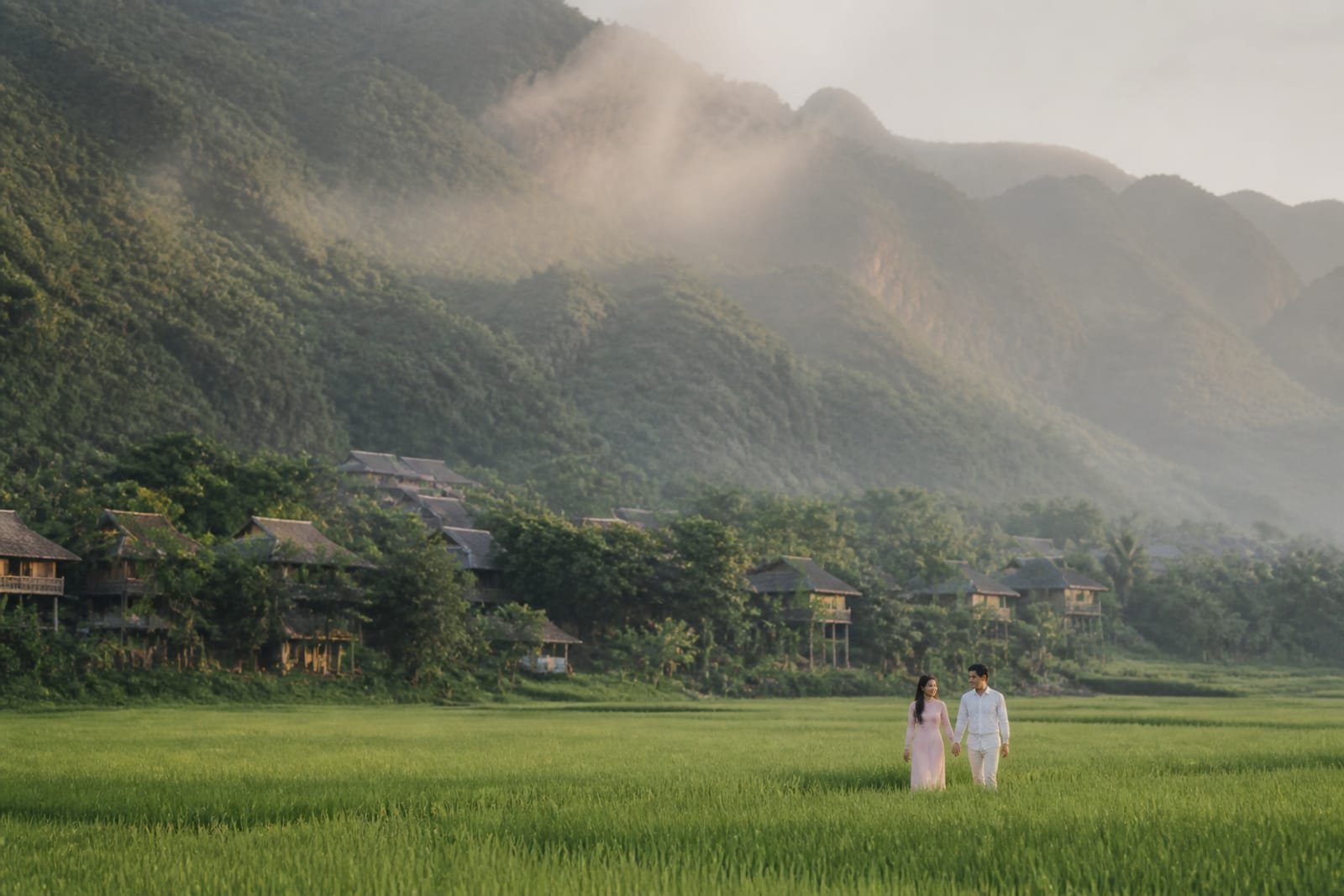
Pu Luong rice terraces photograph best in golden light two hours after sunrise (roughly 7–9 am) and two hours before sunset (roughly 4–6 pm), when side light sculpts the water and paddies. The drier season—late May through June, and September through October—shows golden rice and clear skies; December through February brings cool mist but grey light. A small, fast team (photographer, stylist, makeup artist as one unit) avoids crowds that gather after 10 am and handles outfit, hair and light changes on location in a single morning or afternoon session. Cáo Studio shoots pre-wedding in Pu Luong by arrangement from our Hanoi base; most couples book one session combining wide landscape frames, close couple portraits, and detail shots of rings or fabric. Avoid midday (10 am–3 pm) when overhead sun flattens texture; avoid the rainy season (August, November) when clouds persist and rice isn't ripe.
Why is Pu Luong harder to shoot than central Vietnam beaches?
Pu Luong sits in Vietnam's northern hill country (Thanh Hoa province), a four-hour drive from Hanoi through switchback roads. Unlike Ho Chi Minh City or Hoi An, there's no permanent studio base, no walk-in makeup service, and no backup weather. Morning light arrives cool and still, but grey clouds roll in by 10 am most days outside the dry season. A team that travels together—photographer, hair, makeup, outfit in one van—adapts fast: if the 7 am light is overcast, you move to a shadowed water reflection; if a dress seam pulls, the stylist fixes it in ten minutes without tracking down another vendor. A fragmented crew (separate photographer, separate makeup artist, separate stylist hired locally) loses two hours coordinating arrival times and arguing about light direction. Choose a pre-wedding package that includes makeup, hair and styling as one booking, not three separate vendors.
📸 Book on WhatsApp — pre-wedding photoshoot
When does the rice turn gold, and what does that mean for light?
Rice reaches peak color in late May through June (spring planting) and again in late September through mid-October (autumn harvest). At these times, paddies shift from deep green to amber-gold under morning and afternoon sun. Golden rice also holds light longer—a 6 pm shot still catches warm reflection off the water, whereas green paddies absorb it. However, golden season also draws more tourists (buses arrive 9 am–noon), so a 7 am start—before crowds, before overhead light—is non-negotiable. December through February brings cool, misty mornings that suit moody couple portraits, but the light reads grey-blue rather than warm, and rice is stubble or replanted green. If you want golden fields with soft light, book late May or late September; if you prefer mist and intimacy, book January or early February and accept that the color palette is cooler. The best compromise is October: gold rice, lower humidity, and still-reliable dry mornings.
Should you book Pu Luong as a same-day shoot from Hanoi, or stay overnight?
| Option | Best for | Start time | Why it works |
|---|---|---|---|
| Overnight stay in Pu Luong | Maximum light windows (one sunrise session, one sunset) | 6:30 am departure from hotel | Two sessions = two outfit changes, both with ideal light; no rush-hour traffic on return |
| Day trip from Hanoi (one morning or afternoon session) | Couples short on time; flexible light preference | 4:30 am pickup (4-hour drive) | One full session at golden hour; team rested; simpler logistics; back in Hanoi for dinner |
| Midday shoot (avoid) | None; only if weather forces you | 10 am–3 pm | Overhead sun flattens texture; terraces lose dimension; no warm rim light on water |
An overnight stay lets you shoot sunrise and sunset, but requires booking a local hotel and coordinating a second makeup touch-up. A day trip (departing Hanoi at 4:30 am for a 7 am start) gives you one strong session and avoids extra cost. Either way, book the team the day before so they arrive rested; a tired crew makes slow decisions when light is changing fast.
What outfit choices work best in Pu Luong, and how does terrain shape the shoot?
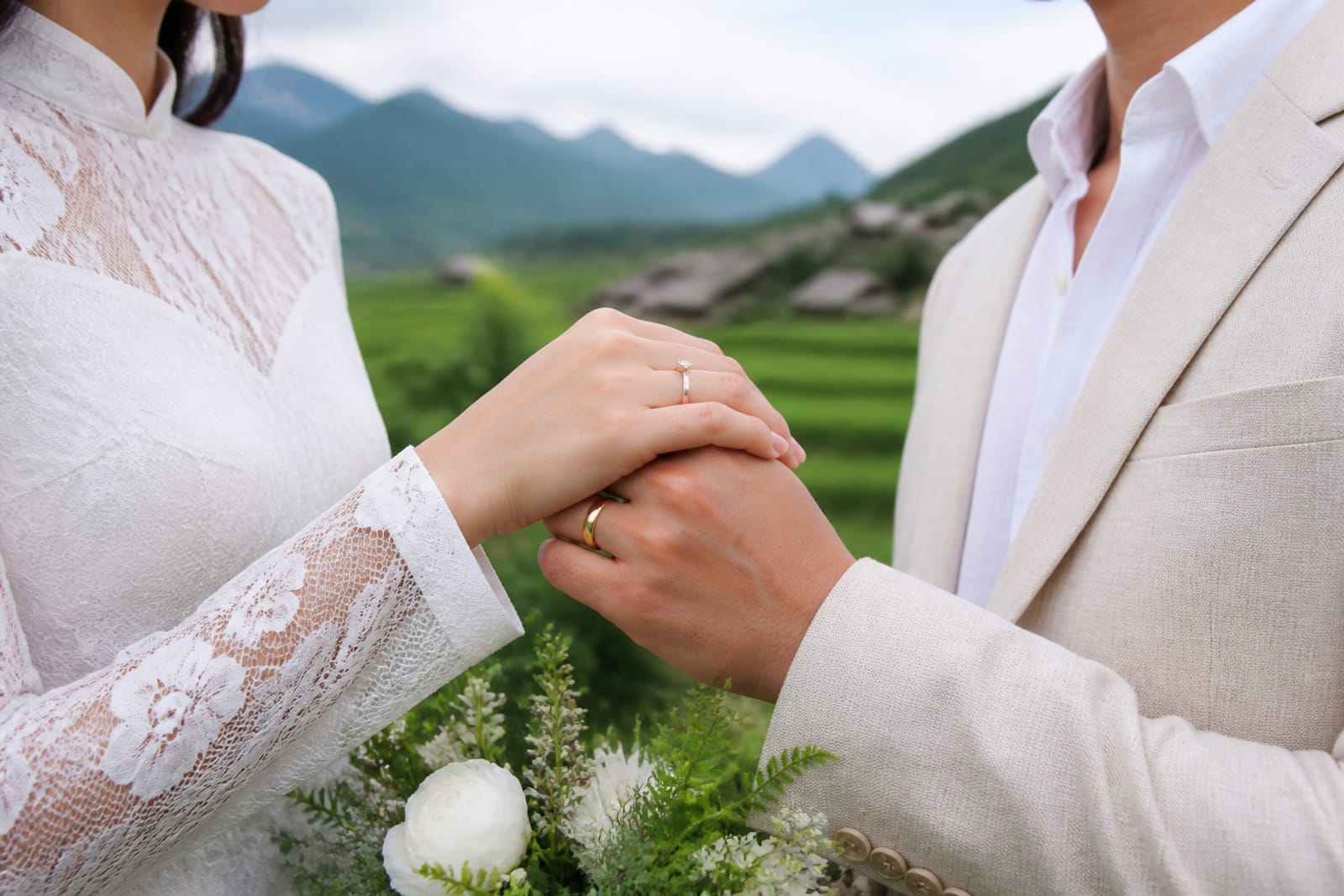
Terraced rice paddies have narrow dirt paths, standing water, and slippery edges after rain. A flowing ao dai works beautifully in wide landscape shots—the fabric catches air and light—but deep hems drag in mud. For a pre-wedding session, a shortened ao dai (knee-length) or a modern fitted version keeps your movement unrestricted while maintaining the cultural frame. Western wedding dress is possible but requires a dedicated dress handler (your stylist) to hold fabric while you step down embankments. Avoid metallic fabrics, heavy jewelry, and light shoes; bring a second pair in case the first gets wet. The best visual contrast is a dark groom outfit (charcoal suit, dark ao dai) against golden rice and water reflection. Walk the paths rather than standing still—couples in motion look grounded, not posed. A stylist on-site adjusts fabric every shot; without one, wrinkles and mud show in detail frames.
How does weather change your light and backup plan?
December–February: cool mornings, frequent grey clouds until 9 am, then clearing. Start early; if clouds persist, shoot moody couple portraits in soft, even light (flattering for faces, weak for landscape texture).
March–April: warming, occasional afternoon thunderstorms. Shoot morning, depart by 1 pm.
May–June: hot, clear mornings; afternoon clouds build by 1 pm. Sunrise session only (6:30–9 am) unless you stay overnight.
July–August: hot, humid, frequent rain. Avoid; light is unreliable and rice is partially harvested.
September–October: cool, dry, clear. Shoot anytime 7–9 am or 4–6 pm; best overall window.
November: start of rainy season; morning clouds possible. Book early dates (Nov 1–15) for better odds.
Always confirm the weather forecast 48 hours before travel; if rain is predicted, shift one day forward rather than shoot in grey, wet conditions. Cáo Studio carries backup lighting for dark conditions, but natural light is always the stronger choice in Pu Luong.
What do you check before booking a Pu Luong photoshoot team?
Ask your photographer or studio:
- Have they shot Pu Luong before, and do they have a portfolio from the same season you're booking? Pu Luong light and landscape change month to month; ask to see photos from late September if you're booking October.
- Is the makeup and hair artist traveling with the photographer, or hired separately? A separate artist means waiting on-site; a team-based artist means one booking, one arrival, no delays.
- What's the backup if light is poor (rain, grey sky) on shoot day? A studio should offer a reschedule option or a second session date, not a refund.
- How do they handle wardrobe (ao dai, dress, suit)? Do they bring it, or do you? Do they have a stylist on-site, or do you manage changes?
- How long is the full session, and are edits included? Confirm the exact timeline and the number of edited photos you receive (don't assume; ask on WhatsApp).
- What does post-processing include? Color grading, cropping, blemish removal? Ask to see a sample edit from their lookbook.
For Cáo Studio: we travel from Hanoi or Ho Chi Minh City for Pu Luong shoots; ask on WhatsApp for availability, dates, and how we structure the session. We bring styling, makeup and hair; no separate vendors.
---
What to check before you book
- Dates & season: Confirm golden rice season (late May–June, late September–October) or mist season (December–February) matches your vision. Ask the studio for portfolio photos from the exact month you're booking.
- Team structure: Ensure the photographer, makeup artist and stylist travel as one unit. A fragmented crew costs more and loses two hours to coordination on-site.
- Edited files & turnaround: Don't assume how many photos you get or how long edits take. Ask for specific numbers and deadlines in writing.
- Weather & reschedule policy: Confirm what happens if rain or grey light arrives on shoot day. A credible studio offers a free reschedule, not a cancellation fee.
- Outfit & styling included: Clarify whether the studio brings ao dai, suit, or dress, or whether you source it. Budget for alterations if needed.
- Transport & logistics: Ask whether the team drives from Hanoi (your earliest start is usually 7 am) or whether you meet them in Pu Luong. Calculate arrival time and rest the night before.
---
More from Cáo Studio
- Explore couple photoshoots across Vietnam for beach and urban sessions.
- Learn about ao dai rental and styling for cultural depth.
- See all pre-wedding & elopement packages.
- Check our Hanoi base for same-day makeup and hair bookings.
FAQ
How early do we need to start a Pu Luong shoot to catch good light?
6:30 am departure from Hanoi (4-hour drive) to arrive by 10:30 am start. If you stay in Pu Luong, wake at 6 am for a 6:45 am shoot. Golden light peaks 7–9 am and 4–6 pm. Midday (10 am–3 pm) is flat and harsh.
Is Pu Luong better in October or December for a wedding photoshoot?
October: golden rice, clear skies, warm light. December: cooler, misty, grey light but intimate mood. Choose October for landscape drama; December for close portraits in soft, even light.
Can we rent an ao dai in Pu Luong, or should we bring one from Hanoi?
Bring or rent from Hanoi before travel. Village shops sell simple versions, but pre-wedding quality requires a studio rental. Ask Cáo Studio about ao dai rental when you book.
Do we need a permit to shoot in the rice terraces?
No formal permit, but check locally with your hotel or guide. Some sections are private family land; others are village common. Stay on marked paths and respect locals.
What happens if it rains on shoot day—do we reschedule free, or lose the deposit?
Ask your studio upfront. Cáo Studio offers a free reschedule within 30 days if weather is poor. Confirm this policy before booking.
How many edited photos do we get from a Pu Luong session, and when?
Ask your studio directly—don't assume. Cáo Studio sends specifics on WhatsApp (number of edited files, delivery timeline). This varies by package.
FAQ
How early do we need to start a Pu Luong shoot to catch good light?
6:30 am departure from Hanoi (4-hour drive) to arrive by 10:30 am start. If you stay in Pu Luong, wake at 6 am for a 6:45 am shoot. Golden light peaks 7–9 am and 4–6 pm. Midday (10 am–3 pm) is flat and harsh.
Is Pu Luong better in October or December for a wedding photoshoot?
October: golden rice, clear skies, warm light. December: cooler, misty, grey light but intimate mood. Choose October for landscape drama; December for close portraits in soft, even light.
Can we rent an ao dai in Pu Luong, or should we bring one from Hanoi?
Bring or rent from Hanoi before travel. Village shops sell simple versions, but pre-wedding quality requires a studio rental. Ask Cáo Studio about [ao dai rental](/ao-dai-rental) when you book.
Do we need a permit to shoot in the rice terraces?
No formal permit, but check locally with your hotel or guide. Some sections are private family land; others are village common. Stay on marked paths and respect locals.
What happens if it rains on shoot day—do we reschedule free, or lose the deposit?
Ask your studio upfront. Cáo Studio offers a free reschedule within 30 days if weather is poor. Confirm this policy before booking.
How many edited photos do we get from a Pu Luong session, and when?
Ask your studio directly—don't assume. Cáo Studio sends specifics on WhatsApp (number of edited files, delivery timeline). This varies by package.
Ao dai, makeup, hair and a local photographer in Hanoi or Saigon — one WhatsApp message.