/pre-wedding-photoshoot
Rainy Day Backup Plan for Bat Trang Ceramic Photoshoot
Bat Trang ceramic village photoshoots in Hanoi are vulnerable to rain because potter studios are semi-open, clay dust settles on lenses, and village paths become slippery during heavy downpours. A rainy-day backup plan must happen before you book: choose between rescheduling to a dry-season window (Oct–Nov is optimal), pivoting to an indoor studio with painted ceramic backdrops, shooting at a covered kiln facility with natural side-light, or moving to Hanoi's ao dai photoshoot locations (Hoan Kiem Lake, French Quarter, temple courtyards) where rain creates moody urban atmosphere. Cáo Studio – Makeup & Photoshoot works with couples on backup dates at no extra fee if weather cancels your original session; confirm rescheduling policy on WhatsApp before booking. The key: book during the dry season if Bat Trang is non-negotiable, or accept that rain might shift your aesthetic from rustic pottery to intimate studio ceramic—both valid, different moods.
Bat Trang has been Hanoi's pottery heartland for centuries, and its working kilns, clay workshops and terracotta-stacked courtyards create an authentically artisanal backdrop that can't be faked in a studio. But its strengths—open-air workshops, natural light, outdoor clay sculptures—become liabilities in rain. Hanoi's rainy season (May–Sep) and the typhoon-vulnerable monsoon tail (Sep–Oct) drench the Red River area where Bat Trang sits. Potter studios, many without full roofs, collect water. Paths turn to mud. Kiln smoke mixes with humidity until lens fog defeats autofocus. A backup plan isn't pessimism; it's the difference between a cancelled shoot and a session you actually love.
Why Does Rain Hit Bat Trang Harder Than Central Hanoi?
Bat Trang sits on the Red River's flood plain, about 20 km southeast of Hanoi's Old Quarter. The village's pottery studios are built low and lean on natural light—high windows, open sides, metal roofing with gaps. They were designed for clay work, not weather protection. During Hanoi's rainy season (May–Sep) and the remnant monsoon surge (late Sep–early Oct), the water table rises and afternoon downpours often linger in the village for hours because drainage is poor in the clay-heavy soil. When you compare it to Hanoi's central lakes and French Quarter streets, which have curbed drainage and soak up rain faster, Bat Trang feels like it's under water. Studio makeup also suffers: humidity balloons, foundation separates, and your ao dai's silk hem absorbs clay-tinted puddle water. The conclusion: Bat Trang is best in the dry-season window (Oct–Nov, Dec–Feb) when light is soft and ground is firm.
Which Months Are Actually Safe for a Bat Trang Shoot?
Hanoi's autumn (Oct–Nov) is the gold standard for any outdoor session, including Bat Trang. Days are mild (around 20–25°C), humidity drops, and the weak sun gives flattering, shadowless light all morning. Paths are dry. Kilns' smoke rises clean. Autumn rainfall is rare, and if light drizzle does fall, it adds mood without destroying the shoot. December through February is cool (10–20°C) and often overcast—not bad, but grey skies yield flat, moody tones rather than rich terracotta warmth. Drizzle is common but gentle. March and April are mild but humidity creeps up and haze clouds mid-morning light. May through September is the gamble: afternoons routinely see heavy rain, puddles persist, and studio floors get slick. Late September through early October is worst—remnant monsoon swells can trigger flooding. If your wedding date is locked in a rainy season, don't force Bat Trang; pivot to a studio backup instead of gambling on a washout.
What Are Your Real Backup Options if Rain Strikes?
Three genuine alternatives exist for couples who want ceramic-village authenticity but face weather risk:
Reschedule to Oct–Nov (dry-season shift). If your wedding is in a rainy month but the photoshoot can move to autumn, this is cleanest. No pivot needed. Cáo Studio's rescheduling policy (confirm on WhatsApp) typically allows one free date change if weather cancels. You get the real Bat Trang in optimal light.
Indoor ceramic studio with backdrop walls. Hanoi has smaller pottery studios that rent space for shoots. They have painted kiln backdrops, stacked ceramic vessels, and clay dust on shelves—the vibe is authentic, but the floor is sealed concrete and light comes from controlled overhead fixtures or tall north-facing windows. Humidity stays moderate. Your makeup and ao dai stay intact. The trade: less organic texture, more styled. This works if you want the idea of Bat Trang without the mud.
Covered kiln facility or workshop canopy. Some larger Bat Trang workshops have roofed production areas where kilns run under shelter. Light enters from the sides, creating striped shadow-and-gold tones that clay photographs beautifully against. You're still in the village, still shooting real potters at work, but rain doesn't drench you. This is a middle path—book it by asking Cáo Studio to scout during your WhatsApp consultation.
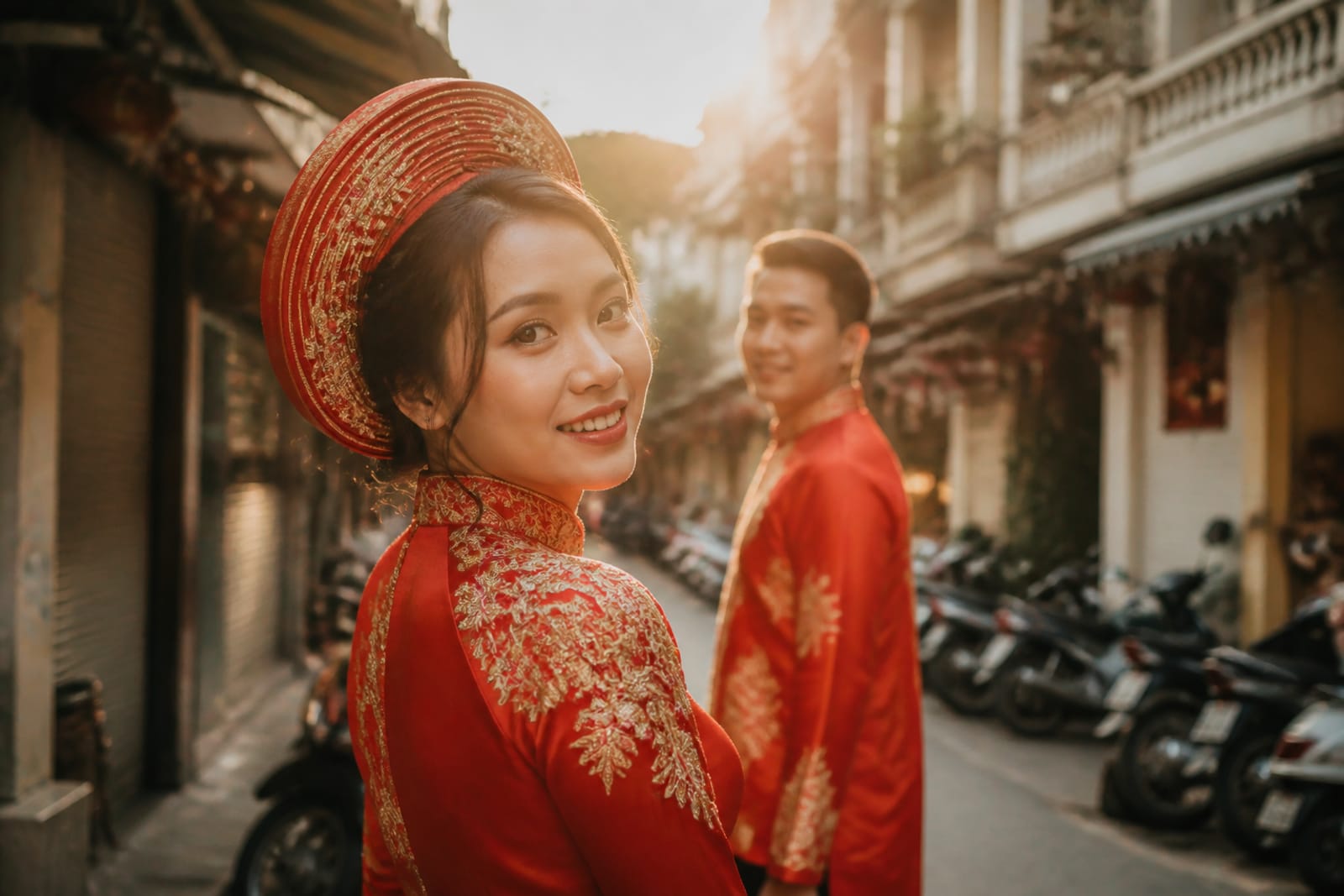
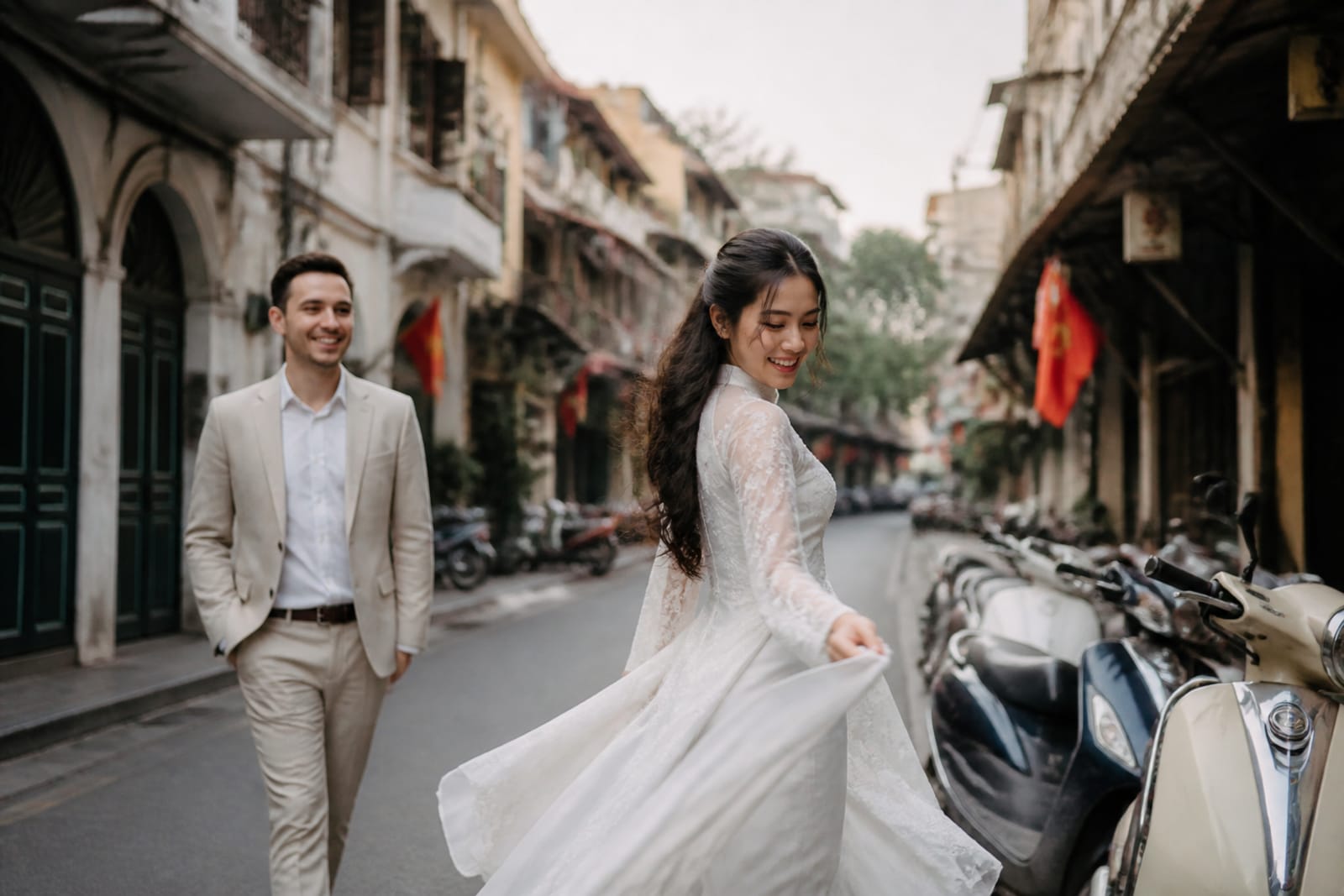
Pivot to Hanoi's pre-wedding photoshoot locations. If Bat Trang becomes impossible, Cáo Studio shoots couples across Hanoi's Old Quarter, Temple of Literature, and lakeside temples. Rain on wet stone and in autumn's leaf-wet streets creates melancholic, intimate energy that's entirely different from Bat Trang's rustic joy—but equally striking. This is not a consolation; it's a real aesthetic choice.
How Do Light and Outfit Conditions Change in Rain?
| Condition | Best For | Light Quality | Outfit Impact |
|---|---|---|---|
| Oct–Nov, dry Bat Trang | Classic ceramic shoot | Soft, warm, shadowless morning light | Silk ao dai gleams; clay dust settles on hem only |
| May–Sep, rainy Bat Trang | Cancelled or rescheduled | Flat grey sky, no shadows | Mud on lace; makeup humidity-damaged; soggy hem |
| Indoor studio, painted backdrop | Studio ceramic aesthetic | Controlled overhead or window-side; some harshness | No mud; makeup stays; ao dai pristine |
| Covered kiln canopy | Hybrid Bat Trang vibe | Side-striped gold-and-shadow on clay | Rain-protected; ao dai dry; artistic striping |
| Hanoi ao dai photoshoot alternative (lakeside, temple) | Moody urban romance | Wet-street reflections; cloud diffusion; soft contrast | Ao dai on wet stone is intimate; puddle reflections add drama |
The table shows that rain fundamentally changes the shoot's mood and logistics. Dry-season Bat Trang is bright and rustic. Rainy Bat Trang is either cancelled or muddy-compromised. Covered facilities and studio backdrops are safer but lose some authenticity. Alternative Hanoi venues aren't "backup options"—they're different creative directions. Know which you prefer before rain forces the choice.
📸 Book on WhatsApp — pre-wedding photoshoot

What Should You Confirm With Cáo Studio Before Booking?
Don't assume the studio's rainy-day policy. Before you pay a deposit, ask on WhatsApp:
- Rescheduling terms: Are there free date changes if weather cancels? How many? What if your wedding is in a month you can't reschedule to?
- Backup location cost: If you pivot from Bat Trang to a studio, does the fee change? Is travel to a covered kiln facility included?
- Makeup touchup kit: Heavy rain and humidity wreck foundation. Does the makeup & hair at your hotel team bring extra powder, setting spray and touch-up supplies?
- Ao dai protection: Will the team pack a garment bag to protect your rental ao dai from mud splashes on the drive to Bat Trang?
- Timeline flexibility: If you show up on a rainy morning and pivot to an indoor studio, does the session start on time or is setup delayed while the team scouts the backup space?
- Edited file delivery: Does a rescheduled session still ship photos on the original timeline, or does the clock reset?
These aren't nitpicks—they're the difference between a seamless pivot and a stressful scramble. Get answers in writing on WhatsApp before you book.
When Should You Book Bat Trang, and When Should You Pick Hanoi's Ao Dai Photoshoot Instead?
Choose Bat Trang if: Your wedding is in Oct–Nov (Hanoi's autumn); you have flexibility to reschedule if rain hits; you love rustic clay, terracotta and working-village energy; you're willing to move to an indoor backup if weather forces it; and you can visit in advance to scout studios with the team.
Choose Hanoi's lakeside and temple locations pre-wedding photoshoot if: Your date is locked in a rainy season (May–Sep); you want a mood that thrives in grey light (moody urban romance, wet-stone reflections); you prefer predictable indoor backups (French Quarter arcades, temple courtyards with covered areas); or you want the flexibility to shoot the same day regardless of weather.
Choose both if: Book Bat Trang for dry-season dates and Hanoi's ao dai venues as your documented backup. This removes the decision stress entirely and gives you two distinct, high-quality albums.
What Else Changes in a Rainy-Season Photoshoot?
If you're committed to Bat Trang during May–Sep, expect longer prep time. The team will arrive earlier to scout which studios are dry, which paths are passable, and which kilns have enough light despite overcast skies. Shots that would take 20 minutes in Oct–Nov's bright light might need 45 minutes of repositioning and reflector work in grey drizzle. Makeup requires more frequent touch-ups (powder, setting spray, lipstick). Your ao dai's hem and lower silk will collect dried clay dust and mud splashes—plan for dry-cleaning after the shoot, not a week later. Portable lighting (reflectors, small flashes) becomes essential, not optional, because studio windows are dimmed by cloud cover. None of this is a disaster—many photographers love rainy Bat Trang's moody, intimate texture—but it's not the bright, sun-kissed energy autumn delivers. Decide in advance which mood you're chasing.
What to Check Before You Book
- Your wedding date and season: Is it Oct–Nov (safe for Bat Trang)? Or May–Sep (high rain risk)? Ask Cáo Studio whether they recommend Bat Trang or a covered studio for your month.
- Backup policy in writing: Get the team's rescheduling and location-pivot terms on WhatsApp before you pay any deposit.
- Studio visit: If possible, visit Bat Trang with the photographer to see which studios have good natural light and covered shooting areas. This prevents day-of surprises.
- Ao dai protection: Confirm that the team brings garment bags and protective covers so mud splashes don't stain a rental.
- Edited timeline: Ask whether rescheduled shoots still deliver photos within the original window or if the delivery date extends.
- Contingency outfit: If a rainy-day pivot to an indoor studio happens, do you have a backup ao dai at home, or will the session use the original rental in an indoor setting?
Bat Trang is stunning when conditions align. Planning for rain doesn't ruin the romance—it protects it.
FAQ
What months should we avoid for a Bat Trang shoot?
May through September carry high rain risk in Hanoi, especially afternoon downpours. Late September and early October are worst due to monsoon remnants. If your date is locked in these months, ask Cáo Studio about indoor ceramic studios or covered kiln facilities instead. Oct–Nov is safest.
Can we still shoot in Bat Trang if rain is in the forecast?
Light drizzle in Oct–Nov is manageable and adds mood. Heavy rain (forecast downpours, thunderstorms, yellow/orange weather alerts) should trigger a reschedule or pivot to a covered studio. Confirm the team's decision-making process on WhatsApp before your shoot date.
Does Cáo Studio charge extra if we reschedule to a different date due to rain?
Rescheduling policy varies; ask on WhatsApp for exact terms before booking. Most studios offer one free date change for weather cancellations. If you pivot to an indoor studio, ask whether the fee is the same or differs.
What's the difference between rescheduling and pivoting to a backup location?
Rescheduling moves your shoot to a different date (same Bat Trang location, same aesthetic). Pivoting changes the location the same day (e.g., from Bat Trang to an indoor ceramic studio). Rescheduling preserves your original vision; pivoting delivers a different mood but the same timeline.
Should we book a rainy-season shoot at all, or wait for autumn?
If Bat Trang is essential, wait for Oct–Nov if your wedding date allows. If your date is fixed in a rainy season, choose a studio with covered areas or pivot to Hanoi's ao dai photoshoot lakeside and temple locations, where rain creates beautiful moody light. Don't force an outdoor village shoot into bad weather.
What happens to our ao dai if mud splashes it during a rainy Bat Trang shoot?
Dried clay dust can be gently brushed off; mud splashes may require dry-cleaning. Ask Cáo Studio whether the ao dai rental includes protective garment bags for the journey to Bat Trang and whether post-shoot cleaning is covered. Confirm this before your shoot date.
If we reschedule from rainy May to dry October, do we lose our edited photos from the original date?
A rescheduled shoot is a new session with new edited photos. Confirm on WhatsApp whether a cancelled rainy-date shoot gets stored as a rain check or forfeit. Most studios treat weather cancellations as postponements, not losses, but get this in writing.
FAQ
What months should we avoid for a Bat Trang shoot?
May through September carry high rain risk in Hanoi, especially afternoon downpours. Late September and early October are worst due to monsoon remnants. If your date is locked in these months, ask Cáo Studio about indoor ceramic studios or covered kiln facilities instead. Oct–Nov is safest.
Can we still shoot in Bat Trang if rain is in the forecast?
Light drizzle in Oct–Nov is manageable and adds mood. Heavy rain (forecast downpours, thunderstorms, yellow/orange weather alerts) should trigger a reschedule or pivot to a covered studio. Confirm the team's decision-making process on WhatsApp before your shoot date.
Does Cáo Studio charge extra if we reschedule to a different date due to rain?
Rescheduling policy varies; ask on WhatsApp for exact terms before booking. Most studios offer one free date change for weather cancellations. If you pivot to an indoor studio, ask whether the fee is the same or differs.
What's the difference between rescheduling and pivoting to a backup location?
Rescheduling moves your shoot to a different date (same Bat Trang location, same aesthetic). Pivoting changes the location the same day (e.g., from Bat Trang to an indoor ceramic studio). Rescheduling preserves your original vision; pivoting delivers a different mood but the same timeline.
Should we book a rainy-season shoot at all, or wait for autumn?
If Bat Trang is essential, wait for Oct–Nov if your wedding date allows. If your date is fixed in a rainy season, choose a studio with covered areas or pivot to Hanoi's [ao dai photoshoot](/ao-dai-photoshoot) lakeside and temple locations, where rain creates beautiful moody light. Don't force an outdoor village shoot into bad weather.
What happens to our ao dai if mud splashes it during a rainy Bat Trang shoot?
Dried clay dust can be gently brushed off; mud splashes may require dry-cleaning. Ask Cáo Studio whether the [ao dai rental](/ao-dai-rental) includes protective garment bags for the journey to Bat Trang and whether post-shoot cleaning is covered. Confirm this before your shoot date.
If we reschedule from rainy May to dry October, do we lose our edited photos from the original date?
A rescheduled shoot is a new session with new edited photos. Confirm on WhatsApp whether a cancelled rainy-date shoot gets stored as a rain check or forfeit. Most studios treat weather cancellations as postponements, not losses, but get this in writing.
Ao dai, makeup, hair and a local photographer in Hanoi or Saigon — one WhatsApp message.