/pre-wedding-photoshoot
Rainy Day Backup Plan for Ganh Dau Cape Photoshoot
Ganh Dau Cape, on Phu Quoc's north coast, is exposed to weather—wind, mist, and afternoon rain arrive fast, especially May–October. You need a Plan B before the day arrives. Options: reschedule to the dry window (November–April, when the west coast clears), pivot to a sheltered indoor studio or covered pavilion on-site, or shoot the storm itself if your vision allows grey mood light. Cáo Studio does not operate in Phu Quoc; book a local photographer who knows the cape's microclimate and has scouted indoor fallbacks. Ask them to confirm a backup location in your pre-shoot call and specify what happens if rain hits mid-session—whether they'll wait it out, move, or offer a reschedule credit. The difference between a ruined shoot and a recovered one is a plan made before you arrive.
Why Ganh Dau Gets Caught in Rain So Often
Ganh Dau juts into the Gulf of Thailand on Phu Quoc's northern tip, fully exposed to coastal weather systems. The cape has no shelter—cliffs rise but offer no cover, and the ocean can shift from calm to choppy in thirty minutes. Phu Quoc's rainy season (May–October) delivers afternoon downpours almost daily; October–November peaks with tropical depressions and localized flooding. Even in the "dry" months, tropical moisture can trigger sudden mist or brief showers that scatter your light and soak silk ao dai or wedding dresses within minutes.
Local weather forecasts sometimes miss mountain-driven gusts that slam the cape an hour before the rest of the island feels rain. This is why photographers who shoot Ganh Dau regularly scout not just the main platform but also cliff shelters, nearby pavilions, and indoor fallback spaces. If your photographer claims rain won't happen or dismisses a backup plan, they've never worked there during monsoon season.
When Should You Reschedule Instead of Pivoting Indoors?
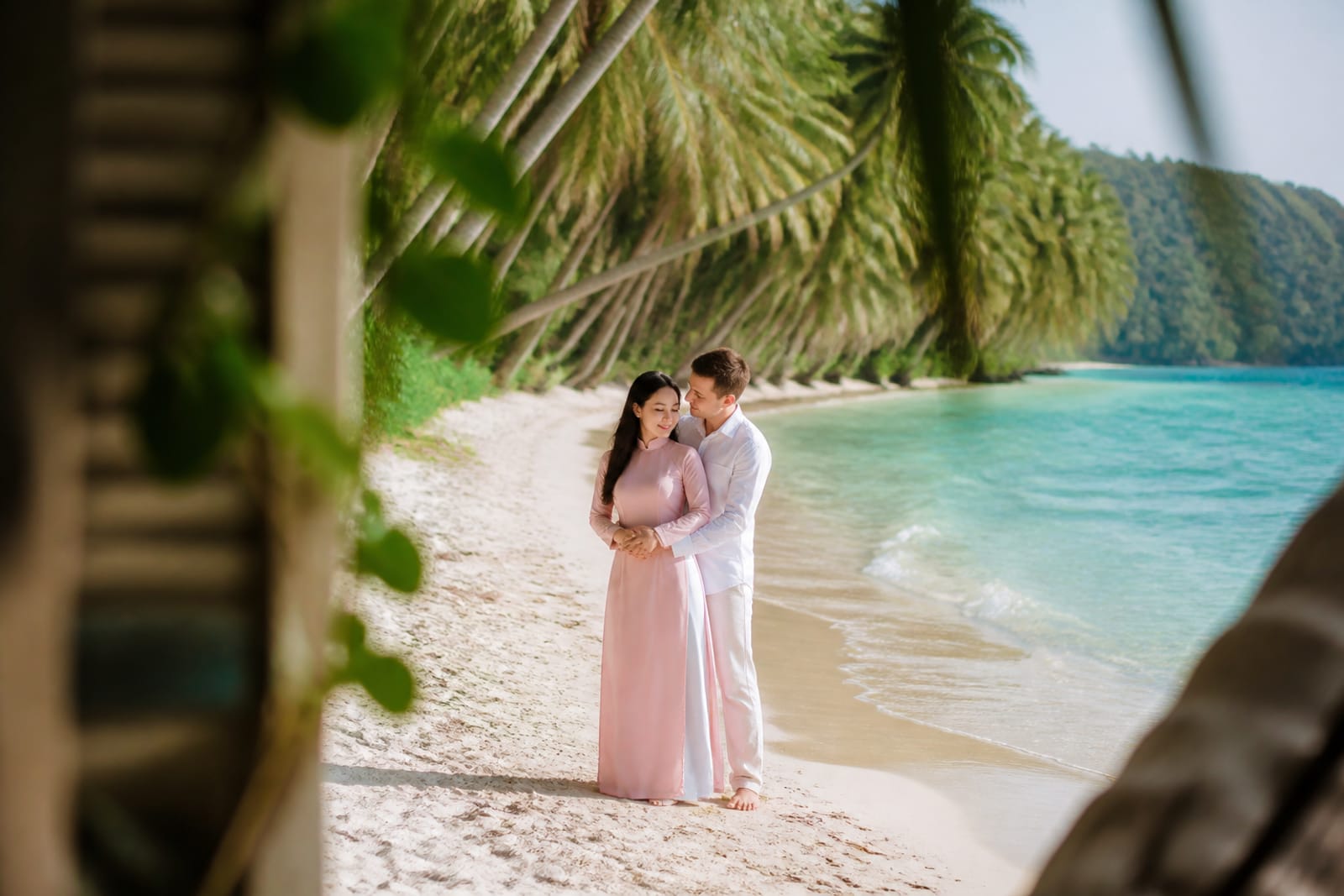
If your vision is Ganh Dau's cliffs, sea, and golden hour light—and you want those as the core of your frames—reschedule rather than settle for an indoor studio. Rescheduling costs money and emotional energy, but a pale imitation indoor shoot costs credibility with your partner and leaves you with frames you don't love.
Phu Quoc's dry season runs November–April: calm seas, clear sunsets on the west coast, and minimal rain. Book your shoot for January–March if possible; the light is warm and diffuse, crowds are thinner than peak winter, and storms are rare. If you're locked into May–October dates, ask your photographer to book early morning (5:30–7:00 am) when mist may still hang but rain usually hasn't started. Accept that you'll shoot fewer outfits and stick to one location—speed is safety in rainy season.
A reschedule clause in your booking protects both of you: confirm in writing that if weather forces a cancel on the morning of the shoot, you can move to a guaranteed alternate date within 30 days at no extra charge.
Covered Pavilions and Nearby Indoor Studios
Ganh Dau has no on-site pavilion shelter, but nearby resorts and attractions have covered spaces. Phu Quoc cable car station (a short drive from Ganh Dau) has a covered waiting area with glass walls and sea views; some photographers book it as a rainy-day set. Dinh Cau Temple, also on the northern coast, has a sheltered courtyard and temple halls—ask the monks' permission in advance and plan modest outfits that respect sacred space.
Ho Tram Straw Beach, ten minutes south, has a rustic pavilion with an ocean view and open sides; it offers shelter from direct rain but stays breezy. None of these are designed for photoshoots, so confirm access and privacy with your photographer before the day.
For guaranteed indoor backup, Phu Quoc's resort spas and hotel lobbies sometimes allow short shoot bookings; ask your photographer which resorts near Ganh Dau they have pre-approved. A hotel suite with floor-to-ceiling windows and sea views (book the top floor) can work in a pinch—the light is flat and cool indoors, but it's dry and intimate.
| Backup Option | Best For | Light & Season | Why It Works |
|---|---|---|---|
| Reschedule to Nov–Apr | Cliffs, sea, golden hour | Warm, diffuse, calm sea | Preserves your original vision; rare rain. |
| Cable car station (covered) | Shelter + exterior mood | Overcast, grey tones | Glass walls keep rain out; you see the sea. |
| Dinh Cau Temple courtyard | Cultural frame, reverent tone | Soft shadow, temple detail | Sacred space adds meaning; must get permission. |
| Hotel suite (top floor) | Intimate, window light | Cool, diffuse, soft | Dry and controlled; no cliffs, no sea view. |
| Pavilion (Ho Tram Beach) | Covered, open-sided | Breezy, dappled, grey | Adventure feel; still exposed to wind and spray. |
The best backup is one your photographer scouted in person before you booked, not one they invent the morning of the shoot.
Indoor Shoots: When Pivot Works and When It Doesn't
Moving indoors mid-shoot is not a free pass to ignore light. A studio with soft north-facing windows and white walls can yield tender frames—cool tone, intimate, no cliffs, but the story changes. If your partner imagines you against sea cliffs, an indoor pivot feels like surrender. If your story is "two people, storm coming, we chose each other," indoor light can work.
Indoor pivot works when: your outfit is a paid rental (ao dai or wedding dress that'll dry in time for second-location shoot), your timeline is loose (no sunset deadline), and your vision includes intimacy, detail, or a secondary location you hadn't scouted yet. Indoor pivot fails when: your core vision is the cape itself, you've booked only one location, or your photographer hasn't lit an indoor space before—flat, yellow light, harsh shadows, no depth.
Ask your photographer before booking: "If we pivot indoors, where would we shoot and what would that look like?" If they hesitate or say "we'll figure it out," they don't have a plan. A photographer with a real backup has already lit that indoor space with test frames or experience.
How to Choose a Photographer and Lock Down Terms
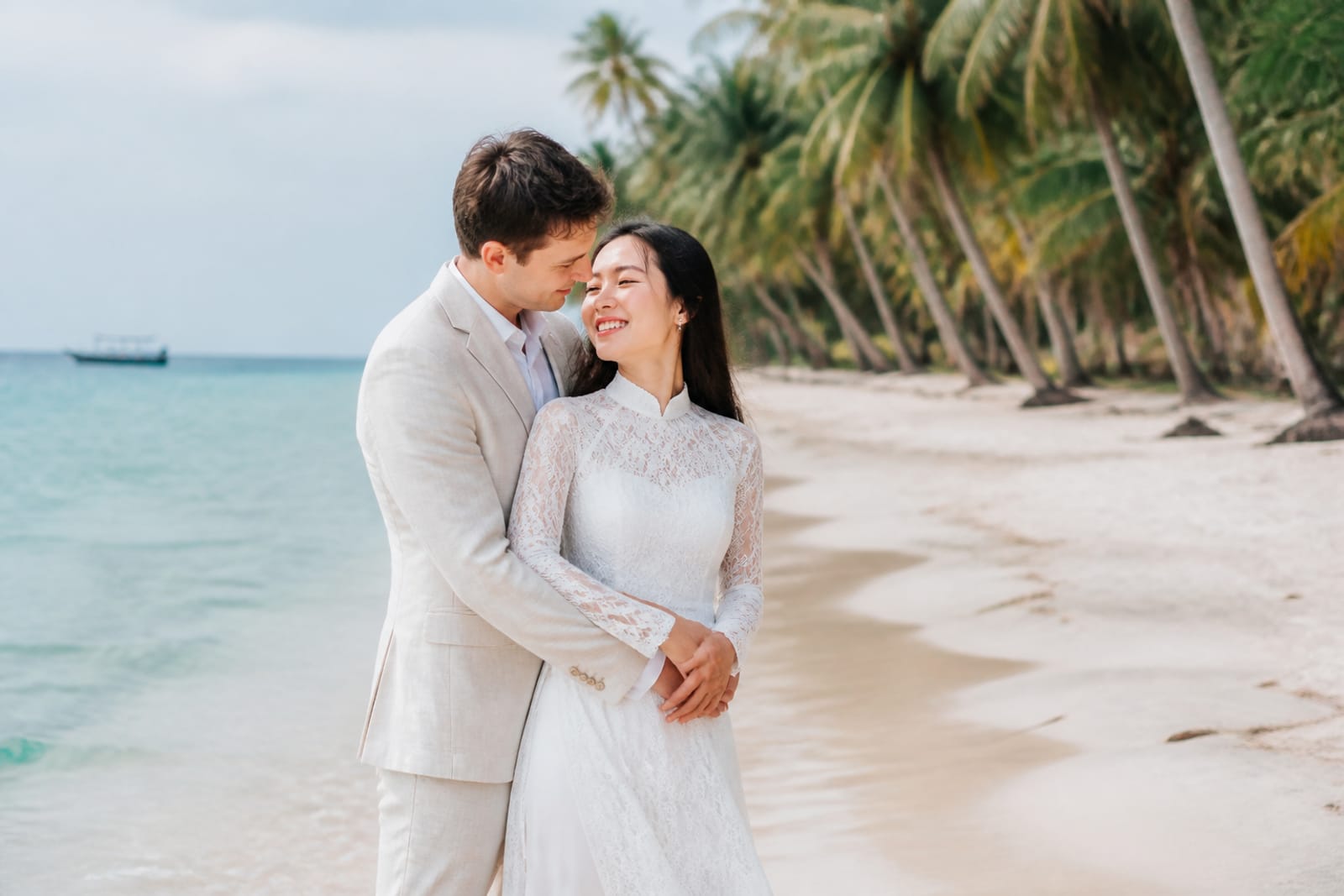
Cáo Studio operates in Hanoi, Ho Chi Minh City, and Hoi An; we do not shoot in Phu Quoc. If you're booking a Phu Quoc pre-wedding shoot, find a local photographer through resort recommendations, wedding vendors, or Instagram location tags. Here's how to vet them:
- Ask about rainy-season bookings. How many shoots have they done in May–October? What happened when rain hit? Do they have a backup location scouted for Ganh Dau specifically, or do they "usually get lucky"?
- See their backup frames. Ask to see 3–5 shots from a rainy-day pivot—studio, pavilion, or alternate outdoor location. Light, composition, emotion should be as strong as their fair-weather work.
- Confirm the reschedule clause in writing. Specify: if weather forces a cancel before the shoot starts (photographer's call, made by 6:00 am on the day), you can reschedule within 30 days at no extra cost. If you cancel due to weather, clarify if you forfeit a deposit or get store credit.
- Confirm backup location access. If Plan B is a resort pavilion, hotel suite, or temple, the photographer should have confirmed permission in advance. Ask them to show you the backup location's address and describe the light there at your scheduled time of day.
- Discuss outfit protection. Ao dai or wedding dresses are fragile and expensive. How will the photographer keep your outfit dry during transitions? Do they carry garment bags, umbrellas, or have a covered vehicle? If they'll shoot the storm (rain on dress), confirm that in advance—some couples love it, others don't.
A photographer who answers these questions clearly and shows backup frames has done Phu Quoc rainy-season work before. One who brushes off rain with "it'll be fine" is gambling with your day.
📸 Book on WhatsApp — pre-wedding photoshoot
What to Check Before You Commit
Ask your photographer these specific questions before deposit:
- Dry season vs. rainy season pricing: Does backup plan or reschedule option cost extra, or is it included?
- Outfit drying time: If the backup is indoors, how long until your ao dai or dress dries before outfit change two?
- Light scout: Have they lit your backup location (pavilion, studio, temple) at your exact time slot? Ask for test frames.
- Reschedule guarantee: Is it in writing? Does it expire after 30 days, or do you have flexibility through the season?
- Communication morning-of: How early will they call with a weather call (reschedule vs. pivot)? Do they check hourly, or only at sunrise?
A photographer without clear answers on these points may be skilled but unprepared for Phu Quoc weather variability. Preparation is not paranoia—it's the difference between a day you love and a day you regret.
For pre-wedding shoots in Hanoi, Ho Chi Minh City, or Hoi An, Cáo Studio handles all weather logistics as part of our process: we scout light windows, pack backup locations, and brief couples before the day. We also offer makeup and hair services to protect your look during weather transitions.
The Rescheduled Shoot: Making the Most of November–April Light
If you've chosen to reschedule to Phu Quoc's dry season, the west coast opens up. Sunset Town and the Kiss Bridge face west and deliver warm, clear light November–March. Ganh Dau itself, facing east and northeast, gives soft morning light and dramatic midday cliffs—no rain, no mist, calm sea.
Book January–March for the warmest, longest golden hour. February–March is peak, but also busier; January or late March offer similar light with fewer tourists crowding your frames. Confirm with your photographer that they've worked Ganh Dau in that month and know where the light sits at your chosen time.
A rescheduled shoot in clear season yields the frames you imagined. The delay stings, but you'll have images you treasure for decades.
FAQ
What happens if it rains during our Ganh Dau pre-wedding shoot?
Your photographer's call, made by early morning. If rain is heavy, they'll pivot to a backup location (pavilion, studio, hotel) or reschedule within 30 days. Confirm this clause and the backup location in your booking agreement before the day.
Is Phu Quoc rainy season off-limits for pre-wedding shoots?
No. Early morning shoots (5:30–7:00 am) often clear before noon; January, February, and March are cloudiest but rarely rainy. Ask your photographer about their rainy-season success rate and whether they've scouted backup light for Ganh Dau specifically.
Can we shoot the rain as part of our story?
Yes, if that's your vision—rain on a wedding dress, stormy mood light, dramatic cliffs. Confirm this with your photographer in advance so they prepare protective gear, plan the narrative, and nail the timing. This is a style choice, not a backup plan.
Should we reschedule or pivot indoors if rain hits mid-shoot?
Reschedule if your core vision is Ganh Dau's cliffs and sea light. Pivot indoors only if your photographer has scouted and lit that space beforehand and your story works in both places. Avoid pivoting to an unknown studio on the morning of the shoot.
How do we protect our ao dai or wedding dress if weather shifts during the shoot?
Ask your photographer how they'll keep your outfit dry during transitions—garment bags, umbrellas, covered vehicle. If the backup is indoors, confirm drying time before outfit change two. Wet silk and satin don't dry fast; plan outfit gaps or have a backup outfit ready.
What's the best time to shoot Ganh Dau for light and safety?
November–April (dry season, calm sea, clear sunsets). Within that window, January–March offers the softest, warmest light and lowest rain risk. Early morning (5:30–7:00 am) in rainy season can work if your photographer has tracked weather patterns there for years.
FAQ
What happens if it rains during our Ganh Dau pre-wedding shoot?
Your photographer's call, made by early morning. If rain is heavy, they'll pivot to a backup location (pavilion, studio, hotel) or reschedule within 30 days. Confirm this clause and the backup location in your booking agreement before the day.
Is Phu Quoc rainy season off-limits for pre-wedding shoots?
No. Early morning shoots (5:30–7:00 am) often clear before noon; January, February, and March are cloudiest but rarely rainy. Ask your photographer about their rainy-season success rate and whether they've scouted backup light for Ganh Dau specifically.
Can we shoot the rain as part of our story?
Yes, if that's your vision—rain on a wedding dress, stormy mood light, dramatic cliffs. Confirm this with your photographer in advance so they prepare protective gear, plan the narrative, and nail the timing. This is a style choice, not a backup plan.
Should we reschedule or pivot indoors if rain hits mid-shoot?
Reschedule if your core vision is Ganh Dau's cliffs and sea light. Pivot indoors only if your photographer has scouted and lit that space beforehand and your story works in both places. Avoid pivoting to an unknown studio on the morning of the shoot.
How do we protect our ao dai or wedding dress if weather shifts during the shoot?
Ask your photographer how they'll keep your outfit dry during transitions—garment bags, umbrellas, covered vehicle. If the backup is indoors, confirm drying time before outfit change two. Wet silk and satin don't dry fast; plan outfit gaps or have a backup outfit ready.
What's the best time to shoot Ganh Dau for light and safety?
November–April (dry season, calm sea, clear sunsets). Within that window, January–March offers the softest, warmest light and lowest rain risk. Early morning (5:30–7:00 am) in rainy season can work if your photographer has tracked weather patterns there for years.
Ao dai, makeup, hair and a local photographer in Hanoi or Saigon — one WhatsApp message.