/pre-wedding-photoshoot
Rainy Day Backup Plan for Pu Luong Rice Terraces Wedding Photoshoot
Pu Luong's wet season (September–December, worst October–November) brings heavy afternoon rain; morning shoots often escape it, but backup plans are essential. Rain-ready approaches include: shooting during clearer morning hours before clouds gather, moving to covered structures (farm homestays, limestone caves, village shelters), pivoting to close-up portraiture indoors, or switching to an ao dai session at your accommodation. The best backup plan isn't a single location—it's a team that scouts multiple light conditions on the day and knows how to frame you in low light without losing depth. Cáo Studio coordinates pre-wedding shoots in Hanoi, Ho Chi Minh City, and Hoi An, and we work with trusted local photographers in Pu Luong; the key is confirming before booking what happens if midday rain hits, and whether your team can pivot between outdoor terraces, indoor homestay sessions, and close-up detail work using the light you actually have. ---
What rain actually does to Pu Luong light?
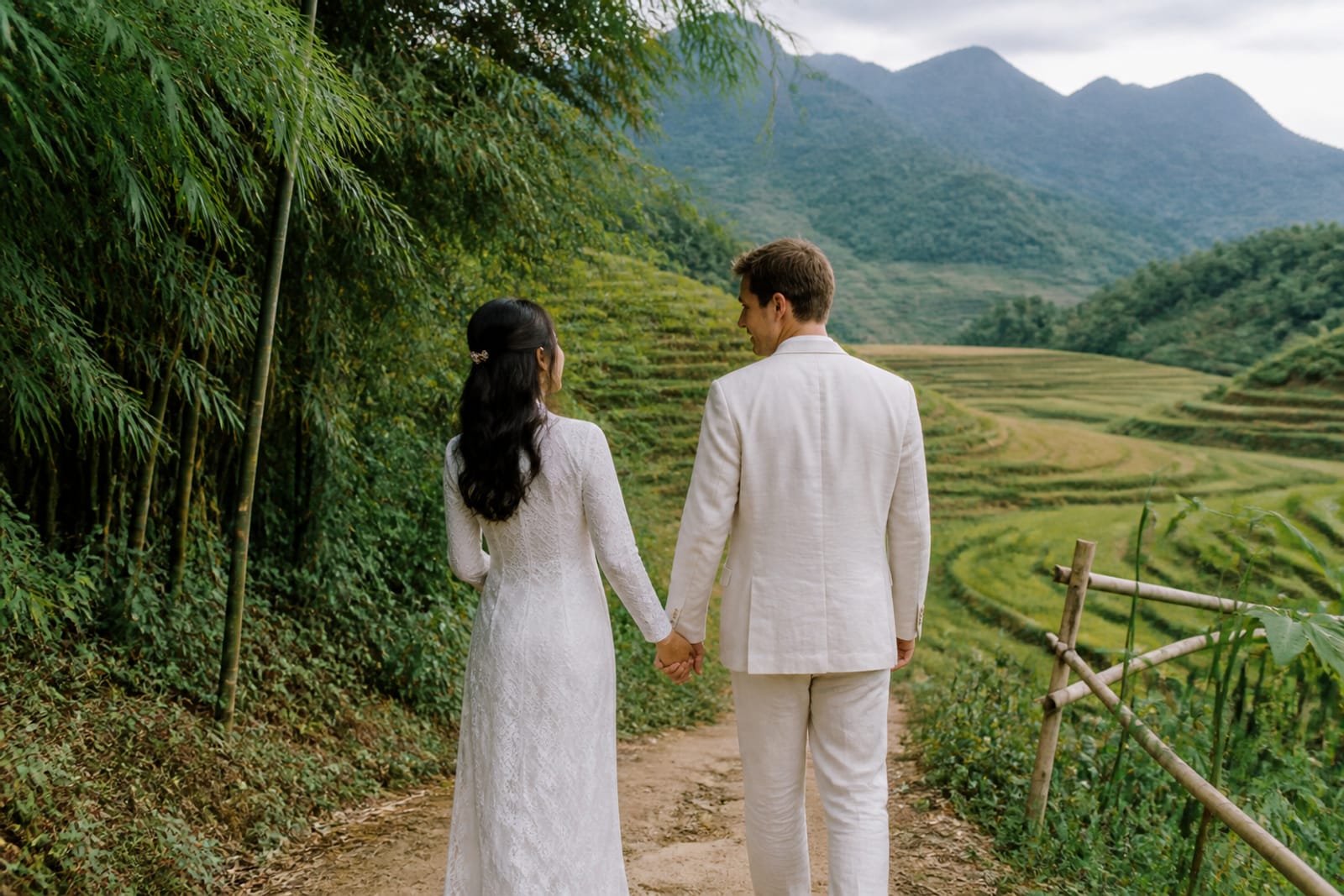
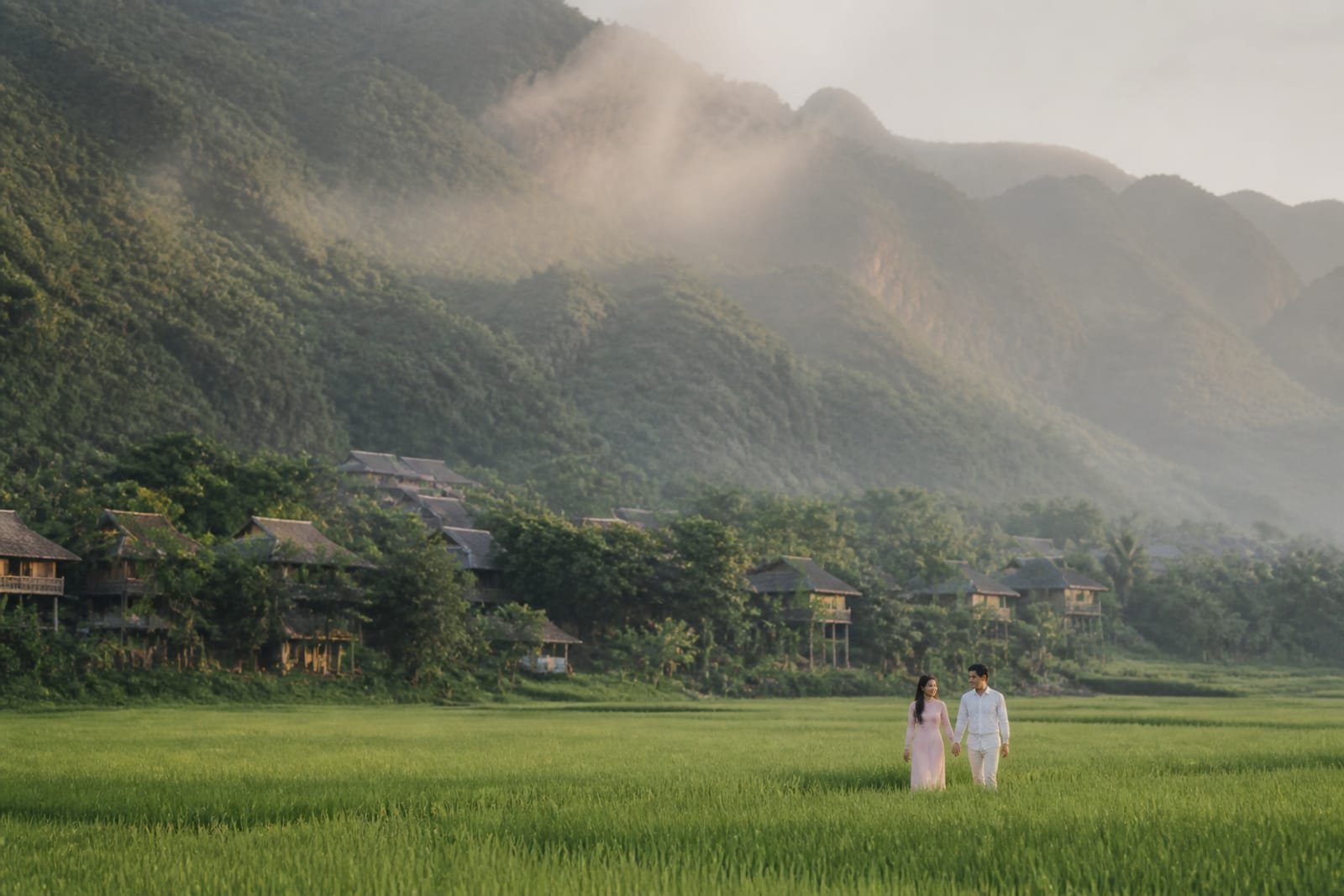
Rain in Pu Luong doesn't mean flat, grey, unusable light—it often brings soft, directional morning mist and occasional breaks between showers that create dramatic backlighting through clouds. Heavy afternoon downpours (1–4 pm typical) close open-air options, but early shoots (6–9 am) often work because rain clears or stays light. The catch: you need a photographer who shoots in mist and doesn't rely on direct sun. Many teams cancel or reschedule; teams that stay agile use the wet landscape's reflections, the muted greens, and close-frame portraits that feel intimate rather than expansive. Scout your backup locations (homestay interiors, covered walkways, village temples with shelter) during your first morning visit, and brief your photographer on what "plan B light" means to them—can they expose for mist? Do they know how to frame you indoors without making it feel staged?
Should you schedule around the dry season instead?
Pu Luong's driest months are February–April and August–early September; golden rice appears roughly late May–June and September–October. Scheduling around dryness makes sense if you must have open-air terrace light, but the tradeoff is tourism crowds and less distinctive foliage (the valley is green year-round, but post-monsoon greenery is denser and more photographically saturated). If your wedding date is already set and falls in the wet season, don't reschedule just for weather—rain-ready planning and a flexible team matter more than the calendar. A shoot in November mist with a director who knows how to use it often produces more cinematic frames than a crowded-but-clear May session. Confirm with your photographer whether they've shot in-season (wet months) and kept the session quality; if they haven't, that's a red flag.
Comparing your backup plan options: outdoor pivots vs. indoor sessions
| Backup Option | Best For | Light & Timing | Why It Works |
|---|---|---|---|
| Early morning shoot (6–9 am) | Avoiding afternoon rain | Soft mist, backlighting through clouds; rain often lighter before 11 am | Most rain clears by dawn; soft light flatters ao dai and skin without harsh shadows. |
| Homestay or farm building interior | Midday downpour safety | Window light, diffused through rain; intimate, close-frame portraits | Sheltered, warm tones; frames feel personal rather than "rained-on compromise." |
| Limestone cave or tunnel entrance | Dramatic weather backup | Side light from cave mouth; muted, cinematic, moody | Rain reinforces the shelter feeling; backlighting through rain adds depth. |
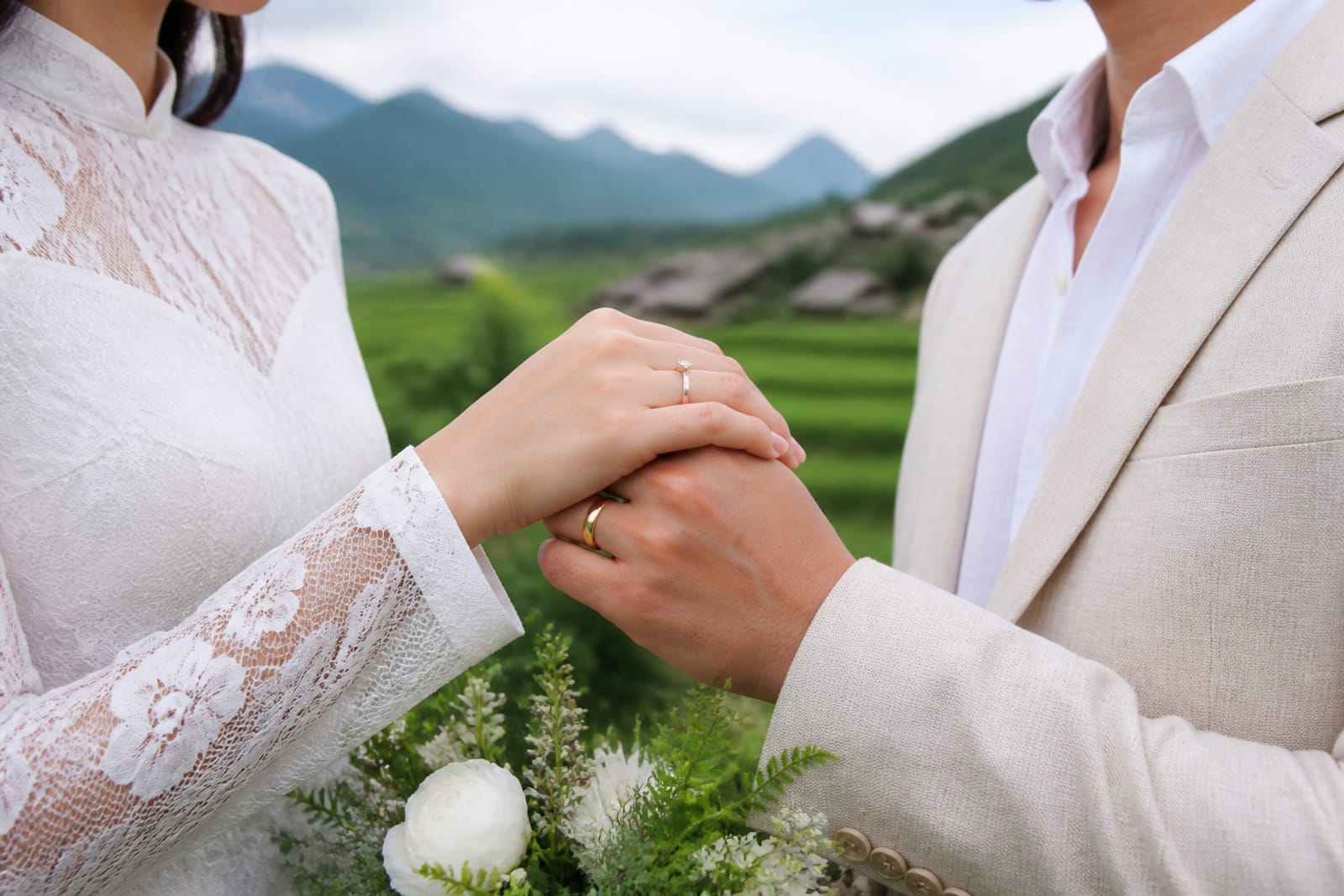
| Close-up detail work (hands, dress, rings) | Any weather | Works in low light; focus on texture, folds, jewelry | Doesn't require wide landscape; builds a visual story even if full-body framing isn't possible outdoors. |
| Rescheduled half-day (next morning) | Total downpour | Depends on next-day forecast; confirms weather-contingency clause in contract | Only viable if your schedule allows; clarify rescheduling terms upfront. |
The strongest backup isn't one option—it's three: an early start to beat afternoon rain, an indoor session ready if morning fails, and a detail-focused sequence that works anywhere. Ask your photographer which of these they've executed before you book.
How do you brief a photographer on rain-ready framing?
Rain-ready framing means your photographer stops expecting you to stand in front of a wide landscape and instead directs you to move through light, interact with the environment, and let the frame follow intention rather than vista. Tell them upfront: "We want frames that work in mist and morning light, not just sunny vistas." A director's briefing might sound like, "We'll shoot wide first along the northern terrace at 7 am (often clearer), then move to close-ups of the dress and rings if clouds thicken by 8:30, then a portrait session under the homestay's porch roof by 9 am." This isn't a fallback—it's a shot sequence designed around real light, not hope. Ask your photographer to show you examples of rain-day or mist-day work; if they only show sunny expanses, they're not rain-ready. A team comfortable in wet conditions frames you walking, looking at each other, and moving between shelter—not posing and hoping the light cooperates.
What do you wear under an ao dai in wet, cool Pu Luong mornings?
Pu Luong mornings are cool (10–15°C in winter, 16–20°C in mist season) and damp; traditional ao dai with long sleeves and a slip work best. Wear thermal or wool leggings under the silk slip if it's November–February; cotton leggings risk clinging and showing in mist. Bring a lightweight, non-shiny shawl or cardigan (not synthetic) that reads well in rain-softened light; drape it over your shoulders between shots to stay warm without disrupting the aesthetic. If you're doing an indoor homestay session as backup, change into a second ao dai or a reception dress; don't try to shoot indoors in rain-soaked fabric. Confirm with your photographer and stylist whether they bring outfit options or you supply them; most teams have contingency pieces, but clarifying beforehand prevents logistical stress on the day. See ao dai rental and makeup & hair at your hotel for outfit and styling support.
What to check before you book a Pu Luong photoshoot team
Before committing, ask these questions:
- Rain contingency clause: What happens if rain arrives before 9 am? Can you reschedule at no extra cost, move indoors, or get a refund?
- Backup locations scouted: Does the team know 2–3 sheltered or indoor spots within walking distance of your main shoot site?
- Wet-weather examples: Can they show you 5+ frames from shoots in rain, mist, or low light? (Not all photographers have these—it matters.)
- Team size and mobility: Do they travel with hair, makeup, and stylist, or do you coordinate separately? Rain days are chaos if you're juggling three vendors.
- Edited turnaround: How quickly can they deliver edited photos? Rain shoots often need color grading; confirm timelines.
- Outfit contingency: Do they bring backup ao dai or reception dresses, or do you supply all outfits?
- Rescheduling terms: If the shoot is cancelled mid-session due to severe weather, what's the refund or reschedule policy?
If a team can't answer these clearly, they haven't planned for rain—move on. Book Cáo Studio's pre-wedding shoots in Hanoi, Ho Chi Minh City, or Hoi An; we handle the full team (photographer, makeup, hair, stylist, outfit coordination) and you'll get a clear contingency briefing before your date. For Pu Luong shoots, ask us on WhatsApp +84 338 762 340 for trusted local-photographer recommendations and a pre-shoot rain-planning call.
📸 Book on WhatsApp — pre-wedding photoshoot
Finding a local photographer in Pu Luong if Cáo Studio isn't your choice
Cáo Studio operates in Hanoi, Ho Chi Minh City, and Hoi An; we don't have a Pu Luong team, but we can recommend vetted local photographers. If you're booking independently, look for photographers who:
- Have shot 10+ weddings or pre-wedding sessions in Pu Luong (not just once).
- Show mist and low-light work in their portfolio (not only sunny-day shots).
- Are based in Pu Luong or nearby (Thanh Hoa town) so they know light patterns by season.
- Offer packages that include hair, makeup, and stylist, or coordinate with local services.
- Provide a written rain contingency (reschedule, refund, or backup plan).
Contact them via WhatsApp or their website at least 2 months before your shoot. Ask to visit the location together and discuss light direction, outfit changes, and backup sequences. Vet reviews on Google Maps and ask for 3 recent couple references you can contact directly. Budget for travel time if your photographer is based outside Pu Luong; early morning shoots mean 5–6 am pickups from Hanoi or nearby towns.
---
💄 Makeup & hair at your hotel | 🌸 See the lookbook
What to expect on shoot day if rain is forecast
Your photographer texts you by 5 am with a shot plan based on the current light. If morning mist is heavy but breakable, you start as planned at 6 am on the terraces and monitor clouds. If rain is steady, you move to the homestay's covered porch or a sheltered pavilion by 7 am and shift to close-ups and couple portraits. By 9–10 am, if conditions don't improve, you either wrap and reschedule a second session, or pivot entirely to an indoor setup at your accommodation—a change of ao dai, window light, and intimate framing. The team stays flexible; you don't worry about timings or logistics. Bring snacks, water, a dry bag for gear, and an extra phone charger. Wear comfortable shoes (terraces are slippery when wet). Keep your phone on; the photographer will update you every 30 minutes if weather is uncertain. Most rain-ready shoots feel more relaxed than sunny ones because everyone knows the backup plan and stops fighting the elements.
---
🌸 Browse pre-wedding & elopement sessions
FAQ
Can we still get an ao dai photoshoot in Pu Luong if it rains?
Yes. Rain softens light and makes mist cinematic. Shoot early (6–8 am before heavy downpours), use shelter between shots, and focus on close-frame portraits and movement rather than wide landscapes. A rain-ready photographer frames you walking or interacting, not standing still in downpour.
What happens to our session if it rains so hard we can't shoot outdoors at all?
A contracted rain contingency clause covers this: reschedule for the next clear morning at no cost, move to an indoor session at your homestay or accommodation, or receive a refund. Confirm the exact terms with your photographer before booking.
Should we reschedule our Pu Luong shoot to the dry season instead?
Only if weather is your only concern. Dry-season shoots (Feb–Apr, Aug–Sep) have less atmospheric light and more tourists. Rain-season shoots (Sep–Nov) produce saturated greens and soft mist; a skilled photographer often creates more cinematic frames in wet months. If your date is fixed, invest in a rain-ready team instead of rescheduling.
Do we need to bring two ao dai, one as backup?
It depends on your team's contract. Some photographers and stylists provide backup outfits; others expect you to supply them. Clarify before booking. If you're changing indoors due to rain, a second ao dai or reception dress adds session variety and ensures you have a dry option.
How long does it take to edit photos from a rainy-day shoot?
Low-light and mist shots often need careful color grading and exposure recovery, so expect 2–4 weeks rather than the standard 1–2 weeks for sunny shoots. Confirm the exact turnaround timeline with your photographer before the session so you're not surprised if editing takes longer.
Can we do a Pu Luong photoshoot with Cáo Studio, or do you have a local team there?
Cáo Studio operates in Hanoi, Ho Chi Minh City, and Hoi An. For Pu Luong, we recommend trusted local photographers and provide rain-planning guidance via WhatsApp +84 338 762 340. Ask us for referrals when you inquire.
FAQ
Can we still get an ao dai photoshoot in Pu Luong if it rains?
Yes. Rain softens light and makes mist cinematic. Shoot early (6–8 am before heavy downpours), use shelter between shots, and focus on close-frame portraits and movement rather than wide landscapes. A rain-ready photographer frames you walking or interacting, not standing still in downpour.
What happens to our session if it rains so hard we can't shoot outdoors at all?
A contracted rain contingency clause covers this: reschedule for the next clear morning at no cost, move to an indoor session at your homestay or accommodation, or receive a refund. Confirm the exact terms with your photographer before booking.
Should we reschedule our Pu Luong shoot to the dry season instead?
Only if weather is your only concern. Dry-season shoots (Feb–Apr, Aug–Sep) have less atmospheric light and more tourists. Rain-season shoots (Sep–Nov) produce saturated greens and soft mist; a skilled photographer often creates more cinematic frames in wet months. If your date is fixed, invest in a rain-ready team instead of rescheduling.
Do we need to bring two ao dai, one as backup?
It depends on your team's contract. Some photographers and stylists provide backup outfits; others expect you to supply them. Clarify before booking. If you're changing indoors due to rain, a second ao dai or reception dress adds session variety and ensures you have a dry option.
How long does it take to edit photos from a rainy-day shoot?
Low-light and mist shots often need careful color grading and exposure recovery, so expect 2–4 weeks rather than the standard 1–2 weeks for sunny shoots. Confirm the exact turnaround timeline with your photographer before the session so you're not surprised if editing takes longer.
Can we do a Pu Luong photoshoot with Cáo Studio, or do you have a local team there?
Cáo Studio operates in [Hanoi](/hanoi), [Ho Chi Minh City](/saigon), and [Hoi An](/hoi-an). For Pu Luong, we recommend trusted local photographers and provide rain-planning guidance via WhatsApp +84 338 762 340. Ask us for referrals when you inquire.
Ao dai, makeup, hair and a local photographer in Hanoi or Saigon — one WhatsApp message.