/pre-wedding-photoshoot
Rainy day backup plan for Ta Phin village wedding photoshoot
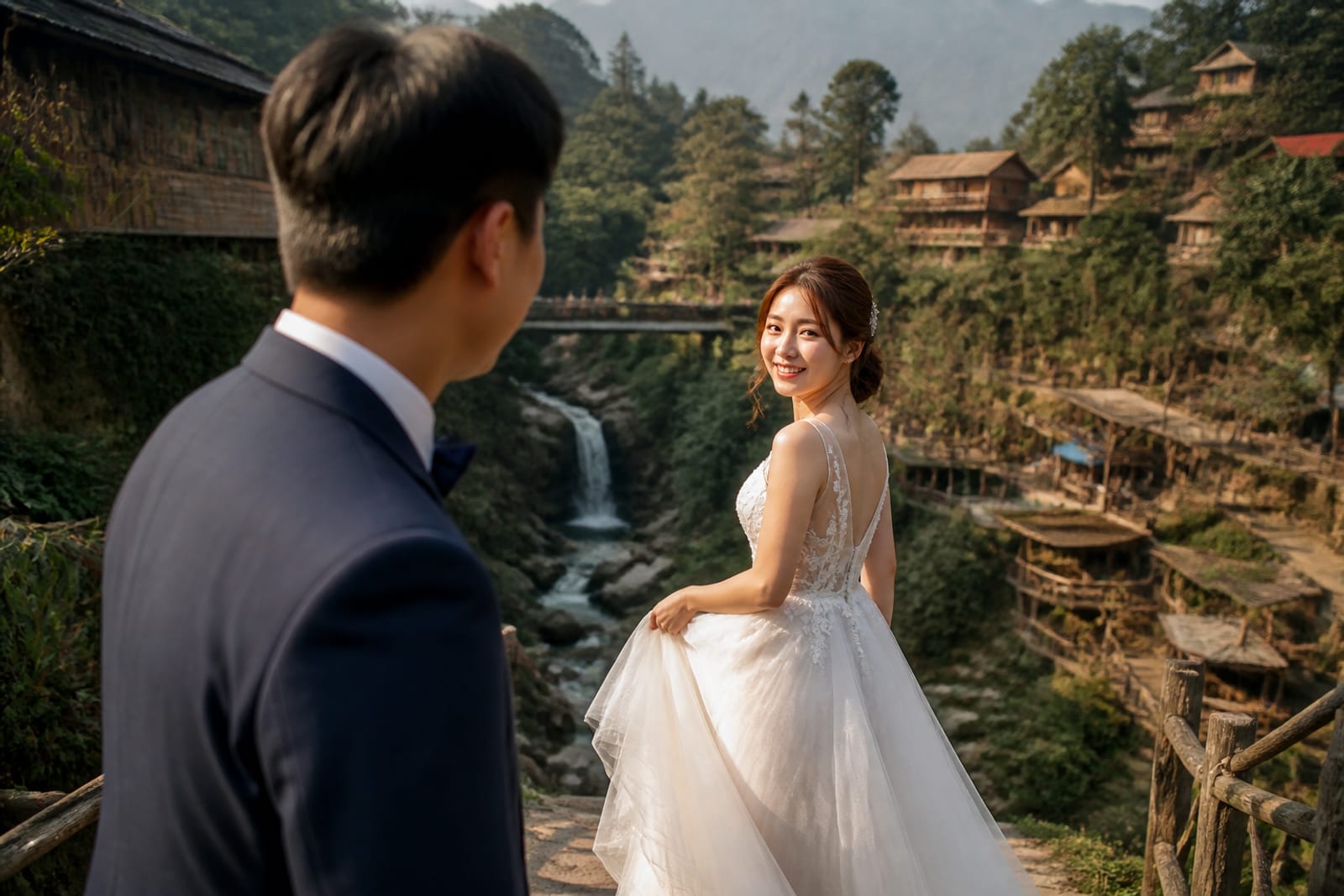
Ta Phin village, set high in Sapa's limestone valleys, offers dramatic terraced landscapes and Red Dao homestays—but the monsoon season (May–Sep) brings afternoon fog, mist and heavy rain that obscure the scenery and risk gear damage. Your backup plan depends on your priorities: if the landscape is essential, reschedule to the dry window (late Sep–Nov or Mar–May); if the cultural look matters most, shoot indoors in a homestay with natural window light and local textiles as backdrop; if you're committed to the date, work with mist and rain as mood elements—moody, intimate frames that feel honest to the season. Cáo Studio doesn't operate in Sapa; this guide helps you plan with a local Sapa-based photographer and decide which backup suits your vision. Confirm light, access and weather risk with your chosen team before booking. ---
Is rescheduling the shoot worth it for Ta Phin's dry season?
Rescheduling gives you the best light and landscape. Late September to November offers clear mornings, golden side light on the terraces, and minimal fog—ideal for wide landscape frames. March to May is cooler and equally clear, though greener than the harvest season. If your couples' wardrobe (áo dài, suits, wedding attire) won't change and your venue calendars are flexible, shifting 2–4 weeks often delivers images worth the logistical effort. The trade-off is coordination: confirm your chosen photographer's availability and that homestay or village access doesn't require permits that take weeks to arrange. Ask your Sapa photographer if they're booked solid in the dry window—many are—and how far ahead they need a deposit.
What indoor backup setups work best in a homestay?
Homestay interior shoots use window light, woven textiles, and traditional decor—Red Dao fabrics, wooden beams, lanterns—as your set. A north-facing window in early morning or an east-facing room at sunrise gives soft, diffused light ideal for couple portraits and detail shots of áo dài embroidery or jewelry. Bring a reflector or ask the homestay owner for white cloth to bounce light onto faces. Shoot medium and close-up frames; wide landscape shots won't work indoors. The mood feels intimate and story-driven rather than monumental—which suits pre-wedding narrative photography if you frame it that way in your creative direction. Rain on the windows becomes part of the aesthetic. Confirm with your photographer that they've shot indoors in similar light before and have backup diffusers or reflectors packed.
How do you adapt an outdoor shoot to actual rain and mist?
Work with the weather, not against it. Mist transforms the landscape into layers—foreground terraces, mid-ground fog, distant silhouettes—which creates depth without needing clear skies. Shoot in monochrome or desaturated color where grey tones dominate; rain-wet clothing and skin read richer in B&W. Keep sessions short (1–2 hours); rain means cold, wet gear, and both you and your photographer tire faster. Wear weatherproof layers under your main outfit—a waterproof undershirt beneath an áo dài, or rain-resistant wedding trousers. Ask your photographer to scout covered spots: village pavilions, overhangs, homestay porches where you can pose out of direct rain while still capturing the atmospheric background. Expect fewer final keepers (rain spotting on lens, slower shutter speeds); plan for fewer outfit changes. This option suits couples who want authenticity and moodiness over polished brightness.
| Backup Option | Best For | Light & Season | Why It Works | Key Trade-Off |
|---|---|---|---|---|
| Reschedule to dry season (late Sep–Nov, Mar–May) | Landscape drama, clean light, multiple outfit locations | Clear mornings, golden hour, minimal fog | Wide terraces, sky definition, no weather interruption | Requires schedule flexibility, may conflict with your calendar |
| Homestay interior with window light | Cultural storytelling, intimate couple moments, detail close-ups | Soft north/east window light, any time of day during rain | No weather risk, authentic textures, slower pacing | No landscape backdrop, limited framing directions, smaller space |
| Adapted outdoor in mist/rain | Moody authenticity, layered atmosphere, emotional depth | Grey tones, fog depth, wet surfaces | Feels honest to the season, unique aesthetic, fewer competing couples | Fewer keeper frames, cold wet gear, shorter safe sessions |
What questions should you ask a Ta Phin photographer before committing?
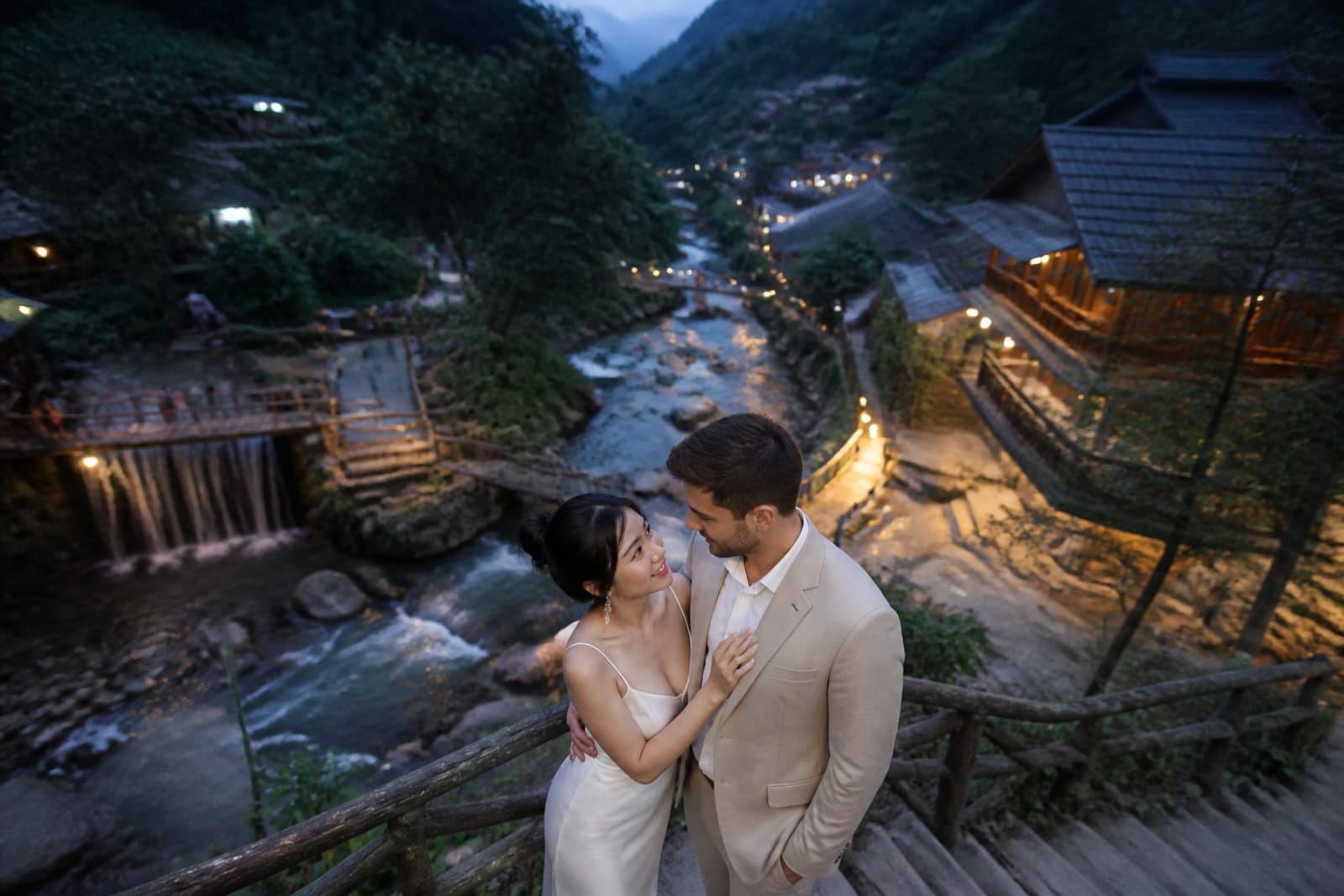
Before booking any Sapa-based photographer for your pre-wedding shoot, ask: Have you shot in rainy season and do you have indoor backup locations arranged? (Vague answers = risk.) Can you deliver edited files within two weeks? (Rain and fog take longer to edit.) What's your cancellation policy if weather is dangerous? (Avoid teams with no refund clause.) Do you own backup gear—extra lenses, rain covers, reflectors—or rely on rentals? (Owned backup gear means faster problem-solving.) Can you show a full gallery from a rainy-season session? (Not just dry-season work.) Are permits needed for Ta Phin village or the homestay? (Some homestays charge a "photography fee"; clarify who pays and how much.) Ask these on your first message—a photographer who gives evasive or generic replies hasn't worked in Sapa's constraints.
Can Cáo Studio help plan a Ta Phin shoot, or do you need a Sapa-based team?
Cáo Studio operates only in Hanoi, Ho Chi Minh City, and Hoi An, so we cannot shoot in Sapa or Ta Phin village. However, we guide couples through finding a trustworthy local Sapa photographer: check portfolios for rainy-season work, ask for WhatsApp references from past clients, and avoid teams with only landscape or tourism photos (pre-wedding requires different pacing and intimacy). If you prefer to combine a Ta Phin trip with a professional pre-wedding photoshoot in a location we serve, consider a two-destination elopement—Ta Phin adventure photos (self-guided or with a local team) followed by a curated couple photoshoot in Hanoi or Hoi An. Hoi An's riverside setting, Ancient Town, and dry season (Feb–Aug) make it an excellent pre-wedding alternative if Ta Phin's monsoon timing conflicts. Contact us on WhatsApp to plan a Hanoi or Hoi An session around your trip.
📸 Book on WhatsApp — pre-wedding photoshoot
What to check before you book a Ta Phin rainy-season session
- Photographer's rainy-season portfolio. Request 5–10 images shot in actual rain or heavy mist, not just clear-day backups. If they have none, that's a yellow flag.
- Indoor backup location and access. Ask which homestay or pavilion they've secured and whether it's included in their quote or billed separately.
- Cancellation and rescheduling terms. Get it in writing—what happens if weather is unsafe? Do you keep the deposit, reschedule, or get a refund?
- Gear and insurance. Confirm they carry weather-sealed camera bodies and lenses, and that their insurance covers weather-related damage (to their kit and your rentals, if you're renting áo dài or suits).
- Editing timeline. Rainy, misty images take longer to retouch. Ask for a realistic delivery date—2–3 weeks is standard, not 48 hours.
- Local logistics. Clarify vehicle access to Ta Phin, homestay reservation, any photography permits, and whether they'll brief you on Red Dao etiquette (many homestays appreciate a small gift or donation).
---
FAQ
Can I bring an áo dài photoshoot to Ta Phin if it rains?
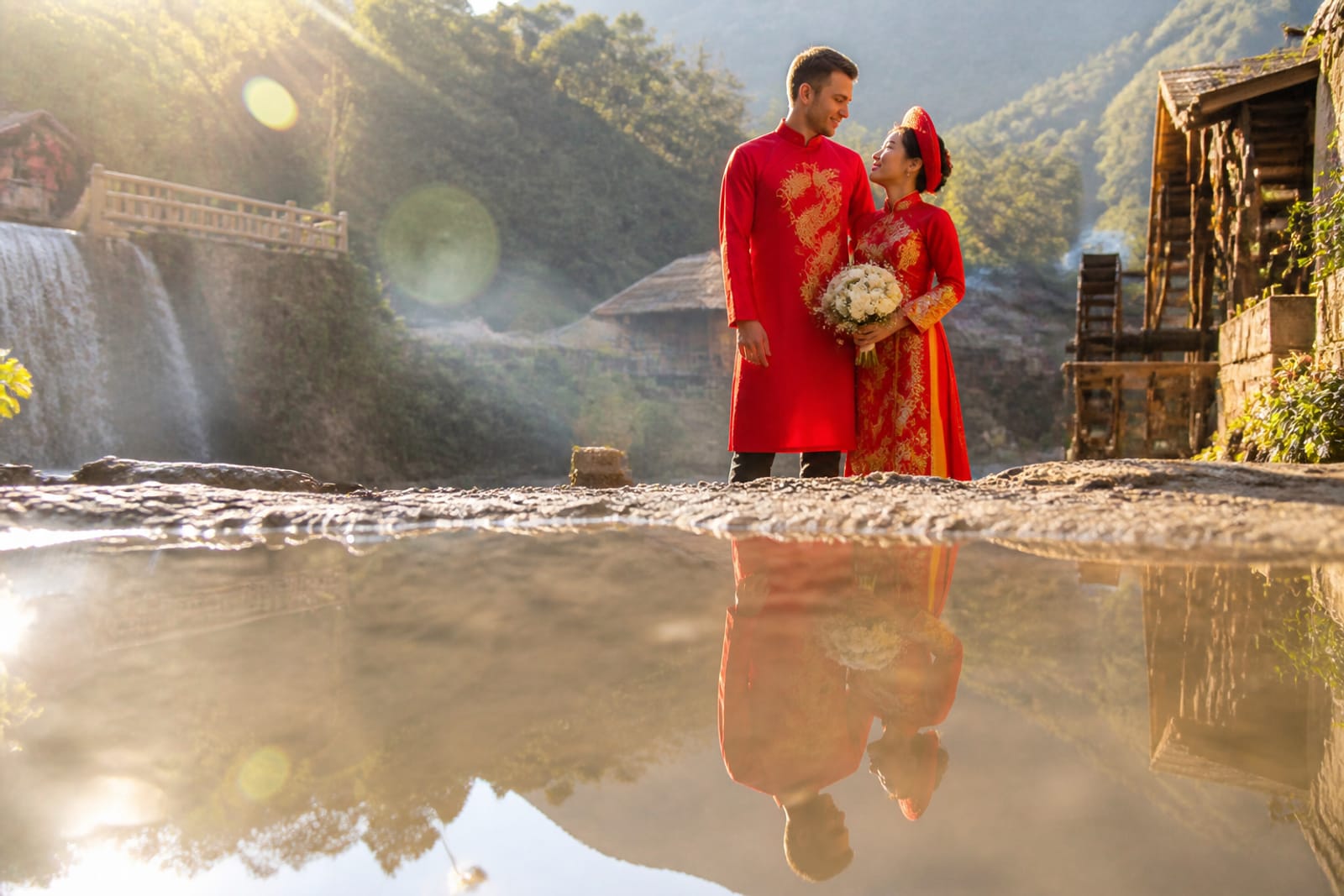
Yes, but mist and rain affect the fabric's drape and color saturation. Brief, light rain works if you reschedule for dry-season dates (late Sep–Nov, Mar–May). Heavy rain risks water damage to embroidered áo dài. Confirm your photographer has water-resistant covering and a nearby shelter, and that your rental áo dài is insured against weather damage.
Should I reschedule my pre-wedding shoot from May to October?
If landscape clarity is your priority, yes—October light is superior and Ta Phin's rice terraces are golden from harvest. If your venue, partner's work, or family calendar can't shift, book an indoor backup or work with mist as an aesthetic. Ask your photographer to show October and May galleries side-by-side so you see the difference in mood and framing options.
How much longer does editing take after a rainy-season Ta Phin shoot?
Misty, rain-spotted images require extra retouching to bring out detail and correct white balance. Budget 2–3 weeks instead of 1 week for final delivery. Confirm the timeline in writing with your photographer before booking; teams that promise 48-hour turnaround on monsoon shoots may deliver rushed work.
Is homestay interior light bright enough for couple portraits?
Yes, if you shoot near a north or east-facing window in early morning or midday. Bring a reflector or use white cloth to fill shadows on faces. Expect softer, more intimate portraits than outdoor landscape light—ideal for close-up emotional frames but less versatile for full-length or group shots. Ask your photographer to share samples of homestay interior work.
What happens if weather is so bad the shoot can't happen?
A professional photographer will communicate honestly the night before or morning-of. Confirm their cancellation policy in your contract: Does a full refund apply? Can you reschedule at no extra cost? Is there a weather buffer day built in? Avoid photographers with no written policy; they often don't refund on unsafe days.
Can I wear a wedding dress to an outdoor Ta Phin shoot in rainy season?
Not recommended in heavy rain—wet fabric weighs more, mud splashes, and delicate lace or beading risk water damage if you're renting. Dry-season shoots (Sep–Nov, Mar–May) are safer. If you're committed to rainy-season dates, choose a suit or áo dài instead, or plan an indoor homestay session where fabric stays dry.
FAQ
Can I bring an áo dài photoshoot to Ta Phin if it rains?
Yes, but mist and rain affect the fabric's drape and color saturation. Brief, light rain works if you reschedule for dry-season dates (late Sep–Nov, Mar–May). Heavy rain risks water damage to embroidered áo dài. Confirm your photographer has water-resistant covering and a nearby shelter, and that your rental [áo dài](/ao-dai-rental) is insured against weather damage.
Should I reschedule my pre-wedding shoot from May to October?
If landscape clarity is your priority, yes—October light is superior and Ta Phin's rice terraces are golden from harvest. If your venue, partner's work, or family calendar can't shift, book an indoor backup or work with mist as an aesthetic. Ask your photographer to show October and May galleries side-by-side so you see the difference in mood and framing options.
How much longer does editing take after a rainy-season Ta Phin shoot?
Misty, rain-spotted images require extra retouching to bring out detail and correct white balance. Budget 2–3 weeks instead of 1 week for final delivery. Confirm the timeline in writing with your photographer before booking; teams that promise 48-hour turnaround on monsoon shoots may deliver rushed work.
Is homestay interior light bright enough for couple portraits?
Yes, if you shoot near a north or east-facing window in early morning or midday. Bring a reflector or use white cloth to fill shadows on faces. Expect softer, more intimate portraits than outdoor landscape light—ideal for close-up emotional frames but less versatile for full-length or group shots. Ask your photographer to share samples of homestay interior work.
What happens if weather is so bad the shoot can't happen?
A professional photographer will communicate honestly the night before or morning-of. Confirm their cancellation policy in your contract: Does a full refund apply? Can you reschedule at no extra cost? Is there a weather buffer day built in? Avoid photographers with no written policy; they often don't refund on unsafe days.
Can I wear a wedding dress to an outdoor Ta Phin shoot in rainy season?
Not recommended in heavy rain—wet fabric weighs more, mud splashes, and delicate lace or beading risk water damage if you're [renting](/wedding-dress-rental). Dry-season shoots (Sep–Nov, Mar–May) are safer. If you're committed to rainy-season dates, choose a [suit or áo dài](/suit-rental) instead, or plan an indoor homestay session where fabric stays dry.
Ao dai, makeup, hair and a local photographer in Hanoi or Saigon — one WhatsApp message.