services/special-concept
Rice Field Farmer Concept Photoshoot Etiquette Guide
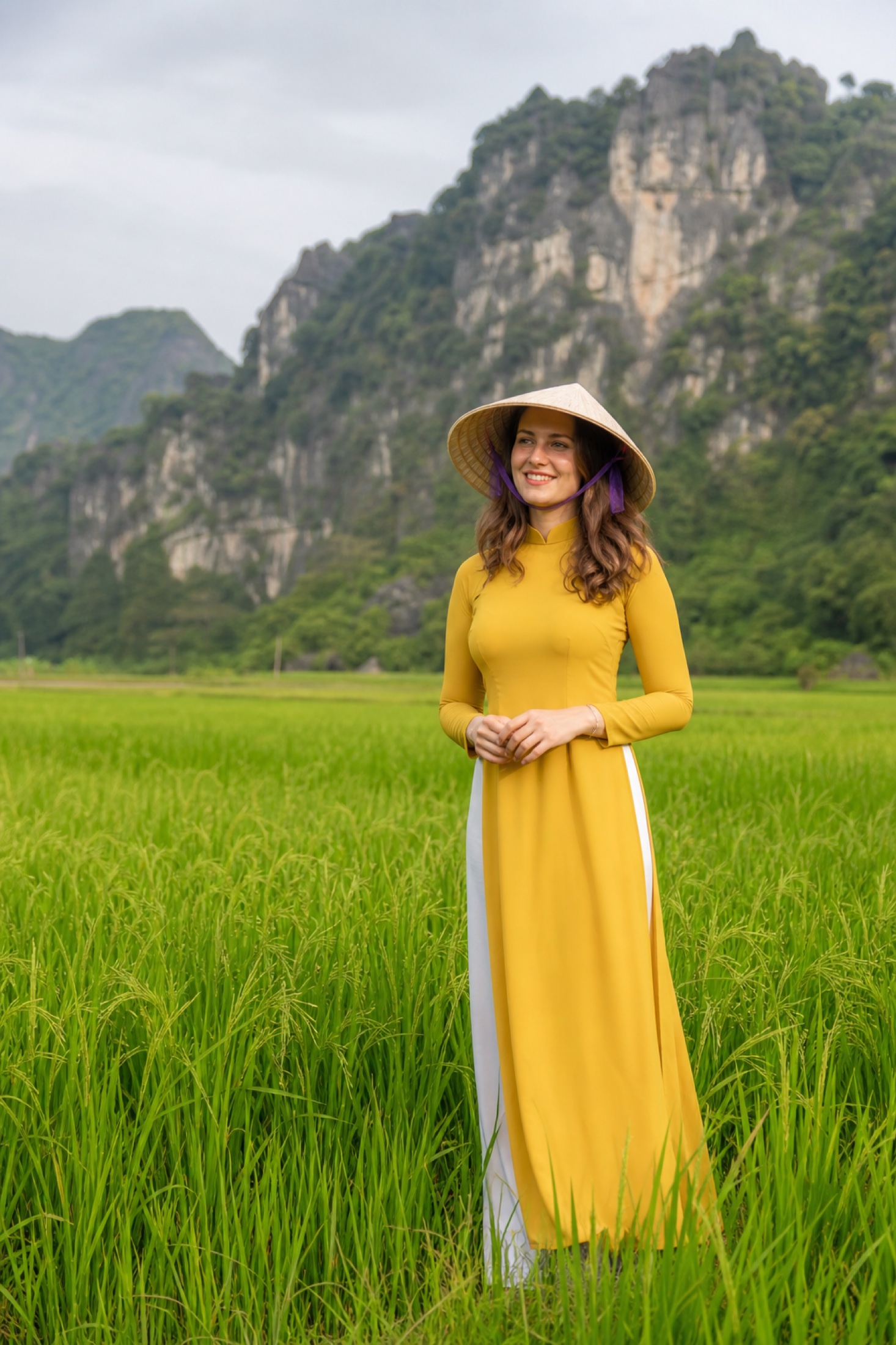
Rice fields are one of Vietnam's most photographed landscapes. But unlike temples or urban backdrops, they're working farms—not sets. A careless tourist can ruin a season's crop or deeply offend the people who tend it. This guide walks you through real etiquette, timing, and how to book responsibly.
Why are farmers upset when tourists disrespect rice fields?
Rice farming is subsistence work. Most farmers earn $2–5 per day. A single careless footstep on a planted field destroys weeks of growth; replanting costs money they don't have. In peak season (May–August in the North, September–December in the Mekong), families work 12-hour days. When tourists show up at midday for "golden hour" photos, they interrupt harvesting, distract workers, and sometimes block access to water channels or pathways families rely on.
Local resentment has been building for years. Some villages now charge entry fees or ban photography outright. Respectful shoots—booked through photographers who have relationships with farmers—still welcome travelers. Disrespectful ones get turned away or reported.
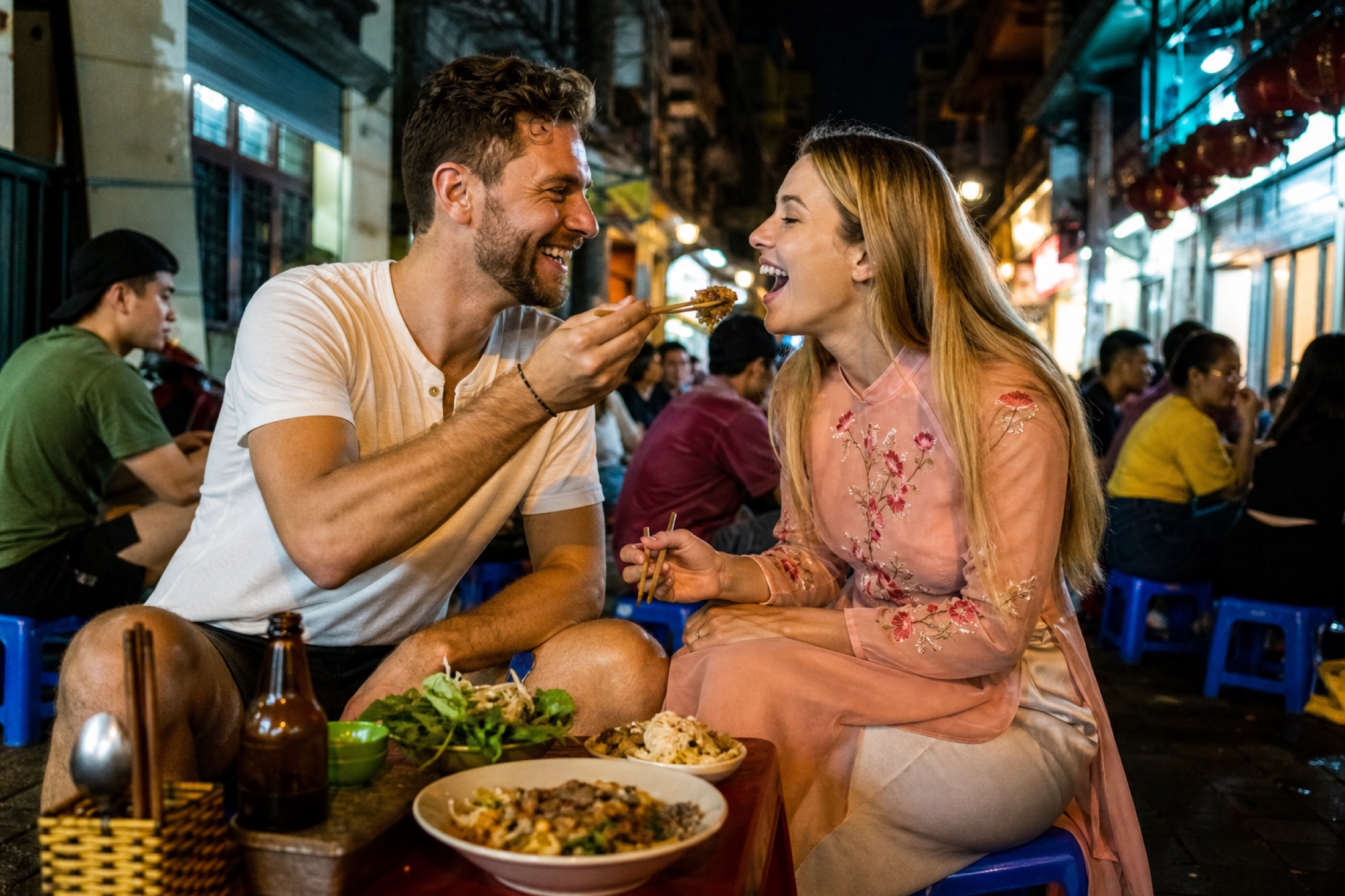
What time of day actually works for rice field shoots?
Early morning (6–7 a.m.) is ideal: light is soft, fields are cooler, most farmers haven't started heavy labor yet, and mist still clings to the water. Late afternoon (4–6 p.m.) works if farmers are finishing for the day. Avoid 9 a.m.–3 p.m. entirely during planting and harvest; that's when families are most active and stressed.
Winter (November–January) is more flexible. Growth is slower, weather is mild, and fewer urgent tasks mean farmers are less likely to see you as an obstacle. Rice fields are also greener in early winter than in the dry season.
📸 Book on WhatsApp — ao dai photoshoot
What should you wear under an áo dài for rice field shoots?
The etiquette rule: If your outfit wouldn't be appropriate on a family farm back home, it's not appropriate here. Áo dài photoshoots in rice fields call for modesty—not just style.
Wear:
- Cotton slip or undergarment in white, cream, or the áo dài color (visible through silk when wet/backlit)
- Lightweight linen pants or leggings underneath (farmers wear them; you should too)
- Closed shoes: canvas sneakers or farm boots (rice paddies have snakes and sharp stubble; flip-flops are disrespectful and unsafe)
- Thin long-sleeve shirt under the áo dài if your skin burns easily (sun reflection off water is intense)
Don't wear:
- Bikinis, sports bras, or bare skin under the áo dài (exposes you during movement, offends locals)
- Short shorts or hot pants as "base layer" (signals you're not taking the space seriously)
- Jewelry that jingles or catches (distracting during shots, risk in muddy terrain)
Most traveling couples book a makeup & hair session the morning of their shoot. We do full prep at hotels in Hanoi and Saigon, then head to the fields with your áo dài already fitted and styled.
How do you ask a farmer for permission without a translator?
You hire a photographer who already has permission. This is non-negotiable.
If you book independently, here's how it works:
- Scout the field a day before. Find the farmer or nearest family member. Never show up at shoot time and then ask.
- Bring an interpreter (hotel concierge, hired guide, friend who speaks Vietnamese). Gestures alone cause misunderstandings.
- Explain: duration (30–60 minutes), what you'll wear, why you're there. Mention you'll stay off planted rows and won't damage crops.
- Offer a gift: Fruit, snacks, or small cash (100,000–200,000 VND / $4–8 USD is respectful, not obligatory). Never photograph the transaction.
- Get verbal yes. No written contract needed; a farmer's word is their bond.
Cáo Studio has standing relationships in Hoi An's rice-growing districts and Hanoi's Ba Vì countryside. We've worked the same fields for years. Farmers know us, trust us, and are prepared for our shoots. You skip the negotiation entirely and focus on the photos.
What safety and etiquette mistakes do photographers see most?
| Mistake | Why it fails | What to do instead |
|---|---|---|
| Wading into muddy water to pose | Sinks, ankle injuries, water parasites, destroys banks | Stand in shallow edges or on pathways; ask photographer to frame creatively |
| Arriving during midday harvest | Farmers stop work, feel watched, stressed about schedule | Book for 6–7 a.m. or 4–6 p.m. only |
| Removing áo dài for "beach-style" shots | Exposes intimate spaces, deeply disrespectful in rural areas | Keep the áo dài on; it's the concept |
| Ignoring "no photography" signs or farmer gestures | You get banned, future tourists get turned away | Read signs, watch for body language, leave immediately if asked |
| Bringing 20 friends and crew | Overwhelms farmers, looks like an event, creates dust/noise | Keep group small: photographer + 1–2 subjects max |
| Not checking weather (monsoon approaching) | Flash floods, lightning, photoshoot gets cut short, fields close | Check forecast 3 days before; reschedule if rain is forecast |
A professional photographer prevents most of these. They know field conditions, can read farmer mood, and have contingency plans.
How does booking a concept shoot through a studio protect both you and the farmers?
When you book a special concept photoshoot through Cáo Studio:
- We secure farmer consent in advance. No day-of negotiation or surprise intrusions.
- We know safe routes. Off-limits areas, water channels, nesting zones—we avoid them.
- We schedule outside stress hours. Early morning or post-harvest windows only.
- We bring local guides if needed. They translate if farmers have questions mid-shoot.
- We leave the fields better. No trash, no damaged plants, no footprints in active crop rows.
- Farmers recognize us. Years of consistent, respectful shoots means they actually want us back.
Cáo Studio shoots in:
- Hanoi: Ba Vì district rice paddies, Red River terraces, Hoài Đức countryside. Visit Hanoi.
- Saigon & Mekong region: Visit Saigon.
- Hoi An: Ancient town rice fields, coconut groves, water buffalo herds. Ask on WhatsApp for Hoi An dates—we travel by appointment.
What should you check before you book a rice field photoshoot?
Before finalizing:
- ✓ Confirm the photographer has standing permission from the farmer (not a "we'll ask on arrival" vague promise).
- ✓ Ask the exact time slot and confirm it's outside 9 a.m.–3 p.m. in peak season (May–August, September–December).
- ✓ Verify the áo dài fits properly and undergarments are modest (request a fitting 1–2 days before if you're nervous).
- ✓ Check the weather forecast 3 days prior; reschedule if monsoon rains are forecast.
- ✓ Ask if the photographer includes a guide or translator (valuable if you're unsure about boundaries).
- ✓ Confirm the session includes basic editing and delivery timeline (usually 2–4 weeks).
- ✓ Clarify what's included: makeup & hair, transportation, number of outfits, location scouting.
📸 Book on WhatsApp — ao dai photoshoot
Cáo Studio also offers couple & family photoshoots, pre-wedding & elopement, and proposal packages in rural settings if you want to combine concepts. See our full pricing page or FAQ for specifics.
Rice field shoots are worth the preparation. You get stunning, meaningful images—and the farmers who make it possible are respected and fairly treated.
FAQ
Can I bring children to a rice field photoshoot?
Yes, if they're comfortable with early morning wake-ups (6 a.m.) and can stand still for 30–45 minutes. Hire a childminder or book a family photoshoot where movement and play are expected. Avoid bringing toddlers to working rice paddies; water and snakes pose real risks.
What happens if a farmer asks us to leave mid-shoot?
Stop immediately. Don't argue or negotiate. Leave calmly, thank them, and contact the photographer for a reshoot date with clarified boundaries. Pushing back damages the photographer's reputation and ruins future shoots for all travelers.
Is it okay to photograph the farmer while they work?
Only if they consent explicitly and seem comfortable. Many farmers say yes out of politeness, then feel watched. Ask once; if they look uncertain, skip it. Never photograph children without parental permission.
Do we need to hire an interpreter?
Not if you book through Cáo Studio—we handle communication. If booking independently, yes. Hotel concierges can recommend affordable guides for 1–2 hours ($8–15).
What month is actually best for rice field photos in Vietnam?
November–January (winter): mild weather, fresh green shoots, fewer active farmers to disturb. May–August works too but requires earlier booking and stricter timing (6–7 a.m. only). Avoid September–October (chaotic harvest) and March–April (heat, dust).
How much do you typically charge for a rice field concept shoot?
We send custom quotes on WhatsApp based on location, duration, group size, and styling needs. Visit our pricing page or book a consultation.
FAQ
Can I bring children to a rice field photoshoot?
Yes, if they're comfortable with early morning wake-ups (6 a.m.) and can stand still for 30–45 minutes. Hire a childminder or book a [family photoshoot](/services/couple-photoshoot) where movement and play are expected. Avoid bringing toddlers to working rice paddies; water and snakes pose real risks.
What happens if a farmer asks us to leave mid-shoot?
Stop immediately. Don't argue or negotiate. Leave calmly, thank them, and contact the photographer for a reshoot date with clarified boundaries. Pushing back damages the photographer's reputation and ruins future shoots for all travelers.
Is it okay to photograph the farmer while they work?
Only if they consent explicitly and seem comfortable. Many farmers say yes out of politeness, then feel watched. Ask once; if they look uncertain, skip it. Never photograph children without parental permission.
Do we need to hire an interpreter?
Not if you book through Cáo Studio—we handle communication. If booking independently, yes. Hotel concierges can recommend affordable guides for 1–2 hours ($8–15).
What month is actually best for rice field photos in Vietnam?
November–January (winter): mild weather, fresh green shoots, fewer active farmers to disturb. May–August works too but requires earlier booking and stricter timing (6–7 a.m. only). Avoid September–October (chaotic harvest) and March–April (heat, dust).
How much do you typically charge for a rice field concept shoot?
We send custom quotes on WhatsApp based on location, duration, group size, and styling needs. Visit our [pricing page](/pricing) or [book a consultation](/book).
Ao dai, makeup, hair and a local photographer in Hanoi or Saigon — one WhatsApp message.