lookbook
Rice Terrace Season Photoshoot Vietnam: When, Where & How to Book
Rice terrace photography in Vietnam demands precision: light fades fast, weather changes hourly, and seasonal shifts rewrite the landscape every few weeks. Whether you're planning an ao dai shoot, engagement photos, or a solo traveler session, knowing when the terraces look their best—and how to compose shots—separates stunning keepsakes from flat, midday snaps.
Which rice terrace season gives the best light and colors?
Planting season (May–June) floods paddies into mirror-like reflections; emerald shoots create layered greens. Harvest (September–October) turns fields golden-bronze, ideal for warm-toned portraits. Early morning (6–7 a.m.) and late afternoon (4–6 p.m.) offer directional, soft light; midday sun flattens color and creates harsh shadows. Shoulder months (April, November) have fewer tourists and stable weather, though color contrast is muted.
🌸 See the lookbook — browse ao dai and couple shoots styled in seasonal landscapes.
Where are Vietnam's best rice terraces for photoshoots?
Sapa (north): steep, narrow terraces; dramatic cloud cover; cooler temps; best May–October. Heavy rainfall July–August muddles roads; plan accordingly.
Hoi An valley (central): gentler slopes; easier access; golden hour reflections. Cáo Studio runs photoshoots in Hoi An by appointment—ask on WhatsApp for terrace session dates and logistics.
Mekong Delta (south): flatland canals and rice belts; longer dry season; less dramatic but intimate. Best November–April (cool, dry).
Mu Cang Chai (north): tourist-heavy but visually stunning; late September through October is peak harvest color.
Light direction matters as much as location. Shoot with sun behind or side-lit (not front-lit) to reveal texture. Midday overhead light washes color; avoid 11 a.m.–2 p.m. Overcast mornings suit ao dai shoots (diffused, even skin tones); terraces pop on clear days.
How do outfit choices affect rice terrace photos?
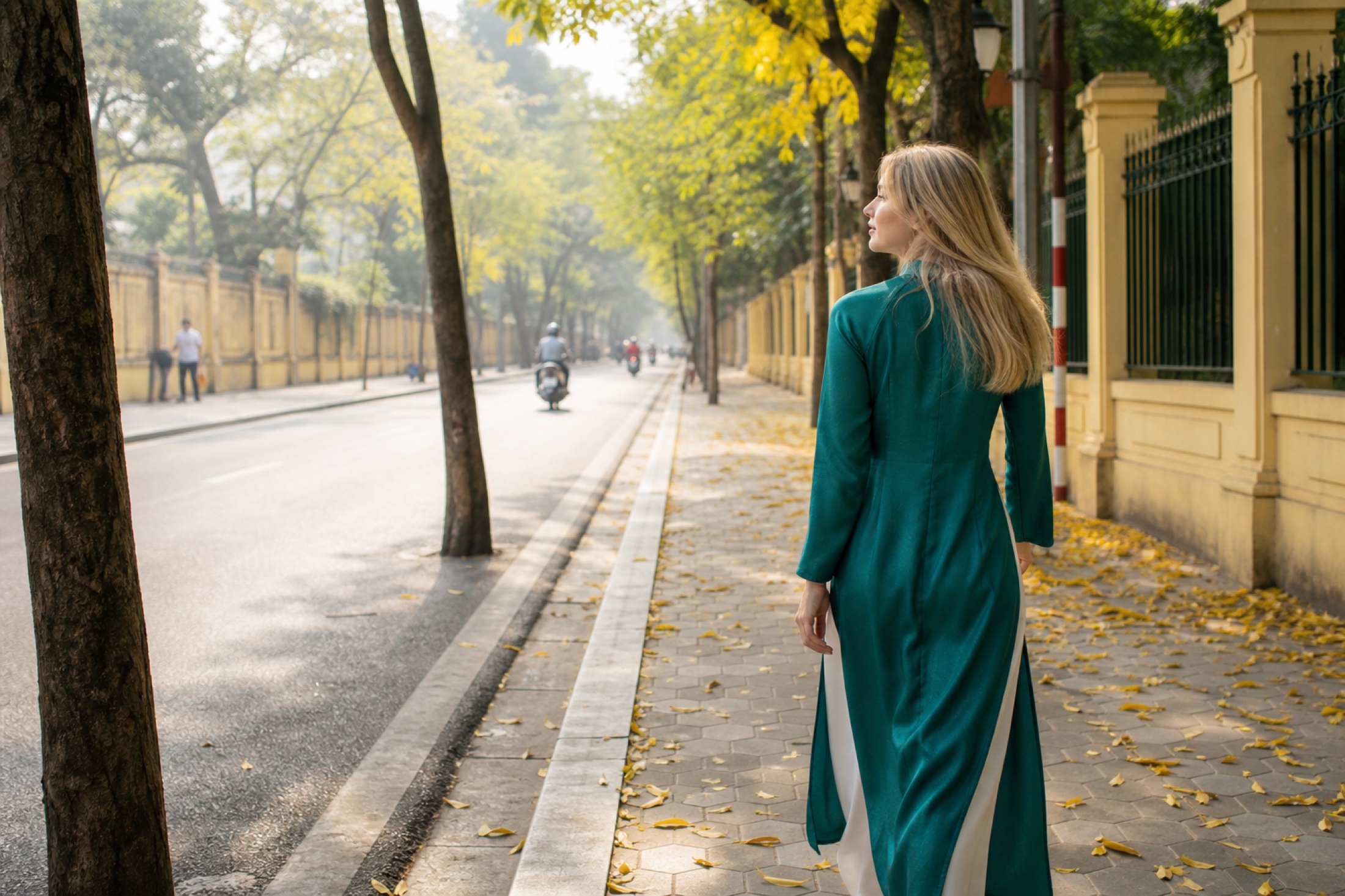
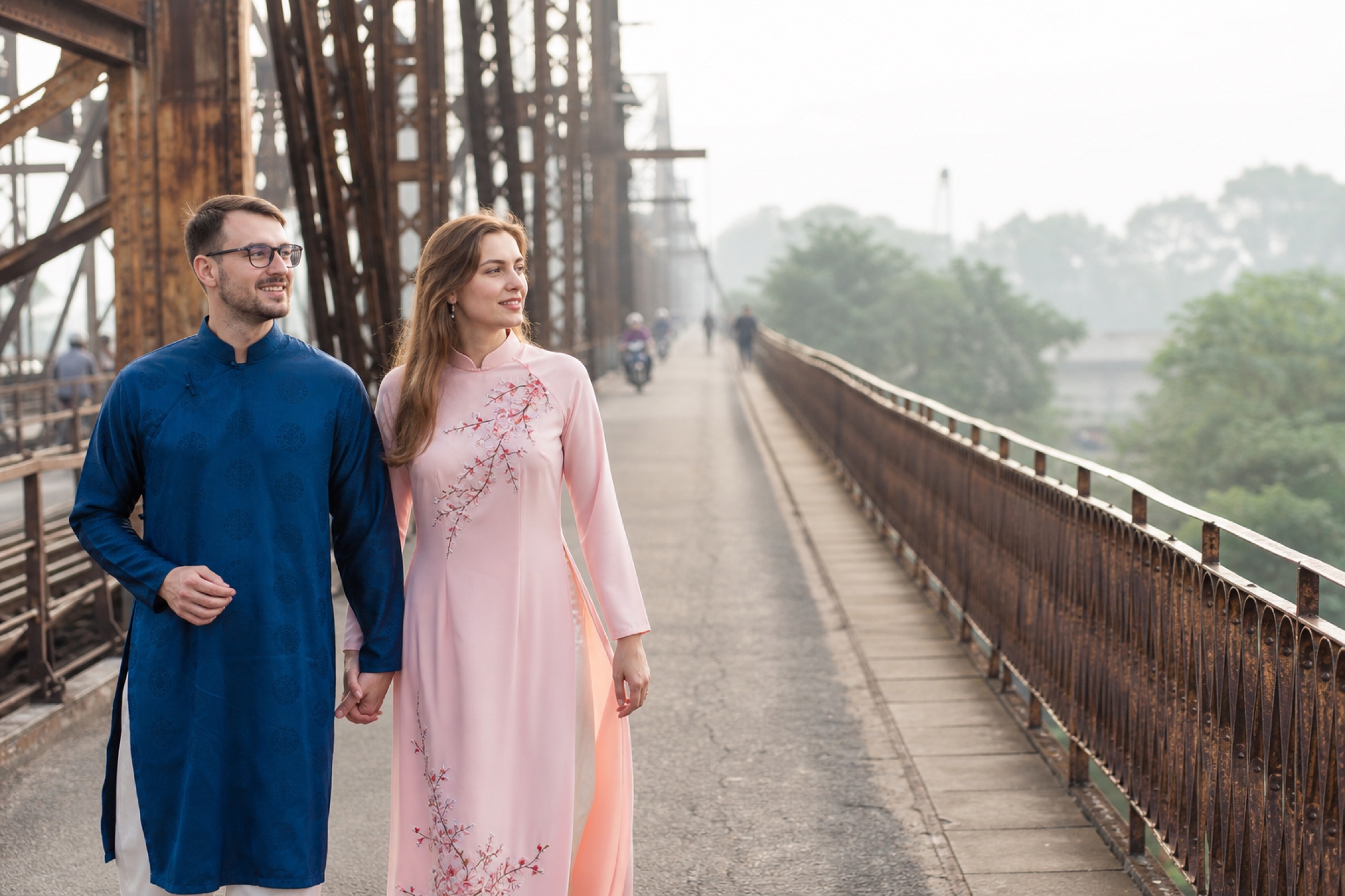
Áo dài (traditional tunic) floats beautifully over terraces and reads well in wide shots; jewel tones (emerald, sapphire, rust) contrast plowed earth. Avoid white (reflects glare, hardens skin tone in direct sun). Layers work: silk áo dài over loose trousers means freedom to move and kneel on damp ground.
Western casual (dresses, linen, tailored shirts) works if neutral or tonal; patterned fabrics compete with geometric terrace lines. Wear shorts or pants—muddy banks require mobility.
Footwear: slip-on waterproof sandals or hiking shoes. Wet terraces = slick, and you'll cross water channels. Avoid heels.
Fabric choice: linen wrinkles and shows water stains; cotton breathes but clings when damp; silk drapes and hides minor soiling better. For ao dài shoots, silk or silk-blend is standard.
Color checklist:
- Emerald terraces: warm jewel tones, gold, terracotta
- Golden harvest: deep blues, purples, grays
- Flooded paddies (mirrors): jewel tones, pastels (yes—contrast reads better)
Avoid black and pure white in direct sun (either loses detail or glares).
What's the difference between DIY, local guide, and professional studio bookings?
| Option | Best for | Logistics | Photo quality | Budget expectation |
|---|---|---|---|---|
| Self-shoot (phone/camera) | Solo travelers, casual memories | Sunrise hike + tripod timer | Flat midday light; composition guesswork | Free (your time) |
| Local tour guide with photo stop | Budget groups, casual snapshots | Group pacing; guide finds "Instagram spot" | Rushed timing; generic angles | $15–30/day (tour) |
| Hired local photographer | Couples, small families, 2–3 hour session | Booked via Facebook/Airbnb; communicates basic English | Hit-or-miss; better if you scout beforehand | $40–80 USD (typical) |
| Cáo Studio Hanoi or Hoi An ao dài/couple session | Travelers wanting curated, styled shoots; pre-wedding previews | Professional team; makeup & hair included; full-day or half-day packages | Polished, posed, keepsake-ready; hair/makeup corrects harsh sun | Send WhatsApp for quote |
Key question: do you want posed, styled keepsakes (studio), or candid, unstructured moments (guide)? Studio shoots require 2–4 weeks' booking; guides need 1–2 days.
📸 Book on WhatsApp — ao dai photoshoot — terrace sessions available in Hanoi and Hoi An; makeup & hair included.
What are the seasonal weather risks and how to plan around them?
| Month | Light quality | Rainfall risk | Terrace stage | Risks |
|---|---|---|---|---|
| April | Golden, even | Low | Dry/prepping | Heat haze 10 a.m.–3 p.m. |
| May–June | Soft, saturated | Medium (5–10 rainy days) | Flooded, green | Flash storms; muddy roads; humidity |
| July–August | Diffused, cool | High (frequent) | Lush, overcrowded | Landslides in Sapa; visibility drops |
| September–October | Warm, golden | Low | Harvest, golden | Peak tourist season; book early |
| November–December | Clear, warm | Very low | Dry, stubble | Shorter daylight; cooler mornings (ideal) |
| January–March | Bright, crisp | Low | Fallow/early plant | Less visual drama; best for morning clouds |
Planning rule: book 3–4 weeks ahead for professional studio sessions. For DIY or guide-based shoots, check local weather 5–7 days prior; a single rainstorm can close terrace access 24–48 hours.
Rain doesn't ruin photos—it deepens greens, clears sky, and cuts haze. Wet áo dài clings; bring a second outfit or accept the romantic, cling-draped look.
How does a professional rice terrace photoshoot actually run?
Pre-shoot (1–2 weeks before):
- Scout location and confirm access (Sapa charges ~50k VND per entry; some private farms require farm-owner permission).
- Confirm sunrise or sunset time (shifts 15 min/month).
- Brief client on outfit, weather contingency, mobility.
Day-of (4 a.m. start for sunrise, 2 p.m. for sunset):
- Arrive before light peaks; set makeup/hair last (sweat + humidity = touch-ups every 20 min).
- Shoot 45–60 min in optimal light window.
- Move 2–3 nearby vistas to vary backdrop.
Posing on terraces:
- Kneel, recline, or sit on paddy edges (avoid stepping into planted paddies—crops are income).
- Wide shots show landscape; close-ups isolate emotion. Mix both.
- Hands in pockets or tucking áo dài folds reads better than arms at sides.
- Slow, deliberate movement looks graceful; rushed poses flatten.
Typical session (Cáo Studio Hanoi or Hoi An): 4–6 hours total (travel + makeup + 50–80 edited images). Makeup & hair at your hotel can be added to offset early morning rush.
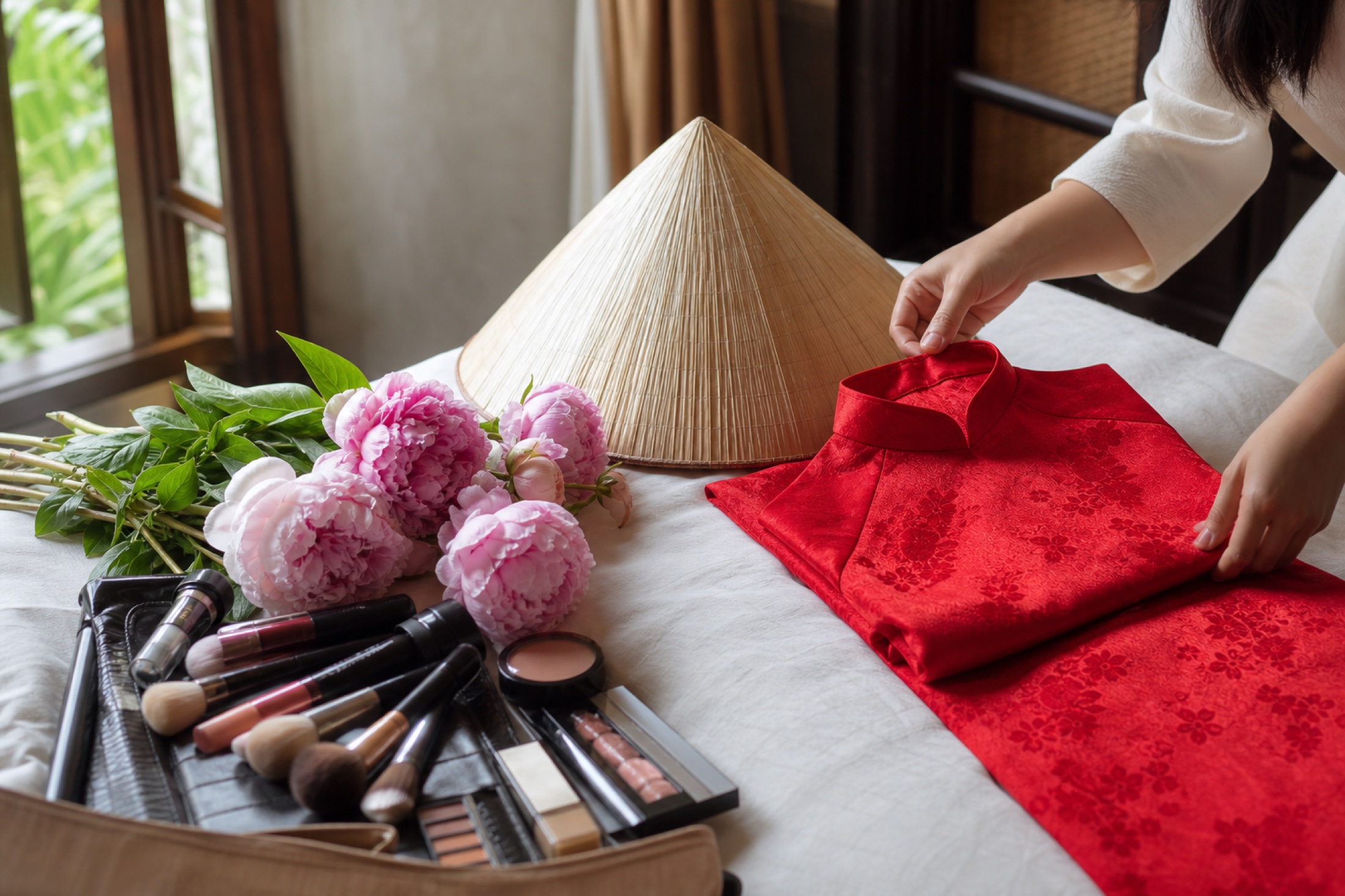
💄 Makeup & hair at your hotel — arrive polished to your terrace location; we travel to you in Hanoi, Hoi An, and Saigon.
For engagement or pre-wedding shoots, terraces work beautifully as a secondary location (start in a village, move to terraces for golden hour). Cáo Studio's couple & family photoshoot packages can include terrace routing; ask during WhatsApp consultation.
---
What to check before you book a rice terrace photoshoot
- Confirm access: Is the terrace public (Sapa, Mu Cang Chai) or private farmland (Hoi An valley, Mekong)? Private = may need permission; some charge entry or expect a small donation.
- Verify light time: Sunrise (exact time) and sunset (exact time) shift monthly. Check 7-day weather; if rain forecast, book a rain date.
- Outfit finality: Does your áo dài or dress dry quickly after contact with damp ground? Will mud stains show by hour 3? Test beforehand if hiring locally.
- Transport to terrace: Is the location walkable from a road or a steep 30-min hike? Worn hiking shoes, not flats.
- Image delivery: How many edited photos, and when? Studio shoots typically deliver 40–80 processed images within 2 weeks; local guides may hand over unedited camera files only.
- Backup plan: If weather cancels, can you reschedule at no extra cost? Confirm in writing.
---
For travelers booking with Cáo Studio Hanoi or choosing Hoi An shoots, we handle scout location permits, early transport, and makeup touch-ups on-site. Couples often pair terraces with a later village or temple backdrop in one session; the cost and logistics are clearer in a WhatsApp quote.
Traveling solo and want to hire a local? We can refer trusted photographers in Sapa and Mekong; message us on WhatsApp.
📸 Book on WhatsApp — ao dai photoshoot | 💄 Makeup & hair at your hotel | 🌸 See the lookbook
---
Related reads:
- Ao dài photoshoot service
- Couple & family photoshoot
- Pre-wedding & elopement packages
- Proposal & anniversary shoots
- Cáo Studio Hanoi | Saigon | Hoi An
- Pricing & packages
- Lookbook gallery
FAQ
When is the absolute best month to shoot rice terraces in Vietnam?
October (harvest, golden light, dry, fewer midges). September is equally good but peak-tourist busy. May–June offers emerald greens and mirror reflections but higher rain and humidity. Choose based on color preference, not just crowd.
Can you do a rice terrace shoot if you're wearing Western clothes, not an áo dài?
Yes. Neutral-toned dresses, linen shirts, and tailored shorts read well in wide terrace shots. Avoid patterns (compete with terrace geometry) and white (glare in sun). Áo dài is culturally fitting and photographs more dramatically, but not mandatory.
Do I need to hire a photographer, or can I just hike and self-shoot?
Self-shooting works for casual phone snaps; timing sunrise/sunset and finding non-tourist angles takes trial. A local guide ($20–40/day) adds composition advice. Professional studio bookings cost more but deliver styled, edited keepsakes ready for prints or albums—worth it for proposals or anniversary trips.
Is July or August a bad time to shoot terraces?
Yes, typically. Heavy rainfall, landslide risk (Sapa), and overcast skies reduce color drama and visibility. October–April is safer and more photogenic. If you must shoot July–August, aim for early morning (clearer light) and expect rain contingencies.
How long does a professional rice terrace session take, and what comes after?
Typically 4–6 hours total (travel, setup, 50–80 minute shoot, image offload). Edited photos arrive within 2 weeks; studios usually deliver 40–100 polished, color-corrected images. DIY or guide-based shots may give you unedited files same-day, requiring your own post-processing.
Can Cáo Studio shoot rice terraces in Mekong Delta or just northern/central regions?
We run sessions in Hanoi (Sapa, north), Hoi An (central valleys), and Saigon (Mekong accessible by day trip). For Mekong shoots departing Saigon, ask on WhatsApp—we coordinate local photographer referrals or arrange transport. Hoi An terrace dates are by appointment; message to confirm availability.
FAQ
When is the absolute best month to shoot rice terraces in Vietnam?
October (harvest, golden light, dry, fewer midges). September is equally good but peak-tourist busy. May–June offers emerald greens and mirror reflections but higher rain and humidity. Choose based on color preference, not just crowd.
Can you do a rice terrace shoot if you're wearing Western clothes, not an áo dài?
Yes. Neutral-toned dresses, linen shirts, and tailored shorts read well in wide terrace shots. Avoid patterns (compete with terrace geometry) and white (glare in sun). Áo dài is culturally fitting and photographs more dramatically, but not mandatory.
Do I need to hire a photographer, or can I just hike and self-shoot?
Self-shooting works for casual phone snaps; timing sunrise/sunset and finding non-tourist angles takes trial. A local guide ($20–40/day) adds composition advice. Professional studio bookings cost more but deliver styled, edited keepsakes ready for prints or albums—worth it for proposals or anniversary trips.
Is July or August a bad time to shoot terraces?
Yes, typically. Heavy rainfall, landslide risk (Sapa), and overcast skies reduce color drama and visibility. October–April is safer and more photogenic. If you must shoot July–August, aim for early morning (clearer light) and expect rain contingencies.
How long does a professional rice terrace session take, and what comes after?
Typically 4–6 hours total (travel, setup, 50–80 minute shoot, image offload). Edited photos arrive within 2 weeks; studios usually deliver 40–100 polished, color-corrected images. DIY or guide-based shots may give you unedited files same-day, requiring your own post-processing.
Can Cáo Studio shoot rice terraces in Mekong Delta or just northern/central regions?
We run sessions in Hanoi (Sapa, north), Hoi An (central valleys), and Saigon (Mekong accessible by day trip). For Mekong shoots departing Saigon, ask on WhatsApp—we coordinate local photographer referrals or arrange transport. Hoi An terrace dates are by appointment; message to confirm availability.
Ao dai, makeup, hair and a local photographer in Hanoi or Saigon — one WhatsApp message.