/couple-photoshoot
Same-sex couple photoshoot in Mekong Delta: spots and tips
A same-sex couple photoshoot in the Mekong Delta means working with a photographer (or team) to capture frames across floating markets, canal banks, orchards and villages during the dry season (December–April), when water levels are stable and morning light is soft and even. Sessions run 2–4 hours depending on outfit and location changes; light is best from dawn to mid-morning and again after 4 p.m. Choose between a directed studio-led session (one team handling photography, styling and direction) or booking a local Mekong photographer independently and coordinating outfits, timing and transport yourself. Cáo Studio does not operate in the Mekong Delta, but this guide helps you plan a shoot there or book a session in Hanoi, Saigon or Hoi An before or after. Key decision: unified direction (faster, one vision, higher logistics cost) vs. piecemeal booking (lower per-vendor cost, more coordination burden, risk of misaligned styles). 📸 Book on WhatsApp — couple photoshoot | 💄 Makeup & hair at your hotel ---
Which Mekong spots work best for same-sex couple frames?
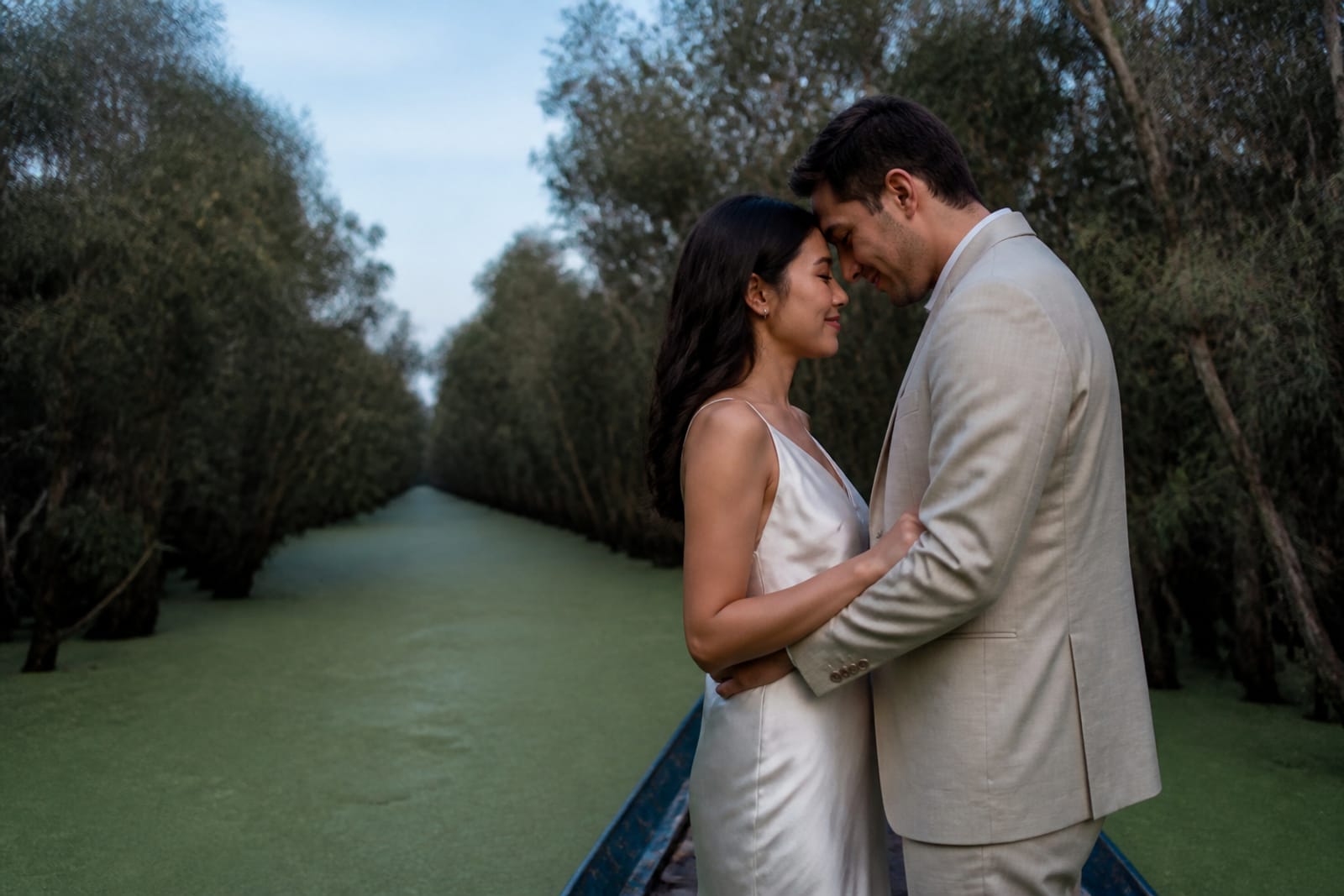
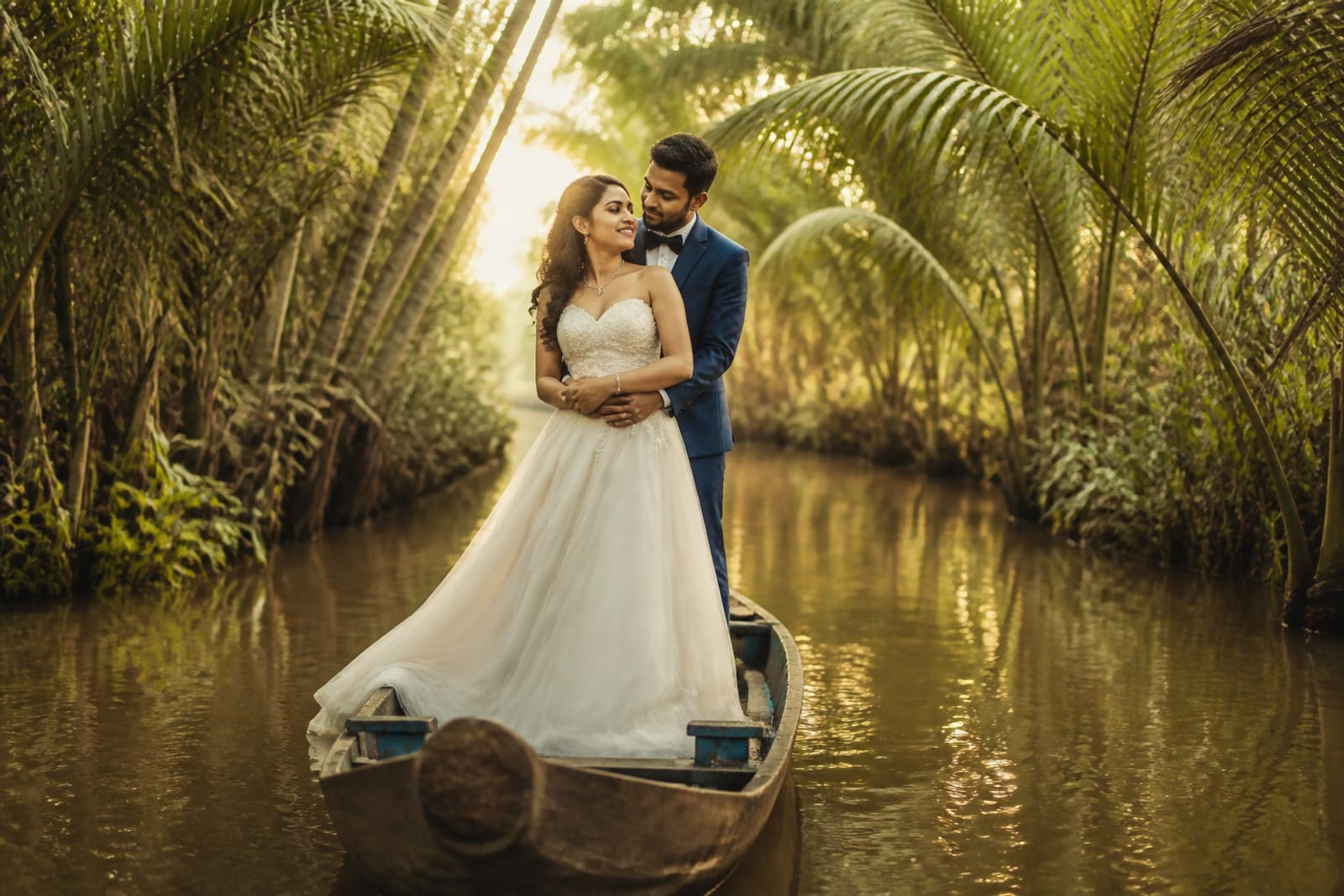
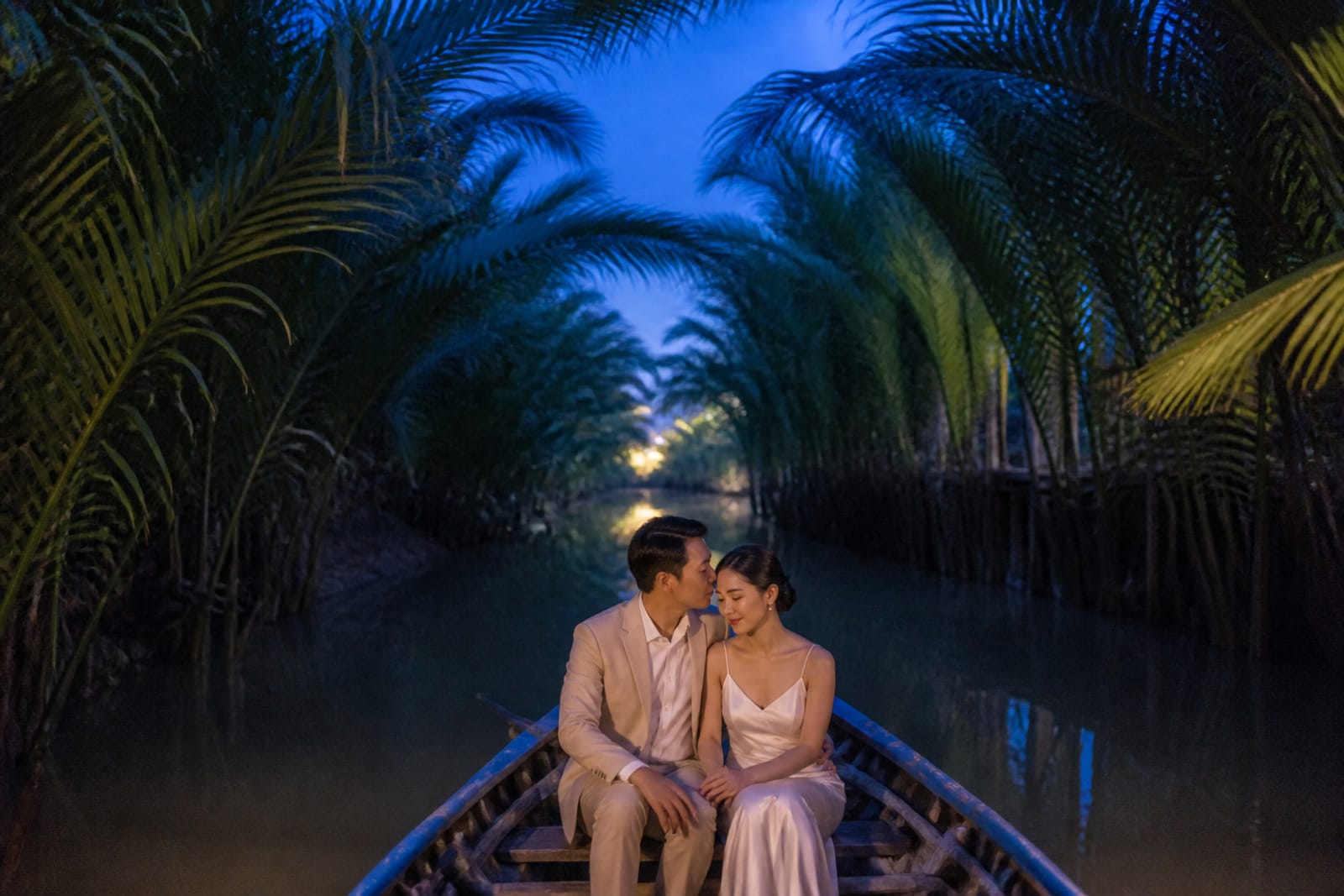
Floating markets (Cai Rang, Phong Dien) are busiest before 7 a.m., when long-tail boats cluster tight and light reflects softly off water; shooting after 9 a.m. means sparse boats and harder shadows. Orchard villages (Ben Tre, Vinh Long) offer quiet canals, palm shade and intimate walking shots—low foot traffic, stable water levels December–April. Canal homestays let you frame windows, doorways and walkways without crowds; negotiate with the property owner for a dawn session. Fruit farms and small docks are less scenic but allow private access. Avoid monsoon-season swollen water (Sep–Nov); channels become dangerously fast and light is diffuse and grey.
The trade-off is access vs. authenticity: markets feel alive but chaotic; orchards are serene but require longer boat travel (and fuel costs). Pick based on the story you want—market energy or quiet connection.
How does seasonal light and water level affect your shoot dates?
The dry season (December–April) means stable water levels, clear skies and side light that sculpts faces and water detail. December–February brings mild mornings (15–22°C) and haze from Hanoi coal; light is soft but grey-toned. March–April clears to brighter, warmer conditions with harder midday shadows—shoot 6–8 a.m. or after 4 p.m. May–November is wet season: afternoon downpours, murky water from silt, and low light. October–November brings typhoon risk and flooding in low-lying orchards.
| Season | Light quality | Water level | Weather risk | Best time of day |
|---|---|---|---|---|
| Dec–Feb | Soft, hazy, even | Stable, low | Occasional haze | 6–9 a.m., 4–6 p.m. |
| Mar–Apr | Bright, warm, harder | Stable, dropping | Heat, clear skies | 6–7:30 a.m., after 4:30 p.m. |
| May–Sep | Diffuse, grey, wet | Rising, unpredictable | Rain, flooding risk | Early morning only |
| Oct–Nov | Overcast, dim | High, flood risk | Typhoon, heavy rain | Avoid if possible |
Plan 6–8 weeks ahead; book a local photographer familiar with current water levels and monitor the forecast 10 days out.
Should you hire a unified team or book vendors separately?
Unified team (one director, photographer, stylist, makeup artist) works when the team has shot couples in the Mekong and understands water light, outfit weight in heat, and LGBTQ+-affirming direction. All decisions flow through one person; you avoid miscommunication between separate vendors. Cost factors: travel time to the Delta from their home base, team size, outfit/styling scope. Risk: if the director isn't experienced in same-sex portraiture, frames may still feel generic.
Separate vendors (photographer + local stylist/makeup + guide) spreads cost per vendor lower but adds coordination: you confirm the shoot brief with each separately, manage arrival times, troubleshoot on location if a vendor doesn't show, and reconcile different visions (e.g., your stylist's hair idea clashes with how the photographer wants to frame your face). Work with a photography agency that vets local vendors and provides a day-of coordinator.
Who suits which:
- Unified team: couples wanting a stress-free morning, willing to pay for seamless direction, first time in the Delta.
- Separate vendors: couples with a specific photographer in mind, flexible timelines, local connections or prior Delta travel experience.
Ask potential photographers: Have you shot same-sex couples in the Mekong? Show examples. Do you work with a stylographer on set, or do I hire separately? What happens if it rains at 6:30 a.m.—do we reshoot, or edit around it?
What outfits and styling work in Mekong heat and water light?
Cotton or linen in neutrals (cream, sage, terracotta, soft grey) photograph true in soft morning light and don't cling or wrinkle when you're moving in 28°C heat. Avoid white (overexposes in bright light); blacks can look flat in soft overcast. Matching or complementary tones (both in cream and taupe, or one sage and one rust) feel cohesive without costume-like.
Layers to plan for:
- Footwear: water-friendly sandals or water shoes; carry dry socks and sneakers for walking orchards. Bare feet work only on dry dock wood (test it first; water-logged wood splinters).
- Cover-ups: a lightweight scarf or overshirt for boat shade and sun protection; it adds movement to frames without adding thermal stress.
- Undergarments: moisture-wicking briefs; avoid cotton that stays damp. Bring a change.
- Jewelry: small, secure pieces; rings catch water spray and light distractingly.
If you want Vietnamese-inflected frames (e.g., wearing ao dai together), book ao dai rental and makeup & hair in your session city (Hanoi, Saigon or Hoi An) before traveling to the Delta; transporting fresh ao dai by boat and keeping it dry is logistically hard. Some Mekong photographers have lightweight ao dai for on-location changes, but condition varies.
Heat note: test your outfit at home in a warm room and move around for 20 minutes. If you overheat or feel restricted, the photographer will see tension in your face and posture.
How do you vet a local Mekong photographer for LGBTQ+-affirming work?
Ask for a portfolio focused on couples (not solo travel or landscapes). Request 3–5 recent same-sex couple sessions; if they don't have any, ask why and whether they've shot other non-traditional couples. Look for frames that show genuine interaction—walking, looking at each other, a moment of real contact—not static poses in front of landmarks.
Red flags:
- "I usually shoot families and solo travelers; couples are new territory."
- Portfolio has no recent work or is heavily filtered in a single style.
- Photographer doesn't ask about your vision, outfit or light preferences during consultation.
- Session includes only full-length standing shots; no detail (hands, faces mid-conversation).
Green flags:
- Photographer mentions shooting at specific times (e.g., "Cai Rang before 6:45 a.m.") and explains why.
- Examples show genuine candid moments and varied framing (wide landscape, medium two-shot, detail).
- First contact includes questions: What story do you want? What's your comfort level with direction? Any outfits or locations off-limits?
- They provide a shot list or session flow (e.g., "market first light, then orchard, then dock at golden hour").
Ask for a reference from a past couple client; most photographers will provide one. A 15-minute video call is worth it: do they listen, ask questions, and feel calm and respectful?
Cost factors to ask about (never assume pricing):
- Travel time from their home city to your Delta location.
- Half-day vs. full-day rate.
- Number of edited files included.
- Digital files vs. prints (ask about turnaround and any add-on costs).
- Reshoot clause if weather is poor.
---
What to check before you book
- Confirm the photographer's experience with same-sex couples and the Mekong Delta in writing (email or WhatsApp).
- Get a written session brief: time, location, outfit plan, number of outfit changes, edited file count, and delivery date.
- Check the forecast 10 days before; agree with the photographer on a rain-date or partial edit/reshoot plan.
- Arrange transport (private boat or long-tail rental) 2 weeks ahead; ask your photographer for vendor recommendations.
- Test your outfit at home in warmth and movement; bring extra undergarments and a cover-up to location.
- Confirm timings with your photographer 48 hours before: exact pickup time, market opening time, sun position (ask them, not a general website).
- Bring backups: portable phone charger, wet bag for electronics, lip balm, sunscreen, hair clips, and a small mirror for touch-ups.
- Ask about editing scope: black-and-white vs. colour, skin tone adjustments, and whether you get RAW files or only edited JPEGs.
---
Bringing your Cáo Studio session to the Mekong
If you're based in Hanoi, Ho Chi Minh City or Hoi An and want a couple photoshoot before traveling to the Delta, Cáo Studio can capture frames in your home city, including makeup & hair and styling. This gives you a unified team experience and edited frames in 48 hours—useful if you want polished couple images alongside candid Delta portraits taken by a local photographer you hire independently. A pre-trip session also builds confidence and visual language (how you move, where you feel most present) that carries into the Delta shoot.
---
FAQ
Can Cáo Studio shoot couple sessions in the Mekong Delta?
No, Cáo Studio operates in Hanoi, Ho Chi Minh City, and Hoi An. This guide helps you plan a Delta shoot independently or with a local photographer. We can photograph you in your home city before or after a Delta trip.
What's the best month for same-sex couple photos in the Mekong?
March–April offers stable water, warm light, and clear skies. December–February works too but light is softer and hazier. Avoid May–November (wet season, silt, flooding risk, grey light).
Do I need to book a local guide separately, or does the photographer provide one?
Most Mekong photographers arrange boat transport and guide access; confirm this in your booking brief. If you hire separate vendors, budget for a private boat rental and guide from a local tourism operator or hotel.
What happens if it rains on the morning of my session?
Ask your photographer before booking: will they reschedule, shoot in light rain (wet landscapes can photograph beautifully), or offer a partial edit with reduced file count? Get this in writing.
Can I wear ao dai in the Mekong for couple photos?
Yes, but coordinate with a stylist and makeup & hair service in your home city (Hanoi, Saigon, Hoi An) before traveling to the Delta. Transporting fresh ao dai by boat and keeping it dry is difficult. Some Delta photographers have on-location ao dai; ask about fabric quality and fit.
How much does a Mekong couple photoshoot cost?
Costs depend on photographer experience, travel distance to the Delta, session length, and number of outfit changes. Request quotes directly from photographers; factors include their base rate, boat rental, and file delivery.
Should we arrive in the Mekong a day early?
Yes. Travel time from Ho Chi Minh City is 2+ hours; arriving the day before allows you to scout light with your photographer, confirm boat access, and rest before an early morning session.
FAQ
Can Cáo Studio shoot couple sessions in the Mekong Delta?
No, Cáo Studio operates in Hanoi, Ho Chi Minh City, and Hoi An. This guide helps you plan a Delta shoot independently or with a local photographer. We can photograph you in your home city before or after a Delta trip.
What's the best month for same-sex couple photos in the Mekong?
March–April offers stable water, warm light, and clear skies. December–February works too but light is softer and hazier. Avoid May–November (wet season, silt, flooding risk, grey light).
Do I need to book a local guide separately, or does the photographer provide one?
Most Mekong photographers arrange boat transport and guide access; confirm this in your booking brief. If you hire separate vendors, budget for a private boat rental and guide from a local tourism operator or hotel.
What happens if it rains on the morning of my session?
Ask your photographer before booking: will they reschedule, shoot in light rain (wet landscapes can photograph beautifully), or offer a partial edit with reduced file count? Get this in writing.
Can I wear ao dai in the Mekong for couple photos?
Yes, but coordinate with a stylist and [makeup & hair](/makeup-and-hair) service in your home city (Hanoi, Saigon, Hoi An) before traveling to the Delta. Transporting fresh ao dai by boat and keeping it dry is difficult. Some Delta photographers have on-location ao dai; ask about fabric quality and fit.
How much does a Mekong couple photoshoot cost?
Costs depend on photographer experience, travel distance to the Delta, session length, and number of outfit changes. Request quotes directly from photographers; factors include their base rate, boat rental, and file delivery.
Should we arrive in the Mekong a day early?
Yes. Travel time from Ho Chi Minh City is 2+ hours; arriving the day before allows you to scout light with your photographer, confirm boat access, and rest before an early morning session.
Ao dai, makeup, hair and a local photographer in Hanoi or Saigon — one WhatsApp message.