/couple-photoshoot
Same-sex couple photoshoot in Sapa: spots and tips
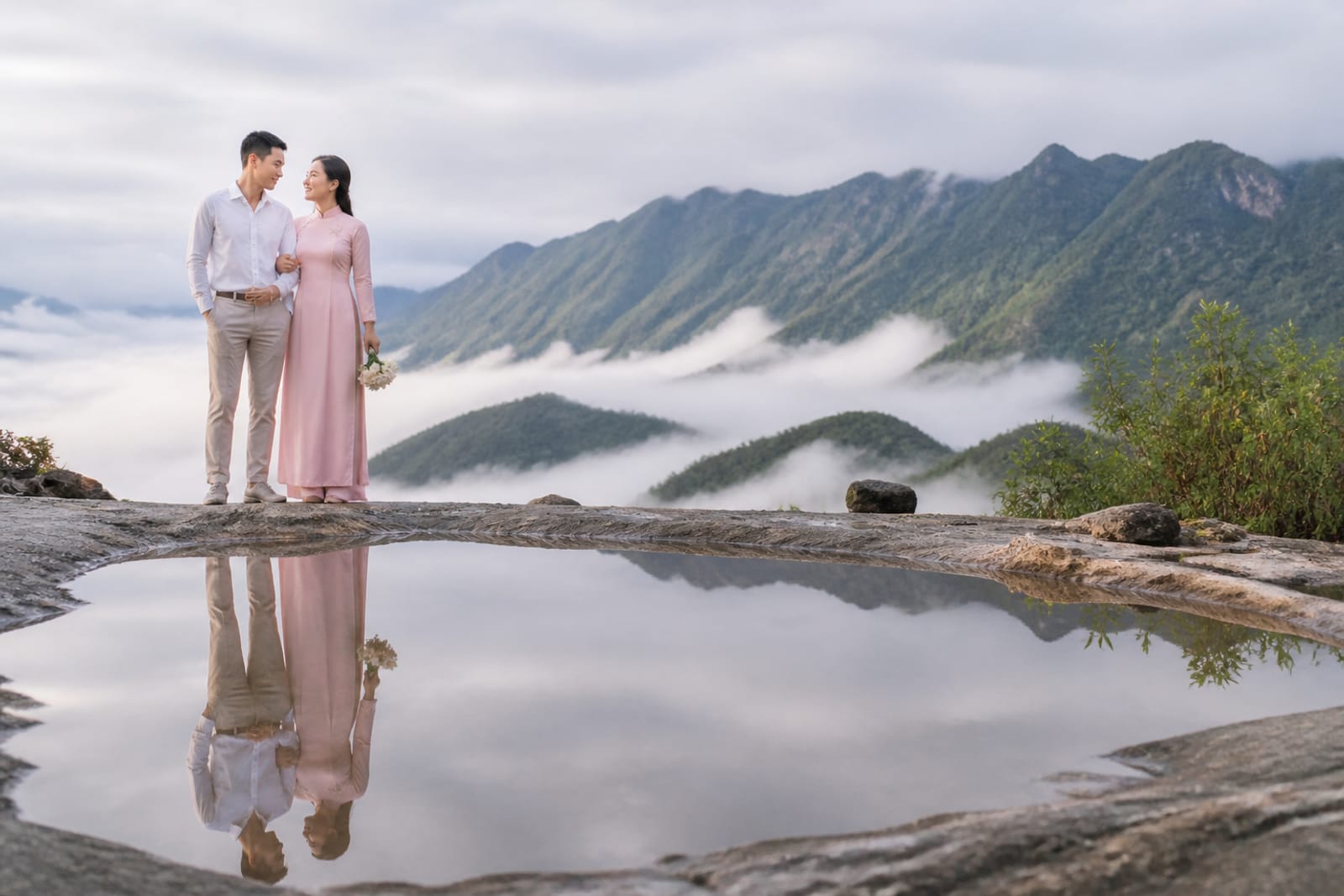
Same-sex couple photoshoots in Sapa work best during clear-sky windows: March to May and September to November bring stable light, green or golden terraces, and fewer crowds. A shoot typically runs 2–4 hours around sunrise (5:30–7:30 am) or late afternoon (4:00–6:30 pm) when side light sculpts the terrain and softens skin tones. Sapa's steep, muddy trails mean wear grip-soled shoes and scout the path beforehand; hire a local guide who knows which terraces have safe footing and minimal foot traffic. Cáo Studio does not operate in Sapa, but our Hanoi team can advise on local photographer vetting or arrange a pre-wedding session closer to the city, then you day-trip for landscape-only frames with a guide. Real light beats posed backdrops — walk together, look at the valley, let the photographer capture you moving through the frame.
Why does Sapa's light make couple portraits stronger than studio backdrops?
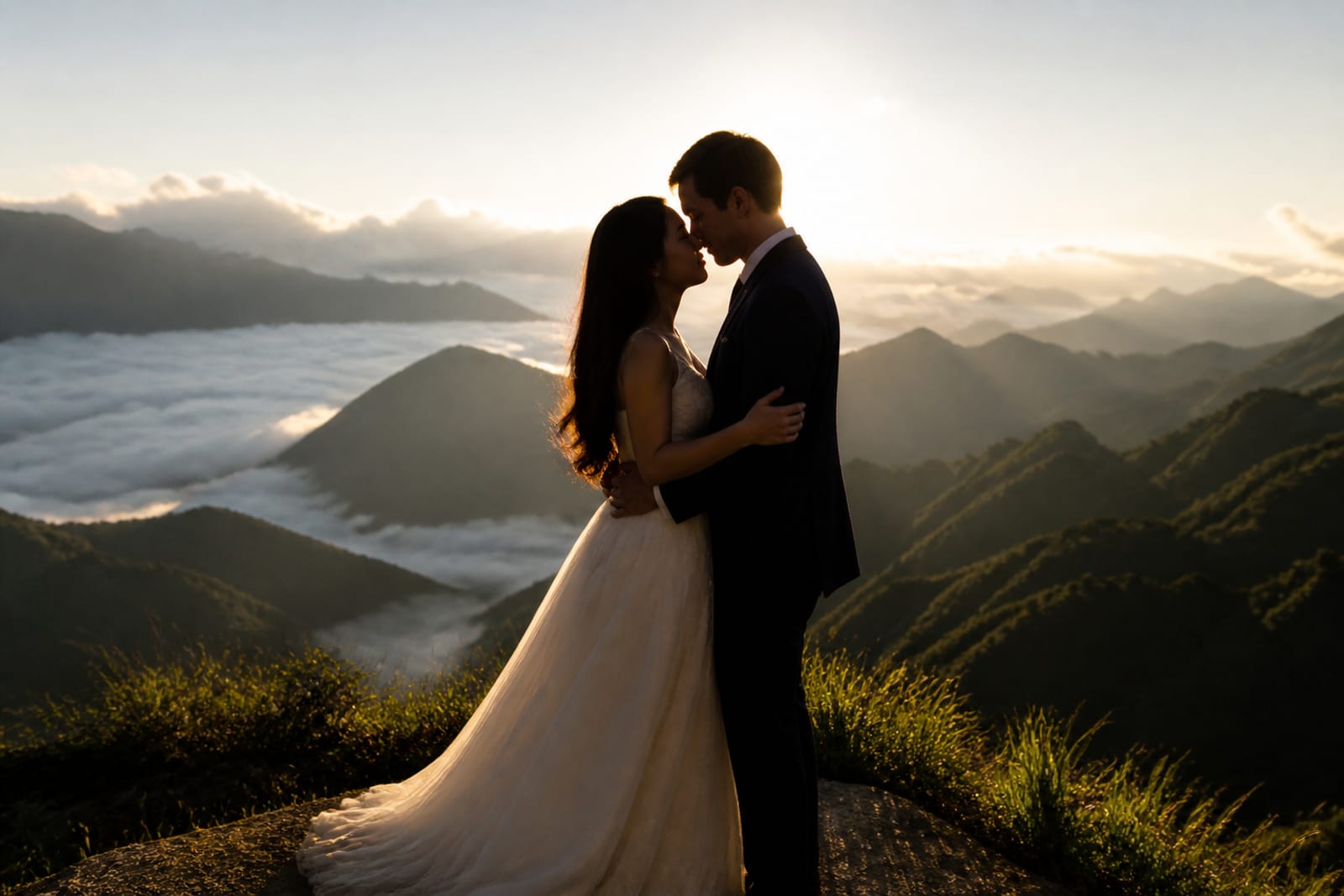
Sapa's morning and evening sun hits the terraces at a shallow angle, casting long shadows across ridges and creating depth that a flat monument backdrop cannot. This side light models the contours of faces and the landscape together, so your silhouettes read against the valley, not against a generic wall. The mist that often lingers in the terraces (especially May and Sep–Nov) diffuses harsh shadows, making skin tones even and warm. A photographer trained in natural light composition will position you so the terrace lines lead the eye toward you, not distract from you. Studio light is flat and controllable; Sapa's light tells a story about where you chose to commit. That story is harder to fake.
📸 Book on WhatsApp — couple & family photoshoot
What are the best months and hours for shooting in Sapa's rice terraces?
| Month | Terrace color | Weather | Best shooting hours | Why it works |
|---|---|---|---|---|
| Mar–May | Green to bright gold | Clear, occasional mist | 5:30–7:00 am, 4:30–6:00 pm | Stable skies; mist softens light; not yet peak tourist crowds |
| Jun–Aug | Lush green; water-filled | Rainy afternoons; foggy mornings | Early dawn before clouds; risky after 9 am | Wet terraces reflect light; afternoon rain likely; reduced visibility |
| Sep–Oct | Golden harvest (mid-Sep onwards) | Clear and cool; occasional mist | 5:30–7:00 am, 4:30–6:00 pm | Terraces at peak color; stable light; fewer midday tourists |
| Nov–Feb | Faded gold to brown; frost possible Dec–Feb | Cold and grey; fog frequent | 6:00–8:00 am only (low sun angle, short window) | Moody, but light is diffuse and weak; frost risk on muddy paths |
Sapa's coolest, most stable light arrives during the first hour after sunrise. By 7:30 am, mist clears and direct sun flattens the terraces. Evening light is equally strong (4:30–6:00 pm), but clouds often build by 5:00 pm during the rainy season. Avoid midday (11:00 am–3:00 pm): the sun is overhead, faces sit in shadow under foreheads, and the terraces look washed out. March to May offers green terraces, clear skies and warm but not scorching heat; September to November brings the gold harvest and cool mornings. June to August is beautiful but risky — afternoon downpours come suddenly and make trails slippery. December to February is moody but cold (near 0°C at night) and fog often obscures the view entirely. A shoot in March, April, October or early November is the safest bet for light, color and safety.
How do you choose between booking Sapa locally versus traveling to Hanoi for Cáo Studio?
| Option | Best for | Logistics | Why choose it |
|---|---|---|---|
| Local Sapa photographer | Couples who live/stay in Sapa; minimal travel; budget focus | Scout photographer 2–4 weeks ahead; test with portfolio and references; single freelancer; no makeup/hair coordination | You see only edited frames; no art direction; pay per session; coordinate outfit, hair yourself |
| Cáo Studio Hanoi pre-wedding + Sapa day-trip | Couples who want one art-directed session, one landscape backup; 2–3 days in region | Book 4–6 weeks ahead; team travels from Hanoi (2 hours); makeup/hair included; delivered in 48 hours | You get one directed shoot (outfit, hair, makeup, photography in sync), then you hire a local guide + camera person for landscape frames; more intentional, faster turnaround |
| Hire independent Sapa guide + bring freelance photographer | Couples with time and high photography confidence | Both booked separately; no pre-shoot briefing; coordinate outfit/hair yourself; risky timeline | You know the landscape, light, and trails; photographer focuses on framing and light; lowest price, but most logistics friction |
Booking a local Sapa photographer works if you have 3–4 weeks to vet their work, clear communication, and comfort with freelance-only coordination. You'll save on travel time and may pay less per hour. The downside: no makeup or hair artist on-site, no art direction from a team experienced with your light and season, and no 48-hour turnaround — most freelancers deliver in 1–3 weeks.
Booking Cáo Studio in Hanoi for a full pre-wedding or couple session costs more in travel time (2 hours each way) but gives you one professionally directed session with outfit, makeup and hair included, plus a team that has shot Sapa dozens of times and knows which hours and spots to avoid. After that session, you hire a local guide and a camera operator for 2–3 hours in the terraces — a second shoot focused purely on landscape and movement. You end up with 200+ frames from one directed session and 100+ from a landscape walk, delivered from the directed session in 48 hours. The trade-off: two photographers, two different aesthetics, but one of them is art-directed from the start.
A third option suits couples who know Sapa well or are staying there several days: hire a Sapa guide (who knows every safe terrace and the best light hours), then book an independent Hanoi-based travel or wedding photographer for 1–2 days to shoot with you. This way you get local knowledge, professional light work, and some cost savings — but you'll coordinate three people instead of one team.
What should you wear for a mountain couple photoshoot, and how do terraces affect your outfit choice?
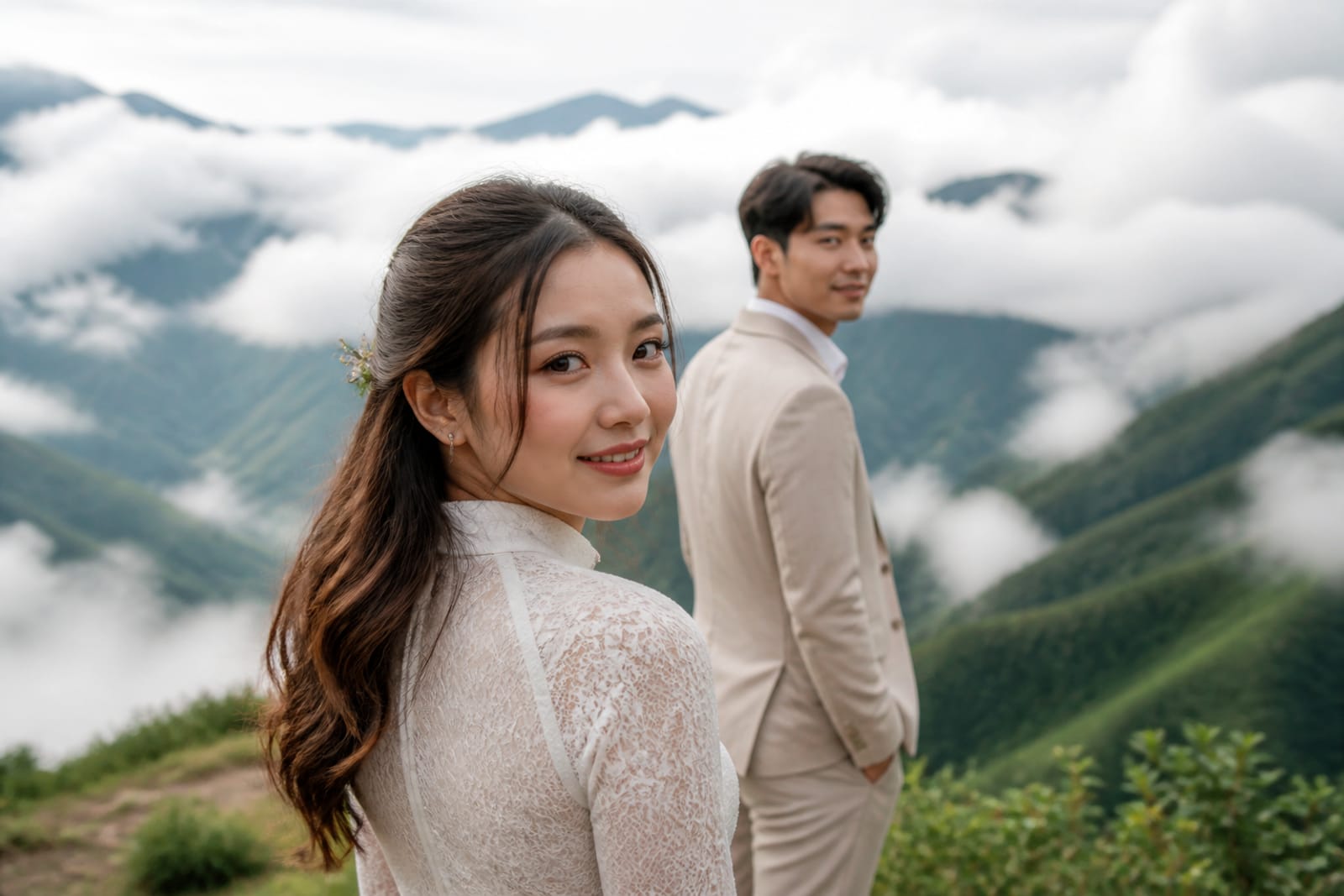
Sapa's cool mountain air (10–18°C even in spring) and muddy, uneven terrain demand practical elegance. Avoid heavy fabrics that absorb sweat and wrinkle in humidity; instead wear structured cotton, linen blends or silk that breathe and photograph crisply. Jewel tones (forest green, deep plum, charcoal, navy) stand out against the golden or green terraces; pastels and whites work if one of you wears a bolder accent (scarf, outer layer). Layers are essential — a fitted base layer and a loose overshirt or jacket keeps you warm at dawn and gives you options to roll up sleeves or open the jacket for movement.
Footwear is non-negotiable. Terraces are steep, wet and slippery, especially after mist or rain. Wear hiking boots with deep treads, not trainers or flats. The photographer may shoot your boots in the frame (especially detail shots of you walking), so choose a style you're proud of. Avoid anything that shows dirt easily — the paths are mud.
If you're considering an ao dai rental for a formal session later, book that separately in Hanoi or Ho Chi Minh City; the terrain makes ao dai impractical for mountain shoots. Reserve ao dai for temple backdrops or urban couple sessions where you can walk on level ground and have a support team nearby.
Accessories should be minimal and secure: a small crossbody bag, a watch that won't slip off in damp conditions, and avoid dangling jewelry that catches on branches. If you're both in outdoor wear (matching jackets, complementary colors), the frames read as a cohesive unit against the landscape. Couples who dress in coordinating-but-distinct styles photograph stronger than couples in identical outfits.
How do you work with a photographer to avoid stiff poses and capture movement in steep terrain?
The difference between a snapshot and a keeper frame is movement and intention. Instead of standing still facing the camera, walk together down a terrace path while the photographer shoots from ahead or the side — your gaze naturally finds each other, your posture relaxes, and the landscape behind you reads as dynamic. Ask the photographer to shoot three sequences: (1) you walking toward the camera, (2) you walking past the camera (so the photographer catches a profile or three-quarter view and you're lit from the side), and (3) you paused at a viewpoint, looking out or at each other.
Brief the photographer on mood, not poses. Say "We want quiet and close" or "We want to feel the landscape" rather than "Shoot us kissing here." A good photographer will direct your gaze ("Look at the valley, not the camera") and your body ("Walk a step closer together, don't stop") so you're reacting naturally, not performing. In steep terrain, give the photographer time to position themselves safely first. Uneven ground means they can't be looking through the viewfinder and watching their footing simultaneously — a guide should be with them, or you should move slowly enough that the photographer can direct and shoot without tripping.
If the photographer suggests a pose ("Sit on that terrace edge, face the camera"), ask first: Is that edge stable? Can you both stand or sit there without slipping? Sapa's terrain is treacherous in wet conditions — never agree to a pose just for the frame. Safety is always stronger than a single shot.
What do you need to check before booking a local photographer or arranging a Cáo Studio session?
For a local Sapa photographer:
- Portfolio screening. Request 10–15 full couple shoots (not single portraits or landscapes). Look for natural light, varied backgrounds, frames where you can see the couple moving and interacting, not just standing. If the portfolio has heavy filters or oversaturated colors, ask to see unedited RAW files or before-and-afters.
- Seasonal experience. Ask: "How many shoots have you done in [your season — March, October, etc.]? What was the light like? Did you have to adjust your plan because of weather?" A photographer who shoots Sapa year-round knows when mist clears and when afternoon rains hit.
- Turnaround time and delivery format. Clarify: "How many edited images do we receive? When are they delivered? Do I get RAW files, JPEGs, or both? Can I order prints through you, or do I need to find a lab?" Most Sapa freelancers deliver 80–150 images in 2–3 weeks as JPEGs only; some charge extra for RAW or albums.
- Backup plan for weather. Ask: "What happens if it rains or is too foggy to shoot? Do we reschedule, get a refund, or accept the moody frames as-is?" Weather in Sapa is unpredictable, especially June–August and October–November. A professional photographer should have a clear policy.
- References and communication. Message at least one previous couple and ask: "Was the photographer easy to brief? Did they deliver on time? Would you book again?" Check response time — if they take 2+ days to reply to a WhatsApp, expect delays in editing.
For a Cáo Studio session in Hanoi:
Contact us via WhatsApp to discuss your dates, season and goals. We'll confirm available dates, explain what a couple photoshoot includes (exact inclusions confirmed on WhatsApp), and guide you on whether to book a pre-wedding session, an ao dai photoshoot, or a pre-wedding and elopement package. We do not shoot in Sapa, but we can advise on local team vetting and recommend second-shoot options if you're planning a multi-day trip.
FAQ
Can same-sex couples shoot in Sapa temples or cultural sites?
Yes. Most temples welcome all visitors respectfully. Dress modestly (covered shoulders, knees); some temples may ask you to remove shoes. Ask your photographer or guide before shooting inside sacred spaces — some prohibit commercial photography. A local guide will know the rules and help you navigate respectfully.
What's the best backup plan if it rains during my Sapa shoot?
Book your shoot for morning (5:30–7:30 am) when mist is predictable but rain is less likely than afternoon. If weather closes in, pivot to a second location (lower elevation, tree cover for softer light) or reschedule for the next clear dawn. Confirm with your photographer whether rescheduling or a refund is offered if conditions are unsafe.
Do I need a local guide, or can a photographer guide me through the terraces?
A guide is essential. Photographers focus on framing and light; guides know every safe path, water level, and which terraces are harvested or planted. Hire both. A guide costs less than a photographer and prevents you from slipping or trespassing on private farmland.
How many shots should I expect from a Sapa couple shoot?
Local freelancers typically deliver 80–150 edited images. Cáo Studio's turnaround and image count are confirmed on WhatsApp when you book. Always ask upfront and get it in writing to avoid surprises.
Should I fly to Hanoi to book Cáo Studio, or book a local Sapa photographer?
If you're already in Sapa and staying 1–2 days, book a local photographer. If you have 3+ days and want one professionally directed session with art direction, makeup and hair included, book Cáo Studio in Hanoi — the 2-hour drive is worth it for a full team. If you're passing through Hanoi first or staying several days, combining a directed session in the city with a landscape shoot in Sapa gives you two distinct aesthetics and 300+ frames.
Can I book a Sapa shoot through Cáo Studio's website?
No. Cáo Studio operates in Hanoi, Ho Chi Minh City, and Hoi An. For Sapa, we recommend this guide to vet a local photographer. Contact us on WhatsApp to discuss a pre-wedding session in Hanoi and a Sapa day-trip itinerary if you'd like our advice.
FAQ
Can same-sex couples shoot in Sapa temples or cultural sites?
Yes. Most temples welcome all visitors respectfully. Dress modestly (covered shoulders, knees); some temples may ask you to remove shoes. Ask your photographer or guide before shooting inside sacred spaces — some prohibit commercial photography. A local guide will know the rules and help you navigate respectfully.
What's the best backup plan if it rains during my Sapa shoot?
Book your shoot for morning (5:30–7:30 am) when mist is predictable but rain is less likely than afternoon. If weather closes in, pivot to a second location (lower elevation, tree cover for softer light) or reschedule for the next clear dawn. Confirm with your photographer whether rescheduling or a refund is offered if conditions are unsafe.
Do I need a local guide, or can a photographer guide me through the terraces?
A guide is essential. Photographers focus on framing and light; guides know every safe path, water level, and which terraces are harvested or planted. Hire both. A guide costs less than a photographer and prevents you from slipping or trespassing on private farmland.
How many shots should I expect from a Sapa couple shoot?
Local freelancers typically deliver 80–150 edited images. Cáo Studio's turnaround and image count are confirmed on WhatsApp when you book. Always ask upfront and get it in writing to avoid surprises.
Should I fly to Hanoi to book Cáo Studio, or book a local Sapa photographer?
If you're already in Sapa and staying 1–2 days, book a local photographer. If you have 3+ days and want one professionally directed session with art direction, makeup and hair included, book [Cáo Studio in Hanoi](/hanoi) — the 2-hour drive is worth it for a full team. If you're passing through Hanoi first or staying several days, combining a directed session in the city with a landscape shoot in Sapa gives you two distinct aesthetics and 300+ frames.
Can I book a Sapa shoot through Cáo Studio's website?
No. Cáo Studio operates in [Hanoi](/hanoi), [Ho Chi Minh City](/saigon), and [Hoi An](/hoi-an). For Sapa, we recommend this guide to vet a local photographer. Contact us on WhatsApp to discuss a pre-wedding session in Hanoi and a Sapa day-trip itinerary if you'd like our advice.
Ao dai, makeup, hair and a local photographer in Hanoi or Saigon — one WhatsApp message.