services/ao-dai-photoshoot
Sapa Ao Dai Photoshoot Guide: Where, What to Wear & How to Book
Sapa ao dai photography is a traveler dream—terraced rice fields, monsoon mist, and hill-tribe villages create backdrops no urban studio offers. But Sapa is 1,600 meters high, wet, muddy, and cold even in warm months. This guide walks you through real decisions: when to shoot, what to wear under an ao dai for comfort and layering, where to position yourself for light and safety, and how to hire a photographer who knows the terrain.
Does Sapa's weather allow ao dai shoots year-round?
No. October to early December offers the clearest skies and crispest air; January–March stays cool but drier. May–September brings daily rain and thick fog that obscures views until midday. April and late September are transitional—unpredictable. Shoot October–November for high probability of usable light; December–March if you can tolerate 8–12°C mornings and accept that dawn mist may linger.
📸 Book on WhatsApp — ao dai photoshoot (for Hanoi/Saigon/Hoi An sessions; Sapa requires local booking)
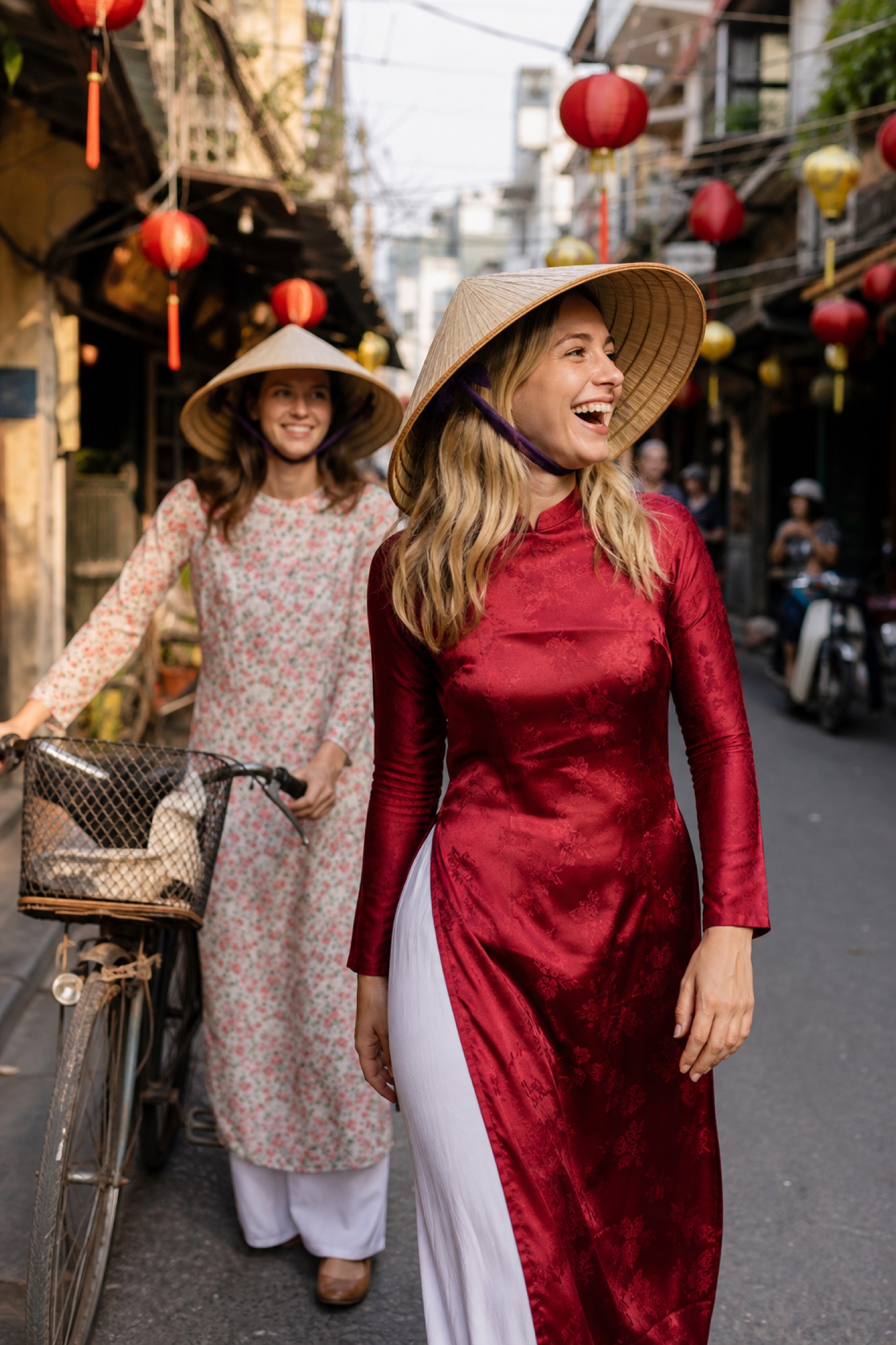
What do you wear under an ao dai in Sapa's cold?
An ao dai is sheer silk; Sapa's altitude and wind chill make underdressing risky. Wear a fitted long-sleeve thermal or silk base layer (not cotton—it holds moisture). Pair it with high-waisted, opaque pants or leggings in black, cream, or deep jewel tones so they show modestly at the ankle slit. Bring a lightweight shawl or silk wrap for between-shot warmth; it doubles as a styling prop. Avoid bulky sweaters—the ao dai's silhouette will look distorted.
Many travelers underestimate cold. Test your outfit in your hotel room at dawn before the shoot. If you shiver during setup, you'll shiver during every frame.
Where in Sapa should you position for the best light and safety?
| Spot | Light Best | Altitude Risk | Mud Risk | Photo Style |
|---|---|---|---|---|
| Silver Waterfall path (lower loop) | 6–7 a.m., before crowds | Mild (sloped steps) | High (rain seeps) | Mist, movement |
| Fansipan base meadow | 4–5 p.m. | Moderate (open, windy) | Medium (grassy) | Wide landscape, silhouette |
| Heaven's Gate village road | 7–8 a.m. | Low (flat terrain) | Medium (compacted dirt) | Villager interaction, textured path |
| Stone church area | 5–6 p.m. | Moderate (uneven stone) | Low (paved/stone) | Architecture, golden hour |
Practical rule: Stick to established paths with a local guide. Ao dai hems drag; muddy slopes cause slips. Book your photographer before arrival and confirm they know which trails are passable on your shoot date.
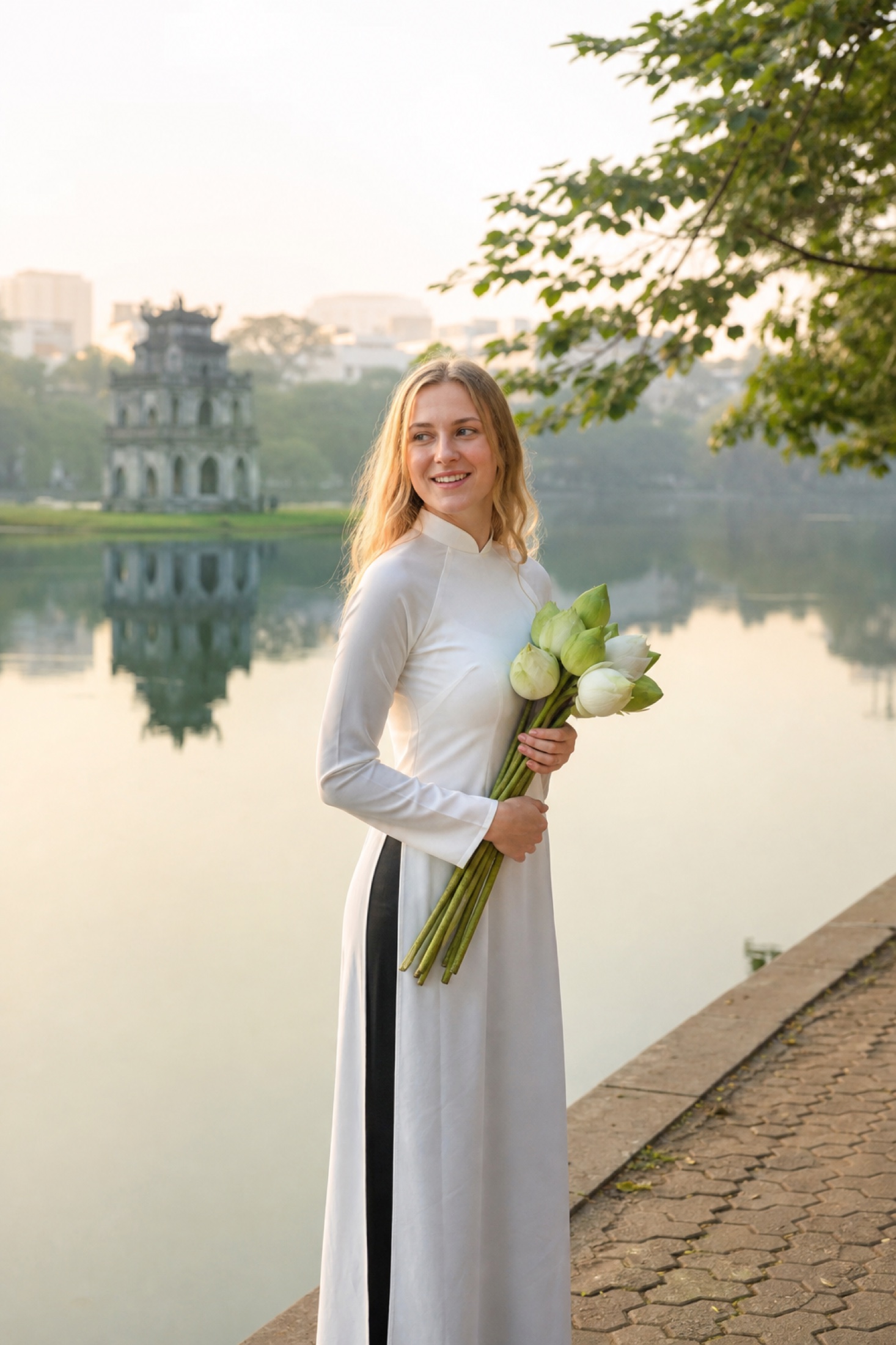
How do you hire a Sapa photographer who understands ao dai work?
Cáo Studio – Makeup & Photoshoot operates in Hanoi, Saigon, and by appointment in Hoi An—not Sapa. For Sapa, search local Hanoi-based teams who travel (many do), or contact Sapa tourism offices for vetted freelancers. Ask candidates:
- "How many ao dai shoots have you completed?" (Experience matters; untrained photographers miss the fabric's movement and fold.)
- "Do you have a Sapa-specific shot list?" (Terrain knowledge shows professionalism.)
- "What gear do you bring for mist/low light?" (Phone cameras struggle in fog; ASA 800+ or fast lenses are essential.)
- "Do you scout locations the day before?" (Yes = serious operator.)
Request a portfolio with a mix of outdoor/ao dai work, not just landscape. Agree on shot duration, outfit changes, and rain contingency before payment.
💄 Makeup & hair at your hotel (book Hanoi makeup first if you're staying there pre-Sapa)
What's the realistic cost and timeline for a Sapa ao dai session?
Hanoi-based photographers who travel to Sapa typically charge 2–3× their in-city rate due to transport and lodging. Expect to budget $400–800 USD for a 4–6 hour shoot plus guide-assisted logistics. Flights Hanoi–Sapa (1 hour) run $40–80 return; accommodation near shooting spots, $30–50/night. Factor in 1–2 rest days to acclimate to altitude.
Book 4–6 weeks ahead if you want a skilled operator. Many photographers fill October–November slots early. Confirm cancellation policy—weather delays are common; a professional offers rescheduling or partial refund, not ghosting.
What to check before you book: your pre-shoot checklist
- [ ] Passport valid. Sapa is accessible to foreigners; check Vietnamese visa requirements.
- [ ] Altitude comfort. Test a 1,500m+ hike beforehand. If altitude sickness is a concern, book a slower 2-day schedule.
- [ ] Ao dai fit. Rent or buy before travel; alterations take 1–2 weeks. See Cáo Studio's lookbook for inspiration on draping and movement.
- [ ] Weather window confirmed. Text your photographer 3 days before; if mist is forecasted, discuss alternate dates.
- [ ] Trail accessibility. Ask: "Which path is open/safe on my date?" Monsoon can wash out routes.
- [ ] Insurance & transport. Carry travel insurance; arrange internal flights, not minibus (faster, safer).
- [ ] Sun protection. Lightweight UV shirt, sunscreen (SPF 50+)—Sapa sun reflects off water and terraces.
---
Considering a more controlled setup? If Sapa's terrain feels risky or time is tight, book an ao dai session in Hanoi where Cáo Studio controls lighting, backdrops, and logistics. You'll receive professionally retouched images with guaranteed weather. For couples or families, we also offer couple & family photoshoots and pre-wedding packages in urban venues plus select travel destinations.
🌸 See the lookbook for style inspiration before you decide.
FAQ
Can I rent an ao dai in Sapa, or should I bring one?
Rental shops exist in Sapa town (Old Sapa quarter), but stock is limited and fits may be off-season. If your shoot is October–November, book a rental 1 week ahead. For perfect fit and choice of silk/embroidery, buy or have tailored in Hanoi 2–3 weeks before travel. Hanoi tailors are cheaper (from $50–150) and faster than Sapa shops.
What if fog ruins my shoot date?
Sapa's mist often lifts by 9 a.m. or descends after 3 p.m. Agree with your photographer on a "mist clause"—either reschedule for a second date within 7 days (free) or receive a 50% refund if the trip can't extend. Avoid booking only one day; build in a buffer.
Is it safe to shoot in remote villages in an ao dai?
Yes, if you hire a local guide. Hill-tribe communities are welcoming, but respect customs: ask permission before photographing people, dress modestly (ao dai does this), and don't touch religious objects. A guide ensures you're on safe paths and understand cultural etiquette. Solo exploration in fog or unfamiliar terrain is unwise.
Do I need a makeup artist for a Sapa shoot?
Optional but worth it. Sapa's humidity and wind require long-wear makeup; professional touch-ups prevent streaking in photos. Hire a Hanoi makeup artist who can travel, or book Cáo Studio's makeup & hair service in Hanoi before you depart, and they'll advise on products that survive altitude and altitude.
How should I edit Sapa photos to show the mist and mood?
Avoid over-brightening; mist is your aesthetic strength. Increase clarity and vibrance slightly (not saturation) to make the ao dai pop against gray sky. A slight cool color cast (5–10% toward blue) enhances the ethereal mood. Work with a photographer experienced in moody landscapes, or request RAW files and edit yourself using presets designed for overcast/mist conditions.
FAQ
Can I rent an ao dai in Sapa, or should I bring one?
Rental shops exist in Sapa town (Old Sapa quarter), but stock is limited and fits may be off-season. If your shoot is October–November, book a rental 1 week ahead. For perfect fit and choice of silk/embroidery, buy or have tailored in Hanoi 2–3 weeks before travel. Hanoi tailors are cheaper (from $50–150) and faster than Sapa shops.
What if fog ruins my shoot date?
Sapa's mist often lifts by 9 a.m. or descends after 3 p.m. Agree with your photographer on a "mist clause"—either reschedule for a second date within 7 days (free) or receive a 50% refund if the trip can't extend. Avoid booking only one day; build in a buffer.
Is it safe to shoot in remote villages in an ao dai?
Yes, if you hire a local guide. Hill-tribe communities are welcoming, but respect customs: ask permission before photographing people, dress modestly (ao dai does this), and don't touch religious objects. A guide ensures you're on safe paths and understand cultural etiquette. Solo exploration in fog or unfamiliar terrain is unwise.
Do I need a makeup artist for a Sapa shoot?
Optional but worth it. Sapa's humidity and wind require long-wear makeup; professional touch-ups prevent streaking in photos. Hire a Hanoi makeup artist who can travel, or book [Cáo Studio's makeup & hair service](/services/makeup-and-hair) in Hanoi before you depart, and they'll advise on products that survive altitude and altitude.
How should I edit Sapa photos to show the mist and mood?
Avoid over-brightening; mist is your aesthetic strength. Increase clarity and vibrance slightly (not saturation) to make the ao dai pop against gray sky. A slight cool color cast (5–10% toward blue) enhances the ethereal mood. Work with a photographer experienced in moody landscapes, or request RAW files and edit yourself using presets designed for overcast/mist conditions.
Ao dai, makeup, hair and a local photographer in Hanoi or Saigon — one WhatsApp message.