services/makeup-and-hair
Sensitive Skin Makeup for Photoshoots: What to Wear, What to Avoid
Sensitive skin and professional photoshoots create real tension. You want camera-ready coverage; your skin needs protection. This guide walks you through product selection, timing, and communication so you look polished without flare-ups.
What skin triggers should you disclose to your makeup artist?
Tell your artist: known allergens (nickel, fragrance, lanolin), past reactions (rashes, stinging, breakouts), and active conditions (rosacea, eczema, dermatitis). Provide your dermatologist's recommended brands if you have them. This prevents last-minute scrambling on shoot day—your artist can prep accordingly or source alternatives before you arrive. A 5-minute intake call saves hours of regret.
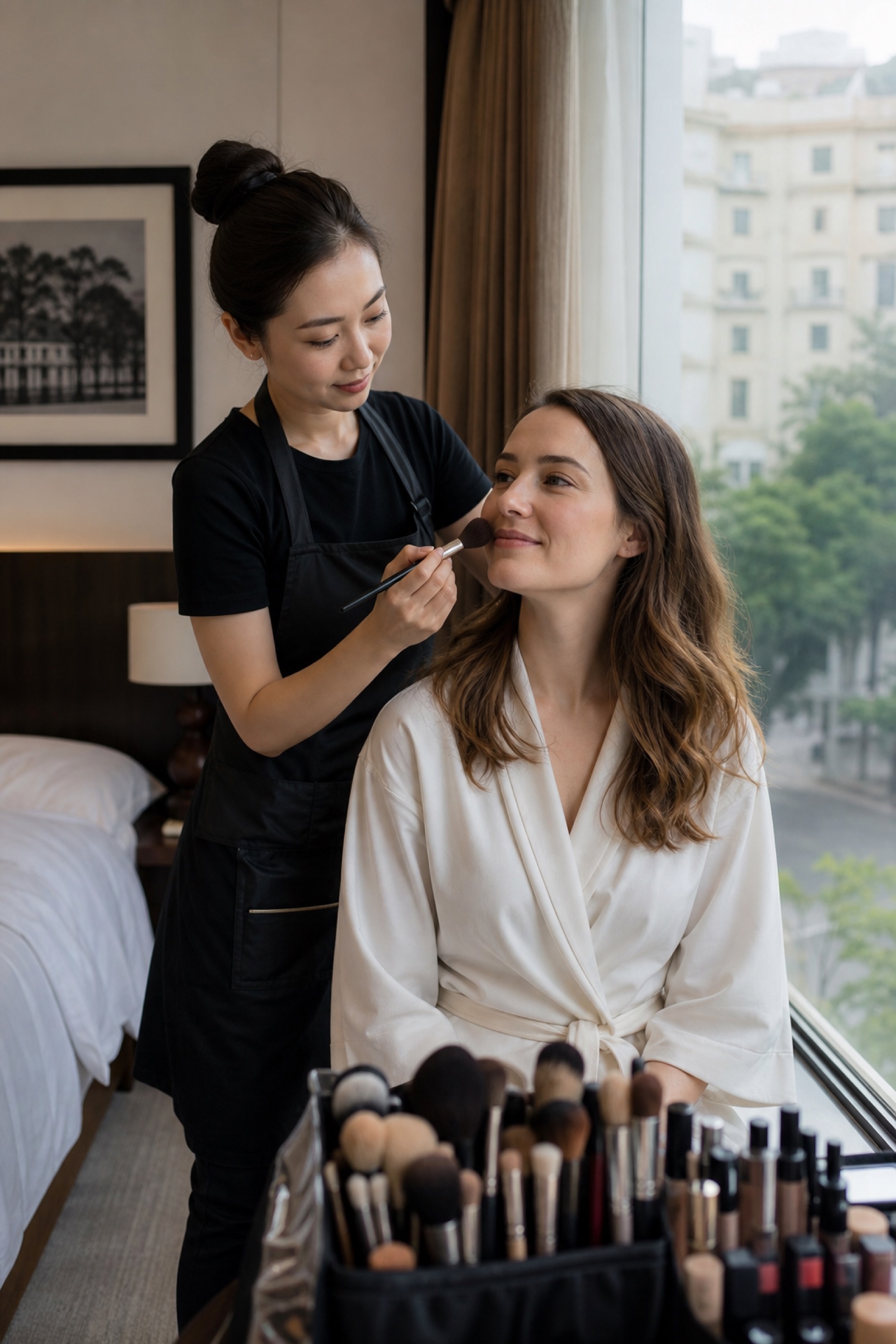
💄 Makeup & hair at your hotel | Book with full skin history upfront.
Which makeup product types are safest for reactive skin?
Fragrance-free, hypoallergenic, and mineral-based formulas carry lower irritation risk than heavily fragranced or talc-heavy options. Silicone-based primers create a breathable barrier without direct skin contact. Water-resistant formulas designed for sensitive skin often skip common irritants. Avoid matte foundations with heavy pigment loads—sheer, buildable coverage reduces product volume on skin. Always confirm "dermatologist-tested" claims; this means the brand tested for sensitivity, not that dermatologists universally approve it.
| Product Type | Why It Works for Sensitive Skin | What to Check | Common Risk |
|---|---|---|---|
| Mineral powder foundation | No fragrance, talc-free option available, easy to remove | Mica content (usually safe, rare irritant) | Iron oxides (rare allergen) |
| Silicone primer | Smooth barrier, minimal contact, long wear | Silicone type (dimethicone safest) | Buildup if layered too thick |
| Fragrance-free cream blush | Emollient, buildable, reduces powder dust | Oil content (won't clog if comedogenic-tested) | Waxes (occasional trigger) |
| Eyeshadow stick (cream) | Single-ingredient, minimal packaging chemicals | Preservatives (look for phenoxyethanol-free) | Metal compacts (occasional nickel) |
| Tinted lip balm | Hydrating, no harsh drying agents | Natural waxes (lanolin-free if sensitive) | Mint/cooling agents (irritating) |
How far in advance should you patch-test makeup?
Patch-test 48 to 72 hours before your shoot—ideally on your neck or inner arm where skin mirrors face sensitivity but won't show redness in daily life. Apply a small amount and wait. If redness, itching, or swelling appears within 24 hours, that product is off the table. Test each foundation, primer, and cream product separately; powder products are lower risk but still worth a spot check if you have severe reactivity. Document what you test so your artist knows what's already approved.
Timing matters: a patch test 12 hours before your shoot is too late. Redness can linger 18+ hours. A week before lets you identify problems, source backups, and trial them too. Your artist needs this info when you confirm the booking.
What's your pre-shoot skincare routine for sensitive skin?
Three days before:
- Use only your regular cleanser and moisturizer—no new actives, exfoliants, or serums.
- Skip any retinol, vitamin C, or AHA/BHA products; they thin the skin barrier.
- If you have a trusted sensitive-skin serum (hydrating, no fragrance), continue it; don't stop abruptly.
Two days before:
- Do your patch test (see above).
- Hydrate heavily—drink extra water and apply a thick, fragrance-free moisturizer or occlusive balm.
Night before:
- Gentle cleanse, hydrate, and apply your barrier balm.
- Sleep well; fatigue worsens inflammation.
Morning of:
- Cleanse gently with lukewarm (not hot) water.
- Apply moisturizer before your artist arrives—they'll prep your skin properly and apply primer over it.
- Skip breakfast with high-sodium or spicy foods (both can trigger flushing).
How should your makeup artist adapt their technique for sensitive skin?
A skilled artist will:
- Use less product overall. Spotting (applying only where needed) instead of full coverage reduces irritation load.
- Apply primer first. A silicone primer creates a buffer so foundation doesn't sit directly on skin.
- Set powder sparingly. Only on the T-zone; avoid heavy powdering on cheeks or around eyes.
- Skip heavy contouring. Multiple products layered increase irritation risk; a single cream blush or bronzer is safer.
- Use a damp sponge or brush. Hands and fingers generate heat and friction; tools are gentler.
- Remove makeup promptly after the shoot. Don't leave makeup on for hours post-session.
Before booking, ask: Does your artist have experience with sensitive skin? Request that they use specific product brands you've patch-tested, or ask whether they source hypoallergenic alternatives. Our team at Cáo Studio – Makeup & Photoshoot always asks about skin concerns at the intake stage—we source fragrance-free and dermatologist-recommended options for reactive clients.
📸 Book on WhatsApp — ao dai photoshoot | Let us know your skin type when you confirm.
What should you avoid on shoot day?
Don't:
- Try new skincare or supplements. Timing is unpredictable; a new ingredient might trigger redness mid-shoot.
- Overexfoliate. Exfoliating within 24 hours of a shoot thins skin and worsens sensitivity.
- Apply heavy moisturizer right before makeup. It can cause slippage; your artist needs a clean, primer-ready base.
- Wear wool or irritating fabrics near your face. Friction + makeup chemicals = redness.
- Use alcohol-based toners or micellar water. These strip the barrier. Stick to your regular cleanser.
- Eat trigger foods (spicy, salty, high-heat foods that cause flushing) within 4 hours of the shoot.
- Stress excessively. Cortisol worsens inflammation; practice calm before and during.
What to Check Before You Book
- Ask if your artist has a sensitive-skin product list. Request specific brands they use; cross-reference with your dermatologist if needed.
- Confirm they'll accommodate patch-tested products. Some studios require their own; ask if you can bring pre-approved alternatives.
- Verify their cancellation policy if a flare-up occurs. Sensitive skin is unpredictable; a flexible rebooking option gives peace of mind.
- Request a pre-shoot skin consultation call. A 10-minute chat beats guessing about triggers.
- Ask about the removal process. Gentle, oil-based makeup remover is critical; confirm they don't rush the takeoff.
---
Types of Sessions Where Sensitive Skin Prep Matters Most
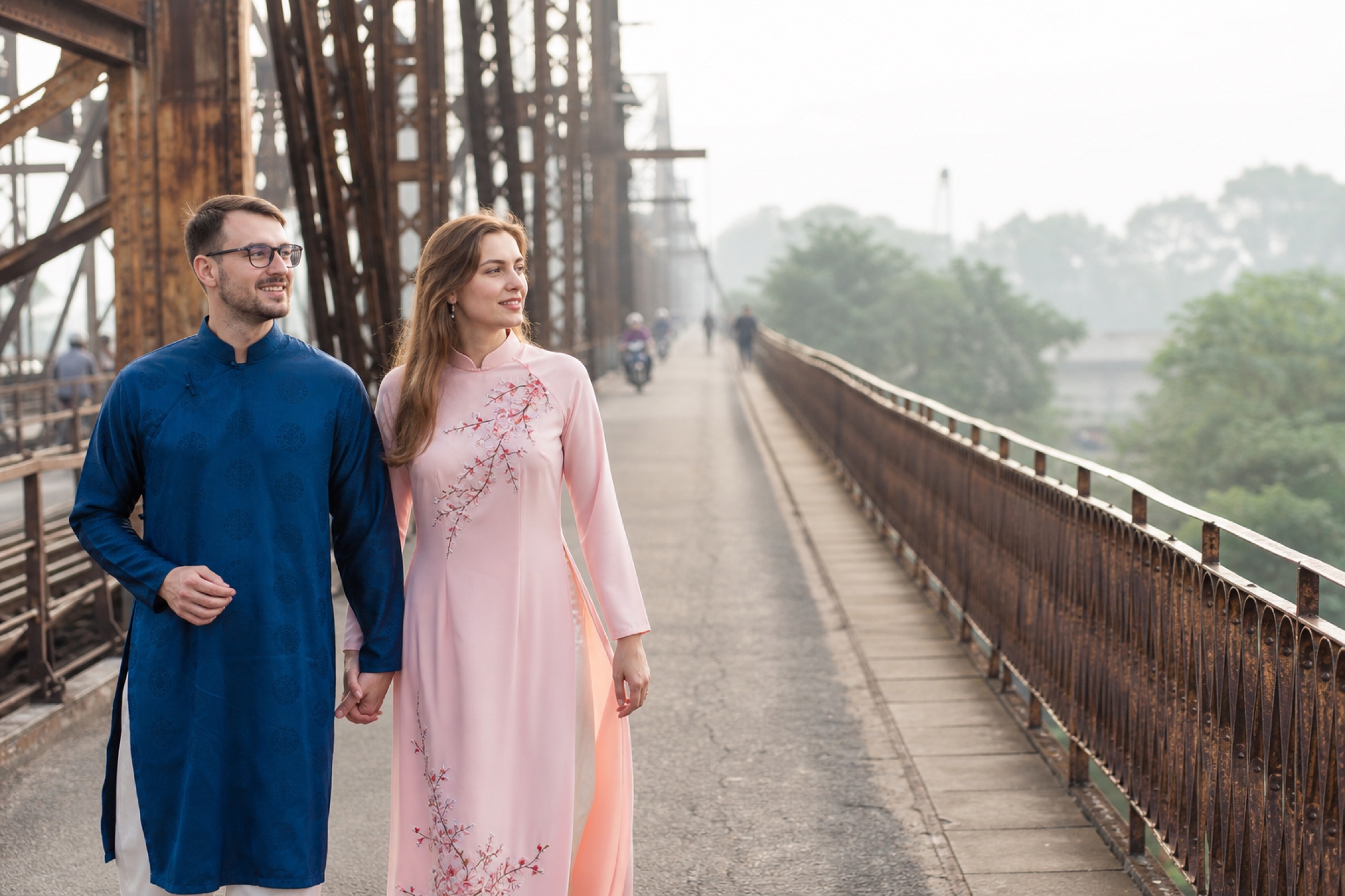
Ao dai photoshoots involve traditional Vietnamese dress with heavy draping—heat and friction are higher, so flawless prep is essential. Couple and family sessions run longer, so product durability and comfort matter more. Pre-wedding shoots span multiple hours or days; sensitive skin needs bulletproof prep across all sessions.
For makeup and hair at your hotel, brief your artist about your room's lighting and temperature—heat can trigger flushing, so they'll factor in extra setting spray or powder.
🌸 See the lookbook | View real clients and how makeup translates on camera.
---
Sensitive skin is manageable. Plan ahead, communicate clearly, and trust a skilled makeup artist—you'll get camera-ready photos without irritation.
FAQ
Can I bring my own makeup to the photoshoot?
Yes, most studios allow pre-approved, patch-tested products. Confirm this when you book, and provide a list of product names and brands to your artist in advance so they know what you're bringing.
How long does a sensitive-skin patch test take?
Application takes 2 minutes; observation takes 24–48 hours. Wait a full 48 hours before the shoot to catch delayed reactions that might appear 12–24 hours post-application.
What if my skin flares up the morning of the shoot?
Contact your artist immediately. They may adjust technique (less product, more setting spray) or suggest rescheduling. A 30-day flexibility guarantee means you can rebook without penalty if your skin isn't ready.
Are mineral foundations always safe for sensitive skin?
Mineral foundations are lower-irritant than conventional, but not universally safe. Some react to mica or iron oxides. Always patch-test, even "natural" or "sensitive-skin" formulas.
Should I stop my prescription skincare before a photoshoot?
No—stopping abruptly can worsen sensitivity. Continue your regular routine, but skip new products 2 weeks before. If you take retinoids or prescription treatments, mention this to your artist so they know your skin barrier may be thinner.
What's the difference between "hypoallergenic" and "fragrance-free"?
Fragrance-free means no added scent; hypoallergenic means tested to minimize allergic reactions. Both are helpful for sensitive skin, but neither guarantees safety—always patch-test. A product can be hypoallergenic and still contain a fragrance compound as a preservative.
FAQ
Can I bring my own makeup to the photoshoot?
Yes, most studios allow pre-approved, patch-tested products. Confirm this when you book, and provide a list of product names and brands to your artist in advance so they know what you're bringing.
How long does a sensitive-skin patch test take?
Application takes 2 minutes; observation takes 24–48 hours. Wait a full 48 hours before the shoot to catch delayed reactions that might appear 12–24 hours post-application.
What if my skin flares up the morning of the shoot?
Contact your artist immediately. They may adjust technique (less product, more setting spray) or suggest rescheduling. A 30-day flexibility guarantee means you can rebook without penalty if your skin isn't ready.
Are mineral foundations always safe for sensitive skin?
Mineral foundations are lower-irritant than conventional, but not universally safe. Some react to mica or iron oxides. Always patch-test, even "natural" or "sensitive-skin" formulas.
Should I stop my prescription skincare before a photoshoot?
No—stopping abruptly can worsen sensitivity. Continue your regular routine, but skip new products 2 weeks before. If you take retinoids or prescription treatments, mention this to your artist so they know your skin barrier may be thinner.
What's the difference between "hypoallergenic" and "fragrance-free"?
Fragrance-free means no added scent; hypoallergenic means tested to minimize allergic reactions. Both are helpful for sensitive skin, but neither guarantees safety—always patch-test. A product can be hypoallergenic and still contain a fragrance compound as a preservative.
Ao dai, makeup, hair and a local photographer in Hanoi or Saigon — one WhatsApp message.