services/ao-dai-photoshoot
Shoes to Wear With an Ao Dai: A Photoshoot Styling Guide
Shoes to Wear With an Ao Dai: A Photoshoot Styling Guide
Choosing footwear for an ao dai matters more than many travelers realize. Your shoes influence posture, stride, photo framing, and how confident you feel during a session. Unlike casual wear, ao dai styling is intentional—every element frames your silhouette and the fabric's drape. This guide breaks down real options, fits, comfort trade-offs, and what works best for photoshoots with Cáo Studio.
📸 Book on WhatsApp — ao dai photoshoot
What shoe styles actually work under an ao dai?
Ao dai photography pairs well with four main categories: flat sandals (traditional or modern), embroidered slippers, heeled pumps, and minimal leather shoes. Flat options keep focus on fabric and movement. Heels elongate the leg line in cropped shots and suit indoor venues. Embroidered or beaded slippers add cultural richness but work best for still poses—complex details distract if you're walking. Minimal leather (ballet flats, loafers, pointed-toe pumps) creates clean visual contrast without competing. Your choice depends on shoot location, session length, and whether photos frame full-body or stop at mid-calf.
Which shoe height works best for outdoor temple shoots?
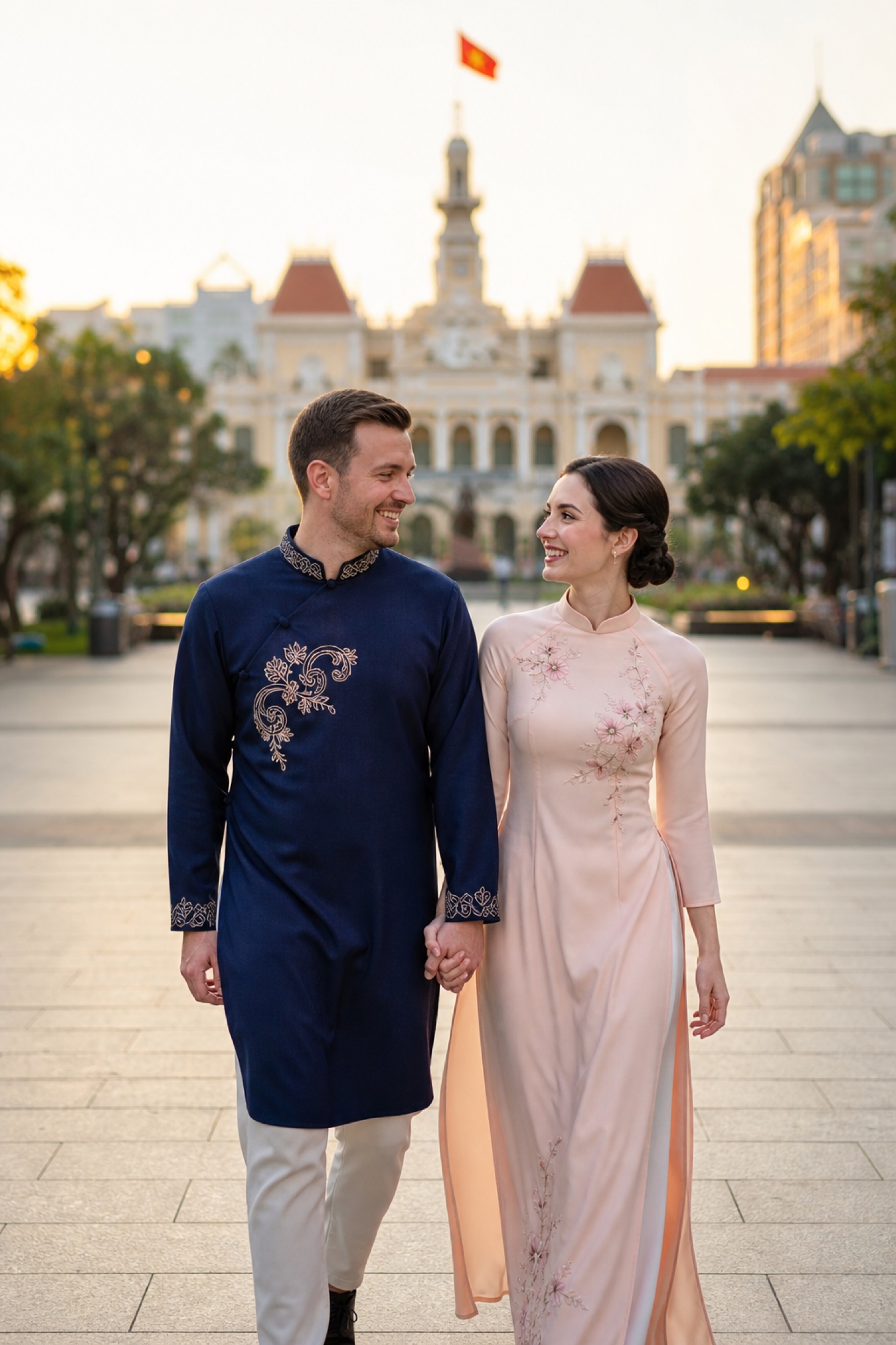
Temple sessions involve walking on uneven stone, gravel, and inclined paths. Flat sandals or slip-on leather flats prevent ankle strain and let you move naturally while photographers capture candid moments. Heels catch on temple stairs and dig into soft ground, forcing posture changes that read stiffly on camera. Many clients choose embroidered flat sandals—they honor traditional dress codes, photograph beautifully in natural light, and won't make you limp by your third temple stop. If temples in Hanoi or Hoi An are on your ao dai photoshoot itinerary, ask your stylist to source locally—local pairs fit the environment and culture better than shoes from home.
Should you wear heels indoors or outdoors?
Heeled pumps (2–3 inches) excel in indoor studio and hotel settings where floors are smooth and you're posing rather than walking far. They elongate your leg in photographs and add polish to composed shots. Outdoors, especially on uneven ground or grass, heels create safety and comfort issues—they sink into earth, force compensation in your posture, and distract you from the shoot. Choose heels if your session is a hotel makeup and hair booking followed by interior or lobby photography. Reserve flats for outdoor temple walks, garden scenes, and street photography in old town areas like Hoi An. Mixed shoots (outdoor + indoor) work best with packable flats you can swap before entering buildings.
What's the actual difference between slippers, sandals, and pumps on camera?
| Shoe Type | Best For | Camera Effect | Comfort (2+ hours) | Traditional Feel |
|---|---|---|---|---|
| Embroidered flat slipper | Posed, cultural shots | Adds richness; details visible in close frames | High—no foot strain | Very high |
| Leather flat sandal | Temple walks, outdoors | Clean lines; fabric drape visible | High—breathes well | Moderate |
| Heeled pump (2–3") | Indoor portraits, studio | Elongates legs; adds elegance | Moderate—tiring after 90 min | Moderate |
| Minimal pointed flat | Mixed indoor/outdoor | Sleek; directs eye upward | High—versatile | Low—modern |
Embroidered slippers photograph with intricate detail and cultural weight—ideal for pre-wedding or formal couple sessions. Leather sandals stay invisible, emphasizing the ao dai itself. Heels draw attention to leg length and posture; pumps suit studio and proposal photography. Minimalist flats suit travelers mixing ao dai with contemporary style.
How do you avoid blisters, swelling, and discomfort during a long photoshoot?
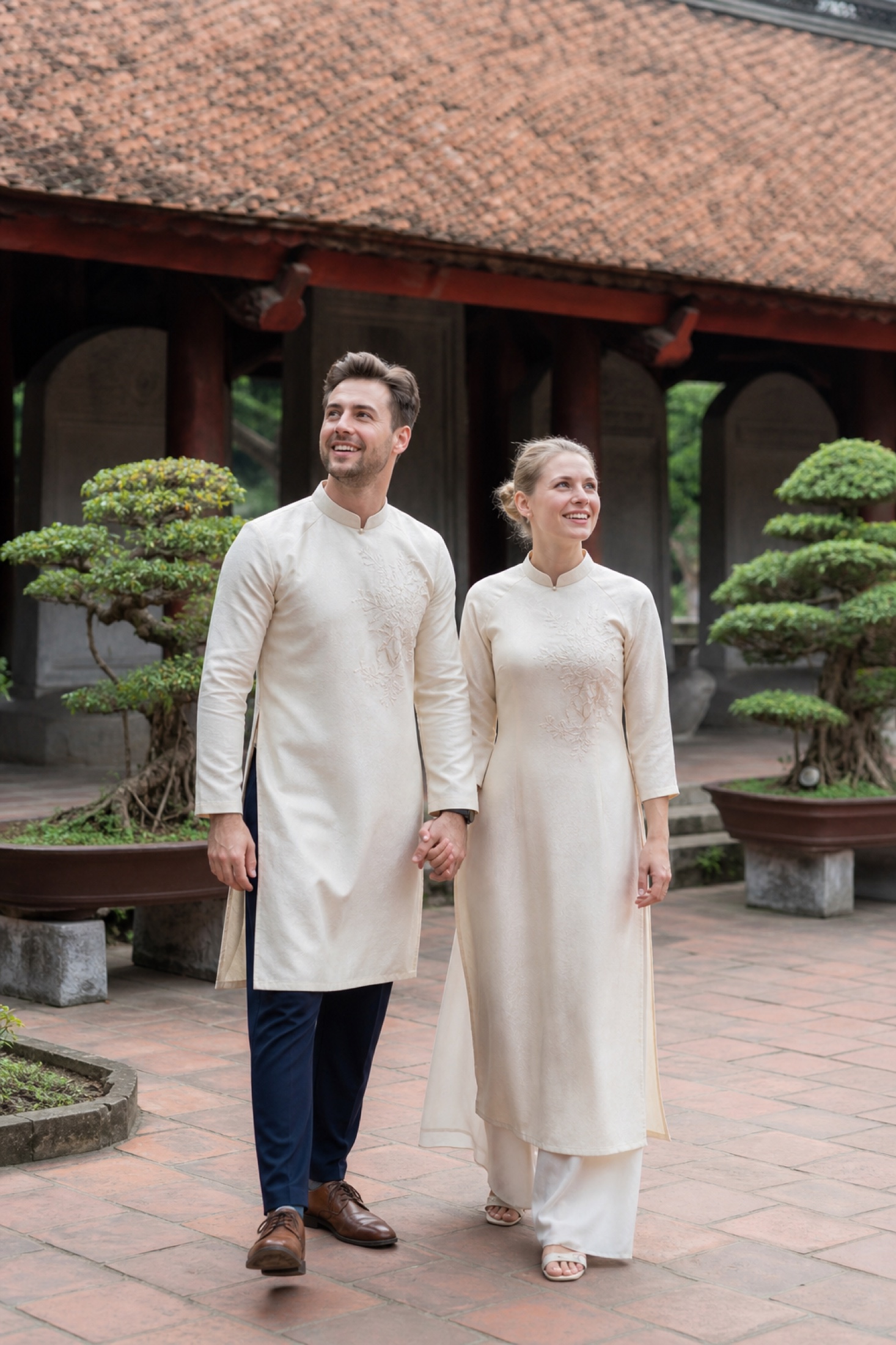
A typical ao dai photoshoot session runs 2–4 hours. Bring two pairs: one to arrive in (break-in shoes), one fresh for the shoot. Wear thin, moisture-wicking socks or go barefoot in closed shoes; cotton socks absorb sweat and reduce rubbing. If heels are your choice, pack gel inserts and a second pair of flats for outfit swaps. Never wear brand-new shoes to a shoot—test them indoors for a week first. At Cáo Studio, clients often bring slippers and leave heels in the car; our stylists and makeup artists help you change quickly between shots. Choose shoes one size up if you're shooting in warm months (feet swell); Vietnam's heat and humidity intensify this. Arrive hydrated and eat a light meal 30 minutes before—fatigue and low blood sugar make every shoe feel worse.
What should you check before ordering ao dai shoes online?
Fit and sizing:
- Most Vietnamese shoe sizes run small; order one half-size up if buying locally.
- Measure your foot length (heel to big toe) in centimeters; compare to brand charts—don't trust US/EU conversions.
- Embroidered slippers often have rigid insoles; order a size larger than your street shoe.
Quality and durability:
- Leather (full-grain or genuine) lasts through multiple shoots and travel; synthetic wears quickly in heat.
- Embroidered details should be stitched (not glued) to fabric—pull gently before buying.
- Soles matter: rubber or leather compounds grip stone temples; thin rubber slips on wet tiles.
Returns and shipping:
- Check return policies before ordering (US shoppers often face 2-week return windows).
- Confirm shipping time to your arrival date; international orders take 5–10 days to the US.
- Many Vietnamese sellers offer free shipping over modest thresholds; factor this into cost.
Style authenticity:
- Embroidered slippers from Hanoi's Old Quarter suit any ao dai; generic online pairs may clash.
- Avoid overly trendy heels—ao dai is classic, so minimal silhouettes age better in photos.
- If unsure, consult Cáo Studio stylists via WhatsApp before booking; they can advise specific pairs.
📸 Book on WhatsApp — ao dai photoshoot
How do Cáo Studio clients choose the right shoes for their session?
Our stylists recommend this simple framework:
- Confirm your shoot type: Temple walk (flats only), studio/hotel (heels or flats), couple session (matching flats), pre-wedding or proposal (polished flats or modest heels).
- Check venue light: Outdoor golden-hour shoots showcase detailed embroidery; indoor sessions favor simple flats or nude pumps that don't distract.
- Test comfort: Bring shoes to a fitting and walk 10 minutes; your feet will stay in them 2–4 hours, not 10 minutes.
- Match your ao dai color: Neutral shoes (cream, gold, black, nude) work with any ao dai. Matching embroidered pairs create visual harmony but limit outfit swaps.
- Book your styling call: Contact us on WhatsApp before your session; our team can source or advise shoes that fit your aesthetic and feet.
Most international clients at Cáo Studio rent or borrow embroidered slippers from Hanoi rather than ship shoes internationally. This saves luggage space, avoids fit mistakes, and supports local artisans. If you prefer your own pair, leather flats in neutral tones photograph timeless and pack easily.
Visit the Cáo Studio Hanoi studio or Saigon branch to try shoes before your shoot. Appointments for makeup and hair styling include shoe consultation. If you're shooting in Hoi An, contact us on WhatsApp for styling tips specific to old town temples and lantern-lit locations.
FAQ
Can I wear socks under ao dai shoes?
Yes—thin, neutral-colored socks prevent blisters and absorb sweat in Vietnam's heat. Avoid thick athletic socks; they bunch under embroidered slippers. Many photographers shoot from mid-calf up, so socks won't be visible. Test your choice during a walk-through before the session.
Should ao dai shoes match the áo dài color or fabric?
Not necessarily. Neutral shoes (cream, gold, nude, black, or silver) work with any ao dai and elongate your silhouette. Matching embroidered pairs add cultural richness but limit your outfit flexibility within a session. Ask your Cáo Studio stylist to preview pairs against your specific ao dai.
Are heels okay for temple photography, or only flats?
Flats are strongly preferred outdoors. Heels catch on stone stairs, sink into earth, and force unnatural posture that shows on camera. Temple grounds in Hanoi and Hoi An feature uneven tile and gravel. Save heels for indoor poses and studio backdrops, then switch to flats for walking and candid moments.
How do I break in embroidered slippers before a photoshoot?
Wear them indoors for 1–2 hours daily for a week before your session. Embroidered slippers often have stiff insoles; this softens them and shapes the interior to your foot. If they pinch after a week, size up or apply gel inserts to pressure points. Never wear untested shoes to a paid shoot.
Can I ship shoes from the US and still have time to break them in before my trip?
Standard shipping to the US takes 5–10 days; factor in customs delays (1–3 days extra). If your trip is fewer than 3 weeks away, order immediately or buy locally in Hanoi/Saigon 2–3 days before your session. Cáo Studio can recommend local shops and help you choose remotely via WhatsApp.
What if I arrive with the wrong shoes—can Cáo Studio help?
Yes. Contact us on WhatsApp before or upon arrival. Our stylists can source embroidered slippers, flats, or heels in Hanoi or Saigon within 24 hours. You can also borrow shoes from our studio wardrobe for your session. No last-minute footwear stress—we've solved this for hundreds of international clients.
FAQ
Can I wear socks under ao dai shoes?
Yes—thin, neutral-colored socks prevent blisters and absorb sweat in Vietnam's heat. Avoid thick athletic socks; they bunch under embroidered slippers. Many photographers shoot from mid-calf up, so socks won't be visible. Test your choice during a walk-through before the session.
Should ao dai shoes match the áo dài color or fabric?
Not necessarily. Neutral shoes (cream, gold, nude, black, or silver) work with any ao dai and elongate your silhouette. Matching embroidered pairs add cultural richness but limit your outfit flexibility within a session. Ask your Cáo Studio stylist to preview pairs against your specific ao dai.
Are heels okay for temple photography, or only flats?
Flats are strongly preferred outdoors. Heels catch on stone stairs, sink into earth, and force unnatural posture that shows on camera. Temple grounds in Hanoi and Hoi An feature uneven tile and gravel. Save heels for indoor poses and studio backdrops, then switch to flats for walking and candid moments.
How do I break in embroidered slippers before a photoshoot?
Wear them indoors for 1–2 hours daily for a week before your session. Embroidered slippers often have stiff insoles; this softens them and shapes the interior to your foot. If they pinch after a week, size up or apply gel inserts to pressure points. Never wear untested shoes to a paid shoot.
Can I ship shoes from the US and still have time to break them in before my trip?
Standard shipping to the US takes 5–10 days; factor in customs delays (1–3 days extra). If your trip is fewer than 3 weeks away, order immediately or buy locally in Hanoi/Saigon 2–3 days before your session. Cáo Studio can recommend local shops and help you choose remotely via WhatsApp.
What if I arrive with the wrong shoes—can Cáo Studio help?
Yes. Contact us on WhatsApp before or upon arrival. Our stylists can source embroidered slippers, flats, or heels in Hanoi or Saigon within 24 hours. You can also borrow shoes from our studio wardrobe for your session. No last-minute footwear stress—we've solved this for hundreds of international clients.
Ao dai, makeup, hair and a local photographer in Hanoi or Saigon — one WhatsApp message.