services/makeup-and-hair
Skin Prep the Week Before a Photoshoot: What to Buy & Do
Why does skin preparation matter for photos?
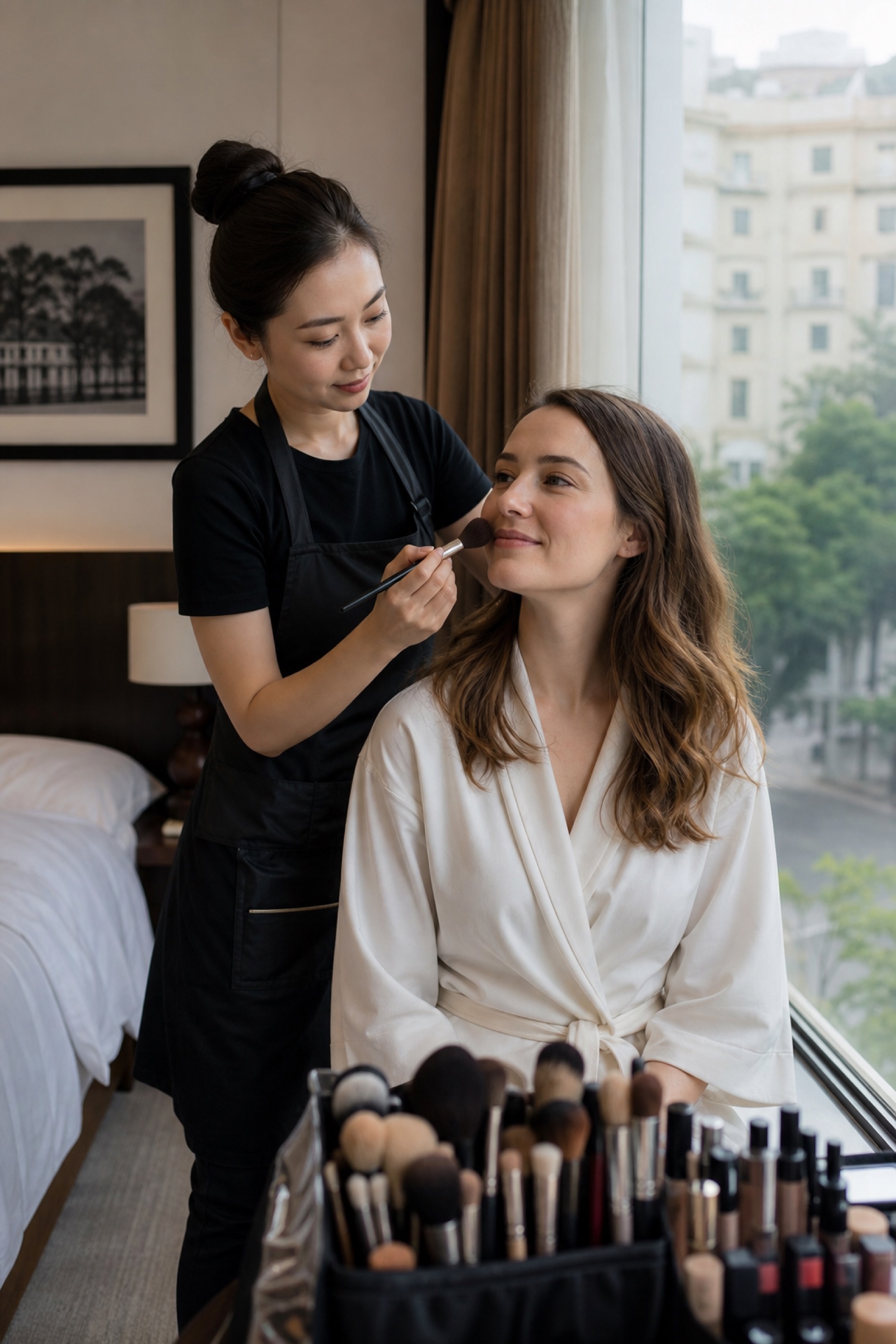
Camera flashes and close-ups expose every texture, dry patch, and inflammation your skin carries into the session. Prep week gives cells time to regenerate, hydration to settle, and inflammation to calm. Poor prep means heavy foundation coverage—which looks flat and cakey in natural light. Good prep means your makeup artist at your hotel starts with a flawless canvas, uses less product, and your photos look naturally luminous for months.
What type of exfoliant should you use?
Avoid harsh physical scrubs and chemical peels in prep week. Gentle options work best: a soft washcloth with warm water, enzyme-based powders (rice or papaya), or a low-strength AHA or BHA toner (0.5–2% lactic acid or salicylic acid). Exfoliate twice, three days and one day before the shoot. Skip it entirely if you have active acne, rosacea, or sensitive skin—let your makeup artist handle texture. Timing matters: exfoliate too close to shoot day and redness lingers; too early and you've rebuilt dead skin layer.

How much hydration is too much?
Hydration is not one product—it's layers. Start with a hydrating toner or essence applied to damp skin, follow with a lightweight serum (hyaluronic acid or peptides), then lock it with a moisturizer suited to your skin type. Use a sleeping mask three nights before the shoot. Dehydrated skin photographs grey and emphasizes fine lines; over-hydrated skin looks puffy, especially around eyes. The sweet spot: skin feels supple, not tight, and not visibly swollen when you wake up. If you're prone to puffiness, use a gentle jade roller or cold spoon on eyes each morning of prep week.
What about serums, spot treatments, and actives?
This is where most people go wrong. Stop using vitamin C, retinol, niacinamide, or any new active ingredient three days before the shoot. Your skin needs stability, not change. If you use a retinol regularly, keep using it—suddenly stopping can trigger a dull, reactive phase. For spot treatments (acne or dark spots), use them as normal early in prep week, but stop 24 hours before if they're drying or potentially irritating. A calming serum with centella asiatica or allantoin soothes inflammation without disrupting your routine. Skip trendy acids, vitamin serums, or exfoliating toners on the day before and day of the shoot.
| Product Type | Who It's For | How to Use | What to Avoid |
|---|---|---|---|
| Enzyme exfoliant powder | All skin types, first-timers | 2–3 times week-of | Do NOT use if active acne present |
| Hydrating toner or essence | Dry, dehydrated, mature skin | Layer under serums, twice daily | Skip if acne-prone and already using actives |
| Hyaluronic acid serum | All types seeking plump texture | On damp skin, seal with moisturizer | Alone—always layer, never skip moisturizer |
| Sleeping mask | Combination to oily, compromised barrier | 3 nights before shoot | Heavy masks if prone to breakouts; use sparingly |
| Calming serum (centella, allantoin) | Sensitive, reactive, rosacea-prone | Use if inflammation present, stop 24h before | Not a replacement for sunscreen |
| Targeted dark spot or acne treatment | Specific concerns only | Continue routine if established; stop 24h before shoot | Do NOT introduce new treatment week-of |
📸 Book on WhatsApp — ao dai photoshoot
What daily habits support camera-ready skin?
Sleep eight hours minimum—swelling under eyes and a dull complexion are direct results of poor sleep. Drink water consistently (not a gallon at once; steady hydration throughout the day). Limit alcohol three days before the shoot; it dehydrates skin and causes next-day puffiness. Avoid touching your face, apply sunscreen every day (SPF 30+, reapply if outdoors), and eat foods rich in antioxidants and healthy fats (berries, salmon, avocado). Stress directly triggers inflammation and breakouts; take a walk, meditate, or do something calming each day. On shoot day itself, eat a light breakfast, arrive hydrated and fed, and trust your makeup artist to enhance what you've prepped.
What should you check before buying skin-prep products?
Read the ingredient list, not marketing claims. Check for actives you're already using (avoid doubling up on niacinamide, vitamin C, or AHA). Verify expiration dates—old products lose efficacy and can irritate. Patch-test new products on your inner arm or behind ear 2–3 days before starting prep week (not during it). Match to your skin type: dry skin needs occlusives (oils, butters), oily skin benefits from lightweight hydration and gentle actives, sensitive skin prioritizes calming ingredients over innovation. Buy in advance—don't order new products days before the shoot and hope they arrive; use what you know works. If you're unsure, bring your current routine and let Cáo Studio's makeup team adapt on the day—they carry hydrating primers and setting sprays for every skin condition.
---
Real situations and how to handle them
Breakout mid-prep week? Stop all exfoliation immediately. Use only a gentle cleanser, hydrating toner, calming serum, and SPF. A drying spot treatment is fine, but don't aggravate it. Let your makeup artist know on shoot day—they'll use targeted coverage and colour correction.
Dry, peeling patches? Skip exfoliation, double down on hydration (toner + serum + moisturizer + oil), and use a hydrating sleeping mask nightly. Avoid makeup on severely dry patches; wet-apply foundation or use a hydrating primer underneath.
Puffy face or under-eye bags? Sleep 8–9 hours, elevate your head on an extra pillow, skip salt, and use a jade roller or cold spoon on eyes each morning. On shoot day, your makeup artist will sculpt with shadow and highlight to minimize puffiness.
Suddenly oily or congested? Use a clay or charcoal mask once early in prep week (not the day before), keep hydration lightweight, and avoid heavy creams. Don't strip skin with strong actives—this triggers more oil production.
---
For brides, couples, and families booking pre-wedding or couple & family sessions, skin prep week sets the tone for confidence in front of the camera. Visit our Hanoi studio to discuss your skin concerns during a consultation, or book makeup & hair service before your session. Skin that's prepped is skin that photographs.
FAQ
Can I do a chemical peel the week of my photoshoot?
No. Chemical peels cause redness, flaking, and irritation that lasts 3–7 days. Schedule peels 2–3 weeks before the shoot, then use gentle, hydrating routines only during prep week.
What if my skin looks worse after starting prep?
Adjust immediately. If a new product stings, breaks you out, or dries you excessively, stop and return to your baseline routine. Prep week should feel calming, not experimental. Trust your skin.
Should I exfoliate the night before the shoot?
No. Exfoliate three days before (48 hours minimum before the session) so redness and irritation fade. The final two days are hydration and protection only.
Can I wear makeup during prep week?
Yes, wear light makeup as normal. Avoid heavy foundation that clogs pores. Cleanse thoroughly each night and let skin breathe when you're home.
What if I'm on a prescription skincare (retinoid, tretinoin, adapalene)?
Keep using it at your normal dose and frequency. Stopping suddenly causes rebound dryness and breakouts. Just increase hydration and sunscreen during prep week—your makeup artist will know how to work with slightly sensitized skin.
FAQ
Can I do a chemical peel the week of my photoshoot?
No. Chemical peels cause redness, flaking, and irritation that lasts 3–7 days. Schedule peels 2–3 weeks before the shoot, then use gentle, hydrating routines only during prep week.
What if my skin looks worse after starting prep?
Adjust immediately. If a new product stings, breaks you out, or dries you excessively, stop and return to your baseline routine. Prep week should feel calming, not experimental. Trust your skin.
Should I exfoliate the night before the shoot?
No. Exfoliate three days before (48 hours minimum before the session) so redness and irritation fade. The final two days are hydration and protection only.
Can I wear makeup during prep week?
Yes, wear light makeup as normal. Avoid heavy foundation that clogs pores. Cleanse thoroughly each night and let skin breathe when you're home.
What if I'm on a prescription skincare (retinoid, tretinoin, adapalene)?
Keep using it at your normal dose and frequency. Stopping suddenly causes rebound dryness and breakouts. Just increase hydration and sunscreen during prep week—your makeup artist will know how to work with slightly sensitized skin.
Ao dai, makeup, hair and a local photographer in Hanoi or Saigon — one WhatsApp message.