lookbook
Street Food Photoshoot Hanoi: Real Spots, Timing & What to Wear
Street food photography in Hanoi is not just about the bowl of pho or the steaming bánh mì cart—it's about capturing the rhythm, the hands, the steam, the morning rush, and the vendor's story compressed into 10 frames. If you're planning a shoot, you need to know when light works, where you won't crowd locals, how to dress for a sticky market environment, and who can actually pull it off without disturbing the daily grind. This guide covers the real logistics.
Why early morning matters more than you think
Light at 6:30 a.m. in Hanoi's markets is directional but soft—it sculpts without harsh shadows on faces and food. By 9 a.m., the sun climbs above the surrounding buildings, and vendors are packed three-deep. By 11 a.m., you're shooting silhouettes or blown-out plates.
Early also means vendors are not yet rushed. They'll tolerate one shot of their setup before the breakfast rush hits. Daytime shoots (noon–3 p.m.) are possible but require a faster camera, a reflector to lift shadow, and a photographer who can move without blocking foot traffic. Sunset at 5:30–6:30 p.m. is too warm and backlits everything; you lose detail in the food and faces.
Golden hour does not apply to markets. Street food is a morning medium.
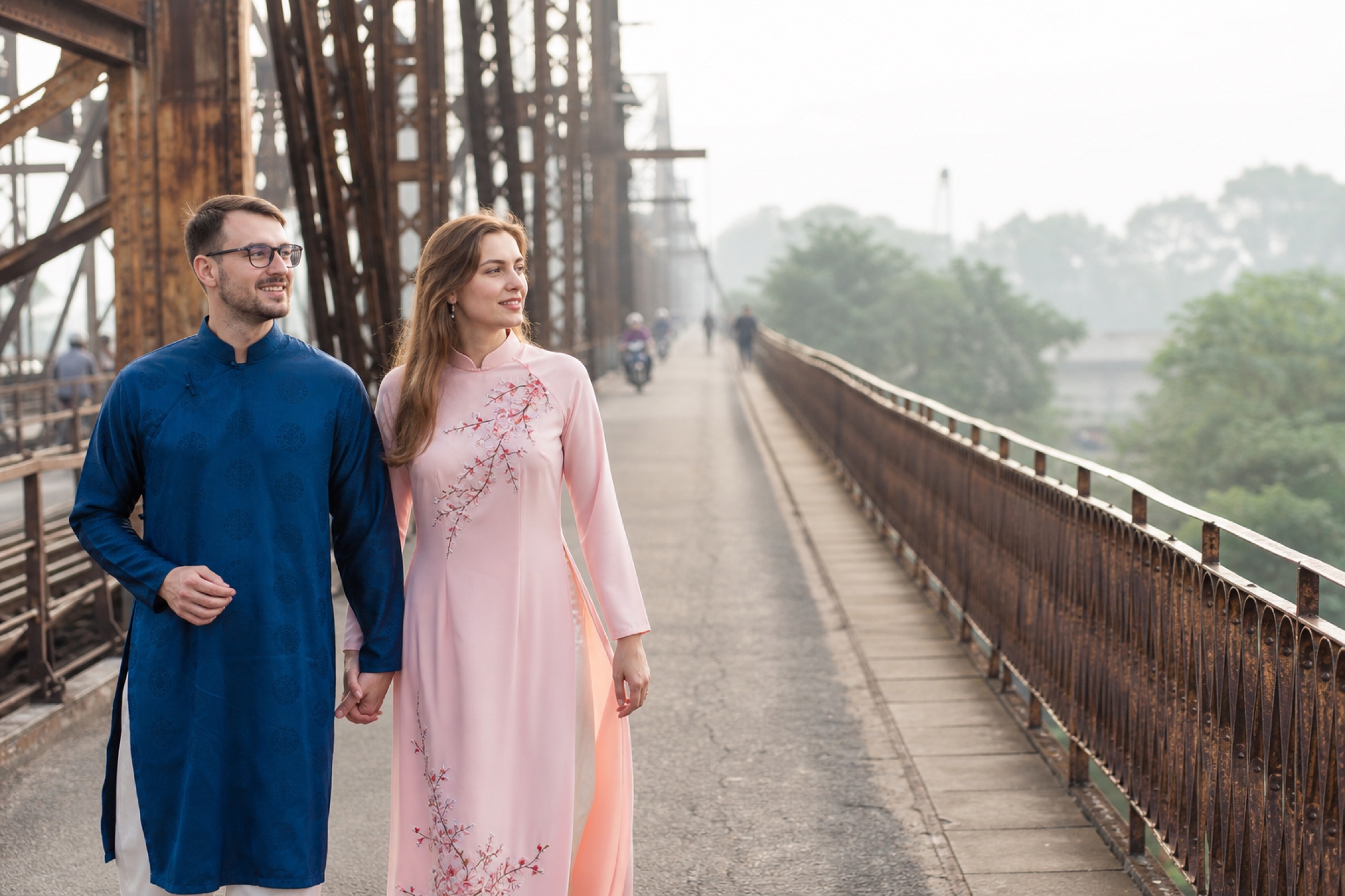
The three zones: Old Quarter, Hoan Kiem, Tay Ho
Dong Xuan Market (Old Quarter): The largest covered wet market in central Hanoi. Best 6–7:30 a.m., when produce stalls are still organizing. Floors are wet, smells are intense, and vendors are alert to cameras—respect "no photos" if asked. Light enters from the north side; plan your position accordingly. Risk: crowded with tour groups by 8 a.m.
Ta Hien Street (Old Quarter): Famous for street vendors; pho stalls, bánh cuốn carts, coffee shops. Less organized than Dong Xuan but more intimate. 6–7 a.m. is emptier; by 7:30 a.m. backpackers start appearing. Light bounces off shophouse walls and is flattering for skin tones. Risk: overused background (many Instagram accounts shoot here).
Tay Ho Market (West Lake area): Smaller, local, less touristed. 6–7 a.m. vendors are calm and more open to a photographer with a guide. Light is softer here because of tree cover. Good for candid, unrushed portraits with food context. Risk: takes 20–30 minutes from central Hanoi.
Pick based on your mood: chaos and color (Dong Xuan), intimacy and bustle (Ta Hien), or calm and authenticity (Tay Ho).
What to wear under an ao dai for a street food shoot
An ao dai is the obvious choice—traditional, elegant, and instantly gives you cultural credibility with vendors. But street food markets are sweaty, steamy, and smell of fish sauce.
Under the ao dai: Lightweight silk slip or cotton slip in white or cream. Anything thicker shows through. The slip protects the ao dai from sweat and makes movement easier. Wear bike shorts or a light slip skirt underneath; you'll be crouching, bending, and climbing onto stools to frame shots.
If not ao dai: Dark linen pants or wide-leg trousers, a plain white or black t-shirt or blouse, and a light outer layer (linen shirt) you can remove. Avoid white bottoms (water splashes, dust). Neutral colors let vendors and food be the subject.
Footwear: Closed-toe shoes with grip—market floors are wet and oily. Sneakers are safer than sandals. You will stand for 2–3 hours.
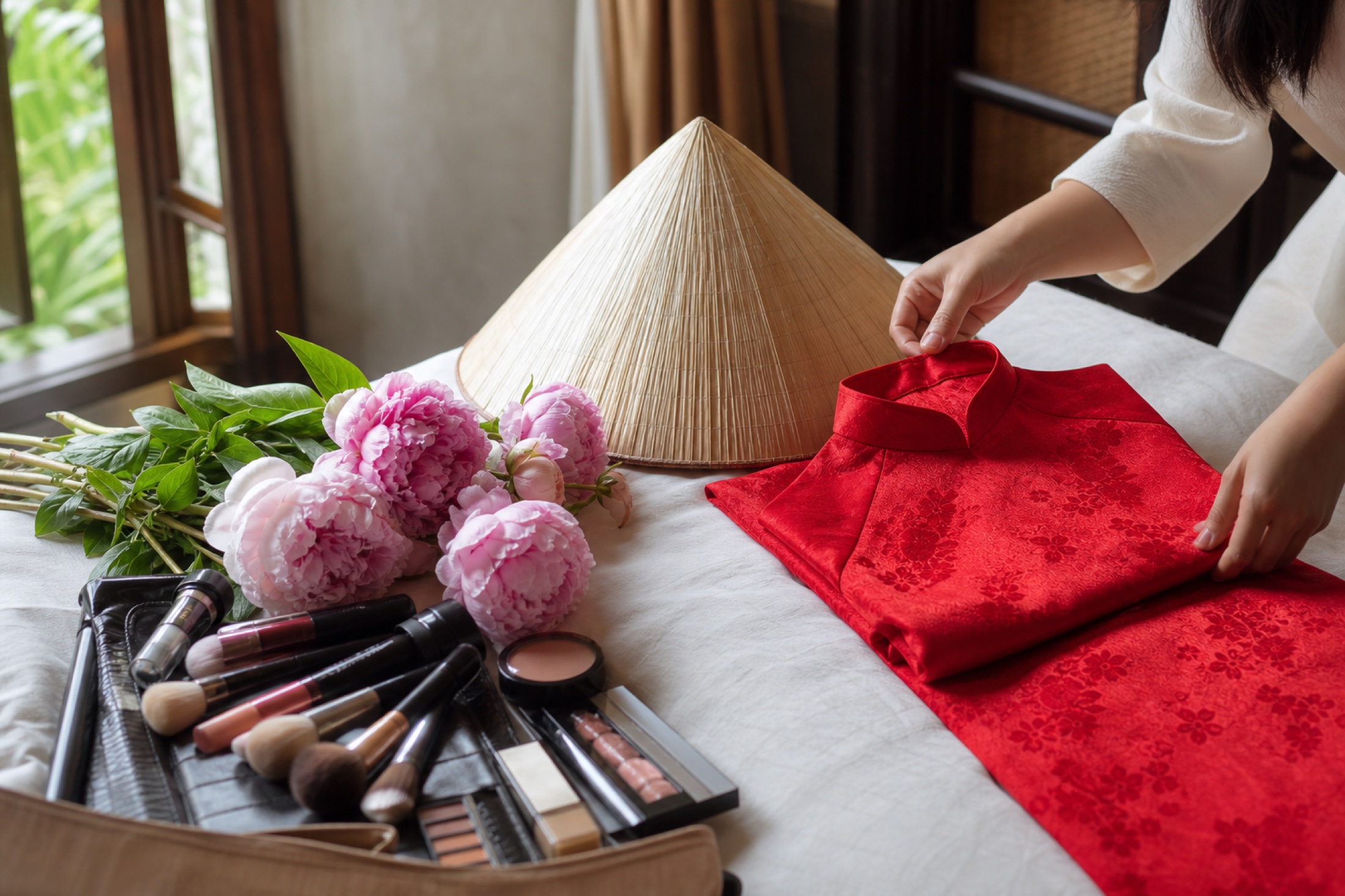
Hair & makeup: Hire a makeup & hair artist to arrive at your hotel 30 minutes before the shoot. Waterproof makeup is non-negotiable. Sweat-proof foundation, matte or satin lip color, and a long-wear setting spray prevent running in humidity. Hair in a low bun or braid keeps it out of your face and food shots. If you do your own: bring blotting papers and a compact powder; you'll need touch-ups after 45 minutes in the heat.
Vendor etiquette: how not to disrupt the shoot
Street food vendors in Hanoi are working, not posing. If you approach without respect, they'll turn away or ask you to leave—and you should respect that.
Ask permission first: Your photographer or guide should approach and ask (in Vietnamese) if they can take 3–5 photos. Most say yes. Offer a small tip (50,000–100,000 VND ≈ $2–4 USD) after, not before.
One shot of the setup, one of their hands/action, one of the finished dish. Then move. Don't linger or ask them to "redo" the action. Real vendors don't perform.
Don't block their customers. If someone steps up to order, step back. Your shot is less important than their livelihood.
Don't touch the food or their tools. You're a guest in their workspace.
Be quiet. Let the market sounds be in the frame. Loud direction or loud laughter breaks the mood and makes vendors uncomfortable.
Buy something. Sit down with a bowl of pho or a coffee and eat. Vendors remember customers, not just photographers.
Comparison: Street Food Shoot Types & What Each Needs
| Shoot Type | Best For | Duration | Crew | Outfit | Makeup | Cost Frame |
|---|---|---|---|---|---|---|
| Solo with guide + photographer | Individual or couple, authentic mood | 2–3 hours | 2–3 people | ao dai or casual linen | professional waterproof | Budget session |
| Small group (2–4 people) | Friends, family, content creators | 3–4 hours | 3–4 people + guide | coordinated ao dai | on-site artist or DIY | Standard session |
| Guided food tour + photography | Travel content, blog post, portfolio | 4–5 hours | guide + photographer | casual layered look | light makeup | Extended session |
All begin at 5:45 a.m. arrival; most involve 1–2 backup markets if the first is too crowded.
How to book a street food photoshoot in Hanoi
Via Cáo Studio – Makeup & Photoshoot (Hanoi branches): Cáo has three Hanoi locations and runs ao dai photoshoots, couple & family sessions, and custom market shoots. A street food session includes a photographer fluent in vendor etiquette, a fixer/guide, and an optional makeup & hair artist. Send WhatsApp for availability and to confirm your preferred market.
📸 Book on WhatsApp — ao dai photoshoot
Via independent photographers: Search "street food photographer Hanoi" on Instagram. Ask for:
- Portfolio photos from the exact market you want.
- Knowledge of vendor permissions and timing.
- References from other travelers (check their posts).
- Experience with couple or group dynamics if you're not solo.
- Clarity on delivery (when you get edited files; usually 2–4 weeks).
What to confirm before you pay a deposit:
- Market choice: Which market are you shooting? Are there backup options if it's too crowded?
- Start time: Confirm 6 a.m. or earlier; no negotiation.
- Weather contingency: What happens if it rains heavily? Are shots rescheduled?
- Edited file count: How many finished images do you receive?
- Makeup artist included? If not, budget ₫600,000–₫1,000,000 (≈$25–40 USD) for a separate professional.
- Duration & locations: Is it one market for 3 hours, or two markets for 4 hours?
- Language barrier: Does the photographer or guide speak English? Can they negotiate with vendors?
What can go wrong and how to avoid it
Overshooting: You take 500 photos and edit for weeks. Shoot with intention—3–5 shots per vendor, 20–30 total per market. It forces discipline and faster editing.
Weather: June–August monsoons bring heavy rain 5–7 a.m. June–July also means humidity 85–95%. Bring a thin raincoat and accept that humidity will blur some frames and require more blotting powder. Shoot on a dry day if possible; reschedule if storms are forecast.
Jet lag & early wake-up: If you arrive the day before, nap 2–4 p.m. and sleep by 10 p.m. that night. Melatonin or a short walk in morning light helps reset your clock. Bring coffee or energy; you'll be tired.
Outfit regret: Choose clothes the night before. Try the ao dai on your photographer or via video call to confirm fit and movement. If you're hiring a professional makeup artist, they'll advise on what works with lighting.
Expecting Instagram perfection: Real street food is messy, crowded, and unlit. The best shots are candid and raw, not styled. If you want a "perfect" pho bowl with flatlay setup, rent a studio space or hire a food stylist separately (not a street market shoot).
Related shoots that pair well with street food photography
Once you've captured the market energy, consider adding a second session:
- Ao dai photoshoot: Book a full morning of ao dai in markets + a styled afternoon shoot at a temple or lake for contrast.
- Couple photoshoot: Shoot street food as a couple, then move to a café or quiet alley for intimate portraits.
- Pre-wedding shoot: Integrate a market segment into your pre-wedding story—it shows cultural immersion and adds authentic texture.
See Cáo Studio's full lookbook for inspiration on how others blend street food with other Hanoi backdrops.
Planning by month: when to shoot
- Jan–Feb: Cool, dry, 15–20°C. Light is crisp. Best season. Markets are less humid.
- Mar–Apr: Warm, 20–28°C, occasional showers. Still good; bring an umbrella.
- May: Hot, humid, 28–32°C. Early morning is mandatory. Makeup runs by 7:30 a.m.
- Jun–Aug: Hot, very humid, frequent rain. Challenging but moody. Shoot only if you embrace the sweat and weather drama.
- Sep–Oct: Humidity drops, light improves. Second-best season after Jan–Feb.
- Nov–Dec: Cool, dry, 18–25°C. Perfect. Markets are organized; vendors are calm.
Best months: January–February, November–December. Doable: March–April, September–October. Challenging: May–August.
---
Ready to shoot?
Street food photography in Hanoi is a 2–3 hour morning commitment that requires early waking, vendor respect, and a photographer who knows the rhythm. Start at /hanoi to see Cáo Studio's Hanoi team and book on WhatsApp. Check /pricing and /faq for session details. And review the lookbook for real examples of how street food blends into ao dai and lifestyle shoots.
FAQ
Do vendors get paid if I photograph them?
No—they do not expect payment for a photo. Offering a 50,000–100,000 VND tip (≈$2–4 USD) after 3–5 quick shots is respectful but optional. Most decline or accept graciously. Always ask permission first.
What if it rains at 6 a.m.?
Light rain is fine; shoot with a rain jacket and umbrella. Heavy downpour = reschedule. Confirm your photographer's rain policy before booking; most offer one free reschedule if monsoon conditions hit.
Can I hire a professional makeup artist just for the market shoot?
Yes. Waterproof makeup for 2–3 hours in humidity costs ₫600,000–₫1,000,000 (≈$25–40 USD) with a freelance artist. Cáo Studio can arrange this; mention it in your WhatsApp message.
Will vendors let me pose with their food or stall?
Most say yes if you ask politely through a guide. They'll tolerate 1–2 posed shots, then want to return to work. Real candids (you watching them cook) are stronger than staged poses.
How many edited photos will I get?
Depends on your package. Typically 20–40 finished images from a 2–3 hour market shoot. Confirm the exact number with your photographer before paying a deposit. Editing takes 2–4 weeks.
Is an ao dai necessary for a street food shoot?
No, but it's striking and culturally respectful. Casual linen or cotton clothes work too. Avoid white bottoms and loose fabrics that drag in water. Wear closed-toe shoes with grip.
FAQ
Do vendors get paid if I photograph them?
No—they do not expect payment for a photo. Offering a 50,000–100,000 VND tip (≈$2–4 USD) after 3–5 quick shots is respectful but optional. Most decline or accept graciously. Always ask permission first.
What if it rains at 6 a.m.?
Light rain is fine; shoot with a rain jacket and umbrella. Heavy downpour = reschedule. Confirm your photographer's rain policy before booking; most offer one free reschedule if monsoon conditions hit.
Can I hire a professional makeup artist just for the market shoot?
Yes. Waterproof makeup for 2–3 hours in humidity costs ₫600,000–₫1,000,000 (≈$25–40 USD) with a freelance artist. Cáo Studio can arrange this; mention it in your WhatsApp message.
Will vendors let me pose with their food or stall?
Most say yes if you ask politely through a guide. They'll tolerate 1–2 posed shots, then want to return to work. Real candids (you watching them cook) are stronger than staged poses.
How many edited photos will I get?
Depends on your package. Typically 20–40 finished images from a 2–3 hour market shoot. Confirm the exact number with your photographer before paying a deposit. Editing takes 2–4 weeks.
Is an ao dai necessary for a street food shoot?
No, but it's striking and culturally respectful. Casual linen or cotton clothes work too. Avoid white bottoms and loose fabrics that drag in water. Wear closed-toe shoes with grip.
Ao dai, makeup, hair and a local photographer in Hanoi or Saigon — one WhatsApp message.