/pre-wedding-photoshoot
Street-style pre-wedding photos in Ho Chi Minh City
Street-style pre-wedding photography in Ho Chi Minh City means shooting you and your partner walking, talking and looking at each other on real Saigon streets—the river, markets, alleyways and French colonial architecture as the frame, not the focus. A session runs 3–4 hours in early morning (5:30–8:30 am) or golden hour (4:30–6:30 pm) when light is soft and crowds are thin. Cáo Studio brings one team—photographer, outfit stylist, hair and makeup artist—to direct the shoot in one booking, so the look, the light and the story stay aligned. You'll walk, pause at intersections, sit on curbs, cross bridges; the camera follows. You receive edited frames plus a short vertical film in 48 hours. Street-style suits couples who want motion over monuments, real moments over Instagram clichés, and a single point of contact instead of coordinating three vendors.
What makes street-style pre-wedding shoots different from studio or monument photography?
Street-style shoots happen while you move on actual Saigon streets, not on a private set or posed in front of landmarks. The light is real (sunrise, sunset, street lamps, window glow), the background is lived-in (a coffee stall, a delivery bike, a vendor), and the frame tells your story, not a template. Studio shoots control every variable—clean, predictable, timeless. Monument shoots trade light for a recognizable backdrop. Street-style trades backdrop for authenticity: you're walking out of frame, caught in a moment, the city around you unplanned. This suits couples who reject posed perfection and prefer a director who sees light and timing over poses and props. The trade-off is weather risk (rain stops street work; studio doesn't) and less control over background clutter—but that clutter is often what makes Saigon street frames memorable.
Why is early morning or golden hour the only time that works for street-style in Ho Chi Minh City?
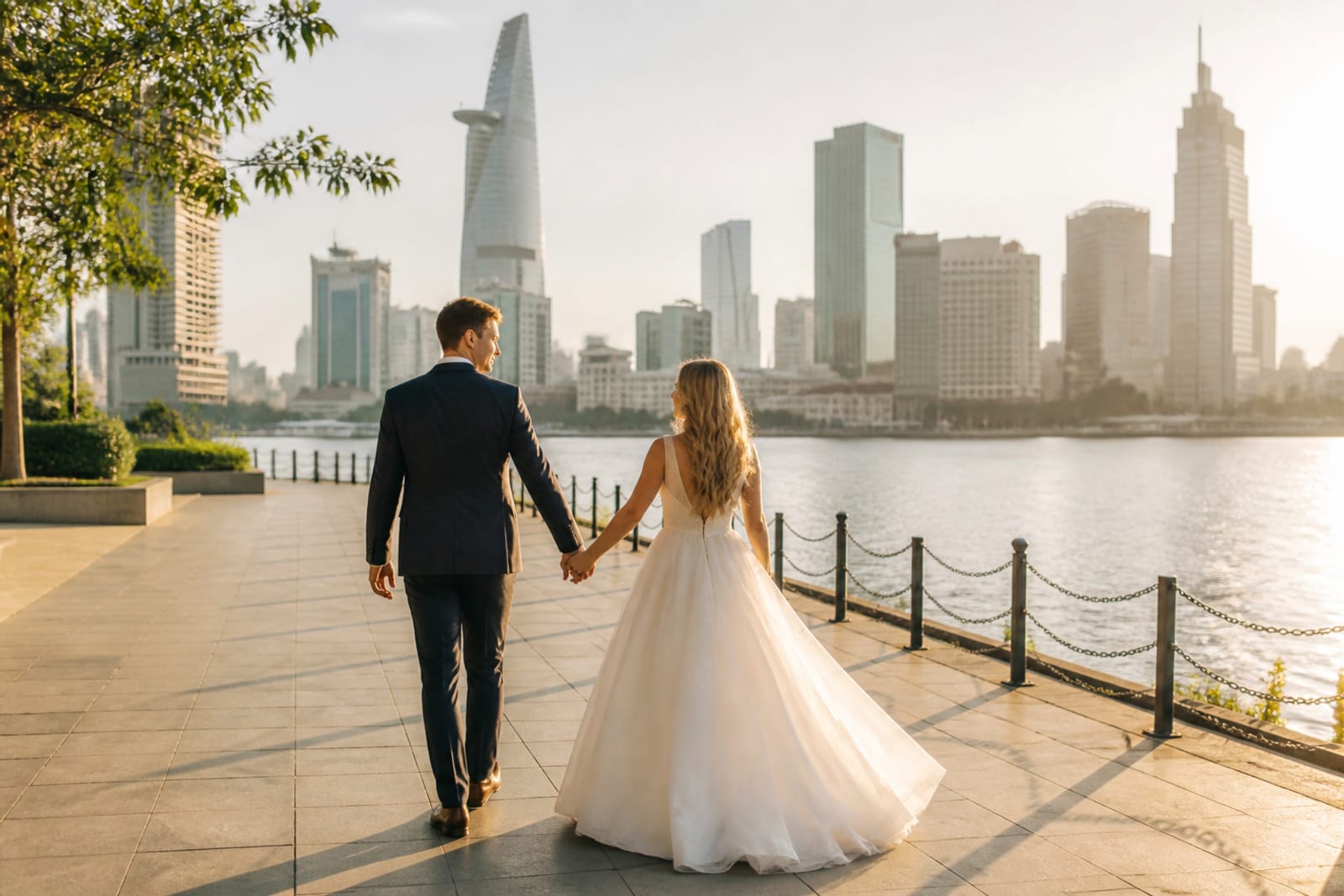
Ho Chi Minh City is hot and sunny year-round; midday light is harsh, shadows are black, skin looks flat, and the heat drives everyone indoors. Early morning (5:30–8:30 am) gives soft, directional light from the east, thin crowds (vendors just opening, few tourists), and cooler air so you're not sweating through your outfit. Golden hour (4:30–6:30 pm) mirrors this: warm, directional light from the west, the city slowing down. Between 9 am and 4 pm, the sun is directly overhead, light is dead, and Saigon's streets are packed. Shooting mid-morning or mid-afternoon on Saigon streets means harsh shadows across your face, washed-out skin tones, and crowds blocking frames. Street-style requires angle and softness, so timing is non-negotiable. If you book a street-style shoot and the morning is overcast, the light is still workable (diffused, even); if the morning is clear, the light is golden. Rain stops work entirely; you'd reschedule.
Which Saigon streets and neighborhoods deliver the best frames for pre-wedding shoots?
Huc Bridge and the Old Quarter riverside (dawn, before 6:30 am): soft east light on water, the bridge nearly empty, locals on bikes and motorbikes. Walk the embankment, pause mid-bridge, sit on stone steps. Best Feb–Apr (dry, cool); avoid Sep–Nov (rain risk, grey light).
Ben Thanh Market and Tao Đàn Park surroundings (5:30–7 am): narrow colonial streets, yellow shutters, a few vendors setting up, morning light pooling in alleyways. Walking feels like discovery. Dry season works year-round; wet season mornings are still safe if the forecast is clear.
Nguyen Hue Walking Street and the surrounding French Quarter (6–8 am): wide boulevards, colonial villas, soft north light, very few people. Suits couples who want a cleaner, quieter backdrop. Best Feb–May (dry, comfortable).
Saigon River Promenade and Bitexco pier area (4:30–6 pm, facing west): golden light on water, boats, industrial cool-meets-romance. More tourists here, so you need a director who frames tightly and moves fast.
Bui Vien and the backpacker alley (7–8 am, off-hours): colorful shutters, street food carts, lived-in texture. Niche choice; suits couples who like grit and energy over postcard beauty.
Each spot has a 1–2 hour window of ideal light. The director scouts the exact angle and time before the shoot; you're given a detailed brief (e.g., "Huc Bridge at 6:10 am, soft side light, we'll shoot wide first, then move to the park").
| Option | Best for | Light & season | Why it works |
|---|---|---|---|
| River & bridges (dawn) | Connection, romance, water reflections | Soft east light, Feb–May best | Empty, golden, story-driven walking |
| Old Quarter alleys | Texture, discovery, local life | Diffused side light, year-round | Narrow framing, yellow walls, intimacy |
| French Quarter (dawn) | Clean frames, architectural elegance | Long shadows, Feb–Apr best | Quiet, formal yet romantic, colonial light |
| River Promenade (golden hour) | Dramatic, urban, sunset energy | Golden west light, Dec–Mar best | Busy but framed tightly, dynamic backdrops |
| Markets (early morning) | Energy, authentic Saigon, vendor life | Warm, diffused, all seasons if dry | People, color, motion without crowds |
How do you choose between a street-style shoot, an ao dai session, or a couple hotel package?
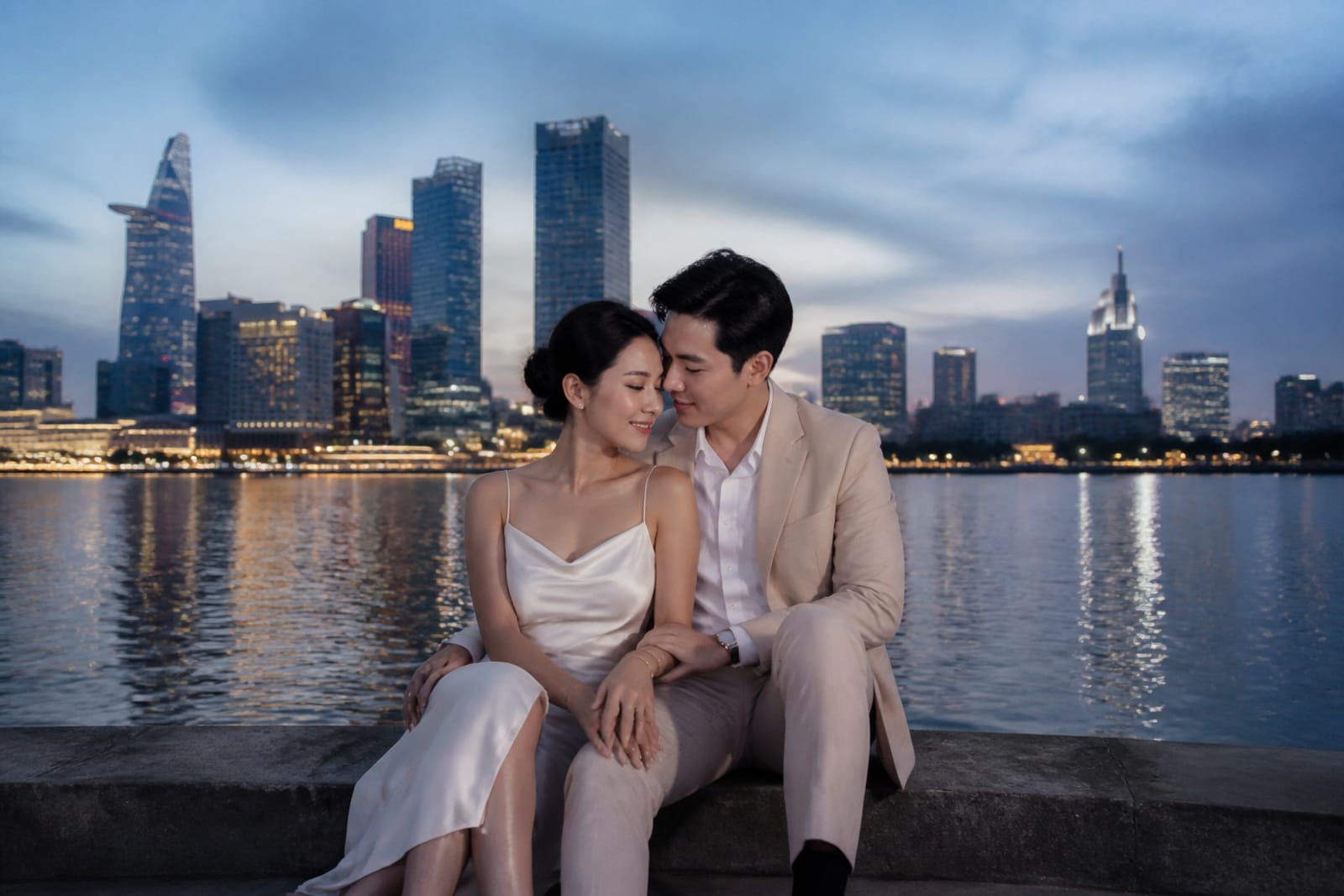
Street-style pre-wedding: best if you want motion, real light, and a narrative arc—walking through the city as a story. One team, 3–4 hours, early morning or golden hour. Suits couples who like candid-style frames and have flexible schedules. Cost factors: location travel time (inner city = shorter setup), season (dry = no reschedules), number of outfits (more = longer session).
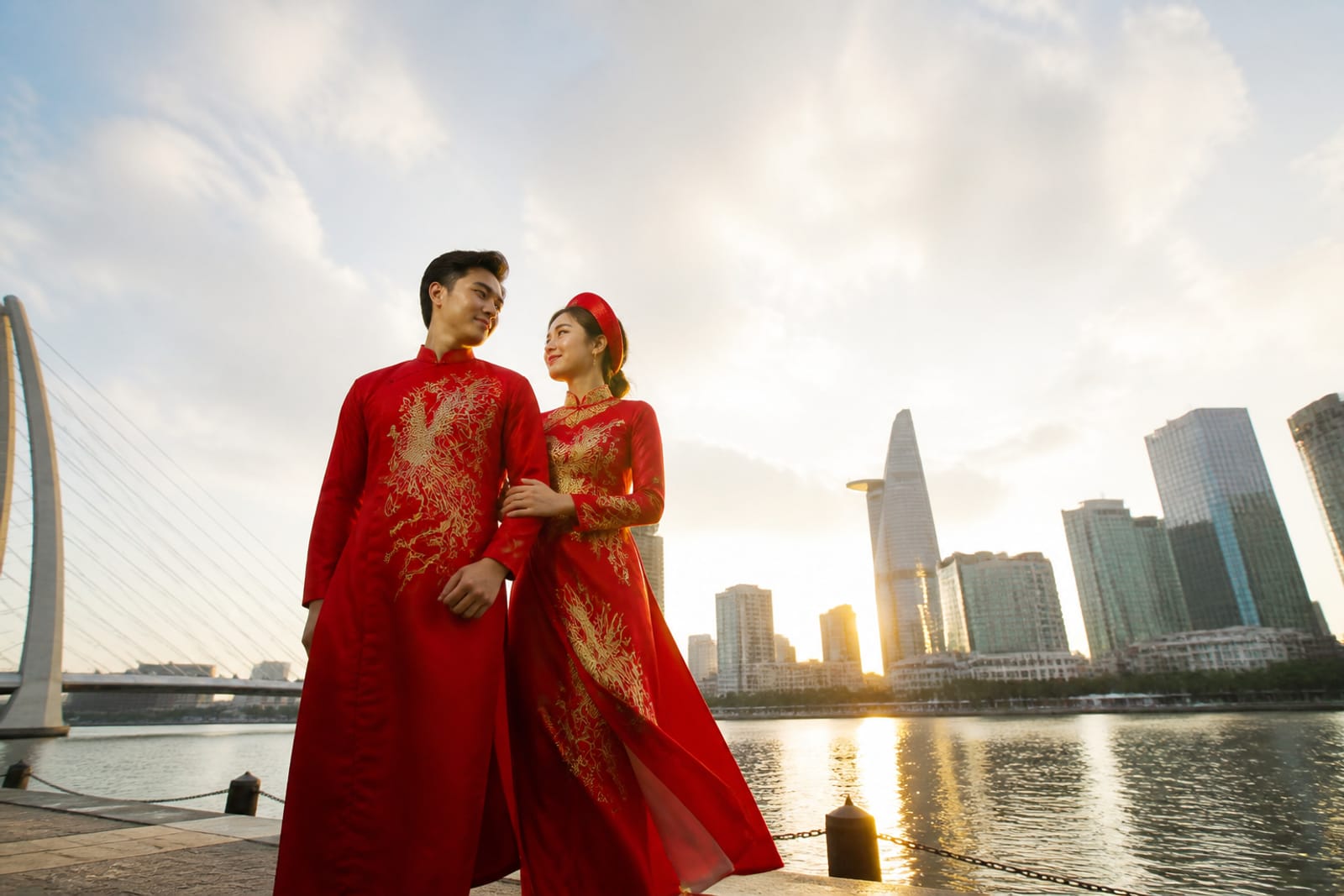
Ao dai photoshoot: best if you want to wear traditional Vietnamese dress and mix street light with the cultural gravity of the outfit. Often street-style in ao dai—same timing, same team, different visual. Suits couples honoring Vietnamese heritage or mixing ceremony dress into pre-wedding frames.
Couple photoshoot at a hotel or your venue: best if you have limited time, unpredictable weather, or a specific indoor backdrop (rooftop, pool, suite). Controlled light, no weather risk, flexible hours. You're still directed (not posed), but the frames are tighter and more curated. Suits couples on tight schedules or who prioritize a finished look over street authenticity.
Makeup & hair at your hotel solo: best if you're already booked elsewhere and just need professional styling before an elopement or a second-shooter day. No photoshoot included. Pairs well with a street-style shoot if you want to look polished before you walk.
The decision hinges on three factors: Do you want motion or stillness? (street = motion; hotel = stillness) Do you have a tight weather window? (dry season street-style is safer; wet season = hotel backup) Do you have time flexibility? (street-style locks in dawn or dusk; hotel shoots work anytime).
📸 Book on WhatsApp — pre-wedding photoshoot
What goes wrong on street-style shoots and how do you avoid it?
Weather: Rain stops street work. In dry season (Dec–Apr in Saigon), the risk is low. In wet season (May–Nov), morning shoots are safer than afternoon (afternoon brings sudden storms), but reschedule clauses matter—ask what happens if it rains 30 minutes into your 4-hour shoot.
Crowds and tourists: Even at dawn, a Huc Bridge or Ben Thanh shoot may attract early-rising tourists or motorbike traffic. A good director anticipates this and has backup angles and timings ready. If the original time is too crowded, pivot to a parallel street or shift 15 minutes earlier.
Outfit discipline: Street-style in a dress or suit means walking, sitting on curbs, crossing wet streets. Your outfit must move with you. Avoid heavy, stiff fabrics that crease or heavy jewelry that catches on doorways. Ask your stylist to bring a change of shoes (street shoes, then shoot shoes) and a small repair kit. If you're renting ao dai, confirm the tailor allows movement (no overly tight sleeves).
Makeup melt: Saigon is hot and humid, even at dawn. Your makeup artist should use setting spray, powder, and waterproof products. Touch-ups happen mid-session if needed. Bring blotting papers.
Post-processing: Streets mean cluttered backgrounds—a delivery bike, a sign, a stranger. The editor will clean some of this; ask for a preview of retouching scope before the final edit (some studios over-blur backgrounds, losing texture; Cáo Studio keeps Saigon's texture visible).
Timing misalignment: A director who's late by 15 minutes may lose the ideal light window entirely. Confirm the shoot time down to the minute and meet 10 minutes early.
Avoid these by booking a team that scouts locations beforehand, has a weather contingency, and communicates the exact time in a brief before the shoot day.
What should you check before you book a street-style pre-wedding shoot?
Before committing, confirm these points with the studio (Cáo Studio answers all of these on WhatsApp):
- Exact timing & location scouting: Does the studio lock in a specific time (e.g., 6:10 am, Huc Bridge) or is it flexible? Do they scout the spot beforehand or wing it? A good studio scouts and sends you a time + light description in advance.
- Weather contingency: If it rains, does the shoot reschedule, move indoors, or refund? What's the notice period? Ask for the full policy.
- Outfit & styling: Does the studio bring outfits, or do you provide them? Can you wear a rental ao dai, or is there a surcharge? Does hair and makeup happen on-site or at your hotel? Confirm what's included and what costs extra (rentals usually add to your quote).
- Delivery timeline: How many edited frames do you receive? Do you get RAW files or only JPEGs? When do you get the vertical film? Cáo Studio delivers 48 hours; others may take 2 weeks. Check the exact timeline.
- Team size & roles: Will the photographer be the only person there, or will a stylist and makeup artist come with them? A one-person shoot means stops for outfit changes; a full team means seamless flow. One team = one message (Cáo Studio's belief).
- Backup locations: Does the director have 2–3 alternate streets in mind if the original is too crowded? Can they pivot on the day?
- Retouching scope: How much background cleanup is included? Do they sharpen, color-correct, or remove objects? Ask to see an unretouched frame and a retouched one so you know the style.
- Cost factors, not fixed prices: Ask about the cost factors—season (dry = higher demand), travel time (outer city = longer setup fee), number of outfits, video length, rush editing. Don't expect a price quote until these are clarified on WhatsApp. 🌸 See the lookbook
---
FAQ
Can I wear a regular wedding dress on a street-style shoot?
Yes, but it affects movement and weather risk. Heavy lace or trains get dirty on Saigon streets and slow your walking. Lighter, shorter dresses (knee or tea-length) work better. Ask the studio about fabric care and whether they bring a cleaning kit. Ao dai or a simple silk dress is easier to move in.
What if the forecast says 60% chance of rain on my shoot day?
A 60% forecast in Ho Chi Minh City usually means an afternoon downpour risk, not morning risk. Street-style shoots at dawn (5:30–8 am) are usually safe even with that forecast. By 9 am, clear. Golden hour (4:30–6 pm) carries higher risk. Ask the studio if they'll commit to shooting at dawn if afternoon rain is forecast, or if they'll reschedule. Confirm the rain policy in writing before you book.
Do I need to bring a second outfit, or can we shoot in one dress?
One outfit is enough for a 3–4 hour street-style shoot. Multiple outfits slow the shoot (changes, touch-ups, new location scouting) and cut into light windows. A good director gets 30–50 usable frames from one outfit and one street arc. If you want two looks, add time and expect a longer session or a return visit. Ask the studio how many outfits fit your session length.
How much retouching is normal for street photos?
Expect skin smoothing, color correction, and minor object removal (a random plastic bag, a street sign just touching your shoulder). Expect not to see heavy background blur (street context is part of the story) or unrealistic skin tones. Ask to see 3 sample edits from the studio—same shoot, same couple, edited—so you know their style. Cáo Studio's style: natural skin, textured Saigon streets, sharp frames.
Is street-style cheaper than studio or venue shoots?
Cost depends on team size, season, and location travel—not inherently cheaper. A full team (photographer, stylist, hair, makeup) on a river location at dawn in December costs more than a single photographer in a studio. A team of one is cheaper per hour but means slower workflow. Discuss cost factors (season, location, team size, edits, video) with the studio on WhatsApp; avoid comparing fixed prices across studios (they hide different inclusions). Cáo Studio's model is one team + 48-hour turnaround; confirm your budget and priorities before quoting.
Can we shoot in the afternoon if we don't have morning availability?
Yes, but light quality and crowds shift. Late afternoon (4:30–6 pm) gives golden hour; 2–4 pm is harsh and busy. Morning is always safer for light and space, so if you can only do afternoon, book golden hour and expect more tourists in background frames. The director can frame tightly to minimize clutter. Confirm the afternoon light plan with the studio before booking.
FAQ
Can I wear a regular wedding dress on a street-style shoot?
Yes, but it affects movement and weather risk. Heavy lace or trains get dirty on Saigon streets and slow your walking. Lighter, shorter dresses (knee or tea-length) work better. Ask the studio about fabric care and whether they bring a cleaning kit. Ao dai or a simple silk dress is easier to move in.
What if the forecast says 60% chance of rain on my shoot day?
A 60% forecast in Ho Chi Minh City usually means an afternoon downpour risk, not morning risk. Street-style shoots at dawn (5:30–8 am) are usually safe even with that forecast. By 9 am, clear. Golden hour (4:30–6 pm) carries higher risk. Ask the studio if they'll commit to shooting at dawn if afternoon rain is forecast, or if they'll reschedule. Confirm the rain policy in writing before you book.
Do I need to bring a second outfit, or can we shoot in one dress?
One outfit is enough for a 3–4 hour street-style shoot. Multiple outfits slow the shoot (changes, touch-ups, new location scouting) and cut into light windows. A good director gets 30–50 usable frames from one outfit and one street arc. If you want two looks, add time and expect a longer session or a return visit. Ask the studio how many outfits fit your session length.
How much retouching is normal for street photos?
Expect skin smoothing, color correction, and minor object removal (a random plastic bag, a street sign just touching your shoulder). Expect *not* to see heavy background blur (street context is part of the story) or unrealistic skin tones. Ask to see 3 sample edits from the studio—same shoot, same couple, edited—so you know their style. Cáo Studio's style: natural skin, textured Saigon streets, sharp frames.
Is street-style cheaper than studio or venue shoots?
Cost depends on team size, season, and location travel—not inherently cheaper. A full team (photographer, stylist, hair, makeup) on a river location at dawn in December costs more than a single photographer in a studio. A team of one is cheaper per hour but means slower workflow. Discuss cost *factors* (season, location, team size, edits, video) with the studio on WhatsApp; avoid comparing fixed prices across studios (they hide different inclusions). Cáo Studio's model is one team + 48-hour turnaround; confirm your budget and priorities before quoting.
Can we shoot in the afternoon if we don't have morning availability?
Yes, but light quality and crowds shift. Late afternoon (4:30–6 pm) gives golden hour; 2–4 pm is harsh and busy. Morning is always safer for light and space, so if you can only do afternoon, book golden hour and expect more tourists in background frames. The director can frame tightly to minimize clutter. Confirm the afternoon light plan with the studio before booking.
Ao dai, makeup, hair and a local photographer in Hanoi or Saigon — one WhatsApp message.