lookbook
Temple Photography Etiquette Vietnam: Sacred Spaces, Respect & Gear
How do you dress respectfully inside a Vietnamese temple?
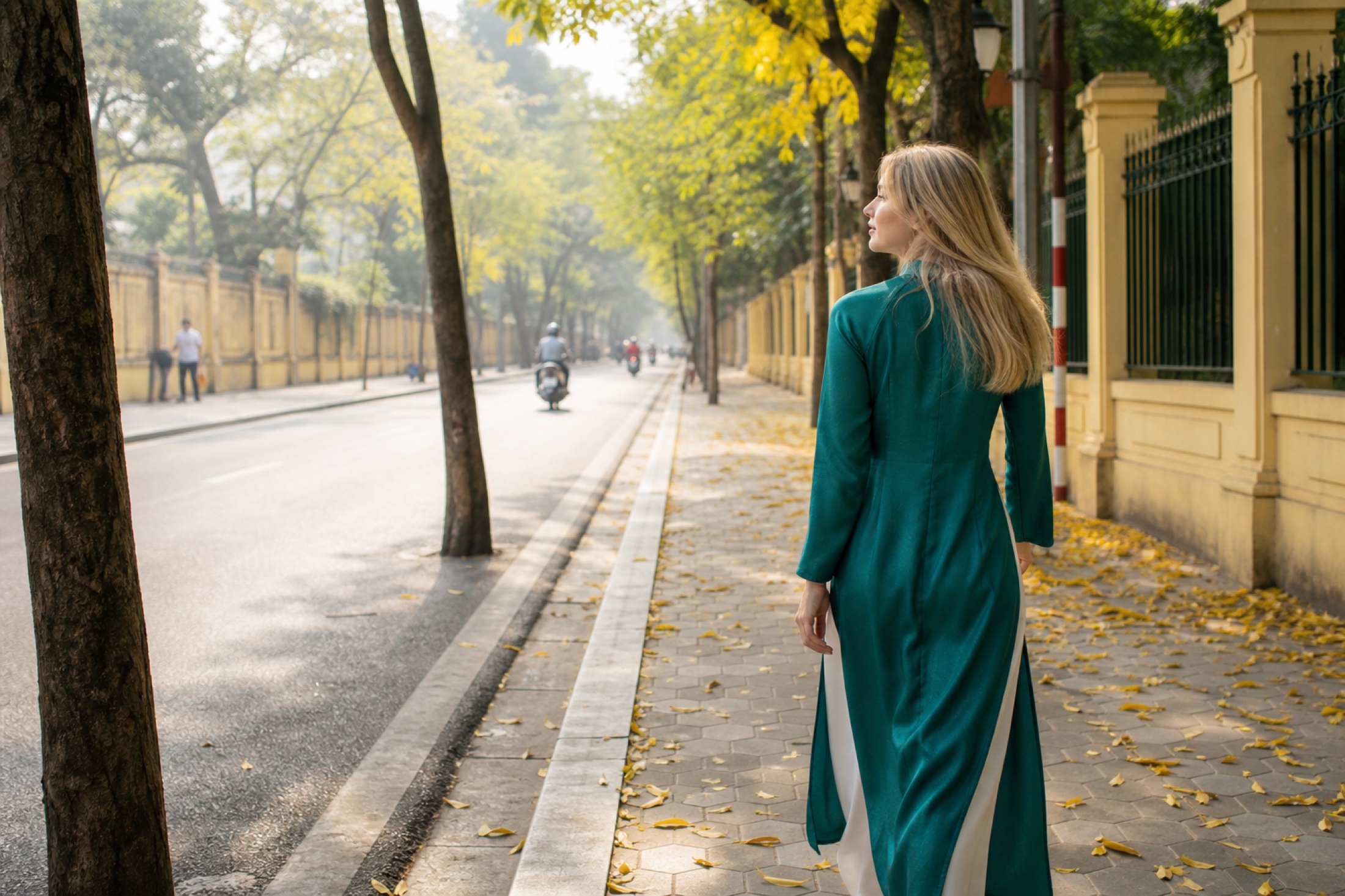
Temples are active worship spaces. Wear long pants or a skirt past the knee; cover shoulders and chest. An áo dài—Vietnam's traditional tunic—is ideal: it's respectful, photogenic, and expected at most pagodas. Avoid sleeveless tops, shorts, and bright casual sportswear. Remove shoes before entering inner sanctums; many temples have designated shoe areas.
📸 Book on WhatsApp — ao dai photoshoot
When is the best time to photograph temples without disturbing worship?
Early morning (6–8 a.m.) or late afternoon (4–6 p.m.) offer soft light and fewer crowds. Avoid midday glare and peak tourist hours. Never shoot during active ceremonies, prayer times, or when monks are present unless explicitly invited. Check with temple staff on prayer schedules: most have quiet windows mid-morning or mid-afternoon.
Do you need permission to photograph inside temples?
Yes. Approach the head monk or a temple guardian, bow slightly, and ask in English or basic Vietnamese: "May I take photographs?" At popular temples, staff expect this; they'll often say yes but may restrict camera use near altars or during rituals. Some temples charge a small donation (₫20,000–₫50,000) for photography permits. Always respect a "no"—many temples reserve photography rights for official events.
What's off-limits when photographing Vietnamese temple interiors?
| Subject | Why it's restricted | What to do instead |
|---|---|---|
| Active altars during ceremony | Sacred worship in progress | Photograph from doorways only; wait for breaks |
| Monks in private prayer or meditation | Spiritual concentration required | Ask permission; retreat if declined |
| Burial grounds or family shrines | Family and ancestor veneration | Stay outside marked areas; shoot exterior architecture |
| Buddha statues in poor repair | Temple dignity | Photograph well-maintained statues; avoid unflattering angles |
| Offerings and ritual objects | Spiritual significance | Document the space rather than individual items |
How do you compose temple photos that honor the space while capturing compelling images?
Frame architecture, not crowds. Shoot doorways, courtyards, and roof details rather than centering on altars. Use golden-hour light (sunrise/sunset) to illuminate stone carvings and tile work; this creates reverence without relying on flash (which is forbidden in many interiors). Include contextual shots: worshippers, incense smoke, lanterns—these tell a respectful story. Avoid selfies at main altars or sacred objects.
---
What's the difference between solo temple visits and booking a professional photoshoot?
| Approach | Best for | Light control | Permission ease | Final images | Cost |
|---|---|---|---|---|---|
| Solo with smartphone | Quick personal shots, learning composition | Natural only; dependent on time of day | You ask; language barrier risk | Casual, unpolished | Free (donation expected) |
| Solo with DSLR/mirrorless | Serious hobbyists wanting control | Better depth of field; manual settings | Same risk; bulky gear may invite scrutiny | Professional-grade quality | ₫0 + tripod/lens investment |
| Guided professional session (ao dai photoshoot) | Cultural immersion + polished portfolio | Studio + natural hybrid; pro knows best light windows | Photographer has temple relationships; pre-arranged access | Edited, styled, narrative flow | Quote on WhatsApp; includes hair/makeup and guide |
---
How do weather and seasons affect temple photography in Vietnam?
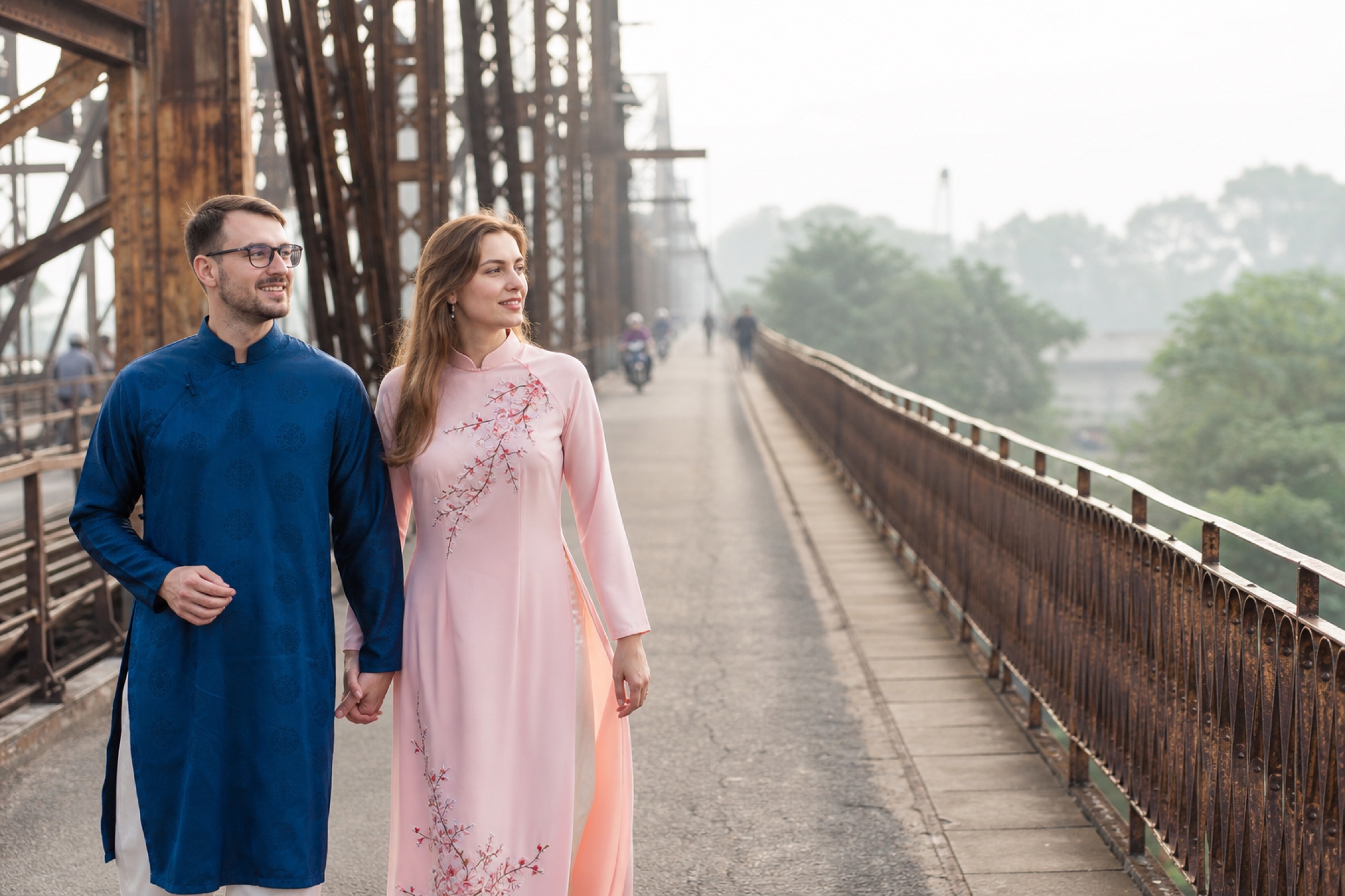
Hanoi & Northern temples (Nov–Feb): Cool, dry, clear light. Golden hour is stunning; best for exterior and courtyard shots. Bring layers; mornings are chilly.
Central & Southern temples (Nov–Jan): Warm, minimal rain. Consistent soft light; perfect for full-day sessions.
Monsoon (May–Oct): Unpredictable rain, humid haze, dramatic storm clouds over roofs. Wet stone creates reflective texture. Morning light rare. If shooting, go early; plan contingency indoor shots.
For guided professional sessions at temples, Cáo Studio coordinates around weather: we reschedule monsoon shoots to clear windows or pivot to covered temple courtyards and Hoi An's ancient structures. Ask on WhatsApp for temple shoot dates.
---
What are common mistakes that disrespect temple spaces?
- Touching statues or offerings → Take photos from distance; never handle sacred objects.
- Loud conversations or music → Quiet reverence expected; silence camera shutter sound if your phone allows.
- Photographing worshippers without consent → Ask before including people; some believe it captures their spiritual energy.
- Leaving trash or souvenirs → Temples are not Instagram props; leave no trace.
- Wearing temple clothing (robes, ritual items) as costume → Respect tradition; wear áo dài or modest Western dress, not appropriated sacred garments.
- Refusing to donate after photography → A small offering (₫20,000–₫100,000) is customary respect, not coercion.
---
How to book a respectful temple photoshoot in Hanoi, Saigon, or Hoi An
If you want professional-guided temple photography:
- Choose your temple: Popular respectful choices include Tran Quoc (Hanoi's lakeside pagoda), Thien Hau (Ho Chi Minh's largest), and Phap Bao (Hoi An's coastal sanctuary).
- Contact Cáo Studio via WhatsApp with: your temple preference, session date/time (mornings preferred), and outfit choice (áo dài style, color).
- Cáo Studio coordinates access: Our team has standing relationships with major temples; we handle permissions and timing.
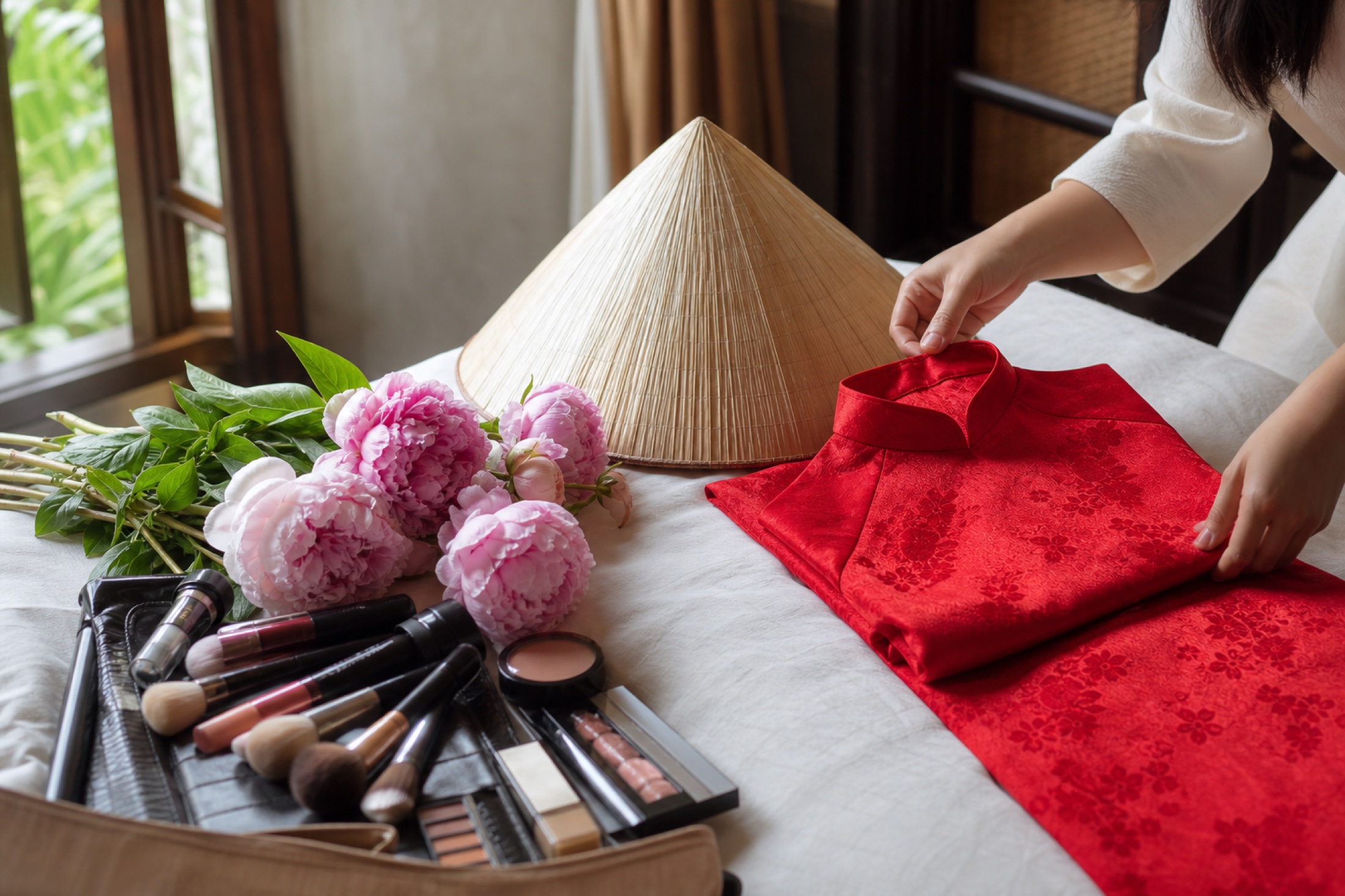
- Preparation: Hair and makeup fitted to temple light (soft, no heavy glitter). You'll wear traditional áo dài (we advise on style for your temple).
- On the day: Arrive early, meet staff, bow, follow cues. Shoot during the quiet window we've arranged; 2–3 hours typical.
- After: Edited images within 1–2 weeks; you receive digital gallery.
Get a custom quote:
- Ao dai photoshoot at temples — solo or couple/family option
- Available in Hanoi, Ho Chi Minh City, and Hoi An
- See example looks in our lookbook
---
What to check before booking or shooting independently
If you're booking a professional session:
- Does the photographer speak English? (Cáo Studio's team is fluent.)
- Are pre-shoot consultations included? (Yes—we advise on temple choice and outfit.)
- What's included? (Session fee, áo dài rental, hair/makeup, edited images—confirm each.)
- How long? (2–4 hours typical; longer sessions available.)
- Can you reschedule if weather fails? (Yes; we offer date swaps within 30 days.)
If you're shooting solo:
- Which temples allow photography? (Check local guides or TripAdvisor reviews; ask staff on arrival.)
- What time opens? (Most open 6–7 a.m.; confirm closing time to avoid locked gates.)
- Do you have modest clothing already? (Rent or buy an áo dài locally for ₫150,000–₫400,000 if needed.)
- Backup battery and phone storage? (Temples are often remote; charge overnight.)
- Small donation prepared? (Cash only; ₫20,000–₫50,000 expected.)
---
Why book with Cáo Studio for temple photography?
We're Vietnam-based, not a foreign agency. Our photographers understand temple etiquette deeply and have permissions at major sites. Your session includes professional hair and makeup—essential for temple light and edited authenticity. We also tailor proposals and pre-wedding shoots to sacred temples if you're marking a milestone. All images edited within 2 weeks; free reshoots if weather interferes.
📸 Book on WhatsApp — ao dai photoshoot
Get a personalized quote: mention your temple, date, and whether you want solo ao dai, couple, or family framing.
FAQ
Can I wear Western dress to a temple photoshoot, or must I rent an áo dài?
Western dress (long skirt, covered shoulders) is respectful. An áo dài is more photogenic and culturally resonant, especially at ancient temples. Many clients rent for ₫150,000–₫300,000; Cáo Studio recommends áo dài for temple shoots but respects your choice.
Are temples in Hoi An different from Hanoi in terms of photography rules?
Hoi An temples (Phap Bao, Quan Cong) are older, smaller, and stricter about interiors. Exterior courtyard and architecture shots are preferred; interior altar photography is often restricted. Ask on WhatsApp for Hoi An temple guidance—we arrange these shoots by appointment.
What if I visit a temple unannounced without booking a photographer?
Respectfully approach staff, ask permission, dress modestly, donate if photographing, avoid altars during prayer. Morning visits (6–8 a.m.) minimize crowds. Expect lower image quality and possible polite refusal at some sites. Solo temple photography is allowed but less curated than professional sessions.
Do I need a special visa or permit to photograph temples in Vietnam?
No visa upgrade needed. Standard 30-day tourist visa allows photography. Some temples may request a small donation or charge a photography fee (₫20,000–₫50,000); never forced. Sacred sites (family shrines, burial grounds) are off-limits without owner consent.
How much should I donate at a temple if I'm photographing?
₫20,000–₫50,000 (≈$0.80–$2 USD) is customary. Larger donations (₫100,000+) are respectfully received but not obligatory. Donation boxes are usually near entrances or altars. Even if refused, offering is a gesture of respect.
Can Cáo Studio shoot temple photos outside Hanoi, Saigon, and Hoi An?
We base our teams in those three cities. For other destinations (Nha Trang, Da Lat, Da Nang temples), we provide honest planning guides and recommend local photographers. Ask on WhatsApp for referrals; we won't promise a shoot we can't deliver.
FAQ
Can I wear Western dress to a temple photoshoot, or must I rent an áo dài?
Western dress (long skirt, covered shoulders) is respectful. An áo dài is more photogenic and culturally resonant, especially at ancient temples. Many clients rent for ₫150,000–₫300,000; Cáo Studio recommends áo dài for temple shoots but respects your choice.
Are temples in Hoi An different from Hanoi in terms of photography rules?
Hoi An temples (Phap Bao, Quan Cong) are older, smaller, and stricter about interiors. Exterior courtyard and architecture shots are preferred; interior altar photography is often restricted. Ask on WhatsApp for Hoi An temple guidance—we arrange these shoots by appointment.
What if I visit a temple unannounced without booking a photographer?
Respectfully approach staff, ask permission, dress modestly, donate if photographing, avoid altars during prayer. Morning visits (6–8 a.m.) minimize crowds. Expect lower image quality and possible polite refusal at some sites. Solo temple photography is allowed but less curated than professional sessions.
Do I need a special visa or permit to photograph temples in Vietnam?
No visa upgrade needed. Standard 30-day tourist visa allows photography. Some temples may request a small donation or charge a photography fee (₫20,000–₫50,000); never forced. Sacred sites (family shrines, burial grounds) are off-limits without owner consent.
How much should I donate at a temple if I'm photographing?
₫20,000–₫50,000 (≈$0.80–$2 USD) is customary. Larger donations (₫100,000+) are respectfully received but not obligatory. Donation boxes are usually near entrances or altars. Even if refused, offering is a gesture of respect.
Can Cáo Studio shoot temple photos outside Hanoi, Saigon, and Hoi An?
We base our teams in those three cities. For other destinations (Nha Trang, Da Lat, Da Nang temples), we provide honest planning guides and recommend local photographers. Ask on WhatsApp for referrals; we won't promise a shoot we can't deliver.
Ao dai, makeup, hair and a local photographer in Hanoi or Saigon — one WhatsApp message.