/pre-wedding-photoshoot
Thanh Ha pottery village pre-wedding photos: pros, cons, alternatives
Thanh Ha pottery village (Hoi An district) is a working ceramic hub where couples shoot among kilns, clay workshops and weathered pottery displays. Sessions run 1–3 hours depending on location spread; best light is early morning (6–7:30 a.m.) before heat and crowds arrive. Access requires coordination with local potters and sometimes permits; the narrow lanes and uneven grounds limit dress trains and fast outfit changes. Flooding closes the village during rainy season (Sep–Dec, worst Oct–Nov). Cáo Studio – Makeup & Photoshoot runs pre-wedding shoots in Hanoi, Ho Chi Minh City and Hoi An by appointment; for Thanh Ha specifically, confirm dates and logistics on WhatsApp, as weather and potter schedules shift seasonally. Authenticity is the draw—but light, access and muddy terrain often surprise couples. Compare studio and coastal alternatives before committing. ---
Is Thanh Ha light good for pre-wedding photos?
Thanh Ha's strength is texture, not light. Early morning (5:30–7:30 a.m.) offers soft, directional rays that sculpt kiln walls and throw shadows across pottery stacks—ideal for moody, editorial portraits. By 8 a.m., direct sun turns clay dust into harsh contrast; midday is unusable without reflectors or shade structures. Afternoon (3–5 p.m.) can work if clouds gather, which happens often in rainy season. Cloudy days feel flat; you lose the ceramic-texture drama that makes Thanh Ha distinctive. If you favor bright, even light and quick turnarounds, studio or temple backdrops (with controlled reflectors) outperform village shooting.
Conclusion: Thanh Ha rewards early-bird couples willing to wake before dawn and adapt to natural variability.
---
What are the seasonal and access challenges?
Thanh Ha sits in Hoi An's flood zone. Feb–Apr is dry and best; May–Aug is hot but passable if you shoot sunrise-only; Sep–Dec is rainy with typhoons, and Oct–Nov brings literal flooding that blocks lanes and muddies workshops. Heavy fabrics (thick tulle, satin) pick up clay dust and water; hems suffer. Access requires negotiating with individual potters—no formal entrance gate or set hours. Permits are unofficial; a local guide or photographer familiar with each kiln helps avoid trespassing. Sunrise shooting means a 5 a.m. pickup and 2–3 hour session to catch decent light; most couples find this tiring after travel. Logistics are loose, not streamlined like a destination shoot or studio.
Conclusion: Thanh Ha demands flexibility and local knowledge; inflexible schedules or formal logistics clash with its working-village reality.
---
Thanh Ha vs. studio, ao dai, coastal and temple shoots: which suits you?
| Option | Best for | Light & season | Access & effort | What makes it work |
|---|---|---|---|---|
| Thanh Ha pottery village | Texture-forward couples, editorial style, authentic Vietnam | Sunrise only; Feb–Apr ideal, avoid Oct–Nov | Negotiated access, uneven terrain, permit grey zone | Rustic kilns, clay dust, weathered facades |
| Studio session | Controlled light, multiple outfit changes, fast turnaround, all weather | Constant, flattering; any season, any time | On-site in Hanoi/HCMC, wheelchair-accessible | Backdrop variety, makeup touch-ups, instant preview |
| Ao dai photoshoot | Cultural portrait, tradition, heritage story | Same as studio + outdoor temple/garden light | Ao dai rental, makeup, hair on-site; 2–4 hours | Garment, styling expertise, Vietnamese narrative |
| Coastal shoot (Da Nang/Hoi An beaches) | Romantic, dreamy, sunset romance | Golden hour (4–6 p.m.) Feb–Aug; avoid Sep–Dec rain | Sandy access, parking, tide timing | Wide horizons, soft backlight, natural flow |
| Temple/pagoda (Hoi An, Hanoi) | Serene, spiritual, intricate architecture | Early morning (6–8 a.m.) or late afternoon; all seasons | Public access, crowds 9 a.m.–4 p.m., ticket required | Stone carvings, lantern glow, symmetry, reverence |
Best match: If you love raw texture and morning shoots, Thanh Ha stands out. If you need reliable light, outfit speed or all-weather backup, studio or coastal shore win.
---
What goes wrong in Thanh Ha shoots—and how to avoid it?
1. Light fades fast. Arrive by 5:30 a.m. or accept moody, contrasty frames. No late-morning "second chance." 2. Trains and hems get muddy. Wear separates, not a full skirt-train. Bring a bag to carry the dress between spots. Schedule a makeup touch-up midway. 3. Potters shut workshops or restrict access. Book through a photographer who has relationships with specific kilns. Confirm 48 hours prior. 4. Flooding isolates villages. Check local weather alerts Sep–Dec. Have a rain-date or indoor backup (studio, temple). 5. Outfit changes take 20–30 minutes. Plan 2–3 outfits max. Cramming four means rushing light or skipping best angles. 6. Clay dust coats makeup and lenses. Bring lens wipes and powder puffs. Makeup artist should travel with you.
Prevention checklist:
- ✓ Book a photographer with Thanh Ha experience and potter contacts.
- ✓ Schedule Feb–Apr or early May; avoid rainy season.
- ✓ Plan sunrise-only (5:30–7:30 a.m.).
- ✓ Confirm pottery access 48 hours before.
- ✓ Wear 2–3 separates, not trained gowns.
- ✓ Budget an extra hour for setup and clay navigation.
- ✓ Bring makeup artist or plan touch-ups on-site.
---
Should you book Thanh Ha or a studio + coastal combo instead?
Many couples split their shoot: studio for speed and backup outfits, coastal or temple for romance and flow. Thanh Ha works as a third location only if you commit to early morning and rough terrain. Its authenticity is singular—no studio replicates aged pottery stacks and working kilns. But authenticity has costs: unpredictable light, logistics friction, and narrow weather windows.
Consider Thanh Ha if:
- You prioritize editorial, magazine-style texture over traditional beauty.
- You can wake at 4:30 a.m. and accept 1.5–2 hours of usable light.
- You're comfortable negotiating local access and have a guide or photographer familiar with potters.
- You're shooting Feb–Apr (dry, cool, optimal light angle).
- You're wearing light, separable outfits—not a heavy satin or beaded gown.
Skip Thanh Ha if:
- You want daylong light or multiple outfit changes in one location.
- You're shooting Oct–Nov (rainy, flooding) or traveling on a tight schedule.
- You're wearing a full, trained gown that muddies easily.
- You value predictable logistics and formal permits.
Alternative combo: Studio session (2–3 hours, controlled light, makeup, multiple outfits) + coastal beach shoot at golden hour or temple portrait at sunrise. Both offer romantic backdrops, reliable light and simpler access. Ask Cáo Studio about pre-wedding packages that bundle studio and location work.
📸 Book on WhatsApp — pre-wedding shoot | 💄 Makeup & hair at your hotel | 🌸 See the lookbook
---
What to check before you book a Thanh Ha session
- Photographer experience: Confirm they've shot Thanh Ha 5+ times and have active potter contacts. Ask to see a sunrise-to-8 a.m. timeline of their last shoot. Avoid photographers who claim "flexible hours"—Thanh Ha doesn't offer them.
- Permit and access: Ask if they secure written permission or work through informal arrangement with potters. Understand which workshops are off-limits. Budget an extra 30 minutes for access negotiation.
- Weather backup: Confirm you have an indoor alternative (studio, temple, restaurant interior) if rain or flooding blocks villages. Pre-book a rain-date location, not a "we'll figure it out" promise.
- Makeup and hair: Confirm your makeup artist travels with you to site and brings powder, touch-up kit and lens-cleaning cloths. Studio makeup often doesn't survive clay dust and humidity changes.
- Light and timing: Ask the photographer to show you real frames from Feb, Mar, Apr and Aug shoots—not edited highlights. Compare sunrise light across seasons. If you don't like the contrast or color, Thanh Ha won't please you.
- Outfit realism: Discuss fabric, hem length and train with your photographer and seamstress. Lace, beads and long trains are liabilities; light silks and separates thrive. If you're set on a heavy gown, choose studio or temple instead.
- Turnaround and file delivery: Confirm how many edited photos you receive, file format, and delivery timeline. Thanh Ha's unpredictability can delay sorting. Agree on a "final hand-off date" upfront.
- Cost factors (not amounts—confirm on WhatsApp): Thanh Ha typically costs more than a single-location studio shoot because of early wake-up, travel, potter coordination and professional guide fees. Sunrise travel time (30–45 min from Hoi An town) adds to fatigue and logistics. Ask if your quote includes makeup artist, guide and transport, or if you arrange separately.
💄 Makeup & hair at your hotel | 🌸 See the lookbook
---
How Cáo Studio – Makeup & Photoshoot approaches pre-wedding shoots
Cáo Studio runs pre-wedding and elopement sessions in Hanoi, Ho Chi Minh City and Hoi An by appointment. For Thanh Ha work, the team travels to Hoi An and coordinates directly with potter access; exact dates, logistics and inclusions are confirmed on WhatsApp. The studio combines professional makeup and hair (on-site or at your hotel, see makeup & hair service) with location scouting and light management. If you choose studio + location hybrid, Cáo can architect a day that includes a morning Thanh Ha session (5:30–7:30 a.m., pottery texture) and an afternoon studio touch-up or temple shoot for outfit variety and backup light. Ask on WhatsApp for a tailored timeline and quote.
📸 Book on WhatsApp — pre-wedding shoot | 💄 Makeup & hair
---
Alternatives: Hoi An Ancient Town, Da Nang coast, Hanoi temples
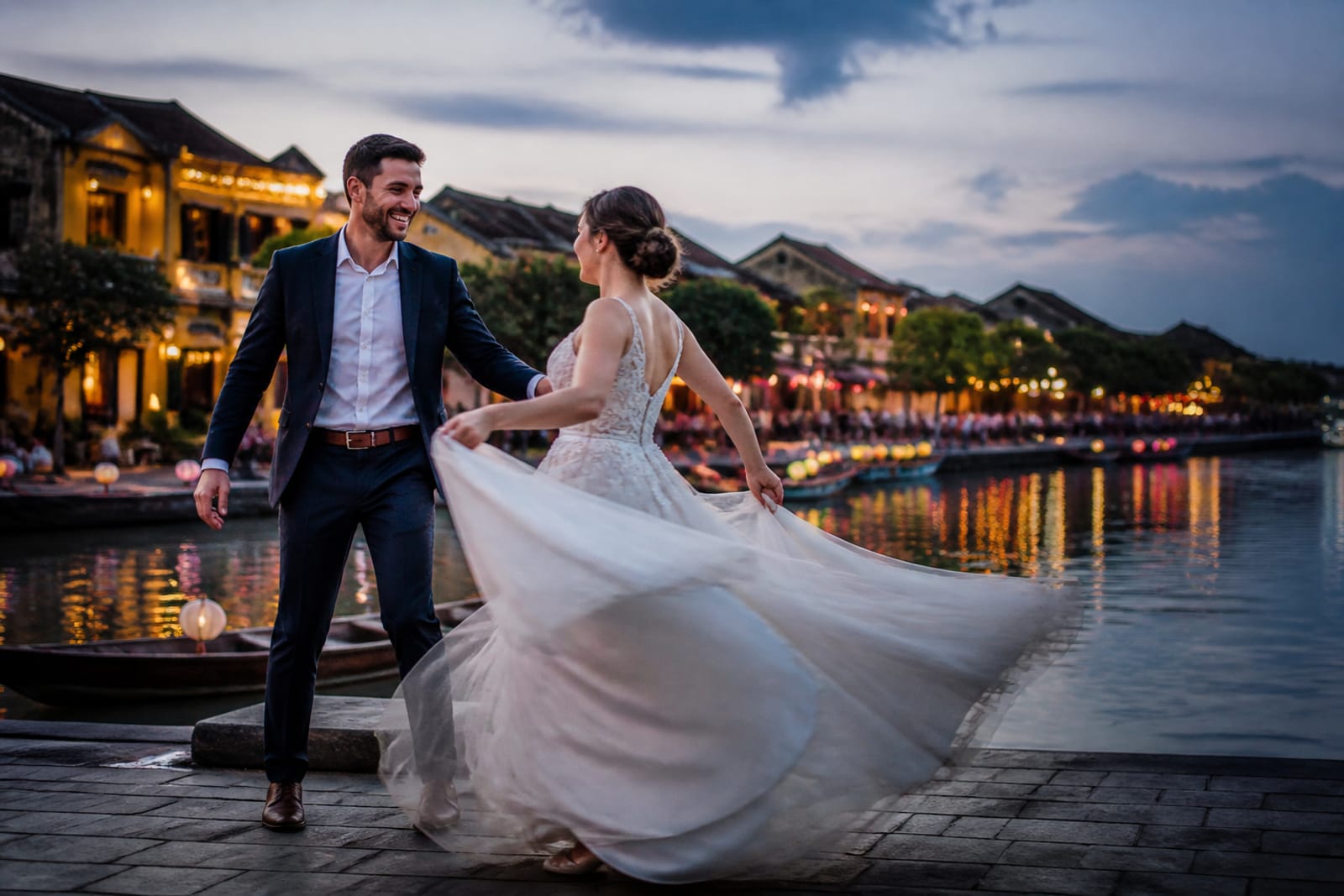
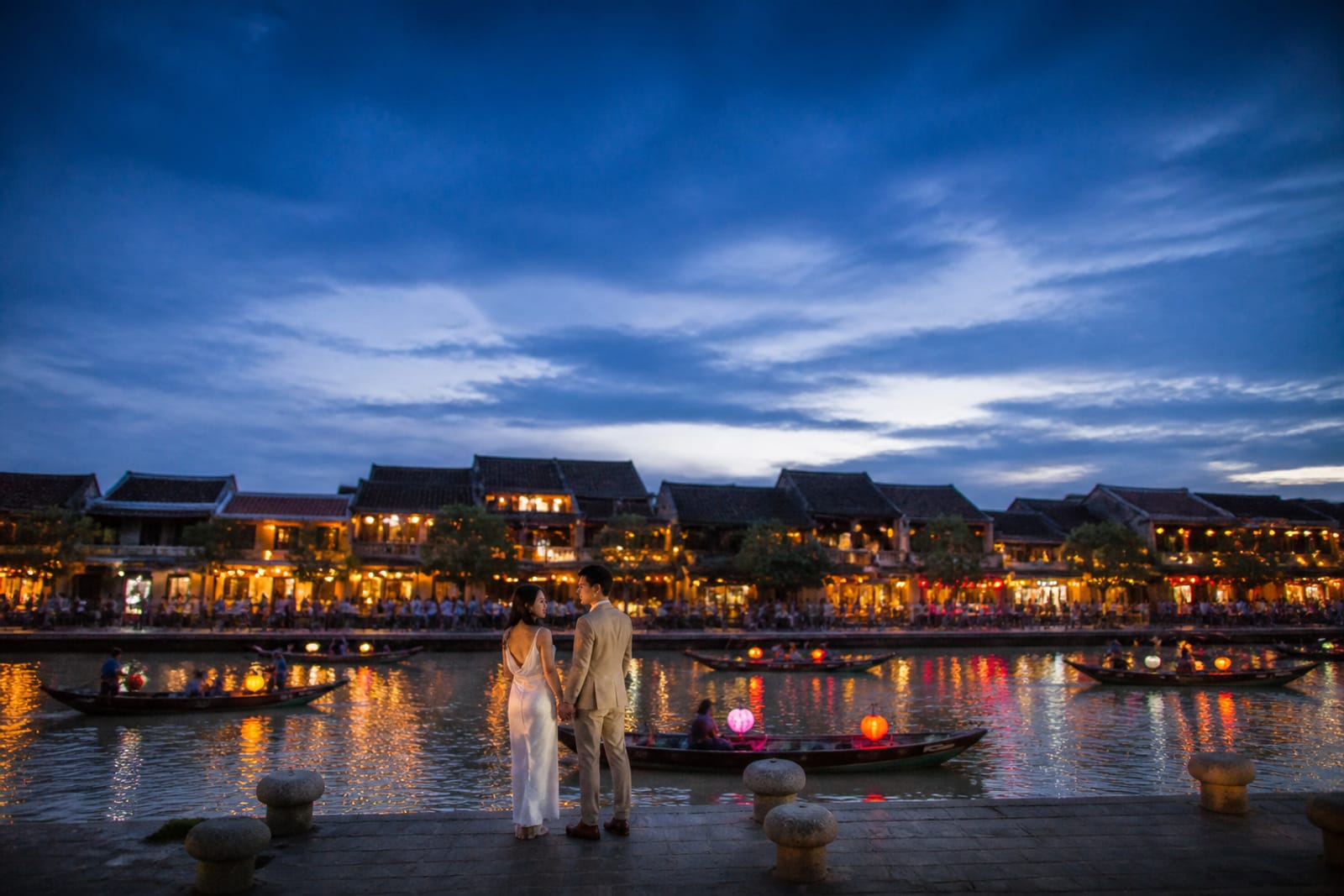
Hoi An Ancient Town (Feb–Apr only; avoid Oct–Nov flooding): Lantern-lit streets, French colonial shutters, canal reflections. Sunrise (6–7 a.m.) is crowded but atmospheric; afternoon light is flat. Entrance ticket required; you compete for framing with tour groups. Light is reliable Feb–Apr, weather is unpredictable Sep–Dec.
Da Nang beaches (Feb–Aug, avoid Sep–Dec): Wide horizons, golden-hour glow (4–6 p.m.), sand and sea romance. Parking and tide timing matter; weather is stable Feb–Aug. No permits; easier logistics than Thanh Ha.
Hanoi temples (Tran Quoc, Ambassa pagodas): Intricate stone, spiritual tone, quiet 6–8 a.m. light. All-weather; ticket required. Accessible, fast outfit changes, reliable glow. Better for serene couple portraits than raw texture.
Each trades Thanh Ha's authenticity for reliability—choose based on your narrative and comfort with logistics.
---
FAQ
Can we shoot Thanh Ha in the afternoon or on an overcast day?
Afternoon light is usable only if dense clouds soften it (rare Feb–Apr). Overcast days flatten texture—you lose the ceramic drama Thanh Ha offers. Early morning is non-negotiable for this location.
Will a long wedding dress train work at Thanh Ha?
No. Uneven ground, muddy lanes and multiple location moves make trains impractical. Wear a separable overskirt or choose a short gown; bring a carrying bag between spots to protect fabric.
Do we need a permit to shoot at Thanh Ha?
No formal permit system exists. A local photographer or guide negotiates directly with potters; access is informal and shifts seasonally. Confirm arrangements 48 hours before your shoot.
How many outfits can we change into during a Thanh Ha session?
Plan 2–3 maximum. Each change takes 20–30 minutes on-site; you'll lose light waiting. Stick to lightweight separates or a reversible styled look.
What if it rains the day before our shoot?
Villages flood Oct–Nov (worst); lanes become impassable mud. Feb–Apr rain clears fast but dims light. Always have a studio or temple backup pre-booked. Confirm 48 hours ahead and reschedule if rain has saturated the ground.
Is it worth adding Thanh Ha to a 1–2 day Hoi An shoot?
Yes, if you're already in Hoi An and committed to an early wake-up. Split it as: sunrise Thanh Ha (1.5 hours), breakfast, then afternoon coastal or temple shoot for outfit variety and daylight. A studio day beforehand ensures backup if Thanh Ha light disappoints.
FAQ
Can we shoot Thanh Ha in the afternoon or on an overcast day?
Afternoon light is usable only if dense clouds soften it (rare Feb–Apr). Overcast days flatten texture—you lose the ceramic drama Thanh Ha offers. Early morning is non-negotiable for this location.
Will a long wedding dress train work at Thanh Ha?
No. Uneven ground, muddy lanes and multiple location moves make trains impractical. Wear a separable overskirt or choose a short gown; bring a carrying bag between spots to protect fabric.
Do we need a permit to shoot at Thanh Ha?
No formal permit system exists. A local photographer or guide negotiates directly with potters; access is informal and shifts seasonally. Confirm arrangements 48 hours before your shoot.
How many outfits can we change into during a Thanh Ha session?
Plan 2–3 maximum. Each change takes 20–30 minutes on-site; you'll lose light waiting. Stick to lightweight separates or a reversible styled look.
What if it rains the day before our shoot?
Villages flood Oct–Nov (worst); lanes become impassable mud. Feb–Apr rain clears fast but dims light. Always have a studio or temple backup pre-booked. Confirm 48 hours ahead and reschedule if rain has saturated the ground.
Is it worth adding Thanh Ha to a 1–2 day Hoi An shoot?
Yes, if you're already in Hoi An and committed to an early wake-up. Split it as: sunrise Thanh Ha (1.5 hours), breakfast, then afternoon [coastal or temple shoot](/hoi-an) for outfit variety and daylight. A studio day beforehand ensures backup if Thanh Ha light disappoints.
Ao dai, makeup, hair and a local photographer in Hanoi or Saigon — one WhatsApp message.