/pre-wedding-photoshoot
Thung Nham bird garden wedding photos: best time of day and light
Thung Nham Bird Garden sits in Ninh Binh's karst landscape, roughly 90 minutes south of Hanoi. Best light occurs during golden hour at sunrise (6:30–7:30 a.m., depending on season) when mist clings to cliffs and reflections mirror in still water, or at sunset (5:00–6:00 p.m., Oct–Mar). Avoid midday (11 a.m.–3 p.m.): harsh overhead sun flattens features and tourists crowd walkways. Wear weather-appropriate outfits—wet conditions are common, and boat operators may advise against long trailing fabrics on water. Plan around the rainy season (Sep–Dec, worst Oct–Nov); Feb–Aug is drier. Cáo Studio – Makeup & Photoshoot coordinates pre-wedding shoots in Hanoi and Hoi An; for Thung Nham, you'll need to hire a local Ninh Binh photographer or travel with a team. Check access paths, entry times, and whether your outfits suit the terrain before booking. 📸 Book on WhatsApp — ao dai photoshoot ---
Why golden hour matters at Thung Nham more than other Ninh Binh spots?
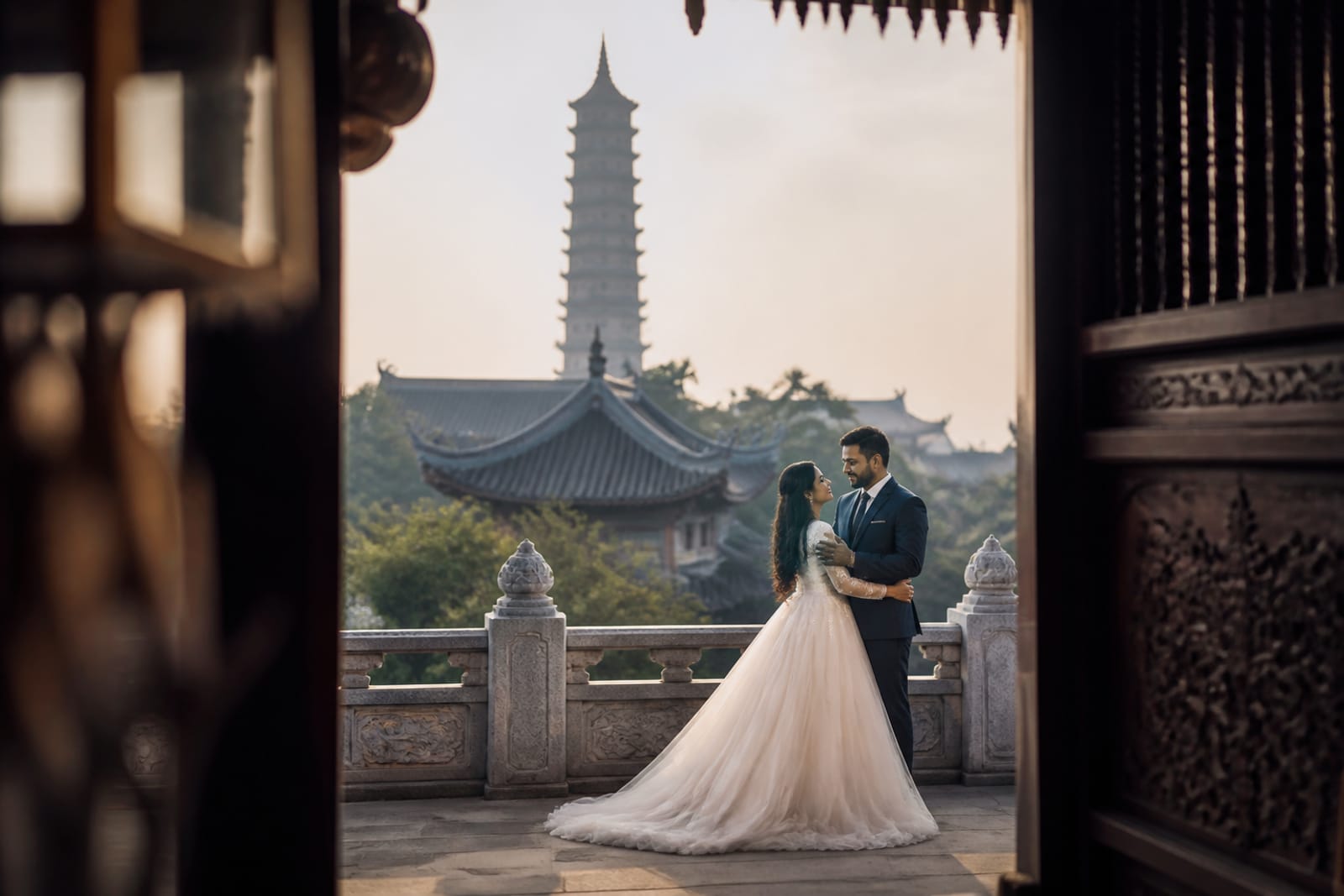
Golden hour—the hour after sunrise or before sunset—bathes limestone cliffs in warm amber light that photographs with depth and romance. At Thung Nham, this light refracts off standing water in the wetland areas, creating soft reflections that mirror your ao dai or wedding dress. No filter needed; the hour itself does the work. Midday sun is flat, bright, and unforgiving; it erases the moody, atmospheric quality that makes Thung Nham distinctive. Cloud cover during golden hour (common Oct–Mar) softens edges further, reducing harsh shadows on faces and fabric.
The garden's elevation changes—from walkway level to cliff-top viewpoints—mean light behaves differently at each spot. Lower sections near water catch reflected light twice, amplifying the glow. Higher paths get direct, unfiltered rays. A local guide or experienced photographer reads these micro-zones and positions you where the light favors your skin tone and outfit color.
Conclusion: Golden hour here isn't optional—it's the reason to wake early or linger into dusk.
What season gives you the clearest light and fewest weather surprises?
March to May offers cool, stable air with minimal rain. Mist still appears at sunrise but clears by mid-morning, leaving blue skies and sharp cliff detail. February through August is the official dry season for central Vietnam, but the central coast (Ninh Binh sits on the threshold) can still see brief afternoon showers. September to December is the typhoon and flood season; October and November are the worst, with heavy rain and low grey clouds that kill light contrast. December to February is cooler and clearer, but morning fog lingers longer, sometimes obscuring backgrounds—good for intimate close-ups, bad for landscape context.
Light quality shifts by season:
- Feb–Mar: Bright, cool, mist burns off early.
- Apr–May: Warm and long-lasting gold hour; afternoon heat builds.
- Jun–Aug: Hot, occasional storms, light flattens at peak hours.
- Sep–Nov: Grey, unpredictable, frequent downpours.
- Dec–Jan: Clear, cool, mist persists longer.
Outfit durability matters: silk and delicate fabrics absorb moisture in high-humidity seasons (Jun–Sep); synthetic or linen blends weather better. Ask your photographer whether the forecast suggests backup indoor shots or rescheduling.
Conclusion: Late Feb to May gives you the most reliable light and weather.
How does boat-level vs. walkway-level photography change the light you capture?
Thung Nham's boat trips take you through flooded karst valleys where water-level perspectives catch light at a different angle than elevated walkway shots. On a boat, you're shooting upward at cliffs backlit by morning or evening sun, creating silhouettes and rim-lit edges that frame subjects dramatically. Walkways let you shoot down or level with the landscape, capturing wider context—cliff faces, forest layers, people's expressions unobstructed.
| Perspective | Best for | Light behavior | Why it works |
|---|---|---|---|
| Boat (water-level) | Intimate couple shots; dramatic cliff silhouettes | Backlit, rim-lit, reflections on water double the glow | Sunrise/sunset rays skim across water, isolating subjects against bright backgrounds |
| Walkway (elevated) | Group shots; full-body portraits; landscape context | Front-lit or side-lit; even light across faces | Eye-level compositions reduce neck strain; easier to pose without getting wet |
| Cliff-top lookout | Expansive pre-wedding shots; solo or couple scale | Golden hour rakes across cliffs; longer sightlines | Last location in sequence: light fades slower at height |
Boat trips demand secure, water-resistant outfit choices. Ao dai isn't ideal on water—long sleeves absorb spray, and hems catch boat edges. Western wedding dresses aren't practical. Ninh Binh photographers typically suggest changing outfits between boat and walkway sections or wearing a protective layer (a light cardigan or shawl). Boat operators schedule trips around tourist flow; early morning (before 7 a.m.) or late afternoon (after 4 p.m.) means fewer other boats blocking light or photographic sightlines.
Conclusion: Boat shots need different outfit planning but reward you with unique backlit moments walkways can't replicate.
---
What should you wear under an ao dai to handle wetness and terrain?
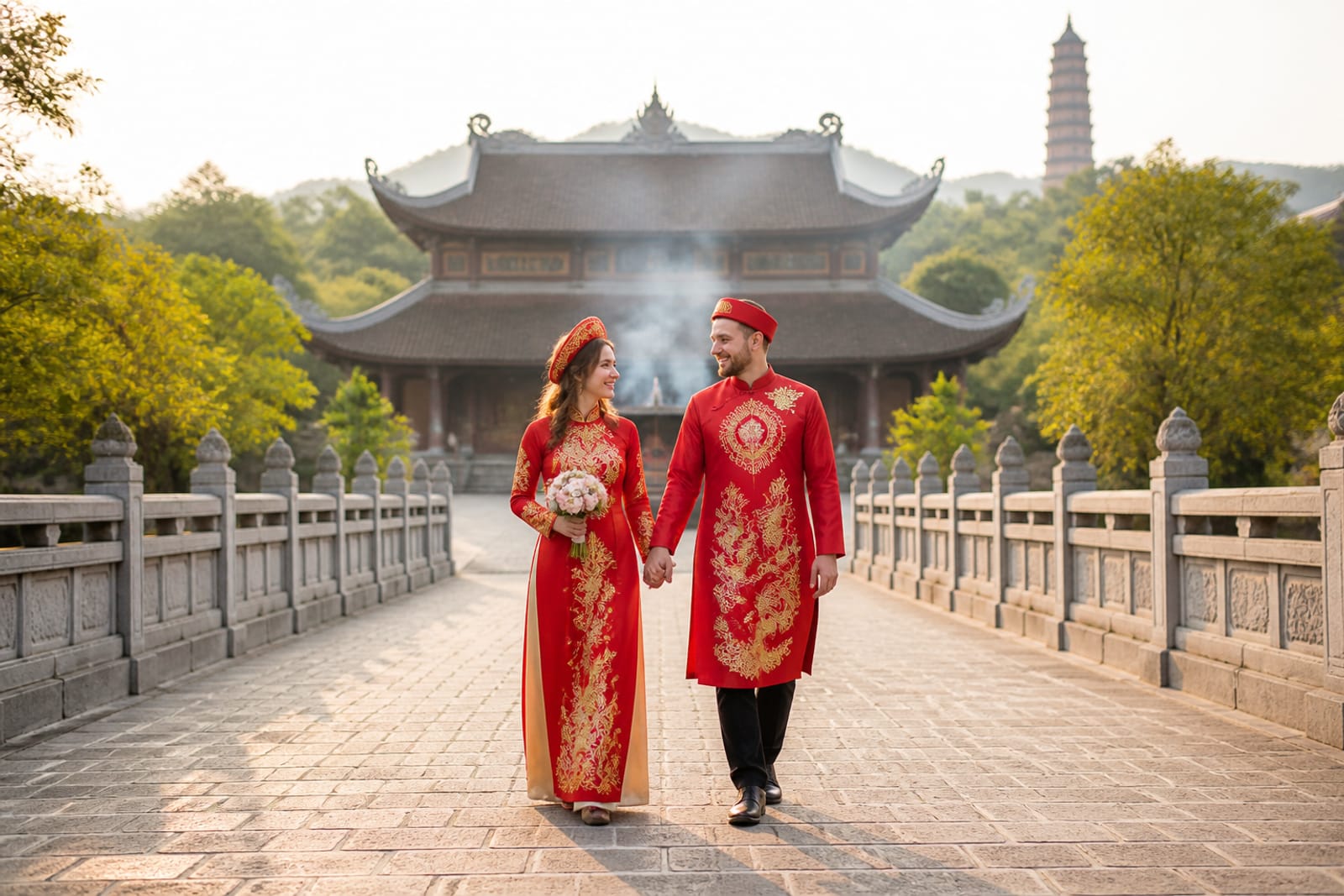
Thung Nham's walkways can be slippery after rain, and morning mist leaves surfaces damp. If you're wearing an ao dai, understand the construction first: the tunic sits over wide-leg pants (called tà áo), so pants stay dry if you wear waterproof leggings or cycling shorts underneath and pair them with water-resistant footwear. Leather soles slide on wet stone; rubber-soled flats or invisible tread grips better. Avoid heels entirely—the terrain isn't designed for them, and a twisted ankle ends the shoot.
If you're in a Western wedding dress, bring a second outfit: a casual romantic look (tea-length dress, flowy separates, or a second-day outfit) for walkway and boat segments. This also lets the photographer capture variety and gives you time to dry between locations. Long sleeves and flowing hems photograph beautifully but heavy fabrics become waterlogged and heavy to carry; linen and silk-blend materials dry faster than satin or organza.
Footwear strategy:
- Ao dai: flat leather sandals or embroidered traditional shoes; bring socks to avoid wet feet.
- Dress: waterproof flats or ankle boots; skip the heels for here, wear them only for pre-ceremony indoor portraits.
- All outfits: a lightweight shawl or silk scarf to dry hands and small wet spots instantly.
Pack a small towel in your gear bag. Early morning shoots mean fewer people watching you adjust clothing—use that privacy to change without rushing.
Conclusion: Layering and practical footwear let you move confidently through Thung Nham's environment without damaging your outfit or the photos.
---
How do you find and vet a local Ninh Binh photographer for a Thung Nham shoot?
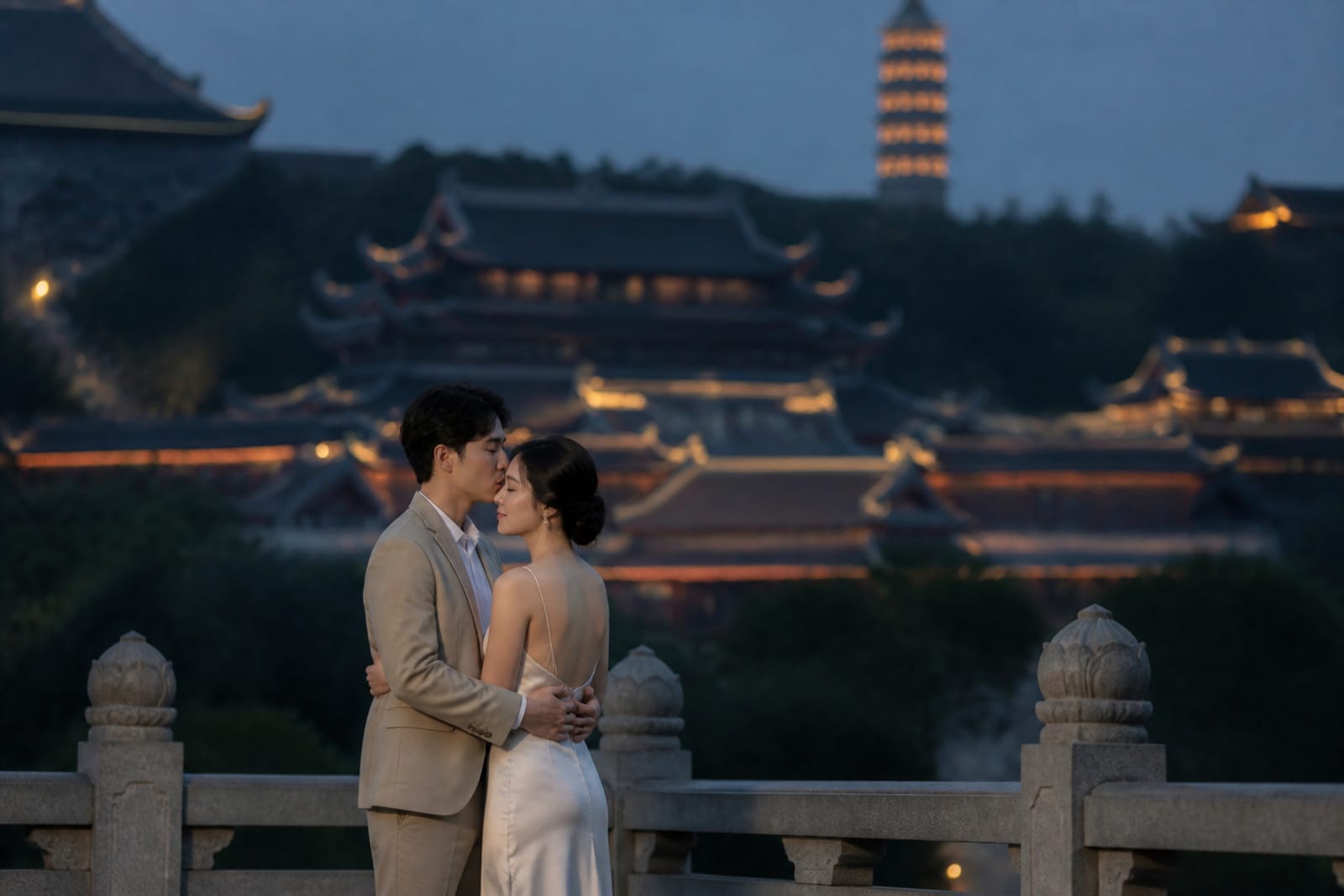
Cáo Studio – Makeup & Photoshoot operates in Hanoi, Ho Chi Minh City, and Hoi An; Thung Nham falls outside these bases, so you'll need a local Ninh Binh photographer. Start by asking your accommodation (hotel, resort, homestay) for referrals—they know which photographers have reliably guided guests and respect park rules. Check their Instagram or Facebook portfolio specifically for Thung Nham work; look for consistent light quality, sharp focus on faces, and genuine emotion in couple shots (not overly posed).
Ask a shortlist of candidates:
- How many Thung Nham shoots have they done? (Avoid first-timers; ask for at least 5 previous bookings there.)
- Do they know the best boat times and walkway light windows? (If they hesitate, move on.)
- Do they own backup lighting or reflectors for overcast days? (Shows professionalism.)
- What's their plan if weather turns bad—reschedule or pivot to indoor/alternative sites?
- Do they handle outfit changes smoothly, or do you manage yourself? (Time matters when golden hour is finite.)
Request a contract in writing—even a simple message—confirming shoot date, time, locations, number of edited images, and delivery timeline. Meet them at Thung Nham entrance the morning-of to confirm light conditions and adjust the itinerary if needed. A good photographer scouts the site beforehand or adapts fast to real conditions; they don't rigidly stick to a plan when the light has shifted.
If you prefer a makeup and hair team on-site, Cáo Studio offers hotel makeup & hair services in Ninh Binh's main towns (Tam Coc area)—ask on WhatsApp whether they travel to your accommodation the morning of your shoot.
Conclusion: Local referrals, portfolio review, and pre-shoot communication prevent surprises and ensure the photographer understands Thung Nham's unique light and logistics.
---
Should you book a full pre-wedding package or hire a photographer à la carte for Thung Nham?
A full pre-wedding package typically bundles multiple locations, outfit changes, hair and makeup, and edited image delivery into one timeline and price. À la carte booking means you hire a photographer for a single location or a half-day, choosing your own outfits and managing hair separately.
| Option | Best for | What to consider | Hidden costs |
|---|---|---|---|
| Full package (day-long) | Couples wanting variety; multiple outfit concepts; professional coordination | Requires 8–10 hours commitment; includes 2–3 locations and touch-up services; travel time to/from Thung Nham; post-processing timeline | Hotel makeup & hair if not local; transportation between sites; outfit rentals if needed |
| Half-day Thung Nham only | Budget-conscious couples; one concept; intimate two-person vibe | 3–4 hours covers boat + one walkway section; you manage your own hair and outfit; photographer focused on light windows | May miss other Ninh Binh backdrops; limited variety; single outfit change |
| Multiple locations (Thung Nham + Hoa Lu/Tam Coc) | Couples wanting Ninh Binh diversity on one day | Requires full-day coordination; car/scooter travel between sites; outfits must work at different altitudes and light conditions | Transition time eating into golden hour; makeup touch-ups mid-day; higher photographer rate |
Full-day shoots let you capture different moods: mist at Thung Nham at sunrise, then move to Hoa Lu's ancient temples for midday cultural context, then return to Thung Nham for sunset. This requires a experienced local photographer who knows light zones and travel time buffers. Half-day shoots mean you maximize one golden hour but skip other Ninh Binh photogenic sites.
Cost factors (not amounts—ask your photographer for quotes) include shoot duration, number of locations, travel time, image count, editing depth, and album or print finishes. A longer shoot doesn't always mean better photos; light quality and composition matter more than hours spent. Ask what's included: do they provide editing, or are images delivered unedited? Do they offer prints or albums, or just digital files?
Conclusion: Choose package scope based on your concept and how many Ninh Binh locations matter to you—Thung Nham alone is worthwhile; adding Tam Coc or Hoa Lu needs careful timing to catch good light at each.
---
What to check before booking your Thung Nham pre-wedding shoot
- Light forecast: Check the weather 5–7 days before and again 2 days before. Grey clouds → softer, moodier light (fine if that's your goal); heavy rain → potential reschedule.
- Park opening times: Thung Nham opens early (around 6:00–6:30 a.m.) for sunrise access. Confirm with your photographer and the garden directly—hours vary seasonally.
- Boat schedule: Tour operators run boats on fixed schedules. Early-morning boats may be private (your team only) or shared; private feels more intimate but may cost more. Confirm availability with your photographer.
- Outfit fit for terrain: Walk or test-wear your ao dai or dress on stairs or uneven ground beforehand. Hems, train length, and shoe grip matter.
- Backup plan: Ask the photographer in writing what happens if severe weather hits the day-of—postponement, alternative indoor location, or refund.
- Image timeline: When will edited images arrive? (Typically 2–4 weeks; confirm before payment.)
- Permissions and fees: Thung Nham may require a permit or extra fee for commercial photography. Your photographer handles this, but ask upfront.
---
🌸 See the lookbook | 💄 Makeup & hair at your hotel
If you're planning a pre-wedding photoshoot and Thung Nham isn't your only location, Cáo Studio coordinates shoots in Hanoi and Hoi An—both offer ao dai photoshoots and can pair images with professional makeup & hair services. For Ninh Binh, a local photographer gives you the best advantage, but we're here to help you plan your overall shoot strategy.
---
📸 Book on WhatsApp — ao dai photoshoot
FAQ
What time of day has the best light at Thung Nham for pre-wedding photos?
Golden hour at sunrise (6:30–7:30 a.m.) or sunset (5:00–6:00 p.m., Oct–Mar) offers warm, soft light that reflects off water and flatters skin. Avoid midday (11 a.m.–3 p.m.) when sun is harsh and overhead. Choose sunrise for mist and stillness; sunset for deeper gold tones.
Can you wear an ao dai on a Thung Nham boat trip?
Ao dai isn't ideal on water—long sleeves absorb spray and hems catch boat edges. Wear water-resistant pants underneath and bring a protective layer or a second outfit (casual romantic dress) for the boat segment. Change back to your ao dai for walkway shots.
What's the best season to shoot at Thung Nham?
Late February to May (cool, dry, stable light) and December to January (cool, clear). Avoid September–November (typhoon season, heavy rain, grey skies) and June–August (hot, afternoon storms, flattened midday light).
Do I need a professional photographer for Thung Nham, or can a friend shoot?
A local Ninh Binh photographer knows the light windows, boat schedules, and terrain; they can adapt to real conditions and composition. A friend can supplement behind-the-scenes shots, but professional expertise ensures consistent image quality and efficient use of golden hour—crucial since light windows are brief.
What should I wear on my feet at Thung Nham?
Wear waterproof rubber-soled flats, embroidered traditional shoes, or ankle boots. Avoid heels (uneven terrain, slippery stone). Leather soles slide when wet; bring socks to keep feet dry if wearing open sandals. Pack a light towel for quick drying.
How far is Thung Nham from Hanoi, and does Cáo Studio shoot there?
Thung Nham is roughly 90 minutes south of Hanoi in Ninh Binh. Cáo Studio operates in Hanoi, Ho Chi Minh City, and Hoi An; for Thung Nham, hire a local photographer. Cáo Studio can help coordinate makeup and hair services at your Ninh Binh accommodation if you're planning a larger pre-wedding day.
FAQ
What time of day has the best light at Thung Nham for pre-wedding photos?
Golden hour at sunrise (6:30–7:30 a.m.) or sunset (5:00–6:00 p.m., Oct–Mar) offers warm, soft light that reflects off water and flatters skin. Avoid midday (11 a.m.–3 p.m.) when sun is harsh and overhead. Choose sunrise for mist and stillness; sunset for deeper gold tones.
Can you wear an ao dai on a Thung Nham boat trip?
Ao dai isn't ideal on water—long sleeves absorb spray and hems catch boat edges. Wear water-resistant pants underneath and bring a protective layer or a second outfit (casual romantic dress) for the boat segment. Change back to your ao dai for walkway shots.
What's the best season to shoot at Thung Nham?
Late February to May (cool, dry, stable light) and December to January (cool, clear). Avoid September–November (typhoon season, heavy rain, grey skies) and June–August (hot, afternoon storms, flattened midday light).
Do I need a professional photographer for Thung Nham, or can a friend shoot?
A local Ninh Binh photographer knows the light windows, boat schedules, and terrain; they can adapt to real conditions and composition. A friend can supplement behind-the-scenes shots, but professional expertise ensures consistent image quality and efficient use of golden hour—crucial since light windows are brief.
What should I wear on my feet at Thung Nham?
Wear waterproof rubber-soled flats, embroidered traditional shoes, or ankle boots. Avoid heels (uneven terrain, slippery stone). Leather soles slide when wet; bring socks to keep feet dry if wearing open sandals. Pack a light towel for quick drying.
How far is Thung Nham from Hanoi, and does Cáo Studio shoot there?
Thung Nham is roughly 90 minutes south of Hanoi in Ninh Binh. Cáo Studio operates in Hanoi, Ho Chi Minh City, and Hoi An; for Thung Nham, hire a local photographer. Cáo Studio can help coordinate makeup and hair services at your Ninh Binh accommodation if you're planning a larger pre-wedding day.
Ao dai, makeup, hair and a local photographer in Hanoi or Saigon — one WhatsApp message.