hoi-an
Tra Que Vegetable Village Photoshoot: A Hoi An Guide
Tra Que Vegetable Village is not a museum exhibit. It's a working farm that feeds Hoi An's markets. On a photoshoot morning, you're stepping into genuine labor—people bending over herb beds, flooding paddies with river water, loading baskets onto bicycles. The light here is unfiltered and honest, and the etiquette is simple: you're a guest, not a subject.
Most Western travelers book Tra Que shoots thinking it's a photo set. It's not. It's a village where photographing requires respect for working hours, knowledge of which sections are accessible, and a sense that you're there because the light and moment are real—not because an influencer told you to check the spot off a list.
Here's what a Hoi An Tra Que photoshoot actually demands from you.
When Should You Shoot at Tra Que?
Golden light lasts 45 minutes at sunrise (5–7 a.m.) and 90 minutes at sunset (4–5 p.m.)—but the village is busiest 6–8 a.m. and 4–6 p.m. Early risers shoot alone; late-afternoon groups often overlap. Midday (10 a.m.–3 p.m.) is harsh, flat, and hot, with full crowds and no shadow relief for skin tones.
If you're alone or a couple, 5–6 a.m. is your window—you'll have paths to yourself and light that builds softly across water. Groups of 4+ should either hire a photographer to skip ahead or commit to 4–5 p.m., when families finish and light angles lower. Rain (November–January) floods some paths but makes water reflections deeper and grass richer. Shoot after dawn rain if the sun breaks through.
Never plan a shoot without checking the actual farm schedule on WhatsApp—harvests shift by season, and some paddies close for planting or sale.
What Should You Wear Under an Ao Dai at Tra Que?
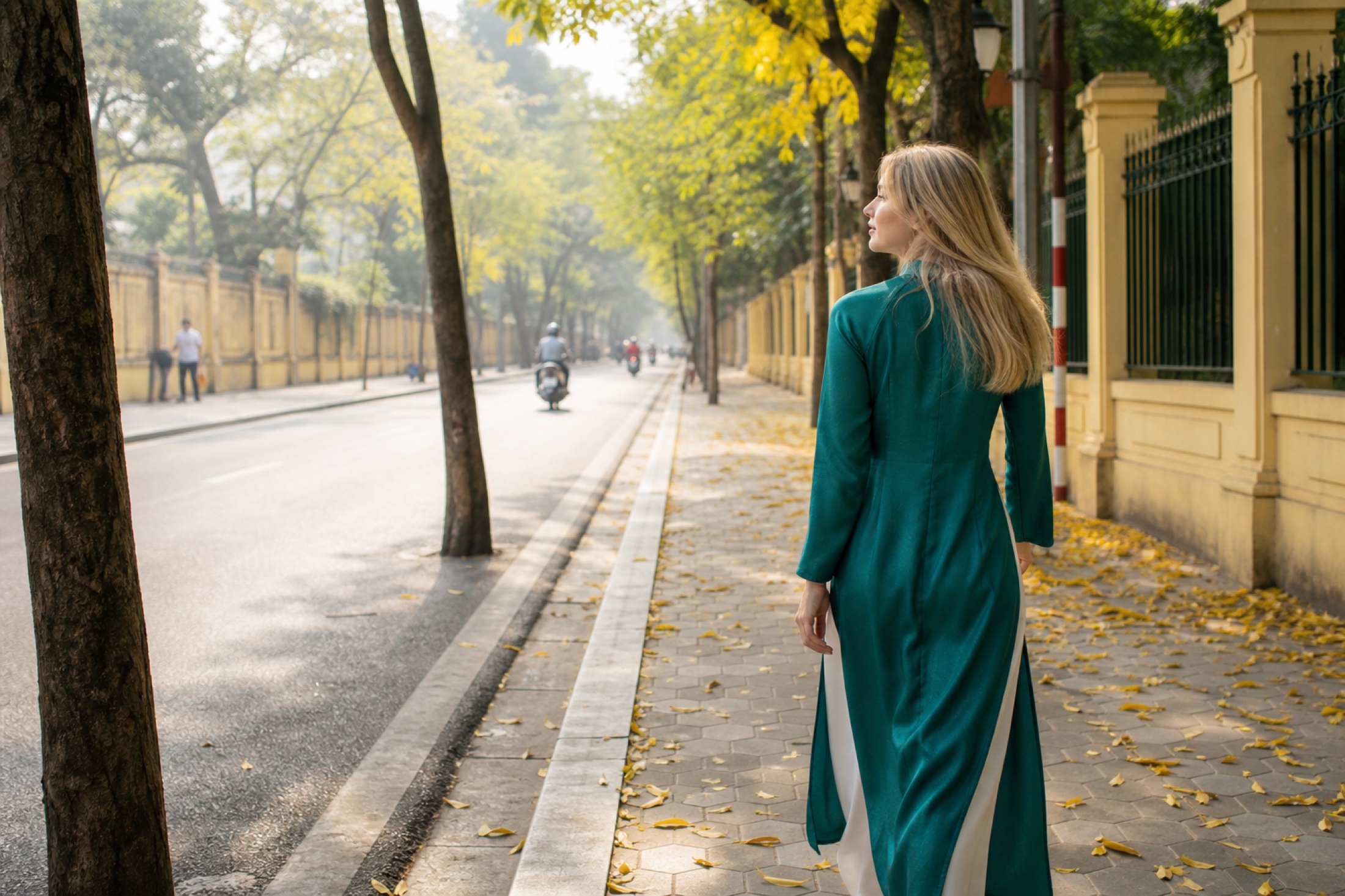
Tra Que mud isn't fashion-friendly. If you're wearing an ao dai (the traditional tunic), wear neutral-toned, fitted leggings or silk slip pants underneath—white and pastels show mud spots badly. Thin cotton is cooler; silk photographs better but stains show more.
Wear closed-toe shoes with grip—flip-flops slide on wet paths, heels sink into soft earth, and sandals let mud in. Waterproof hiking shoes or simple canvas sneakers work. Bring a lightweight scarf or cotton wrap; early mornings are cool and misty, and you may need to cover your head near the herb-drying racks out of respect.
If you're photographing in casual clothes, darker, earthy tones (sage, rust, charcoal, navy) blend better with the landscape than bright pastels or neons. Avoid white shirts—they bleach out in early sun and flatten in photographs.
Check the water level the day before. High water (October–December) means paddies are fully flooded and reflective; low water (June–August) shows muddy bed and rope systems that work visually if you frame tight on people.
How Do Professional Shoots Run at Tra Que?
A real Tra Que session is 1.5–2 hours (not a quick 30-minute stop). A photographer who knows the village arrives early, scouts light angles, finds farmers willing to work around you, and frames shots that include genuine activity—not posed standing in mud.
Here's a typical structure:
- 5–5:30 a.m.: Meet at village entrance; photographer briefs you on paths and lighting zones
- 5:30–6:30 a.m.: Move through paddies and herb beds, capturing morning setup and early light
- 6:30–7 a.m.: Pause for direct sunlight break or shift to secondary location (drying racks, river edge)
- 7–7:30 a.m.: Last-light shots; rest or hotel return
Photographers charge per session, not by time—ask for a quote on WhatsApp. Most Hoi An-based shooters factor in travel time to the village and coordination with farmers.
What to expect to go wrong:
- Light changes faster than you think (45 minutes is genuinely short)
- Farmers may ask you not to photograph them directly (respect this; frame wider or ask permission in advance)
- Paths are muddy even after rain; wear shoes you don't care about
- Mosquitoes thrive early mornings and dusk—bring repellent
- Crowds arrive 6:30–7 a.m.; shoot early to avoid them
Tra Que + Ao Dai: Why This Combo Works Photographically
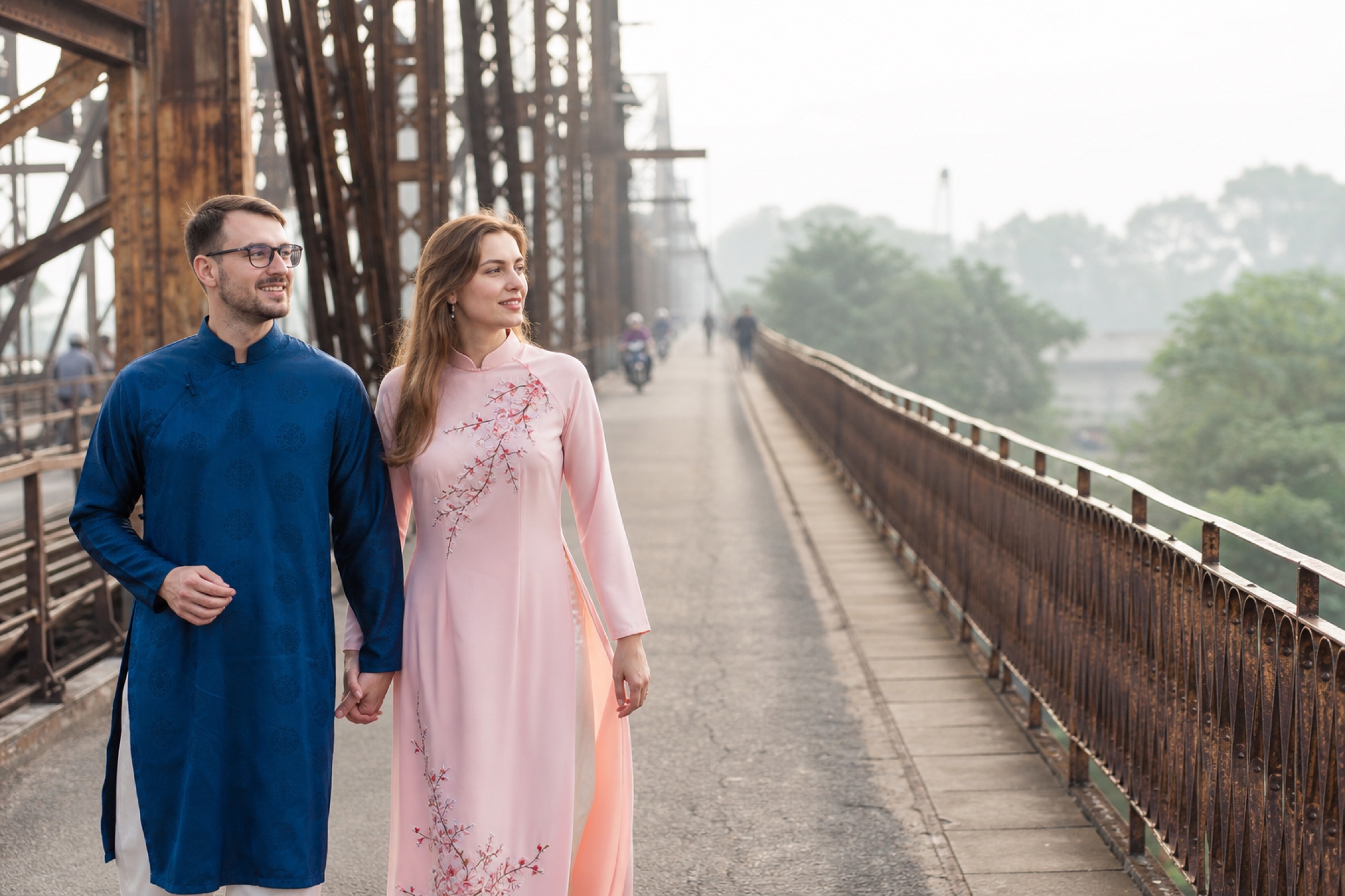
An ao dai against wet earth, green herbs, and water reflection reads differently than city streets or beaches. The tunic's silk catches diffused light; the split skirt moves when you walk through paths. The contrast between the formal garment and genuine farm labor creates narrative tension that viewers recognize instantly.
If you're already visiting Hoi An, a couple ao dai photoshoot or pre-wedding session can include Tra Que as one location within a longer itinerary. Some travelers book 3–4 hours with a photographer and move between Tra Que (dawn), old town (mid-morning light), and riverside (sunset). This spreads the investment and gives you varied backdrops.
Cáo Studio partners with trusted Hoi An photographers—ask on WhatsApp to combine Tra Que with other sessions or makeup support.
📸 Book on WhatsApp — ao dai photoshoot
Should You Hire a Photographer or Go Solo?
| Approach | Who it's for | Real cost | Why it works or fails |
|---|---|---|---|
| Solo phone/camera | Budget travelers, casual snaps | $0 | You control timing but lose composition skill; best with good morning light only |
| Hire a local photographer | Couples, families, ao dai wearers | $70–150 USD (ask on WhatsApp) | Professional angles, farmer coordination, edited files; no guesswork on timing |
| Join a group tour | Solo travelers, no experience | $15–25 per person | Fast, cheap, crowded; you're in background of other tourists' shots |
Honest truth: Tra Que's beauty is wasted on a quick tour-group stop. If you've traveled to Hoi An specifically for photographs, hiring a local photographer (even for 1.5 hours at dawn) returns sharper images and a less-rushed experience than rushing through with 20 other people at 7 a.m.
Cáo Studio doesn't run a Tra Que branch—the farm isn't in Hanoi or Saigon—but we coordinate with skilled local photographers for Hoi An sessions by appointment. Ask on WhatsApp for Hoi An dates and village-specific planning.
💄 Makeup & hair at your hotel | 🌸 See the lookbook
What to Check Before You Book a Tra Que Shoot
Before you commit to a session, verify:
- Photographer's experience with farm conditions (mud, early hours, farmer etiquette)
- Inclusion of edited files (RAW or JPG; how many)
- Travel time from town and meeting point clarity
- Cancellation policy if weather closes paths (November–January rain happens)
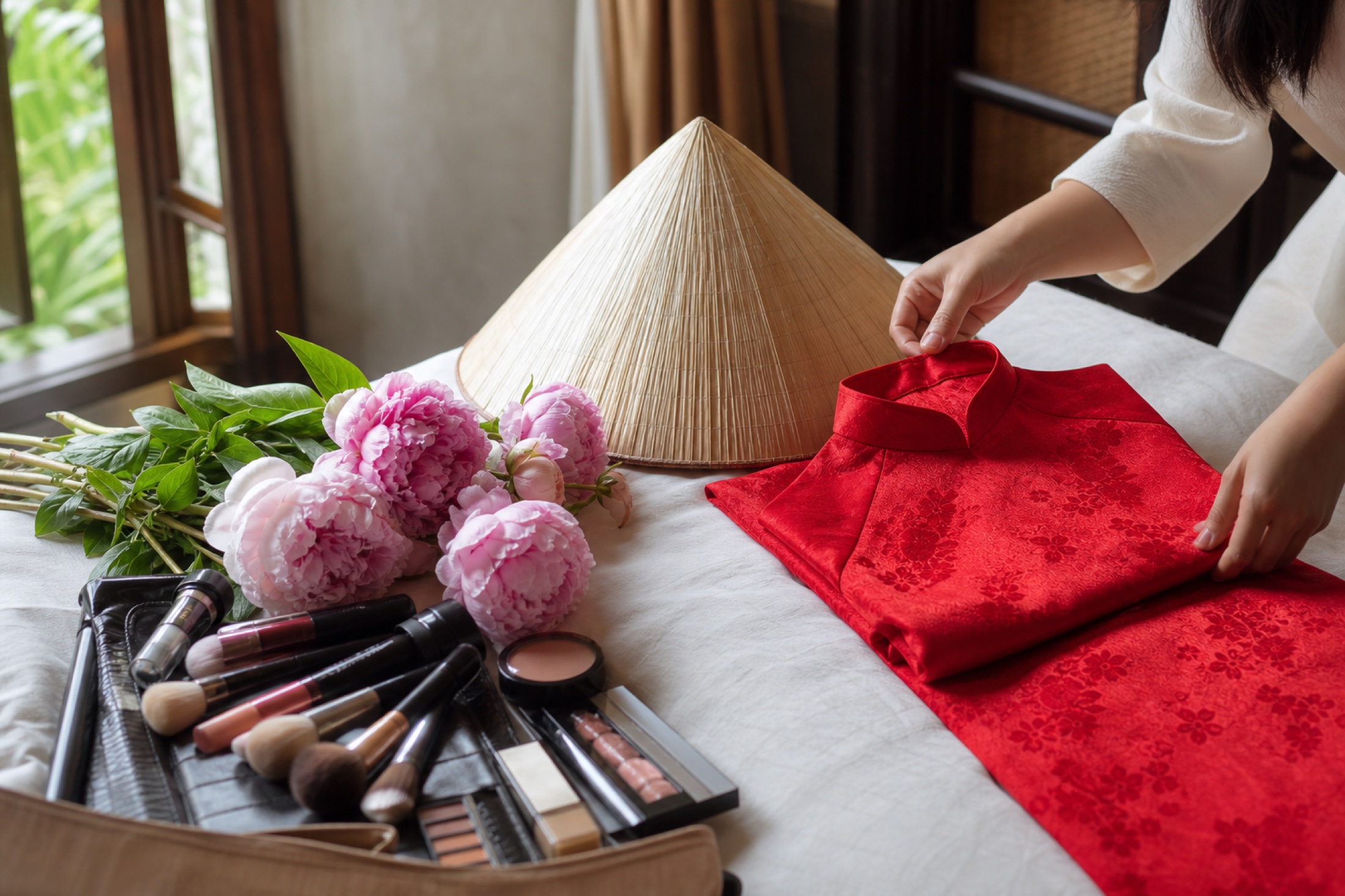
- Whether makeup and hair are included (book separately with hotel service if needed)
- Confirmed farmer permissions (some sections don't allow photography)
If you're wearing an ao dai:
- Confirm the photographer has styled village shoots before (framing and movement are different than studio)
- Rent or bring your ao dai to your hotel the day before; check for mud-resistant fabric
- Pack a backup outfit (plain pants or casual dress) in case paths are too flooded
Ask directly on WhatsApp about these points. A photographer who dodges detail questions isn't ready for early morning and real conditions.
🌸 See the lookbook | 📸 Book on WhatsApp — ao dai photoshoot
---
For a broader Hoi An trip, read our Hoi An photoshoot guide—it covers timing across the old town, lantern light, riverside golden hour, and how to plan multiple locations in one day. You can also explore couple and family photoshoots and pre-wedding options if Tra Que is part of a larger session plan.
FAQ
Is Tra Que free to enter?
Tra Que charges a small entry fee (₫20,000–30,000 per person, roughly $1–1.50 USD). Walking the paths is open; paid entry supports the farm and gives photographers legal access to shoot.
Can I wear a regular dress instead of an ao dai?
Yes. Wear earthy, fitted styles in rust, sage, navy, or charcoal—avoid loose fabrics that catch mud and white, which flattens in early light. Closed-toe shoes are essential; flip-flops and heels don't work on wet earth.
What if it rains the morning of my shoot?
Early morning rain (November–January) often clears by 6 a.m., leaving water reflections and richer greens. Check with your photographer at 5:30 a.m.; most reschedule only if paths flood dangerously. Bring a compact umbrella or rain jacket to layer over your clothes.
How many photos do I get from a Tra Que session?
This depends on your photographer's package. Ask on WhatsApp for the exact number of edited files (typically 30–80 images for a 1.5–2 hour session). Some include RAW files; others deliver JPGs only.
Can I photograph the farmers directly?
Always ask permission before framing someone's face. Most farmers are comfortable if you approach respectfully and explain you're a visitor. Frame wider shots of activity if you're unsure—these often work better compositionally anyway.
What's the best month to shoot at Tra Que?
September–November offers morning mist, lower humidity, and lush herb beds. December–January has cooler light but risks flooding. June–August is hot and dry; paddies have less water. October is ideal—warm enough for early hours, cool enough for comfort, and water levels are full.
FAQ
Is Tra Que free to enter?
Tra Que charges a small entry fee (₫20,000–30,000 per person, roughly $1–1.50 USD). Walking the paths is open; paid entry supports the farm and gives photographers legal access to shoot.
Can I wear a regular dress instead of an ao dai?
Yes. Wear earthy, fitted styles in rust, sage, navy, or charcoal—avoid loose fabrics that catch mud and white, which flattens in early light. Closed-toe shoes are essential; flip-flops and heels don't work on wet earth.
What if it rains the morning of my shoot?
Early morning rain (November–January) often clears by 6 a.m., leaving water reflections and richer greens. Check with your photographer at 5:30 a.m.; most reschedule only if paths flood dangerously. Bring a compact umbrella or rain jacket to layer over your clothes.
How many photos do I get from a Tra Que session?
This depends on your photographer's package. Ask on WhatsApp for the exact number of edited files (typically 30–80 images for a 1.5–2 hour session). Some include RAW files; others deliver JPGs only.
Can I photograph the farmers directly?
Always ask permission before framing someone's face. Most farmers are comfortable if you approach respectfully and explain you're a visitor. Frame wider shots of activity if you're unsure—these often work better compositionally anyway.
What's the best month to shoot at Tra Que?
September–November offers morning mist, lower humidity, and lush herb beds. December–January has cooler light but risks flooding. June–August is hot and dry; paddies have less water. October is ideal—warm enough for early hours, cool enough for comfort, and water levels are full.
Ao dai, makeup, hair and a local photographer in Hanoi or Saigon — one WhatsApp message.