/pre-wedding-photoshoot
Tra Que Vegetable Village Pre-Wedding Photos: Worth It or Overhyped?
Tra Que is a working organic vegetable farm 3 km west of Hoi An Ancient Town, open year-round but driest and greenest Feb–Apr and early Aug. A session there runs 1–2 hours of unscripted moments among basket weavers, farmers and produce rows, strongest at sunrise (5:30–6:30 am) when light is soft and locals work. The village attracts couples for its working authenticity—no theme park staging—but you must accept mud after rain, limited shade in summer (35°C+), and tourist groups from mid-morning onward. For organized ao dai and makeup, book Cáo Studio – Makeup & Photoshoot, which shoots Hoi An locations by appointment; coordinate timing, logistics and styling directly via WhatsApp to avoid clashing with rain windows or peak foot traffic. --- Tra Que works best for couples who want lived-in Vietnamese rural identity over manicured backdrops. But it's not the only choice—and seasonal, logistical and aesthetic tradeoffs mean the "best" option depends on your priorities, travel dates and willingness to wake early.
What makes Tra Que compelling for pre-wedding photos?
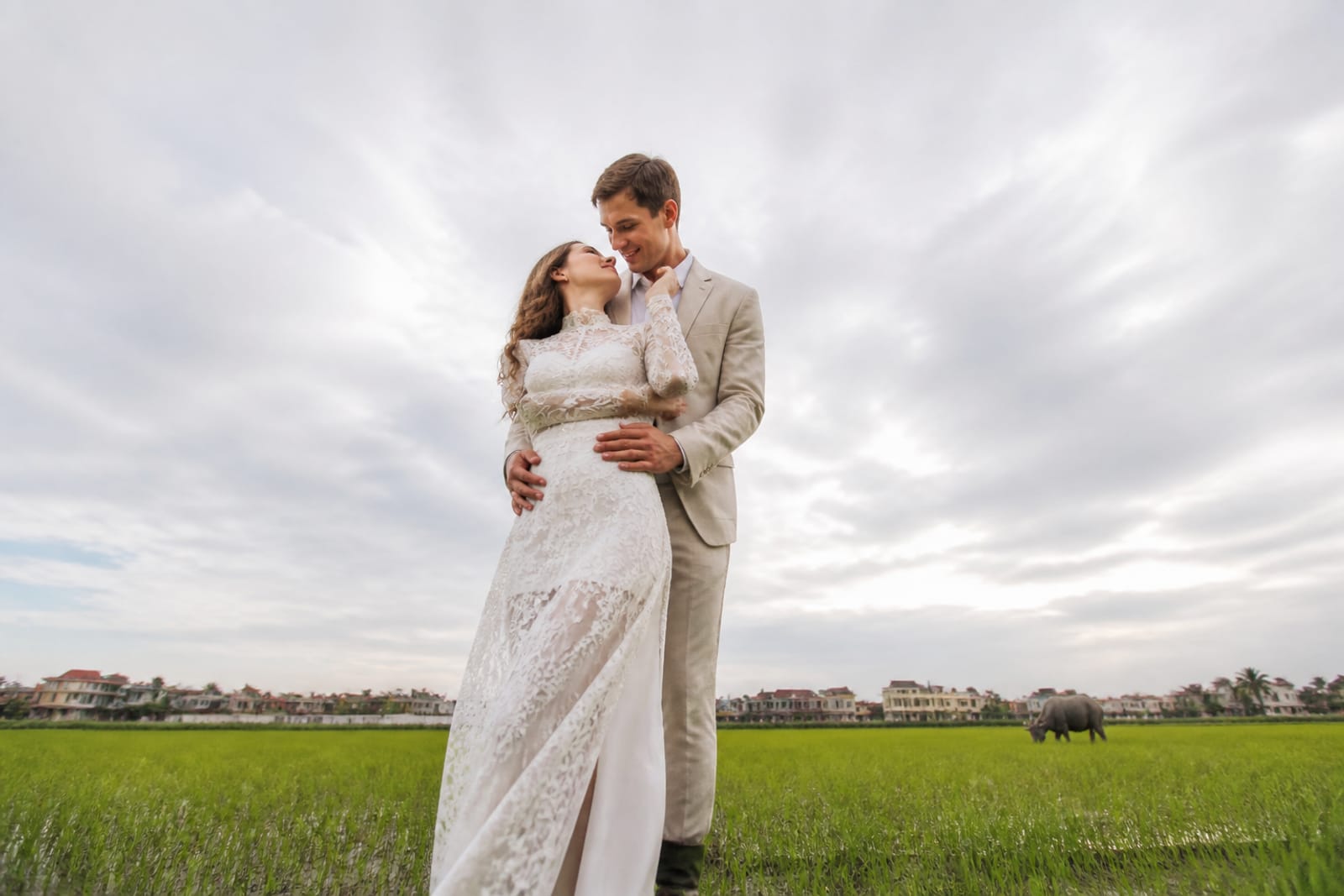
Tra Que's draw is authenticity without pretense. Unlike resort gardens or hired temple sets, the village is genuinely working: farmers harvest greens, weavers bind baskets, locals interact naturally. Couples appreciate unscripted moments—a vendor handing over a bunch of herbs, your partner learning to weave, golden light across actual growing rows. The landscape shifts by season: Feb–Apr shows lush green paddies after harvest season; May–Aug is driest but sun bleaches early color; Sep–Dec introduces monsoon greens but brings rain and crowd bottlenecks.
Early morning is non-negotiable. Sunrise (5:30–6:30 am in high season, later in winter) delivers soft directional light, minimal crowds and cooler air—essential in May–Aug when midday heat hits 35°C+ and humidity limits makeup longevity. After 8 am, tour groups arrive; by 10 am the village bustles with day-trippers.
The village rewards flexibility. You're not posing at a fixed monument; you're moving with activity, which means unexpected candid frames and a more editorial, less-stiff feel than studio or resort shoots. That works for couples comfortable with "messy" authenticity.
📸 Book on WhatsApp — pre-wedding photoshoot
When is Tra Que actually too crowded or closed?
Access and foot traffic are decisive factors many couples underestimate. Tra Que is open year-round but operates within village work rhythms and weather realities.
Closure risk in rainy season: Sep–Dec is Hoi An's monsoon period; Oct–Nov see typhoons and flooding in the Ancient Town nearby. Tra Que itself, inland and on higher terrain, doesn't flood like the town center, but heavy rain (common afternoon downpours Oct–Nov) turns paths muddy, spoils makeup and delays farmer activity. A photographer may advise rescheduling or moving to a covered location nearby.
Tourist crowd surges: Dec–Feb (cool, dry, Western holidays) and Easter weeks pack day-trippers onto buses by 7 am. Even at sunrise you'll encounter other couples or tour groups. Later mornings (8 am onward) become documentary-crowded, making isolation shots difficult.
Midday heat (May–Aug): Technically dry, but direct sun is relentless. Makeup runs, skin shines, shadows are harsh. Sunrise sessions are mandatory; afternoon shoots are rarely attempted here.
A practical reality: if you can't commit to 5:30 am wakeup and a 1–2 hour window (accounting for travel from your hotel), Tra Que's magic evaporates. Tour groups and heat fill the rest of the day.
Tra Que vs. Hoi An Ancient Town, rice fields, and nearby alternatives
| Option | Best for | Light & Season | Crowd Timing | Why It Works (or Doesn't) |
|---|---|---|---|---|
| Tra Que village | Authentic rural, unscripted moments | Sunrise Feb–Apr, Aug; avoid Oct–Nov flooding | Pre-7 am best; after 8 am crowded | Working landscape, soft early light, but muddy after rain, tourist-heavy midday |
| Hoi An Ancient Town | Lantern-lit, iconic golden architecture | Driest Feb–Apr, May–Aug; avoid Oct–Nov floods | Sunrise 5:30–6:30 quietest; town ticket required | Requires entrance pass, iconic but highly photographed, tight alleyways limit variety |
| Surrounding rice fields | Expansive, fewer people, seasonal green | Peak green Feb–Apr; dry/brown May–Aug | Sunrise best; after 8 am heat & foot traffic | Fewer tourists, better isolation, but unshaded, no focal point activity, hotter |
| Cam Thanh coconut boats | Water, romantic boat element, sunset potential | Driest Feb–Aug; avoid Sep–Dec floods | Afternoon (3–6 pm) best for golden hour on water | Logistically complex (boat booking, transfer), weather-dependent, can be pricey factor |
| Marble Mountains (nearby Da Nang) | Elevation, temple backdrop, morning mist | Cool Feb–Apr; avoid summer heat & typhoon Oct–Nov | Sunrise best; crowded by 8 am | Scenic but 90 min drive from Hoi An, requires early departure, steeper climb effort |
The honest take: Tra Que beats alternatives if you're a couple who values working-life immersion and commit to sunrise. If you want postcard isolation, Tra Que shares crowds and mud seasons with every rice-field and water location in central Vietnam. If you can't do 5:30 am, book Hoi An Ancient Town at dawn instead—it's managed, iconic and cooler at sunrise, despite the entrance fee.
How to plan a Tra Que shoot: timing, outfits, and what goes wrong
A successful Tra Que session requires coordination across three factors: seasonal weather, logistics, and styling.
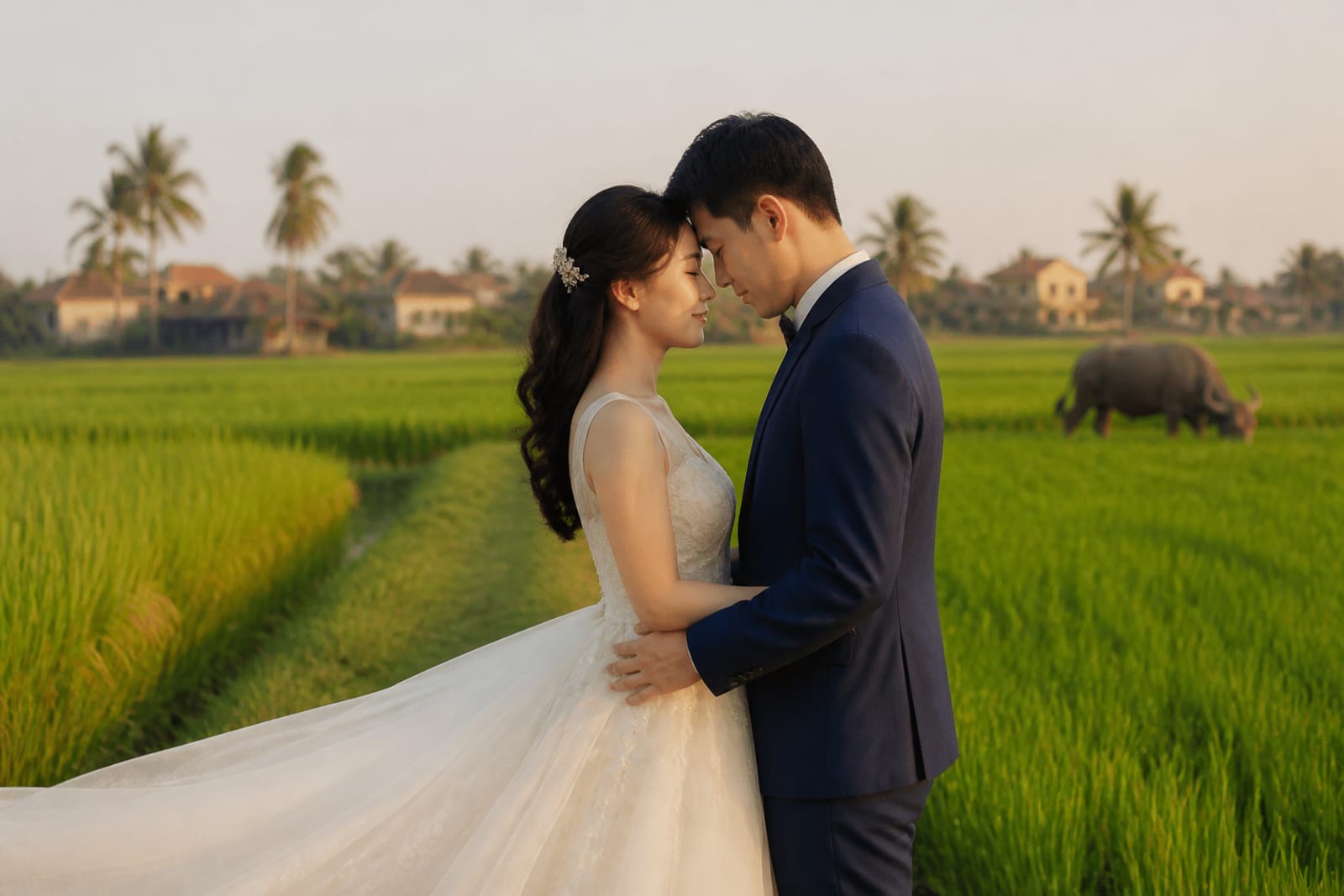
Seasonal window: Feb–Apr is peak—mild temperature (22–28°C), no rain risk, lush green growth, farmers active. Aug (late summer, pre-monsoon) works if you commit to 5–6 am to beat heat and crowds. Avoid Oct–Nov entirely (typhoon risk, waterlogged paths). Dec–Jan is cool and sometimes drizzly (light rain, grey light) but less crowded and quieter.
Outfit strategy: Ao dai (traditional Vietnamese tunic) is iconic at Tra Que—its flowing fabric photograph well against earth tones and green. Pair it with practical footwear (not heels; paths are uneven and muddy after rain). Jeans or casual dress work equally well for "modern couple" aesthetics. Avoid white or very light fabric if there's been rain—mud splashes photograph and is hard to clean. Bring a second outfit or change shoes to reset visual variety across 1–2 hours.
Makeup timing: Sunrise humidity and sweat demand long-wear foundation and waterproof products. If you book a makeup & hair service at your hotel, request formulas rated for heat and humidity; a touch-up kit travels with you to the village. Arrange makeup 30–45 min before you depart (not day-before), and confirm the hotel-to-village transfer time with your photographer.
Light and shadow: Sunrise delivers golden-hour softness for 20–30 min, then light hardens. Use the first hour for romantic portraits; shift to activity shots (weaving, basket-carrying, walking between rows) as light broadens. By 7:30–8 am, aim to be leaving as day-trippers arrive.
Rain contingency: Check the weather forecast 2–3 days prior. Afternoon downpours (May–Sep) don't usually cancel sunrise shoots; heavy morning rain (Oct–Nov) may force rescheduling. Confirm your photographer's reschedule policy before booking—Cáo Studio's team shoots Hoi An by appointment, so discuss weather clauses via WhatsApp.
What to check before booking a Tra Que shoot
1. Photographer's Hoi An appointment availability Cáo Studio shoots Hoi An by appointment—the team travels. Confirm dates and sunrise slot 7–14 days ahead via WhatsApp; don't assume availability during peak season (Feb–Apr). Ask whether pre-wedding sessions include makeup & hair on-site or if that's booked separately at your hotel.
2. Weather and reschedule policy Ask your photographer for their rain/typhoon policy. Do they offer a free reschedule if weather cancels? Oct–Nov and early Dec are monsoon risk; confirm this window is explicitly covered before paying.
3. Village entry and local protocols Tra Que is a working village, not a theme park. Ask whether photos require a village contribution (small donation or purchase from farmers) or if access is free. Confirm your photographer knows local etiquette—some farmers prefer not to be photographed; others welcome it if you buy their produce. Budget time for these interactions.
4. Transfer and timing coordination Confirm your hotel-to-Tra Que drive time (usually 15–20 min from Hoi An town center). If makeup is at your hotel, work backward: 5:30 am departure = 4:45 am makeup start = 4:15 am hair/wardrobe. Cáo Studio coordinates this via WhatsApp—ask the team to map your exact timeline.
5. Outfit and footwear prep Bring two outfits or shoes to refresh the scene. Try your ao dai at your hotel the night before—mud and wetness require easy changes. Heels are impractical; flat sandals or slip-on shoes work best.
6. Number of edited photos and delivery Ask your photographer how many final edited images you receive and the delivery timeline. Exact inclusions are confirmed on WhatsApp—don't assume a number or turnaround.
---
Is Tra Que right for you? A decision framework
Use this checklist:
- You travel Feb–Apr or Aug: Tra Que's light and weather are ideal.
- You can commit to 5–6 am wakeup: Sunrise is non-negotiable; skip Tra Que if you can't.
- You value unscripted, working-life moments over posed perfection: Tra Que thrives on authenticity.
- You want professional styling and makeup: Pair Tra Que with hotel makeup services for polish.
- You're flexible if rain forces a reschedule: Oct–Nov are monsoon season; accept rescheduling or shoot earlier.
- You're comfortable with mud, uneven paths, and less-controlled environments: Tra Que is not manicured.
If you checked three or more "yes," book Tra Que. If you're unsure about sunrise or crowds, consider:
- Hoi An Ancient Town at sunrise for iconic postcard look, entrance fee.
- Surrounding rice fields for open space, but fewer focal-point moments.
- Cam Thanh coconut boats for water and sunset romance, logistically heavier.
Couples often book both Tra Que (1 hour sunrise) and Hoi An Ancient Town (2 hours after sunrise) in one morning, using the golden-hour window efficiently. Cáo Studio coordinates multi-location pre-wedding sessions—ask on WhatsApp about combining locations in one shoot day.
---
📸 Book on WhatsApp — ao dai photoshoot
---
FAQ
Does Tra Que village charge entry or require permission to photograph?
Tra Que is open to visitors, but it's a working farm. Many photographers arrange a small village contribution (often via buying fresh produce from the farmers). Confirm this with your photographer before the shoot; Cáo Studio's team coordinates this via WhatsApp when booking.
Is Tra Que flooded or closed in October and November?
The village itself is inland and higher than Hoi An Ancient Town, so it rarely floods. However, Oct–Nov bring typhoons and heavy afternoon rain that can disrupt shoots or turn paths to mud. Sunrise sessions are usually possible, but afternoon sessions are risky. Confirm your photographer's reschedule policy for this season.
Can we do a Tra Que shoot in summer (May–August)?
Yes, but only at sunrise (5–6 am). Midday heat exceeds 35°C, which wilts makeup and exhausts couples. If you're visiting May–Aug, book an early-morning Tra Que slot and plan an indoor activity (lunch, rest) during midday heat. Afternoon shoots here are not recommended.
Do we need to wear an ao dai at Tra Que, or can we wear modern clothes?
Either works. Ao dai (traditional Vietnamese tunic) is iconic and photographs beautifully against the rural landscape, but modern dress (jeans, casual shirt) is equally valid for a contemporary pre-wedding style. Choose based on your aesthetic and comfort—Tra Que suits both. Discuss outfit options with your photographer when you book.
How long does a Tra Que photoshoot take?
Most sunrise sessions run 1–1.5 hours, timed to catch the golden hour and wrap before tourist groups arrive (around 8 am). Some couples add Hoi An Ancient Town afterward, extending to a full half-day pre-wedding shoot. Ask your photographer about the timeline when booking via WhatsApp.
FAQ
Does Tra Que village charge entry or require permission to photograph?
Tra Que is open to visitors, but it's a working farm. Many photographers arrange a small village contribution (often via buying fresh produce from the farmers). Confirm this with your photographer before the shoot; Cáo Studio's team coordinates this [via WhatsApp](/hoi-an) when booking.
Is Tra Que flooded or closed in October and November?
The village itself is inland and higher than Hoi An Ancient Town, so it rarely floods. However, Oct–Nov bring typhoons and heavy afternoon rain that can disrupt shoots or turn paths to mud. Sunrise sessions are usually possible, but afternoon sessions are risky. Confirm your photographer's reschedule policy for this season.
Can we do a Tra Que shoot in summer (May–August)?
Yes, but only at sunrise (5–6 am). Midday heat exceeds 35°C, which wilts makeup and exhausts couples. If you're visiting May–Aug, book an early-morning Tra Que slot and plan an indoor activity (lunch, rest) during midday heat. Afternoon shoots here are not recommended.
Do we need to wear an ao dai at Tra Que, or can we wear modern clothes?
Either works. Ao dai (traditional Vietnamese tunic) is iconic and photographs beautifully against the rural landscape, but modern dress (jeans, casual shirt) is equally valid for a contemporary pre-wedding style. Choose based on your aesthetic and comfort—Tra Que suits both. Discuss outfit options with your photographer when you book.
How long does a Tra Que photoshoot take?
Most sunrise sessions run 1–1.5 hours, timed to catch the golden hour and wrap before tourist groups arrive (around 8 am). Some couples add Hoi An Ancient Town afterward, extending to a full half-day [pre-wedding shoot](/pre-wedding-photoshoot). Ask your photographer about the timeline when booking via WhatsApp.
Ao dai, makeup, hair and a local photographer in Hanoi or Saigon — one WhatsApp message.