/ao-dai-photoshoot
Traditional Vietnamese wedding elements for Cao Bang photos
Traditional Vietnamese wedding elements — ao dai, temple bows, betel trays, and family rituals — photograph best in Cao Bang during the dry season (Oct–Mar) when light is soft and the rice terraces hold water or gold. The ao dai's silhouette works well in wide landscape shots, while close-ups catch embroidery and hand details; temple sequences require permission and low-angle, backlit framing to avoid glare off stone. A unified team (photographer, makeup artist, outfit coordinator) shoots faster and more coherently than separate vendors — they see how the dress reads in light, how the ritual flows, and where the story needs a pause. Before booking, confirm the photographer has shot temple ceremonies, owns a wide lens, and understands ao dai fitting under weather. Cáo Studio brings that integration to Hanoi, Ho Chi Minh City, and Hoi An (by appointment); for Cao Bang, we provide a planning guide and can help you vet local photographers on WhatsApp. ---
Why does Cao Bang suit traditional Vietnamese wedding frames?
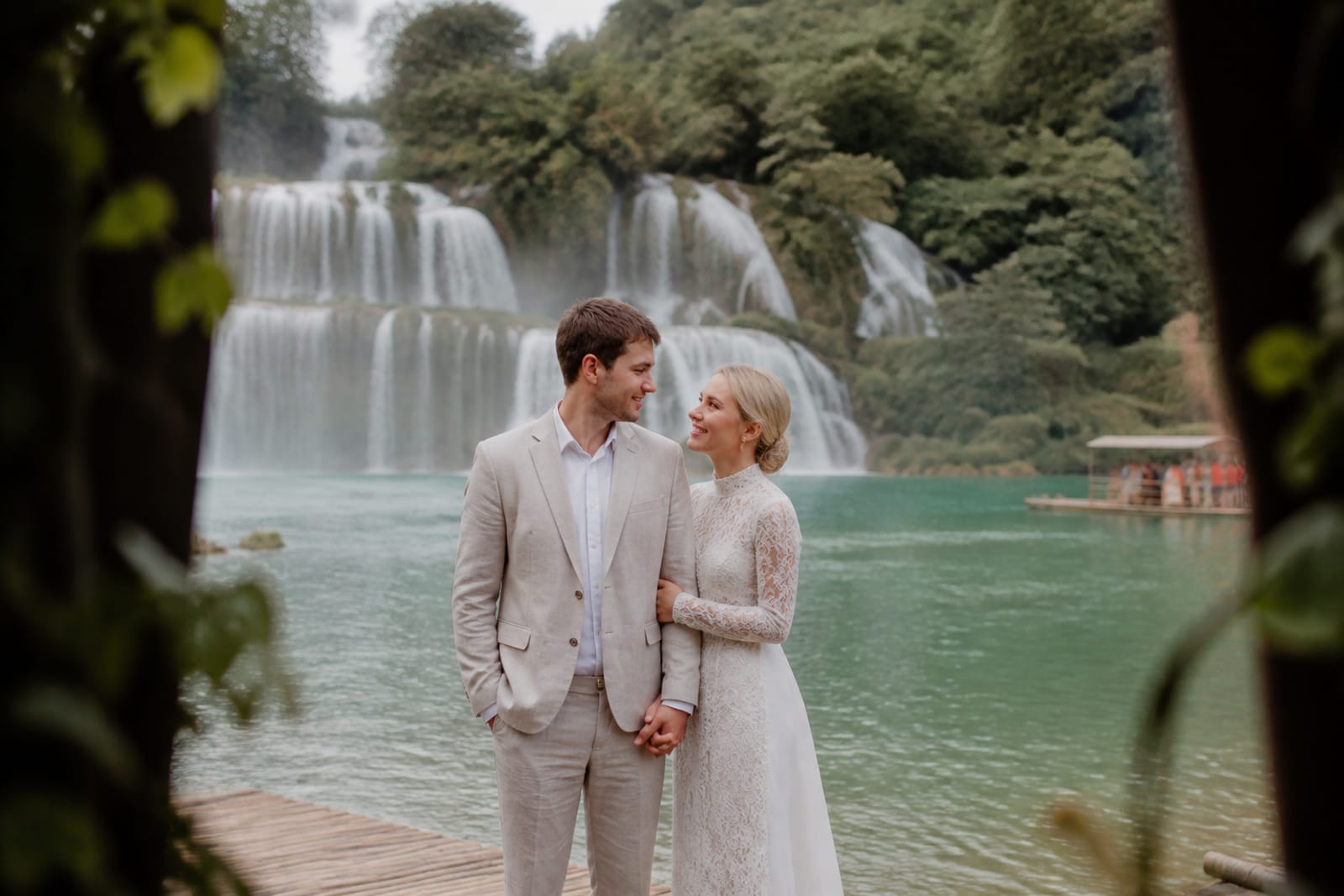
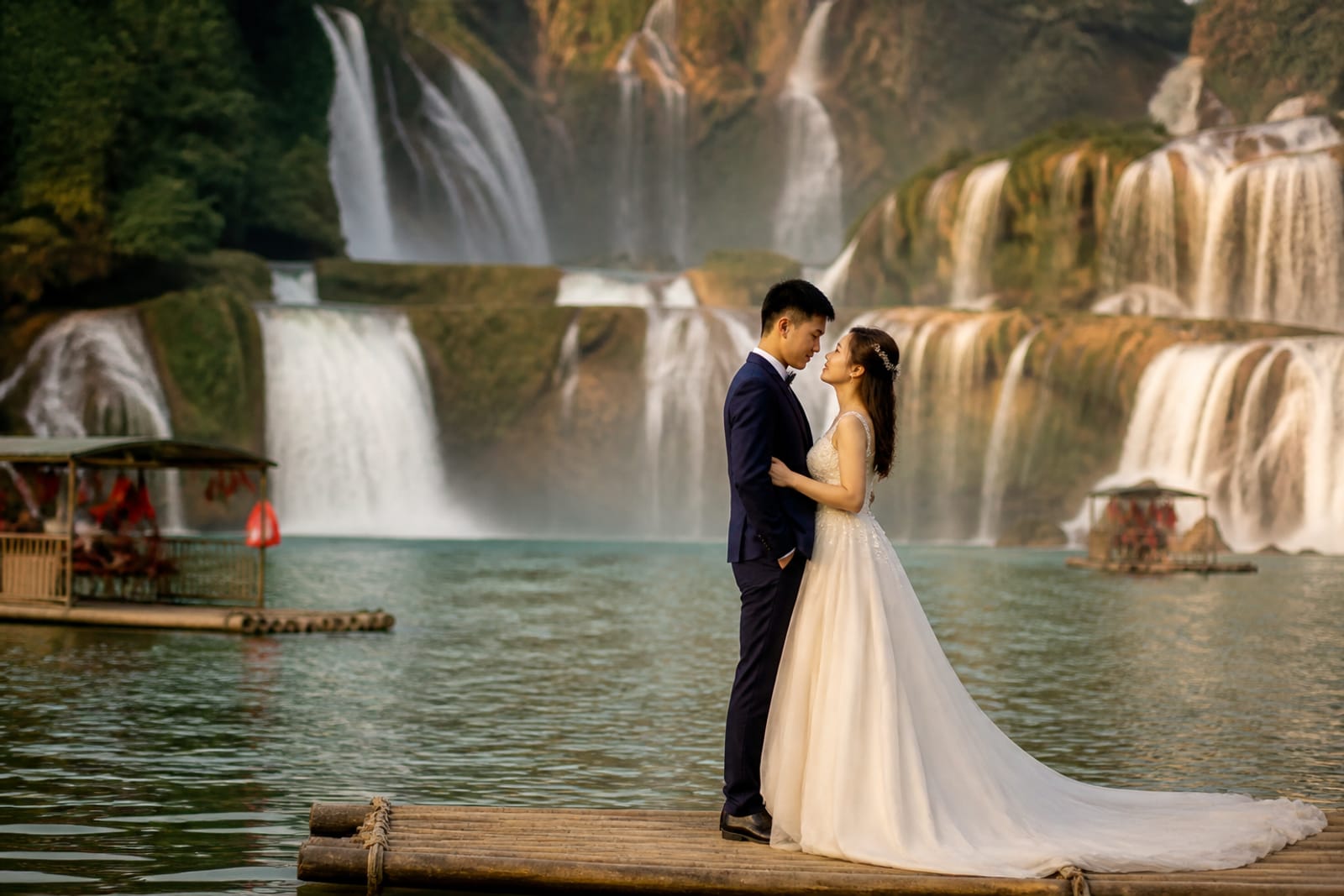
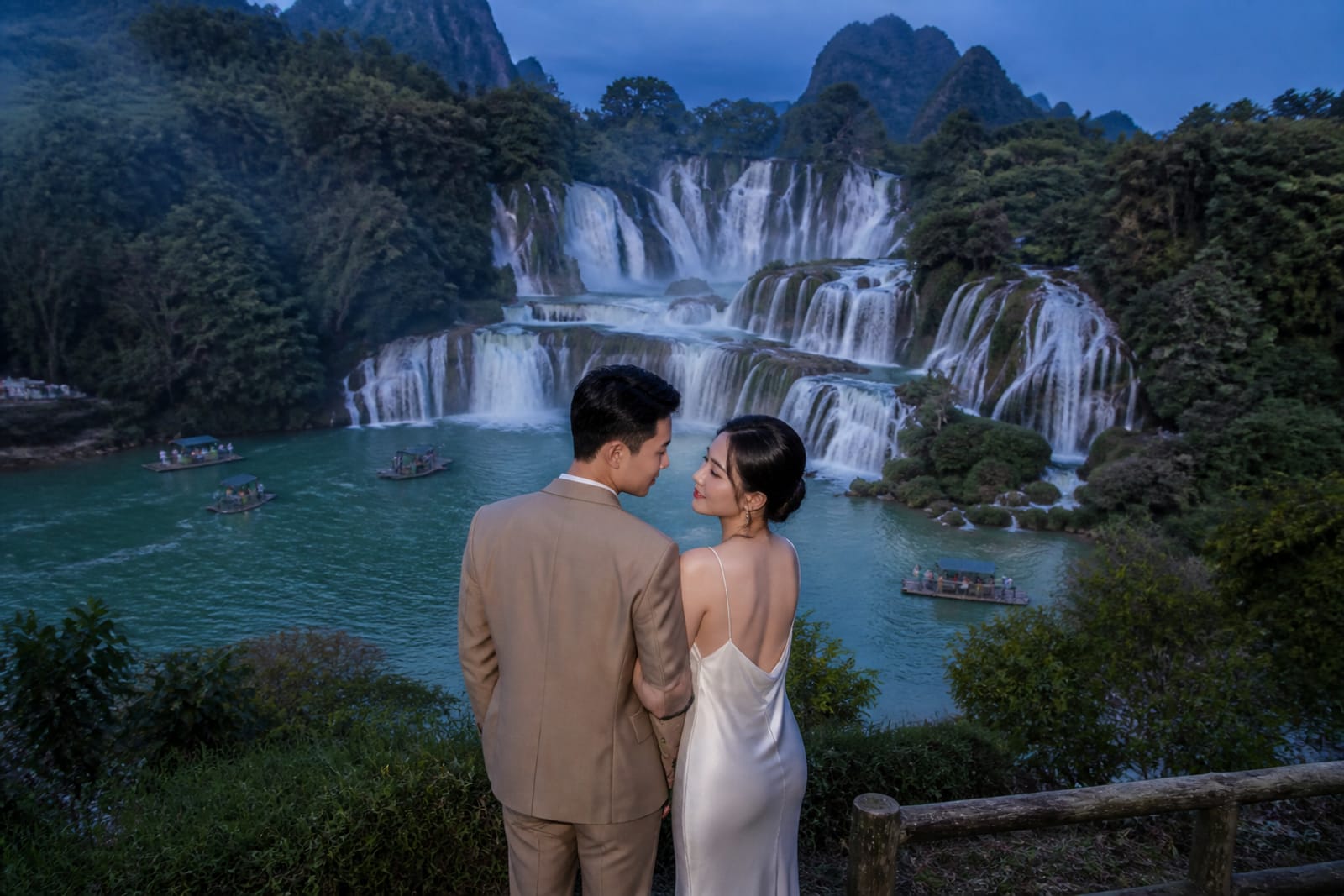
Cao Bang's Ban Gioc waterfall, limestone cliffs, and agricultural valleys offer a raw, unmanicured backdrop — no manicured gardens, no resort backdrops. The region's proximity to the China border, its minority villages, and its working rice landscape mean light falls on genuine texture, not staged sets. This matters for traditional elements: an ao dai reads against forest shadow differently than against a painted studio wall. The waterfall's mist, the paddy's reflection, the temple's age — they all anchor the formality of ritual in place. A session here typically involves travel time and patience for golden hour, which filters out rushed couples and attracts those who want story over speed.
📸 Book on WhatsApp — ao dai photoshoot
What season shows traditional elements best in Cao Bang?
October to March is the window. The waterfall runs full (water has color and motion, not a trickle) from July–September, but by October the rains ease and light becomes sharp — critical for catching ao dai embroidery and temple stone detail. The rice paddies turn gold around September–October, then muddy or rest through winter; in January–February they're often fallow but the light is clearest and coolest. December–February brings occasional drizzle, which can add mood but delays shoots. Tet (late Jan–mid Feb) closes temples and roads for days. By April the heat and humidity rise, and the rainy season (May–Sep) brings monsoon risk. Plan 4–6 weeks ahead; ask locally about current water flow and temple opening hours before finalizing dates.
How does ao dai photography change in a landscape versus temple setting?
The ao dai's long silk panels and high collar work as framing tools. In open landscape (rice fields, cliff edge, waterfall approach), shoot wide first — the dress becomes a vertical accent against horizontal terrain, and the pale or jewel-tone silk reads crisply against green or grey rock. The camera moves back, the couple walks, the fabric moves with them. In a temple, stone and shadow dominate; the ao dai's brightness can overexpose against dark walls. Position the couple in doorways or on temple steps where sidelight catches the fabric's drape and embroidery without washing it out. Close-ups of hand details (beaded cuffs, embroidered panels) require raking light — shoot early morning or late afternoon inside the temple courtyard, never at midday when shadows are harsh and flat. A team that has lit ao dai before knows these shifts; a generalist may default to face-close shots and miss the garment's story.
Should you include family rituals, and how do they affect timing and crew?
Traditional rituals — betel-tray presentation, tea ceremony, family bows — add 1–2 hours to a shoot and require a makeup artist and outfit coordinator on-set to manage multiple people's appearance and timing. A betel tray (symbolic of engagement or blessing) needs a clean, styled foreground and soft backlight to show its color; a tea ceremony works in a temple courtyard or family home but demands permission and often a second camera angle (one on the couple, one on the elder receiving the tea). These moments are slow and emotional — they're not "shots," they're pauses in a narrative. Budget for: location permits, travel time to multiple sites, wardrobe changes for family members, and a photographer calm enough to shoot while people are genuinely moved, not performing. If you're flying in from abroad, a local coordinator helps; if you're based in Vietnam, Cáo Studio's team in Hanoi, Ho Chi Minh City, or Hoi An can advise on Cao Bang logistics over WhatsApp.
Unified crew versus separate vendors — what's the real difference?
| Aspect | One team (photographer + makeup + outfit) | Three separate vendors |
|---|---|---|
| Light continuity | Crew sees how the ao dai reads in morning light; adjusts makeup warmth and outfit drape in real time | Makeup artist lights you indoors; photographer lights you outdoors differently; outfit person focuses on fit, not framing |
| Timing | One person manages pacing — they know when light is best, when to move, when to pause | Three schedules; delays cascade; crew arrives late, light window closes |
| Ritual flow | Photographer frames the tea ceremony while makeup touches up; outfit person steadies the tray — all in sync | Photographer steps back for logistics; makeup artist waits; outfit person misses the moment |
| Outfit changes | Managed on-set; photographer sees how each ao dai (or dress change) reads and suggests framing | Outfit changes happen in a room; photographer loses continuity; reshoot makeup after each change |
| Cost drivers | Season, travel distance, number of sites, duration | Season + travel + number of vendors + overlap wait time |
One team doesn't cost less — it costs differently. You pay for coherence and real-time problem-solving, not vendor coordination fees. A team that has shot ao dai rituals before recognizes a moment before it happens and is already positioned.
What to check before booking a Cao Bang traditional wedding photoshoot
Location permits & temple access: Cao Bang's temples require permission; some close at noon or for ceremonies. Confirm with your photographer weeks ahead — they should have relationships with temple custodians, not assume entry on the day.
Photographer's ao dai and ritual experience: Ask for examples of past ao dai shoots (not just portraits in a dress, but the garment in motion, in natural light, in ritual context). Ask how they've lit temple interiors, handled multiple subjects, and managed timing around ceremony.
Weather and season realism: Your photographer should say, plainly, "October is clearest light but the paddy is fallow" or "September shows gold rice but the waterfall mist may scatter light." If they guarantee blue skies, move on.
Outfit and makeup coordination: Confirm who brings the ao dai (or is it rented locally?), who does hair and makeup, and whether they understand how heat, humidity, and movement affect both throughout the day. If makeup is separate, ask the photographer how they'll manage touch-ups between locations.
Travel and contingency: Cao Bang is 3–4 hours from Hanoi. Who handles transport? What happens if the waterfall is inaccessible, or light is poor? A credible team has a second-choice location and a reschedule clause.
Turnaround on edits: Ritual shots and ao dai details require intentional editing — not filters, but exposure, color grading, and detail recovery. Ask for a timeline and examples of edited ao dai work.
---
For shoots in Hanoi, Ho Chi Minh City, and Hoi An, Cáo Studio handles the full coordination. For Cao Bang, we're happy to guide you through the planning and help you vet a local team — reach out on WhatsApp with your dates and vision.
See how ao dai photoshoots translate across seasons and light on our lookbook, or explore couple and family sessions that blend traditional elements with your own story.
---
FAQ
Can Cáo Studio shoot a traditional wedding session in Cao Bang?
Cao Bang is outside our core service area (Hanoi, Ho Chi Minh City, Hoi An). We can guide your planning and help you find and vet a local photographer on WhatsApp; for shoots in our bases, we manage the full experience.
What's the best month for the waterfall and rice together?
September shows golden rice and a full waterfall, but light is hazy. October clears the haze and the water still flows; rice is fading but the landscape reads sharply. Choose based on which you prioritize — harvest mood or light clarity.
Do I need permission to shoot inside Cao Bang temples?
Yes. Contact the temple custodian weeks ahead; some close midday or for ceremonies. Your photographer should have local relationships and confirm access before your travel date.
How long does a traditional ritual session take?
A betel-tray or tea ceremony with family, plus travel to 2–3 locations, typically runs 6–8 hours. Budget extra time for setup, wardrobe changes, and emotional pauses — these aren't rushed moments.
Should I rent an ao dai locally or bring one from Hanoi?
Local rentals in Cao Bang are limited; most couples rent from Hanoi before traveling or bring one. Confirm with your photographer what's available and what fits the shoot. An ill-fitting ao dai reads poorly in wide landscape shots.
What if the waterfall is too low or it rains on shoot day?
Your photographer should scout alternate locations (temple, village, cliff edge, paddy) and have a reschedule option in the contract. Ask for this in advance, not on the day.
FAQ
Can Cáo Studio shoot a traditional wedding session in Cao Bang?
Cao Bang is outside our core service area (Hanoi, Ho Chi Minh City, Hoi An). We can guide your planning and help you find and vet a local photographer on WhatsApp; for shoots in our bases, we manage the full experience.
What's the best month for the waterfall and rice together?
September shows golden rice and a full waterfall, but light is hazy. October clears the haze and the water still flows; rice is fading but the landscape reads sharply. Choose based on which you prioritize — harvest mood or light clarity.
Do I need permission to shoot inside Cao Bang temples?
Yes. Contact the temple custodian weeks ahead; some close midday or for ceremonies. Your photographer should have local relationships and confirm access before your travel date.
How long does a traditional ritual session take?
A betel-tray or tea ceremony with family, plus travel to 2–3 locations, typically runs 6–8 hours. Budget extra time for setup, wardrobe changes, and emotional pauses — these aren't rushed moments.
Should I rent an ao dai locally or bring one from Hanoi?
Local rentals in Cao Bang are limited; most couples rent from Hanoi before traveling or bring one. Confirm with your photographer what's available and what fits the shoot. An ill-fitting ao dai reads poorly in wide landscape shots.
What if the waterfall is too low or it rains on shoot day?
Your photographer should scout alternate locations (temple, village, cliff edge, paddy) and have a reschedule option in the contract. Ask for this in advance, not on the day.
Ao dai, makeup, hair and a local photographer in Hanoi or Saigon — one WhatsApp message.