/ao-dai-photoshoot
Traditional Vietnamese Wedding Elements for Con Dao Photos
Traditional Vietnamese wedding elements—ao dai silk, altar flowers, ritual objects, ancestral frames—gain texture and meaning in Con Dao's soft, tropical light. Ao dai photoshoots here blend formal dress with the island's unhurried pace: think temple grounds at dawn, lantern-lit ceremonies at dusk, or couple walks past fishing villages. The island's dry season (roughly March–June) offers the clearest light; typhoon months (July–November) bring moody grey skies and afternoon rain. Cáo Studio does not operate on Con Dao, but our guides show how to vet a local photographer and what to brief them on (light angle, framing, timing). Key decisions: hire one photographer or three vendors; rent ao dai locally or bring your own; shoot ritual or lifestyle; choose temple, beach, or village as your backdrop. Budget factors include travel time, number of outfits, and whether hair/makeup happens on-island or you arrange it separately. 📸 Book on WhatsApp — ao dai photoshoot ---
What Traditional Elements Photograph Best in Con Dao's Light?
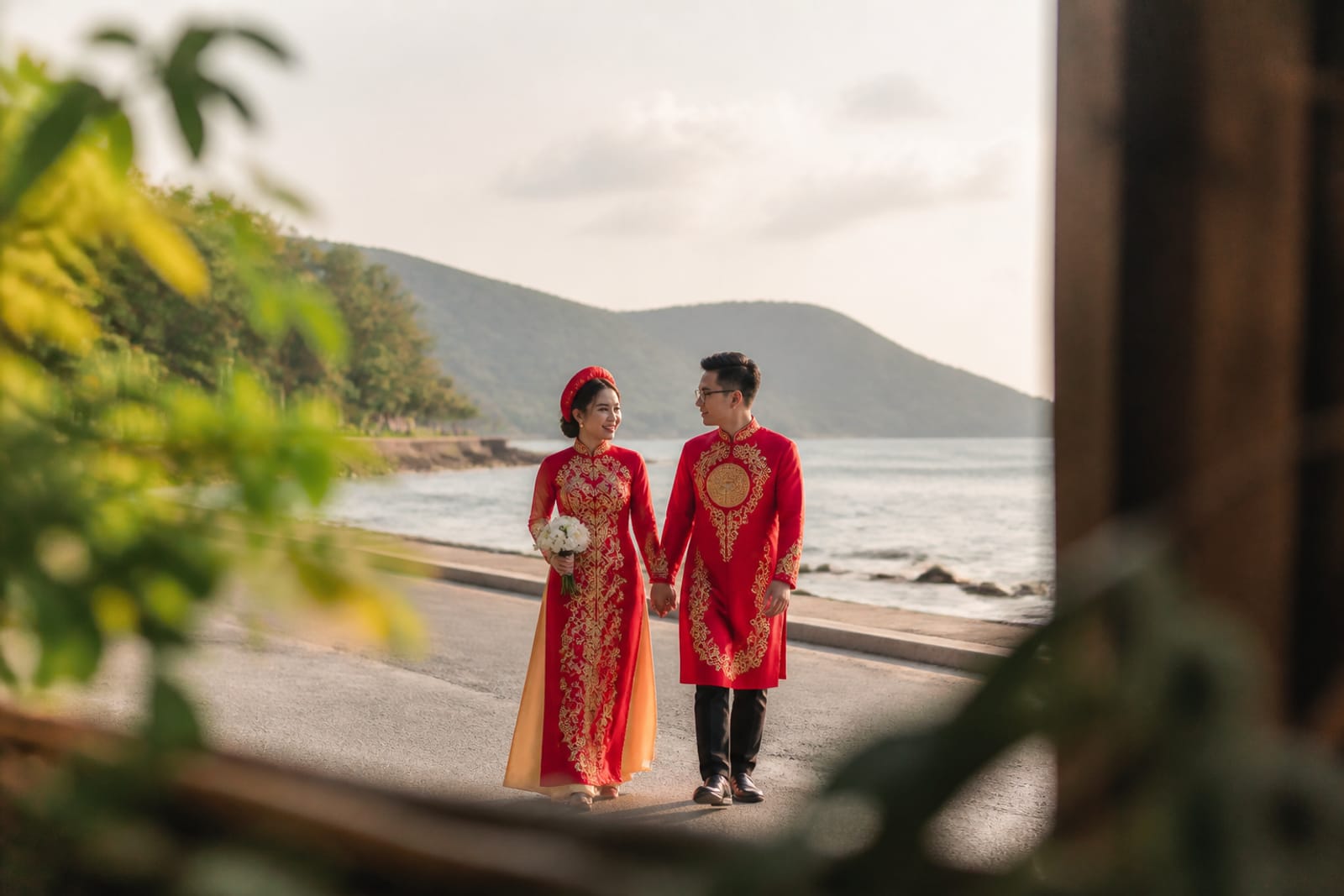
Ao dai—the fitted silk tunic—reads strongest in soft, directional light: side-light at 6:10 am on a quiet beach, or backlight during the golden hour when the silk glows. Ritual objects (ancestral flowers, incense holders, red silk scarves tied to wrists) gain depth against Con Dao's muted greens and stone temples. Hanoi's Cáo Studio team has shot ao dai in grey winter light and bright summer sun; the same is true of Con Dao's shifting seasons. Altar arrangements (usually chrysanthemums, candles, a photo of ancestors) photograph best indoors, in window light or amber lamp glow—avoid midday flash. Couple gestures (hands linked over a prayer mat, walking toward a temple door, exchanging rings with the sea behind) rely on timing and walking direction, not static poses. Temple grounds—worn stone steps, incense smoke, wooden doors—add narrative without competing for attention. The strongest frames isolate one element (the ao dai's hem against sand, a flower in sharp focus, the couple's silhouettes framed by an archway) rather than crowding ritual and landscape together.
Conclusion: soft directional light and isolation of detail matter more than the element itself.
When Is Con Dao's Light and Weather Right for a Wedding Shoot?
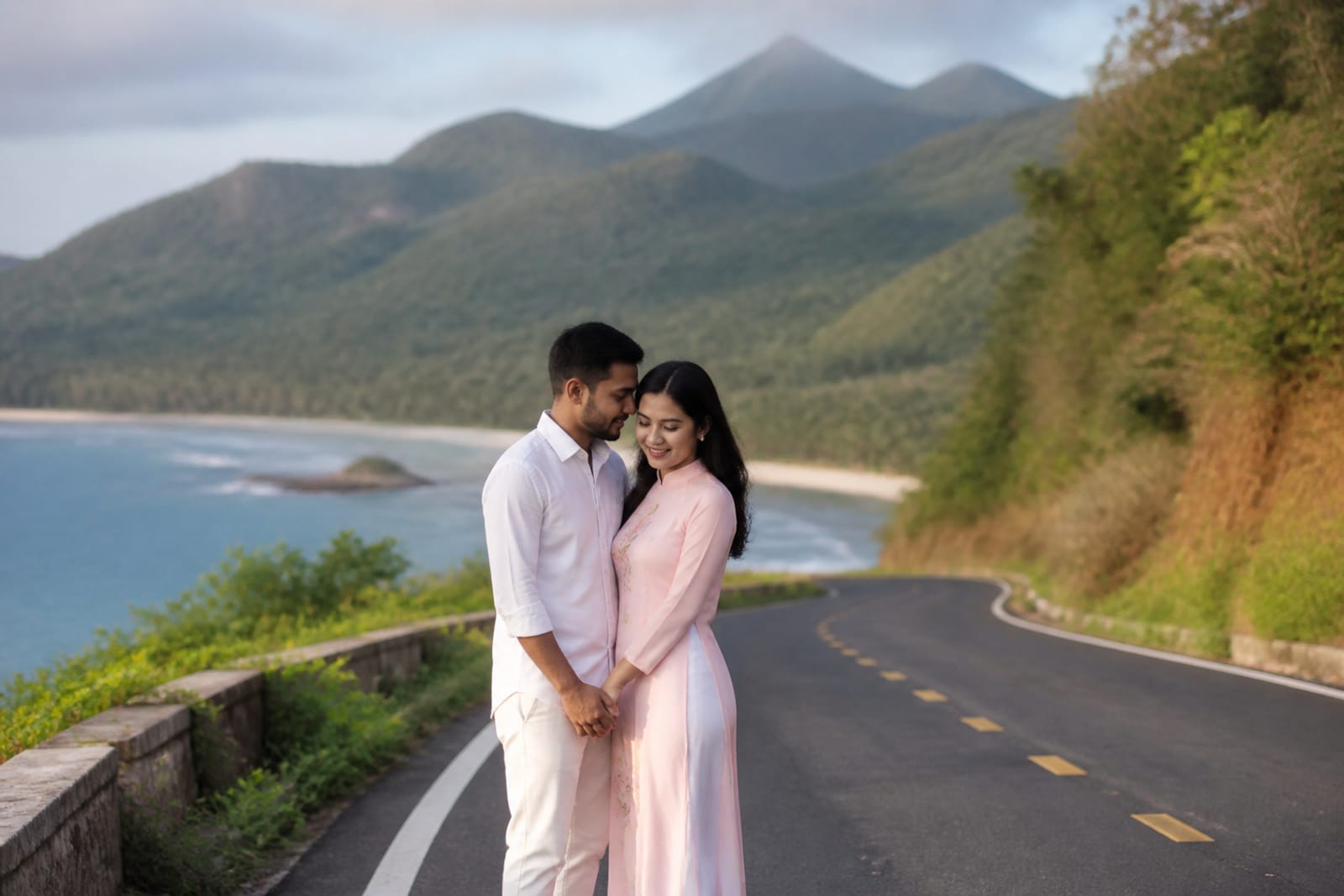
Con Dao's calm season runs roughly March–June: seas are calmest, mornings are clear, and humidity is moderate. July–November brings the rainy season; short afternoon downpours are common, and the sea roughens. December–February sees occasional cooler days but can be crowded near New Year (Tet, late January–mid February). For ao dai photoshoots, the light is softest in the hour after sunrise (5:30–7:00 am) and in the last 90 minutes before sunset; midday (11 am–3 pm) is flat and harsh, not ideal for silk texture or skin tone. Overcast skies (common May–November) diffuse light evenly—good for even skin exposure, but you lose the directional drama that makes ao dai glow. Wind is a factor: March–May can see gusty mornings, which moves fabric beautifully but risks continuity in handheld shots. Rain is not a blocker—it silvers the light and deepens greens—but it soaks fabric and electronics. The best window for predictable light is late March through May; book your photographer early if you want those weeks.
Conclusion: March–June offers calm seas and soft morning light; plan shoot times for sunrise or sunset.
Which Backdrop—Temple, Beach, or Village—Suits Each Ritual Element?
| Backdrop | Best Elements | Light Quality | Why It Works |
|---|---|---|---|
| Temple grounds | Altar, incense, ao dai formality, couple bows | Soft; window light indoors, dappled shade outdoors | Sacred context holds ritual; worn stone adds age and weight. |
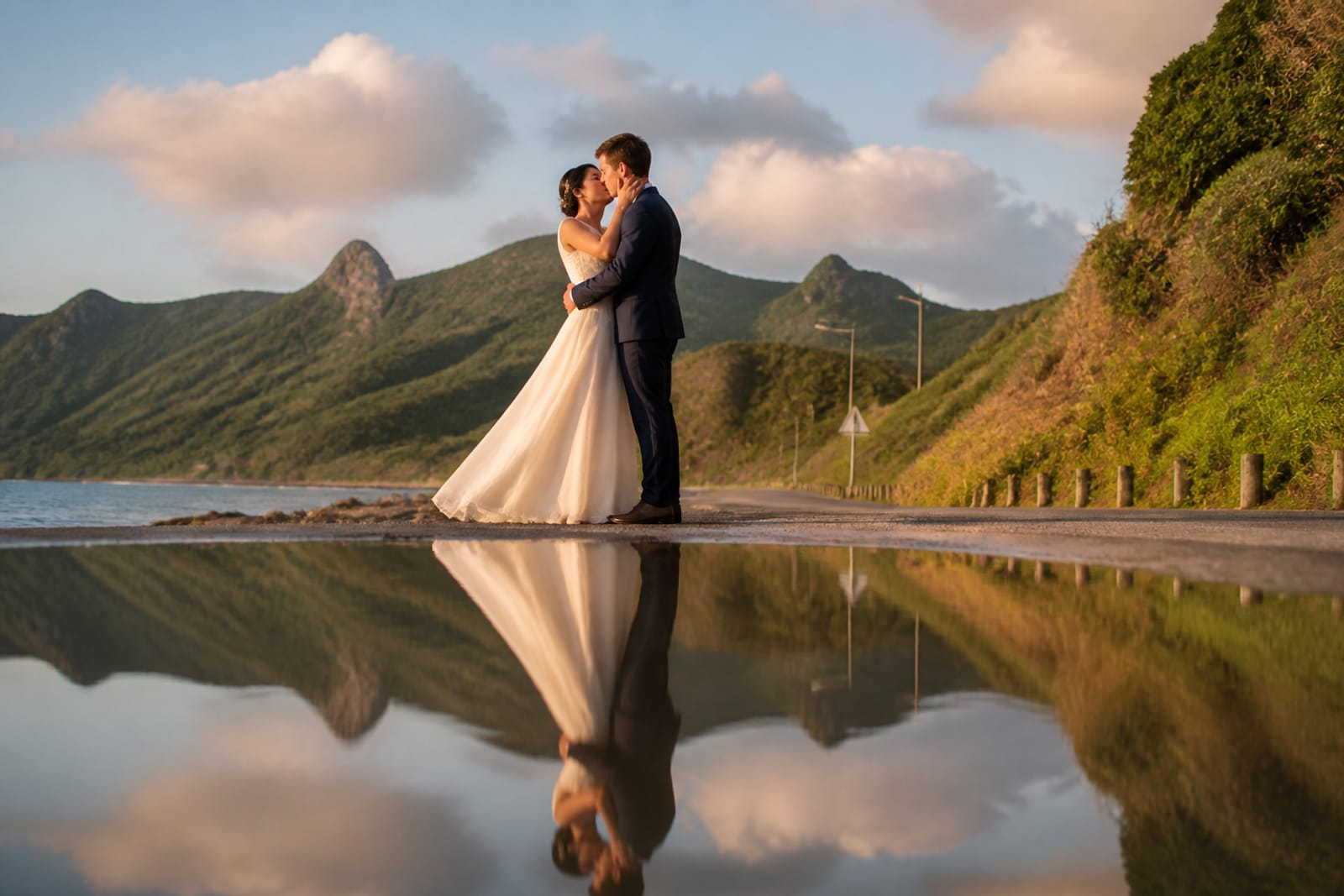
| Beach (quiet coves) | Couple walks, ao dai flow, silk against sand/sea | Golden hour, backlight, side-light (5–7 pm) | Open space shows movement; ao dai hem catches light. Avoid midday glare. |
| Fishing village (early morning) | Daily ritual frames, ao dai worn casually, family scenes | Diffuse pre-dawn, soft sun at 6–7 am | Authenticity—real life, not staged. No crowds. |
| Temple interior (altar room) | Ancestral flowers, prayer, close detail | Warm lamp, window sill light | Intimacy; ritual objects shine in amber. |
This framework helps you brief a photographer: if you want formal ritual, choose the temple; if you want movement and ao dai fabric drama, choose the beach at golden hour; if you want cultural narrative, choose the village at dawn. A single location limits continuity; most couples shoot 2–3 backdrops in one day, moving by motorbike or boat between 7 am and 4 pm.
Conclusion: temple suits ritual, beach suits ao dai movement, village suits authenticity—pick the tone first, then the backdrop.
Should You Hire One Photographer or Separate Vendors for Hair, Makeup, and Dress?
One photographer who directs the whole shoot (and partners with a makeup artist and stylist on the same brief) will shoot faster, with a unified visual language. Cáo Studio's model—one team handles ao dai, hair, makeup, and camera—means no waiting for a makeup artist to finish before the photographer frames a shot, no miscommunication about light or outfit choice between three vendors. On an island like Con Dao, logistics favour this: one boat ride, one arrival time, one creative conversation about light and timing. If you hire separately, confirm each vendor knows Con Dao's light, season, and temple etiquette; arrange a call between them to align on timing and the story you want told. Costs scale differently: one team costs less in coordination but more per hour; three vendors may seem cheaper individually but add travel time and delay. Cáo Studio does not travel to Con Dao, but when you brief a local photographer, ask if they've shot ao dai before, if they've worked with a stylist and makeup artist, and whether they direct movement or only pose.
Conclusion: one team avoids delays and miscommunication; three vendors need a clear creative lead.
How Do You Find and Vet a Con Dao Wedding Photographer?
Con Dao has no large photography studios; most wedding photographers are based in Ho Chi Minh City or Vung Tau and travel to the island on request. Start by asking your hotel's concierge or wedding planner for referrals—word-of-mouth beats search here. When you shortlist, ask to see full albums (not highlight reels), especially shots in overcast light or temples, to gauge how they handle flat skies and ritual framing. Check: Have they shot ao dai? Do they understand temple etiquette (no loud shutter, respectful framing, no posing at altars)? Can they brief a makeup artist or work solo? Do they shoot on film or digital, and how quickly do they deliver edits? On Con Dao, offer clear reference images—Pinterest pins of light, framing, and mood—and a timeline (which temple or beach at which hour, where you'll be at sunset). Confirm they have backup gear and a plan if afternoon rain hits. Agree on delivery time (typically 2–4 weeks for edited photos) and file format (digital or prints, social-media-ready or full-resolution). Budget factors: travel time (they may charge for the ferry or a day rate), number of outfits, and whether they handle video. Ask for a quote in writing, including what's delivered.
Conclusion: ask for full albums, temple experience, and written quotes before booking.
What Should You Check Before Booking an Ao Dai Photoshoot on Con Dao?
Outfit & fit: Does the photographer rent ao dai, or do you bring your own? Cáo Studio's rental service includes fitting in Hanoi or Ho Chi Minh City; if you hire locally, allow time to collect and fit the dress 1–2 days before the shoot. Check the ao dai's silk weight (heavy drapes better in wind, light floats but tangles) and whether it's been professionally cleaned.
Hair & makeup: Will they happen on-island (find a salon or bring a stylist) or will you do them yourself? Traditional wedding makeup (soft eyes, defined brows, matte lips) reads better in sunlight than trendy tones; ask the photographer's preference for light conditions.
Permissions & timing: Confirm which temples allow photoshoots and whether you need permission. Temple etiquette: remove shoes indoors, no posing at altars, keep voices low. Beaches are usually free; villages may warrant a small gift (cigarettes, fruit, banh mi) for locals if you frame their homes.
Weather backup: If your shoot date falls in the rainy season (July–November), agree on a rain plan—reschedule, shoot indoors, or embrace wet conditions. Some elements (incense, flowers) are vulnerable to moisture.
Delivery & files: Confirm how many edited photos you'll receive, whether you get print-ready files or web-only, and the timeline (rush edits cost more). Ask if you can order prints or albums after the shoot.
Travel & logistics: Budget time for ferry delays. If shooting on multiple days, confirm the photographer's availability and whether they offer a package rate.
FAQ
Can I shoot traditional Vietnamese wedding elements at Con Dao if I'm not getting married there?
Yes. Engagement shoots, pre-wedding photoshoots, and anniversary sessions use the same ritual elements and backdrops. A photographer will adjust the framing and narrative (celebration rather than ceremony) but keeps the ao dai, flowers, and temple backdrop. Ask for a lookbook showing non-wedding ao dai shoots to see the tone you prefer.
What's the best month to shoot on Con Dao—and do I need to book far in advance?
March–June offers the calmest seas and clearest light; book 2–3 months ahead if you want those weeks. July–November brings moody skies and afternoon rain—good for certain moods, but less predictable. Avoid late January–mid February (Tet crowds and many closures). Most local photographers have lead times of 4–8 weeks, especially in peak season.
Do I need to rent an ao dai in Ho Chi Minh City, or can I rent locally on Con Dao?
Ho Chi Minh City has larger rental shops with more sizes and silk qualities; Con Dao has limited options. If you rent in the city, transport the dress carefully in a garment bag. Confirm rental terms (damage fees, cleaning) and whether the shop will steam or press the ao dai on the shoot day. Cáo Studio's ao dai rental includes fitting and steaming if you book through Saigon.
How do I brief a local Con Dao photographer about light, timing, and the story I want?
Send reference images (Pinterest pins, Instagram posts) showing the mood, backdrops, and ao dai framing you love. Create a timeline: "7 am at [temple name], 9:30 am boat to [beach name], 5 pm sunset walk." Explain the ritual elements you want (altar shot, couple bow, village walk) and the order. Ask the photographer to suggest the best light times for each. Confirm they understand temple etiquette and can direct movement (walking, looking, interacting) rather than static poses.
What's the difference between hiring Cáo Studio for a Hanoi or Saigon ao dai shoot versus finding a photographer on Con Dao?
Cáo Studio operates in Hanoi, Ho Chi Minh City, and Hoi An with a unified team—photographer, makeup artist, stylist—all briefed on the same vision, and delivery in 48 hours. Con Dao requires you to find a local photographer; you gain island authenticity and lower travel costs, but coordinate separately with hair/makeup and accept longer lead times and delivery. If you want to combine both—shoot in Saigon before flying to Con Dao—Cáo Studio can film pre-wedding content in the city and you'll already know the team's style.
Will rain or overcast skies ruin an ao dai photoshoot on Con Dao?
No. Overcast light is even and flattering for skin tone and ao dai silk (no harsh shadows). Rain deepens greens and silvers the light dramatically—good for mood, but soaks fabric and requires protection for electronics. Plan indoor altar or temple shots for heavy downpours, and outdoor movement shots for overcast or drizzle. Bring a waterproof bag for the camera and a microfibre cloth. Ritual elements (flowers, incense) can be sheltered or repositioned indoors.
FAQ
Can I shoot traditional Vietnamese wedding elements at Con Dao if I'm not getting married there?
Yes. Engagement shoots, pre-wedding photoshoots, and [anniversary sessions](/proposal-and-anniversary) use the same ritual elements and backdrops. A photographer will adjust the framing and narrative (celebration rather than ceremony) but keeps the ao dai, flowers, and temple backdrop. Ask for a lookbook showing non-wedding ao dai shoots to see the tone you prefer.
What's the best month to shoot on Con Dao—and do I need to book far in advance?
March–June offers the calmest seas and clearest light; book 2–3 months ahead if you want those weeks. July–November brings moody skies and afternoon rain—good for certain moods, but less predictable. Avoid late January–mid February (Tet crowds and many closures). Most local photographers have lead times of 4–8 weeks, especially in peak season.
Do I need to rent an ao dai in Ho Chi Minh City, or can I rent locally on Con Dao?
Ho Chi Minh City has larger rental shops with more sizes and silk qualities; Con Dao has limited options. If you rent in the city, transport the dress carefully in a garment bag. Confirm rental terms (damage fees, cleaning) and whether the shop will steam or press the ao dai on the shoot day. Cáo Studio's [ao dai rental](/ao-dai-rental) includes fitting and steaming if you book through Saigon.
How do I brief a local Con Dao photographer about light, timing, and the story I want?
Send reference images (Pinterest pins, Instagram posts) showing the mood, backdrops, and ao dai framing you love. Create a timeline: "7 am at [temple name], 9:30 am boat to [beach name], 5 pm sunset walk." Explain the ritual elements you want (altar shot, couple bow, village walk) and the order. Ask the photographer to suggest the best light times for each. Confirm they understand temple etiquette and can direct movement (walking, looking, interacting) rather than static poses.
What's the difference between hiring Cáo Studio for a Hanoi or Saigon ao dai shoot versus finding a photographer on Con Dao?
Cáo Studio operates in [Hanoi](/hanoi), [Ho Chi Minh City](/saigon), and [Hoi An](/hoi-an) with a unified team—photographer, makeup artist, stylist—all briefed on the same vision, and delivery in 48 hours. Con Dao requires you to find a local photographer; you gain island authenticity and lower travel costs, but coordinate separately with hair/makeup and accept longer lead times and delivery. If you want to combine both—shoot in Saigon before flying to Con Dao—Cáo Studio can film [pre-wedding content](/pre-wedding-photoshoot) in the city and you'll already know the team's style.
Will rain or overcast skies ruin an ao dai photoshoot on Con Dao?
No. Overcast light is even and flattering for skin tone and ao dai silk (no harsh shadows). Rain deepens greens and silvers the light dramatically—good for mood, but soaks fabric and requires protection for electronics. Plan indoor altar or temple shots for heavy downpours, and outdoor movement shots for overcast or drizzle. Bring a waterproof bag for the camera and a microfibre cloth. Ritual elements (flowers, incense) can be sheltered or repositioned indoors.
Ao dai, makeup, hair and a local photographer in Hanoi or Saigon — one WhatsApp message.