/ao-dai-photoshoot
Traditional Vietnamese wedding elements for Da Lat photos
Traditional Vietnamese wedding elements—ao dai, temple ceremonies, tea plantations, flowers—photograph strongest in Da Lat's cool, misty highland light (best Dec–Apr). An ao dai shoot here blends formality with natural landscape; the mountain backdrop and overcast mornings create soft, even light without harsh shadows. Pair it with sunrise at Xuan Huong Lake or walks through the terraced tea farms. Cáo Studio shoots in Hanoi, Ho Chi Minh City and Hoi An year-round; for Da Lat, ask on WhatsApp about travel dates and logistics. Avoid rainy season (May–Nov brings afternoon downpours and grey skies), and book with a local photographer experienced in highland light—mist can hide detail if framing is loose. ---
Why does Da Lat suit traditional Vietnamese wedding photos?
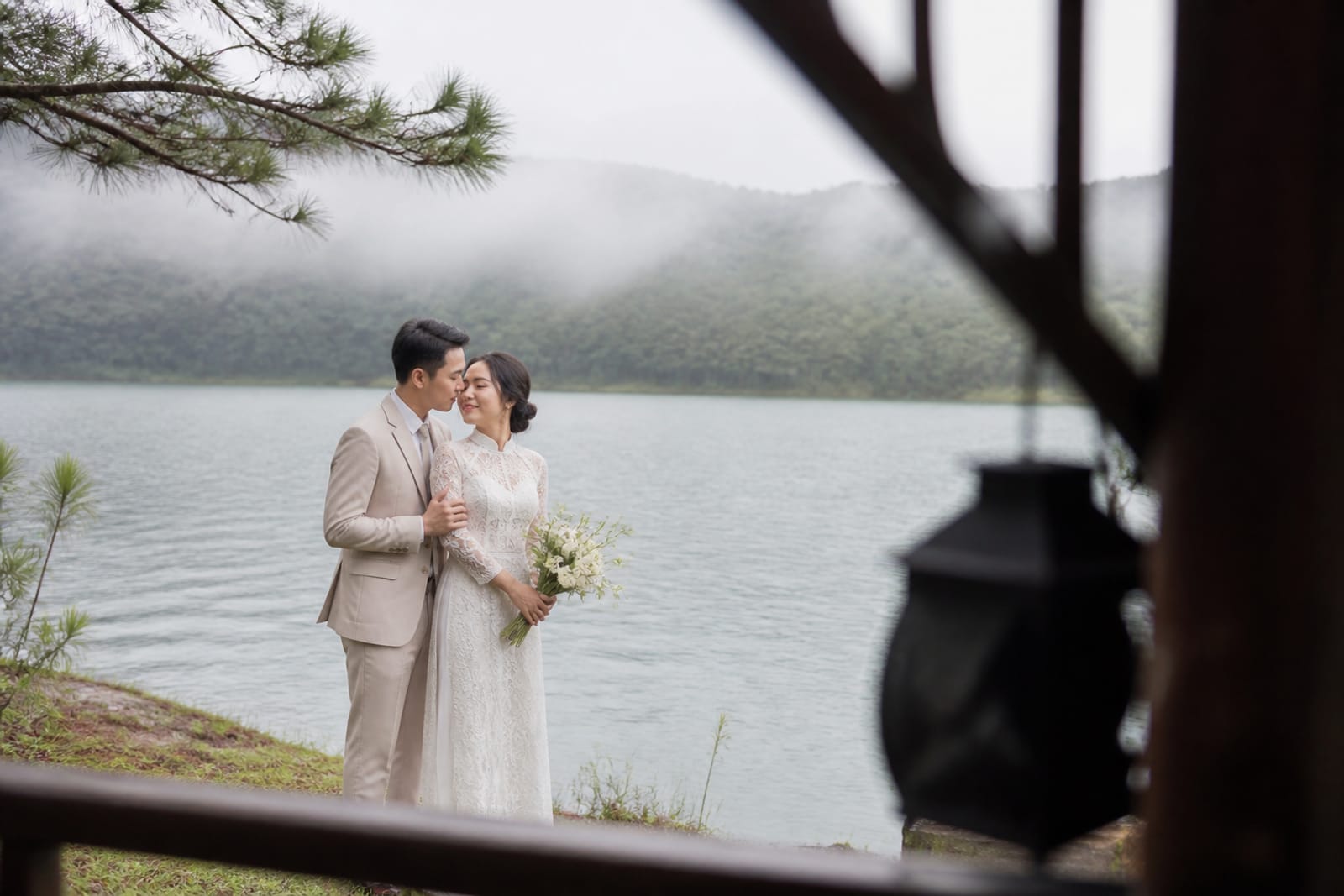
Da Lat's altitude (1,500 meters), cool climate and pine forests create a visual break from Vietnam's lowland coastal norm. Unlike Hanoi's urban density or Ho Chi Minh City's heat, Da Lat offers open hillside vistas, flower gardens and misty early light—a cinematic frame for formal ao dai and couple portraits. The season matters: Dec–Apr brings clear mornings, soft side light and natural mist that diffuses sunlight into a flattering, cool-toned glow. Compare this to summer (May–Nov), when afternoon downpours and dense cloud make consistent light impossible. A morning shoot before 9 a.m. captures the mist; by 11 a.m. it often lifts. This timing window suits a one-team photoshoot (photographer, makeup artist, stylist in one booking) because you're moving between fixed spots—Xuan Huong Lake, the Dalat Flower Gardens, tea plantations—not waiting for light to change.
📸 Book on WhatsApp — ao dai photoshoot
Which ao dai colors and styles work best in highland light?
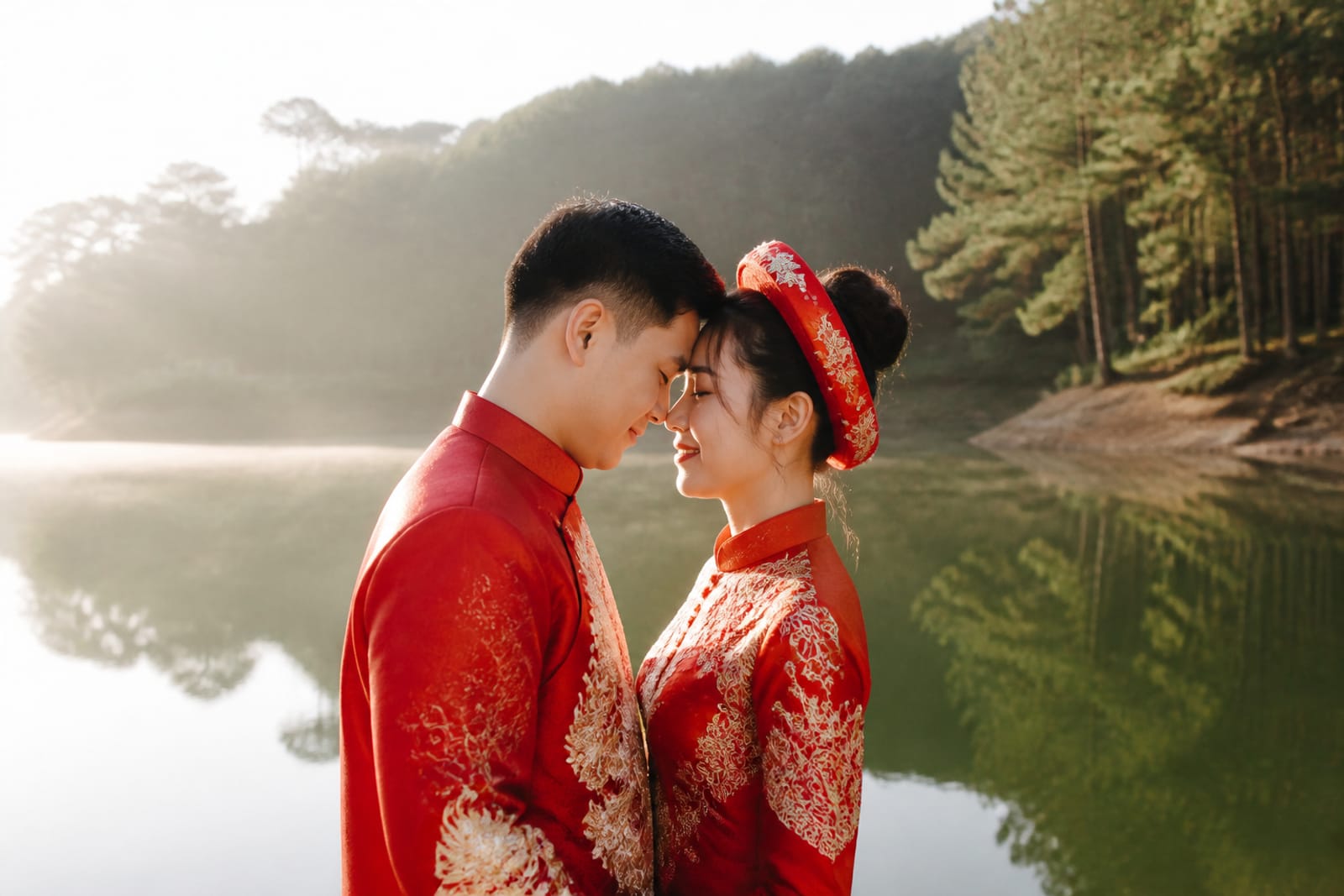
Deep jewel tones (burgundy, emerald, navy, gold-trimmed) photograph richer against Da Lat's cool, overcast backdrop than pastels. Soft pink or lavender can fade into the grey sky; crimson or sapphire anchors the frame. Silk ao dai (not cotton) catches and reflects light subtly—important in diffused morning mist. For couples, matching tones or a complementary pair (e.g., burgundy and cream) feels cohesive without flatness. A classic, fitted silhouette (not heavily embroidered) reads clearly in wide landscape shots where detail dissolves at distance. Avoid busy patterns or metallic embroidery that catches light unevenly—in mist, simplicity wins. If renting, check the rental supplier's fabric weight and dye quality; some rentals use thin nylon that looks plastic in highland light. Cáo Studio's ao dai rental is styled for photography—ask on WhatsApp whether the color and fit suit your chosen location.
What traditional ceremonies and rituals look best on camera?
Tea ceremony, incense offering and garden walks photograph as quiet, intentional moments—not stiff poses. In Da Lat, a tea ceremony framed in a garden pavilion (e.g., at Dalat Flower Gardens) works because the greenery and soft light create natural depth; the groom serves the bride, you walk between shots, hands rest naturally on cups. Incense offerings at a small altar or shrine photograph best at eye level (not wide-angle overhead) and in side light—the smoke becomes visible, the gesture reads as reverent. Garden walks—bride and groom walking, not standing—are stronger than front-facing couple poses; the landscape becomes part of the story. Avoid indoor temple ceremonies with dim, mixed tungsten light unless your photographer has a 35mm or 50mm lens and can shoot at f/1.4–f/2 (wide aperture for low light). If you're planning a temple visit, scout it first with your photographer to check light at your chosen time and whether phones or tripods are permitted.
When is the ideal season, and what do weather and light look like month by month?
| Month | Light | Sky | Rain | Best time of day | Outfit fit | Why or why not |
|---|---|---|---|---|---|---|
| Dec–Jan | Soft, clear | Clear or mist | Rare | 6–9 a.m. (mist rises slowly) | Excellent; cool enough for layers | Peak season; book early |
| Feb–Mar | Soft, side light | Mostly clear | Minimal | 6–9 a.m. | Excellent | Cherry blossoms near, still calm |
| Apr | Bright, warm | Clear | Rare | 5:30–7 a.m. (heat builds) | Good | Mist lifts earlier; shoot early |
| May–Jul | Diffuse, heavy overcast | Grey, clouds | Frequent afternoon | 6–10 a.m. | Fair; humidity visible | Risky; downpours end shoots |
| Aug–Sep | Diffuse, overcast | Dense cloud | Very frequent | Not reliable | Fair | High humidity; avoid |
| Oct–Nov | Unpredictable | Storm-prone | Typhoon, flood risk | Not reliable | Risky | Worst season; hard to shoot |
Da Lat's dry season (Dec–Apr) is non-negotiable for reliability. Morning shoots (5:30–9 a.m.) avoid afternoon rain and capture mist. Rainy season (May–Nov) brings unpredictable downpours—backup indoor locations don't exist easily in Da Lat's tourism infrastructure.
Which locations pair traditional wedding aesthetics with photogenic light?
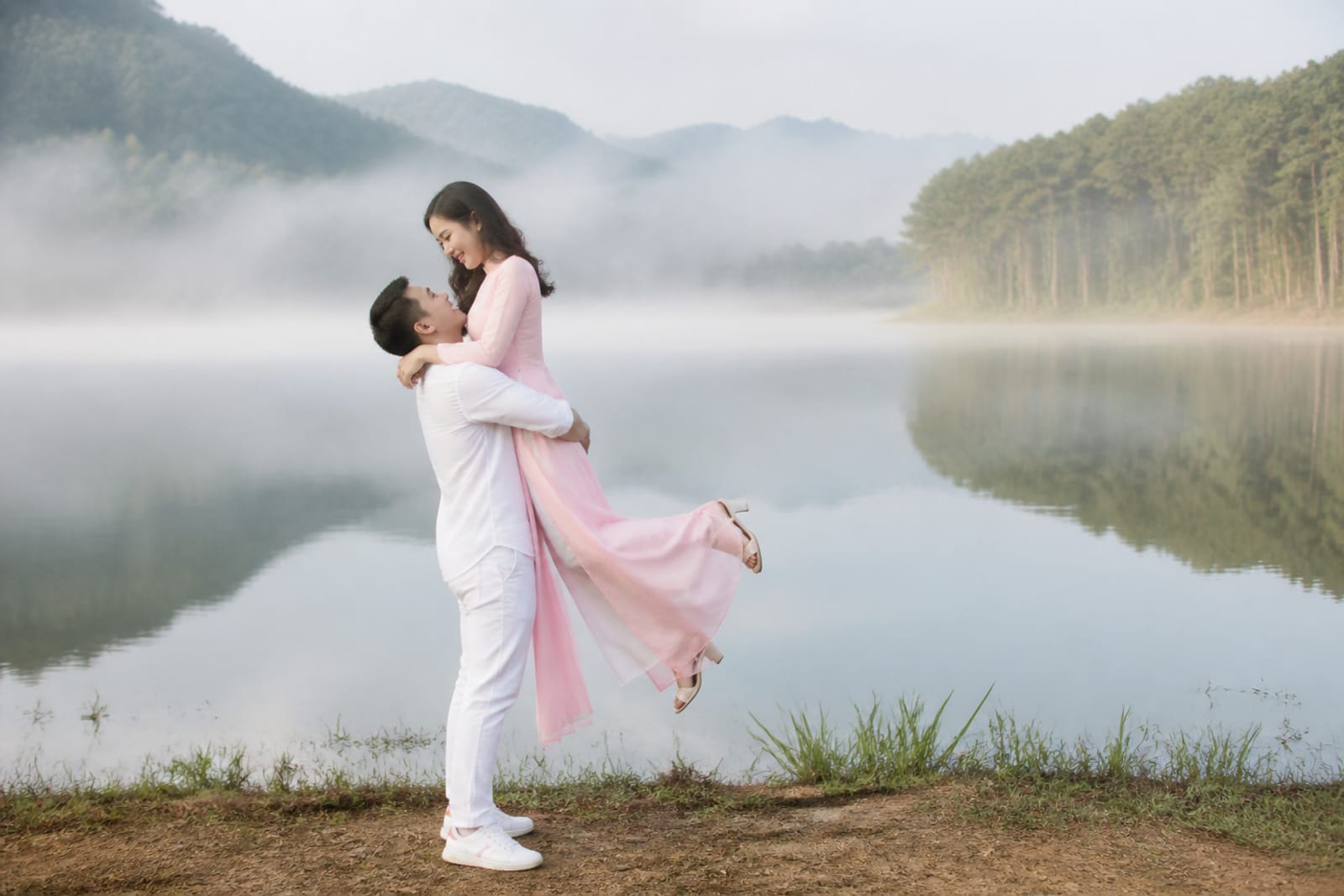
Xuan Huong Lake (sunrise, 6–7 a.m., cool side light): wide lake views, natural mist. Best for couple walks and reflections. Moderate walking effort; accessible parking near the lake.
Dalat Flower Gardens (7–9 a.m., soft overcast): formal backdrop, rows of blooms, pavilions. Best for ao dai solo and couple frames. Enclosed space; some paths narrow.
Tea plantations (7–8 a.m., side light through rows): terraced slopes, rich greens. Best for walking shots and detail frames. Uphill walking; early light critical to avoid harsh midday contrast.
Highway 20 pine forest (7–8 a.m., dappled light): tall pines, natural canopy. Best for solo and couple close-up frames. Uneven ground; light changes fast as cloud shifts.
Ankroet Falls (6–7 a.m., cool, diffuse): small waterfall, moss-covered rocks, intimate framing. Best for couple detail and movement. Slippery rocks; avoid wet season.
For a pre-wedding or elopement shoot, combine two locations (e.g., lake + garden) in one morning. Ask your photographer to arrive 30 minutes early to scout light and framing.
---
What to check before you book a Da Lat wedding photoshoot
- Photographer's highland experience: ask for examples shot in Da Lat or similar highland terrain; mist and altitude change how lenses focus and color renders.
- Travel logistics: if Cáo Studio is not based in Da Lat, confirm travel dates and whether travel time is built into your session or quoted separately on WhatsApp.
- Backup date: book with a rain clause; Da Lat's weather can shift fast in shoulder season (Apr, Oct).
- Ao dai fit and color: order or rent 2–3 weeks ahead so you can approve color and fit in photos before the shoot day.
- Makeup and hair: highland air is cool and humidity is lower than the coast, so makeup wears longer—but mist can affect eyeshadow blending; confirm your stylist has highland experience.
- Light timing: insist on starting before 7 a.m.; after 9 a.m., mist disperses and contrast hardens.
---
More from Cáo Studio
Interested in traditional wedding aesthetics outside Da Lat? Cáo Studio's ao dai photoshoots in Hanoi and Ho Chi Minh City work year-round in urban and rural settings. For couples and families, see couple & family photoshoots. Makeup and hair at your hotel are available in all three cities—ask about highland-suited makeup on WhatsApp.
---
FAQ
Can Cáo Studio shoot in Da Lat, or do I need to hire a local photographer?
Cáo Studio is based in Hanoi, Ho Chi Minh City and Hoi An. For Da Lat, ask on WhatsApp about travel availability and dates. Otherwise, hire a local Da Lat photographer with portfolio work in highland light and misty conditions.
What's the difference between shooting in Da Lat versus the coast (Hoi An, Da Nang)?
Da Lat's cool, misty highlands suit formal ao dai and muted tones; the coast is brighter, warmer, and better for pastels and beachside frames. Da Lat has fewer crowds and a "retreat" feel; coastal towns are busier. Choose based on your aesthetic and season—coastal is reliable year-round; Da Lat is seasonal (Dec–Apr only).
Do I need to rent an ao dai, or can I bring my own?
Either works. Rentals suit photography because they're pre-styled for light and movement. If you bring your own, confirm it's freshly pressed and the fit allows walking and sitting naturally. Cáo Studio partners can advise on fit—ask on WhatsApp.
How early do I need to wake up for a Da Lat shoot?
Aim for a 5:30–6 a.m. start to catch mist and soft side light. By 10 a.m., mist lifts and light hardens. A typical session includes travel time, makeup on location, and 2–3 hour shooting window. Confirm exact timing on WhatsApp.
What if it rains on my shoot day?
Morning shoots (before 9 a.m.) in dry season (Dec–Apr) rarely hit rain. If you book in rainy season (May–Nov) or shoulder months, confirm a backup date in your booking. Da Lat's infrastructure for indoor alternative shoots is limited—plan early.
Should I include temple or shrine visits in my Da Lat wedding shoot?
Yes, if the space has good light and your photographer scouts it first. Temples in Da Lat are smaller and less crowded than lowland temples; avoid midday indoor ceremonies with poor light. Ask your photographer to visit 48 hours ahead to check light and permissions.
FAQ
Can Cáo Studio shoot in Da Lat, or do I need to hire a local photographer?
Cáo Studio is based in Hanoi, Ho Chi Minh City and Hoi An. For Da Lat, ask on WhatsApp about travel availability and dates. Otherwise, hire a local Da Lat photographer with portfolio work in highland light and misty conditions.
What's the difference between shooting in Da Lat versus the coast (Hoi An, Da Nang)?
Da Lat's cool, misty highlands suit formal ao dai and muted tones; the coast is brighter, warmer, and better for pastels and beachside frames. Da Lat has fewer crowds and a "retreat" feel; coastal towns are busier. Choose based on your aesthetic and season—coastal is reliable year-round; Da Lat is seasonal (Dec–Apr only).
Do I need to rent an ao dai, or can I bring my own?
Either works. Rentals suit photography because they're pre-styled for light and movement. If you bring your own, confirm it's freshly pressed and the fit allows walking and sitting naturally. Cáo Studio partners can advise on fit—ask on WhatsApp.
How early do I need to wake up for a Da Lat shoot?
Aim for a 5:30–6 a.m. start to catch mist and soft side light. By 10 a.m., mist lifts and light hardens. A typical session includes travel time, makeup on location, and 2–3 hour shooting window. Confirm exact timing on WhatsApp.
What if it rains on my shoot day?
Morning shoots (before 9 a.m.) in dry season (Dec–Apr) rarely hit rain. If you book in rainy season (May–Nov) or shoulder months, confirm a backup date in your booking. Da Lat's infrastructure for indoor alternative shoots is limited—plan early.
Should I include temple or shrine visits in my Da Lat wedding shoot?
Yes, if the space has good light and your photographer scouts it first. Temples in Da Lat are smaller and less crowded than lowland temples; avoid midday indoor ceremonies with poor light. Ask your photographer to visit 48 hours ahead to check light and permissions.
Ao dai, makeup, hair and a local photographer in Hanoi or Saigon — one WhatsApp message.