/ao-dai-photoshoot
Traditional Vietnamese wedding elements for Ha Giang photos
Traditional Vietnamese wedding elements—ao dai, silk accents, flower crowns, temple settings, and ceremonial poses—transform in Ha Giang's high-altitude, grey-winter light and golden autumn air. The region is not urban: shoots here are part of a multi-day trip, involve winding mountain roads and require a photographer experienced in both wedding styling and remote logistics. Cáo Studio does not operate in Ha Giang; the region falls outside our Hanoi, Ho Chi Minh City and Hoi An bases. If you're committed to Ha Giang, you'll need a local photographer vetted for mountain light, ao dai handling, and safety on narrow roads. Plan for October–November (buckwheat flowers, clear skies) or December–February (cool, grey, intimate mood); avoid May–September (heavy rains, landslides). Budget time for the drive and a creative partner who understands both tradition and the specific challenges of shooting at altitude. 📸 Book on WhatsApp — ao dai photoshoot | 🌸 See the lookbook ---
Which traditional elements translate best to mountain light?
Ao dai in jewel tones—deep emerald, sapphire, burgundy—reads stronger against Ha Giang's muted winter palette than pastels. Silk flowers (not fresh bouquets that wilt on long drives) stay composed through full-day shoots. Temple backdrops work only if you arrive early: Ha Giang's small villages fill quickly with motorbikes and locals by mid-morning. Ceremonial jewelry—gold hairpieces, layered necklaces, bangles—catches low, side light beautifully at dawn or late afternoon. Avoid heavy makeup designed for tropical sun: the cool air and grey skies demand a softer base and emphasis on lips and eyes. Your photographer must understand that traditional poses (sitting, formal profile) flatten in mountain light; movement—walking between rice terraces, turning toward each other at a temple gate—creates depth.
Conclusion: jewel-tone ao dai, silk flowers, and dawn or dusk timing unlock the cinematic potential of traditional wedding elements in Ha Giang's landscape.
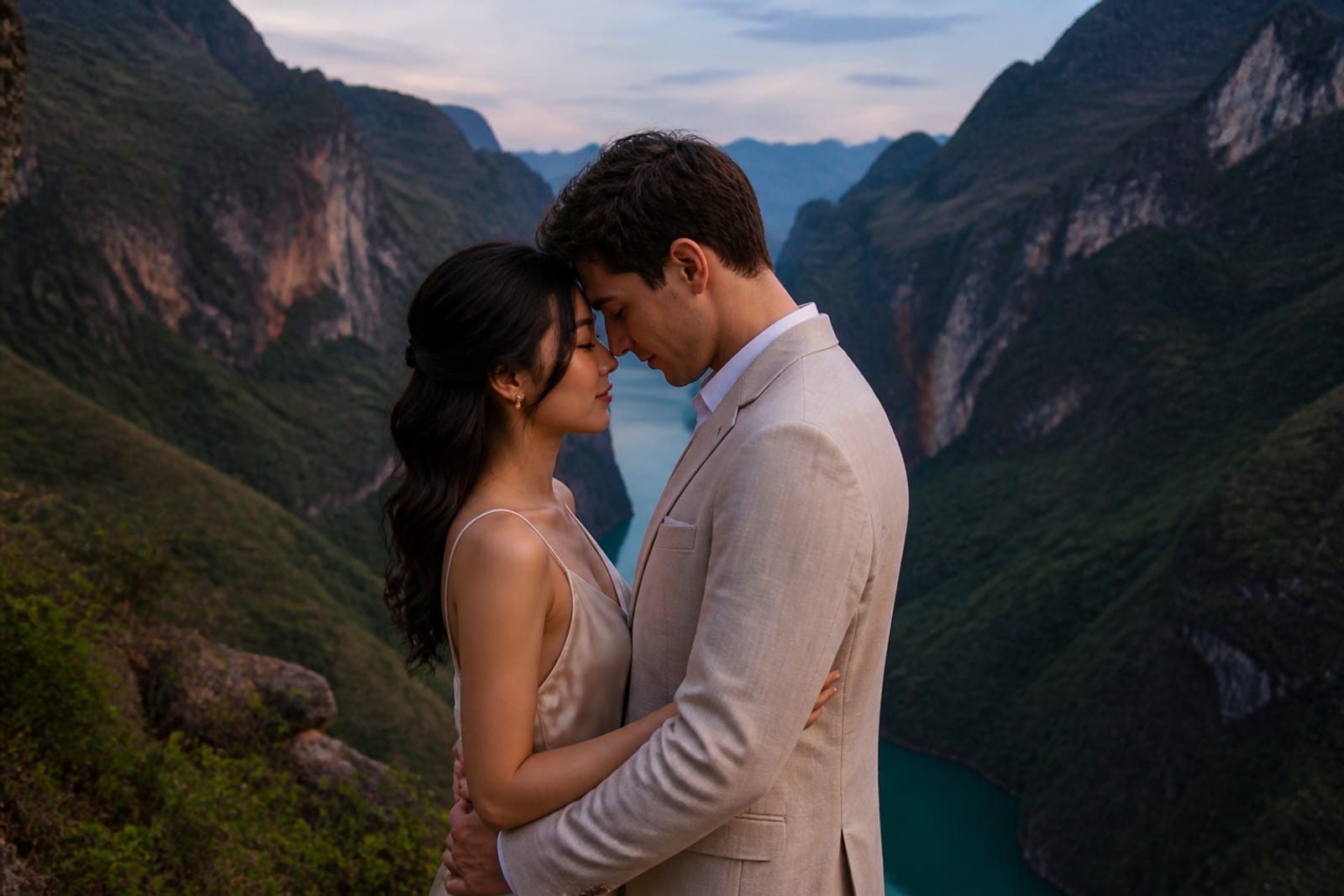
When does Ha Giang light actually favor traditional wedding styling?
October–November brings buckwheat flowers (white, magenta blooms on ridgelines), clear skies and cool air that keeps silk and makeup intact. Side light at 6:00–6:45 am and 4:30–5:30 pm wraps around ao dai embroidery and highlights temple stone. December–February is grey and cool—intimate, moody, perfect for couples who want ceremony without spectacle; the muted sky flatters jewel-tone fabric without blowing highlights. May–September means afternoon downpours, landslides on mountain roads, and grey-white overcast that erases shadow and depth. Tet (late January–mid February) closes many villages for several days and crowds remaining attractions. Plan a shoot at least 6–8 weeks ahead; mountain weather and road conditions demand a local photographer who can scout locations and time the light to the hour.
Conclusion: October–November and December–February are the only practical windows; each demands different styling and a photographer who knows the region's light patterns.
Should you rent or bring ao dai to Ha Giang?
| Approach | Best for | Logistics | Why it works |
|---|---|---|---|
| Rental (Hanoi before departure) | Travellers flying in; couples wanting multiple outfits | Rent 2–3 days before, collect from Hanoi studio, carry on motorbike or car | No baggage worry; local tailor can adjust fit same day |
| Bring your own | Sentimental garment; family heirloom; perfect fit guaranteed | Pack flat in cabin baggage; dry-clean before you leave home | Emotional weight elevates frames; no rental timeline stress |
| Rent locally (if available) | Last-minute bookings; trying styles you're unsure of | Ask your photographer; limited stock in mountain towns | Reduces transport risk but selection is narrow |
Ha Giang has no ao dai rental shops: rent before you leave your home city or collect from Cáo Studio's Hanoi base a day or two before you drive north. Silk creases and dust from mountain roads—pack garment bags and plan a gentle steam or press the evening before your shoot. If you're wearing an heirloom ao dai, bring a second outfit (casual dress or second ao dai in a different color) so your photographer can capture both ceremony and intimacy. Never travel with an ao dai on a motorbike without a protective bag; potholes and dust damage silk.
Conclusion: rent or collect ao dai in Hanoi; carry it carefully; bring a backup outfit to maximize your shoot's visual range.
How do you frame traditional elements without looking staged?
Mountain landscapes compress perspective: a temple 50 metres away looks close in the frame, and traditional poses (standing still, hand-on-chest) feel frozen against epic backdrop. Instead, ask your photographer to shoot you walking toward the temple, turning to look at each other mid-step, or sitting on the temple steps with the valley behind you. Flowers should be held loosely, carried in one hand, or tucked into your ao dai sash—never extended stiffly toward the camera. If you want a formal ceremony shot (exchange of rings, vows at an altar), do it once, quickly, then move into movement-based frames: walking out of the frame, hand-in-hand, looking back. Your photographer should shoot wide first (full landscape, you two small in it), then medium (waist-up, showing fabric and expression), then close (hands, flower detail, ao dai embroidery). This three-step sequence takes 15–20 minutes per location and yields a narrative, not a pose collection.
Conclusion: motion, layered framing and intimate details make traditional styling feel authentic, not ceremonial.
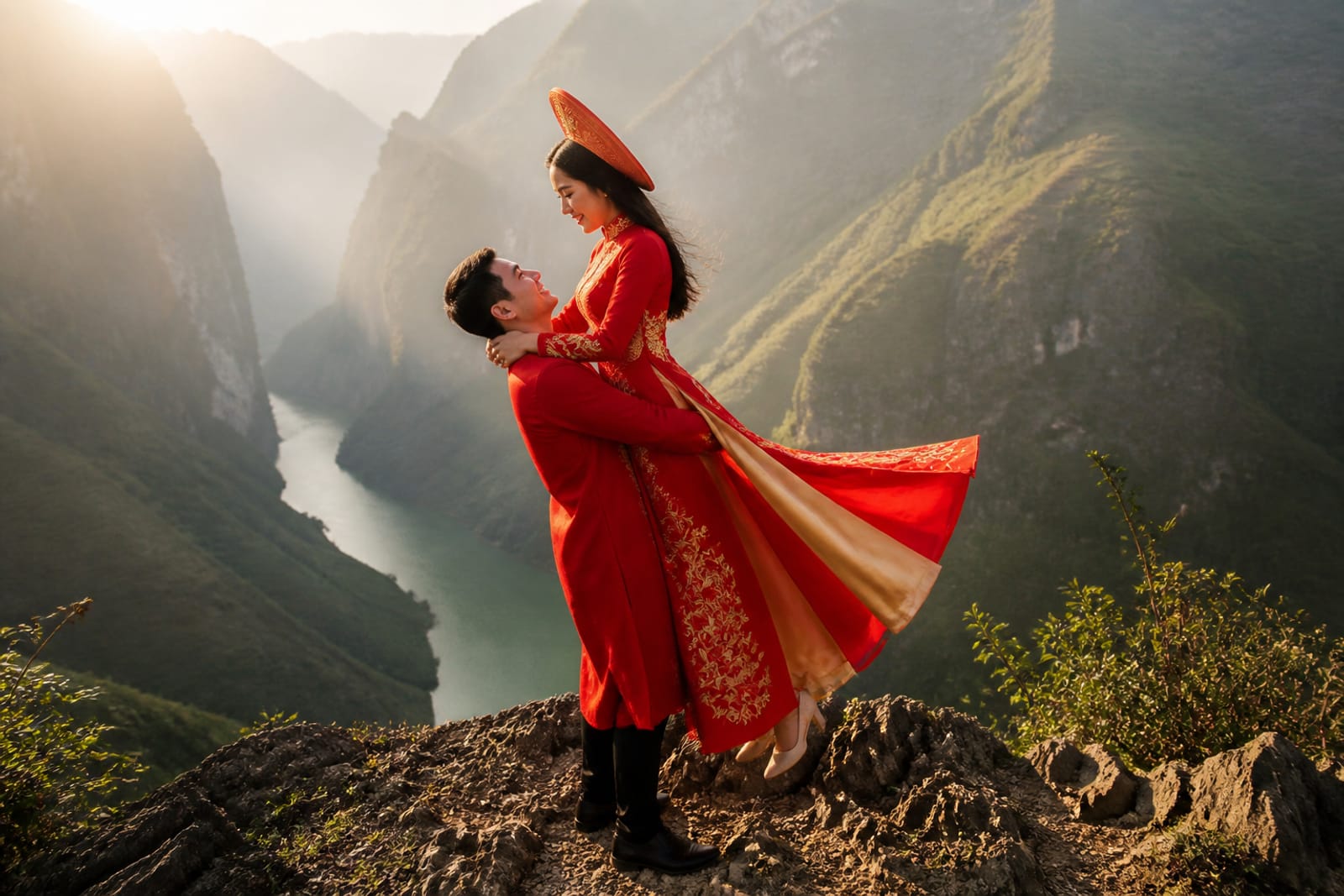
What do you check before booking a Ha Giang photographer?
- Mountain experience: Ask if they've shot ao dai in Hoa Binh, Sapa or Ha Giang before. Tropical studio photographers often overexpose sky or underexpose fabric in high-altitude light.
- Ao dai handling: Do they know how to style silk for motion? Have they worked with rental garments? Can they steam or press before a shoot?
- Transport & safety: Can they navigate mountain roads safely? Do they scout locations beforehand? What's their backup plan if weather closes roads?
- Editing timeline: Ask for a delivery schedule. Mountain shoots often involve longer editing (low light, mist, shadow detail). Confirm this fits your travel dates.
- Weather contingency: What happens if October rain or November fog rolls in? Do they have indoor backups (temple interiors, village homes)?
- Flower sourcing: If silk flowers aren't included, who supplies them? Can they coordinate with local florists, or do you bring them?
- References: Ask for recent Ha Giang couples or wedding shoots. Real examples show whether they understand your vision.
Don't book solely on Instagram aesthetics: ask technical questions, see behind-the-scenes edits, and verify they've worked in mountain light specifically.
Does Cáo Studio cover Ha Giang photoshoots?
No. Cáo Studio operates in Hanoi, Ho Chi Minh City and Hoi An (by appointment). Ha Giang's remote location, winding roads and weather volatility require a photographer based in or familiar with the region. If you're committed to a Ha Giang shoot and want professional ao dai styling and makeup, book your hair and makeup session in Hanoi before you travel north—our team can prep you, advise on ao dai care for mountain roads, and recommend local photographers they trust. Alternatively, consider a couple or family photoshoot in Hanoi with mountain-adjacent backdrops (Ba Vi, Tram Tau, Thac Ba), where our team handles everything in one booking and completes edits in 48 hours.
📸 Book on WhatsApp — ao dai photoshoot | 💄 Makeup & hair at your hotel | 🌸 See the lookbook
---
What to check before you book
- Shoot date & season: October–November or December–February only. Confirm your photographer can deliver edits before you leave Vietnam.
- Ao dai source: Rent in your home city, collect in Hanoi, or bring your own. Confirm fit and care plan with your photographer 1–2 weeks before.
- Weather plan: Ask your photographer's backup locations and rescheduling policy if roads close or weather prevents the original plan.
- Transport & logistics: Will your photographer arrange your ride, or do you hire a driver separately? Who carries equipment on winding roads?
- Edited file delivery: Confirm timeline, file format and whether a short film is included. Mountain shoots often take longer to edit.
- References: Request 2–3 recent Ha Giang couple or wedding shoots. Ask those couples directly about their experience.
- Cost factors, not amounts: Budget for longer travel time, potential weather delays, multiple outfits (ao dai rental or bring a backup), and local logistics. Ask your photographer to quote on WhatsApp after you confirm dates and locations.
---
FAQ
Can Cáo Studio photograph my Ha Giang wedding or pre-wedding shoot?
No. Cáo Studio operates in Hanoi, Ho Chi Minh City and Hoi An only. For Ha Giang, you'll need a local photographer experienced in mountain light and ao dai handling. We can prep you with makeup & hair in Hanoi before you travel north.
What's the best time of year for traditional wedding elements in Ha Giang?
October–November (buckwheat flowers, clear skies) or December–February (cool, grey, intimate mood). May–September brings heavy rains, landslides and grey overcast that flatten light. Avoid late January–mid February (Tet closures and crowds).
Should I rent ao dai or bring my own to Ha Giang?
Rent or collect ao dai in Hanoi 1–2 days before your shoot; Ha Giang has no rental shops. Bring a protective garment bag. Pack a backup outfit (casual dress or second ao dai) to expand your shoot's visual range and allow your photographer to capture both ceremony and intimacy.
How do I make sure my Ha Giang photographer understands traditional wedding styling and mountain light?
Ask for portfolio examples from Ha Giang, Sapa or Hoa Binh. Confirm they've worked with ao dai in high-altitude light. Discuss how they'll frame traditional elements (temple backdrops, ceremonial poses) to avoid stiffness. Request references from recent couples and speak to them directly about their experience.
What's a realistic budget range and timeline for a Ha Giang photoshoot?
Costs depend on travel distance, number of outfits, flower sourcing and editing timeline—ask your photographer to quote on WhatsApp after you confirm dates and locations. Plan at least 6–8 weeks ahead so your photographer can scout locations and secure reliable transport.
Can I book Cáo Studio for makeup & hair if I'm shooting in Ha Giang with another photographer?
Yes. Contact us on WhatsApp to arrange a session at your Hanoi hotel or studio before you travel. We'll style you for mountain light and can advise on ao dai care and local photographer recommendations.
FAQ
Can Cáo Studio photograph my Ha Giang wedding or pre-wedding shoot?
No. Cáo Studio operates in Hanoi, Ho Chi Minh City and Hoi An only. For Ha Giang, you'll need a local photographer experienced in mountain light and ao dai handling. We can prep you with makeup & hair in Hanoi before you travel north.
What's the best time of year for traditional wedding elements in Ha Giang?
October–November (buckwheat flowers, clear skies) or December–February (cool, grey, intimate mood). May–September brings heavy rains, landslides and grey overcast that flatten light. Avoid late January–mid February (Tet closures and crowds).
Should I rent ao dai or bring my own to Ha Giang?
Rent or collect ao dai in Hanoi 1–2 days before your shoot; Ha Giang has no rental shops. Bring a protective garment bag. Pack a backup outfit (casual dress or second ao dai) to expand your shoot's visual range and allow your photographer to capture both ceremony and intimacy.
How do I make sure my Ha Giang photographer understands traditional wedding styling and mountain light?
Ask for portfolio examples from Ha Giang, Sapa or Hoa Binh. Confirm they've worked with ao dai in high-altitude light. Discuss how they'll frame traditional elements (temple backdrops, ceremonial poses) to avoid stiffness. Request references from recent couples and speak to them directly about their experience.
What's a realistic budget range and timeline for a Ha Giang photoshoot?
Costs depend on travel distance, number of outfits, flower sourcing and editing timeline—ask your photographer to quote on WhatsApp after you confirm dates and locations. Plan at least 6–8 weeks ahead so your photographer can scout locations and secure reliable transport.
Can I book Cáo Studio for makeup & hair if I'm shooting in Ha Giang with another photographer?
Yes. Contact us on WhatsApp to arrange a session at your [Hanoi hotel](/makeup-and-hair) or studio before you travel. We'll style you for mountain light and can advise on ao dai care and local photographer recommendations.
Ao dai, makeup, hair and a local photographer in Hanoi or Saigon — one WhatsApp message.