/ao-dai-photoshoot
Traditional Vietnamese wedding elements for Hue photos
Traditional Vietnamese wedding elements—ao dai, temple incense, royal tomb grounds, silk sashes and family jewelry—frame best in Hue between February and April, when the light is soft and the rainy season hasn't started. The Imperial City requires permits and can feel crowded mid-morning; early starts (6–7 am) yield empty courtyards and warm side light. Cáo Studio does not operate in Hue, but our Hanoi and Ho Chi Minh City teams have shot countless ao dai sessions; we can guide you toward vetting a local Hue photographer who understands directed frames (walking, looking at each other, real light) over stiff poses. Key decisions: indoor royal tomb shoots need fast film and a photographer comfortable in dim light; outdoor temple sessions depend on weather and entrance restrictions; ao dai rental, makeup and hair coordination should all come from one vendor or be tightly scheduled to avoid delays. 📸 Book on WhatsApp — ao dai photoshoot
Why does Hue suit traditional Vietnamese wedding photos?
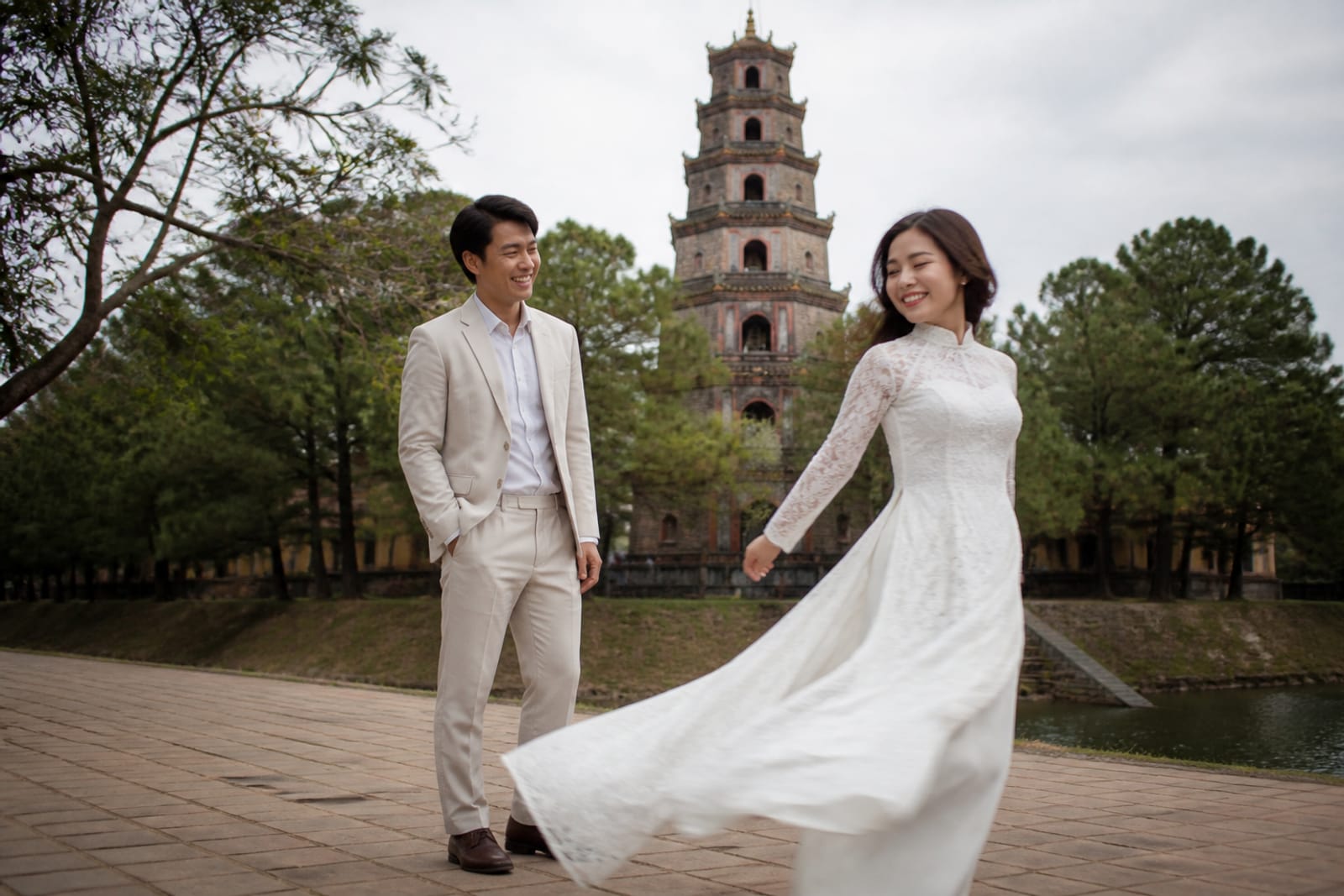
Hue sits on Vietnam's central coast, where the Perfume River threads through layered history—the walled Imperial City, the Forbidden Purple City, royal tombs dotting jungle hillsides, and centuries-old temples with red pillars and incense smoke. No other Vietnamese city packs this many authentic, camera-ready backdrops within 30 minutes' drive. The ao dai (long silk tunic) reads as a statement against Hue's architecture; temple grounds give natural framing; early-morning light on the river feels cinematic without effort. Local photographers know these locations intimately, but the deciding factor is whether they shoot directed (guiding you to walk, pause, look at each other in real light) or posed (stiff arrangements facing the camera). Hue's best photoshoot advantage is its quietness early in the day—tourist crowds arrive 9 am onward, leaving the 6–8 am window to your team alone.
When is the best season to shoot traditional elements in Hue?
Hue's climate is wetter and less predictable than other central-coast cities. February through April offers the driest window and warmest, most stable light; rain is rare and brief. May to August brings intense heat and occasional afternoon showers that ruin unprepared shoots. September to December is the heavy rain and flood season—October and November are worst, with typhoons and multi-hour downpours that close road access to royal tombs and temples. Tet (late January to mid-February) coincides with acceptable weather but brings crowds and reduced services; many vendors close for the holiday, making coordination harder. If you're set on winter (December to January), pack contingency days and accept grey skies over the river—the upside is near-empty temples and fewer tourists in background frames. Book your local photographer at least two months ahead; Hue's best teams fill up March–April quickly.
How do you work with a local Hue photographer versus traveling with a team?
| Option | Best for | Season & light notes | Why it works—and what to watch |
|---|---|---|---|
| Hire local Hue photographer | Budget-conscious couples; relaxed day with local guide; exploring multiple tombs over 6–8 hours. | Feb–Apr: soft morning light, stable weather. May–Aug: heat and midday glare; shoot early or late. Sep–Dec: rain risk; check forecasts daily. | Local knows tomb access, permits, temple rules. Risk: may default to posed frames if you don't brief them on movement and real light. Use a shot list with walking + pausing examples. |
| Travel with Cáo Studio team (Hanoi/HCMC base) | Couples who want one coordinated vendor; ao dai rental, makeup and hair all in one booking; directed frames (no poses); 48-hour edit turnaround. | Feb–Apr: ideal. May–Aug: very hot; early start essential. Sep–Dec: rain; plan 1–2 backup days. | Cáo Studio shoots only in Hanoi, Ho Chi Minh City and Hoi An by appointment. For Hue, we can guide you on vetting a local team or you can book our Hanoi team and fly us in (travel cost factor increases). |
| Hybrid: rental + local hair/makeup + local photographer | Couples splitting the load; want ao dai from a reliable shop; local beauty services; independent photographer. | Same climate constraints as local hire. | Most affordable. Risk: three vendors = three communication chains; delays cascade. Sync everyone's start time and location in writing 48 hours before. |
What traditional elements photograph best and why?
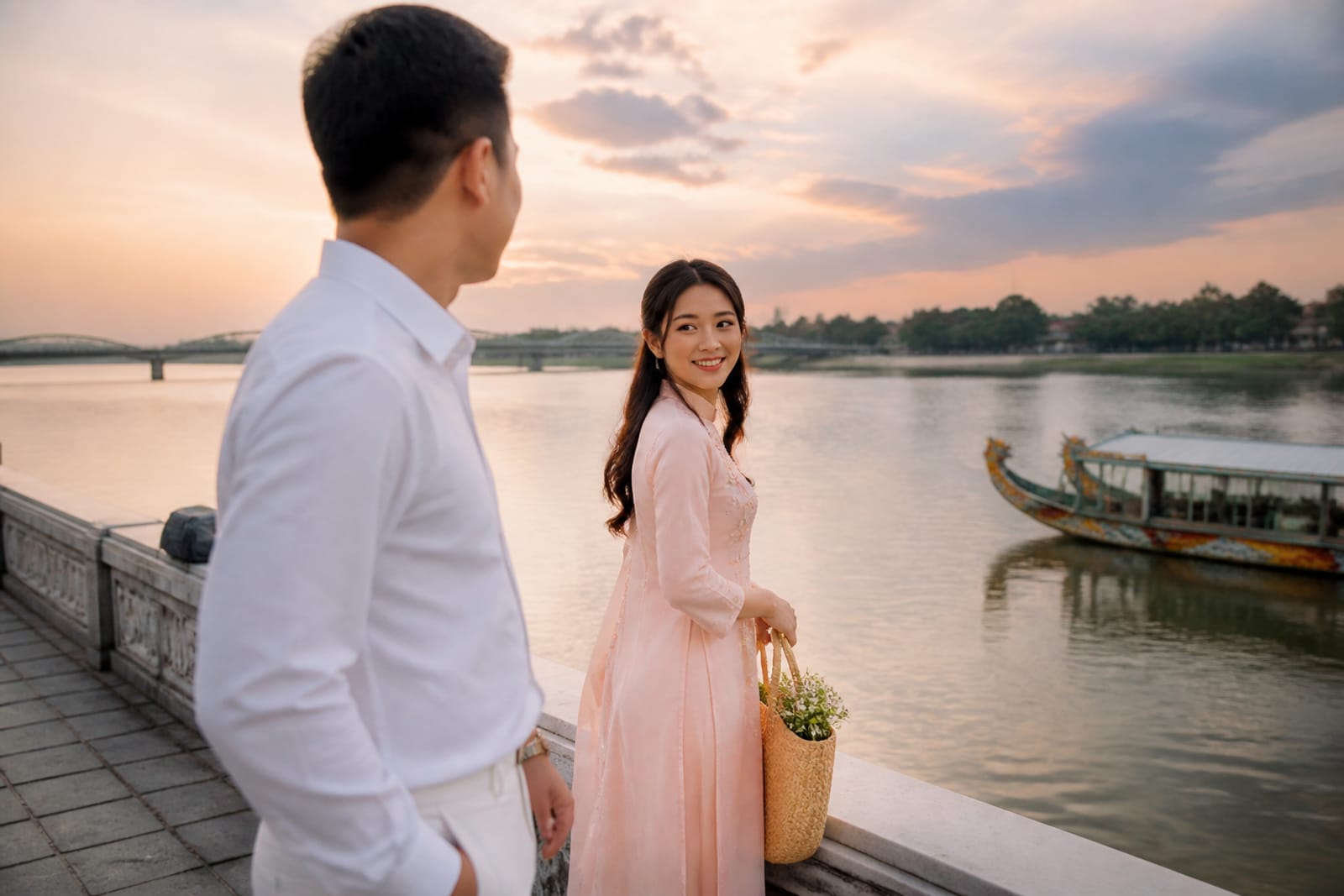
Ao dai (silk tunic). The ao dai is the foundation—its long, flowing silhouette interacts beautifully with movement and wind. Early morning along the Perfume River, a bride walking away from the camera in white ao dai with side light catching the silk reads as pure cinema. Rent from a Hue shop known for fit and quality; a poorly cut ao dai bunches at the shoulders and looks cheap on film. Confirm the fit two days before the shoot.
Temple incense and lanterns. Smoke from temple incense adds depth and atmosphere to frames; it's not staged, it's ambient. Shoot during morning prayer hours (6–7 am) when incense is thickest. Be respectful—temples restrict photography in prayer areas; ask permission and never pose in front of active altars.
Royal tomb grounds. The Khai Dinh and Tu Duc tombs are the most photogenic. Stone steps, moss-covered walls and jungle canopy create layered backgrounds. Permits are required; hire a local guide who can fast-track access and suggest the least-crowded entry times. Afternoon side light on tomb steps is warm but brief (30 minutes, 4–5 pm in Feb–Apr; much shorter in summer).
Jewelry and hair ornaments. Delicate gold ear studs, a traditional comb or flower crown in the hair, a silk sash—these read as texture in close-up frames. Bring heirloom pieces or borrow from family; modern costume jewelry looks plastic on high-resolution digital. Have the photographer shoot detail frames (rings, flowers, face framing) alongside wide and medium shots.
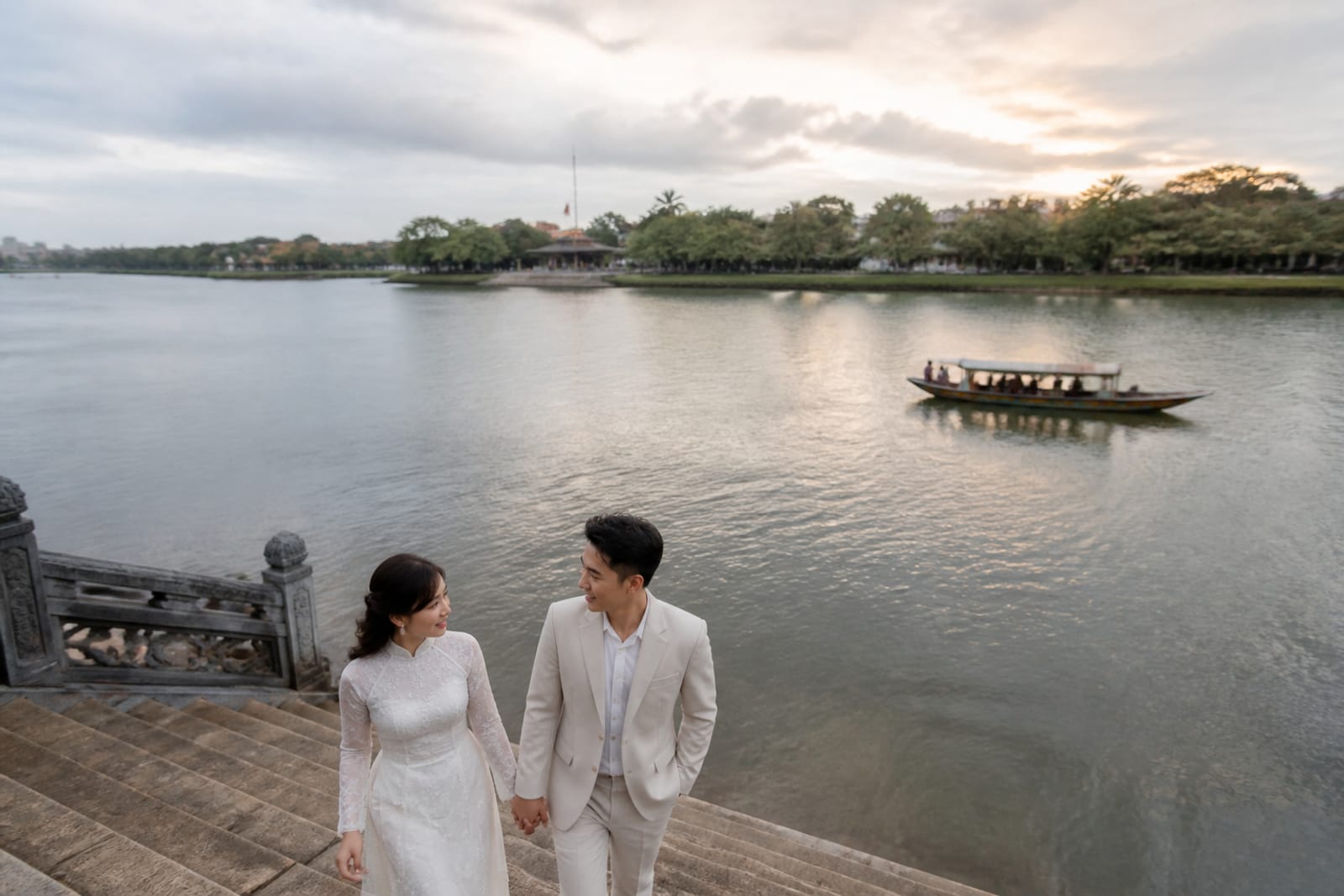
River backdrop (Perfume River). The river is Hue's spine. Sunrise frames with you both standing at a low stone wall, the river misty behind you, are iconic. But crowds arrive by 8 am; book a 6:15 am start to catch the light and solitude. The riverbank is public; no permits needed, but avoid slippery stones after rain.
How do you coordinate ao dai rental, makeup and hair in Hue?
Hue has reputable ao dai rental shops, but quality varies widely. Ask for recommendations from your local photographer or your hotel concierge—they'll know which shops deliver pressed, well-fitted pieces and not damaged stock. Order the ao dai at least three weeks ahead; confirm sizing via video call or in person. Pickup is usually 1–2 days before the shoot; arrange for it to be pressed and ready morning-of.
Hair and makeup in Hue are cheaper than Hanoi or Ho Chi Minh City, but artist skill is inconsistent. Book a stylist who has worked with brides and understands that heavy makeup photographs differently than in-person makeup—less powder, more dimension. Many stylists will travel to your hotel or the shoot location for a modest fee. Start hair and makeup two hours before your first shoot time; ao dai takes 15–20 minutes to put on correctly (helpers speed this up). If you rent ao dai and hire hair/makeup separately, have one person (you, or a trusted family member) as the point person; miscommunication between vendors wastes an hour.
Alternatively, if you're flying in photographers or coordinators from Hanoi, budget for them to liaise via WhatsApp with local vendors the week before. Clear, written confirmations in Vietnamese (use Google Translate and ask your hotel to review) reduce delays.
What permits and restrictions apply to Hue temples and tombs?
Entry to the Imperial City requires a ticket; check the current price on the official Hue Monuments website. Photography is allowed throughout most of the complex, but some restored chambers may restrict tripods or professional lighting gear—ask at the gate. Royal tombs (Khai Dinh, Tu Duc, Minh Mang, Thieu Tri) each require separate entry tickets. Tu Duc is the largest and most visited; arrive before 7 am or after 3 pm to avoid groups.
Temples (Thien Mu, Linh Mu) are active religious sites. Remove shoes in prayer areas, dress modestly, and ask permission before photographing monks or altars. Most temples welcome visitors and photographers before 8 am when tourism is light and morning rituals are happening—this is also the best light window. Avoid midday (10 am–2 pm) when harsh overhead sun flattens frames and crowds peak.
Professional photographers may need to register or pay a small daily permit fee; your local photographer will know current requirements. Check at each site 24 hours before your shoot to confirm any temporary closures or festivals that affect access.
How do you vet a local Hue photographer if Cáo Studio doesn't operate there?
Start by asking your hotel concierge and ao dai rental shop for photographer recommendations. Look at their portfolio with these questions: Do their frames show movement (couples walking, laughing, looking at each other), or just posed standing? Are their colors natural or oversaturated? Do temple and tomb shots have depth and real light, or do they look flat and flash-lit? Ask for references from international clients (not family); call or message one.
Confirm in writing (via WhatsApp or email translated to Vietnamese): start time, shoot duration, location(s), number of edited photos, delivery timeline, and whether they'll coordinate with your hair/makeup vendor. Ask if they've shot ao dai in your chosen locations before—specific knowledge beats generic portfolio. If they hesitate about directed frames or pushing back on poses, find someone else. A good photographer will send you a shot list or ask what story you want to tell, not just ask "what poses do you like?"
Schedule a 15-minute video call before booking; gauge whether they listen and ask clarifying questions. Red flags: they quote a price in an uncertain way, they don't ask about your vision, or they can't explain how they'll handle midday sun at royal tombs. Trust your gut.
📸 Book on WhatsApp — ao dai photoshoot
What to check before you book a Hue wedding photoshoot
- Photographer style: ask for frames that show walking, movement and real light—not stiff poses.
- Ao dai fit: order early, confirm sizing via video, pick up 1–2 days prior, and have it pressed.
- Hair and makeup: book a stylist with bride experience; confirm they understand photo makeup ≠ in-person makeup. Sync their timing with ao dai arrival.
- Permits and access: if hiring a local photographer, confirm they'll handle temple and tomb tickets and any professional photo permits. Visit each location's website or call ahead.
- Weather contingency: book a backup day if shooting Sep–Dec (rain risk). Feb–Apr weather is stable; still check forecasts 48 hours prior.
- Coordination: if using separate vendors (rental shop, stylist, photographer), assign one person to be the point contact; confirm all start times and locations in writing 48 hours before.
- Light timing: commit to early morning (6–8 am) for best light and empty locations. Afternoon tomb sessions are warm but brief; plan accordingly.
- Shot list: send your photographer 5–10 examples of frames you love (from lookbooks, Pinterest) and describe your day's story—temple first, then river, then tomb—so they know what to prioritize.
---
Why Cáo Studio works differently
If you're choosing between a local Hue photographer and traveling with a coordinated team, explore our ao dai photoshoot in Hanoi or Ho Chi Minh City. Our model puts one director, one makeup artist, one stylist and one photographer on the same team—no miscommunication, one message. We shoot directed frames (real light, movement, story) and edit in 48 hours. For Hue, we can guide you, but we operate in Hanoi, Ho Chi Minh City and Hoi An by appointment—contact us on WhatsApp to discuss flying a team in (travel cost factor applies) or to vet a local Hue photographer using our framework.
---
FAQ
Do I need a permit to shoot a wedding photoshoot at Hue's Imperial City or royal tombs?
Yes. The Imperial City and each royal tomb require entry tickets; check current prices on the official Hue Monuments site. Professional photographers may need a daily photo permit—your local photographer should know this. Confirm 24 hours before your shoot.
What time of day has the best light for ao dai photos at temples in Hue?
Early morning (6–8 am) gives soft, golden side light and near-empty temples when monks are still at prayer. Temples close to tourists by 5 pm. Midday (10 am–2 pm) has harsh overhead sun and peak crowds—avoid it.
Can I rent an ao dai in Hue and have it adjusted if it doesn't fit?
Yes. Rent at least three weeks ahead, confirm sizing via video call, and pick up 1–2 days before your shoot so adjustments can be made. Quality varies; ask your photographer or hotel concierge for a trusted rental shop.
Is February–April really the best season for a Hue wedding photoshoot?
Yes. Feb–Apr is the driest window with stable, warm light and rare rain. May–Aug is very hot; Sep–Dec brings heavy rain and flooding (worst Oct–Nov). Tet (late Jan–mid Feb) has acceptable weather but crowds and reduced services.
How do I know if a Hue photographer will shoot directed frames instead of stiff poses?
Ask for portfolio examples showing movement (walking, looking at each other) and real light—not just standing poses. Ask references about their style. During a video call, brief them on movement and watch if they engage with the concept or push back. A good photographer asks clarifying questions.
Can Cáo Studio shoot my wedding photoshoot in Hue?
Cáo Studio operates in Hanoi, Ho Chi Minh City and Hoi An by appointment. We don't have a Hue base, but we can guide you on vetting a local photographer or discuss flying a team to Hue—contact us on WhatsApp to explore options and cost factors.
FAQ
Do I need a permit to shoot a wedding photoshoot at Hue's Imperial City or royal tombs?
Yes. The Imperial City and each royal tomb require entry tickets; check current prices on the official Hue Monuments site. Professional photographers may need a daily photo permit—your local photographer should know this. Confirm 24 hours before your shoot.
What time of day has the best light for ao dai photos at temples in Hue?
Early morning (6–8 am) gives soft, golden side light and near-empty temples when monks are still at prayer. Temples close to tourists by 5 pm. Midday (10 am–2 pm) has harsh overhead sun and peak crowds—avoid it.
Can I rent an ao dai in Hue and have it adjusted if it doesn't fit?
Yes. Rent at least three weeks ahead, confirm sizing via video call, and pick up 1–2 days before your shoot so adjustments can be made. Quality varies; ask your photographer or hotel concierge for a trusted rental shop.
Is February–April really the best season for a Hue wedding photoshoot?
Yes. Feb–Apr is the driest window with stable, warm light and rare rain. May–Aug is very hot; Sep–Dec brings heavy rain and flooding (worst Oct–Nov). Tet (late Jan–mid Feb) has acceptable weather but crowds and reduced services.
How do I know if a Hue photographer will shoot directed frames instead of stiff poses?
Ask for portfolio examples showing movement (walking, looking at each other) and real light—not just standing poses. Ask references about their style. During a video call, brief them on movement and watch if they engage with the concept or push back. A good photographer asks clarifying questions.
Can Cáo Studio shoot my wedding photoshoot in Hue?
Cáo Studio operates in Hanoi, Ho Chi Minh City and Hoi An by appointment. We don't have a Hue base, but we can guide you on vetting a local photographer or discuss flying a team to Hue—contact us on WhatsApp to explore options and cost factors.
Ao dai, makeup, hair and a local photographer in Hanoi or Saigon — one WhatsApp message.