/ao-dai-photoshoot
Traditional Vietnamese Wedding Elements for Moc Chau Photos
Moc Chau photoshoots combine traditional Vietnamese wedding elements—silk ao dai, gold jewelry, heirloom accessories—with the region's cool mist and tiered tea fields. Sessions work year-round but differ by season: winter (Dec–Feb) brings plum and cherry blossoms and cold, soft light; spring and autumn offer clear skies and sharp golden hours. Most shoots run 4–6 hours, moving between tea plantations, village paths, and the town's quieter corners. Light here is strongest mid-morning (7:30–10 am) and late afternoon (4–6 pm); midday is flat and harsh. Cáo Studio operates from Hanoi and Saigon; for Moc Chau shoots, ask on WhatsApp whether the team travels or can recommend a vetted local photographer who understands ao dai framing and Vietnam's mountain light. ---
What makes Moc Chau light different from Hanoi or Saigon?
Moc Chau sits 1,000 metres up; the air is cooler and often misty, especially Oct–Feb. This creates softer, diffused light—no harsh shadows on the face. The downside: midday is grey and flat; golden hours (sunrise to 8:30 am, 4:30 pm onward) are your window. Unlike Hanoi's urban grit or Saigon's tropical glare, Moc Chau light is gentle but narrow. Plan your shoot inside those windows, and move fast between locations.
📸 Book on WhatsApp — ao dai photoshoot
Which ao dai style works best in a mountain setting?
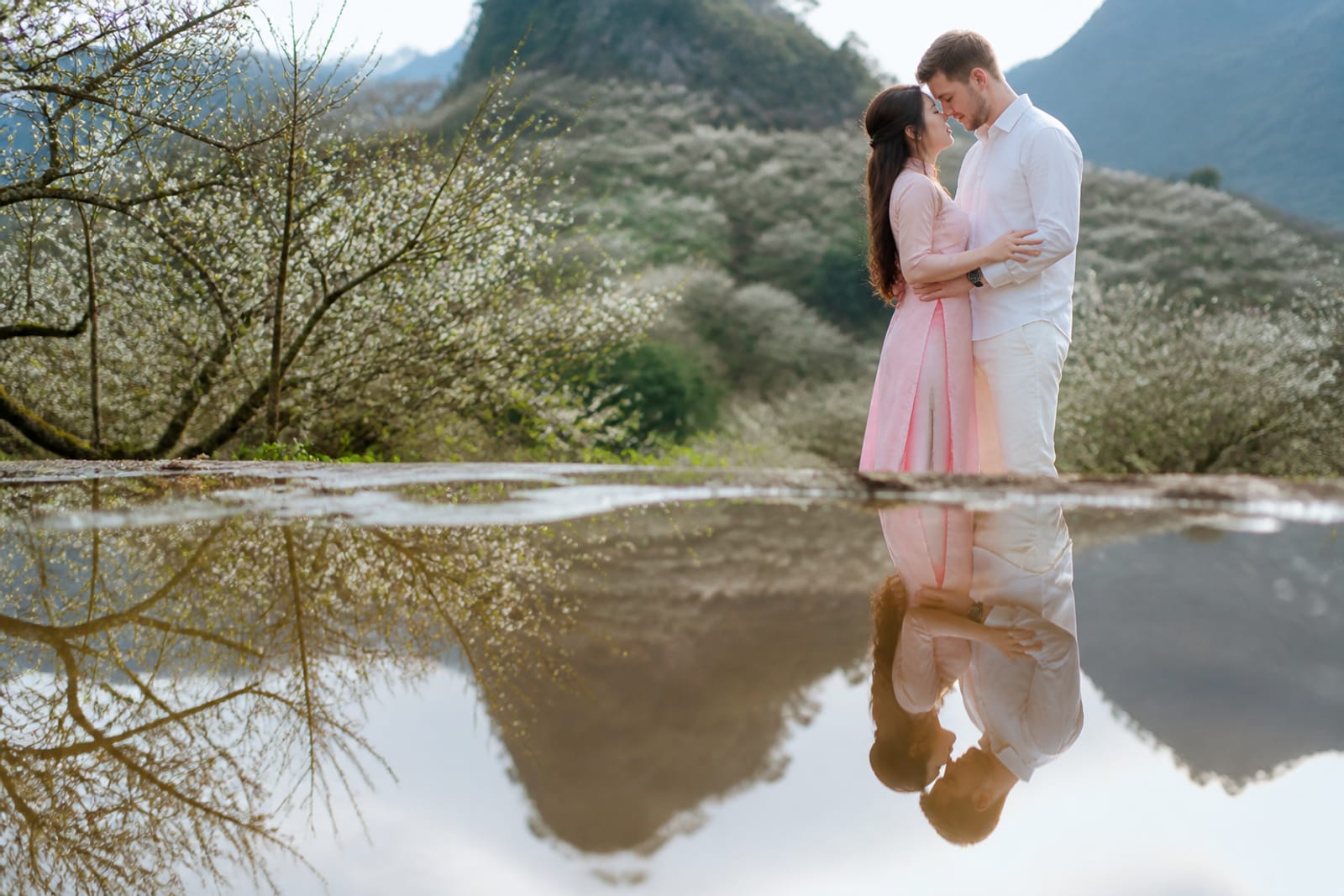
Tradition + practicality matters here. A full silk ao dai (undyed cream or soft pastels) photographs beautifully in Moc Chau's cool tones and doesn't compete with the tea hills. Bright reds or golds work too but read as formal; they suit portraits more than walking/movement shots. Avoid heavy embroidery that catches light unevenly on misty days. Pair it with a simple silk scarf (khăn đóng) rather than a structured veil—wind moves fabric more naturally in mountain shots. For the groom, a traditional silk áo ghi (tunic) or simple suit in cream or grey sits well against the greens. Check the fit before you travel: mountain paths are uneven, and a too-tight ao dai limits your walk and makes the photographer's job harder.
| Element | Best for | Why it works |
|---|---|---|
| Cream silk ao dai | Bridal/engagement | Tonal with mist; reads soft in dappled light |
| Pastel (pale blue, sage) | Couple shots | Complements tea-field greens; won't overpower landscape |
| Jewel red ao dai | Formal/standing portraits | Bold in grey mist; risky for candid walking shots |
| Simple silk scarf | Movement scenes | Wind-friendly; no stiff fabric lines |
| Embroidered áo ghi (groom) | Couple/groomsman shots | Reads cultural without wedding formality |
---
Should you hire a Moc Chau local or bring a team from the city?
Each has trade-offs. A local photographer knows light patterns month-by-month, village access, and private tea fields. But they may not shoot ao dai framing (silhouette, motion, fabric folds) the way a wedding specialist does. A team from Hanoi or Saigon brings ao dai expertise, makeup, styling, and consistency—but travel time (4+ hours from Hanoi) and coordination add cost factors (multiple vendors, back-and-forth logistics). Cáo Studio's model—one team handling photography, makeup, hair, and styling—works best if the team can travel to Moc Chau; ask on WhatsApp whether that's possible or whether they can recommend a vetted local who understands your vision. If choosing a local, ask to see 5–10 ao dai or wedding shoots in the same season and light you're planning. Watch for sharp faces, natural fabric movement, and frames where the couple is doing something (walking, adjusting a scarf) rather than posing.
---
What season gives you the best Moc Chau light and fewest crowds?
Winter (Dec–Feb) is peak: plum and cherry blossoms, soft mist, cool skin tones that flatter ao dai. But Tet (Lunar New Year, late Jan–mid Feb) closes many local services and draws crowds. Aim for early December or late February if you want blossoms without the holiday crush. Spring (Mar–Apr) is clear and windy—light is sharp but white shadows on faces can be harsh; consider overcast days. Autumn (Sep–Oct) has warm afternoon light but afternoon rain is common; plan morning shoots (6–8:30 am). Summer (May–Aug) is hot and humid; mist lifts early, leaving flat midday light. Based on light quality and ao dai comfort, Dec–Feb and Mar–Apr are strongest; Sep–Oct works if you book early morning.
---
How do you prep an ao dai for a mountain photoshoot?
Before you travel, steam or press the ao dai the day before; mountain air won't crease it further if you move carefully. Bring a silk slip (inside layer) that fits snugly—loose slips shift during walking and break the silhouette. Wear supportive but invisible undergarments; mountain paths mean climbing, and a visible bra line or slipped neckline ruins frames mid-motion. If you're renting locally, inspect the fit at least 24 hours before: walk up stairs, sit in a tea-plantation chair, raise your arms. Mountain light reveals every seam; loose hems or puckered armpits photograph badly. Bring a small silk pouch (or ask your photographer) for safety pins: if wind catches fabric during a walk, a pin keeps the front panels aligned. Bring a light shawl as backup—early morning in Moc Chau can dip below 10°C, and ao dai alone isn't warm enough for standing still.
---
What's the honest difference between a Moc Chau shoot and a studio session in the city?
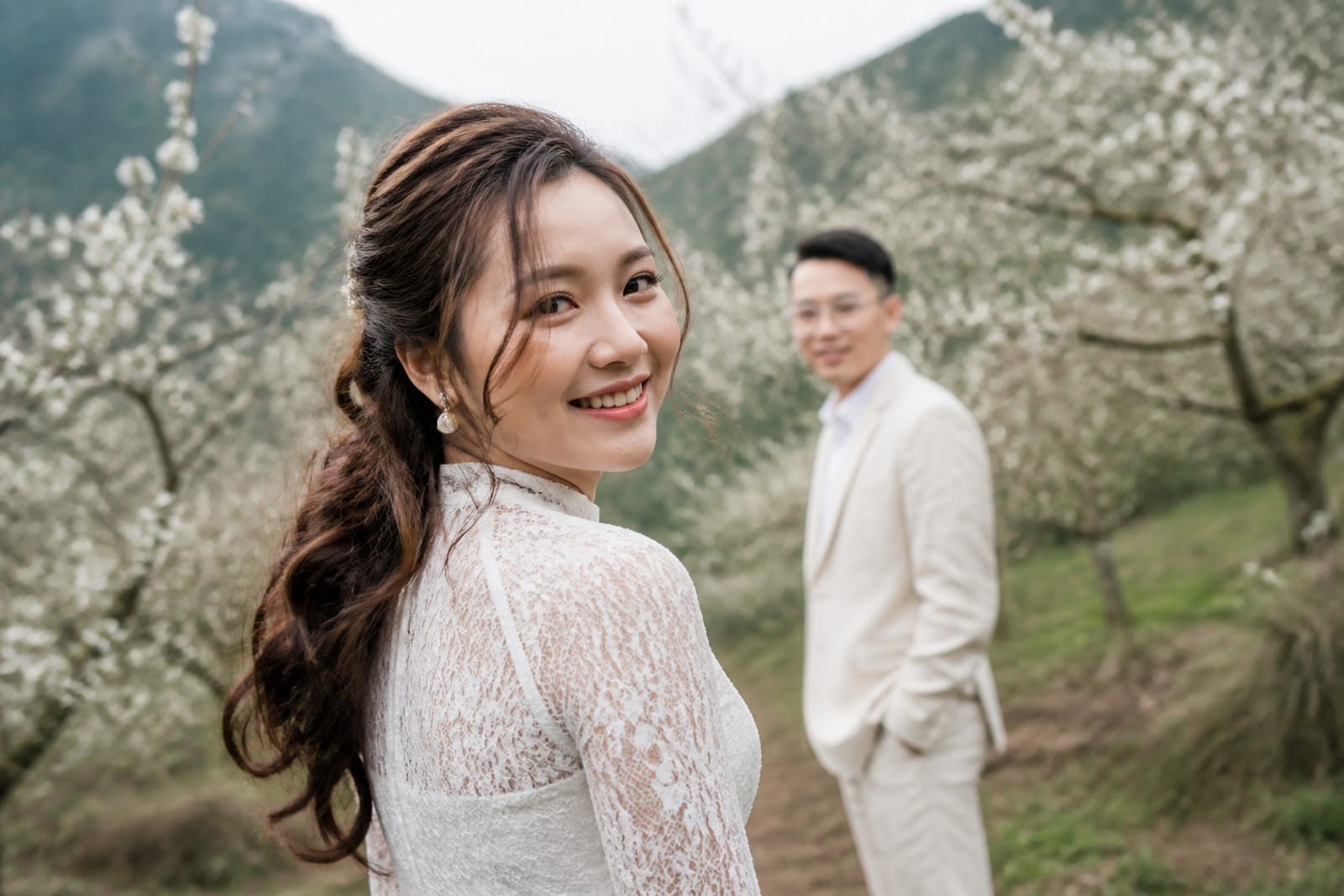
Studio sessions (Hanoi, Saigon, Hoi An) give you controlled light, wardrobe changes, makeup touch-ups between shots, and delivery in 48 hours. Moc Chau location shoots trade control for character: you get real morning mist, golden-hour depth, and frames that tell a place-based story. You won't have mirror access or quick makeup fixes, and you're dependent on weather. If light turns grey (overcast), you adapt—mist becomes a feature, not a bug. Moc Chau suits couples who want ao dai work that feels rooted in Vietnam's landscape, accept weather variability, and prefer fewer, stronger images over high volume. Studio sessions suit those who want variety, curated backdrops, and output guaranteed on time. Both work; choose based on your comfort with spontaneity and what story you want to tell.
---
What to check before you book a Moc Chau photoshoot
Photographer's portfolio:
- Look for ≥5 ao dai shoots in natural light (not studio).
- Check if faces are sharp, fabric moves naturally, couples are walking or interacting (not posed stiffly).
- Confirm they've shot in Moc Chau or similar mountain terrain in the same season.
Logistics:
- Confirm travel time and who covers transport. If you're hiring locally, meet in person or video-call 1 week before.
- Ask about backup locations if weather turns. Mist is okay; heavy rain ends a shoot early.
- Clarify what's included (makeup, hair, styling) and what costs extra. Never assume.
Outfit & fit:
- If renting ao dai locally, inspect it in person 24 hours before. If shipping from Hanoi/Saigon, allow 5+ days and factor in returns.
- Check the groom's outfit fit too—loose fabric photographs badly in natural light.
Timing:
- Confirm start time (dawn light is 6:30–8:30 am; golden hour is 4:30–6:30 pm). Arriving 15 minutes late costs precious light.
- Ask how long the session runs and how many locations you'll visit.
Delivery & edits:
- Get a written timeline for edited photos (48 hours? 2 weeks?). Ask whether the photographer shoots RAW or JPEG and what's included in the edit (color, crop, retouching).
- Confirm how you'll receive files (digital download, USB, cloud link, prints) and whether there's a backup if a device fails.
---
Can Cáo Studio shoot my Moc Chau photoshoot?
Cáo Studio operates from Hanoi and Saigon with a Hoi An team by appointment. For Moc Chau shoots, contact the studio on WhatsApp to ask whether the team travels. If not, Cáo Studio can recommend how to vet a local photographer and advise on ao dai, makeup, and light planning. A pre-wedding photoshoot in Moc Chau is possible with the right local partner; start with a WhatsApp conversation about your dates, vision, and logistics.
---
Getting to and around Moc Chau
Moc Chau is 160 km southwest of Hanoi, roughly 4 hours by road. Most shoots start before dawn, so plan to arrive the evening before. Hire a driver for the day (easier than taxis) and confirm pick-up time with your photographer. Wear flat shoes (sneakers, slip-ons) for mountain paths; ao dai stays at your accommodation until hair and makeup are done. Bring water, sunscreen, and a light jacket. Tea fields and village paths are steep and muddy after rain; if weather forecast shows rain, confirm with your photographer whether you'll reschedule or adapt (mist is fine; downpours are not).
---
Next steps: booking your Moc Chau photoshoot
If you want Cáo Studio's one-team model: Contact on WhatsApp and ask about Moc Chau availability. Share your dates, ao dai style, and vision. The team will confirm whether they travel or refer you to a trusted local photographer.
If you're booking a local photographer: Request their Moc Chau portfolio in the same season. Ask them to explain their backup plan for weather, how they frame ao dai movement, and their edit turnaround. Agree on a contract (dates, price, included services, cancellation policy). Meet in person or video-call at least once before your shoot date.
Before you commit:
- Confirm ao dai fit 1 week before.
- Lock in your start time (dawn or golden hour).
- Share your couple story or mood with the photographer—it shapes their framing.
📸 Book on WhatsApp — ao dai photoshoot
---
A Moc Chau ao dai photoshoot combines Vietnam's wedding tradition with mountain light that flatters both fabric and skin. The key is choosing the right photographer (local or team), understanding the season's light window, and preparing your ao dai fit well ahead of time. Whether you book with Cáo Studio (if they travel) or a vetted local, start conversations early—Moc Chau's best light runs narrow, and the best photographers book fast in Dec–Feb and Mar–Apr.
---
FAQ
What's the best time of year to shoot in Moc Chau?
Dec–Feb offers blossoms, soft mist, and cool light ideal for ao dai. Mar–Apr is clear and calm. Avoid Jun–Aug (heat, midday light) and Oct–Nov (rain, overcast). Before Tet (late Jan–early Feb), book early; services close for the holiday.
Do I need a professional makeup artist in Moc Chau?
Yes. Mountain mist, wind, and early-morning starts mean makeup must be set properly to last 4+ hours. Cáo Studio includes makeup & hair at your hotel in its one-team model; if hiring locally, ask the photographer whether makeup is included or recommended separately.
How many outfit changes should I plan?
One main ao dai works best for a cohesive Moc Chau shoot. A second outfit (groom in áo ghi, bride in a lighter ao dai for late-light shots) adds variety without breaking your timeline. More than two changes means less time per location—light moves fast in mountains.
Can I wear Western wedding dress in Moc Chau?
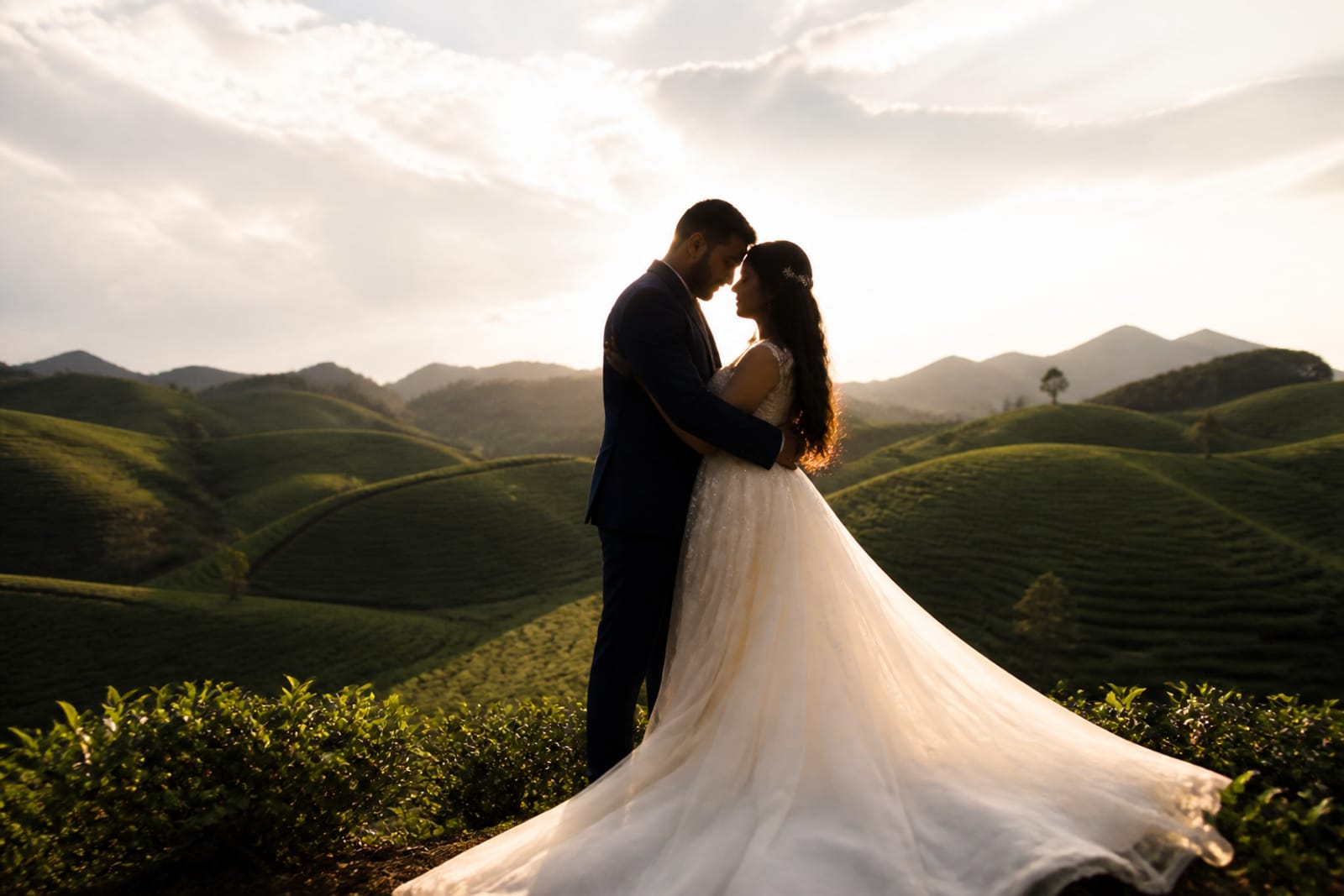
Yes, but ao dai photographs better in natural mountain light—fabric flows, color reads true, and it complements the landscape. A white dress risks blown-out faces in mist. If you want both, shoot ao dai in cool morning light, then change for late-afternoon golden-hour shots.
What if the weather turns bad on my shoot day?
Ask your photographer their weather policy before booking. Mist and soft overcast are favorable; heavy rain often ends shoots early. Reschedule or adapt: a cancelled shoot or partial reschedule is better than unsafe driving or ruined ao dai. Confirm backup dates when you contract.
How do I find a trustworthy local Moc Chau photographer?
Ask your hotel for referrals, check local wedding vendors' portfolios for ao dai work in natural light, and review 5–10 shoots from the same season. Video-call before booking. Confirm they've shot in Moc Chau, understand ao dai framing, and have a clear delivery timeline and cancellation policy.
FAQ
What's the best time of year to shoot in Moc Chau?
Dec–Feb offers blossoms, soft mist, and cool light ideal for ao dai. Mar–Apr is clear and calm. Avoid Jun–Aug (heat, midday light) and Oct–Nov (rain, overcast). Before Tet (late Jan–early Feb), book early; services close for the holiday.
Do I need a professional makeup artist in Moc Chau?
Yes. Mountain mist, wind, and early-morning starts mean makeup must be set properly to last 4+ hours. Cáo Studio includes [makeup & hair at your hotel](/makeup-and-hair) in its one-team model; if hiring locally, ask the photographer whether makeup is included or recommended separately.
How many outfit changes should I plan?
One main ao dai works best for a cohesive Moc Chau shoot. A second outfit (groom in áo ghi, bride in a lighter ao dai for late-light shots) adds variety without breaking your timeline. More than two changes means less time per location—light moves fast in mountains.
Can I wear Western wedding dress in Moc Chau?
Yes, but ao dai photographs better in natural mountain light—fabric flows, color reads true, and it complements the landscape. A white dress risks blown-out faces in mist. If you want both, shoot ao dai in cool morning light, then change for late-afternoon golden-hour shots.
What if the weather turns bad on my shoot day?
Ask your photographer their weather policy before booking. Mist and soft overcast are favorable; heavy rain often ends shoots early. Reschedule or adapt: a cancelled shoot or partial reschedule is better than unsafe driving or ruined ao dai. Confirm backup dates when you contract.
How do I find a trustworthy local Moc Chau photographer?
Ask your hotel for referrals, check local wedding vendors' portfolios for ao dai work in natural light, and review 5–10 shoots from the same season. Video-call before booking. Confirm they've shot in Moc Chau, understand ao dai framing, and have a clear delivery timeline and cancellation policy.
Ao dai, makeup, hair and a local photographer in Hanoi or Saigon — one WhatsApp message.