/ao-dai-photoshoot
Traditional Vietnamese wedding elements for Ninh Binh photos
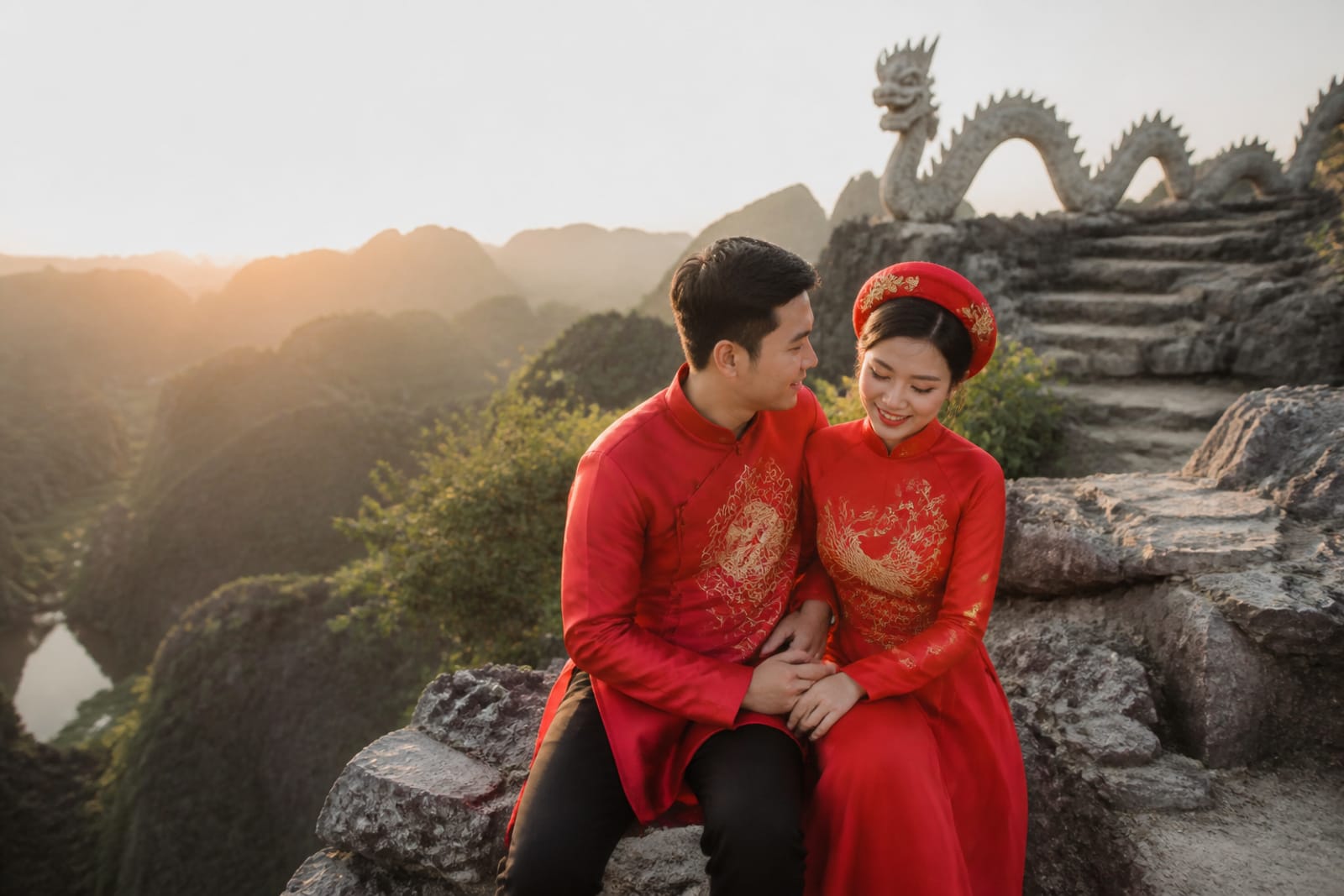
Traditional Vietnamese wedding elements—the ao dai tunic, embroidered silk scarves, gold jewelry, and parasol—transform Ninh Binh's landscapes into intimate storytelling frames. Peak seasons are Mar–May and Sep–Nov, when light is soft and rice fields green or gold. A shoot typically runs 2–4 hours, staged across one or two locations (temple grounds, village paths, boat landings). The ao dai's fitted bodice and flowing skirt move beautifully in motion: walking, turning, looking at each other—not static poses. Cáo Studio shoots in Hanoi, Ho Chi Minh City, and Hoi An with a coordinated team (photographer, makeup artist, stylist in one booking); for Ninh Binh, this article guides you to hire a local photographer and assemble the ao dai, hair and makeup independently. The key is choosing elements that let light and landscape lead—parasols frame soft backlighting, silk scarves catch morning air, jewelry reflects without overwhelming the frame. 📸 Book on WhatsApp — ao dai photoshoot ---
How do traditional ao dai elements change the story in rice fields?
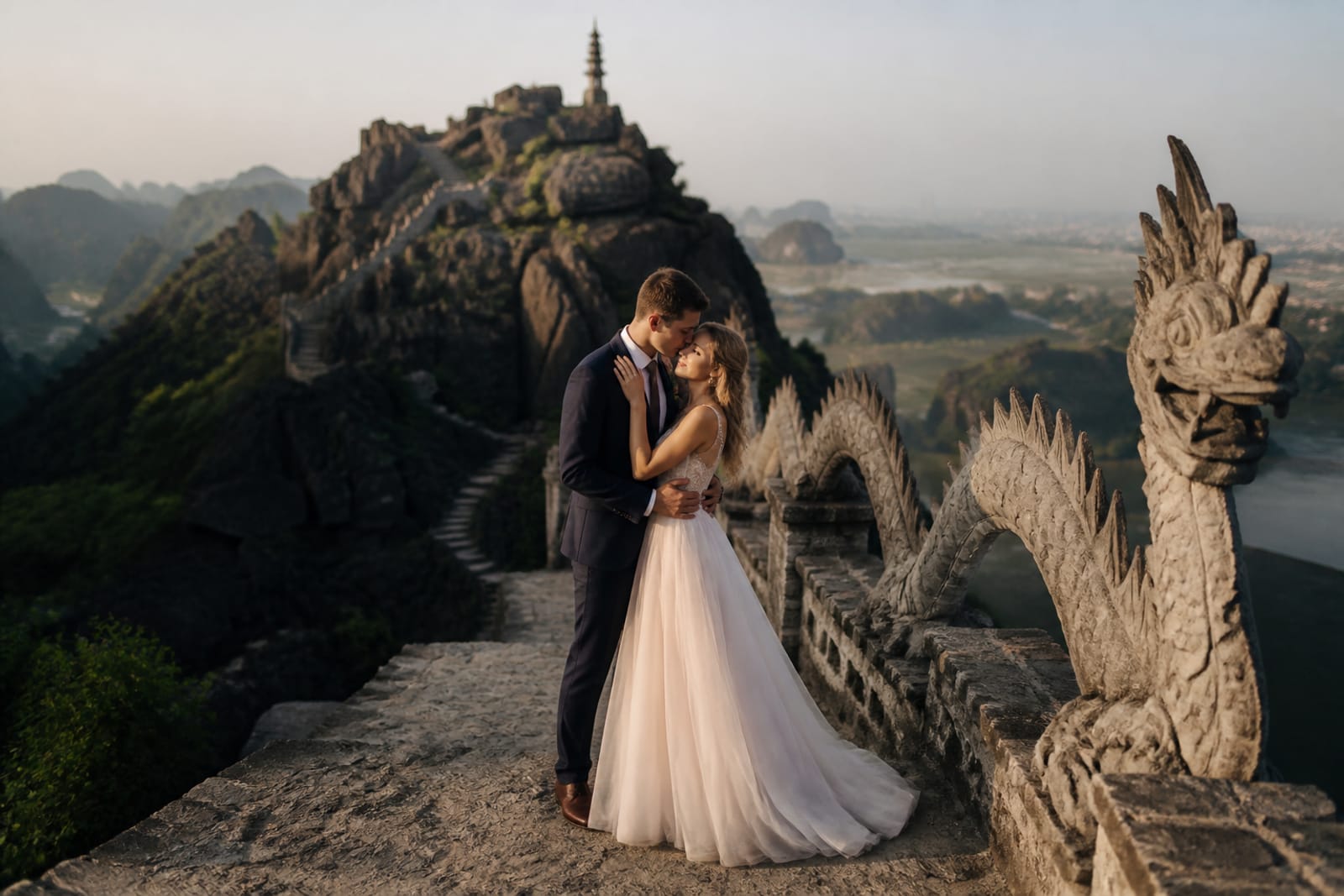
The ao dai works because it moves. In Hanoi and Ho Chi Minh City, Cáo Studio's ao dai photoshoots frame the tunic against urban mirrors and street light; in Ninh Binh, the same garment becomes a landscape element. A cream or ivory ao dai reads bright against green rice in the dry months (Feb–May) and golden fields after harvest (late May–early June, Sep–Oct). Silk scarves—woven in jewel tones or pastels—layer movement: they catch wind as you walk down levees or board boats at Trang An. The fitted bodice elongates the frame; the flared skirt photographs wider at mid-thigh, creating visual rhythm. Jewelry (thin gold bracelets, stud earrings, delicate necklaces) reflects light without competing with the landscape. Avoid heavy pieces or dangling earrings, which distract in motion. The parasol—held at an angle during golden hour—frames your face in soft shadow while the sky glows behind you, a technique that requires a photographer who understands backlighting. Ninh Binh's rice fields are public; locals often work during shoot hours, which adds authenticity but also demands a photographer who knows how to pause, wait, and frame without intruding.
Which traditional elements suit Mar–May light better than Sep–Nov?
March through May in Ninh Binh brings cooler air, clearer skies, and softer shadows. Rice fields are a jewel green; morning mist clings to valleys around Hang Mua viewpoint (500+ stone steps mean plan your shoes and outfit weight carefully). Early-morning shoots (5–6 am) yield the most dramatic light: golden hour lasts longer before heat flattens the landscape. Silk scarves in jewel tones—emerald, sapphire, burgundy—pop against green fields. Lightweight ao dai in cotton or silk-cotton blend keep you comfortable during 2–3 hours of walking and posing. Sep–Nov light is harsher at midday, but the second rice crop (harvested late Sep–Oct) turns fields golden, which photographs warmly under afternoon side-light. By early Nov, fields are replanted and green again. Sep–Nov humidity is higher, and typhoon risk peaks Oct–Nov (check forecasts weekly). For Mar–May, light sits lower on the horizon even at noon, making parasol framing easier. For Sep–Nov, shoot early (6–7 am) or late (5–6 pm) to avoid harsh midday contrast. Neither season eliminates greyness entirely; northern Vietnam's dry-season winters (Dec–Feb) bring cool, flat light unsuitable for traditional wedding frames.
| Element | Best season | Light quality | Why it works |
|---|---|---|---|
| Cream/ivory ao dai | Mar–May | Soft, golden morning | Glows against green rice; no competition |
| Jewel-tone scarves | Mar–May | Lower sun angle | Colors saturate; easier to frame |
| Gold jewelry | Sep–Oct (harvest) | Golden-hour side-light | Reflects warmth; fields also golden |
| Parasol backlighting | Mar–May early morning | Soft backlight (6–7 am) | Creates rim light without harsh shadows |
| Two-crop backdrop | Late May–early Jun + Sep–Oct | Golden fields | Maximizes color and landscape story |
What does hiring a local Ninh Binh photographer require versus booking Cáo Studio?
Cáo Studio operates in Hanoi, Ho Chi Minh City, and Hoi An. For Ninh Binh, you hire a local photographer independently and coordinate your ao dai, hair, makeup and wardrobe separately. This approach costs less upfront but requires three separate bookings and communication across vendors. A local Ninh Binh photographer knows the rice-field access points, local boat operators' schedules, temple opening hours, and which fields flood during rainy season. To vet them: ask for portfolios showing couples in ao dai (not just posed headshots); confirm they've shot Trang An boat sequences and Hang Mua village paths; check their experience with backlighting and motion framing, not flat-lit posed portraits. Ask for equipment—do they shoot full-frame, bring backup batteries, and have neutral density filters for strong midday sun? Agree on timing: if you want 6 am starts, confirm they're available and communicate the meeting point clearly (GPS coordinates, not just "near the viewpoint"). By contrast, Cáo Studio's approach brings photographer, makeup artist, and stylist as one team, which means your outfit, hair and framing align in a single vision. For Ninh Binh, you'll carry this coordination yourself—use a WhatsApp group with your photographer, makeup artist, and stylist to confirm timings and location details 48 hours before the shoot.
How should you prepare an ao dai and accessories for Ninh Binh's weather and walking?
Book your ao dai rental or purchase 2–3 weeks ahead so alterations (hemming, taking in the seams if needed) are finished before your shoot. The tunic sits close at the shoulders and ribs; if you've never worn one, try it on fully dressed—walk, sit, turn, climb a few stairs. Check the fabric weight: cotton blends are lighter and breathe; pure silk is elegant but can cling to sweat in Sep–Nov humidity. Wear a slip or undershirt (white or neutral) under the ao dai tunic; this prevents transparency in backlighting and lets you move without chafing. Ninh Binh in Mar–May is cool enough for lightweight long sleeves; Sep–Nov requires sleeveless versions or very thin fabric. Shoes are critical: Hang Mua's 500+ steps and rice-field levees demand flat, grippy soles—ballet flats, soft leather slippers, or embroidered shoes. Avoid heels; they sink into mud and tire your feet after 2 hours. Accessories: carry a parasol (bamboo or silk, in a neutral or contrasting solid color—avoid patterns that compete with the landscape). Bring a silk scarf folded in your bag; don't wear it during the walk, since wrapping it around your shoulders mid-shoot looks staged. Jewelry should be minimal—two bracelets on one wrist, small studs, one delicate necklace. Gold catches light beautifully in Sep–Oct harvest light; silver is safer for Mar–May's cooler tones. Avoid ringing bracelets and jingling charms; they distract in video or audio-recorded shoots. Have your makeup artist apply waterproof foundation and long-lasting mascara; Ninh Binh's air is humid, and walking generates sweat.
Why does one coordinated team (photographer + stylist + makeup) shoot better than separate vendors?
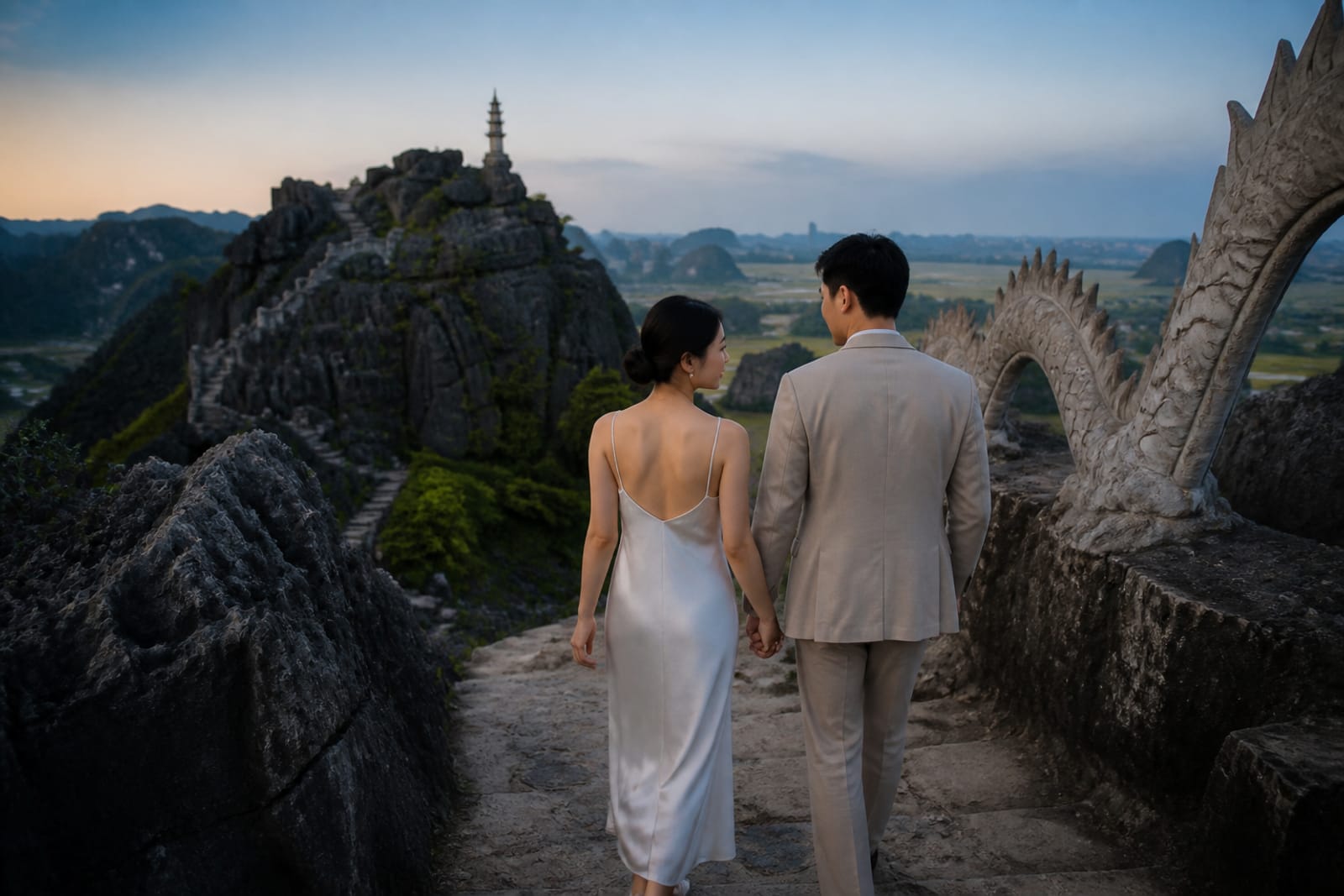
When Cáo Studio books an ao dai photoshoot in Hanoi or Ho Chi Minh City, the photographer, makeup artist, and stylist arrive together with a single creative direction. The stylist knows the light forecast and adjusts jewelry; the makeup artist accounts for the day's humidity and frames the face for the camera distance; the photographer frames the outfit, hair and jewelry as a unified composition. In Ninh Binh, if you hire three vendors independently, miscommunication is the risk: your makeup artist might arrive late, the photographer might have no context for your ao dai's embroidery and recommend angles that hide it, and the stylist might choose scarves that photograph muddy under the morning light the photographer actually finds. A coordinated team avoids these gaps. Cáo Studio's belief is that "one message is enough"—the ao dai's color, the makeup's softness, the parasol's angle and the landscape all support one frame, not compete. For Ninh Binh, where you're assembling your own vendors, mimic this by hosting a WhatsApp call with your photographer, makeup artist and stylist 48 hours before the shoot: share the location GPS, confirm the time and light forecast, show your ao dai and jewelry photos, and agree on one clear direction—e.g., "We're shooting at Hang Mua village at 6 am, so makeup should be soft and waterproof; jewelry will be minimal; the parasol is cream; we're walking, not posing in front of the temple." One unified message replaces three separate agendas.
What should you check before booking a local Ninh Binh photographer or renting an ao dai?
Before you hire:
- Photographer portfolio: ask to see full shoot sequences (5–10 frames from one location), not just hero shots. Look for soft-light frames, motion (walking, turning), and genuine landscape integration—not stiff poses against monuments.
- Photographer's equipment and backup plan: confirm camera model, lens range (24–70 mm is standard), and backup battery/card. Ask what happens if it rains; does he have a Plan B location or a rain date?
- Ao dai rental contract: confirm sizing, alteration timeline, return condition (minor stains acceptable?), and what happens if you damage the hem. Check if the tunic includes a slip; if not, buy one cheaply (white cotton slip, under the price of coffee).
- Makeup artist's experience with ao dai: ask if they've worked with the neckline and shoulder fit before; ao dai frames the face differently than Western dresses, and an artist unfamiliar with it might over-contour.
- Local access: confirm with your photographer 72 hours before that rice fields are accessible (not flooded, not being harvested that day). Trang An boat tours require separate tickets and advance booking; confirm your photographer knows the boat schedule.
- Light forecast: check weather and sunrise time 5 days before; if rain is forecast, discuss a backup time with your photographer the week before, not the morning-of.
- Communication channel: use WhatsApp or a shared document (Google Doc) to log agreed times, locations, and contact numbers. Screenshot confirmations from your photographer and vendors.
For Cáo Studio shoots in Hanoi, Ho Chi Minh City, or Hoi An, these logistics are managed as part of the booking—the team confirms light, location, and outfit alignment before you arrive. Ask on WhatsApp about pre-wedding and elopement packages if you're considering a multi-day Ninh Binh–Hanoi itinerary; Cáo Studio can shoot in Hanoi while you coordinate a local photographer for Ninh Binh.
---
Can you wear traditional elements in other Ninh Binh locations beyond rice fields?
Yes. Hang Mua's viewpoint (500+ stone steps) and the surrounding Hang Mua village offer temple grounds, narrow stone paths, and valley overlooks; the ao dai photographs well on village paths where the tunic catches side-light between stone houses. Trang An's boat landings and riverside paths suit the parasol and scarves because water reflects light upward, softening shadows on your face. Temples (Mua Cave temple, local village shrines) require respectful dress: the ao dai is always appropriate; scarves can drape modestly; jewelry should be understated. Photography inside temples may require permission—your local photographer should know which temples allow it and ask in person. Morning shoots (6–7 am) at temple grounds yield golden light before crowds; afternoon (4–5 pm) offers softer light but more visitors. Avoid shooting directly into temple interiors unless the light is truly exceptional (golden-hour side-light through a doorway). The traditional elements (ao dai, parasol, scarves) work anywhere in Ninh Binh because they're designed for Vietnamese landscapes; what changes is timing, light angle, and crowd management.
---
What does a typical Ninh Binh shoot day look like?
Arrive at your meeting point 15 minutes early. Your local photographer, makeup artist, and stylist should each confirm their arrival time and contact number the evening before. If makeup is done on-site (at your hotel), allow 45 minutes; if on-location, plan for 30 minutes and a shaded spot or vehicle for touch-ups. The shoot itself runs 2–4 hours depending on your locations and outfit changes. A typical sequence: 6–7 am (Hang Mua village paths, backlit by sunrise), 8–9 am (temple grounds or valley overlook, side-light), 9–10 am (boat landing at Trang An if booked, softer light), then either wrap or move to a second location for late afternoon (4–5 pm) light. Between locations, the photographer might take 10–15 minutes to scout framing; use this time to rest, hydrate, and let the makeup artist check your face. Carry a small bag with water, blotting paper, and a makeup compact. Your photographer should take 150–300 frames across the day; final edited photos typically arrive 5–10 days later (confirm timing before you book). Motion and storytelling matter more than standing poses: walk toward the camera, look at your partner, pause while reaching for a parasol, sit on a levee edge. The photographer who frames these moments beats one asking you to "smile and turn left." Ninh Binh's light is strongest early morning and late afternoon; midday (11 am–3 pm) is a weak light for traditional frames, so many photographers do a lunch break or a second location with shade.
📸 Book on WhatsApp — ao dai photoshoot
---
FAQ
Does Cáo Studio shoot in Ninh Binh?
No, Cáo Studio operates in Hanoi, Ho Chi Minh City, and Hoi An. For Ninh Binh, hire a local photographer and coordinate your ao dai rental, hair and makeup independently. This article guides vendor selection and day-of preparation. Ask on WhatsApp if you're combining a Ninh Binh trip with a Hanoi shoot.
When is the best month to shoot traditional ao dai in Ninh Binh rice fields?
Mar–May (cool, soft light, green rice) and late May–early June (golden harvest). Sep–Nov offers golden fields but higher humidity and typhoon risk. Dec–Feb is cool but grey. Mar–May typically suits first-time visitors; Sep–Oct suits those returning for the harvest.
Can I wear a modern white ao dai or must it be traditional embroidered silk?
Both work. Cream or ivory (modern, cleaner framing) reads bright against green fields; embroidered silk (traditional, detailed) photographs beautifully in side-light but requires a photographer who knows to frame it wide first, then detail. Choose based on the story you want—clean modern or richly textured traditional.
What shoes should I wear under an ao dai for Ninh Binh's rice-field walks?
Flat, grippy soles: soft leather flats, embroidered slippers, or ballet flats. Avoid heels; they sink into mud and tire your feet. Ninh Binh's paths are uneven and sometimes wet. Confirm shoe color with your photographer so it frames the composition (neutral tones blend; bright colors can distract).
How long does it take to edit and receive photos after a Ninh Binh shoot?
Typical turnaround is 5–10 days if booked through a professional photographer. Confirm editing timeline and how photos are delivered (cloud link, printed album, USB) before you book. Cáo Studio delivers edited photos within 48 hours for Hanoi and Ho Chi Minh City shoots; ask about wedding photo albums or photo prints for keepsakes.
Should I book a makeup artist separately or let the photographer recommend one?
Book independently if possible; it gives you control over the makeup style (soft vs. bold) and timing. Show your makeup artist the ao dai, jewelry, and light forecast so they tailor foundation and brow color to the landscape. If the photographer has a trusted partner, ask to see their previous work on ao dai clients before committing.
What's the difference between hiring a local Ninh Binh photographer and booking Cáo Studio for a pre-wedding shoot?
A local photographer handles one shoot; Cáo Studio coordinates photographer, makeup artist, and stylist as one team, ensuring outfit, hair, and framing align. Cáo Studio shoots in Hanoi, Ho Chi Minh City, and Hoi An; for Ninh Binh, book locally and use this article as a guide. For multi-location shoots (e.g., Ninh Binh + Hanoi), ask about pre-wedding and elopement packages.
FAQ
Does Cáo Studio shoot in Ninh Binh?
No, Cáo Studio operates in Hanoi, Ho Chi Minh City, and Hoi An. For Ninh Binh, hire a local photographer and coordinate your ao dai rental, hair and makeup independently. This article guides vendor selection and day-of preparation. Ask on WhatsApp if you're combining a Ninh Binh trip with a Hanoi shoot.
When is the best month to shoot traditional ao dai in Ninh Binh rice fields?
Mar–May (cool, soft light, green rice) and late May–early June (golden harvest). Sep–Nov offers golden fields but higher humidity and typhoon risk. Dec–Feb is cool but grey. Mar–May typically suits first-time visitors; Sep–Oct suits those returning for the harvest.
Can I wear a modern white ao dai or must it be traditional embroidered silk?
Both work. Cream or ivory (modern, cleaner framing) reads bright against green fields; embroidered silk (traditional, detailed) photographs beautifully in side-light but requires a photographer who knows to frame it wide first, then detail. Choose based on the story you want—clean modern or richly textured traditional.
What shoes should I wear under an ao dai for Ninh Binh's rice-field walks?
Flat, grippy soles: soft leather flats, embroidered slippers, or ballet flats. Avoid heels; they sink into mud and tire your feet. Ninh Binh's paths are uneven and sometimes wet. Confirm shoe color with your photographer so it frames the composition (neutral tones blend; bright colors can distract).
How long does it take to edit and receive photos after a Ninh Binh shoot?
Typical turnaround is 5–10 days if booked through a professional photographer. Confirm editing timeline and how photos are delivered (cloud link, printed album, USB) before you book. Cáo Studio delivers edited photos within 48 hours for Hanoi and Ho Chi Minh City shoots; ask about [wedding photo albums](/photo-album) or [photo prints](/photo-prints) for keepsakes.
Should I book a makeup artist separately or let the photographer recommend one?
Book independently if possible; it gives you control over the makeup style (soft vs. bold) and timing. Show your makeup artist the ao dai, jewelry, and light forecast so they tailor foundation and brow color to the landscape. If the photographer has a trusted partner, ask to see their previous work on ao dai clients before committing.
What's the difference between hiring a local Ninh Binh photographer and booking Cáo Studio for a pre-wedding shoot?
A local photographer handles one shoot; Cáo Studio coordinates photographer, makeup artist, and stylist as one team, ensuring outfit, hair, and framing align. Cáo Studio shoots in Hanoi, Ho Chi Minh City, and Hoi An; for Ninh Binh, book locally and use this article as a guide. For multi-location shoots (e.g., Ninh Binh + Hanoi), ask about [pre-wedding and elopement packages](/pre-wedding-photoshoot).
Ao dai, makeup, hair and a local photographer in Hanoi or Saigon — one WhatsApp message.