/ao-dai-photoshoot
Traditional Vietnamese wedding elements for Phu Quoc photos
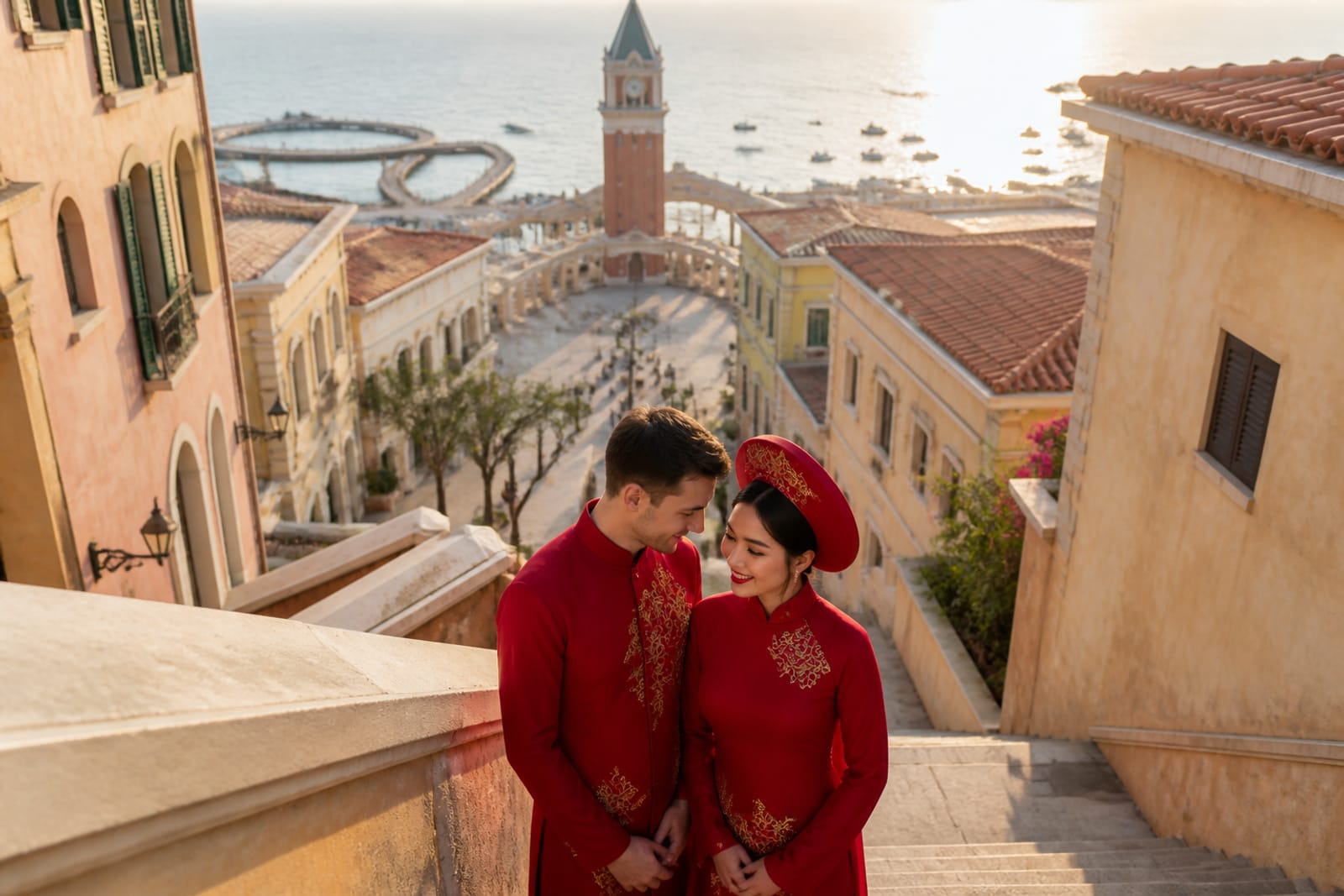
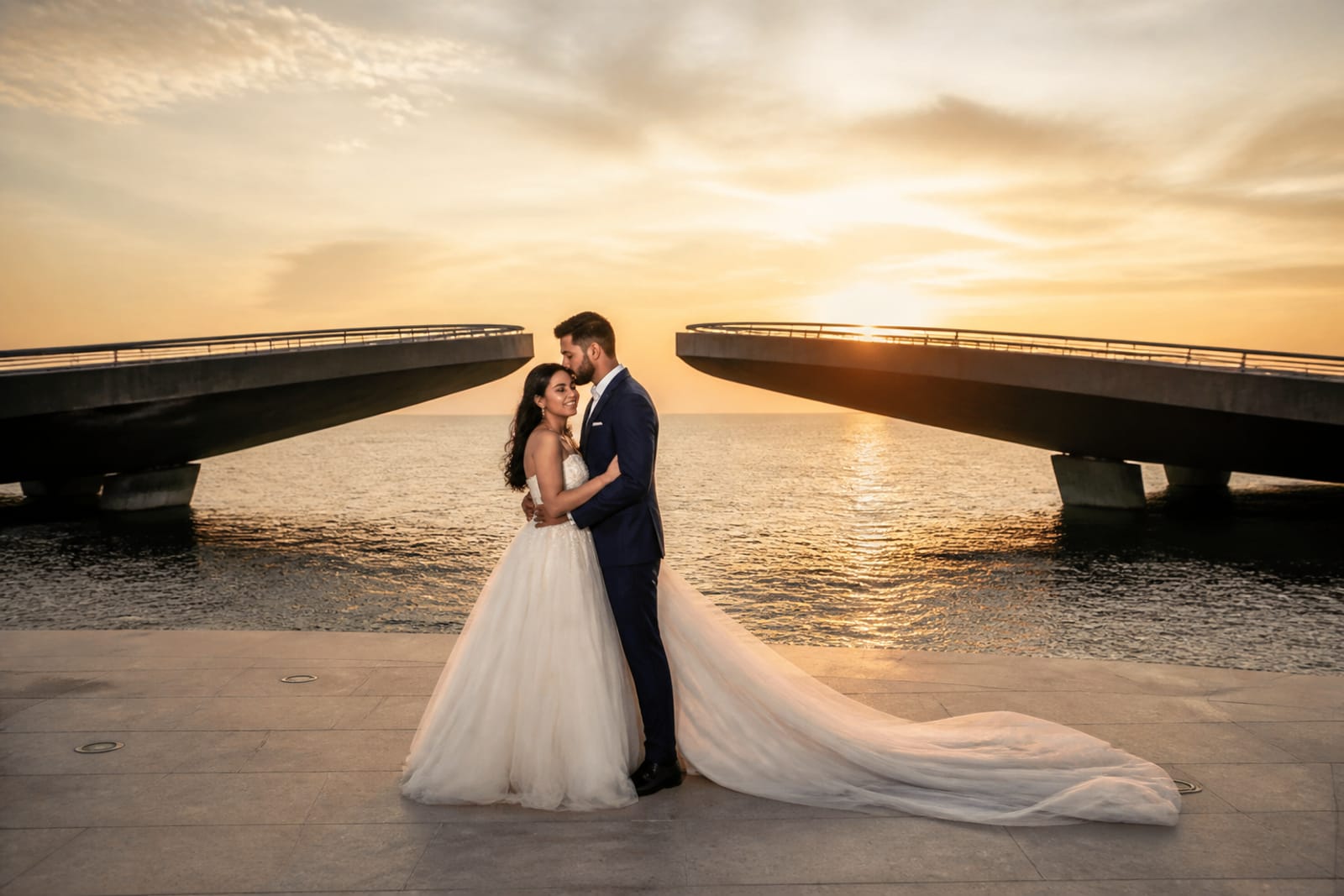
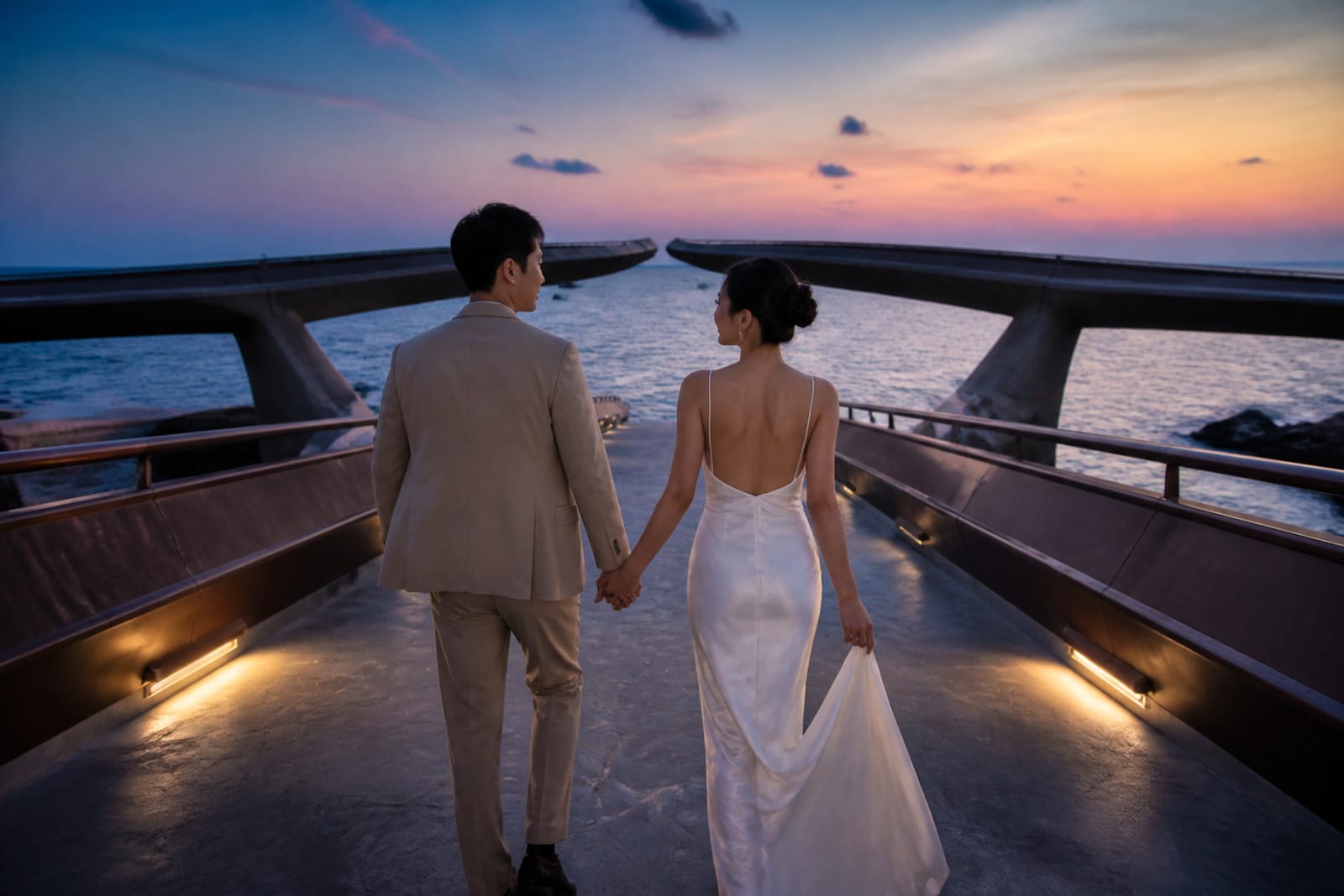
Traditional Vietnamese wedding elements—ao dai, betel leaves, candles, lanterns, temple backgrounds—translate best to Phu Quoc photos during the dry season (Nov–Apr), when light is clean and sea calm. A directed photoshoot team (not a single photographer) coordinates outfit, hair, makeup and framing in one booking, avoiding the scattered look of three vendors. Timing matters: sunrise at Sunset Town on the west coast catches soft light; mid-morning at Dinh Cau temple avoids crowds and harsh shadows. Cáo Studio handles full direction on location—outfit changes, cultural cues, walking cues—and delivers edited frames and a short vertical film within 48 hours. Before booking, confirm the team travels to Phu Quoc by WhatsApp, agrees on specific locations and light windows, and understands your message (couple, anniversary, elopement, family dynamic). ---
Why does Phu Quoc suit traditional elements better than other beach destinations?
Phu Quoc's landscape—limestone cliffs, Buddhist temples, fishing villages, tiered sunset—absorbs traditional Vietnamese visual language without looking forced. The island's spiritual sites (Dinh Cau, Phu Quoc Prison ruins as a contrast backdrop) carry weight. Sunrise on Ganh Dau or sunset at Sunset Town happens on a human scale: not crowded, not industrial. Unlike busier Mekong or Halong scenes, Phu Quoc lets an ao dai breathe. Weather also favors intention: the dry season (Nov–Apr) means predictable light, flat seas for reflections, and fewer downpours that ruin silk. This window is tight; book early.
📸 Book on WhatsApp — ao dai photoshoot | 🌸 See the lookbook
Which traditional elements photograph best on location, and why?
| Element | Best location | Optimal time | Why it works |
|---|---|---|---|
| Ao dai (silk) | Temple grounds, coastal paths | 6–8 am, 5–6 pm | Soft light flatters fabric drape; temple symmetry frames the wearer. |
| Betel leaves & ceremonial tray | Indoor temple altar, family scene | Mid-morning (after crowds) | Intimate detail; red-gold tones pop against cool temple stone. |
| Lanterns (silk or paper) | Sunset Town, waterfront pavilions | 5:30–6:30 pm | Lantern warmth echoes sunset; golden hour creates halo effect. |
| Candles & incense ritual | Private shrine or hotel suite | Early morning or dusk | Controlled light; smoke adds depth; no wind interference. |
| Flowers (lotus, chrysanthemum) | Dinh Cau approach, garden paths | 7–9 am | Fresh petals catch side light; no wilting in afternoon heat. |
Ao dai works longest because silk moves with direction; betel leaves suit close-ups and cultural narrative. Lanterns and candles require windless windows—dawn or dusk indoors. Flowers fade fast in heat; time them first.
What does "directed, not posed" mean when working with traditional elements?
A posed shot locks you in a formal stance, hands arranged, smile held. Directed work asks: walk toward the temple gate with the betel tray, look at each other (not the camera), step into that side light. The photographer frames you moving—not stiff. With an ao dai, this matters: the fabric tells a story only if you're walking, sitting, adjusting it naturally. A makeup artist and hair stylist on-set (not separate hires arriving later) mean your look stays alive between frames. Cáo Studio's approach is wide shot first (you crossing a threshold), medium (turning, betel tray visible), then detail (tray, hands, expression). This three-distance workflow means the final edit tells your narrative, not a template.
💄 Makeup & hair at your hotel | 🌸 See the lookbook
When is the best window to shoot in Phu Quoc, and how does season affect styling?
The dry season runs Nov–Apr: calm seas, predictable light, low humidity. Book Dec–Feb if you want cool-weather layers (silk shawl, light jacket over ao dai for temple scenes). Mar–Apr is still dry but hotter; simpler fabrics work better, minimal layers. Avoid May–Nov: rainy season brings afternoon downpours, grey skies, and rough west-coast waves (Sunset Town becomes unpredictable). Tet (late Jan–mid Feb) crowds temples and closes family businesses for 2–3 days; plan around it. Light quality in the dry season is sharper—betel-tray reds sing, temple stone reads clearly, water reflects gold at sunset without haze.
How do you avoid cultural missteps when styling traditional elements?
Betel leaves belong in a ceremonial context (family gathering, engagement ritual, anniversary moment)—not as a costume prop. If it's not authentic to your story, skip it; authenticity reads. Temple visits require covered shoulders and knees; ao dai already meets this. Remove shoes before altar areas; alert your photographer to this timing. Incense and candle rituals work only if they mean something to you (a blessing, a memory of home, a spiritual moment); don't perform them for the camera. Ask temple staff permission before shooting; some areas forbid photography. Flowers are respectful as an offering or part of a genuine moment, not scattered for effect. A local team (Cáo Studio has a Saigon base and travels to Phu Quoc) knows these boundaries and can advise on the spot.
What does the full shoot experience include, and how do you prepare?
On WhatsApp, confirm with Cáo Studio: which locations, what time you arrive, how many outfit changes, any cultural elements you want (betel, flowers, incense). The team (photographer, makeup artist, hair stylist, director) arrives with ao dai options, styling kit, and a shot list based on light windows and your story. You'll walk, sit, adjust fabric, light incense or arrange flowers—real actions, not held poses. The session takes a few hours depending on location changes; expect to move between temple, coast, and perhaps a pavilion for lantern frames. Edited photos and a short vertical film arrive within 48 hours. Hair and makeup can be done at your hotel before departure, saving coordination time.
---
What to check before you book
- Season & light: Confirm Nov–Apr booking; ask Cáo Studio which sunrise/sunset windows are best for your chosen locations that week.
- Team travel: Phu Quoc requires the full team to travel from Hanoi or Ho Chi Minh City. Confirm dates and travel logistics on WhatsApp.
- Cultural intent: Clarify which elements (betel, incense, flowers, lanterns) match your narrative. Don't include them as decoration alone.
- Location permits: Some temples require advance notice for photo sessions. The team will guide you; confirm before arrival.
- Outfit fit: If renting an ao dai locally vs. bringing one, discuss with the team how fittings work. Cáo Studio offers ao dai rental if needed.
- Delivery format: Confirm that edited photos and vertical film arrive within 48 hours; ask about album or print options (photo prints & frames) if you want keepsakes.
---
Ready to shoot? Book a directed session.
A single afternoon in Phu Quoc can hold your story—ao dai, light, the sea, and the people you came with. Cáo Studio's ao dai photoshoot weaves direction, styling, and cinema into one team. Couples, families, and anniversaries all work; see examples at the lookbook. For Phu Quoc dates and a custom quote, reach out on WhatsApp: 📸 Book on WhatsApp — ao dai photoshoot.
Want makeup & hair at your hotel before the shoot, or traveling to Hanoi or Ho Chi Minh City? Cáo Studio also covers Hanoi, Ho Chi Minh City, and Hoi An for couple sessions, pre-wedding shoots, and family photoshoots. See pricing and FAQ for more.
---
FAQ
Do I need to own an ao dai, or can Cáo Studio provide one for the Phu Quoc shoot?
Cáo Studio offers ao dai rental as part of its service. On WhatsApp, confirm your size and style preference; the team will arrange it before your session. Rental quality ensures photos look professional and the fabric drapes naturally in motion.
What's the best time of day to shoot betel-leaf or ceremonial scenes in Phu Quoc?
Mid-morning (8–10 am) or late afternoon (4–5 pm) work best. Midday sun creates harsh shadows on detail shots; betel reds and temple stone read clearer in softer light. Avoid noon rituals unless they're genuinely part of your story.
Can we shoot at multiple temples in one session?
Yes, but timing matters. Each temple has peak visitor times; Cáo Studio plans routes to avoid crowds and maximize light windows. Travel between sites takes time; discuss the number of locations on WhatsApp so the team books the right session length.
Will the team know which temple backgrounds are culturally appropriate for our shoot?
Yes. The team (based in Hanoi and Ho Chi Minh City, traveling to Phu Quoc) understands temple etiquette and photography rules. They'll advise on which shrines allow photos, how to frame respect into the frame, and when to step back. Discuss your intent on WhatsApp.
What happens if the weather turns bad on our Phu Quoc shoot day?
The dry season (Nov–Apr) is chosen for a reason—downpours are rare. If unexpected rain occurs, Cáo Studio pivots to covered pavilions, hotel suites, or shifts to the next clear window (if travel allows). Confirm cancellation and reschedule policy on WhatsApp before booking.
Do you offer prints or albums to preserve the photos after the shoot?
Yes. Cáo Studio provides edited digital files within 48 hours. For keepsakes, explore photo prints & frames and wedding photo album options. These extend your shoot into a lasting object—ideal for traditional elements that deserve display.
How long does a typical Phu Quoc session run, and what's included?
Session length, number of outfit changes, makeup/hair, locations, and deliverables are confirmed on WhatsApp. Ask for specifics before booking; every shoot is customized. The team's offer includes directed shooting, styling on-location, and edited photos + vertical film within 48 hours.
FAQ
Do I need to own an ao dai, or can Cáo Studio provide one for the Phu Quoc shoot?
Cáo Studio offers [ao dai rental](/ao-dai-rental) as part of its service. On WhatsApp, confirm your size and style preference; the team will arrange it before your session. Rental quality ensures photos look professional and the fabric drapes naturally in motion.
What's the best time of day to shoot betel-leaf or ceremonial scenes in Phu Quoc?
Mid-morning (8–10 am) or late afternoon (4–5 pm) work best. Midday sun creates harsh shadows on detail shots; betel reds and temple stone read clearer in softer light. Avoid noon rituals unless they're genuinely part of your story.
Can we shoot at multiple temples in one session?
Yes, but timing matters. Each temple has peak visitor times; Cáo Studio plans routes to avoid crowds and maximize light windows. Travel between sites takes time; discuss the number of locations on WhatsApp so the team books the right session length.
Will the team know which temple backgrounds are culturally appropriate for our shoot?
Yes. The team (based in Hanoi and Ho Chi Minh City, traveling to Phu Quoc) understands temple etiquette and photography rules. They'll advise on which shrines allow photos, how to frame respect into the frame, and when to step back. Discuss your intent on WhatsApp.
What happens if the weather turns bad on our Phu Quoc shoot day?
The dry season (Nov–Apr) is chosen for a reason—downpours are rare. If unexpected rain occurs, Cáo Studio pivots to covered pavilions, hotel suites, or shifts to the next clear window (if travel allows). Confirm cancellation and reschedule policy on WhatsApp before booking.
Do you offer prints or albums to preserve the photos after the shoot?
Yes. Cáo Studio provides edited digital files within 48 hours. For keepsakes, explore [photo prints & frames](/photo-prints) and [wedding photo album](/photo-album) options. These extend your shoot into a lasting object—ideal for traditional elements that deserve display.
How long does a typical Phu Quoc session run, and what's included?
Session length, number of outfit changes, makeup/hair, locations, and deliverables are confirmed on WhatsApp. Ask for specifics before booking; every shoot is customized. The team's offer includes directed shooting, styling on-location, and edited photos + vertical film within 48 hours.
Ao dai, makeup, hair and a local photographer in Hanoi or Saigon — one WhatsApp message.