/ao-dai-photoshoot
Traditional Vietnamese wedding elements for Quy Nhon photoshoots
Traditional Vietnamese wedding elements—ao dai, ceremonial silk, tray of betel and areca, incense and floral arrangements—anchor photoshoots in Quy Nhon when you book the right combination of outfit, location and light. Quy Nhon itself is not a Cáo Studio base (the team operates in Hanoi, Ho Chi Minh City and Hoi An by appointment), but the dry season Feb–Aug offers soft morning light over the coast, and the crew can coordinate with local photographers or you can travel to Hoi An or Saigon for a directed session with the full team. Before booking any Quy Nhon shoot, confirm the photographer's experience with ao dai drape and movement, check the weather window (avoid Sep–Dec rainy season), and decide whether you want silk ceremony elements or just the dress itself—each choice changes outfit prep and framing time. 📸 Book on WhatsApp — ao dai photoshoot ---
What does "traditional Vietnamese wedding elements" mean for your photoshoot?
Traditional wedding elements include the ao dai (the floor-length silk tunic), a coordinated áo dài for your partner, ceremonial trays (betel, areca, gifts), incense, floral crowns or fresh flowers, and often a backdrop or silk drape evoking the bride's home shrine. These aren't props—they're the visual language of a Vietnamese ceremony, and shooting them in a real landscape (not a studio) tells a deeper story. The question isn't whether to use them, but which ones fit your light and location without looking staged.
---
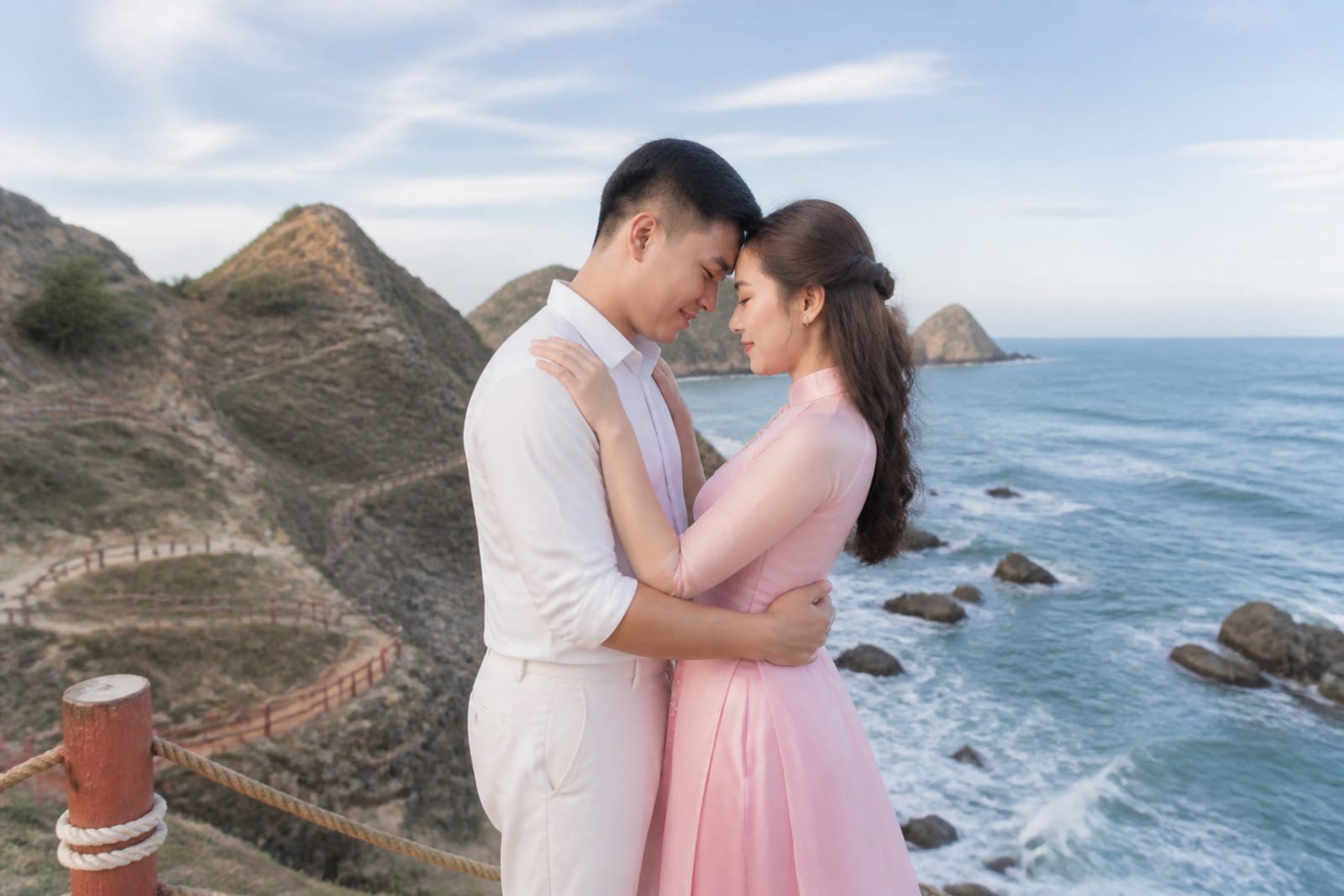
Why does Quy Nhon's dry season matter so much for ao dai shoots?
Quy Nhon sits on the central coast and is driest Feb–Aug; the rainy and typhoon season runs Sep–Dec, with October–November bringing the worst flood risk. During dry months, the morning light hits the rocky coves and fishing villages at a low, soft angle, and humidity is lower—which means your silk won't stick to your skin and makeup holds longer. A 6 am start near Quy Nhon Pier or along Highway 1's coastal stretches gives you backlit silhouettes and warm side light for ao dai movement before the sun climbs and hardens shadows. Avoid Sep–Dec entirely: not only is rain frequent, but wind and overcast skies flatten the frames you came for.
---
Cáo Studio base locations vs. booking a Quy Nhon local photographer
Cáo Studio operates in Hanoi, Ho Chi Minh City and Hoi An (by appointment—ask on WhatsApp for Hoi An dates). Quy Nhon is a 5–6 hour drive from Nha Trang and 14+ hours from Ho Chi Minh City, so traveling the full team there is only feasible if you're also shooting in Saigon or staying weeks. Instead, you have three honest paths:
- Travel to Hoi An or Saigon — Book a directed ao dai session with Cáo Studio, then hire a local photographer in Quy Nhon separately for a vacation or couple shoot later. This splits the shoot, but you get one team's approach to light and styling for the formal frames.
- Hire a local Quy Nhon photographer & DIY the brief — Find a photographer with ao dai drape experience (scroll their Instagram reels, not just static portraits—real movement matters). Send them a mood board, confirm they understand morning light and coastal framing, and ask upfront: have they shot ao dai before, do they know how to pose movement (walking, sitting, looking at each other) rather than stiff standing poses, and do they have a backup plan for rain? Cost factors: travel time from town, number of outfits, and whether they've worked with traditional elements. Ask on WhatsApp if you need vetting advice.
- Book Cáo Studio for a virtual consult + local photo guide — A Cáo director can brief you on light, timing, outfit choice and framing cues before you shoot with a Quy Nhon team. (Confirm availability on WhatsApp.)
---
How to choose between ao dai alone, ceremonial tray setups, and mixed elements
| Approach | Best for | Light window | Setup time | Why it works |
|---|---|---|---|---|
| Ao dai only (dress + movement) | Solo or couple, fast turnaround, storytelling focus | 5:30–7:30 am (any season) | 10 min (get in, shoot walking/sitting) | Light on fabric texture, no props to stage; real person, real place. |
| Ao dai + betel/areca tray | Traditional or family prequel to wedding; formal tone | 6–8 am (still soft) | 20–30 min (arrange tray, compose wide shot) | Anchors the frame in ritual; tray sits in foreground or lap; draws the eye without crowding. |
| Ao dai + incense + silk drape | Couple anniversary or vow renewal; staged but authentic | 6–7 am (soft backlight ideal) | 40–50 min (light, drape, position) | Incense smoke catches light beautifully; drape adds depth and texture; feels ceremonial, not costume. |
| Mixed (tray + flowers + dress) | Pre-wedding or formal family group | 5:30–7 am (before crowds) | 50–60 min (full setup, multiple angles) | Rich layers; tells the story of preparation; requires practiced crew to avoid clutter. |
Conclusion: Pick one or two elements, not everything. Simplicity lets the light and landscape breathe. Cáo's one-team model means no coordination gap between the stylist and photographer—they decide the frame together while you move.
---
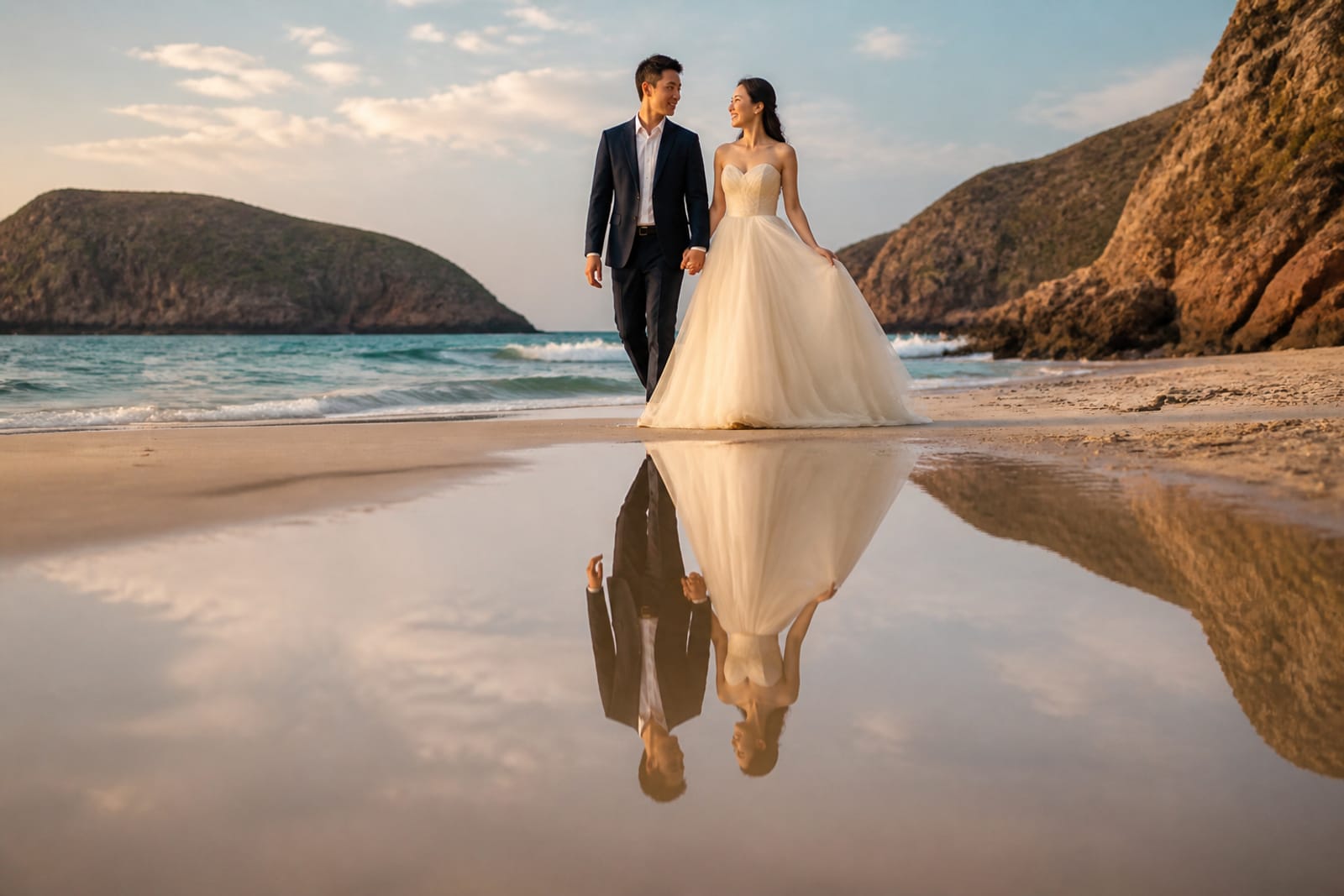
What to pack and prepare: ao dai, undergarments, and weather backup
Ao dai specifics:
- Rent or bring a silk ao dai tailored to fit snugly at the waist and chest (loose fabric photographs as wrinkled). Confirm it's pressed and arrives the day before the shoot.
- Wear a slip or thin white underdress (áo lót) underneath to avoid transparency and reduce skin friction in humid heat.
- Bring flat white or gold sandals; heels sink into sand and distract the frame.
- If you rent locally, collect the morning of the shoot; allow 15 min for fitting and steam.
Weather:
- Even in the dry season, coastal fog can roll in 6–7 am; it's actually beautiful (soft, diffuse light) but wait 20 min or shoot through it.
- Feb–Mar: warmest dry period, least wind.
- Apr–Aug: hotter, occasional afternoon rain (never shoots after 10 am anyway).
- Never book Sep–Dec.
Backup plan:
- Identify a covered spot near your main location (a shelter, pier overhang, temple portico) where you can shoot if light suddenly turns grey.
---
The one-team vs. three-vendor problem: why it matters for Quy Nhon shoots
If you hire a Quy Nhon makeup artist, a stylist and a photographer separately, none of them talk to each other. The makeup artist applies bold color that photographs muddy in morning light. The stylist chooses a silk ao dai that the photographer then has to work around instead of with. By the time you see the issue, the shoot is half over and no one feels responsible.
Cáo Studio's core belief is that one team—makeup, hair, styling and camera—shoots better because they make decisions together. The makeup artist knows the light window starts 6 am, so she chooses matte finishes that hold in humidity. The stylist knows the photographer will shoot wide first (showing the whole ao dai's drape), then medium (showing your face and dress together), then close detail (beading, embroidery). The photographer frames all three shots in one sequence. You move naturally; they direct with precision.
If you're in Quy Nhon and hire local, ask the photographer: "Who's your makeup and hair partner?" If it's not someone they've shot 20+ shoots with, you're adding coordination risk.
---
Before you book: your Quy Nhon photoshoot checklist
- Season: Confirm Feb–Aug window; never book Sep–Dec.
- Photographer experience: Ask to see 5 reels of ao dai shoots (not just photos). Look for fabric movement, natural poses and real light—not studio strobes or stiff standing.
- Outfit plan: Decide: ao dai only, or ao dai + ceremonial elements? Confirm the photographer has styled each before.
- Light timing: Agree on a 6–7 am start at a specific spot (pier, cove, fishing village). Ask about backup if weather closes the location.
- Deliverables: Get a written timeline for edited photos and any film. (Cáo sends edits within 48 hours; confirm local timelines separately.)
- Travel logistics: If hiring locally, confirm the photographer comes to your hotel or if you meet on-location. Clarify who brings props (tray, incense, drape).
---
Real alternatives if Quy Nhon isn't working
Hoi An: 45 min from Quy Nhon; has Cáo Studio available by appointment. The Ancient Town's lantern-lit streets and river offer even stronger traditional frames. Ask on WhatsApp for Hoi An dates.
Da Nang or Nha Trang: Closer coastal cities with more established local photographer networks. Timing and light logic are identical to Quy Nhon.
Ho Chi Minh City base + Quy Nhon day trip: Fly to Saigon, book a pre-wedding or couple session with Cáo, then hire a local Quy Nhon photographer for a second, breezy shoot mid-trip.
---
---
FAQ
Can Cáo Studio shoot my ao dai session in Quy Nhon?
Cáo operates in Hanoi, Ho Chi Minh City and Hoi An. Quy Nhon is outside our base. We can brief you on light, timing and framing before you shoot with a local photographer, or you can travel to Hoi An or Saigon for a directed session. Ask on WhatsApp.
What's the best month to shoot ao dai in Quy Nhon?
Feb–Aug is dry and offers soft morning light. Feb–Mar is ideal: warmest and most stable. Avoid Sep–Dec (rainy season, typhoon risk, grey skies). Pick a specific week and confirm weather before locking the date.
Do I need to rent the ao dai in Quy Nhon, or can I bring my own?
Bring your own if it's tailored and pressed, or rent locally 24 hours before the shoot to confirm fit. Ensure it's silk, not polyester, and ask the rental shop to deliver it pressed the morning of. Rent a slip (áo lót) separately if not included.
How early should I wake up for the best light?
Arrive at your location by 5:45 am; shooting starts 6–6:15 am when the sun is low over the coast or behind landmarks. By 8 am the light hardens and the frame flattens. If you're with a local photographer, confirm this timing the day before.
Should I add betel/areca trays and ceremonial elements, or just wear the ao dai?
Simplicity photographs better. Ao dai alone lets the light and landscape show. If you love ceremonial elements, add one—a tray or incense—and let the photographer compose it into the frame rather than pose around it. Cáo's approach: decide before the shoot, not during.
What happens if it rains in the morning?
Either wait 20–30 min (fog and light drizzle often clear fast), or move to a covered location (pier shelter, temple portico). Confirm a backup spot with your photographer before 6 am. Don't shoot in heavy rain; reschedule for the next dry day in your window.
FAQ
Can Cáo Studio shoot my ao dai session in Quy Nhon?
Cáo operates in Hanoi, Ho Chi Minh City and Hoi An. Quy Nhon is outside our base. We can brief you on light, timing and framing before you shoot with a local photographer, or you can travel to Hoi An or Saigon for a directed session. Ask on WhatsApp.
What's the best month to shoot ao dai in Quy Nhon?
Feb–Aug is dry and offers soft morning light. Feb–Mar is ideal: warmest and most stable. Avoid Sep–Dec (rainy season, typhoon risk, grey skies). Pick a specific week and confirm weather before locking the date.
Do I need to rent the ao dai in Quy Nhon, or can I bring my own?
Bring your own if it's tailored and pressed, or rent locally 24 hours before the shoot to confirm fit. Ensure it's silk, not polyester, and ask the rental shop to deliver it pressed the morning of. Rent a slip (áo lót) separately if not included.
How early should I wake up for the best light?
Arrive at your location by 5:45 am; shooting starts 6–6:15 am when the sun is low over the coast or behind landmarks. By 8 am the light hardens and the frame flattens. If you're with a local photographer, confirm this timing the day before.
Should I add betel/areca trays and ceremonial elements, or just wear the ao dai?
Simplicity photographs better. Ao dai alone lets the light and landscape show. If you love ceremonial elements, add one—a tray or incense—and let the photographer compose it into the frame rather than pose around it. Cáo's approach: decide before the shoot, not during.
What happens if it rains in the morning?
Either wait 20–30 min (fog and light drizzle often clear fast), or move to a covered location (pier shelter, temple portico). Confirm a backup spot with your photographer before 6 am. Don't shoot in heavy rain; reschedule for the next dry day in your window.
Ao dai, makeup, hair and a local photographer in Hanoi or Saigon — one WhatsApp message.