/ao-dai-photoshoot
Traditional Vietnamese wedding elements for Sapa photos
Traditional Vietnamese wedding elements—ao dai, silk accessories, temple rituals and family customs—photograph best in Sapa during clear-sky seasons (Mar–May, Sep–Nov) when mountain light is soft and crowds thin. Ao dai drapes well in cool air and won't wilt; silk embroidery catches dawn and late-afternoon side light. Temples and ethnic homestays provide authentic backdrops without the Hanoi-Hoi An tourist shuffle. Sapa is a 5-hour drive or overnight train from Hanoi, so plan a dedicated shoot day (4–6 hours on location) and hire a local photographer who knows monsoon timing, village etiquette and permit needs—Cáo Studio does not operate in Sapa, but can guide you to vet a local team via WhatsApp. Cost depends on travel time, outfit rentals and whether you include hair/makeup; ask locally for current rates. Avoid the rainy season (Jun–Aug, Oct–Nov peaks) and Tet crowds (late Jan–mid Feb). 📸 Book on WhatsApp — ao dai photoshoot ---
What makes Sapa light different from Hanoi or Hoi An?
Sapa's altitude (1,600 m) and mountain terrain create variable, dramatic light. Dawn breaks clear and cold; by 8 am, side light from the east spills gold across terrace ridges. Midday is harsh and flat—avoid noon to 2 pm. Afternoon (3–6 pm) offers diffused warmth as clouds roll in from the west. Fog arrives unpredictably, especially Jun–Aug; it softens ao dai fabrics and creates moody depth shots, but you cannot control it. Unlike the still-water reflections of Hoi An or the urban geometry of Hanoi, Sapa demands you work with terrain and weather, not against it.
Silk embroidery and traditional jewelry catch side light best. Wide shots of terraces behind you work when the sun is low; close-ups of your ao dai and accessories belong in golden hour (5–6 pm). Hire a local photographer who has shot Sapa through all seasons and knows which trails catch light at which hour—this knowledge cannot be transferred in a brief briefing.
---
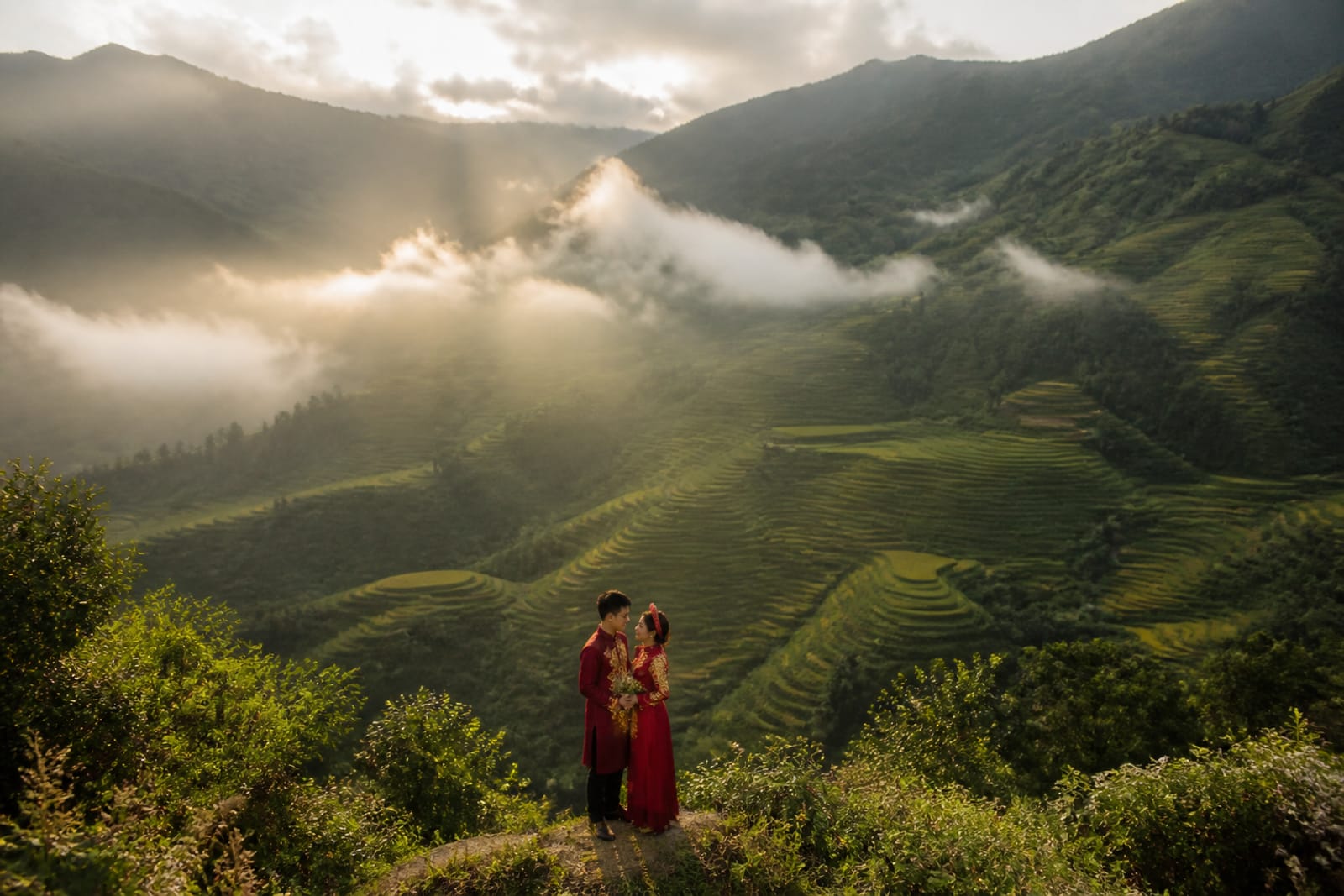
Which traditional Vietnamese wedding elements work best in mountain settings?
Ao dai is the foundation: the fitted áo (tunic) and flowing silk trousers drape dramatically on narrow mountain paths and around seated poses on terrace steps. Avoid heavy embroidery if your shoot involves walking; lighter, tailored styles move better. Silk scarves, beaded hairpins and family heirlooms (rings, bracelets) photograph sharply in close detail when the light is clean. Temple rituals—candle-lighting, incense offerings, family bows—translate to candid frames if you brief the photographer beforehand; Sapa's small family temples feel intimate, not staged.
Ethnic Hmong textiles and woven belts complement ao dai without competing; they add cultural depth and work well in wide shots of you standing among homestay architecture. Avoid bringing both traditional Vietnamese and ethnic Hill Tribe textiles together in one outfit—competing patterns flatten the frame. Choose one: either Vietnamese ao dai with ethnic jewelry, or ao dai with a Hmong woven accessory.
---
Sapa seasons: when do traditional outfits and temple light align?
| Season | Best for | Light & Weather | Why it works | What to watch |
|---|---|---|---|---|
| Mar–May | ao dai, silks, temple detail | Clear mornings, soft side light, cool 15–20°C | Terraces golden; ao dai won't wilt or cling; fog rare; temples well-lit | Rainfall possible; confirm forecast 1 week prior |
| Jun–Aug | moody, fog-wrapped frames | Overcast, diffused, cool but wet | Soft, even light hides harsh midday; fog adds drama | Daily afternoon showers; best to shoot 6–11 am |
| Sep–Nov | harvest gold, dramatic clouds | Clear dawn, fast-changing afternoon light, 10–18°C | Terraces turn gold; ao dai silk glows; side light catches embroidery | Late Oct–Nov: typhoon risk; confirm forecast |
| Dec–Feb | rare frost, sparse crowds, temple quiet | Dry but hazy/cold, weak light, 0–12°C | Few tourists; temples open longer; ao dai layering works | Fog thick mornings; shoot 9 am–3 pm; short daylight |
---
Should you rent ao dai locally or bring your own to Sapa?
Bringing your own ao dai gives you outfit control and guarantees fit; ship it carefully in a dress bag to avoid wrinkles (hand-steam on arrival). Renting locally in Sapa offers convenience and lighter luggage, but stock is limited and tailoring takes 3–5 days—only viable if you arrive early. Hanoi rental shops (Cáo Studio partners include ao dai rental services in Hanoi and Saigon) offer wider choice and next-day delivery; ask about shipping to your Sapa hotel. If you want hair and makeup as well as the ao dai, book a full package: Cáo Studio's makeup & hair at your hotel serves Hanoi and Saigon; for Sapa, arrange with your local photographer's makeup artist (usually available in town or homestays). Cost factors include garment condition, delivery time and rush fees—ask the rental vendor directly.
---
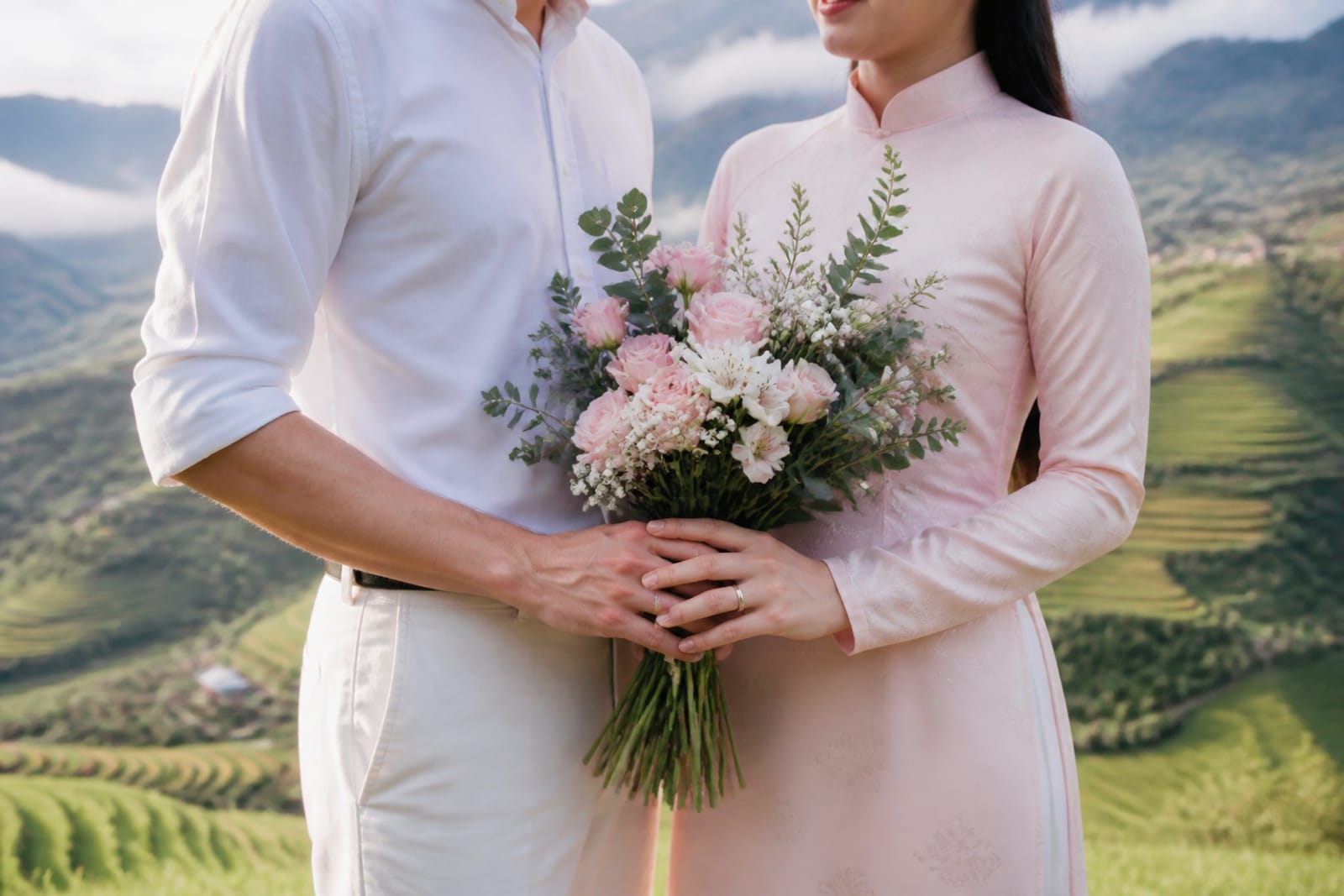
How do you find and vet a local Sapa photographer who understands traditional elements?
Sapa has no major commercial photo studios; most photographers are freelancers who guide tourists on treks. Check portfolios on Instagram or ask your hotel for referrals—look for someone with at least 50 ao dai or wedding shoots (not just trekking portraits). Ask directly: Have you shot ao dai in Sapa? Do you know temple etiquette? Can you work before 8 am or after 4 pm for light? Confirm they own editing software and deliver files within 2–3 weeks. Agree on session length (4–6 hours typical), outfit changes, and how many final edited images you'll receive—put it in a written quote.
Cáo Studio does not operate in Sapa, but if you book an ao dai photoshoot in Hanoi before or after your Sapa trip, we can brief you on what to ask a Sapa photographer and share location scouting tips via WhatsApp. A local Sapa photographer will cost less than flying a Hanoi team, but you trade personalized direction for local knowledge—an honest trade-off.
---
What permits, etiquette and timing do you need before the shoot?
Temples in Sapa accept visitors during morning hours (6–11 am best); avoid during active worship. Ask permission before entering; remove shoes, dress modestly (ao dai fulfills this), and keep audio soft. No permit is needed for photoshoots in public areas, but some homestays and private temple grounds may charge a small fee—ask your guide. Ethnic villages welcome visitors; photograph people only if they agree (offer small prints as thanks). Sunrise shoots start 5:30 am; plan transport the night before. Afternoon rain (especially Jun–Aug) can cancel last-minute; have a backup indoor location (homestay interior, temple steps) or reschedule. Hire a guide as well as the photographer—they navigate terrain, manage timing and smooth cultural interactions.
---
What to check before you book a Sapa photoshoot
- Portfolio: 10+ ao dai or traditional wedding shoots in mountain light, not just trekking portraits.
- Forecast: Check weather 7 days before; avoid typhoon/monsoon predictions (Oct–Nov peaks).
- Outfit plan: Decide on ao dai (bring, rent locally, or rent from Hanoi) and any ethnic textiles; communicate style to photographer.
- Makeup & hair: Book in advance if you want professional styling; many Sapa teams have limited availability.
- Location scouting: Ask the photographer which temples, trails and homestays they'll shoot and whether you can walk the route the day before.
- Timing: Early light (6–8 am) is non-negotiable for sharp, warm frames; afternoon backup locations matter.
- Delivery & files: Confirm edited photo count, delivery timeline and file format (digital only, or prints/album available).
- Cost factors: Travel time from town, number of outfit changes, makeup/hair, and whether guide fees are separate.
- Contact & backup: Ensure the photographer has a local phone number and a WhatsApp for day-of coordination; agree on a rain reschedule date.
---
What's the difference between booking Cáo Studio in Hanoi vs. finding a Sapa photographer?
If you are in Hanoi for 2–3 days before or after Sapa, book an ao dai photoshoot or pre-wedding photoshoot with Cáo Studio. You'll get a full team (photographer, makeup, hair, styling) who know Vietnamese light, culture and ao dai fit. We deliver edited photos and a short vertical film in 48 hours. Sapa requires local expertise—terrain, weather, village etiquette—that no Hanoi team can replicate on a first visit. A local Sapa photographer knows the monsoon calendar, which trails drain after rain, and which homestay owners welcome photo sessions. The trade-off: Hanoi studios offer polished direction and fast turnaround; Sapa freelancers offer authentic local context and lower cost. If you want both, shoot with Cáo Studio in Hanoi for refined ao dai portraits, then hire a Sapa local for mountain wedding rituals.
Ask Cáo Studio via WhatsApp for photographer referrals in Sapa or neighboring Lao Cai; we've worked with international couples on multi-location Vietnam trips and can share vetted contacts and scouting tips.
📸 Book on WhatsApp — ao dai photoshoot
---
FAQ
Can I do a traditional Vietnamese wedding photoshoot in Sapa if I'm not getting married?
Yes. Many couples shoot pre-wedding or anniversary sessions in ao dai without a ceremony. Single travelers and friends also book ao dai shoots for cultural immersion. Discuss your intent (engagement, anniversary, travel memory) with the photographer; they'll tailor poses and locations to your story.
What's the best time of year to shoot ao dai in Sapa without rain delays?
Mar–May and Sep–Nov offer the clearest light and lowest rain risk. Jun–Aug and Oct–Nov peaks are wet; Dec–Feb is cold and foggy but dry (confirm 1 week before). Avoid Tet (late Jan–mid Feb) when transport is chaotic and services close.
Should I hire a guide separately from the photographer in Sapa?
Yes, unless your photographer doubles as a guide. A guide manages village etiquette, finds safe trails and coordinates timing. The photographer focuses on light and framing. Budget for both; ask the photographer whether guide fees are included.
Can Cáo Studio shoot my wedding in Sapa?
No, Cáo Studio operates only in Hanoi, Ho Chi Minh City and Hoi An. But we can book you for an ao dai session in Hanoi before or after your Sapa trip and introduce you to vetted local photographers via WhatsApp. We'll also brief you on what to ask and what to expect.
How many hours should I book for a Sapa traditional photoshoot?
4–6 hours is standard: 2 hours for travel/setup, 2–3 hours on location, 1 hour for outfit changes. Longer sessions (6–8 hours) allow multiple locations and slower, more candid frames. Confirm session length and deliverables (number of edited photos) in your booking quote.
Can I bring my own ao dai from overseas to Sapa, or should I rent there?
Bring your own if you have space and it fits; hand-steam on arrival to remove wrinkles. Renting in Sapa is cheaper but stock is limited; renting from Hanoi (ao dai rental) offers more choice and can be shipped to your hotel (allow 5–7 days). Confirm the rental shop's delivery timeline before you book.
What should I wear under my ao dai during a Sapa shoot?
Wear neutral, fitted undergarments (seamless shorts or briefs, light bra) so the ao dai silhouette stays clean. Avoid bulky or visible lines. The cool Sapa air means you can layer a thin shirt or thermal base under the tunic if you're cold—ask the photographer for advice based on the season.
FAQ
Can I do a traditional Vietnamese wedding photoshoot in Sapa if I'm not getting married?
Yes. Many couples shoot pre-wedding or anniversary sessions in ao dai without a ceremony. Single travelers and friends also book ao dai shoots for cultural immersion. Discuss your intent (engagement, anniversary, travel memory) with the photographer; they'll tailor poses and locations to your story.
What's the best time of year to shoot ao dai in Sapa without rain delays?
Mar–May and Sep–Nov offer the clearest light and lowest rain risk. Jun–Aug and Oct–Nov peaks are wet; Dec–Feb is cold and foggy but dry (confirm 1 week before). Avoid Tet (late Jan–mid Feb) when transport is chaotic and services close.
Should I hire a guide separately from the photographer in Sapa?
Yes, unless your photographer doubles as a guide. A guide manages village etiquette, finds safe trails and coordinates timing. The photographer focuses on light and framing. Budget for both; ask the photographer whether guide fees are included.
Can Cáo Studio shoot my wedding in Sapa?
No, Cáo Studio operates only in Hanoi, Ho Chi Minh City and Hoi An. But we can book you for an ao dai session in Hanoi before or after your Sapa trip and introduce you to vetted local photographers via WhatsApp. We'll also brief you on what to ask and what to expect.
How many hours should I book for a Sapa traditional photoshoot?
4–6 hours is standard: 2 hours for travel/setup, 2–3 hours on location, 1 hour for outfit changes. Longer sessions (6–8 hours) allow multiple locations and slower, more candid frames. Confirm session length and deliverables (number of edited photos) in your booking quote.
Can I bring my own ao dai from overseas to Sapa, or should I rent there?
Bring your own if you have space and it fits; hand-steam on arrival to remove wrinkles. Renting in Sapa is cheaper but stock is limited; renting from Hanoi ([ao dai rental](/ao-dai-rental)) offers more choice and can be shipped to your hotel (allow 5–7 days). Confirm the rental shop's delivery timeline before you book.
What should I wear under my ao dai during a Sapa shoot?
Wear neutral, fitted undergarments (seamless shorts or briefs, light bra) so the ao dai silhouette stays clean. Avoid bulky or visible lines. The cool Sapa air means you can layer a thin shirt or thermal base under the tunic if you're cold—ask the photographer for advice based on the season.
Ao dai, makeup, hair and a local photographer in Hanoi or Saigon — one WhatsApp message.