/ao-dai-photoshoot
Traditional Vietnamese wedding elements for your Phong Nha photos
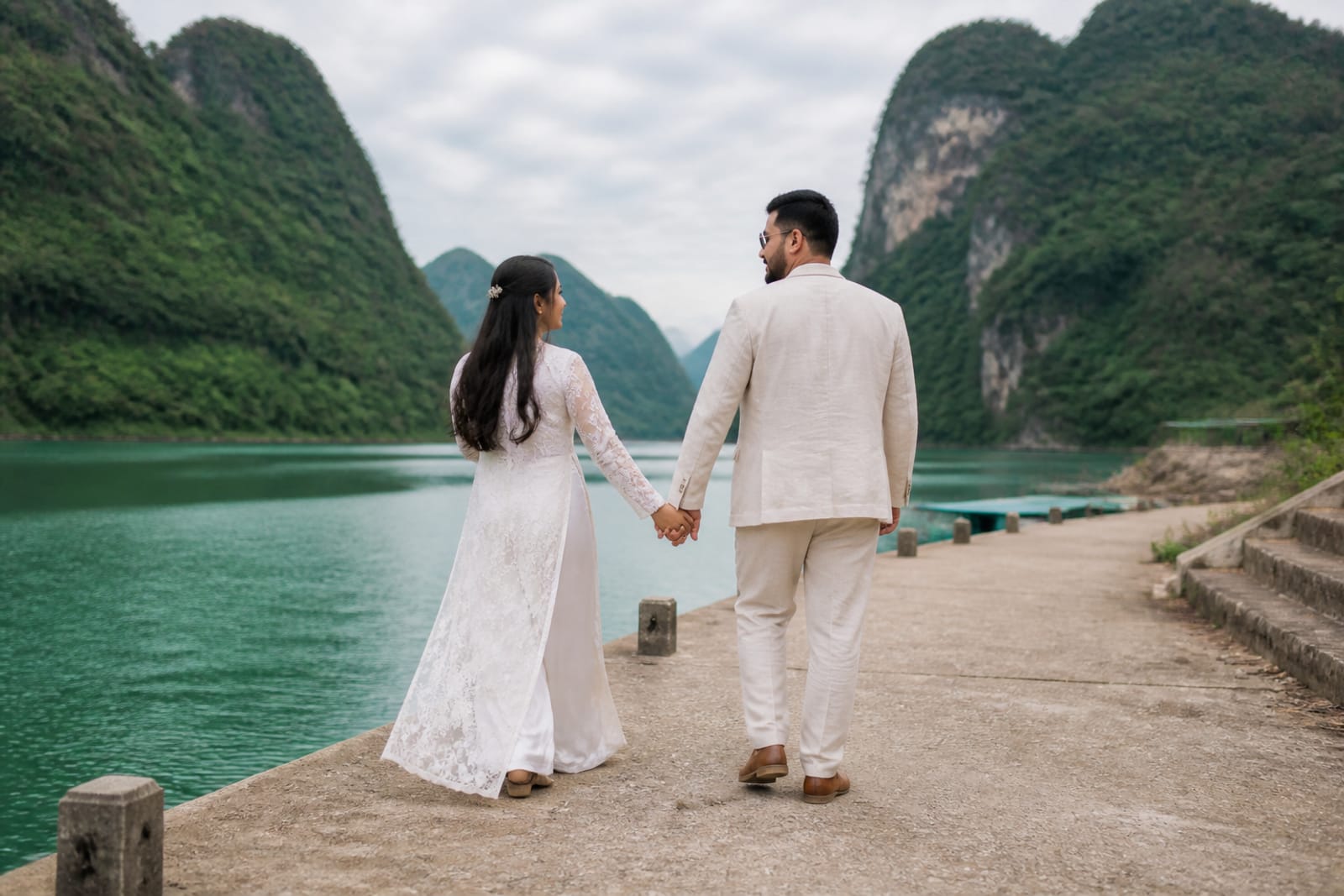
Traditional Vietnamese wedding elements—ao dai, golden jewellery, ceremonial hand-joining, temple offerings—photograph best in Phong Nha during the dry season (Feb–Aug), when light is clearest and monsoon rains won't interrupt. A local photographer experienced in heritage shoots can frame ao dai folds against limestone cliffs and capture ritual moments (like bowing at shrines) without stiffness. Cáo Studio shoots ao dai in Hanoi and Saigon with one team (photographer, makeup artist, stylist); if you're set on Phong Nha, we'll send a planning guide and help you vet a local photographer instead. Budget 2–4 hours for location scouting, outfit changes and editing; confirm weather forecasts one week before and pack a backup indoor venue (hotel, local home) in case rain arrives early. ---
Why does Phong Nha suit traditional Vietnamese wedding photography?
Phong Nha's limestone karst formations create a natural frame for ao dai detail—the fabric's pleats, embroidery and silk sheen read beautifully against grey-green cliffs at distance and in close-up. The Ngo Dong River reflects late afternoon light without harsh contrast, which flatter ceremonial jewellery and pale ao dai dresses. One shoot in a single location (riverside, near caves, temple grounds) lets you capture three styles of shot: wide (you and the landscape), medium (detail of dress and gesture) and intimate (hands, face, veil). Unlike urban settings, Phong Nha's empty roads and sparse foot traffic mean you can move slowly and repeat a moment—bowing toward a shrine, walking hand-in-hand—until the light and emotion align. Because the cave and river system is managed by local authorities, you'll need to scout permitted zones (temples, public riverbanks) one week ahead; a local guide is worth the coordination.
---
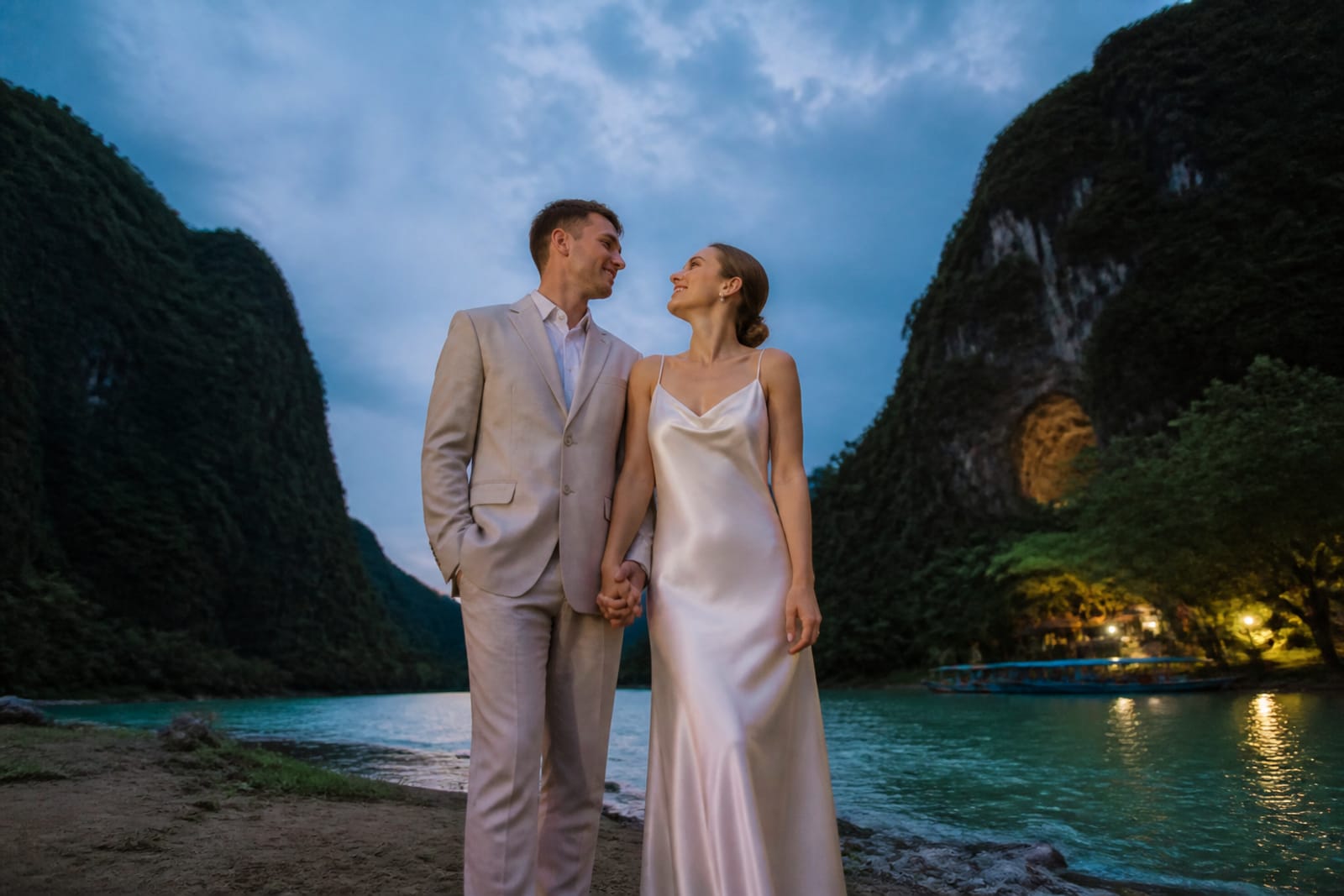
What traditional elements photograph best in Phong Nha's light?
Element | Works best in | Light/season | Why ---|---|---|--- Ao dai with embroidery | Wide and medium shots, riverside | Golden hour (6–7 pm Feb–Aug) | Pleats and threadwork cast micro-shadows; side light lifts silk texture without washing it out Ceremonial jewellery (earrings, necklace, rings) | Close-up and detail | Mid-morning (9–10 am), diffuse sky | Soft light reduces glare; gold reads warm without blown highlights Temple bowing or shrine offering | Medium shot (you at altar, karst behind) | Early morning (6–7 am Feb–Aug) | Mist clears slowly; side light from cave entrance frames your silhouette; crowds at shrines thin before 8 am Hand-joining or ring exchange | Medium and close-up | Golden hour, backlighting | Hands become translucent; rings catch warm light; skin tone deepens Veil or head piece | Medium and detail, outdoors | Overcast or golden hour | No backlighting (fabric flares); side light shows texture and movement when walking
Conclusion: Golden hour (6–7 pm) and early morning (6–7:30 am) are best; avoid midday sun (11 am–3 pm), which flattens detail and casts harsh shadows under the jawline.
---
When is the dry season in Phong Nha, and how does weather affect your shoot?
Phong Nha's dry season runs February to August—the window when you can safely book a full-day or half-day session. From September to December (especially October–November) monsoons bring heavy rain and occasional flooding that closes cave tours and river access; paths become slippery, and ao dai hem trails mud. Typhoons can arrive with little warning (check the national weather bulletin one week before). If you're set on shooting in the shoulder months (late Aug–early Sep or late Jan), book only a 2–3 hour morning session before afternoon downpours start, and arrange a backup indoor venue (your hotel, a local family home, or a temple meeting room). Wind in Feb–Mar can tangle ao dai or veil—pin heavier fabrics, use a stylist's pins and a small fan for movement shots instead. High heat (May–Jul) means your makeup artist needs to work with long-lasting products and bring powder; schedule the longest outdoor time for 6–7:30 am, then move indoors for midday outfit changes.
Conclusion: Book Feb–Aug for reliable light and dry paths; plan a rain backup by September.
---
What's the difference between booking Cáo Studio and hiring a local Phong Nha photographer?
Cáo Studio operates in Hanoi, Ho Chi Minh City and Hoi An—we don't have a Phong Nha base. If Phong Nha is your only option, hire a local photographer, but vet them on one criterion: have they shot traditional Vietnamese wedding elements (ao dai, temple offerings, hand-joining rituals) with lighting intent, not just pose direction? Ask to see their lookbook, specifically images where ao dai fabric reads in texture (not flat), ceremonial moments feel unhurried (not rushed), and background (karst, river) frames the subject instead of distracting. Red flags: portfolios heavy on selfie-style smiling-at-camera shots, no detail or close-up work, vague timelines ("we'll edit when we can"). A strong local photographer will tell you the exact hours she'll shoot, confirm weather 48 hours ahead, and show you edited samples within 2–3 weeks. If you'd prefer a one-team approach (photographer, makeup, stylist, all briefed on the same vision), book an ao dai photoshoot in Hanoi instead—our nearest location is about 3 hours' drive north, and you gain consistency and faster edits.
📸 Book on WhatsApp — ao dai photoshoot
Conclusion: Phong Nha requires a local hire; Hanoi or Ho Chi Minh City gives you one coordinated team.
---
How do you plan the outfit, hair and makeup for a traditional Vietnamese wedding shoot?
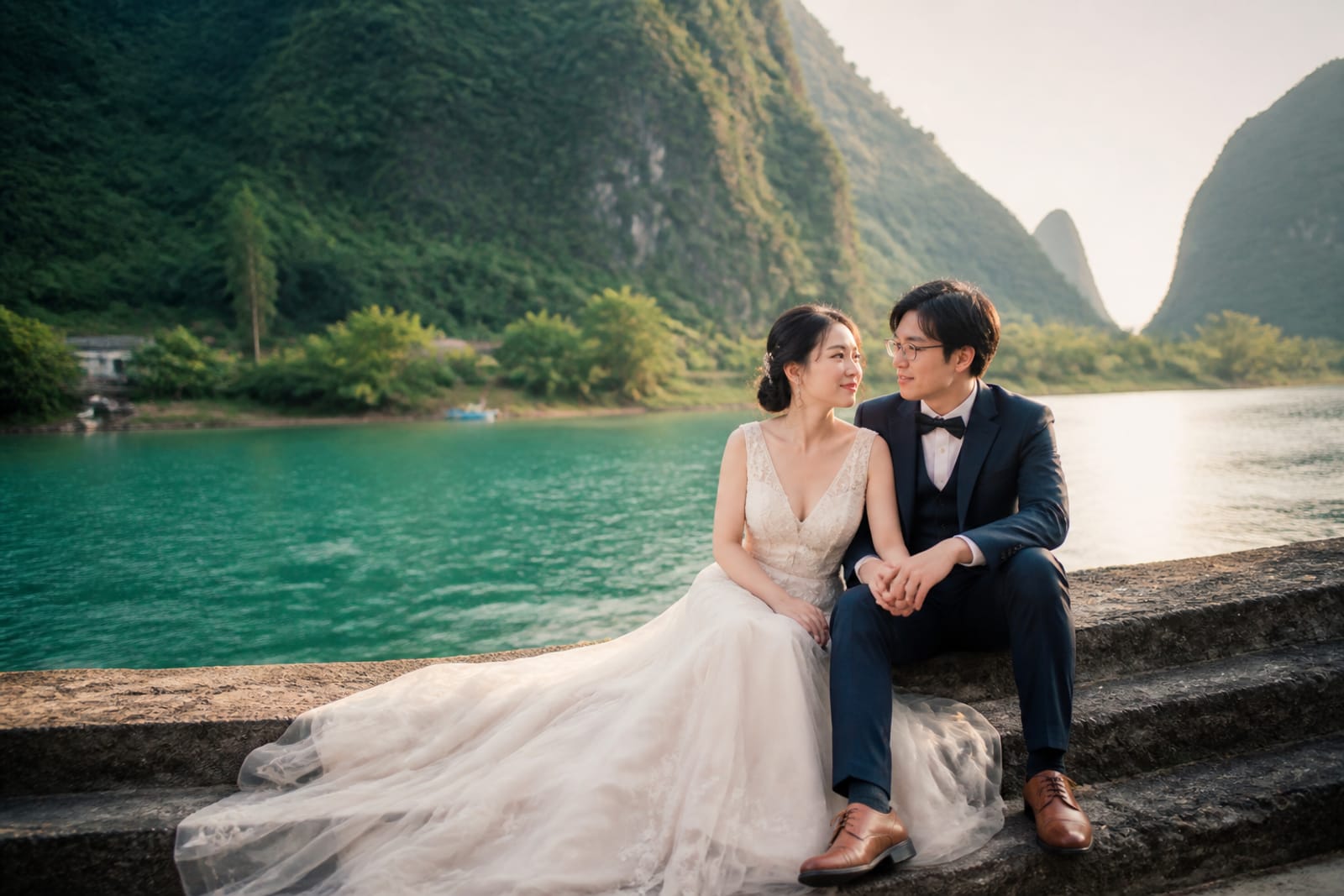
Start with the ao dai 4–6 weeks ahead: decide if you'll rent, commission or bring your own. Rented dresses (from tailor shops in Hanoi, Da Nang, or Ho Chi Minh City) cost less but fit varies; tailored or personal dresses ensure exact length and sleeve fit. Colours matter: white or cream reads pale against grey karst in flat light (choose them for early morning or overcast days); pastels (pale pink, pale yellow) hold detail; deep colours (burgundy, forest green, navy) read richly in golden hour but can disappear in shadow. Pair the ao dai with slim trousers or a long skirt (no shorts or modern dress underneath)—the silhouette must be clean and traditional. Hair should not cover the neckline or ao dai embroidery; updos or side braids work better than long waves. Makeup should last 6–8 hours without retouching in humid heat; request long-wear foundation, waterproof eyeliner and a matte lip colour. If you're planning a makeup & hair at your hotel session before the shoot, book the artist 2 weeks ahead and share reference images of the ao dai colour and your desired style. Avoid heavy contouring (it reads artificial in natural light) and prioritize skin tone match and lip colour that complements both the ao dai and the landscape's cool greens.
Conclusion: Outfit planning takes 4–6 weeks; makeup must be long-wear and understated.
---
What should you check before booking a traditional Vietnamese wedding photoshoot in Phong Nha?
Before you contact a photographer:
- Confirm your travel dates and dry-season window (Feb–Aug preferred)
- Decide on ao dai (rental, tailored, or personal) and share a photo with the photographer for styling advice
- Check Phong Nha's permit calendar (temples close on certain ritual days; some cave areas require guides)
- Book your hotel and transport at least 4 weeks ahead (Phong Nha is a national park with limited lodging)
When you vet the photographer:
- Request a lookbook of ao dai and ceremonial wedding shoots (not just couple poses)
- Ask for their backup plan if rain arrives (indoor venue, rescheduling policy)
- Confirm the session length, number of edited images, and delivery timeline (expect 2–4 weeks)
- Ask if they have a stylist or makeup artist on call; if not, arrange your own or book a makeup & hair service at your hotel
One week before the shoot:
- Check weather forecasts and confirm with the photographer
- Finalize outfit changes and confirm the ao dai fits (length, sleeves, seams)
- Scout locations with the photographer or via photos (riverbank access, temple grounds, cave entrance — some areas may be closed to shooting)
- Arrange backup transport (car service, not solo taxis) and give the photographer your hotel and emergency contact
Conclusion: Vet the photographer's portfolio and plan 6 weeks ahead for permits, outfits and weather.
---
If you're open to shooting in Hanoi or Ho Chi Minh City, Cáo Studio offers ao dai photoshoots with a dedicated photographer, makeup artist and stylist—one team, one message, edited and ready in 48 hours. See our lookbook for examples of traditional ao dai work and pricing for package details.
---
FAQ
Can I wear white ao dai in Phong Nha without it looking washed out?
White reads pale in diffuse light (cloudy days, midday). Book golden hour (6–7 pm Feb–Aug) or early morning (6–7 am) for side light that lifts the fabric. Pair it with warm jewellery and a backdrop (river, karst) for contrast. Overcast days suit white less; pastels are safer.
What's the best time of day to photograph ceremonial hand-joining or ring exchange?
Golden hour (6–7 pm) works best—warm light makes hands translucent and rings glow. Early morning (6–7 am) is second choice if the sky is clear. Avoid 11 am–3 pm, which creates harsh shadows and blown highlights on hands.
Do I need a permit to shoot traditional wedding elements at Phong Nha temples or shrines?
Yes. Most temples and shrines in Phong Nha National Park require permission from local authorities or monks. Ask your photographer to arrange this 1–2 weeks ahead. Some ritual objects (incense, altar offerings) may not be moved for framing—respect the space and work with what's there.
Should I rent my ao dai in Phong Nha or bring one from home?
Bring or commission it. Local Phong Nha rentals are limited; the nearest tailor shops are in Da Nang (1.5 hours south) or Hanoi (4 hours north). Renting from your home city gives you time to fit and style, plus no last-minute panics if the size is wrong.
How long should I budget for a traditional Vietnamese wedding photoshoot in Phong Nha?
Plan 3–4 hours for one location (e.g., riverside with temple backdrop), including outfit changes and makeup touch-ups. Early morning (6–7 am start) and golden hour (6–7 pm start) are ideal but not both in one day unless you have a separate makeup artist on standby. Most photographers deliver 50–100 edited images within 2–4 weeks.
What happens if it rains during my Phong Nha shoot?
September–December, rain is common; Feb–Aug, less likely but possible. Confirm the photographer's reschedule or refund policy before booking. Have a backup indoor venue ready (hotel, local home, shrine shelter). Some photographers can shoot in light rain if the ao dai is protected, but strong downpours close river access and cave areas.
FAQ
Can I wear white ao dai in Phong Nha without it looking washed out?
White reads pale in diffuse light (cloudy days, midday). Book golden hour (6–7 pm Feb–Aug) or early morning (6–7 am) for side light that lifts the fabric. Pair it with warm jewellery and a backdrop (river, karst) for contrast. Overcast days suit white less; pastels are safer.
What's the best time of day to photograph ceremonial hand-joining or ring exchange?
Golden hour (6–7 pm) works best—warm light makes hands translucent and rings glow. Early morning (6–7 am) is second choice if the sky is clear. Avoid 11 am–3 pm, which creates harsh shadows and blown highlights on hands.
Do I need a permit to shoot traditional wedding elements at Phong Nha temples or shrines?
Yes. Most temples and shrines in Phong Nha National Park require permission from local authorities or monks. Ask your photographer to arrange this 1–2 weeks ahead. Some ritual objects (incense, altar offerings) may not be moved for framing—respect the space and work with what's there.
Should I rent my ao dai in Phong Nha or bring one from home?
Bring or commission it. Local Phong Nha rentals are limited; the nearest tailor shops are in Da Nang (1.5 hours south) or Hanoi (4 hours north). Renting from your home city gives you time to fit and style, plus no last-minute panics if the size is wrong.
How long should I budget for a traditional Vietnamese wedding photoshoot in Phong Nha?
Plan 3–4 hours for one location (e.g., riverside with temple backdrop), including outfit changes and makeup touch-ups. Early morning (6–7 am start) and golden hour (6–7 pm start) are ideal but not both in one day unless you have a separate makeup artist on standby. Most photographers deliver 50–100 edited images within 2–4 weeks.
What happens if it rains during my Phong Nha shoot?
September–December, rain is common; Feb–Aug, less likely but possible. Confirm the photographer's reschedule or refund policy before booking. Have a backup indoor venue ready (hotel, local home, shrine shelter). Some photographers can shoot in light rain if the ao dai is protected, but strong downpours close river access and cave areas.
Ao dai, makeup, hair and a local photographer in Hanoi or Saigon — one WhatsApp message.