/pre-wedding-photoshoot
Tran Quoc Pagoda Wedding Photos: Best Time & Light
Tran Quoc Pagoda, perched on the Red River in Hanoi's Tay Ho district, is strongest for pre-wedding photos during autumn (October–November) and winter (December–February) when light is softest and skies are clearer; shoot early morning (6–8 a.m.) or late afternoon (4–6 p.m.) to avoid midday harshness and peak tourist crowds. The pagoda's ancient brick stupa and water views create layered frames, but access roads are narrow and parking limited, so coordinate timing closely with your photographer. Cáo Studio – Makeup & Photoshoot's Hanoi team knows the site's light cycles and crowd patterns—they work around peak tour hours and can scout locations in advance to time your session for the softest, least-interrupted frames.
Tran Quoc Pagoda is Hanoi's oldest pagoda, built in the 6th century on a peninsula jutting into the Red River. Its compact layout and narrow access roads mean light, weather, and timing are not optional—they shape whether your pre-wedding frames sing or feel flat and rushed.
The pagoda's stone staircase, brick stupa, and riverside platform offer classical Vietnamese geometry, but the real pull is the water. Reflections in the river and surrounding moat double your scene, especially in calm morning light. That promise comes with a cost: the site is open to daily tourists, and the narrow lanes between the pagoda and street mean your shoot window is finite. Understanding when light works, when crowds thin, and how your outfit fits the architecture is the difference between frames you'll treasure and rushed, overexposed shots against a backdrop of camera-wielding tour groups.
We've shot here across four seasons and dozens of couples. Below is what actually happens on the ground.
Why does autumn light at Tran Quoc outshine other seasons?
October and November bring the driest, clearest skies in Hanoi's calendar. Direct sun is warm but not punishing; shadows are long and sculptural rather than harsh black bands. The brick stupa glows amber-gold in early morning and late afternoon. Water is still enough to mirror the pagoda's silhouette. Tourist volume drops after the peak September season, so the riverside walks open up for longer takes without strangers photobombing frames. By late November, humidity is low and skies are a clean, pale blue—ideal for the soft, high-key look many couples want in pre-wedding work.
Winter (December–February) is cooler (10–20°C) and often overcast or drizzly, which can flatten color and mood—unless you're chasing moody, intimate tones. Spring (March–April) brings haze and frequent light drizzle that kills contrast. Summer (May–September) is hot, humid, and prone to sudden downpours; the pagoda's stone surfaces are slick, and tourist crowds are thickest. Autumn is the only season where light, comfort, and solitude align.
What time of day gives you the sharpest, least-crowded frames?
Early morning (6–8 a.m.) is Cáo Studio – Makeup & Photoshoot's preferred window. The Red River is calm, reflections are mirror-clean, and the sun is low enough to paint the brick in warm, directional light without blasting the couple's faces. Tourist groups typically don't arrive until 8–9 a.m., so you'll have the staircase and riverside platform nearly to yourselves. The tradeoff: you'll need to arrive by 5:30 a.m. to allow time for hair and makeup touch-ups and location scouting. Many couples choose to do makeup at their hotel beforehand and travel directly to the pagoda—makeup & hair at your hotel is a practical option if you want more sleep and less rushing.
Late afternoon (4–6 p.m.) is the secondary window. The sun sits lower on the western bank, casting the stupa and archways in warm, long-shadow geometry. By 5 p.m., tour buses have left, and the site quiets. The downside: you lose the mirror-calm water reflections that early morning gives—afternoon wind and river traffic ripple the surface. If you shoot after 5:30 p.m., you'll chase the last 20 minutes of useful light before dusk and lose detail in shadows.
Midday (10 a.m.–3 p.m.) is a hard no. Direct overhead sun flattens the brick, overexposes the sky, and casts dark eye-sockets on both of you. Tourist traffic is at its peak, and the narrow staircase becomes a bottleneck.
How does an ao dai vs. Western dress fit the pagoda's architecture?
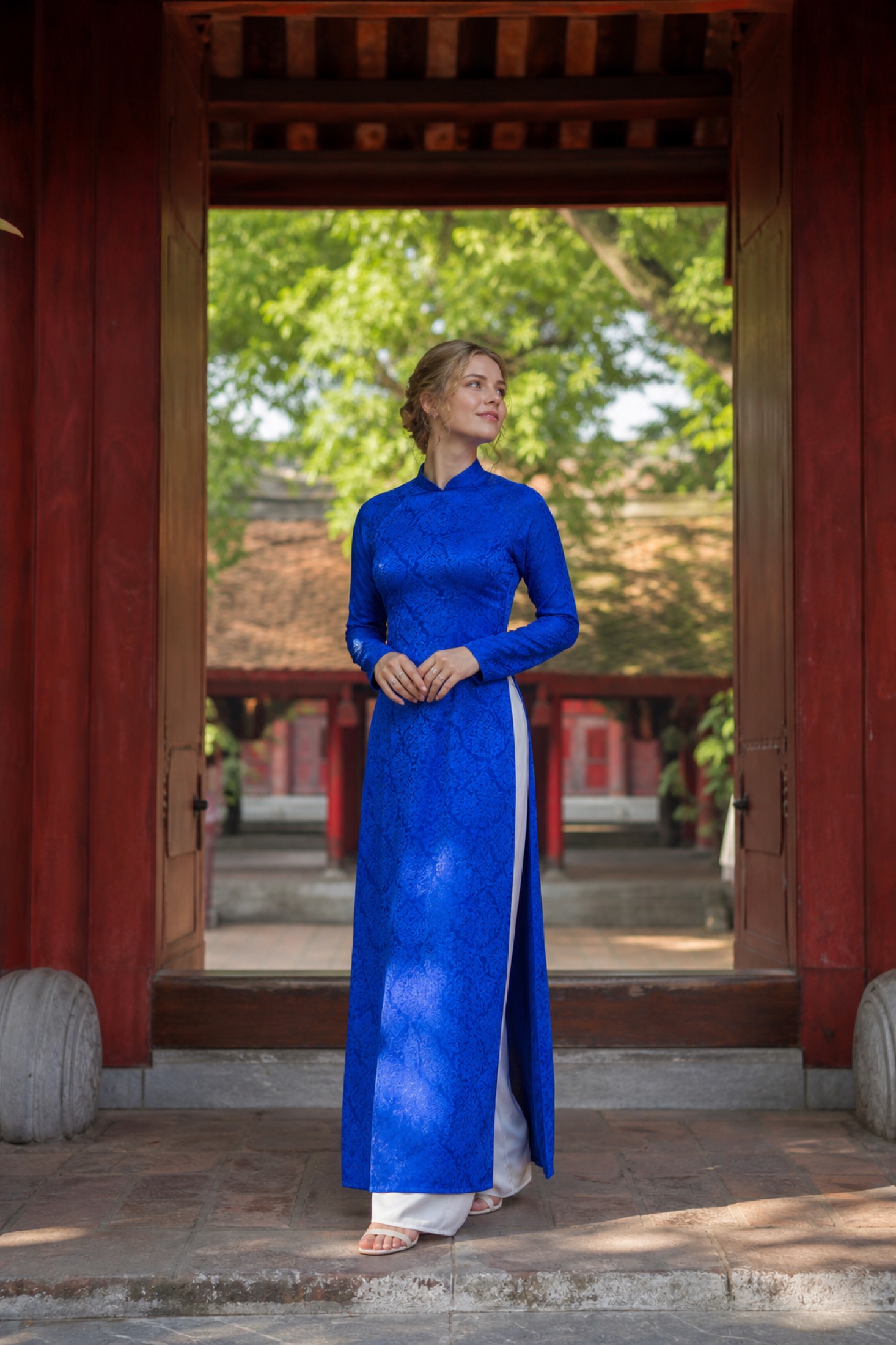
An ao dai is the architectural match. The silk tunic's vertical flow echoes the stupa's height and the staircase's geometry. In morning light, the fabric's sheen catches without glare—reds, blues, and whites separate cleanly from the brick background. An ao dai shoot at Tran Quoc in autumn feels like a photograph waiting to happen.
A Western wedding dress works, but with caveats. A ball gown or heavy train will snag on the pagoda's uneven stone stairs and collect dust during movement—choose a sleek sheath or A-line if you're committed to Western attire. Lighter fabrics (silk, lightweight lace) move better on narrow paths than heavy brocade or multiple layers. Strapless or high-necked designs let skin and jewelry stand out against the ancient stone, whereas very ornate beading can compete with the pagoda's texture rather than complement it.
If you're torn between styles, consider a pre-wedding photoshoot that includes both an ao dai and a Western dress—shoot the ao dai in the morning light at the pagoda, then change for an evening session elsewhere in Hanoi (e.g., old quarter, French colonial sites) where your dress has a different architectural backdrop.
| Outfit choice | Best for | Light & season | Why |
|---|---|---|---|
| Ao dai (silk, jewel tones) | Morning, Oct–Nov | Golden sunrise, calm water | Fabric sheen catches light; vertical line matches stupa geometry |
| Western dress (sleek, light) | Afternoon, Nov–Dec | Soft, angled light; less wind | Simpler lines won't drag on stairs; less bulk in narrow lanes |
| Ao dai + Western dress combo | Split session (morning + evening) | Autumn, coordinated timing | Maximize two looks across different Hanoi locations |
What logistics and permissions do you need to know before booking?
The pagoda is active—monks live and worship here. It's free to enter, but respect matters. Loud music (for dance videos or playback) isn't permitted. Drones are prohibited without prior arrangement with the pagoda administration. Photography for personal (non-commercial) use is allowed; commercial or publication-grade shoots may require a fee or permission letter. Confirm this with your photographer before arrival.
The access road is a single-lane path shared with scooters, taxis, and tour buses. Parking is tight; most couples and photographers arrive on scooter or arrange to be dropped at the pagoda entrance and picked up later. Hanoi's traffic is unpredictable, so budget an extra 15 minutes for arrival delays.
The staircase is approximately 40 stone steps with a rope railing, uneven treads, and no handrails on one side. Wear shoes with grip and test a few steps in advance if you're in a long dress or heels. The riverside platform is flat but can be wet from rain or river spray—shoes that work on damp stone are essential.
Bathrooms and water are not available on-site. Use facilities beforehand. Bring a touch-up kit (powder, lipstick, tissues) and a compact mirror, or arrange for your photographer's assistant to be on hand. Many couples hire a separate makeup artist to travel with them for quick fixes between takes—this is factored into some pre-wedding packages but not all, so confirm on WhatsApp.
How should you plan timing and backup options if weather turns?
Autumn is statistically drier, but Hanoi still sees intermittent drizzle—especially early morning. A light mist can actually enhance mood and reflections, but heavy rain means the stone is slippery and light is too flat to recover post-editing.
Scout the site 2–3 days before your shoot. Check the weather forecast at 24 hours and 3 hours before the session. If rain is predicted for your morning slot, discuss a backup plan with your photographer: shift to late afternoon the same day, move to a second location (e.g., Hanoi's old quarter or French colonial villas), or reschedule to the next clear morning. Rescheduling is always better than pushing through heavy weather and ending with unusable frames.
Alternatively, plan a two-location shoot: 1 hour at Tran Quoc for the pagoda frames, then 1.5–2 hours at a sheltered venue (old quarter, tea house, parks) where light is more forgiving and you won't lose the session to a sudden downpour. This is a common structure in Cáo Studio – Makeup & Photoshoot's pre-wedding packages—ask on WhatsApp for options that combine Tran Quoc with a second location.
---
📸 Book on WhatsApp — pre-wedding shoots
---
The difference between a snapshot and a keepsake is light, timing, and knowing the site. Tran Quoc Pagoda delivers both if you plan around the architecture's rhythm and the river's schedule. Autumn mornings are your golden window. Early arrival, a clear sky, and the right outfit—whether ao dai or dress—will give you frames that feel timeless.
💄 Makeup & hair at your hotel lets you save time and arrive fresh. Or explore our lookbook to see other Hanoi couples' pre-wedding sessions and get inspired for your own shoot.
---
🌸 See the lookbook | 📸 Book on WhatsApp
FAQ
Can we shoot at Tran Quoc Pagoda on a weekend?
Yes, but expect higher tourist traffic. Early morning (before 7 a.m.) is still quieter on weekends. Late afternoon is more crowded and noisier due to weekend leisure visitors. Weekdays are less busy; if your schedule allows, choose Tuesday–Thursday.
Do we need permission from the pagoda to photograph at Tran Quoc?
Personal photography is permitted. Commercial or publication shoots may require a fee or letter—confirm with your photographer before booking. Drones and amplified audio require prior approval from pagoda administration.
What should we wear under an ao dai for comfort during a morning photoshoot?
Wear a fitted slip or tube dress under the áo dàm to avoid bulk and chafing. Avoid heavy undergarments or visible bra lines. Wear undergarments with grip so you don't shift during movement on the stairs.
How long does a typical pre-wedding session at Tran Quoc take?
Most sessions are 1–2 hours. Early morning allows 1.5–2 hours before crowds. Late afternoon is 1–1.5 hours before light fades. Ask on WhatsApp for package details and exact inclusions for your session.
What if rain is forecast on our shoot date?
Light drizzle can add mood, but heavy rain makes the stone unsafe and light unusable. Confirm a backup date or second location with your photographer at booking. Most pre-wedding packages include rescheduling or a second-location option—ask on WhatsApp before committing.
FAQ
Can we shoot at Tran Quoc Pagoda on a weekend?
Yes, but expect higher tourist traffic. Early morning (before 7 a.m.) is still quieter on weekends. Late afternoon is more crowded and noisier due to weekend leisure visitors. Weekdays are less busy; if your schedule allows, choose Tuesday–Thursday.
Do we need permission from the pagoda to photograph at Tran Quoc?
Personal photography is permitted. Commercial or publication shoots may require a fee or letter—confirm with your photographer before booking. Drones and amplified audio require prior approval from pagoda administration.
What should we wear under an ao dai for comfort during a morning photoshoot?
Wear a fitted slip or tube dress under the áo dàm to avoid bulk and chafing. Avoid heavy undergarments or visible bra lines. Wear undergarments with grip so you don't shift during movement on the stairs.
How long does a typical pre-wedding session at Tran Quoc take?
Most sessions are 1–2 hours. Early morning allows 1.5–2 hours before crowds. Late afternoon is 1–1.5 hours before light fades. Ask on WhatsApp for package details and exact inclusions for your session.
What if rain is forecast on our shoot date?
Light drizzle can add mood, but heavy rain makes the stone unsafe and light unusable. Confirm a backup date or second location with your photographer at booking. Most pre-wedding packages include rescheduling or a second-location option—ask on WhatsApp before committing.
Ao dai, makeup, hair and a local photographer in Hanoi or Saigon — one WhatsApp message.