/suit-rental
Tuxedo or ao dai for your Hoi An groom photoshoot: which works best
Both tuxedo and áo dài work beautifully in Hoi An, but timing and light decide which shines. Tuxedos suit February–April (soft, cool morning light) and stay sharp even in harsh midday sun; áo dài—traditional Vietnamese silk tunics—glow in that same mild season and photograph best at sunrise or late afternoon, when fabric texture glows and crowds thin. Hoi An's Ancient Town requires an entrance ticket and is crowded from late morning onward. Cáo Studio – Makeup & Photoshoot runs groom sessions in Hoi An by appointment, arranging travel for your team; you'll need hair and makeup (often included), rental confirmation (suit or áo dài must arrive fitted weeks ahead), and a backup outfit if weather shifts. The choice hinges on your wedding aesthetic, season, and how you want to move—tuxedos demand formal posture; áo dài invite slower, flowing motion.
What makes an áo dài groom look so striking in Hoi An?
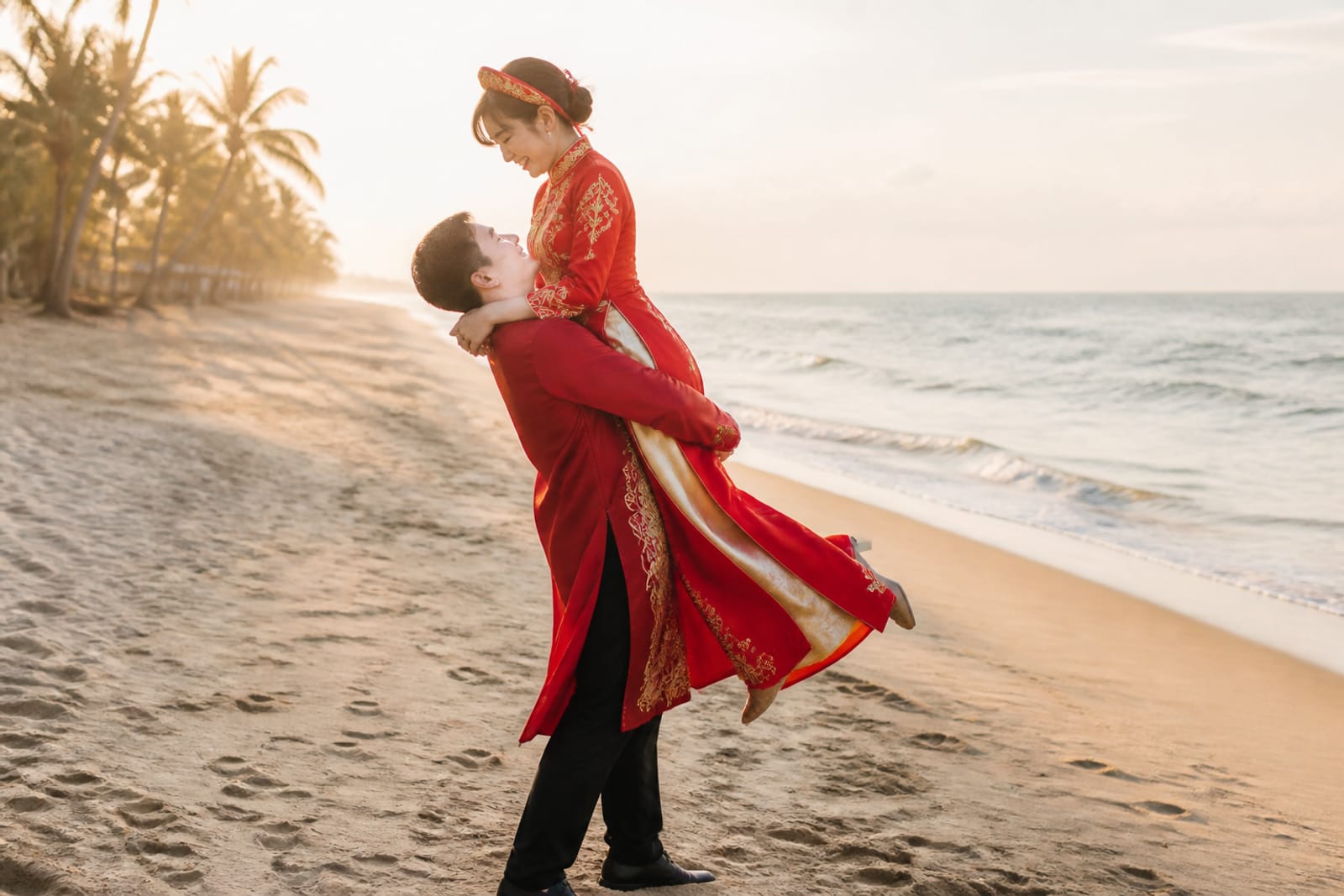
An áo dài is a floor-length, high-necked silk tunic worn over white or patterned trousers. Groom versions are tailored slim, often in jewel tones (navy, burgundy, emerald) or cream silk, and move like fabric art when you walk. In Hoi An's ochre-walled Old Town, a burgundy áo dài reads as romance and cultural respect—essential for couples honoring Vietnamese heritage. The silk catches soft morning light in ways cotton or polyester cannot.
However, áo dài demands sunrise or late-afternoon shoots to avoid harsh shadows on the tunic's face-framing neckline. If your group shoots midday in May–August, the 35°C+ heat will wilt the silk's drape and exhaust your photographer's crew. Tuxedos, by contrast, hold their structure all day.
📸 Book on WhatsApp — ao dai photoshoot
When is each outfit best for Hoi An's light and weather?
| Outfit | Best months | Light sweet spot | Season challenge | Why it matters |
|---|---|---|---|---|
| Áo dài (groom) | Feb–Apr, early May | 5:30–7:00 AM, 4:30–6:30 PM | May–Aug: heat wilts silk; Oct–Nov: flooding risk | Silk needs soft sidelighting; midday sun bleaches color |
| Tuxedo | Feb–Apr, May–Aug, Dec–Jan | 6:00–10:00 AM, late afternoon | Oct–Nov: damp air stains fabric | Structured fabric forgives harsh light; works year-round |
Hoi An's best photo months are February–April: mild air (20–25°C), green rice fields surrounding the town, and low humidity mean your makeup stays set and outfit shape is flawless. October–November brings typhoons and flooding; the Ancient Town itself floods, making ground-level shots impossible. December–January is cool but often drizzly—both work, though overcast light flattens textured fabrics like áo dài silk.
How much does outfit choice affect your shoot cost and timeline?
Outfit cost is not the primary factor—rental logistics are. Both tuxedo and áo dài rentals require fitting sessions 2–4 weeks before your shoot date. If you book from overseas, you'll either mail measurements and receive shipped samples, or arrange a fitting appointment in Hanoi or Ho Chi Minh City before traveling to Hoi An.
Áo dài rentals often include custom tailoring for the groom (neckline shape, sleeve taper, tunic length), adding 1–2 weeks to lead time. A tuxedo rental is faster if the studio stocks your size, but overseas fittings may need a return visit. Ask on WhatsApp whether the studio provides alterations in-house or outsources them—this changes your schedule.
The real cost factor is timing: if you book a sunrise shoot (ideal for áo dài), your crew departs hotels around 4:30 AM and walks the Old Town while it's empty. Midday shoots (tuxedo-friendly) avoid early alarms but mean crowds and bright shadows. Neither inherently costs more; the choice reflects your energy and aesthetic preference.
Áo dài or tuxedo: what does your Hoi An venue and story demand?
Think of your photoshoot's narrative. Are you documenting a traditional Vietnamese wedding day, honoring your family, or creating timeless editorial images for a magazine-style album? Each story points to one outfit.
Áo dài grooms photograph best in Hoi An's temple grounds (Phung Hung Temple, Cua Dai Pagoda), lantern-lined streets, and rice-field backdrops. The outfit reads as "bride's groom" and "cultural celebration." Light silk catches wind beautifully, and the tunic's color (jewel tones are most flattering) stands out against ochre walls and green vegetation. Couples booking a traditional áo dài photoshoot often pair both partners in matching silks—a unified, regal look.
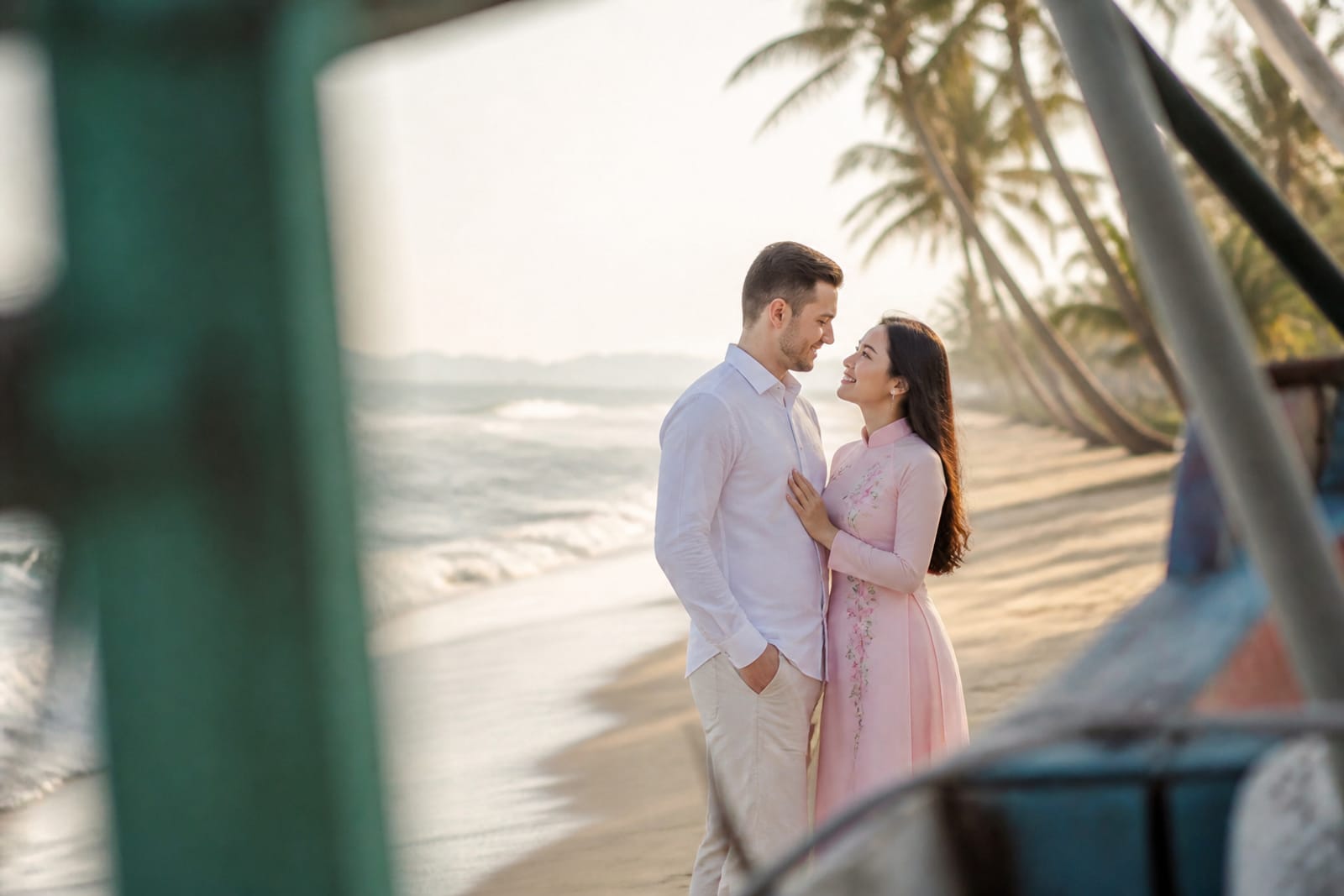
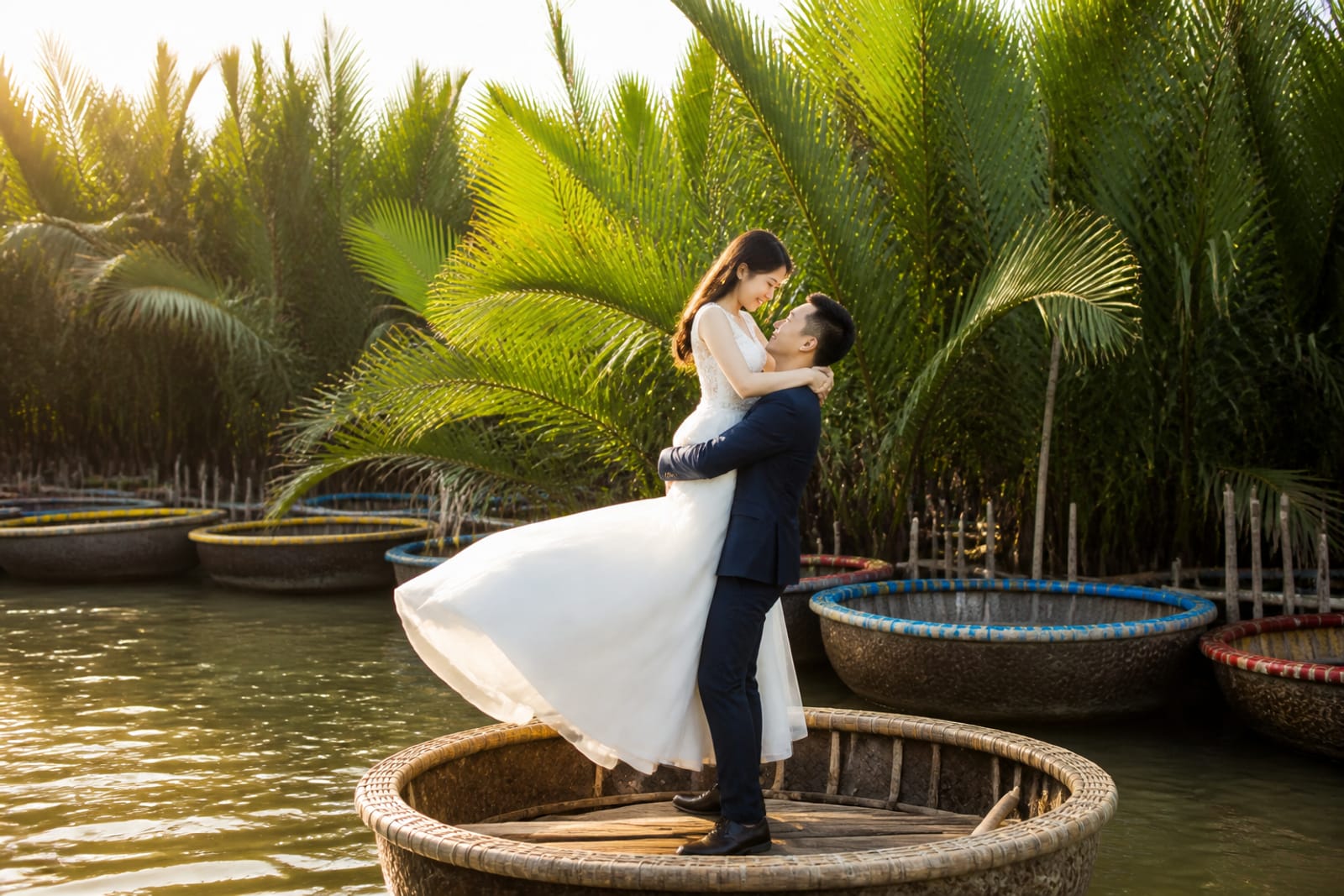
Tuxedo grooms suit editorial and cosmopolitan aesthetics—think urban street-style shots in the Ancient Town's narrow alleys, modern hotel lobbies, or formal restaurant settings. A tuxedo signals "formal event" and "Western sophistication." It photographs cleanly against busy backdrops because the high contrast (black fabric, white shirt, bold tie) reads clearly even when crowds or architecture compete for attention.
Ask yourself: does this shoot tell your family's heritage story, your love story, or both? If heritage is central, áo dài. If you're a Hoi An traveler doing a pre-wedding elopement shoot, tuxedo flexibility often wins. Cáo Studio's pre-wedding & elopement sessions accommodate both—discuss your narrative on WhatsApp so the team plans location, timing, and crew accordingly.
What to check before you book groom photos in Hoi An
- Lead time: Confirm outfit rental requires a fitting appointment 3–4 weeks before the shoot. If you're flying in, ask whether Cáo Studio can arrange a fitting in Hanoi or Saigon before Hoi An, or if Hoi An fittings happen on arrival (this changes your itinerary).
- Backup plan: Ask whether a second outfit is included or available if weather shifts (e.g., rain requires a drier tunic, or midday sun forces an outfit change to keep your look fresh).
- Makeup and hair: Confirm whether your makeup artist travels to Hoi An with the photographer team, or if you're booked into hotel makeup services separate from the photoshoot. This affects timing and cost factors.
- Ancient Town ticket: You'll need an entrance pass. Arrive before 6:30 AM or after 5:00 PM to avoid queues and peak crowds. Cáo Studio coordinates this; verify they obtain tickets on your behalf.
- Sunrise logistics: If booking early light, confirm your crew's arrival time, transportation from your hotel, and whether breakfast is provided. Some shoots run 5:30–8:30 AM; ask the exact duration.
- Edits and timeline: Ask how long you'll wait for edited photos—this is studio-dependent, not outfit-dependent, but it matters when planning your wedding day use.
Tuxedo vs. áo dài: a quick decision checklist
Use this to clarify your preference before messaging Cáo Studio:
- Are you honoring Vietnamese heritage, or creating a contemporary travel photoshoot?
- Do you prefer 4:30 AM sunrise shoots or daytime light?
- Is your venue temples and rice fields, or urban alleys and hotels?
- Are you comfortable in formal Western menswear, or does silk feel more true to you?
- Is your partner also in áo dài (traditional pair) or a wedding dress (mixed aesthetic)?
If three or more answers lean heritage, sunrise, temples, and silk—book áo dài and a couple photoshoot with early-morning timing. If you answer Western, daytime, urban, and formal—tuxedo on any day in February–April works best.
Once you've decided, WhatsApp Cáo Studio with your outfit choice, preferred month, and venue ideas. They'll confirm availability in Hoi An, outline the fitting process, and send a quote for the full session.
FAQ
Can I wear both áo dài and tuxedo in one Hoi An shoot?
Yes. Many couples split their session: sunrise in áo dài at temples (4 hours), then change into tuxedo for late-afternoon street shots. This doubles logistics and shoot duration, so discuss multi-outfit feasibility on WhatsApp—it affects how the team plans locations and lighting.
Is May–August too hot for an áo dài groom photoshoot in Hoi An?
Not impossible, but challenging. Temperatures often exceed 35°C, and silk wilts visibly after an hour outdoors. A sunrise-only shoot (5:30–7:30 AM) is the workaround; midday or afternoon áo dài shoots in May–August risk sweat, fabric creasing, and makeup breakdown. Tuxedo holds structure better in heat, though you'll feel uncomfortable. Confirm crew rest breaks and shaded prep areas on WhatsApp.
Do I need to rent my áo dài in Hoi An, or can I bring one from abroad?
You can bring your own if it fits perfectly and you're confident in airline luggage handling. Most couples rent in Vietnam for expert tailoring, proper fit, and insurance against damage during travel. If you're renting, fittings happen 3–4 weeks before; ask Cáo Studio to recommend a tailor or partner rental shop in Hanoi or Saigon.
What if it rains during my groom photoshoot in Hoi An?
October–November brings typhoon risk and potential flooding; avoid these months if possible. February–April rain is light and rarely cancels shoots. Ask your photographer whether a rain-friendly backup outfit (water-resistant coat, umbrella) is part of the plan, and confirm rescheduling or refund policy before booking.
Does Cáo Studio provide makeup and hair for groom áo dài or tuxedo shoots?
Ask on WhatsApp. Hotel makeup services are separate bookings, often done the morning of your shoot. Confirm whether the photography package includes grooming, or if you arrange it independently. For Hoi An shoots, timing matters—a 5:30 AM sunrise shoot may mean makeup at 4:00 AM in your hotel.
How long does a groom-focused photoshoot usually take in Hoi An?
Exact timings are confirmed on WhatsApp based on your outfit, locations, and light preference. Sunrise áo dài sessions often run 2.5–4 hours; tuxedo daytime shoots vary by location count and outfit changes. Ask for a detailed itinerary so you can plan your partner's schedule and group logistics.
FAQ
Can I wear both áo dài and tuxedo in one Hoi An shoot?
Yes. Many couples split their session: sunrise in áo dài at temples (4 hours), then change into tuxedo for late-afternoon street shots. This doubles logistics and shoot duration, so discuss multi-outfit feasibility on WhatsApp—it affects how the team plans locations and lighting.
Is May–August too hot for an áo dài groom photoshoot in Hoi An?
Not impossible, but challenging. Temperatures often exceed 35°C, and silk wilts visibly after an hour outdoors. A sunrise-only shoot (5:30–7:30 AM) is the workaround; midday or afternoon áo dài shoots in May–August risk sweat, fabric creasing, and makeup breakdown. Tuxedo holds structure better in heat, though you'll feel uncomfortable. Confirm crew rest breaks and shaded prep areas on WhatsApp.
Do I need to rent my áo dài in Hoi An, or can I bring one from abroad?
You can bring your own if it fits perfectly and you're confident in airline luggage handling. Most couples rent in Vietnam for expert tailoring, proper fit, and insurance against damage during travel. If you're renting, fittings happen 3–4 weeks before; ask Cáo Studio to recommend a tailor or partner rental shop in Hanoi or Saigon.
What if it rains during my groom photoshoot in Hoi An?
October–November brings typhoon risk and potential flooding; avoid these months if possible. February–April rain is light and rarely cancels shoots. Ask your photographer whether a rain-friendly backup outfit (water-resistant coat, umbrella) is part of the plan, and confirm rescheduling or refund policy before booking.
Does Cáo Studio provide makeup and hair for groom áo dài or tuxedo shoots?
Ask on WhatsApp. [Hotel makeup services](/makeup-and-hair) are separate bookings, often done the morning of your shoot. Confirm whether the photography package includes grooming, or if you arrange it independently. For Hoi An shoots, timing matters—a 5:30 AM sunrise shoot may mean makeup at 4:00 AM in your hotel.
How long does a groom-focused photoshoot usually take in Hoi An?
Exact timings are confirmed on WhatsApp based on your outfit, locations, and light preference. Sunrise áo dài sessions often run 2.5–4 hours; tuxedo daytime shoots vary by location count and outfit changes. Ask for a detailed itinerary so you can plan your partner's schedule and group logistics.
Ao dai, makeup, hair and a local photographer in Hanoi or Saigon — one WhatsApp message.