/pre-wedding-photoshoot
Two-day pre-wedding photo trip to Phu Quoc: itinerary and route
A two-day pre-wedding photo trip to Phu Quoc spans two locations (usually west-coast beach and Old Town or night market), timed around sunrise and sunset windows, with one full day in between for light variation and outfit changes. The dry season (November–April) offers calm water, clear skies and strong golden light; the rainy season (May–October) brings afternoon downpours and rough seas on the west side, making consistency unpredictable. Cáo Studio operates in Hanoi, Ho Chi Minh City and Hoi An; for Phu Quoc, you'll book a local photographer through verified reviews and a WhatsApp trial booking, then plan your itinerary by tide tables, sunset times (usually 5:45–6:15 pm in dry season) and beach access hours. Avoid midday (11 am–3 pm) harsh overhead light, book accommodation walking distance to your shoot spots, and confirm backup indoor locations (hotel room, covered market, temple corridor) in case of wind or rain.
Why Phu Quoc works for pre-wedding shoots but needs local expertise
Phu Quoc's west coast (Sunset Town, Kiss Bridge, Long Beach, Ong Lang) offers dramatic golden-hour light, shallow turquoise water and white sand — rare in northern Vietnam — but the island's tidal range, wind patterns and seasonal monsoons demand a photographer who knows the exact meter marks, safe wading depths and crowd rhythms. Cáo Studio's strength is one team handling outfit, hair, makeup and camera in Hanoi, Ho Chi Minh City and Hoi An; Phu Quoc requires a local operator who can read the day's light, know which roads flood after rain, and navigate permits for temple or night-market shoots. The island's two-day rhythm suits pre-wedding work: Day 1 catches evening light on the beach (lower tide often means firmer sand for walking shots); Day 2 captures a different location or mood (Old Town's Old Market alley, Sunset Town's evening crowd, or a sunrise return). Plan with a photographer who has shot there in the same month you're travelling — their local calendar (monsoon rains, festival closures, boat schedules) is more reliable than generic online guides.
📸 Book on WhatsApp — ao dai photoshoot
When is the light best for a two-day Phu Quoc shoot?
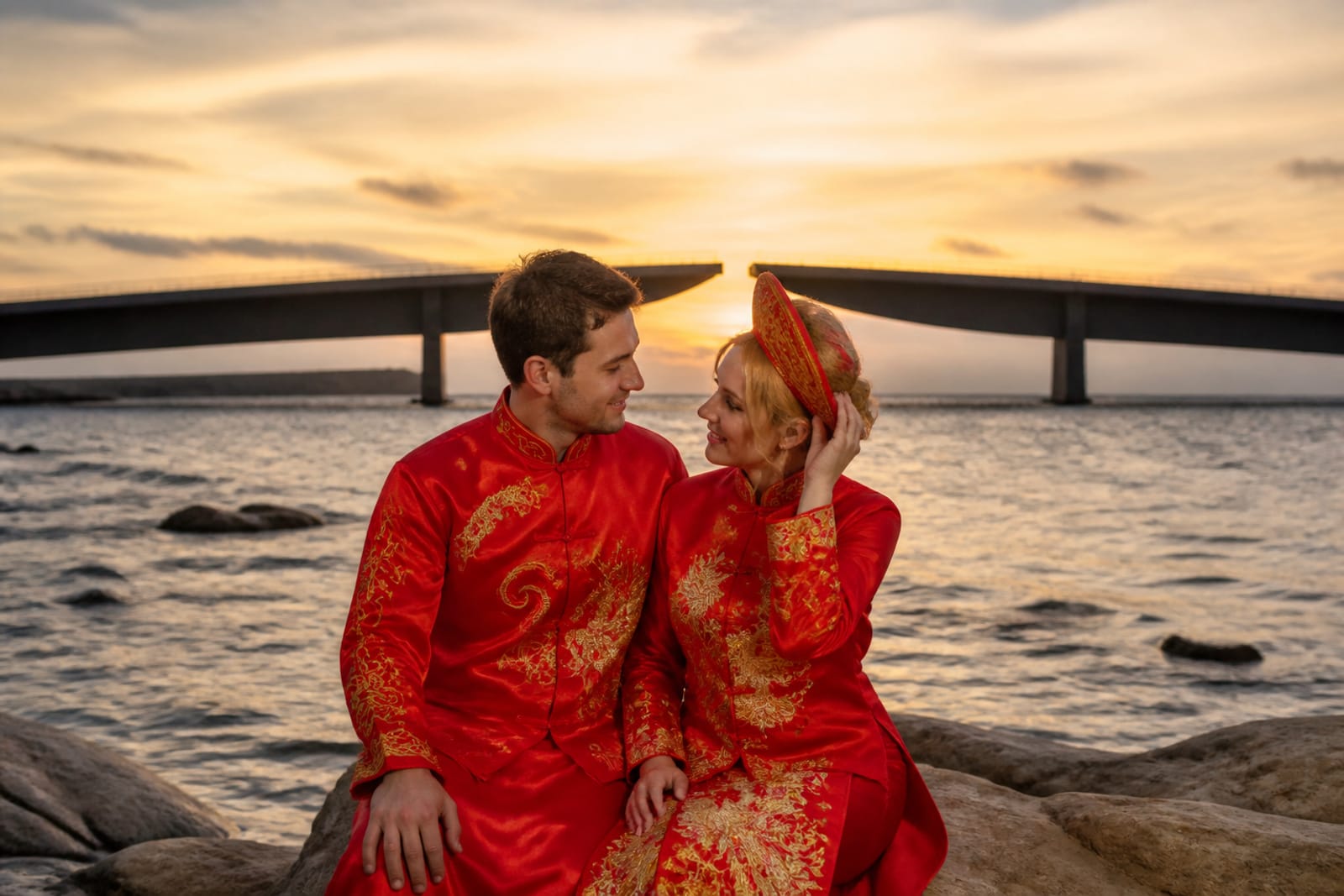
Golden hour dominates pre-wedding work on Phu Quoc: sunset (5:45–6:15 pm, dry season) offers warm side light and silhouettes against the sea; sunrise (5:50–6:20 am, dry season) is cooler and less crowded but requires an early start and willingness to shoot in softer, bluer tones. The dry season (November–April) has predictable clear skies and low wind; the rainy season (May–October) brings afternoon thunderstorms and rougher seas on the west coast, especially October–November. Between golden hours (9 am–11 am and 3 pm–5 pm), light is harsh and overhead — use these slots for outfit changes, makeup touch-ups, or covered locations like Old Market (shaded alleys, natural texture). Avoid midday entirely for beach work; ask your local photographer if they offer a flexible reschedule clause if weather closes the coast on your booked dates. The best two-day rhythm: Day 1 sunset beach (catch the light you came for), Day 2 sunrise market or late-afternoon old-town alley (variety without re-shooting the same angle).
How do you choose outfit changes for sand, salt water and two days?
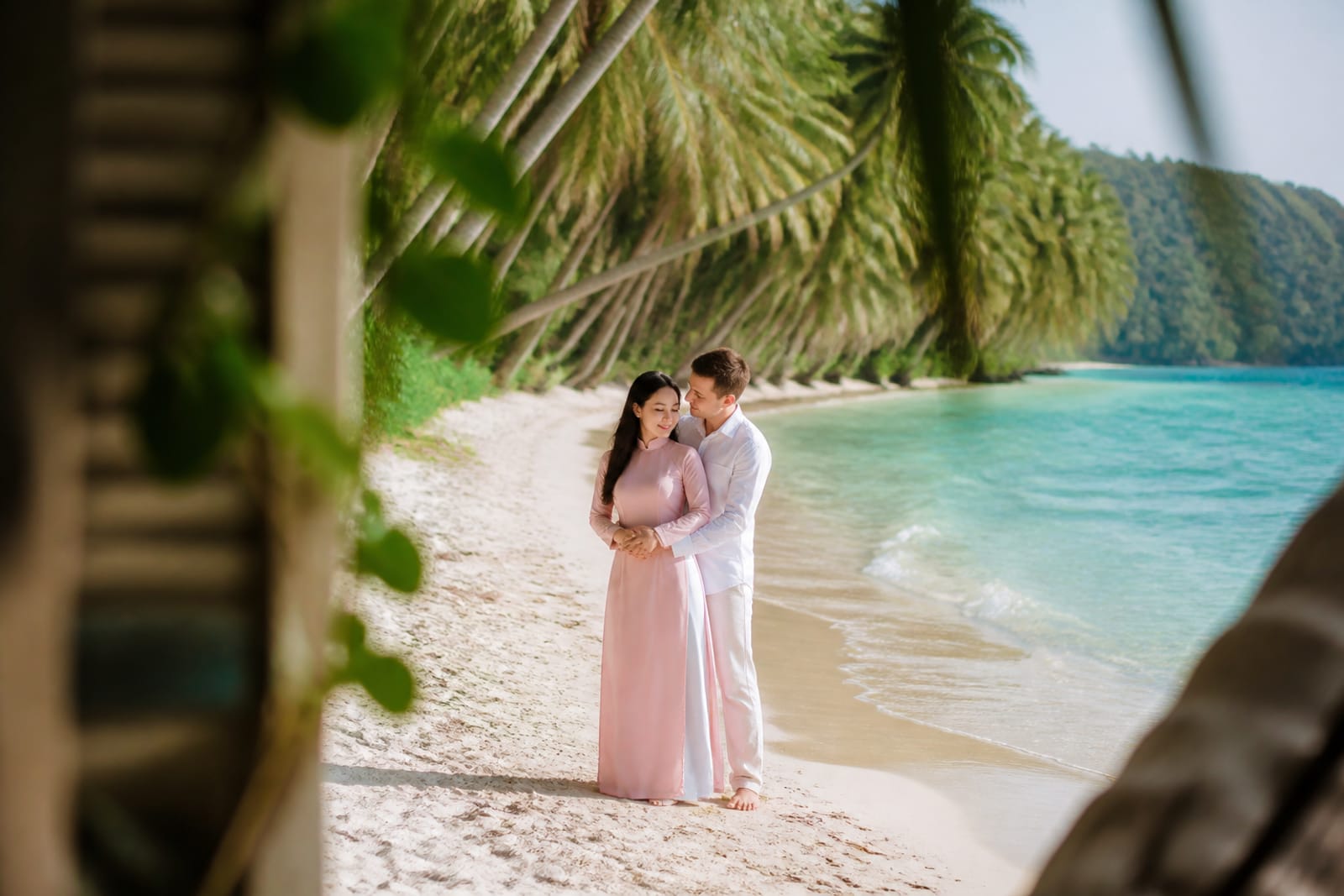
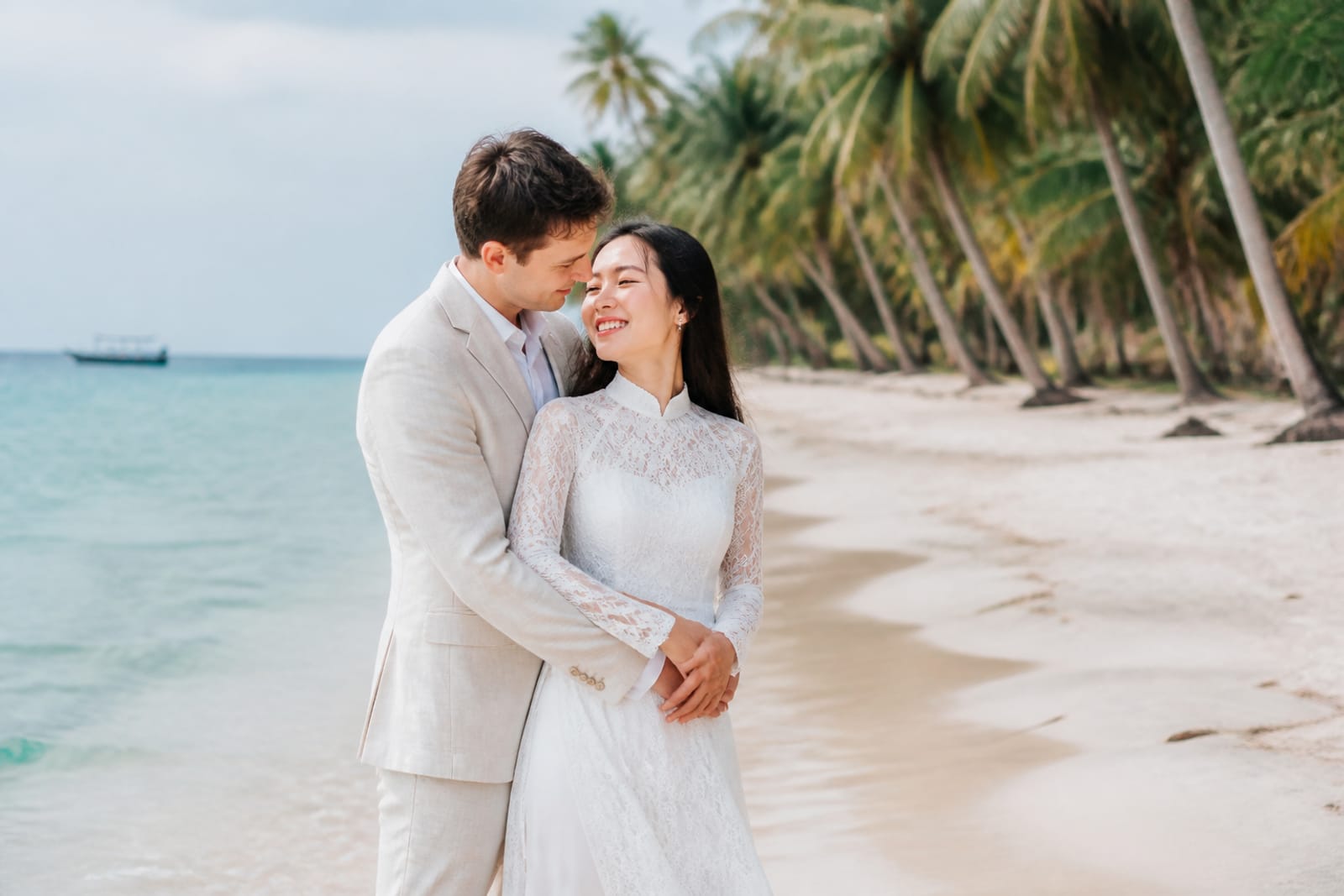
Pre-wedding shoots on Phu Quoc usually include 2–3 outfit changes across two days — a light silk ao dai or white dress for evening beach (salt water will spot silk; ask your photographer if they have a freshwater rinse kit or plastic cover for the walk back), a casual linen shirt and rolled trousers for daytime alley work, and one "moment" outfit (a second ao dai or a formal gown for a stationary shot at sunset, not wading). Fabric choices matter: cotton and linen survive sand and salt; heavy silk or satin absorbs moisture and stains easily. Shoes are either barefoot (sand-walking is slow, ask for a clear route plan from your photographer) or simple rubber sandals (removed before wading, left with a crew member or placed in the shot's background — professional shoots do not leave gear unattended on a public beach). Hair and makeup should be salt-water tested by your artist before the shoot (loose waves survive salt spray better than tight updos; waterproof makeup is non-negotiable). If you're booking Cáo Studio for a pre-wedding shoot in Hanoi, Ho Chi Minh City or Hoi An, our team includes makeup & hair artists who know sand-proof techniques; for Phu Quoc, ask your local photographer if they work with a makeup artist or if you should hire one separately.
| Outfit choice | Day/location | Light timing | Durability note |
|---|---|---|---|
| Light silk or cotton ao dai | Day 1 evening beach | Golden hour (5:45–6:15 pm) | Wading only; salt will spot silk; bring a cover for the walk |
| Linen shirt + rolled trousers | Day 2 alley or market | Mid-morning (9–11 am) or late afternoon (3–5 pm) | Sand-resistant; lightweight for humidity; roll trousers above ankle |
| Formal gown or second ao dai | Day 1 or 2 sunset moment | Golden hour, stationary on dry sand | No wading; keep shoes on; single wide or medium shot only |
| Swimsuit or slip dress | Day 1 if wading deep | Golden hour (short window before sunset) | Plan only if your photographer has rescue/freshwater logistics |
What is the day-by-day route and timing?
Day 1: Evening beach session (sunset focus). Arrive at your accommodation by early afternoon (2–3 pm). Meet your photographer at a specified beach point (e.g., Sunset Town entrance or Kiss Bridge parking) by 5 pm. Confirm parking, bathroom access and a private changing area (most hotels allow guest use for photoshoots; ask in advance). The session runs from 5 pm until 6:30 pm (catching the peak golden hour 5:45–6:15 pm and the softer glow after). Plan to walk the beach, wade in shallow water (photographer frames wide first, then tighter on your faces), and finish with a silhouette shot facing the sunset. Return to your accommodation by 7 pm for dinner and rest.
Day 2: Old Town or market shoot (light varies by start time). Option A: Sunrise (5:50–6:20 am start, meet by 5:30 am). Walk Old Market alleys, temple corridors or the waterfront promenade while blue-hour light is soft. Finish by 7:30 am, return for breakfast. Option B: Late afternoon (3 pm start, finish by 5:30 pm before golden hour). Shoot Old Town (Dinh Cau temple, the night-market alley, covered market) with warm late-light. Bonus: evening light on the water if you're near the waterfront. Confirm which option with your photographer based on your energy and the season's light duration. Both require comfortable walking shoes, a hat or parasol for between-shots, and hydration — Phu Quoc is humid even in dry season.
How do you find and vet a local photographer in Phu Quoc?
Cáo Studio operates in Hanoi, Ho Chi Minh City and Hoi An; for Phu Quoc, search local photographers via Instagram hashtags (#phoquocwedding, #phoquocphotography), verified travel platforms (Airbnb Experiences filtered by photography), or wedding vendor directories based in Vietnam. Vet by: (1) asking for a portfolio shot in the same month and year you're travelling (seasonal light varies, and monsoon reschedules are common); (2) requesting a WhatsApp trial booking — a 30-minute trial session before your full shoot reveals their communication speed, how they direct you (do they guide you naturally, or do you feel posed?), and how they handle unexpected changes (wind, a passing crowd, your comfort); (3) confirming they offer edited files within your timeline (many Phu Quoc photographers deliver in 2–4 weeks; Cáo Studio's standard is 48 hours for shoots in our service areas); (4) asking about rescheduling or weather-cancellation terms in writing. Check reviews mentioning "communication," "punctuality" and "outfit planning" rather than generic praise. A session with a local photographer typically costs less than flying a Hanoi or Saigon team to the island, but you're paying for their local knowledge and day-of logistics.
What logistical checks prevent day-of disappointment?
Before booking:
- Confirm the photographer has a car, or you'll cover transport. Beaches and Old Town are spread across the island; a one-hour drive between spots is normal.
- Ask if makeup and hair are included or separate. Many local photographers work with freelance artists; confirm availability and extra costs.
- Request backup locations (indoor temple, covered market, hotel room with window light) in writing, especially if you're shooting May–October (rainy season).
- Check entry permits: temples in Phu Quoc may require modest dress (knees and shoulders covered between shoots); some night-market shoots need informal permission from vendors.
One week before:
- Confirm outfit plans with your photographer via WhatsApp photos. Ask them if your fabric choices are salt-water safe and if they've shot similar outfits before.
- Ask the photographer to send you tide tables and sunset times for your exact shoot dates.
- Book a hotel or resort with a good Wi-Fi connection if you need to stay in touch with family or work; rural Phu Quoc can have patchy signal.
Day-of checklist:
- Arrive 15 minutes early; bring a paper print-out of your photographer's phone number and the shoot address.
- Bring a light jacket or sarong (wind picks up at sunset, and you may feel cold while wading even in dry season).
- Have cash on hand for parking, any informal vendor fees, or a boat-ride photo bonus if your photographer suggests it.
- Confirm you have freshwater available for a quick rinse if you wade (salt water dries hair and skin; a rinse extends comfort).
Should you hire Cáo Studio for a pre-wedding shoot elsewhere and visit Phu Quoc separately?
Yes, if your timeline and budget allow. Cáo Studio's pre-wedding photoshoot in Hanoi, Ho Chi Minh City or Hoi An includes one team (photographer, makeup, hair, outfit coordination) shooting one cohesive message across 48 hours of edits and delivery — that certainty suits travel-light couples. Many couples book a couple's photoshoot or ao dai session in Hanoi or Saigon 2–3 weeks before their wedding, then holiday in Phu Quoc with a local photographer for casual beach frames (often more relaxed, fewer outfit changes, lighter editing). This split approach lets you control pre-wedding formality (Cáo Studio's directed, cinematic style) while keeping Phu Quoc casual. Discuss your timeline and style with Cáo Studio on WhatsApp; if you're already planning a Hanoi or Saigon session, we can suggest Phu Quoc photographers who match our aesthetic.
FAQ
Can we shoot a full pre-wedding in Phu Quoc in one day?
One day is tight and light-dependent. A single golden-hour session (sunset or sunrise) gives 45 minutes of peak light; adding a second location requires 30–45 minutes of travel time and a second golden-hour window (either next morning or evening two days later). Two days spreads the sessions, allows outfit and location variety, and gives backup time if weather closes the beach. Ask your local photographer if a condensed one-day schedule is possible for your dates.
What is the best month for a Phu Quoc pre-wedding shoot?
November–April (dry season) offers calm seas, clear skies and predictable light. December–January has slightly cooler weather and fewer rainstorms; March–April is warmer and busier. Avoid October–November (tail end of monsoon and typhoon risk) and May–September (frequent afternoon downpours, rough west-coast seas). Book your photographer at least six weeks in advance for peak-season dates.
Do we need local permits to shoot on Phu Quoc beaches or in temples?
Public beaches don't require permits, but some resorts restrict commercial filming; ask your hotel if a pre-wedding shoot needs notice. Temples (Dinh Cau, Sung Hung) request modest dress (covered shoulders and knees between shots) and may ask a small donation if you're using flash or causing disruption. Confirm with your photographer; they usually handle these courtesies.
Can we reschedule if the weather is bad on our shoot date?
Most local photographers include a rescheduling clause, but terms vary. Check your booking contract in writing. Phu Quoc's dry season (Nov–Apr) has a low rain risk, but afternoon thunderstorms can occur; ask if your photographer offers a weather-backup date within 2–3 days or a partial refund if you must leave the island.
What is the cost difference between a Phu Quoc local photographer and a Cáo Studio team from Hanoi or Saigon?
A local Phu Quoc photographer typically costs less because they have no travel time or accommodation fees. Cáo Studio's pricing includes travel to Phu Quoc only by arrangement (ask on WhatsApp); a mainland team flying to the island adds transport and logistics costs. For a two-day pre-wedding shoot, a local operator is often more practical and affordable; Cáo Studio suits couples pre-wedding-booking in Hanoi, Ho Chi Minh City or Hoi An as part of their wider trip.
FAQ
Can we shoot a full pre-wedding in Phu Quoc in one day?
One day is tight and light-dependent. A single golden-hour session (sunset or sunrise) gives 45 minutes of peak light; adding a second location requires 30–45 minutes of travel time and a second golden-hour window (either next morning or evening two days later). Two days spreads the sessions, allows outfit and location variety, and gives backup time if weather closes the beach. Ask your local photographer if a condensed one-day schedule is possible for your dates.
What is the best month for a Phu Quoc pre-wedding shoot?
November–April (dry season) offers calm seas, clear skies and predictable light. December–January has slightly cooler weather and fewer rainstorms; March–April is warmer and busier. Avoid October–November (tail end of monsoon and typhoon risk) and May–September (frequent afternoon downpours, rough west-coast seas). Book your photographer at least six weeks in advance for peak-season dates.
Do we need local permits to shoot on Phu Quoc beaches or in temples?
Public beaches don't require permits, but some resorts restrict commercial filming; ask your hotel if a pre-wedding shoot needs notice. Temples (Dinh Cau, Sung Hung) request modest dress (covered shoulders and knees between shots) and may ask a small donation if you're using flash or causing disruption. Confirm with your photographer; they usually handle these courtesies.
Can we reschedule if the weather is bad on our shoot date?
Most local photographers include a rescheduling clause, but terms vary. Check your booking contract in writing. Phu Quoc's dry season (Nov–Apr) has a low rain risk, but afternoon thunderstorms can occur; ask if your photographer offers a weather-backup date within 2–3 days or a partial refund if you must leave the island.
What is the cost difference between a Phu Quoc local photographer and a Cáo Studio team from Hanoi or Saigon?
A local Phu Quoc photographer typically costs less because they have no travel time or accommodation fees. Cáo Studio's pricing includes travel to Phu Quoc only by arrangement (ask on WhatsApp); a mainland team flying to the island adds transport and logistics costs. For a two-day pre-wedding shoot, a local operator is often more practical and affordable; Cáo Studio suits couples pre-wedding-booking in Hanoi, Ho Chi Minh City or Hoi An as part of their wider trip.
Ao dai, makeup, hair and a local photographer in Hanoi or Saigon — one WhatsApp message.