/pre-wedding-photoshoot
Vietnam pre-wedding photoshoot for Chinese couples: planning guide
A pre-wedding photoshoot in Vietnam is a 4–8 hour session (one or two days) in Hanoi, Ho Chi Minh City, or Hoi An where you wear multiple outfits—often including an áo dài—across carefully scouted locations. Light, weather, and crowd density shift dramatically by month and city. Cáo Studio – Makeup & Photoshoot, which operates three Hanoi branches and one Saigon branch, designs sessions for international couples (especially Mandarin-speaking clients) with a dedicated approach: pre-shoot consultation, professional makeup and hair on location or at your hotel, a creative director who scouts sites and communicates the vision, and edited digital files delivered within weeks. Key decision: book a studio with on-ground logistics and cultural fluency (temples, street etiquette, light timing) rather than a freelancer managing your shoot solo. The biggest mistakes are shooting in the rainy season (October–November for central Vietnam; May–September for the north) and underestimating how a crowded Old Quarter differs from a peaceful rural village. Budget for season (dry seasons cost more), location travel, and outfit rentals or tailoring. ---
Where should we shoot: Hanoi, Ho Chi Minh City or Hoi An?
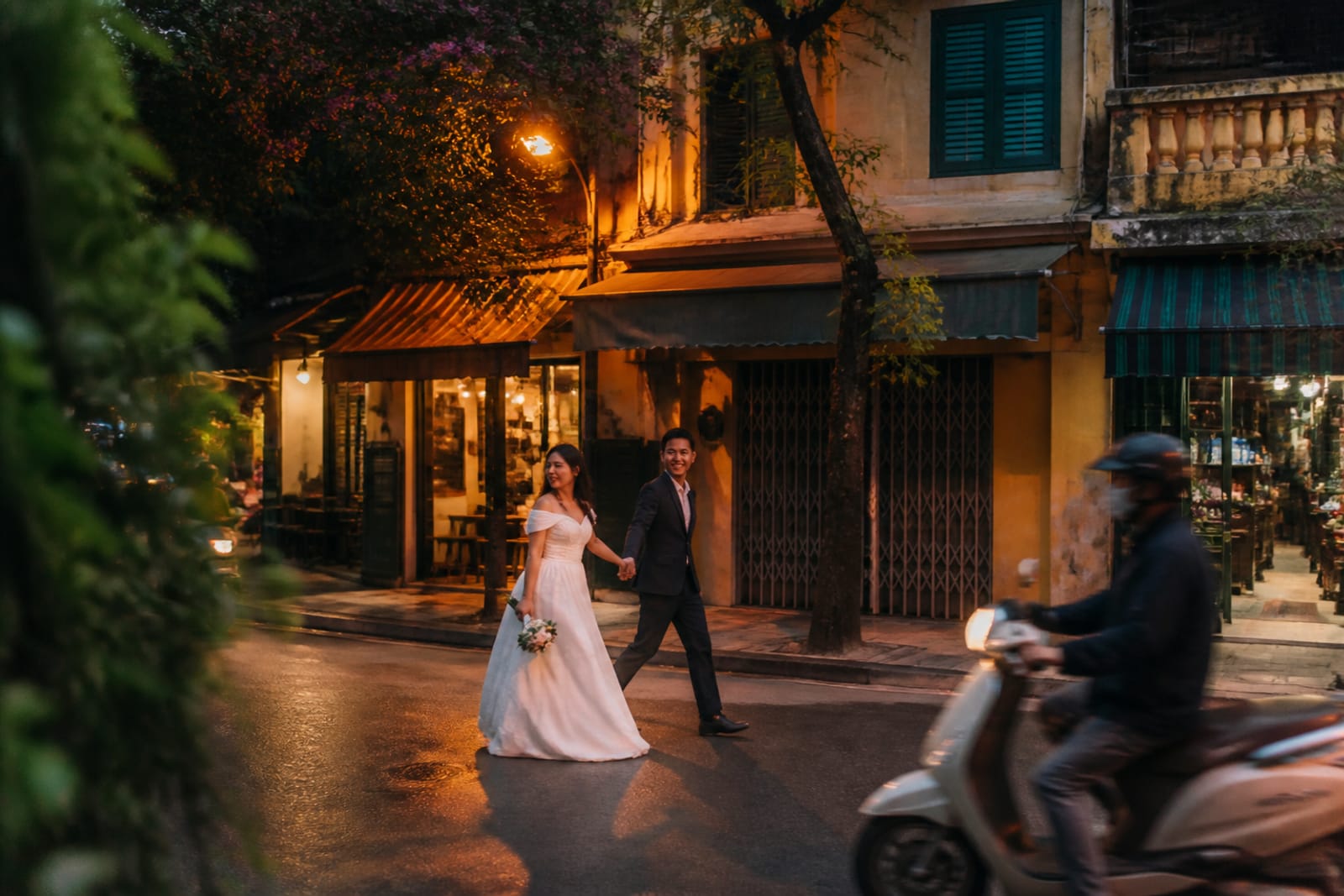
Each city offers a distinct aesthetic and practical trade-offs. Hanoi delivers moody Old Quarter colonial architecture, water reflections at Hoan Kiem Lake at sunrise, and rural ao dai backdrops in nearby villages—best in cool, clear months (November–February). Ho Chi Minh City suits couples who want tropical greenery, modern skyline contrast, and year-round warmth; light is harsher midday but golden-hour crowds are manageable if your team books early slots. Hoi An, Vietnam's most photogenic ancient town, offers lantern-lit old streets and riverside reflections—ask on WhatsApp for Hoi An dates, as Cáo Studio's team travels by appointment. Choose based on your preferred mood (moody vs. tropical), your timeline (Tet closures mid-January to mid-February), and how much travel time you have. Hanoi suits couples with 3–4 days; Saigon works for 2–3 days; Hoi An requires a dedicated trip.
📸 Book on WhatsApp — pre-wedding photoshoot
Which season gives the best light and fewest crowds?
Light quality and weather predictability differ sharply across Vietnam's three climate zones. Northern Vietnam (Hanoi) has crisp, diffused light November–February; May–September brings haze, humidity, and afternoon thunderstorms that ruin shoots. Central coast (Hoi An, Da Nang) is clearest February–August; October–November is typhoon and flood season—avoid it. Southern Vietnam (Ho Chi Minh City) is driest December–April; May–November brings hot, humid afternoons with short downpours. Crowds peak just before Tet (mid-January) and during summer holidays (July–August). Optimal windows: early November for Hanoi (cool, clear, pre-holiday quiet), March–April for Saigon (warm but not stifling), and March–July for Hoi An (sun without monsoon). Book your date 6–8 weeks ahead in peak seasons to secure your preferred locations and crew availability.
What outfits and styling work best for a Chinese couple's vision?
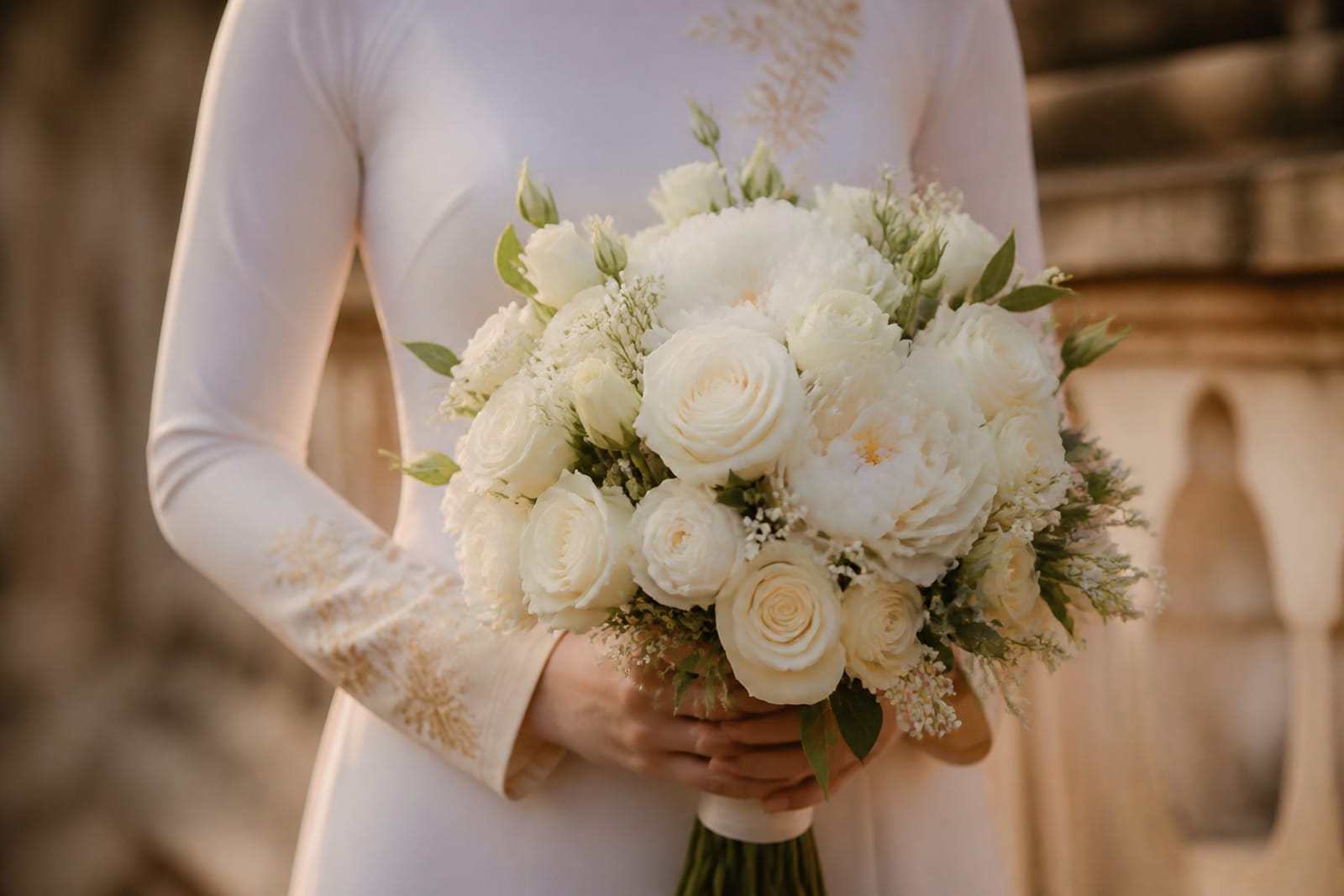
Most Chinese couples pair Western wedding wear (white dress, dark suit) with a red áo dài or áo dài in pastels for contrast and cultural resonance. An áo dài rental costs less than international shipping and fits the setting; ask on WhatsApp for rental partners. Makeup should suit both warm and cool tones in your outfits and the season's light—Cáo Studio's makeup team works with Mandarin-speaking clients to match your palette. Bring or rent a second outfit (city wear, ethnic-inspired, or casual) for location variety; three outfits stretch the shoot into a full narrative. Hair should hold through humidity and wind; discuss weather-proofing with your stylist at the pre-shoot call. Avoid all-white outfits near water (reflections wash out faces); darker accents or jewel tones photograph stronger. Plan outfit changes at a nearby hotel or studio—rushing between outdoor sites costs shoot time and stresses styling.
| Outfit type | Best for | Light conditions | Why it works |
|---|---|---|---|
| White dress + dark suit | Formal, timeless | Golden hour, overcast | Classic contrast, suits all seasons |
| Red áo dài pairing | Cultural storytelling, vibrant | Soft morning light | Pops against greenery; avoids harsh midday shadows |
| Casual/local wear | Candid, lifestyle feel | Dappled shade, overcast | Blends into street scenes; forgiving in poor light |
| Ethnic or designer áo dài | Luxury editorial | Clear morning or late afternoon | Drape and embroidery show detail; requires ideal light |
Should we hire a studio or a freelance photographer?
Studio (Cáo Studio – Makeup & Photoshoot): you get a creative director who manages locations, timing, and permits; on-call makeup and hair; scouted sites with backup plans if weather shifts; cultural guidance (temple etiquette, street photography rules); and a consistent edit style. Studios handle logistics so you focus on posing and emotion. Pricing depends on date (peak season costs more), location travel, and number of outfits; ask on WhatsApp for a quote.
Freelance photographer: lower entry cost, often personable, but you manage transportation, hair/makeup hiring, location scouting, and weather pivots. A solo shooter cannot simultaneously pose you, watch light, and ensure your makeup holds in humidity. Freelancers rarely have permits for closed temples or Old Quarter early-morning shoots; delays and retakes eat shoot time. Best for couples comfortable directing themselves and with flexible timelines.
Verdict: if you have 1–2 days and want stress-free, polished results, a studio saves money in the long run (no reshoot fees, no missed light windows, no failed backup locations). If you have a week and enjoy logistical problem-solving, a freelancer is viable—but hire a local fixer to scout and coordinate.
What do we need to check before booking?
Use this checklist to avoid regrets:
- Timeline: confirm delivery date for edited files (weeks, not months).
- Inclusions: ask exactly what is included—number of edited images, outfit rentals, makeup, location permits, travel time—rather than assuming package terms.
- Cancellation policy: typhoon season (Oct–Nov) and Tet closures (mid-Jan to mid-Feb) happen; confirm reschedule or refund terms in writing.
- Language: confirm your photographer or creative director speaks Mandarin or English fluently; miscommunication on the shoot day ruins vision and timing.
- Location permits: ask if the studio secures temple, heritage site, or private venue permits—you should never handle this yourself as a foreigner.
- Backup plan: how does the studio pivot if rain floods your morning location? Do they have scouted alternatives within walking distance?
- Outfit logistics: can you rent locally, or do you ship dresses? Rental is faster; confirm sizing and fitting time before the shoot.
- Contact method: Cáo Studio confirms all details on WhatsApp (+84 338 762 340); use this channel, never email assumptions.
See Cáo Studio's FAQ for common questions; most answers clarify before you commit.
How does the shoot day actually unfold?
A typical full-day shoot (6–8 hours) starts before sunrise at your first location—often a lake or temple—when light is soft and streets are quiet. Your makeup and hair team arrives at your hotel 1–2 hours before and travels with you. The creative director briefs you on poses and light during the first 20 minutes; expect 30–45 minutes per location, then a 15–20 minute outfit change. Lunch is a natural break midday when light is harsh anyway. Afternoon moves indoors or to shaded venues (old buildings, lantern-lit streets, covered markets). The shoot wraps 1–2 hours before sunset to avoid rushed final images. Expect 500–1,000 raw frames; the studio selects, color-corrects, and delivers edited files in batches over 2–4 weeks. Rain, unexpected crowds (street festivals, school outings), or a location closing mid-shoot require quick pivots—studios with backup sites and permits handle this; freelancers often cannot.
---
What to check before you book
- Confirm your studio speaks your language (Mandarin or English fluently—not just through translation apps).
- Ask for a signed agreement that lists exactly which locations are included and what happens if weather forces a reschedule.
- Request a sample shoot day timeline so you know when to wake up, when outfit changes happen, and when you'll be back at your hotel.
- Verify all permits are studio's responsibility—you should never apply for temple or heritage-site permits as a foreign visitor.
- Check delivery dates for edited images, not vague promises like "soon."
FAQ
Can we shoot across multiple cities (Hanoi, Da Nang, Hoi An) in one trip?
Yes, but costly in crew travel time. Shoot 1–2 days per city; ask Cáo Studio on WhatsApp whether multi-city rates apply or if you book separate sessions. Hoi An requires advance notice for the team to travel.
What happens if typhoon season rain ruins our Hoi An shoot in October?
Reschedule to March–July when weather is predictable. October–November is high-risk; avoid booking then unless you accept full weather cancellation risk and have travel insurance.
Do we need to rent áo dài, or can we bring our own from China?
Both work. Rentals are faster (fitted locally, no customs hassle); bringing your own risks damage and requires careful packing. Ask your studio to recommend trusted rental partners before you decide.
How many outfits do we need for a full-day shoot?
Two outfits (e.g., white dress + red áo dài) fill 6–8 hours comfortably. Three outfits extend variety but add logistics stress. Check with your studio—more outfits may incur additional fees depending on session length.
Can we shoot with a freelancer for a lower cost, then do makeup ourselves?
Possible, but risky. Professional makeup holds through sweat, humidity, and harsh light; DIY makeup often fades by midday, especially in tropical heat. If budget is tight, ask studios about simplified packages with fewer outfits rather than cutting makeup.
FAQ
Can we shoot across multiple cities (Hanoi, Da Nang, Hoi An) in one trip?
Yes, but costly in crew travel time. Shoot 1–2 days per city; ask Cáo Studio on WhatsApp whether multi-city rates apply or if you book separate sessions. Hoi An requires advance notice for the team to travel.
What happens if typhoon season rain ruins our Hoi An shoot in October?
Reschedule to March–July when weather is predictable. October–November is high-risk; avoid booking then unless you accept full weather cancellation risk and have travel insurance.
Do we need to rent áo dài, or can we bring our own from China?
Both work. Rentals are faster (fitted locally, no customs hassle); bringing your own risks damage and requires careful packing. Ask your studio to recommend trusted rental partners before you decide.
How many outfits do we need for a full-day shoot?
Two outfits (e.g., white dress + red áo dài) fill 6–8 hours comfortably. Three outfits extend variety but add logistics stress. Check with your studio—more outfits may incur additional fees depending on session length.
Can we shoot with a freelancer for a lower cost, then do makeup ourselves?
Possible, but risky. Professional makeup holds through sweat, humidity, and harsh light; DIY makeup often fades by midday, especially in tropical heat. If budget is tight, ask studios about simplified packages with fewer outfits rather than cutting makeup.
Ao dai, makeup, hair and a local photographer in Hanoi or Saigon — one WhatsApp message.