/pre-wedding-photoshoot
Vietnam weather by month for wedding photos: plan ahead
Vietnam spans three climate zones: the north (Hanoi, Ninh Binh, Ha Long, Sapa, Ha Giang) has a cool, grey winter (December–February) and a hot, rainy summer (May–September); the central coast (Hue, Da Nang, Hoi An, Quy Nhon, Phong Nha) is driest February–August, with the rainy, typhoon and flood season September–December (worst October–November); the south (Ho Chi Minh City, Mekong, Phu Quoc, Mui Ne, Vung Tau, Con Dao) has a dry season December–April and a wet season May–November with short afternoon downpours. Tet (Lunar New Year, late January–mid February) closes many services for several days and crowds landmarks. For pre-wedding shoots, Cáo Studio – Makeup & Photoshoot recommends booking February–April (north and south) or March–August (central) to capture clear skies and soft morning light, avoid typhoons and Tet chaos, and ensure accessible backdrops and outdoor makeup comfort. --- Vietnam's wedding photo season is not one calendar—it's three. Timing your shoot across the country requires honesty about what each month delivers: light quality, rain risk, crowds, and your team's stamina in heat and humidity. Below is what we've learned from shooting across Hanoi, Ho Chi Minh City, and Hoi An since opening.
Which months have the clearest skies for outdoor shoots?
February through April deliver the most reliable light in both north and south. The winter high-pressure system still lingers in the north, pushing clouds northeast and leaving mornings crisp and shadowless by 7–9 a.m. In the south, the dry season peaks, with low humidity and high contrast between sky and landscape. The central coast (Hoi An, Da Nang) is at its best February through August: the northeast monsoon has retreated, daytime clouds are sparse, and the sea reflects a clean blue backdrop. Late afternoon light (4–6 p.m.) is golden without being too harsh.
Key takeaway: February–April and March–August (coast) offer 80% predictable clear mornings; book these months if light quality is your priority.
---
When should we avoid monsoon rain and typhoons?
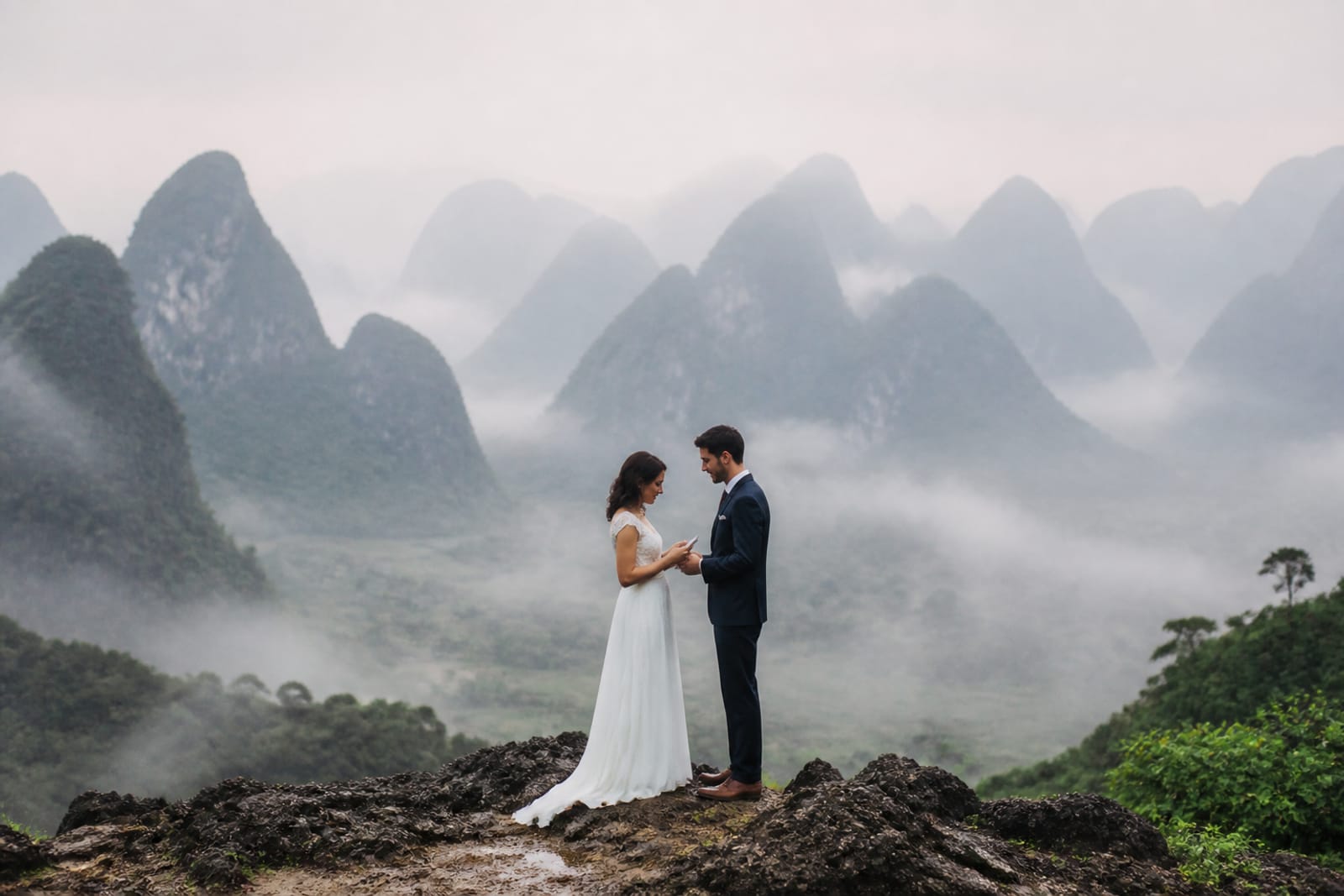
The rainy season in the north runs May through September, with peak downpours July–August. Humidity climbs to 80%+, makeup melts, and outdoor light turns flat and grey. The central coast faces the worst typhoon and flood risk October–November; services shut down, roads flood, and outdoor access becomes dangerous. The south's wet season (May–November) brings short, fierce afternoon showers (usually 2–4 p.m.), but mornings are often dry and shootable if you start early and finish by noon.
Tet (Lunar New Year, late January–mid February) is a special case: most businesses close 5–10 days, landmarks overflow with domestic tourists, and vendors raise prices. Book shoots either January (before) or mid-February onward (after Tet recovery).
Key takeaway: Avoid May–September (north), October–November (coast), and Tet week; plan south shoots for pre-dawn or morning finish.
---
When is the light softest for couple and bridal portraits?
Winter light (December–February in the north) is low-angle and diffuse—ideal for skin tones and intimate close-ups. The cool grey skies act as a giant softbox, reducing harsh shadows on faces. By contrast, summer light (June–August) is overhead and intense, flattening features and forcing you into shade or expecting reflectors and diffusers all day. Central coast light is gentlest March–May, when the sun is moderate and the sky retains a slight haze.
For a couple photoshoot focused on emotion and detail (hands, rings, expressions), book February–April (north/south) or March–June (coast). If you shoot May–September, plan for studio-style backlighting or beach/water shoots where the reflection softens the overhead glare.
Key takeaway: Soft winter (Dec–Feb, north) and early dry season (Feb–Apr, south; Mar–Jun, coast) flatter skin tones; summer requires skill and backup plans.
---
How do season and weather affect ao dai photography?
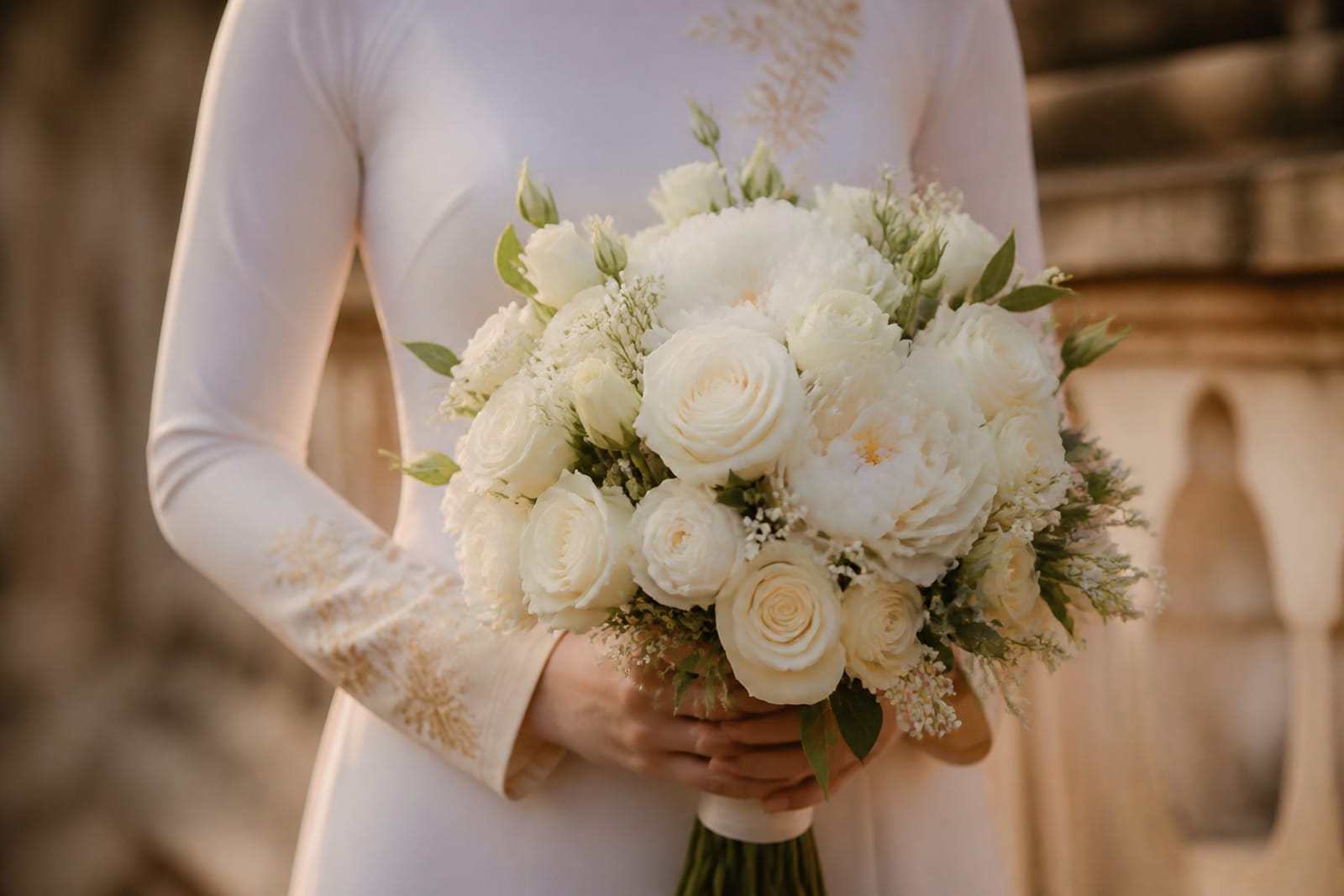
The silk and cotton of an ao dai behaves differently in each season. Winter humidity (December–February, north: 60–75%) is ideal—the fabric drapes cleanly and doesn't cling. Spring (March–April) is drier and slightly windier, which creates natural movement in the áo dài's panels and hemline. Summer heat and rain (May–September) cause the fabric to wrinkle, cling to skin, and absorb moisture, requiring steam and makeup touch-ups every 20 minutes.
The ao dai also photographs better against the right seasonal backdrop. Winter landscapes are bare and muted (greens are pale, water is grey), suiting formal or contemplative tones. Spring foliage is full and bright, ideal for vibrant, celebratory energy. Rainy-season greenery (after July rains) is lush but comes with muddy conditions, insect humidity, and overcast light.
Key takeaway: Book ao dai shoots December–April (north) or March–May (coast) for crisp fabric, easier touch-ups, and complementary seasonal color.
---
What preparation prevents weather disruptions on shoot day?
Equipment and logistics:
- Backup indoor locations scouted before the shoot (hotel lobby, temple, museum, studio) in case rain or heat force a move.
- Waterproof bags for cameras, phones, makeup, and backup outfits.
- Portable reflectors and diffusers for summer shoots (to soften or block overhead light).
- A rain cancel/reschedule clause in your booking terms (critical for October–November coast and July–August north).
Crew and styling:
- Makeup and hair scheduled at a shaded spot 30 minutes after arrival; always start with product that locks (primer, waterproof mascara) in humid months.
- An assistant or second shooter carrying an umbrella and absorbent towels for touch-ups.
- Backup outfits (two ao dai, two casual looks, a dress and suit) in case the primary one gets wet or creased in transit.
Timing and communication:
- Book your pre-wedding photoshoot start time 1–2 hours before peak sun (so 6–7 a.m. in summer, 8 a.m. in spring, 9 a.m. in winter) to maximize soft light and finish before midday heat or afternoon rain.
- Confirm the week before with your photographer about weather forecasts and alternative sites.
Key takeaway: Preparation turns weather into a variable, not a disaster; backup plans and early starts matter more than hoping for perfect sun.
---
Seasonal comparison: which region suits your wedding vibe?
| Region | Best months | Light quality | Humidity & rain | Why it works |
|---|---|---|---|---|
| North (Hanoi, Ninh Binh) | Feb–Apr, Dec | Soft, low-angle, shadowless | Dry; cool mornings (15–20°C) | Winter diffuse light; spring greenery; Tet crowds fade mid-Feb |
| Central coast (Hoi An, Da Nang) | Mar–Aug | Golden afternoon, blue sea, soft morning | Driest Feb–Aug; typhoon risk Sep–Dec | Longest stable season; beach and old-town backdrops; cool enough for makeup |
| South (HCMC, Mekong, Phu Quoc) | Dec–Apr, early May | High contrast, intense; morning soft | Dry Dec–Apr; afternoon showers May–Nov | Dry season predictable; water reflections enhance light; heat high by April |
---
📸 Book on WhatsApp — pre-wedding photoshoot | 💄 Makeup & hair at your hotel | 🌸 See the lookbook
---
What to check before you book your pre-wedding shoot
- Your calendar: Confirm your ideal month, then check Google Calendar and local Vietnam event sites for Tet dates (late Jan–mid Feb) and any school holidays that spike tourist crowds.
- Region lock-in: Decide north (Hanoi), south (HCMC), or coast (Hoi An); each has different optimal months. Hoi An shoots are by appointment—ask on WhatsApp for available Hoi An dates.
- Outfit count: Plan 2–4 outfits (ao dai, casual wear, formal dress/suit, cultural or thematic). Summer shoots require fast outfit changes and extra touch-ups; book longer sessions or plan fewer locations.
- Backup plans: Ask your photographer if they include a free reschedule if weather cancels the shoot. Have 2–3 indoor or covered backup sites in your area before the day.
- Crew coordination: If booking makeup and hair separately, coordinate timing so they happen at a shaded spot on your shoot day.
---
For a personalized weather and timing recommendation, message us on WhatsApp +84 338 762 340—we'll suggest the best window for your location and style, confirm availability at our Hanoi or Saigon studio (or Hoi An by appointment), and walk you through the full booking.
📸 Book on WhatsApp — pre-wedding photoshoot | 💄 Makeup & hair at your hotel | 🌸 See the lookbook
---
FAQ
Is November safe for a pre-wedding shoot in Hoi An or Da Nang?
No. October–November is typhoon and flood season on the central coast; services shut down, outdoor access becomes dangerous, and rain is nearly guaranteed. Book March–August instead for the driest, safest window.
Which month has the least humidity for makeup and styling?
December–February (north) and December–April (south) have the lowest humidity (55–70%), so makeup holds longer and requires fewer touch-ups. Summer humidity (80%+) demands waterproof primers and frequent powder.
Can we shoot during Tet (Lunar New Year)?
Most services close 5–10 days around Tet (late January–mid February). Book either early January or mid-February onward to avoid closures and crowds.
What time of day should we start to avoid the hottest light?
Start 1–2 hours before solar noon: 6–7 a.m. in summer, 8 a.m. in spring, 9 a.m. in winter. Finish before 1 p.m. to avoid harsh overhead sun and afternoon rain in the south.
Does the south have rain risks in February?
No. February–April is the south's dry season with rare rainfall. May–November has short afternoon showers (usually 2–4 p.m.), but mornings are often shootable if you start early.
Can we reschedule for free if weather cancels our shoot?
Ask us on WhatsApp for your specific package terms—reschedule and cancellation policies vary. We recommend booking flexibility, especially in May–September (north) and October–November (coast).
FAQ
Is November safe for a pre-wedding shoot in Hoi An or Da Nang?
No. October–November is typhoon and flood season on the central coast; services shut down, outdoor access becomes dangerous, and rain is nearly guaranteed. Book March–August instead for the driest, safest window.
Which month has the least humidity for makeup and styling?
December–February (north) and December–April (south) have the lowest humidity (55–70%), so makeup holds longer and requires fewer touch-ups. Summer humidity (80%+) demands waterproof primers and frequent powder.
Can we shoot during Tet (Lunar New Year)?
Most services close 5–10 days around Tet (late January–mid February). Book either early January or mid-February onward to avoid closures and crowds.
What time of day should we start to avoid the hottest light?
Start 1–2 hours before solar noon: 6–7 a.m. in summer, 8 a.m. in spring, 9 a.m. in winter. Finish before 1 p.m. to avoid harsh overhead sun and afternoon rain in the south.
Does the south have rain risks in February?
No. February–April is the south's dry season with rare rainfall. May–November has short afternoon showers (usually 2–4 p.m.), but mornings are often shootable if you start early.
Can we reschedule for free if weather cancels our shoot?
Ask us on WhatsApp for your specific package terms—reschedule and cancellation policies vary. We recommend booking flexibility, especially in May–September (north) and October–November (coast).
Ao dai, makeup, hair and a local photographer in Hanoi or Saigon — one WhatsApp message.