services/ao-dai-photoshoot
Vietnamese Ethnic Costume Photoshoot Etiquette: Respect + Style Guide
What does "proper etiquette" mean for wearing an ao dai at temples and shrines?
Temples and shrines are active worship spaces, not costume backdrops. Wear your ao dai with a long-sleeved undershirt (khaki, white, or black), full-length pants or a slip under the skirt, and closed-toe shoes. Remove shoes at the entrance. Don't pose with your back to altars. Never touch Buddha statues or incense without permission. Ask temple staff before photographing. Modesty—not Instagram aesthetics—is the goal.
📸 Book on WhatsApp — ao dai photoshoot
How do I choose between ao dai rental and purchase for a one-time photoshoot?
Rental: Ideal if you're a traveler, prefer zero storage, or want museum-quality pieces. Rentals are cleaned and pressed. Downside: limited custom fits, less control over fabric condition. Purchase: Better if you'll wear it multiple times or want a keepsake. Custom tailoring costs more but ensures perfect fit. For single sessions, rental through Cáo Studio saves money and hassle.
| Option | Who It's For | Durability | Best For | Commitment |
|---|---|---|---|---|
| Rental | Travelers, one-time wear | High (studio-maintained) | Temple & landmark shoots | 1–3 hours |
| Purchase (stock) | Visitors staying 2+ weeks | Medium (home-kept) | Multiple locations + keepsake | 2+ wears |
| Custom tailored | Long-term collectors | High (bespoke fit) | Pre-wedding, elopement, anniversaries | Lifelong |
Next step: Ask Cáo Studio about rental availability and fits via WhatsApp before your trip.
What undergarments and layers go under an ao dai, and why does it matter?
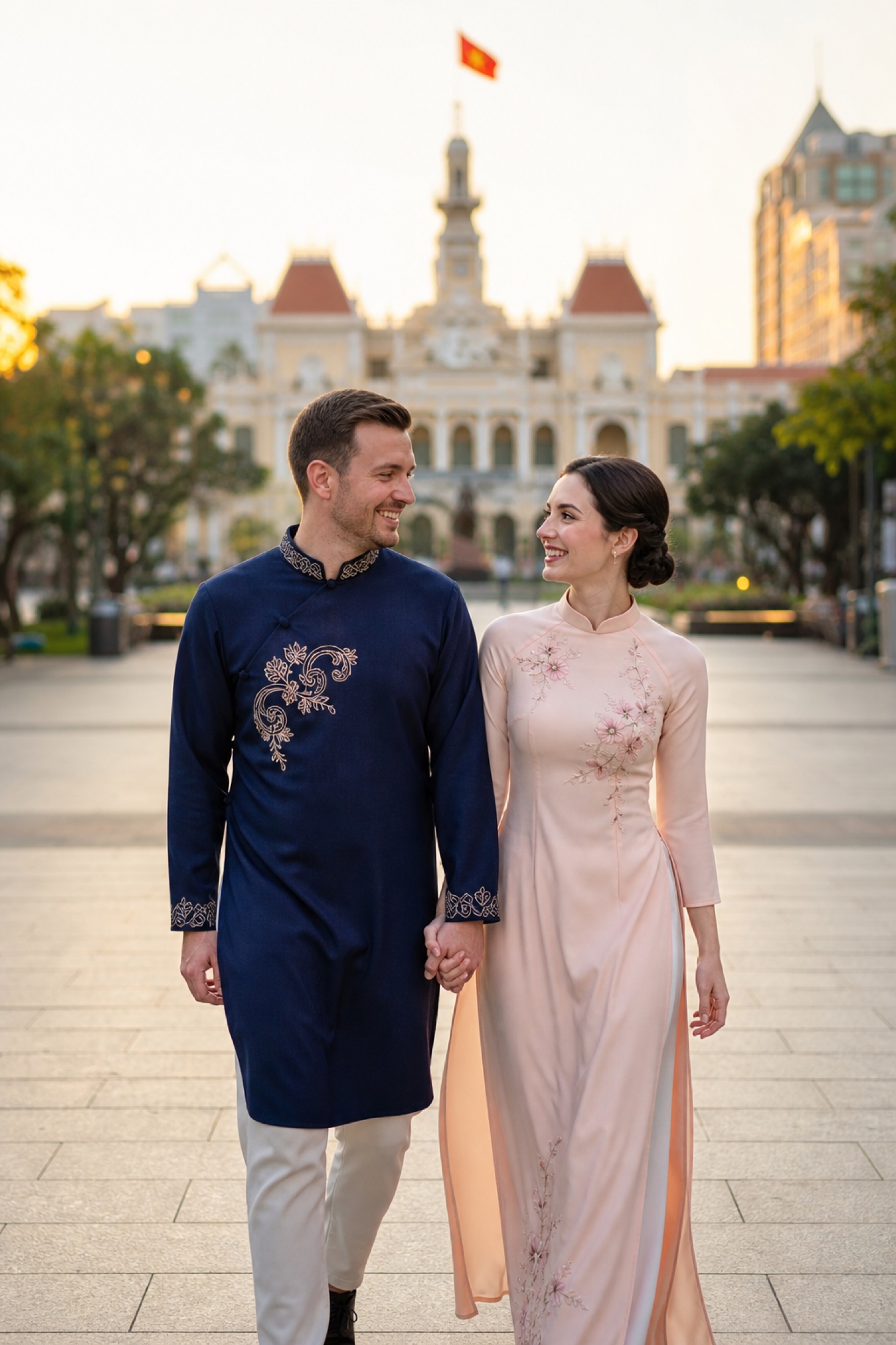
An ao dai drapes loosely; without proper layers, you'll show silhouettes or gaps. Wear: a fitted long-sleeved undershirt (thermal or cotton), full-length slip or fitted pants in matching color. Avoid bulky bras (opt for wireless or sports bra) and visible panty lines. In temples, sleeves must reach your wrists; in outdoor shoots, you have more freedom. Proper layers prevent wardrobe accidents, allow movement, and respect cultural modesty standards. Cáo Studio provides styling sheets so you're prepared.
How do I care for an ao dai before and after a photoshoot to keep it pristine?
Before: Have it dry-cleaned 1–2 days prior; wrinkles ruin photos. Store on a padded hanger in a garment bag. Pack flat in your suitcase with tissue paper between folds. After: Spot-clean immediately if needed; don't wash after one wear. Have it professionally cleaned before returning a rental, or store carefully if you bought it. Never iron directly on embroidery—use a pressing cloth. Humidity in Hanoi and Saigon can cause mildew; hang in a dry room with a humidity pack.
What are the golden rules for respectful posing at religious and heritage sites?
- Altars & statues: Never pose with your back turned or feet pointing toward them. Bow slightly when entering.
- Photography bans: Respect "no photo" signs; many inner sanctums prohibit cameras.
- Crowds: Early morning (6–8 am) means fewer worshippers and better light. Mid-day crowds dilute respect.
- Jewelry & tattoos: Visible tattoos and loud jewelry clash with reverence. Keep accessories minimal.
- Behavior: Speak softly, move slowly, kneel if locals do. Take direction from your photographer and temple guides.
- Timing: Plan sessions when temples are quieter. Avoid peak prayer times (sunrise, lunar new year).
Cáo Studio routes its ao dai photoshoot itineraries to honor these practices; your photographer will coach you on-site.
Should I book a photoshoot in Hanoi, Hoi An, or Saigon—and what's the etiquette difference?
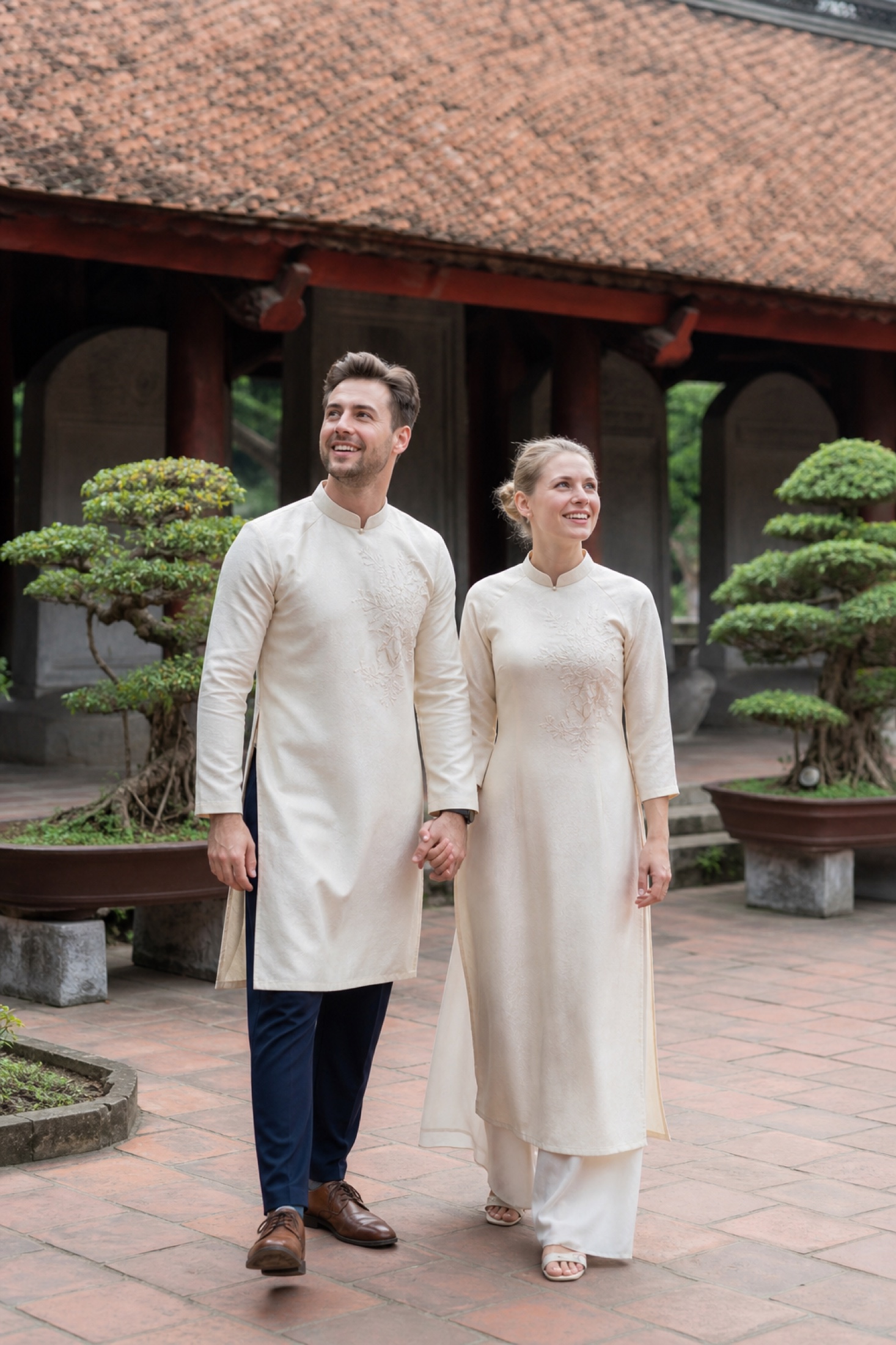
Hanoi temples (Tran Quoc, But Thap): High foot traffic, best shot at dawn. Etiquette is stricter; wear full underlayers, no casual posing. Hoi An Ancient Town: UNESCO site; photography is allowed but framed photography permits exist. Lantern-lit streets at dusk offer magic; fewer crowds, more romantic shoots. Saigon (Jade Emperor Pagoda, Giac Lam): More relaxed; less crowded than Hanoi. Each site has unique light and cultural significance.
For etiquette coaching and logistics, book directly:
- Cáo Studio Hanoi: 3 branches, same-day makeup available.
- Cáo Studio Saigon: Outdoor + temple expertise.
- Hoi An photoshoots: Ask on WhatsApp for visit dates; we travel to you.
---
What to Check Before You Book
- Rental sizes: Confirm ao dai measurements (bust, waist, length) match your frame; custom tailoring adds 3–5 days.
- Underlayer kit: Does the studio provide, or do you bring? Confirm colors and materials.
- Temple permissions: Does your photographer have a relationship with venues? Sacred sites sometimes require advance notice.
- Weather & season: Humid months (May–September) affect fabric drape and makeup longevity. Confirm session timing.
- Hair & makeup trial: Ask if Cáo Studio offers a makeup & hair trial before the shoot day.
- Cancellation policy: What if weather or personal emergencies arise? Get terms in writing.
---
Real Etiquette Scenarios: What to Do
Scenario 1: You're mid-pose at a temple and a monk approaches. Response: Pause, smile respectfully, step aside. Let the monk pass. Resume when he's gone.
Scenario 2: A "no photography" sign appears in a side chapel. Response: Ask your photographer to stop. Move to an outer courtyard or switch locations. Respect beats the perfect shot.
Scenario 3: Your ao dai hem catches on a temple step. Response: Stop immediately. Ask the photographer or a temple staff member for help. Don't yank fabric; Cáo Studio carries a small repair kit for minor catches.
---
Combine Your Photoshoot with Other Services
A full session often includes couple & family photoshoots if you're traveling with loved ones. Add hotel makeup & hair the morning of your shoot for stress-free prep. If you're marking an occasion, ask about proposal & anniversary packages or pre-wedding & elopement options.
📸 Book on WhatsApp — ao dai photoshoot | 💄 Makeup & hair at your hotel | 🌸 See the lookbook
Browse the lookbook to see real sessions in temples, heritage zones, and gardens. Check pricing and FAQ for specifics on duration, inclusions, and group discounts.
FAQ
Is it disrespectful to wear an ao dai if I'm not Vietnamese?
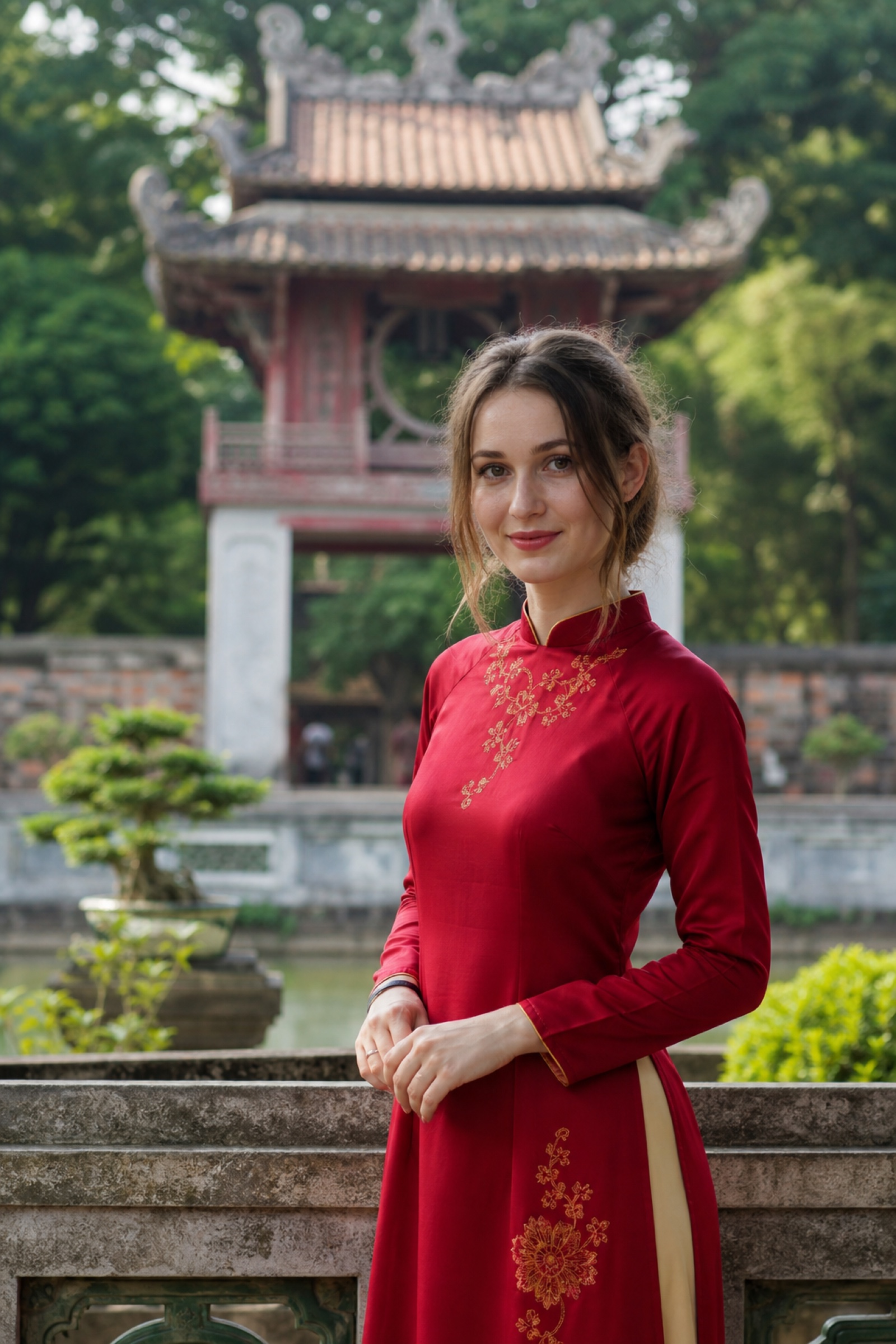
No—wearing ao dai respectfully is a cultural exchange. Temples welcome international visitors in traditional dress, provided you follow modesty rules and photograph ethically. Cáo Studio specializes in coaching foreign guests through these norms.
Can I wear jewelry and makeup with an ao dai for a temple shoot?
Yes, but minimal. Large bracelets, visible piercings, and heavy makeup clash with the solemnity of temples. Opt for delicate necklaces, stud earrings, and natural makeup. Your photographer will advise on-site.
What happens if the weather ruins my ao dai or makeup during the shoot?
Cáo Studio schedules morning sessions to avoid humidity peaks and carries touch-up kits. If a downpour occurs, you can reschedule or pivot to indoor heritage sites. Confirm your backup plan when booking.
How long does an ao dai photoshoot session typically last?
Most sessions run 2–3 hours, including travel between 2–3 locations (e.g., a temple + a lantern street). This allows time for outfit changes, makeup touch-ups, and respecting temple quiet hours.
Do I need to remove my shoes inside temples, and will this affect photos?
Yes, remove shoes at entrances. Photography continues in socks or barefoot. Stairs and stone floors may be cold or uneven, so wear comfortable socks. Your photographer will frame shots to avoid bare feet if you prefer; mention this during booking.
Can I buy an ao dai after my photoshoot, or should I rent?
Both work. Rentals suit one-time travelers; purchases suit long-term collectors. See the comparison table above. Cáo Studio can recommend tailors and fabric shops in Hanoi and Saigon if you decide to buy as a keepsake.
FAQ
Is it disrespectful to wear an ao dai if I'm not Vietnamese?
No—wearing ao dai respectfully is a cultural exchange. Temples welcome international visitors in traditional dress, provided you follow modesty rules and photograph ethically. Cáo Studio specializes in coaching foreign guests through these norms.
Can I wear jewelry and makeup with an ao dai for a temple shoot?
Yes, but minimal. Large bracelets, visible piercings, and heavy makeup clash with the solemnity of temples. Opt for delicate necklaces, stud earrings, and natural makeup. Your photographer will advise on-site.
What happens if the weather ruins my ao dai or makeup during the shoot?
Cáo Studio schedules morning sessions to avoid humidity peaks and carries touch-up kits. If a downpour occurs, you can reschedule or pivot to indoor heritage sites. Confirm your backup plan when booking.
How long does an ao dai photoshoot session typically last?
Most sessions run 2–3 hours, including travel between 2–3 locations (e.g., a temple + a lantern street). This allows time for outfit changes, makeup touch-ups, and respecting temple quiet hours.
Do I need to remove my shoes inside temples, and will this affect photos?
Yes, remove shoes at entrances. Photography continues in socks or barefoot. Stairs and stone floors may be cold or uneven, so wear comfortable socks. Your photographer will frame shots to avoid bare feet if you prefer; mention this during booking.
Can I buy an ao dai after my photoshoot, or should I rent?
Both work. Rentals suit one-time travelers; purchases suit long-term collectors. See the comparison table above. Cáo Studio can recommend tailors and fabric shops in [Hanoi](/hanoi) and [Saigon](/saigon) if you decide to buy as a keepsake.
Ao dai, makeup, hair and a local photographer in Hanoi or Saigon — one WhatsApp message.