services/ao-dai-photoshoot
Vietnamese Khan Dong Headpiece for Ao Dai Photoshoots
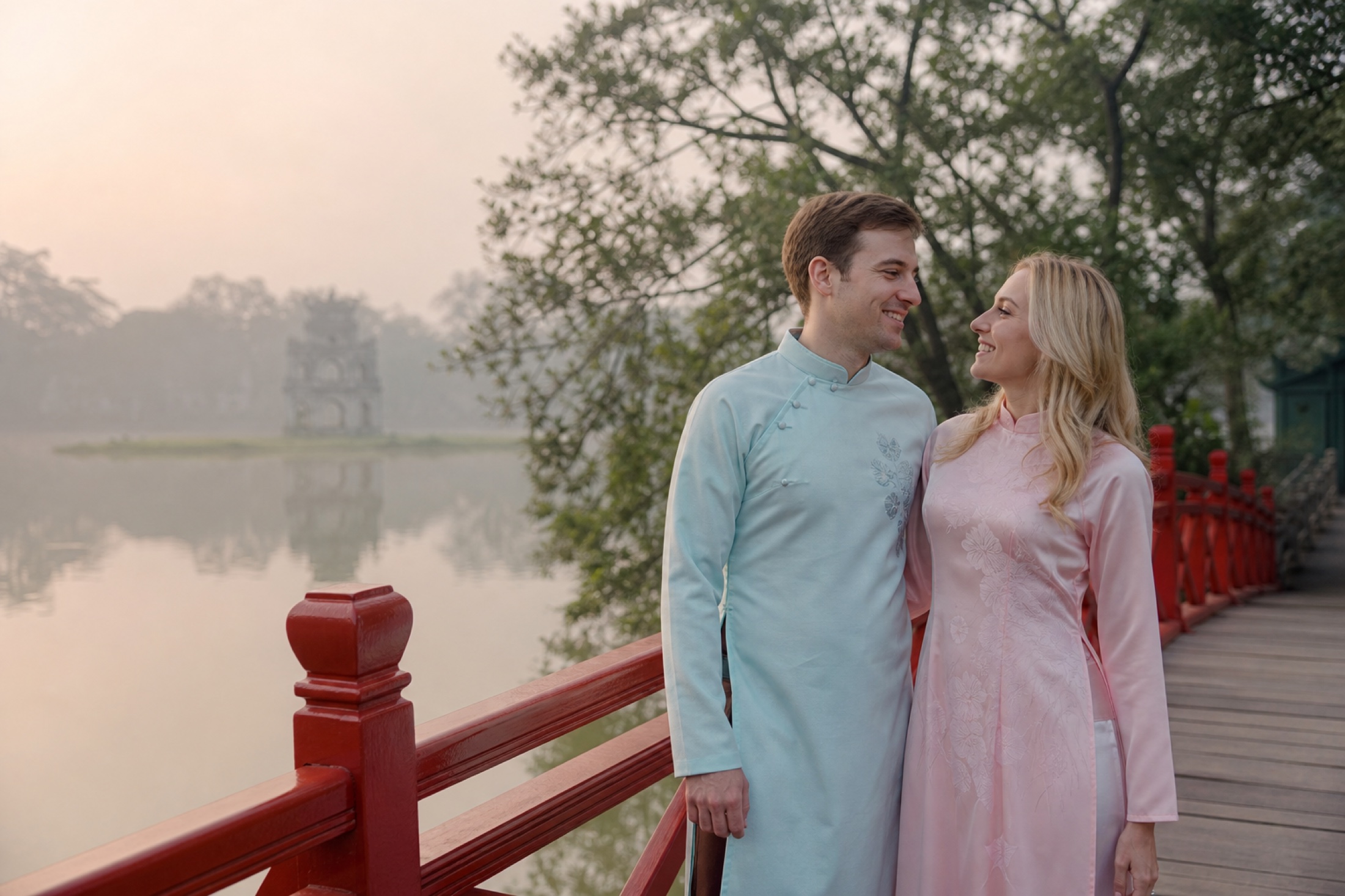
A khan dong (silk turban headpiece) transforms an ao dai photoshoot from casual to ceremonial. The headpiece frames your face, adds height, and photographs beautifully under natural light. At Cáo Studio – Makeup & Photoshoot, we style khan dong for clients doing ceremonial or pre-wedding shoots; the right fabric weight and tie method make the difference between a polished frame and one that shifts during posing.
What exactly is a khan dong and why wear one in photos?
A khan dong is a rectangular silk cloth (traditionally 1–1.5 meters long, 30–40 cm wide) wrapped and tied around the head as a turban. It originated in Northern Vietnam for formal and ceremonial dress. In photoshoots, it adds vertical line, softens facial features, and signals respect—ideal for ao dai portraits, pre-wedding shoots, or proposal sessions. The fabric catches light beautifully in golden-hour or studio setups, creating depth behind your shoulders and face.
📸 Book on WhatsApp — ao dai photoshoot
Which fabric weight works best on camera?
Khan dong fabrics vary: silk (lightweight, drapes smoothly), silk-cotton blend (holds shape better), and heavier jacquard silk (most structured). Lightweight silk photographs with elegant folds but requires secure tying to stay put during posing. Medium-weight blends hold a clean wrap and are forgiving if you turn your head. Heavy jacquard holds its shape longest but can look stiff in candid moments. For a full 2–3 hour ao dai photoshoot session, a silk-cotton blend or medium silk (around 80–120 gsm) balances photography elegance with practical comfort.
How do you tie a khan dong so it stays secure during shooting?
The standard tie begins with centering the cloth on your head, then crossing both ends at the back of your head and bringing them forward over the crown. A second wrap around the back secures it, and a loose knot or tuck at one temple keeps it in place. For photoshoots, avoid knots that tighten over your temples—they show tension in close-up shots and can leave marks. Instead, use a hidden tuck or a soft bow at the base that sits below your hair. Test the tie before your session: lean back, turn your head, and raise your arms. If it slips, it will during posing. Many clients work with our makeup & hair team at their hotel 1–2 hours before shooting to secure and style the khan dong properly with bobby pins and a light hairspray mist.
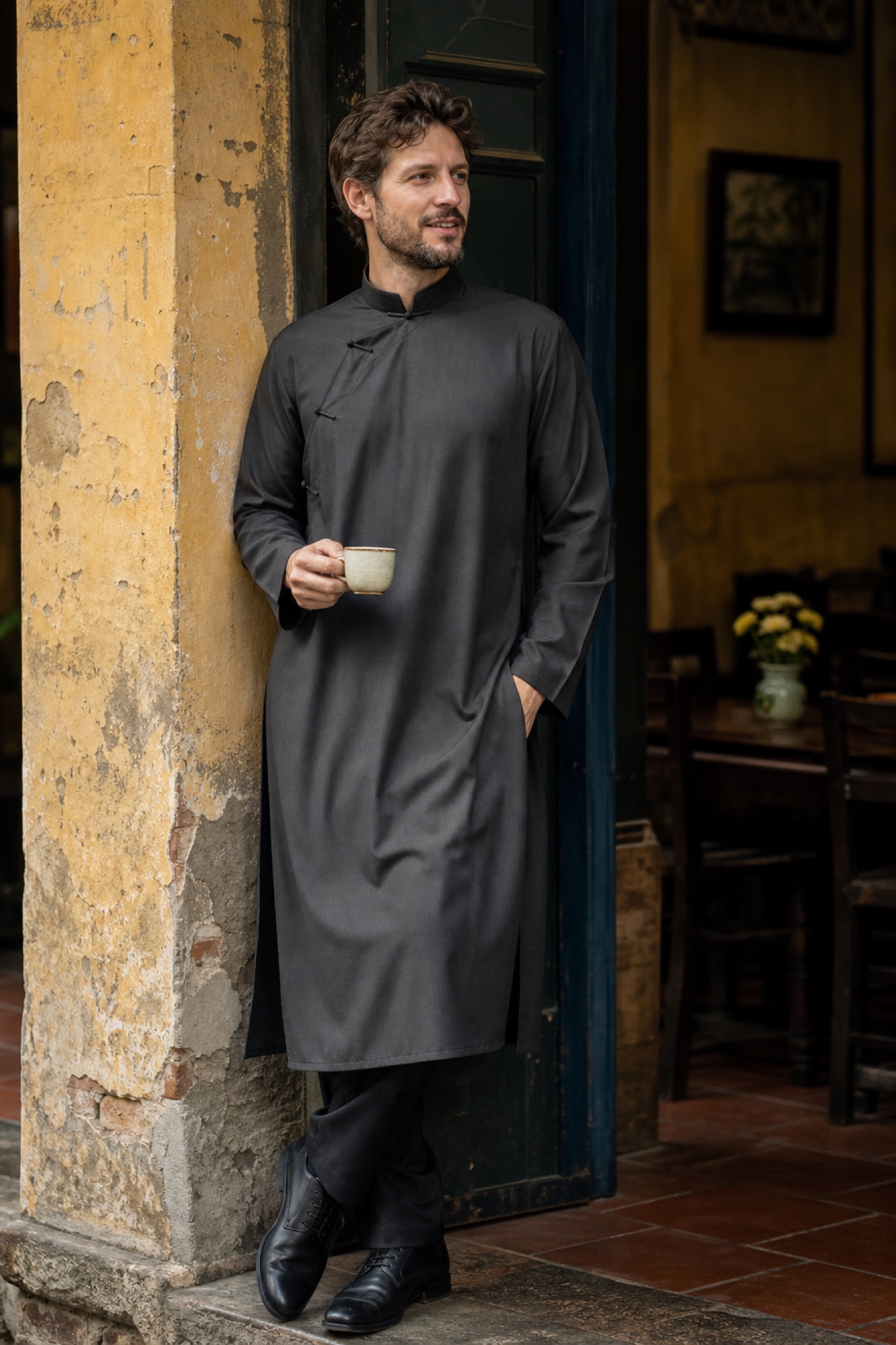
Khan dong color and pattern: what translates on camera?
| Color/Pattern | Best for | Camera Result | Tip |
|---|---|---|---|
| Solid jewel tones (emerald, sapphire, burgundy) | Formal, pre-wedding, proposal | Rich depth; flatters warm and cool skin tones | Pairs with white or pastel ao dai |
| Gold or cream silk | Ceremonial, daytime shoots | Warm, ethereal glow; soft contrast | Ideal in golden hour; test in your light |
| Subtle brocade or damask weave | Modern formal, outdoor session | Texture adds visual interest without distraction | Stands out in group/couple frames |
| Solid neutrals (beige, taupe, black) | Minimalist, editorial | Clean, timeless; centers focus on face and ao dai | Requires flawless makeup to shine |
| Bright or neon hues | Playful, cultural celebration | Eye-catching; can overwhelm in close-ups | Reserve for wide shots; check with photographer |
Solid jewel tones photograph most consistently across lighting conditions. Patterns read better in wider frames and group shots; close-up portraits often favor solid fabrics to keep the face the focal point. Avoid colors that closely match your ao dai—the headpiece should frame, not blend.
What are the most common mistakes to avoid?
Wrapping too tightly causes forehead marks and visible tension in your neck and jawline. Not securing the underlay (the part against your hair) leads to slipping during movement or posing. Choosing fabric too heavy for the session length—after 90 minutes, your neck and shoulders fatigue, and it shows. Mismatching color temperature—a warm gold khan dong with a cool-toned ao dai reads disconnected on camera. Forgetting hairpins and backup pins—even a pin-perfect wrap can loosen if you lean against props or turn sharply. Always bring 4–6 bobby pins and a small backup khan dong if doing a couple photoshoot or outfit change.
What to check before you order or wear a khan dong
Fabric weight: Confirm GSM or thread count if buying online. Medium silk (80–120 gsm) suits most 2–3 hour sessions.
Length and width: Standard is 100–150 cm long, 30–40 cm wide. Measure against your head circumference (average adult: 55–58 cm). A cloth shorter than 100 cm won't wrap twice; longer is better for layering folds.
Edge finish: Look for rolled or bound edges, not raw selvage—raw edges fray and look unfinished in close-up shots.
Fabric hand (feel): Silk should glide smoothly, not feel stiff or waxy. Stiff fabric resists folding and photographs with hard shadows.
Wash test (if new): Hand-wash in cool water before wear. Tight weaves may shrink; a test run prevents day-of disappointment.
Light test: If possible, photograph yourself in your session's lighting (golden hour, studio, overcast) with your chosen ao dai. Headpiece color reads differently under various light.
Backup plan: Bring pins, a hair tie, and a small steam cloth. Humidity, wind, and posing all affect drape.
---
For a complete ao dai photoshoot experience—from khan dong styling to makeup and venue scouting—Cáo Studio team in Hanoi, Saigon, or by appointment in Hoi An handles hair, headpiece tying, and lighting to ensure your khan dong photographs flawlessly. Check our FAQ or pricing to start planning.
FAQ
Can I wear a khan dong for outdoor ao dai shoots in Hanoi?
Yes. Solid or subtly patterned khan dong photographs beautifully in golden-hour outdoor light (6–7 am or 4–5 pm). Wind can shift it, so secure it with pins and a small mist of hairspray beforehand. Our team often styles khan dong outdoors at West Lake or the Old Quarter; book via WhatsApp to discuss location and weather conditions.
What's the difference between khan dong and a traditional Vietnamese head wrap?
Khan dong is a formal, ceremonial wrap tied into a turban shape, typically silk, worn at weddings and photoshoots. Other regional head wraps (like turban styles from Northern villages) vary in technique and fabric. For photoshoots, khan dong is the standard because its elegant drape and structured folds photograph consistently across angles.
How long does a khan dong typically last if worn regularly?
A quality silk or silk-blend khan dong lasts 3–5 years with careful hand-washing and storage. Photoshoot wear (1–3 sessions per year) prolongs life. Heavy jacquard silk outlasts lightweight silk. Inspect for pilling, loose threads, or color fading annually. Heat and direct sunlight fade dyes fastest.
Can I rent a khan dong for a one-time shoot?
Some Vietnamese boutiques in Hanoi and Saigon rent khan dong for photoshoots. Rental costs typically cover 4–6 hours and run $8–15 USD. Confirm the fabric condition, fit, and color compatibility with your ao dai before committing. Cáo Studio stylists can recommend rental shops or help you source a new one if purchasing is preferred.
Do I need professional hair and makeup if I'm wearing a khan dong?
Not mandatory, but highly recommended. Khan dong wrapping, securing bobby pins, and styling coordinated hair take 15–30 minutes. A makeup artist ensures your face remains camera-ready after the wrap is on. Many clients book our makeup & hair service at their hotel before sessions to avoid rushed, last-minute adjustments.
FAQ
Can I wear a khan dong for outdoor ao dai shoots in Hanoi?
Yes. Solid or subtly patterned khan dong photographs beautifully in golden-hour outdoor light (6–7 am or 4–5 pm). Wind can shift it, so secure it with pins and a small mist of hairspray beforehand. Our team often styles khan dong outdoors at West Lake or the Old Quarter; book via WhatsApp to discuss location and weather conditions.
What's the difference between khan dong and a traditional Vietnamese head wrap?
Khan dong is a formal, ceremonial wrap tied into a turban shape, typically silk, worn at weddings and photoshoots. Other regional head wraps (like turban styles from Northern villages) vary in technique and fabric. For photoshoots, khan dong is the standard because its elegant drape and structured folds photograph consistently across angles.
How long does a khan dong typically last if worn regularly?
A quality silk or silk-blend khan dong lasts 3–5 years with careful hand-washing and storage. Photoshoot wear (1–3 sessions per year) prolongs life. Heavy jacquard silk outlasts lightweight silk. Inspect for pilling, loose threads, or color fading annually. Heat and direct sunlight fade dyes fastest.
Can I rent a khan dong for a one-time shoot?
Some Vietnamese boutiques in Hanoi and Saigon rent khan dong for photoshoots. Rental costs typically cover 4–6 hours and run $8–15 USD. Confirm the fabric condition, fit, and color compatibility with your ao dai before committing. Cáo Studio stylists can recommend rental shops or help you source a new one if purchasing is preferred.
Do I need professional hair and makeup if I'm wearing a khan dong?
Not mandatory, but highly recommended. Khan dong wrapping, securing bobby pins, and styling coordinated hair take 15–30 minutes. A makeup artist ensures your face remains camera-ready after the wrap is on. Many clients book our [makeup & hair service](/services/makeup-and-hair) at their hotel before sessions to avoid rushed, last-minute adjustments.
Ao dai, makeup, hair and a local photographer in Hanoi or Saigon — one WhatsApp message.