services/ao-dai-photoshoot
Vintage 1960s Saigon Ao Dai: Concept, Styling & Photo Guide
A 1960s Saigon ao dai concept isn't just a dress—it's a decision. You're choosing between accuracy (archival colors, authentic tailoring) and personal fantasy (modern makeup, Instagram framing). The decade's most photographed Vietnamese women wore fitted, high-waisted áo dài in dove grey, butter yellow, pale pink, or seafoam. Hair was swept up tight. Backdrops were shuttered villas, French colonial gates, Cyclo stops. At Cáo Studio – Makeup & Photoshoot, we've shot hundreds of travelers pursuing this exact aesthetic—and we've learned what makes the concept work versus what reads as costume.
This guide cuts through the Pinterest fantasy and gives you the real choices: which silhouette suits your frame, what makeup reads 1960s without looking dated, which Hanoi and Saigon venues actually deliver that period light, and what to budget and prepare before your session.
---
What defines a 1960s Saigon ao dai silhouette?
The 1960s Vietnamese woman's áo dài was sleeker than its 1950s ancestor—higher waisted, narrower at the hip, with gentler arm seams. The áo itself (the tunic) sat close to the body without padding. Underneath, women wore slim silk trousers that ended just above the ankle. The whole effect was elegant, modern, and distinctly South Vietnamese in its tailoring.
Today's reproduction áo dài come in three cuts: authentic tailor-made (bespoke, takes 2–4 weeks), vintage rentals (authentic pieces, sizes small-medium, one-time use), and modern reproductions (readily available, sized for Western frames). Each serves a different session type.
| Type | Best for | Lead time | Fit note | Why choose |
|---|---|---|---|---|
| Tailor-made (custom) | Engaged couples, elopements | 3–4 weeks | Perfect to your measurements | Heirloom quality; keeps after session |
| Vintage rental | Day-trippers, concept shoots | Available same-week | Authentically narrow; smaller frames | True 1960s fabric, seams, weight |
| Modern reproduction | International travelers, quick books | In stock | Fitted for US/EU sizing | Fast, reliable fit, lower rental cost |
For a 1960s Saigon concept, we recommend tailor-made or rental. Modern reproductions read newer—the fabric has a different drape, and the armholes are often too loose.
---
Which colors and fabrics capture 1960s authenticity?
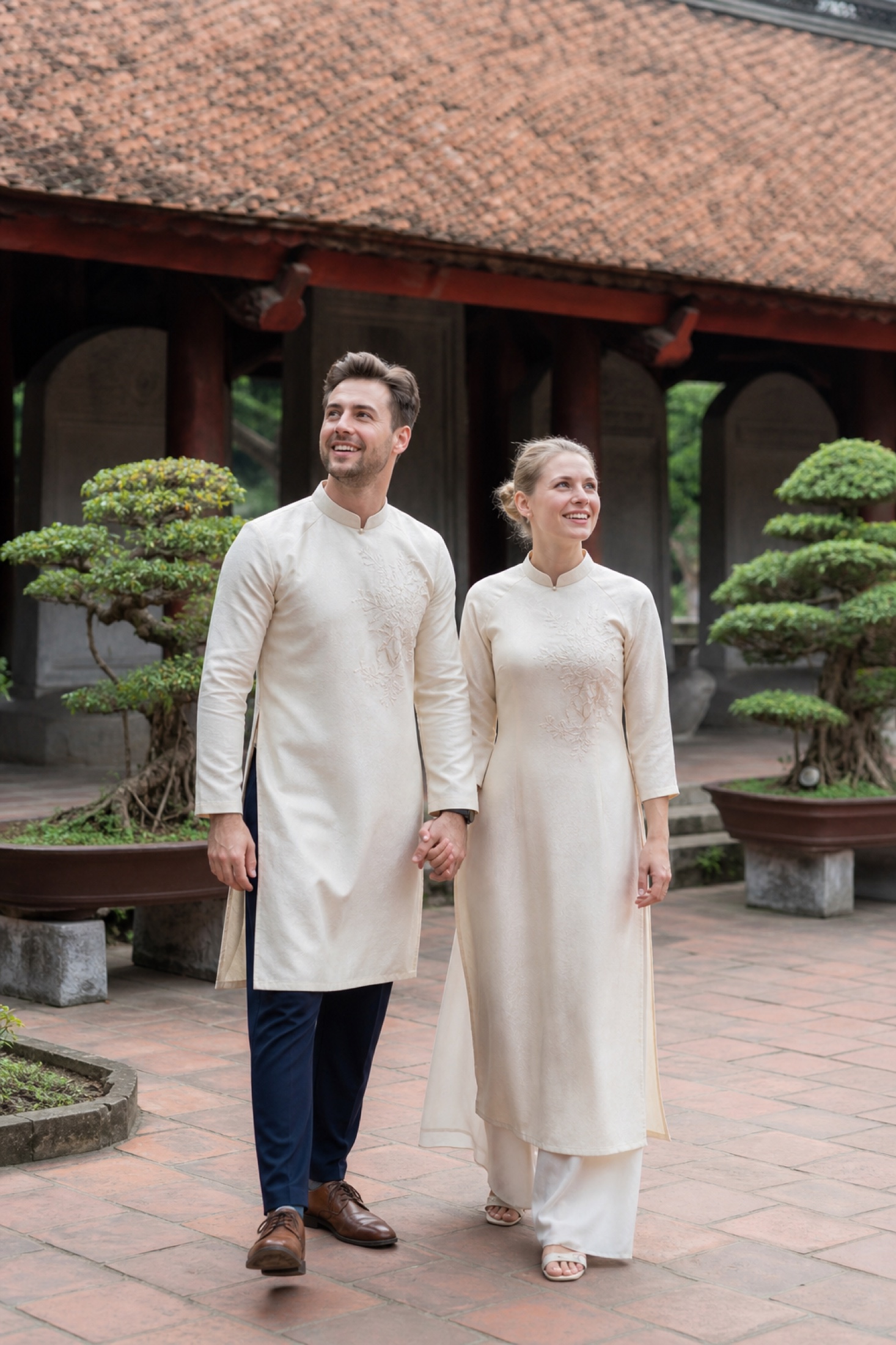
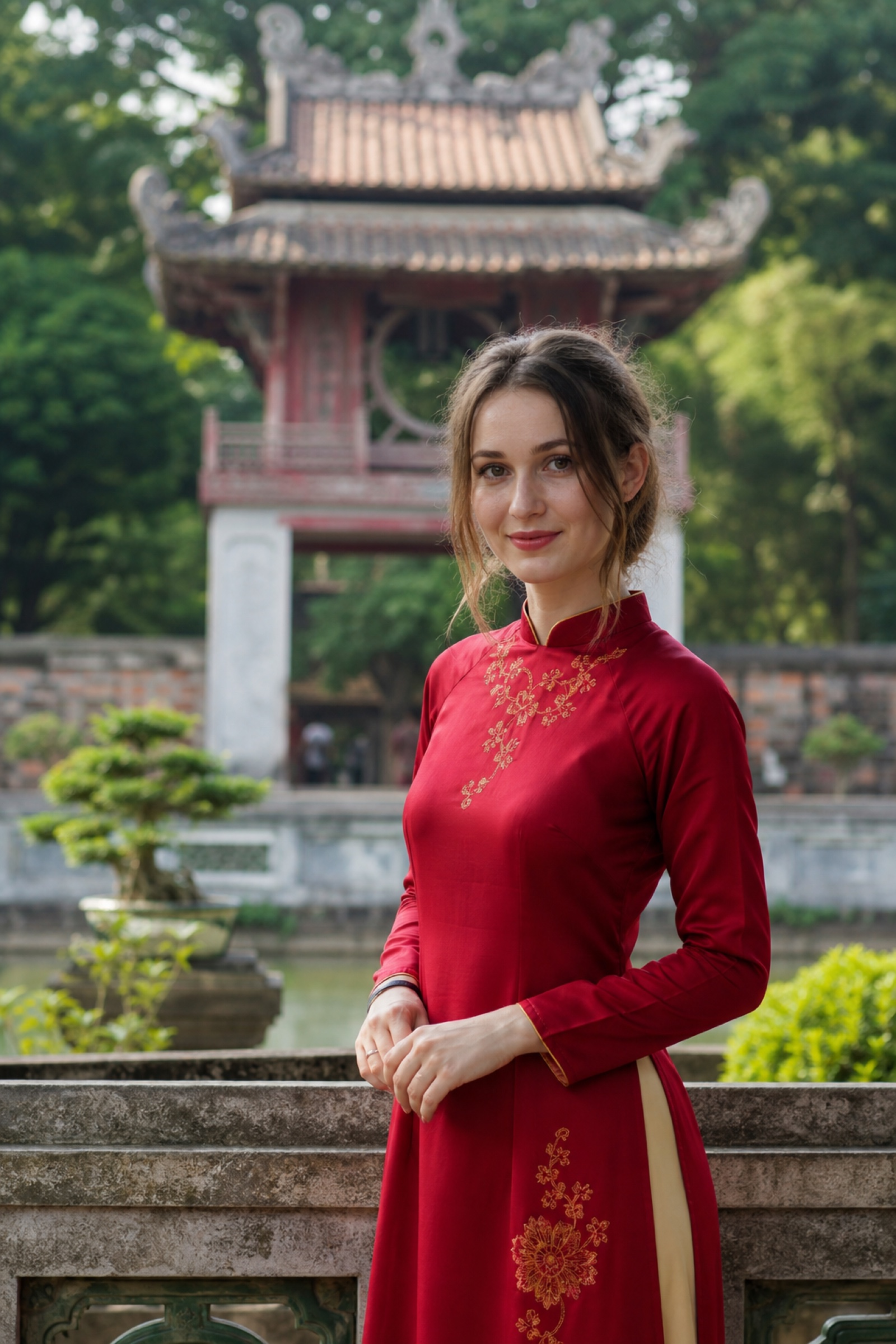
Saigon's 1960s palette was muted and sophisticated. Think dove grey, pale butter yellow, seafoam, blush pink, soft lavender, cream, and celadon green. Avoid hot pink, electric blue, or neon—those are 1980s+ Vietnamese fashion. Bright reds and deep golds were reserved for Tết and formal events, not everyday chic.
Fabric matters more than casual shoppers realize. Authentic 1960s áo dài were silk (heavy, with subtle luster) or silk-cotton blends. They wrinkled slightly and moved with weight. Modern polyester reproductions are stiff and ultra-shiny—they photograph as new, not vintage. If you're renting or commissioning, ask the tailor or rental service what the áo is made from. Silk or silk-blend always photographs better under natural light.
A practical check: Hold the fabric to sunlight. Authentic silk glows warm and diffuses light. Polyester looks flat and reflects glare.
---
Where in Hanoi and Saigon do you shoot 1960s Saigon sessions?
Light and architecture are everything. 1960s Saigon had diffused morning light bouncing off shuttered villas, tree-lined streets, and weathered French colonial facades. You're not looking for pristine Instagram backdrops—you want patina.
Hanoi (best for 1960s Saigon concept):
- French Quarter (Hoan Kiem area): Narrow lanes, shuttered shophouses, soft morning light 6–9 a.m. Yellow walls, arched windows. The aesthetic is authentic 1960s Hanoi (which itself resembled Saigon).
- Thao Dien Villa Area: Private colonial homes available by appointment. Early light (6–8 a.m.) on cream-colored gates, wrapped bougainvillea.
- Hang Trong Street: Cyclo stops, wrought-iron shutters, mid-morning light (9–11 a.m.). Busier, but the backdrop is textbook 1960s.
Saigon (closest to 1960s Saigon geography):
- District 1 Villas (around Dong Khoi): Tamarisk Avenue, art-deco shophouses. Early morning (6–8 a.m.) before foot traffic. True 1960s Saigon backdrop.
- Binh Thanh District (Thao Dien): Quieter colonial villas, tree-lined residential streets. Less crowded; better light consistency.
Light timing: Shoot 6–10 a.m. or 4–6 p.m. Midday (10 a.m.–3 p.m.) creates harsh shadows that flatten the vintage aesthetic. 1960s photography was soft and diffused—that requires low-angle sun.
Cáo Studio books ao dai photoshoots in Hanoi and Saigon at these exact venues. We handle location scouting, light timing, and the logistics—you just show up in your áo dài.
---
How do you style hair, makeup, and accessories for 1960s authenticity?
Hair was the statement. 1960s Saigon women wore hair off the face: tight chignons, low buns, sleek half-ups pinned with pearl or gold clips. Bangs were uncommon; the forehead was exposed. Modern loose waves and volume will read wrong.
Makeup was minimal by today's standards:
- Base: Light, matte (no glow).
- Eyes: Thin eyeliner (not thick wings), neutral shadow, mascara. Eyebrow was natural and defined, not microbladed thick.
- Lips: Pale pink, coral, or nude. Not red (too 1950s Occidental), not plum (too modern).
- Blush: Soft peach or rose, applied high and blended—visible but not dramatic.
Accessories made the difference:
- Small pearl earrings or none at all.
- Thin gold bracelet (not chunky).
- No watches or modern jewelry.
- Optional: vintage brooch on the shoulder seam.
- Clutch or small beaded bag (not a modern crossbody).
At Cáo Studio's makeup & hair service, stylists are trained in 1960s period hair—they'll create a sleek, period-appropriate look. Many clients book this service at their hotel the morning of the shoot; it takes 1.5–2 hours. We source authentic pins, clips, and styling products that hold hair in the tight, glossy finish 1960s photography required.
📸 Book on WhatsApp — ao dai photoshoot
---
What should you check before booking or commissioning?
Before committing to a 1960s Saigon concept shoot, confirm these non-negotiables:
- Hair & makeup included? Some studios charge separately. Cáo Studio includes it in ao dai sessions; confirm upfront.
- What's the venue lock-in time? Early morning shoots (best light) mean you meet at 6:30 a.m. Check your flight, hotel schedule.
- Ao dai rental or bring your own? If renting, ask the tailor about sizing. A loose áo dài ruins the 1960s silhouette.
- How many outfit changes? 1960s Saigon concept = one main color/silhouette. Multiple áo dài dilute the period aesthetic.
- Edited photos included? Expect 40–60 final images from a 2–3 hour session. Ask about color grading—vintage aesthetics need warm, slightly desaturated edits, not bright modern color.
- What weather backup? Monsoon or unexpected rain? Confirm the studio's rebooking policy.
Also check the FAQ and pricing page for session packages. Cáo Studio's Hanoi studio and Saigon studio both offer ao dai sessions; Hoi An is available by appointment (ask on WhatsApp for current Hoi An dates).
---
How do you prep before your session?
2 weeks prior:
- Confirm your ao dai (rental or custom tailor delivery date).
- Share your height, shoe size, and natural hair color with the studio.
- Review the studio's lookbook to see 1960s Saigon sessions shot by the team.
1 week prior:
- Confirm your venue and meet time. Bring a screenshot to your phone.
- Plan your outfit under the áo dài: simple, neutral, fitted. Avoid thick bra straps (visible under silk).
Night before:
- Charge your phone and camera.
- Sleep well. Camera picks up fatigue and stress.
- Have your nails done only if you want hands visible in close-ups (otherwise, skip—period photography often crops below shoulders).
Morning of:
- Eat light. Bloating changes silhouette in fitted áo dài.
- Arrive 30 minutes early for hair and makeup (or confirm appointment time at your hotel if using the makeup & hair service).
- Bring a robe or oversized shirt to wear over the áo dài between shots—keeps it clean, prevents creasing.
---
Who are vintage 1960s Saigon shoots best for?
This concept resonates with a specific traveler: someone who reads Vietnamese history, loves mid-century design, or is creating a personal narrative around their visit. It's popular with:
- Engaged couples (especially those with Vietnamese heritage seeking a connection to family history).
- Solo creatives & photographers building portfolios.
- Travelers who've seen the photos and want to recreate that Saigon-on-film aesthetic.
- Anyone celebrating a milestone (milestone birthday, career change, major life moment) and wanting a timeless keepsake.
If you're looking for something different—a couple or family photoshoot, a proposal or anniversary session, or a pre-wedding and elopement package—Cáo Studio offers all of those too. But if the 1960s Saigon concept is calling you, commit to it fully. The details—the light, the tailoring, the hair—are what separate a good concept shoot from an unforgettable one.
---
FAQ
Can I wear a modern ao dai and still get that 1960s look?
Modern áo dài are cut wider and shorter than vintage styles. They'll read contemporary, not 1960s, no matter the color or backdrop. For authenticity, rent a vintage piece or commission a tailor who specializes in period reproduction. The silhouette is non-negotiable.
What's the best month to shoot a 1960s Saigon concept in Hanoi?
October–November (cool, dry, soft light) or late February–March. Avoid May–September (monsoon, harsh midday sun) and December–January (grey skies, low light). Spring light is sharpest and warmest without being harsh.
Do I need to hire a professional photographer, or can I use a friend?
A trained photographer understands period lighting and composition—they'll frame you to emphasize the silhouette and the vintage palette. Cáo Studio specializes in exactly this; we've shot hundreds of 1960s Saigon concepts. A friend's camera works, but the framing and editing won't carry the same weight.
How long does a 1960s Saigon ao dai session usually take?
2–3 hours total. That includes 1–1.5 hours of hair and makeup, 1–1.5 hours of shooting (usually 1–2 venue changes), and a brief review of selects. You'll receive 40–60 edited photos within 2 weeks.
Can I do a 1960s Saigon concept shoot in Hoi An?
Yes. Hoi An's French colonial architecture and lantern-lit streets suit the aesthetic. Cáo Studio offers photoshoots in Hoi An by appointment—ask on WhatsApp for current availability. Early morning (6–8 a.m.) on the quiet streets before tourist crowds is ideal.
What's the difference between renting an ao dai and having one custom-made?
Rental is fast (available same-week) and affordable (you use it once). Custom is more expensive and takes 3–4 weeks but is tailored to your exact measurements and becomes a keepsake. For a one-time concept shoot, rental works. For an heirloom or engagement session, custom is worth the wait.
FAQ
Can I wear a modern ao dai and still get that 1960s look?
Modern áo dài are cut wider and shorter than vintage styles. They'll read contemporary, not 1960s, no matter the color or backdrop. For authenticity, rent a vintage piece or commission a tailor who specializes in period reproduction. The silhouette is non-negotiable.
What's the best month to shoot a 1960s Saigon concept in Hanoi?
October–November (cool, dry, soft light) or late February–March. Avoid May–September (monsoon, harsh midday sun) and December–January (grey skies, low light). Spring light is sharpest and warmest without being harsh.
Do I need to hire a professional photographer, or can I use a friend?
A trained photographer understands period lighting and composition—they'll frame you to emphasize the silhouette and the vintage palette. Cáo Studio specializes in exactly this; we've shot hundreds of 1960s Saigon concepts. A friend's camera works, but the framing and editing won't carry the same weight.
How long does a 1960s Saigon ao dai session usually take?
2–3 hours total. That includes 1–1.5 hours of hair and makeup, 1–1.5 hours of shooting (usually 1–2 venue changes), and a brief review of selects. You'll receive 40–60 edited photos within 2 weeks.
Can I do a 1960s Saigon concept shoot in Hoi An?
Yes. Hoi An's French colonial architecture and lantern-lit streets suit the aesthetic. Cáo Studio offers [photoshoots in Hoi An](/hoi-an) by appointment—ask on WhatsApp for current availability. Early morning (6–8 a.m.) on the quiet streets before tourist crowds is ideal.
What's the difference between renting an ao dai and having one custom-made?
Rental is fast (available same-week) and affordable (you use it once). Custom is more expensive and takes 3–4 weeks but is tailored to your exact measurements and becomes a keepsake. For a one-time concept shoot, rental works. For an heirloom or engagement session, custom is worth the wait.
Ao dai, makeup, hair and a local photographer in Hanoi or Saigon — one WhatsApp message.