/pre-wedding-photoshoot
Vintage Pre-Wedding Photos in Hoi An: A Couple's Planning Guide
Vintage pre-wedding photos in Hoi An mean shooting in the Ancient Town (or nearby rice fields and rivers) during soft light—typically sunrise or late afternoon—with a director who guides you through real moments rather than posing you stiffly. Cáo Studio's pre-wedding shoots in Hoi An are booked by appointment; the team travels from Hanoi or Saigon, brings an ao dai or your own outfit, works with a makeup artist, and delivers edited frames plus a vertical film in 48 hours. Costs depend on season, outfit changes, and travel logistics—ask on WhatsApp for a quote. The best months are February to April (dry, mild, green rice fields, fewer crowds); May to August is hot and dry but requires pre-dawn starts; September to December brings rain, humidity and typhoon risk, making October and November difficult for outdoor shooting. Plan at least two to four weeks ahead. 📸 Book on WhatsApp — pre-wedding shoot ---
Why is Hoi An ideal for vintage-style pre-wedding frames?
Hoi An's Ancient Town is built for a romantic, layered look: mustard-yellow 19th-century shophouses, narrow lantern-hung alleys, and a river bank lined with silhouettes. No modern billboards or chrome interrupt the scene. A director who knows the light path—how sun moves from the east bank to the Japanese Bridge by 6:15 am, when the west alley turns golden at 5:45 pm—can frame you walking, talking, or standing still without the backdrop dominating. The town's geometry means intimate framing is possible: tight on hands, then a mid-shot of both of you in the alley, then wide to the lanterns. This variety works for a vintage aesthetic because the light feels natural, not studio-lit.
The trade-off: the Ancient Town requires an entrance ticket and is crowded from 9 am onward. Shooting before sunrise or after 4 pm is essential in peak season.
What's the difference between shooting in the Ancient Town vs. rice fields or the river?
Ancient Town light is urban and reflected—shophouse windows bounce warm tones, lanterns add color at dusk, stone streets diffuse shadows. Rice fields (south and west of town) offer open sky: direct, golden light at sunrise or late afternoon, no overhead cover, clean horizons. The river (Thu Bon) gives you silhouettes and reflections, especially at dusk when the water mirrors the sky. Your choice shapes the outfit and timeline.
| Location | Best for | Light character | Walking effort | Crowd factor |
|---|---|---|---|---|
| Ancient Town—alley (dawn) | Intimate, lantern detail, vintage narrowness | Soft side light, long shadows | Minimal | None |
| Ancient Town—Japanese Bridge (early dawn) | Wide shot, iconic framing, reflections | Pre-sunrise glow, then direct | Short walk | Few locals |
| Rice field (sunrise or 4:30 pm) | Open, golden, airy, simple backdrop | Direct side light, no overhead | Moderate; muddy after rain | None |
| Thu Bon River (5:15–6 pm) | Silhouettes, water reflections, romantic dusk | Backlighting, glowing sky | Minimal; riverbank path | Few boats |
Choose the Ancient Town if you want vintage architectural detail and lantern color; choose the field if you want clean, timeless light and simplicity; choose the river if you want a moody, reflective mood and fewer crowds.
What months give the best light and fewest obstacles?
February to April is Hoi An's sweet spot: dry air, mild temperature (20–28°C), clear morning skies, and rice fields in bright green. Sunrise light is sharp and warm. Crowds peak mid-March to mid-April (Tet aftereffect and Easter travelers), but the Ancient Town is still walkable before 7 am. May to August is rainless but hot (often 35°C+); pre-dawn starts (5–6 am) are necessary, and the air becomes hazy. September to December is the rainy and typhoon season; October and November are the worst months—daily downpours, flooded alley edges in the Ancient Town, and unpredictable light. December to January is cool and often drizzly, but lighter rain than Oct–Nov. Plan a shoot in Feb–Apr; if you must shoot in summer, book an early sunrise slot; avoid Oct–Nov entirely.
How do you work with an ao dai without looking stiff?
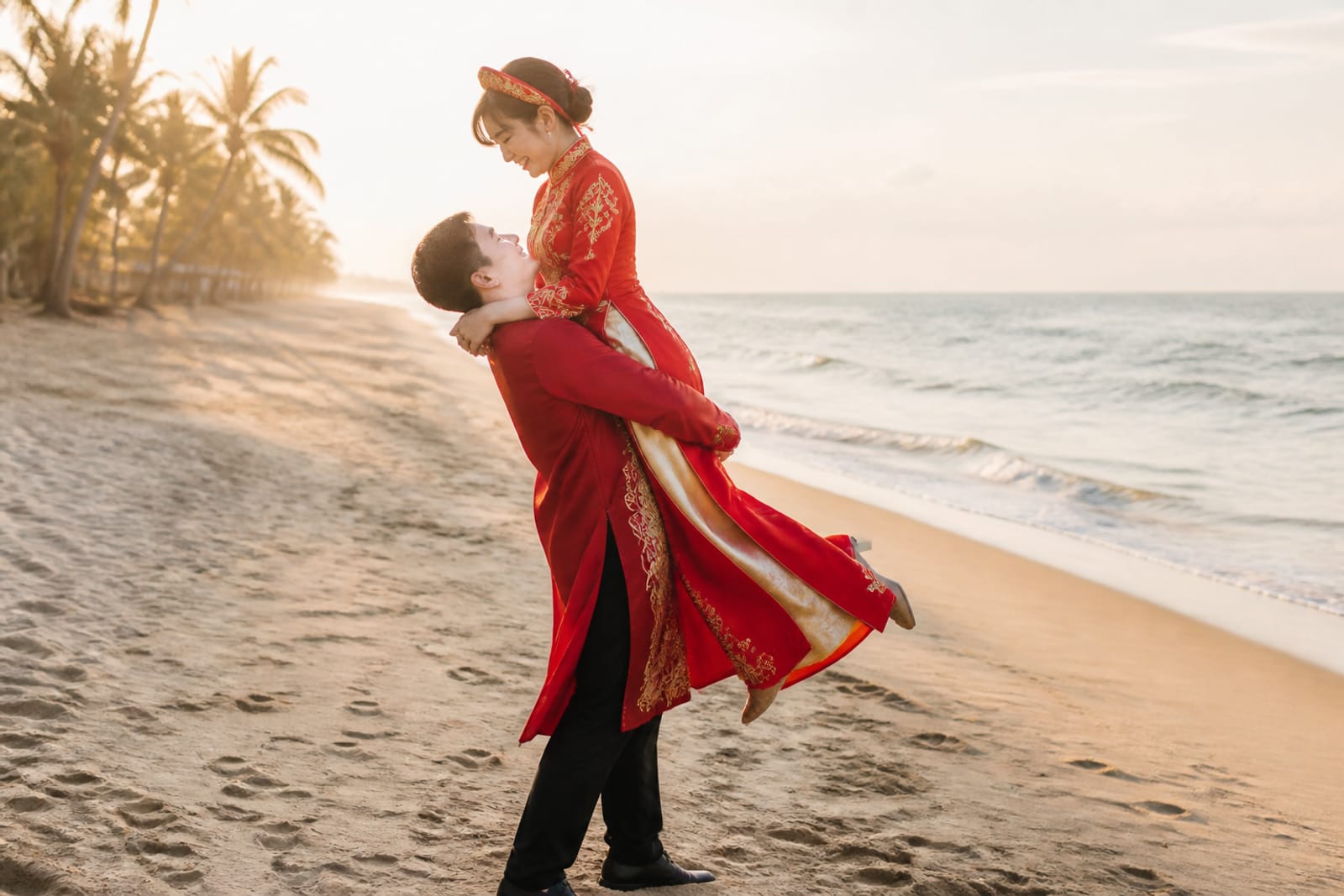
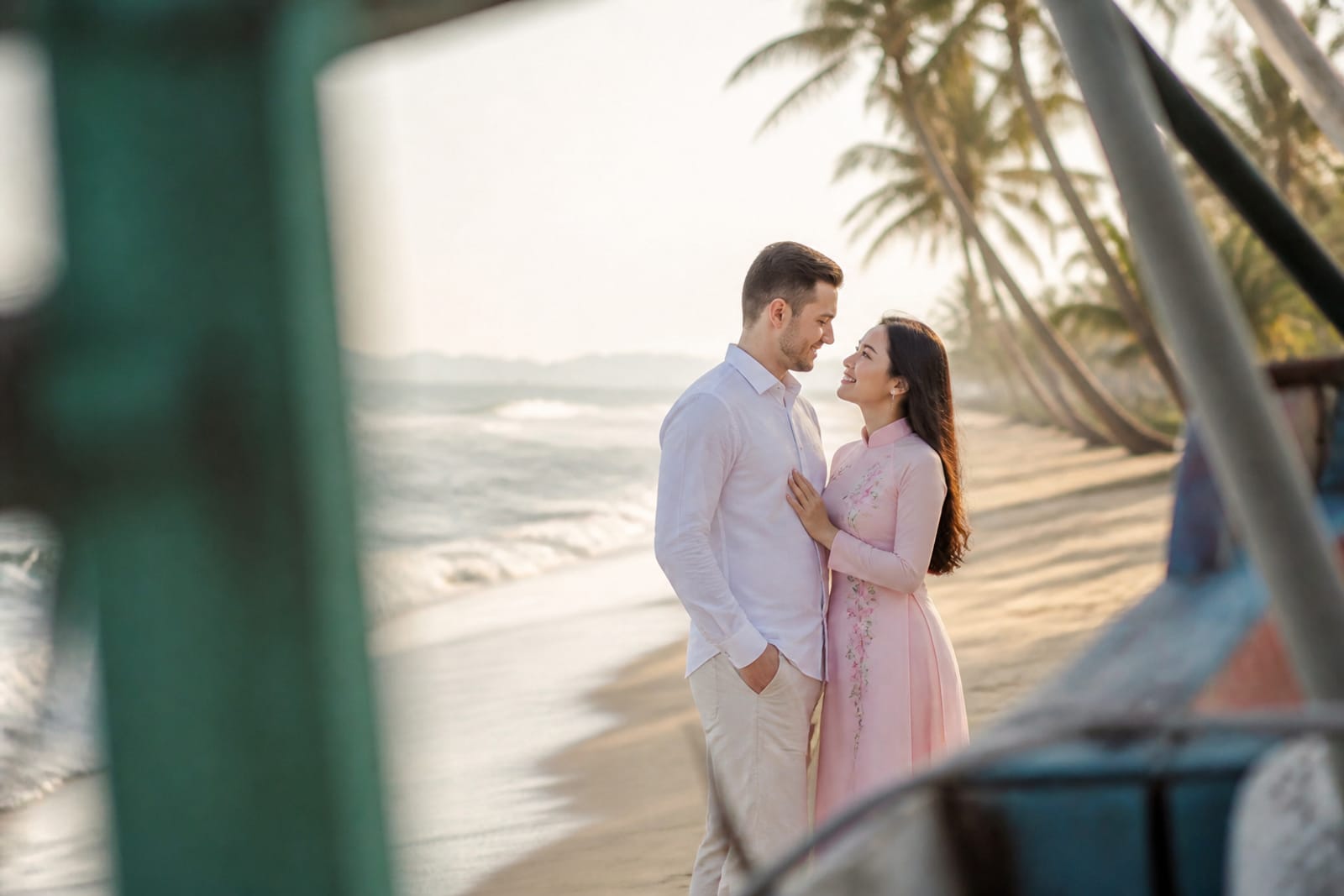
An ao dai is formal by design, but movement—walking slowly, turning to look at each other, hand on arm—breaks the stillness. A director frames during the walk, not after you've stopped. The gown's side slits allow stepping over uneven Ancient Town cobbles; the fitted bodice means layers underneath (soft silk slip) matter for draping. Colors matter too: deep red, forest green, and indigo photograph richly in warm morning light; pastels (blush, cream) work in the late afternoon when sun is lower. If you're renting, ask for a try-on before the shoot day; Cáo Studio's ao dai rental options include styling advice. If you're bringing your own, share a photo with the team so they can scout light and framing that suits the fabric and color.
One detail many couples miss: the gown's back seam and train. Shooting toward the alley entrance with the train trailing behind creates depth; shooting away from it with the train in frame adds drama.
What do you need to prepare and check before booking?
Your timeline. Confirm your travel dates at least three weeks ahead. Hoi An shoots typically run 2–3 hours (sunrise to full light, or late afternoon to dusk). Ask whether the team meets you at your hotel or a meeting point. Travel from Hanoi or Saigon takes 1–2 days, so factor in their schedule.
Season and weather. Check the Vietnam forecast for Feb–Apr dates; ask the studio to suggest a backup date in case of unseasonable rain. (Oct–Nov shoots are not recommended.)
Outfit and styling. Decide: ao dai rental, your own dress, or a mix (ao dai for one location, Western dress for another). Share reference images with the team so they understand your vintage aesthetic. Confirm whether makeup and hair are included; Cáo Studio offers makeup & hair at your hotel on the morning of the shoot.
Location scouting. The team will advise on Ancient Town traffic, light angles, and backup indoor spots (lantern shop interior, temple courtyard—with permission). Ask if they've shot your preferred alley recently and whether the current lighting suits your timeline.
Photo delivery. Clarify the exact number of edited photos, format (digital, prints, album), and the 48-hour turnaround window. Ask to see a sample album from a past Hoi An shoot.
Cost factors—never amounts. Shooting in peak season (Mar–Apr) costs more than off-season (Jan, Aug) due to travel and demand. Multiple outfit changes, additional locations (field + town), or a video add to the session fee. Ask for a WhatsApp quote tailored to your dates and wishes.
---
Comparing pre-wedding options in Hoi An
If you're deciding between a solo photographer (common for budget travelers), a stylist + photographer combo (common at studios), or Cáo Studio's one-team model, here's what matters:
Solo photographer (local hire via booking sites). Cheaper, flexible on timing. You handle your own outfit, hair, and makeup—or hire a separate artist. Risk: no creative direction; the photographer shoots what you ask, not what the light allows. Results depend on individual skill; no guarantee of style consistency. Suit when: you have a specific vision and don't need styling help.
Stylist + photographer combo (two vendors). You book outfit rental and makeup separately from the photographer. Better aesthetics than solo, but coordination is your job—if the makeup artist is late or the outfit doesn't fit, the photographer waits. No unified creative direction. Costs more because you pay two margins. Suit when: you want choice and don't mind managing logistics.
Cáo Studio's one-team model (pre-wedding shoots). One booking, one message: outfit, hair, makeup, and photography all directed by the same person. The team scouts light in real-time, adjusts framing and styling on set, and delivers edited frames in 48 hours. No handoff delays; no misaligned vision. Cost is transparent upfront (ask on WhatsApp for a quote). Suit when: you want peace of mind, a cohesive visual story, and expert direction.
The one-team approach works because the director sees the full picture—how the ao dai drapes in this light, whether the lipstick color reads in the lantern glow, how the alley's architecture frames you best—and adjusts all three in real time. A separate photographer can't tell the makeup artist to soften the liner or suggest a warmer shade; they only shoot what's in front of them.
---
What to check before you book
- Ask for a recent Hoi An sample. Request a full gallery from a couple's shoot in the same season and location you want. Check for light consistency, moment variety (wide, medium, detail), and editing style.
- Confirm the exact inclusions. How many edited photos? Digital files or prints or album? Makeup and hair—included or add-on? Video included? Backup weather date policy. (See Cáo Studio's FAQ or ask on WhatsApp.)
- Check the team's real experience with ao dai. Not every photographer understands how to frame a traditional gown in motion. Ask how they handle the train, side slits, and layering.
- Plan for light. If you choose sunrise, be ready to wake at 4:30 am to allow time for hair, makeup, and travel to the location. If late afternoon, confirm the exact light window (typically 4:30–6 pm depending on season).
- Scout the Ancient Town entrance. Tickets are required. Go online to check current hours and entry times so you can calculate when to arrive. Early morning (before 7 am) is quieter, but some areas may not yet be open.
- Prepare a backup plan. If rain or typhoon warnings emerge, know whether you can reschedule or move to an indoor location (lantern-making shop, temple—with permission).
- Share references. Bring 5–10 images (from Pinterest, Instagram, or other couples' shoots) showing the mood, color palette, and moment type you want. This helps the director align.
---
📸 Book on WhatsApp — ao dai photoshoot | 💄 Makeup & hair at your hotel | 🌸 See the lookbook
---
Other Cáo Studio services in Vietnam
If Hoi An's schedule doesn't work, consider a pre-wedding shoot in Hanoi or Ho Chi Minh City. For broader options, explore couple photoshoots or family sessions. Grooms in search of suit and outfit rentals can book alongside the shoot; brides wanting a traditional gown have ao dai rental options. After the shoot, preserve your frames in a wedding photo album or photo prints & frames. See the full pricing guide or lookbook for inspiration.
---
FAQ
Can we book a Hoi An shoot if we're only in Vietnam for three days?
Yes. Confirm dates immediately on WhatsApp; the team will prioritize your availability. Factor in one day for travel from Hanoi or Saigon. Ideally, schedule the shoot on your second day so you're rested. The actual session is 2–3 hours.
Do we have to wear an ao dai, or can we wear Western wedding dress?
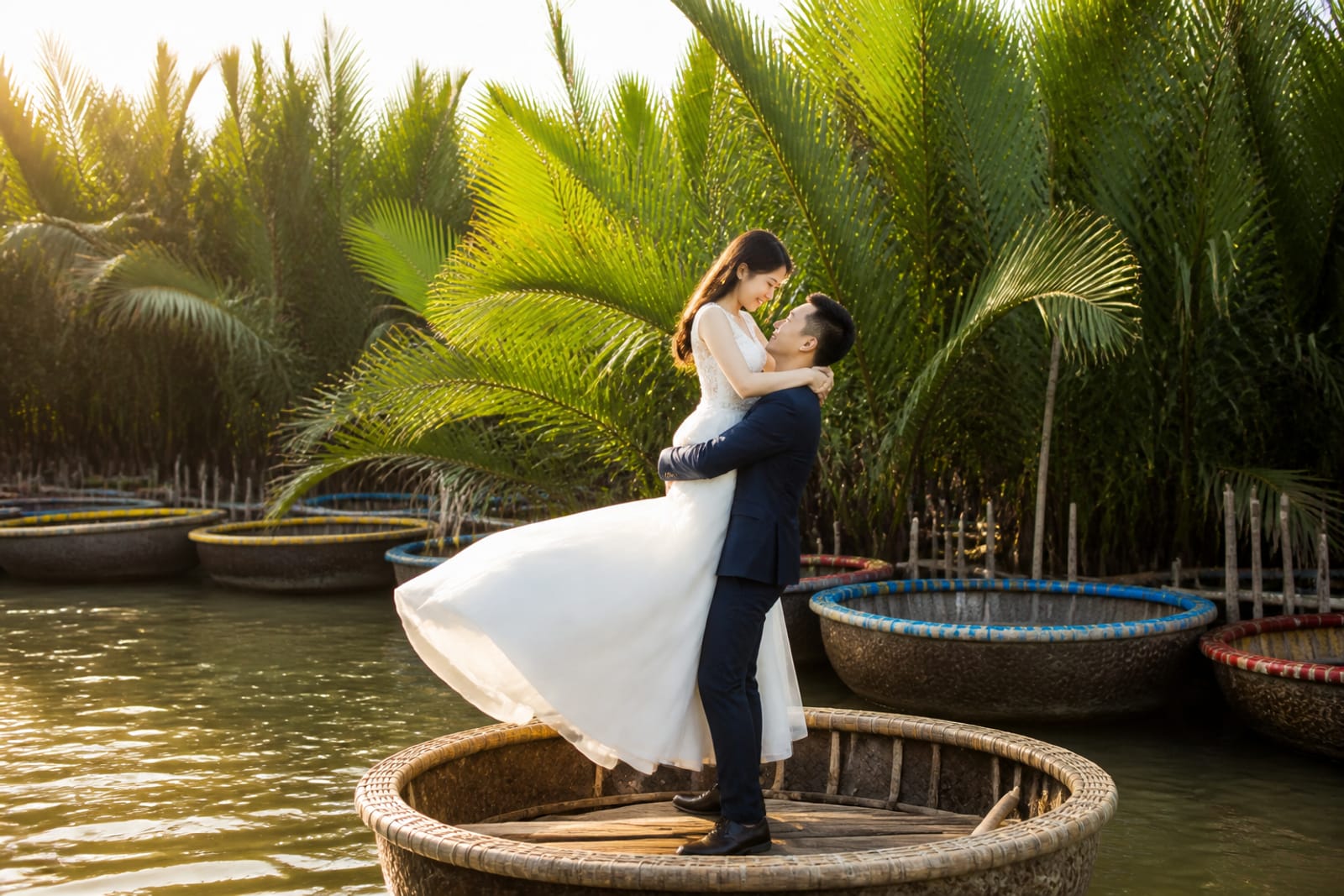
Cáo Studio offers both. Western dress works beautifully in Hoi An's colonial setting, especially in soft morning light. Ao dai is iconic here. Many couples shoot in both—30 minutes in ao dai, then change for a second location. Ask about outfit options and costs on WhatsApp.
What if it rains on our shoot day?
Vietnam's rainy season (especially Sep–Dec) brings daily showers. The team has backup indoor locations—lantern shops, temple courtyards (with permission), covered bridges. Or reschedule to the next clear day if your dates allow. Confirm the rain policy before booking.
How many photos do we get, and how quickly?
Exact counts are confirmed on WhatsApp when you book. Cáo Studio delivers edited photos plus a short vertical film within 48 hours. Ask for a sample of the editing style so you know the final look.
Is makeup and hair included, or do we book separately?
Cáo Studio offers makeup & hair at your hotel on shoot day morning. Confirm whether it's bundled in your package or an add-on cost when you request a quote.
FAQ
Can we book a Hoi An shoot if we're only in Vietnam for three days?
Yes. Confirm dates immediately on WhatsApp; the team will prioritize your availability. Factor in one day for travel from Hanoi or Saigon. Ideally, schedule the shoot on your second day so you're rested. The actual session is 2–3 hours.
Do we have to wear an ao dai, or can we wear Western wedding dress?
Cáo Studio offers both. Western dress works beautifully in Hoi An's colonial setting, especially in soft morning light. Ao dai is iconic here. Many couples shoot in both—30 minutes in ao dai, then change for a second location. Ask about outfit options and costs on WhatsApp.
What if it rains on our shoot day?
Vietnam's rainy season (especially Sep–Dec) brings daily showers. The team has backup indoor locations—lantern shops, temple courtyards (with permission), covered bridges. Or reschedule to the next clear day if your dates allow. Confirm the rain policy before booking.
How many photos do we get, and how quickly?
Exact counts are confirmed on WhatsApp when you book. Cáo Studio delivers edited photos plus a short vertical film within 48 hours. Ask for a sample of the editing style so you know the final look.
Is makeup and hair included, or do we book separately?
Cáo Studio offers [makeup & hair at your hotel](/makeup-and-hair) on shoot day morning. Confirm whether it's bundled in your package or an add-on cost when you request a quote.
Ao dai, makeup, hair and a local photographer in Hanoi or Saigon — one WhatsApp message.