/pre-wedding-photoshoot
Vung Tau lighthouse wedding photos: best time of day and light
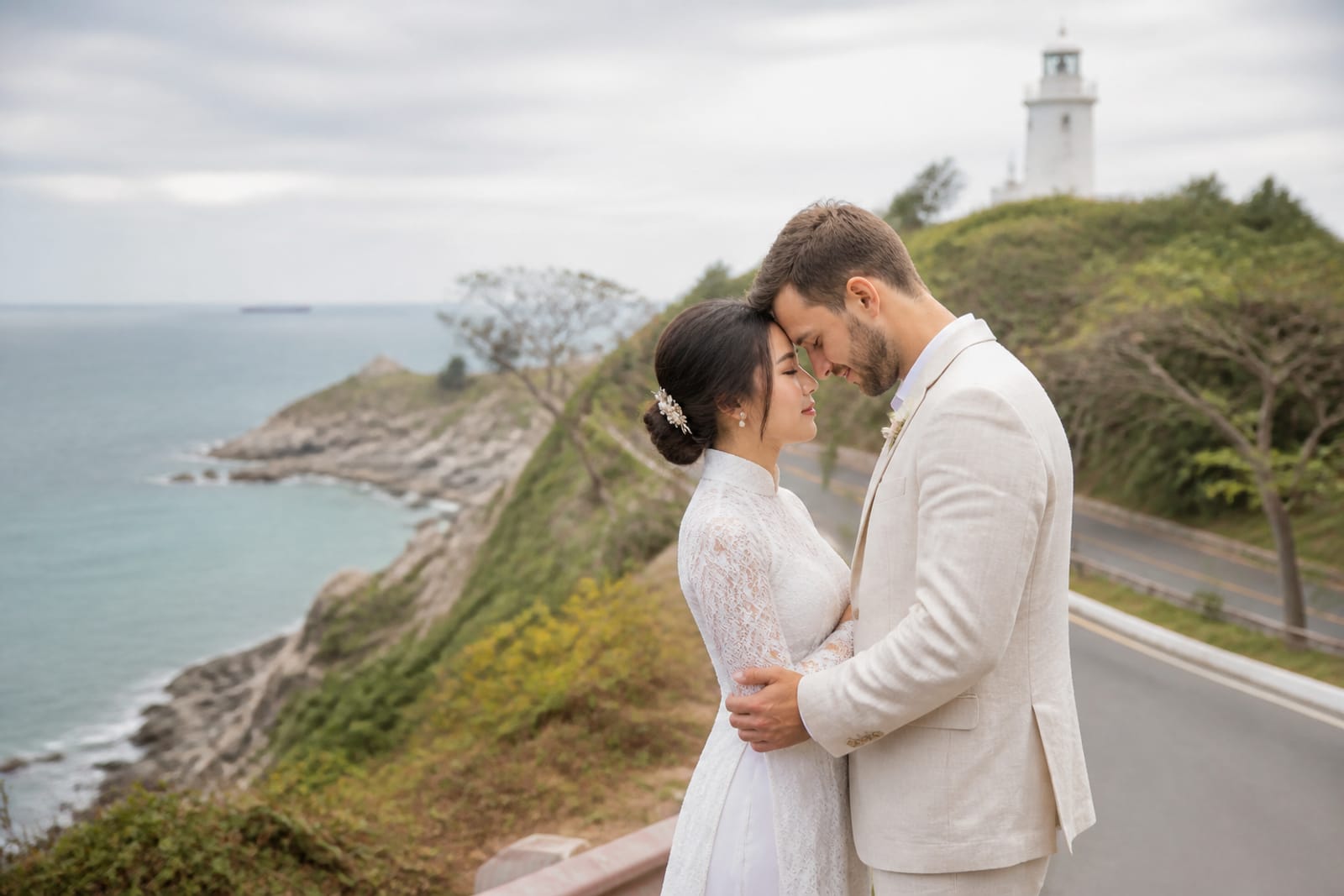
Vung Tau's lighthouse photoshoot works best in the dry season (December–April), when the morning or late-afternoon light wraps the structure in soft contrast without harsh shadows or haze. Early morning (5:30–6:30 am) gives cool side light and empty headland; late afternoon (4:00–5:30 pm) is warmer and busier with day-trippers. Winter light is cleaner than summer because humidity stays lower. Cáo Studio operates in Hanoi and Saigon; for a Vung Tau shoot, we can coordinate a local photographer or you can book a session in Saigon and plan a day trip. Key factors before booking: entry permits, tide timing (which affects walkable rocks), outfit weight in heat, and whether your photographer has a solid working relationship with local guides.
The lighthouse sits on a rocky peninsula 4 km south of Vung Tau town, accessible by road and foot. Its 30-meter white structure faces east-northeast, so morning sun rises behind the sea and side-lights the tower; afternoon sun comes from the left rear, which flatters couples walking toward the camera. Between May and November, the central coast enters its rainy and typhoon season; humidity climbs, cloud cover thickens, and sudden downpours can ruin an afternoon shoot. Book in the dry window (December–April) for consistent, predictable light.
What time of day gives the softest light at the lighthouse?
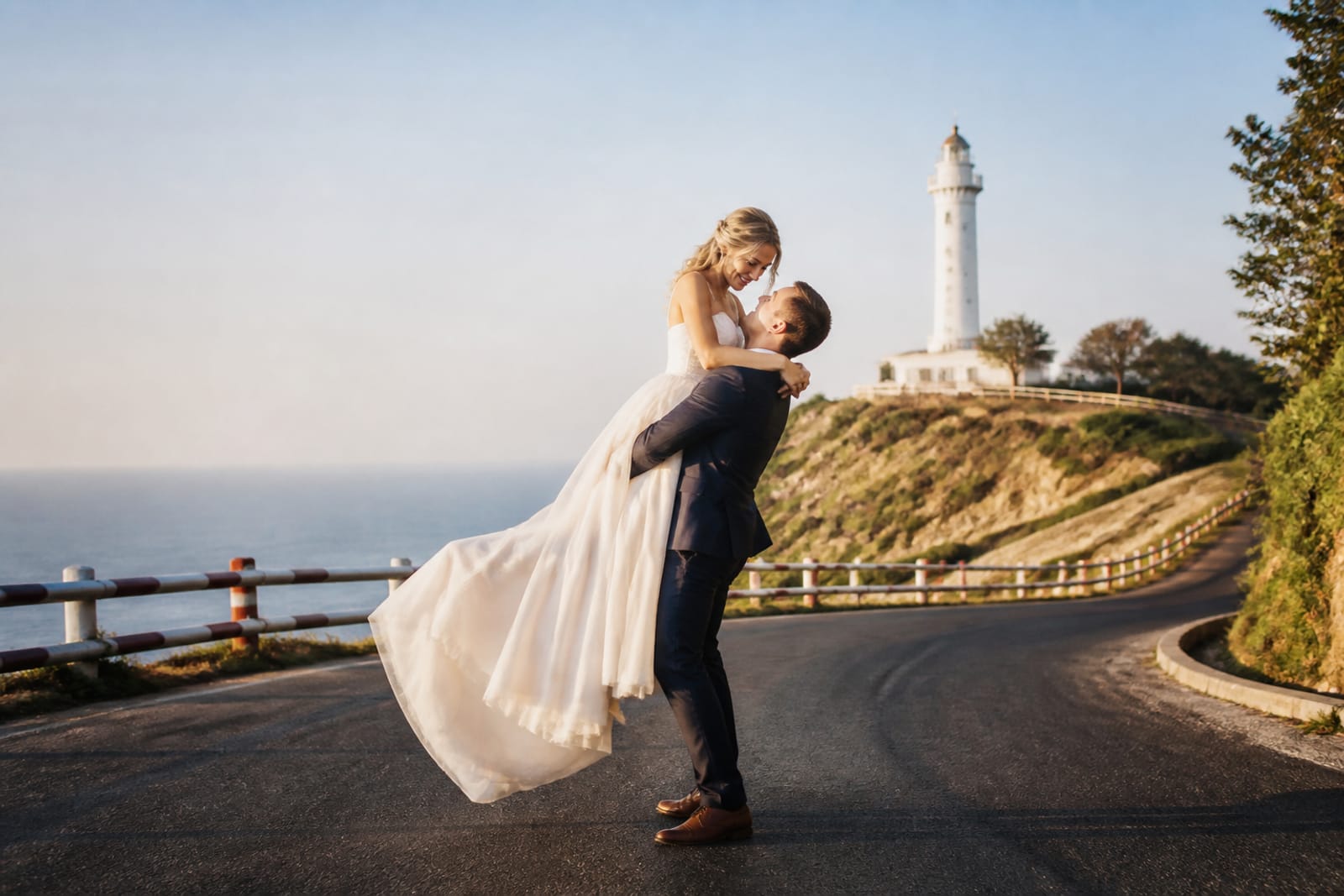
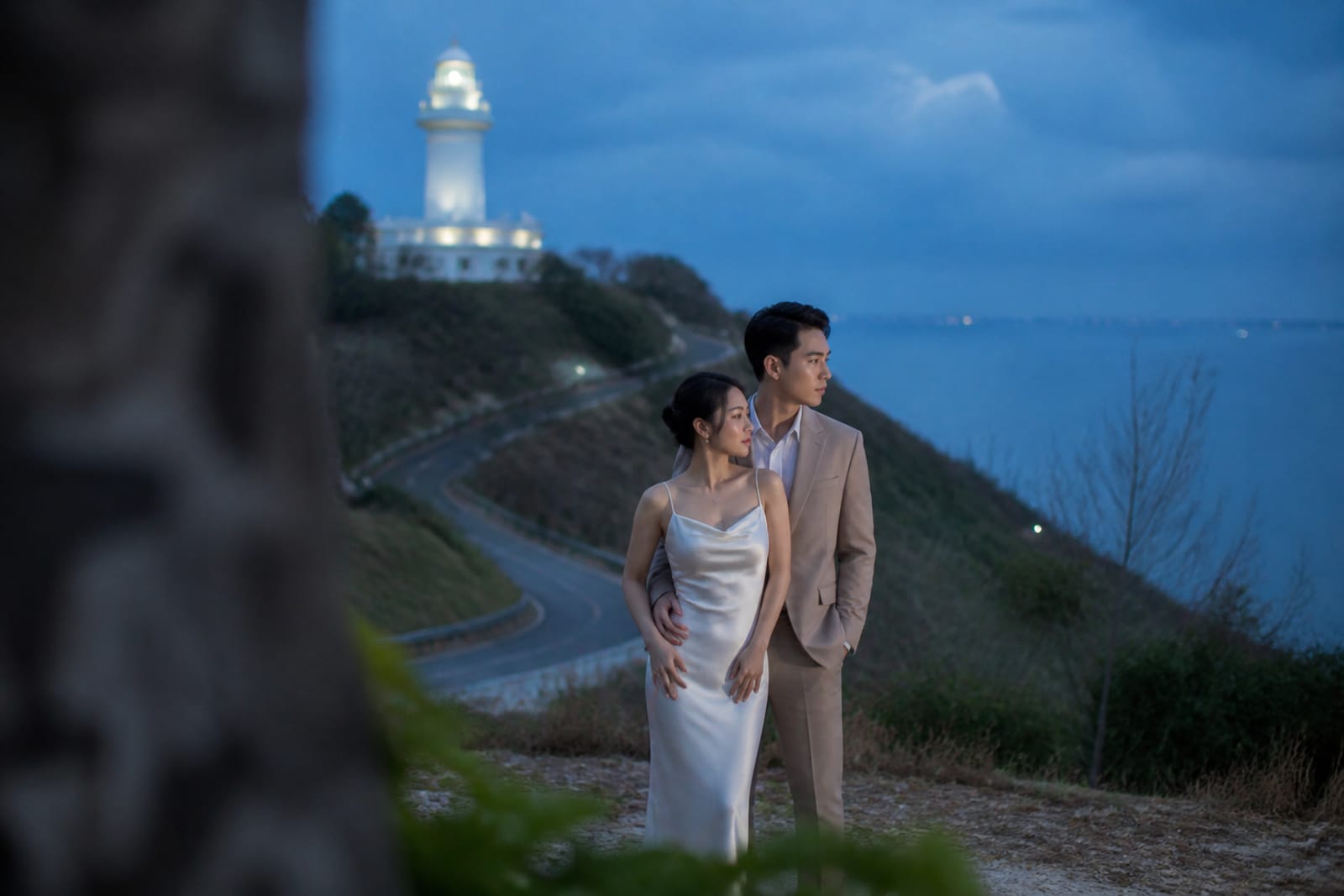
Early morning (5:30–7:00 am) produces cool, diffuse side light that models the tower's curves without blowing out the sky. The rock formations cast long, dramatic shadows eastward, and the sea stays calm and mirror-like. By 7:00 am, day-trippers begin arriving; by 8:00 am, the headland fills. Late afternoon (4:00–5:30 pm) rebuilds warmth and depth; the sun sits lower and throws golden cross-light across the rocks, suiting couples who want a romantic, glowing frame. Both windows require an early start (early) or a staggered arrival (late) to avoid crowds or last-light time pressure.
Conclusion: early morning wins for isolation and cool tone; late afternoon wins for warmth and lower sun angle.
How does season affect the light quality and timing?
| Season | Dry or wet | Light character | Shooting window | Crowd level | Best for |
|---|---|---|---|---|---|
| Dec–Feb | Dry | Cool, crisp, low humidity | 5:30–7:00 am or 4:00–5:30 pm | Low weekday, medium weekend | Clarity, consistent color, fewer retakes |
| Mar–Apr | Dry transitional | Warming, slight haze building | 6:00–7:00 am or 4:30–5:30 pm | Medium–high | Warm tones before heat peaks |
| May–Sep | Wet | Humid, overcast, unpredictable | 6:00–8:00 am (before heat) | Variable | Avoid unless you accept greyness |
| Oct–Nov | Wet (typhoon risk) | Very humid, frequent cloud and rain | Early morning only if clear | Low | Not recommended |
Dry season light is 2–3 stops brighter and cleaner; wet season requires a wider aperture or higher ISO, and clouds flatten contrast. Winter (Dec–Feb) is the safest bet for predictable, saturated color and deep blue sky behind the lighthouse.
Conclusion: shoot December through April; early morning in dry season beats any afternoon timing in wet months.
Should you shoot at sunrise, golden hour, or midday?
Sunrise (5:00–6:00 am) places the sun below the horizon to the east; the sky is pale blue and the tower reads as a dark silhouette against it, which suits minimalist framing or silhouette portraits. Golden hour (4:30–5:45 pm, depending on month) bathes the rock and tower in warm, diffuse light that flatters skin and adds romance; the sun sits low enough to avoid lens flare, and shadows stay directional. Midday (10:00 am–3:00 pm) is harsh; the sun is directly overhead, producing dark eye sockets and blown-out sky, and the headland fills with tourists. Sunrise requires less wind and has the calmest sea; golden hour is busier but warmer, and midday is avoidable.
Conclusion: skip midday entirely; choose sunrise for cool clarity and solitude, or golden hour for warmth and romantic tone.
What outfit and preparation tips work best at Vung Tau lighthouse?
The headland is rocky, exposed to sea wind, and has no shade. Bring a long ao dai or a flowing dress paired with sturdy footwear (flat sandals slip on wet rocks; shoes with grip are non-negotiable). Hair and makeup take wind damage; ask your makeup artist to use long-wear primer and a flexible hairspray that holds without flaking. A lightweight shawl or second outfit lets you shift tone between frames. Sunscreen and a water bottle are essential even in winter; the ocean reflects UV and dehydration creeps fast. Plan outfit changes for sunrise (fresh, cool tones) and golden hour (warm, romantic drape). Avoid heavy fabrics or floor-length skirts that catch on rocks; test your shoes on uneven ground before the shoot.
Conclusion: prioritize grip, wind resistance, and skin protection; bring two outfits and hydration.
How does crowd timing affect your frame options and shoot flow?
Weekday mornings before 6:30 am guarantee empty headland and uninterrupted sight lines to the sea and sky. Weekends fill by 7:00 am with family groups, selfie-stick tourists, and organized tour parties; you'll need to shoot in tighter framing or navigate bodies in the background. Late afternoon crowds are denser on Fridays and Saturdays because Saigon day-trippers arrive after work. A tight crew (photographer, one makeup artist, two subjects) moves faster than a large party; if you're a couple, ask your photographer to work in 15-minute blocks—wide establishing shots first, then medium and detail frames, then pivot to another angle if tourists enter the frame. Booking a professional guide (often available through your hotel or photographer) helps negotiate sight lines and timing.
Conclusion: book a weekday early morning slot for uncompromised frames; if weekends are your only option, arrive by 5:30 am and finish by 6:45 am.
Who should book a Vung Tau lighthouse photoshoot versus other locations?
A lighthouse shoot suits couples drawn to architectural geometry, sea-facing drama, and a structured, recognizable landmark—it works for pre-weddings, proposals, and anniversary portraits. If you want vibrant market energy, book Hoi An Ancient Town or Saigon's backstreets instead. If you prefer intimate, natural-light moments (like a couple's breakfast or walking in rice fields), a couple and family photoshoot in a quieter village or delta region may fit better. If you're on a tighter timeline and want guaranteed completion in one afternoon, Vung Tau's compact layout suits you; if you want multiple outfit changes and a full day's narrative arc, book a destination session in Hanoi or Hoi An. Lighthouse shoots work especially well as a half-day add-on to a Saigon pre-wedding photoshoot, combining urban and coastal frames in one trip.
Conclusion: book the lighthouse if you want bold architectural frames and sea light; choose another location if you prefer organic mood or layered storytelling.
---
What to check before you book
Before committing to a Vung Tau lighthouse shoot, confirm:
- Permit or entry access: check whether the lighthouse headland requires a fee or permit (call your photographer or local tourism office to verify current requirements).
- Tide and rock stability: low tide exposes more rocks and walking paths; high tide limits safe footing. Ask your photographer which tide window suits your outfit and mobility.
- Weather window: dry season is reliable, but call 48 hours before to check for rare frontal systems or unexpected cloud.
- Photographer experience: ask whether they've shot this location before and how they handle crowd management and navigation of uneven terrain.
- Outfit fit: confirm your dress or ao dai works on rocky, windswept terrain and that footwear has grip (not loose sandals).
- Turnaround time: ask how many edited photos you'll receive and when (Cáo Studio delivers within 48 hours for booked sessions; local photographers vary widely).
📸 Book on WhatsApp — pre-wedding photoshoot
---
Comparing your options: DIY versus local photographer versus Cáo Studio
If you're choosing how to shoot your Vung Tau session, here's what each path involves:
Self-guided with a camera or phone: You set the time, location and outfit. Requires deep research on light angles, permit access, and safe footing. Frames are often underlit or framed too far back. No professional retouching, and phone/casual-camera color grading can look flat. Best for casual couples who want a memory capture over a keepsake frame.
Local Vung Tau photographer: Hire someone based in or familiar with the lighthouse spot. Pros: they know access, tides, and crowd patterns, and rates are often lower than studio rates. Cons: portfolios vary widely, communication can be slower, and turnaround time is unpredictable. Vet them hard—ask for a recent lighthouse or coastal portfolio, check their editing style, and confirm editing delivery time before booking.
Cáo Studio Saigon (one team for hair, makeup, and camera): If you book a pre-wedding session in Saigon, we can help you plan a Vung Tau day-trip shoot or coordinate with a vetted local photographer on the ground. The advantage is one message, one editing style, and guaranteed 48-hour turnaround. You're paying for coordination and professional color grading, not just a camera operator. Best for couples who want a studio-quality frame and peace of mind.
---
FAQ
What time does the sun rise and set at Vung Tau in winter versus summer?
In winter (December), sunrise is around 6:15 am and sunset around 5:00 pm. In summer (June), sunrise is around 5:15 am and sunset around 6:30 pm. Shoot the hour after sunrise or the hour before sunset for best light; use an online sunrise/sunset tool for your exact date.
Can we shoot the lighthouse at sunset if we arrive on a Friday evening?
Yes, but expect heavy crowds—Saigon day-trippers peak on Friday and Saturday afternoons. Arrive by 4:00 pm to secure a sight line, and shoot between 4:30–5:30 pm before the light flattens. Early morning the next day will give you calmer frames if you have a flexible schedule.
Is the lighthouse safe to walk around with a dress or ao dai?
The rocks are uneven and slippery when wet or covered in sea spray. Wear footwear with grip (not flip-flops), avoid trailing fabric that catches on rocks, and ask your photographer to scout the safest path first. Avoid shooting during high tide if you're uncomfortable with narrow footing.
How many outfit changes can we do at the lighthouse in one session?
Two outfit changes work well within a 1.5–2 hour early-morning slot. More than three becomes logistically tight because you'll lose light, need changing privacy (a vehicle or tent), and crowd pressure increases as the morning progresses. Confirm outfit count and hair/makeup touch-up time with your photographer beforehand.
Does Cáo Studio shoot at Vung Tau lighthouse?
Cáo Studio operates in Hanoi, Saigon, and Hoi An. For a Vung Tau shoot, we can coordinate with a local photographer on the ground or book you for a pre-wedding session in Saigon and advise on a day trip. Ask on WhatsApp +84 338 762 340 for coordination details.
What's the best season to avoid typhoons and still get good light?
December through April is the safest window. October–November carries typhoon risk and heavy rain; May–September is hot, humid, and unstable. Book December–April for dry, predictable light and no weather cancellation risk.
FAQ
What time does the sun rise and set at Vung Tau in winter versus summer?
In winter (December), sunrise is around 6:15 am and sunset around 5:00 pm. In summer (June), sunrise is around 5:15 am and sunset around 6:30 pm. Shoot the hour after sunrise or the hour before sunset for best light; use an online sunrise/sunset tool for your exact date.
Can we shoot the lighthouse at sunset if we arrive on a Friday evening?
Yes, but expect heavy crowds—Saigon day-trippers peak on Friday and Saturday afternoons. Arrive by 4:00 pm to secure a sight line, and shoot between 4:30–5:30 pm before the light flattens. Early morning the next day will give you calmer frames if you have a flexible schedule.
Is the lighthouse safe to walk around with a dress or ao dai?
The rocks are uneven and slippery when wet or covered in sea spray. Wear footwear with grip (not flip-flops), avoid trailing fabric that catches on rocks, and ask your photographer to scout the safest path first. Avoid shooting during high tide if you're uncomfortable with narrow footing.
How many outfit changes can we do at the lighthouse in one session?
Two outfit changes work well within a 1.5–2 hour early-morning slot. More than three becomes logistically tight because you'll lose light, need changing privacy (a vehicle or tent), and crowd pressure increases as the morning progresses. Confirm outfit count and hair/makeup touch-up time with your photographer beforehand.
Does Cáo Studio shoot at Vung Tau lighthouse?
Cáo Studio operates in [Hanoi](/hanoi), [Saigon](/saigon), and [Hoi An](/hoi-an). For a Vung Tau shoot, we can coordinate with a local photographer on the ground or book you for a [pre-wedding session in Saigon](/pre-wedding-photoshoot) and advise on a day trip. Ask on WhatsApp +84 338 762 340 for coordination details.
What's the best season to avoid typhoons and still get good light?
December through April is the safest window. October–November carries typhoon risk and heavy rain; May–September is hot, humid, and unstable. Book December–April for dry, predictable light and no weather cancellation risk.
Ao dai, makeup, hair and a local photographer in Hanoi or Saigon — one WhatsApp message.