services/pre-wedding-photoshoot
Vung Tau Pre-Wedding Photoshoot Guide: Spots, Light & Planning
Vung Tau is a three-hour coastal drive from Ho Chi Minh City, and many engaged couples choose it for intimate pre-wedding sessions because the city's compact geography—beaches, mountains, urban texture—works in a single shoot day. Unlike Da Nang or Nha Trang, Vung Tau has fewer Western tourist crowds and lower seasonal tourism swings, meaning you book faster and feel more private.
This guide walks you through real shooting conditions, location breakdowns by light quality, what clothes work, and how to choose between hiring a local independent photographer, a travel-based team, or booking pre-wedding as part of a larger trip package through Cáo Studio.
What are the best photo spots in Vung Tau for pre-wedding shoots?
Vung Tau offers five primary zones: the Back Beach (Bai Sau) seafront boulevard, Front Beach's rocky coves, Christ the King statue overlook, Nui Lon mountain ridge, and the old French lighthouse near the southern point. Back Beach is iconic—long promenade, golden sand, and wide sky—but crowded by 7 a.m. on weekends. Rocky coves at Front Beach (Ba Trai) work best at sunrise when rocks cast long shadows. The Christ statue viewpoint frames Vung Tau's cityscape; shoot early morning for soft backlight. Nui Lon ridge (accessible by bike or car) offers panoramic vantage and morning mist on clear days.
🌸 See the lookbook to see how couples pose across coastal and urban settings.
What time of day gives the best light in Vung Tau?
Golden hour (6–7:30 a.m. sunrise; 4–5:30 p.m. sunset) is non-negotiable for pre-wedding work. Morning shoots catch Vung Tau's least-crowded state and softest, most directional light—ideal for silhouettes against the sea and warm sidelighting on skin. Afternoon shoots give warmer, lower-angle rays but require exact positioning to avoid harsh shadows on faces. Midday (10 a.m.–3 p.m.) is useless: flat, overhead sun creates unflattering shadows and washes out the sky. If weather forces an afternoon shoot, stick to shaded urban pockets (old architecture, alleyways) or position subjects against the bright sea to backlight them.
Most pre-wedding teams (including Cáo Studio coordinators) recommend two-location, two-time shoots: early morning at Back Beach or Front Beach (1.5 hours), then a 30-minute car transfer for late-afternoon light at the Christ statue or lighthouse (1 hour). This captures two distinct moods in one day.
What should we wear for Vung Tau pre-wedding photos?
Western formal wear (tailored suits, flowing gowns, minimalist dresses):
- Works best in early-morning soft light and at architectural landmarks
- Avoid heavy fabrics; Vung Tau's humidity (60–85% year-round) causes clinging and sweat marks
- Light linens, breathable silks, and structured cotton suit the seaside backdrop
- Shoes: practice barefoot on sand; if you wear heels, stick to rocky areas and pathways
Ao dai (traditional Vietnamese tunic):
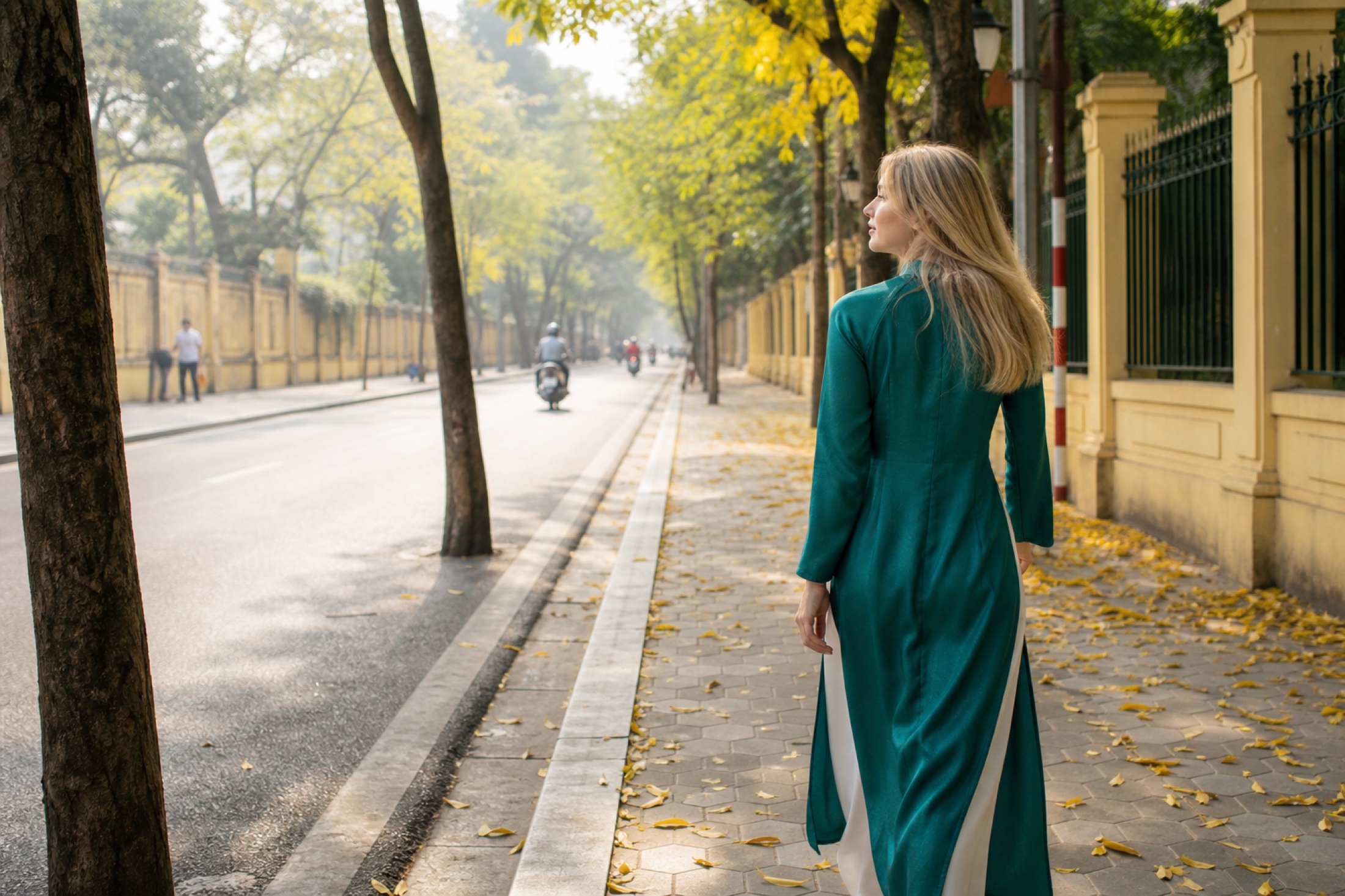
- Pairs beautifully with seafront shots—the flowing fabric catches wind and creates movement
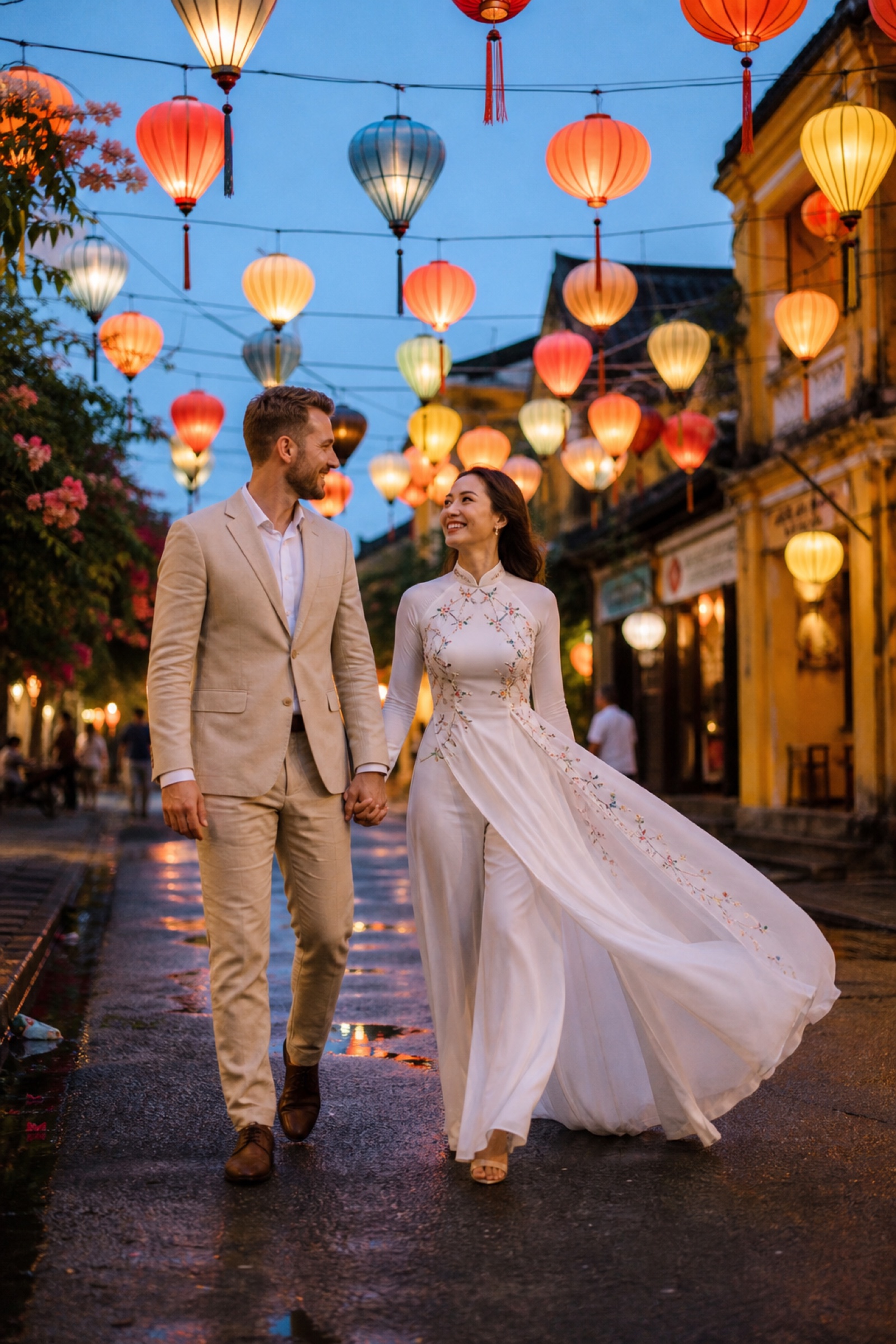
- Pair with Western formal wear for a "morning/afternoon" contrast in a single session
- Book ao dai photoshoot as a standalone or add-on if you want dedicated time in traditional dress
- Many couples shoot ao dai at a second location (temple grounds, urban alley) to separate the aesthetic
Casual/smart-casual (linen shirts, light trousers, sundresses):
- Works for beach walks and candid moments
- Vung Tau's casual vibe suits understated, interchangeable pieces
- Bring a cardigan or light jacket for sunset shoots when sea breeze cools quickly
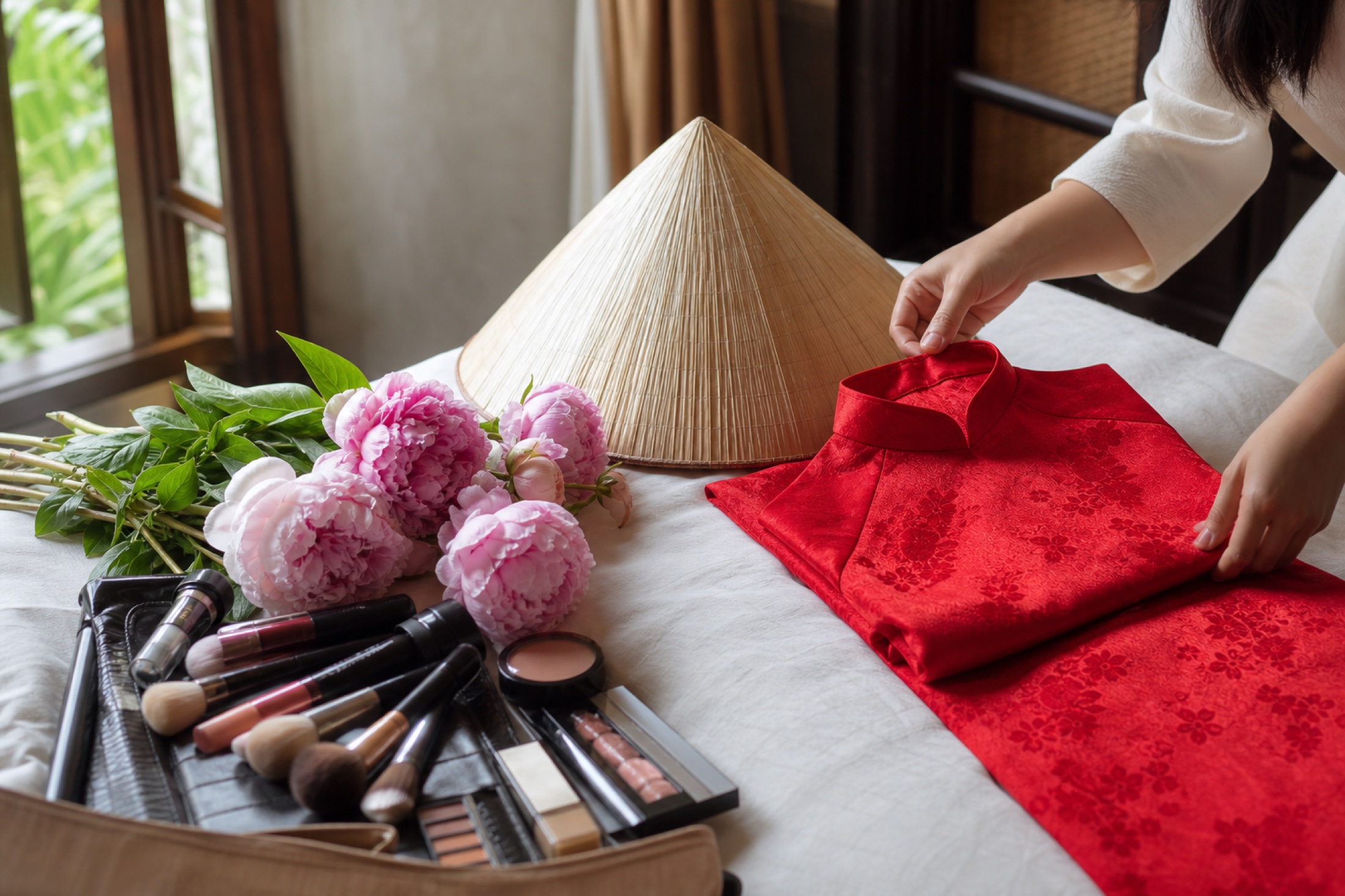
Pro tip: Pack three outfit changes (or two full sets) in a beach bag. Humidity fades makeup; allocate 15 minutes between location moves for touch-ups. Waterproof makeup or a mid-shoot refresh (via makeup & hair at your hotel team) prevents streaking in candid shots.
| Outfit Type | Best Light Window | Key Risk | Prep Checklist |
|---|---|---|---|
| Formal Western wear | Golden hour (6–7:30 a.m., 4–5 p.m.) | Sweat stains, wilting fabric | Antiperspirant 2 hrs before; iron night before; bring steamer |
| Ao dai | Morning (6–8 a.m.) for wind, or calm evening | Static/clinging to body without wind | Lightweight slip; anti-static spray; 2–3 hours for fitting/breaks |
| Casual/smart-casual | 7–9 a.m., 3–5:30 p.m. | Sun-faded colors, wrinkled linen | Choose white/cream/tan; fold loosely; refresh steamer on-site |
| All outfits | Avoid 10 a.m.–3 p.m. | Flat light, overheating, makeup fading | Rent a car with AC; bring wet wipes, powder, setting spray |
What's the weather like in Vung Tau by month, and when should I book?
Vung Tau is subtropical with two seasons: dry (Nov–Apr) and wet (May–Oct). Best months: November to February bring 18–23 °C temps, 60–65% humidity, clear skies, and calm seas—ideal for two-shoot days without sweat-soaked clothes. March–April warm to 25–28 °C with occasional pre-monsoon clouds, but mornings remain sharp. Avoid: May–October sees 25–32 °C, 80%+ humidity, afternoon storms, and choppy waters. Afternoon light often diffuses behind haze.
Book pre-wedding shoots 6–8 weeks ahead during peak season (Nov–Feb) because teams (local photographers and visiting Cáo Studio coordinators) fill quickly. In off-season (May–Oct), book 3–4 weeks prior; you'll have clearer scheduling but must plan around rain. July–August bring typhoon-season cloudiness; January–February are coldest and driest, ideal if you dislike heat.
💄 Makeup & hair at your hotel is crucial in humid months (June–Sept)—book touch-up time mid-shoot and a humidity-proofing primer.
How do I book a pre-wedding photographer in Vung Tau?
Three main options exist: hire an independent local Vung Tau photographer, book a Ho Chi Minh City–based team who travel to Vung Tau, or include pre-wedding as part of a larger trip package through Cáo Studio's Saigon branch.
Local independent photographers (search Facebook groups "Vung Tau photographers" or "Pre-wedding Vung Tau") often cost 30–50% less than city teams, know the best light spots intimately, and offer faster turnaround. Drawback: language barriers, inconsistent portfolios, and weak online presence make vetting hard. Always ask for unedited samples, check 3–5 real couples' galleries, and confirm editing style before deposit.
Ho Chi Minh City teams (including those coordinated by Cáo Studio's Saigon base at /saigon) charge more but bring consistency, experience across multiple venues, and backup gear. They handle client communication in English, manage timeline stress, and deliver polished, cohesive galleries. Book 8 weeks ahead; confirm travel costs and Vung Tau location fees in writing.
Cáo Studio pre-wedding packages (full details here) include makeup & hair, location scouting, and multi-location shoots. The team (based in Hanoi, Saigon, and Hoi An) travels to Vung Tau on request; you pay travel cost + session fee. Benefit: one-stop booking for ao dai touchups, proposal themes, or anniversary sessions if desired.
Booking checklist before you pay a deposit:
- Confirm the photographer's Vung Tau experience (ask for 3 verifiable couples' galleries)
- Clarify shooting hours: are you booking 4 hours or 6? Does it include location moves?
- Request a detailed location itinerary (not vague "beach and city spots")
- Check edited vs. unedited samples to match your aesthetic
- Verify backup photographer/equipment policy in writing
- Confirm final gallery delivery format and editing turnaround (typical: 4–6 weeks)
- Ask about re-shoot policy if weather cancels the day
📸 Book on WhatsApp — ao dai photoshoot to start conversations with Cáo Studio or get referrals for local Vung Tau photographers.
Should we combine a pre-wedding shoot with an ao dai session?
Many Western couples think pre-wedding and ao dai are separate; they're not. An ao dai session is a subset of pre-wedding storytelling—and Vung Tau's coastal backdrops enhance the traditional tunic's flowing fabric and color contrast beautifully.
Combined shoot logic: Hire a team for 5–6 hours. First 2 hours: ao dai at a beach or temple-adjacent location (Vung Tau's Ta Vu Pagoda frames elegantly behind ao dai subjects; the lighthouse grounds offer urban-traditional contrast). Break for 30 minutes (makeup refresh, outfit change). Final 3 hours: Western formal wear at Front Beach, Christ statue, or Back Beach promenade.
Cost is typically lower than booking ao dai + pre-wedding separately because you pay one travel fee. Editing time increases slightly (two aesthetics, two color grades), but the gallery is richer—couples report that ao dai shots feel more intimate, while formal wear shots feel celebratory, and editing ties both threads.
Why Vung Tau works best for this: The city's compact size means location shifts are 10–15 minutes apart (vs. 45-min drives in Hanoi). Early morning light suits ao dai's delicate draping; afternoon light works for formal wear without reshooting the same 4 hours.
See the lookbook for couples who mixed both styles in Vung Tau or coastal settings.
What should we know about working with a team on the day?
Confirm a 24-hour weather call: if rain, ask about reschedule policy or indoor backups (old colonial buildings, covered markets, pagoda interiors). Arrive 20 minutes early to the first location; morning Vung Tau traffic can surprise visitors. Bring a cooler with water, electrolyte drinks, and light snacks—shooting in heat without fuel causes fatigue and dull expressions by hour 4.
Wear an extra shirt in the car; change into shoot outfit 10 minutes before the photographer arrives (sweat takes 5–10 minutes to settle). If you're nervous, request a 15-minute "warm-up" walk before the photographer starts framing shots. Most Cáo Studio coordinators include this; ask explicitly if booking a local team.
Plan two wardrobe changes as minimum; three if combining ao dai + formal wear. Assign a friend or family member as "gear guardian"—they watch phones, shoes, and accessories while you're in water or moving freely.
---
What to check before you book a pre-wedding photographer
- Portfolio depth: Ask for 5–10 full galleries (not cherry-picked singles) from past couples
- Vung Tau-specific experience: How many shoots has this team done here? What are their go-to locations and timing?
- Backup plan: What happens if monsoon rains or equipment fails? Is reshooting free?
- Edit style: View unedited RAW samples and final JPEGs side-by-side. Does the color grade and contrast match your aesthetic?
- Contractual clarity: Confirm session length, location count, gallery size (shot count, not just "500 photos"), delivery timeline, and reprint/album costs
- Communication: Will they be available via WhatsApp or email the day before to confirm timing and meet location?
💄 Makeup & hair at your hotel adds polish and confidence. Book 1–1.5 hours before first shoot if humidity is forecast.
---
FAQ
Can we shoot a pre-wedding session in Vung Tau and an ao dai session on the same day?
Yes. Book a 5–6 hour combined session (2 hours ao dai in early light, 1 hour break, 3 hours formal wear). Cáo Studio's Saigon team and local photographers both offer this. It's cost-efficient and lets you tell a fuller story—the tunic in soft morning light, formal wear in warm afternoon rays. Link: ao dai photoshoot and pre-wedding photoshoot.
What's the difference between hiring a local Vung Tau photographer versus a Saigon-based team?
Local photographers know the best light and avoid crowds but may lack English, have inconsistent editing, and no backup. Saigon teams charge 30–50% more, speak English, and offer polished galleries with consistent style. Cáo Studio Saigon (saigon) handles travel and logistics; vetting is easier. Choose local for budget and intimacy; choose a city team for reliability and polish.
What months have the calmest, clearest light in Vung Tau for pre-wedding shoots?
November to February. Temps are 18–23 °C, humidity is 60–65%, and skies are clear with calm water. March–April works too (25–28 °C, occasional clouds). May–October is humid, hazy, and stormy; avoid if possible. Book 6–8 weeks ahead in peak season, 3–4 weeks in off-season.
Do we need a permit to shoot at Vung Tau's Christ the King statue or lighthouse?
The Christ statue (Vung Tau's iconic landmark) allows photography freely; no permit needed for couples. The lighthouse grounds (Tran Phu Cape) permit casual photography but may charge a small entrance fee ($1–2). Check with your photographer—they usually handle venue permissions. Some temples (Ta Vu Pagoda) request respectful dress and a small donation if photographing inside; ask your team in advance.
Should we book a second outfit or bring a steamer to Vung Tau for touch-ups?
Bring two full outfits minimum. Humidity (60–85%) and sweat will wilt fabrics and makeup. Pack a portable garment steamer or ask your hotel concierge to iron between locations. Book makeup & hair at your hotel for 30-minute touch-ups mid-shoot if humidity is high or the session spans 5+ hours. Setting spray and blotting powder are non-negotiable. ===
FAQ
Can we shoot a pre-wedding session in Vung Tau and an ao dai session on the same day?
Yes. Book a 5–6 hour combined session (2 hours ao dai in early light, 1 hour break, 3 hours formal wear). Cáo Studio's Saigon team and local photographers both offer this. It's cost-efficient and lets you tell a fuller story—the tunic in soft morning light, formal wear in warm afternoon rays. Link: [ao dai photoshoot](/services/ao-dai-photoshoot) and [pre-wedding photoshoot](/services/pre-wedding-photoshoot).
What's the difference between hiring a local Vung Tau photographer versus a Saigon-based team?
Local photographers know the best light and avoid crowds but may lack English, have inconsistent editing, and no backup. Saigon teams charge 30–50% more, speak English, and offer polished galleries with consistent style. Cáo Studio Saigon ([saigon](/saigon)) handles travel and logistics; vetting is easier. Choose local for budget and intimacy; choose a city team for reliability and polish.
What months have the calmest, clearest light in Vung Tau for pre-wedding shoots?
November to February. Temps are 18–23 °C, humidity is 60–65%, and skies are clear with calm water. March–April works too (25–28 °C, occasional clouds). May–October is humid, hazy, and stormy; avoid if possible. Book 6–8 weeks ahead in peak season, 3–4 weeks in off-season.
Do we need a permit to shoot at Vung Tau's Christ the King statue or lighthouse?
The Christ statue (Vung Tau's iconic landmark) allows photography freely; no permit needed for couples. The lighthouse grounds (Tran Phu Cape) permit casual photography but may charge a small entrance fee ($1–2). Check with your photographer—they usually handle venue permissions. Some temples (Ta Vu Pagoda) request respectful dress and a small donation if photographing inside; ask your team in advance.
Should we book a second outfit or bring a steamer to Vung Tau for touch-ups?
Bring two full outfits minimum. Humidity (60–85%) and sweat will wilt fabrics and makeup. Pack a portable garment steamer or ask your hotel concierge to iron between locations. Book [makeup & hair at your hotel](/services/makeup-and-hair) for 30-minute touch-ups mid-shoot if humidity is high or the session spans 5+ hours. Setting spray and blotting powder are non-negotiable. ===
Ao dai, makeup, hair and a local photographer in Hanoi or Saigon — one WhatsApp message.