/pre-wedding-photoshoot
What affects the cost of a pre-wedding photoshoot in Sapa
A pre-wedding photoshoot in Sapa is shaped by five main factors: season (dry Mar–Nov is premium; wet Dec–Feb adds logistics); photographer base (local Sapa photographers cost less but may lack styling; Hanoi studios charge travel time but bring one cohesive team); guide requirement (mandatory for remote rice-terrace access, adds cost); outfit count (traditional ao dai, Western dress, casual changes mean more shoot hours); and timeline pressure (rush editing costs more than 48-hour turnaround). Couples choose between budget local shooters, mid-range Hanoi day-trips, or full-service studios like Cáo Studio that coordinate styling, hair, makeup and photography as one team — compare which fits your priorities and travel flexibility before booking. #
A pre-wedding shoot in Sapa combines landscape drama with couple portraiture, but cost isn't a simple number—it's built from logistics, season, and the photographer's scope.
Sapa sits at 1,600 meters in the northwest; rice terraces, Fansipan cable car and hill-tribe villages form the backdrop. But the mountain's isolation, seasonal weather swings and permit rules make pricing opaque. This guide breaks the factors that drive cost so you can compare options fairly.
What makes Sapa pre-wedding shoots more expensive than lowland cities?
Sapa's remoteness creates three cost layers: travel time (4–5 hours from Hanoi by car or train), porter or guide fees (required for many off-road terrace locations), and weather variability (rain closes trails, forcing rescheduling or alternative venues). A Hanoi-based photographer charges travel and accommodation; a local shooter avoids that but may lack styling coordination. The rice terraces you dream of aren't a 10-minute walk from town—you pay for access, safety and someone who knows where light hits the paddies at dawn.
📸 Book on WhatsApp — pre-wedding & elopement | 💄 Makeup & hair at your hotel | 🌸 See the lookbook
How does season shift the cost and look of your shoot?
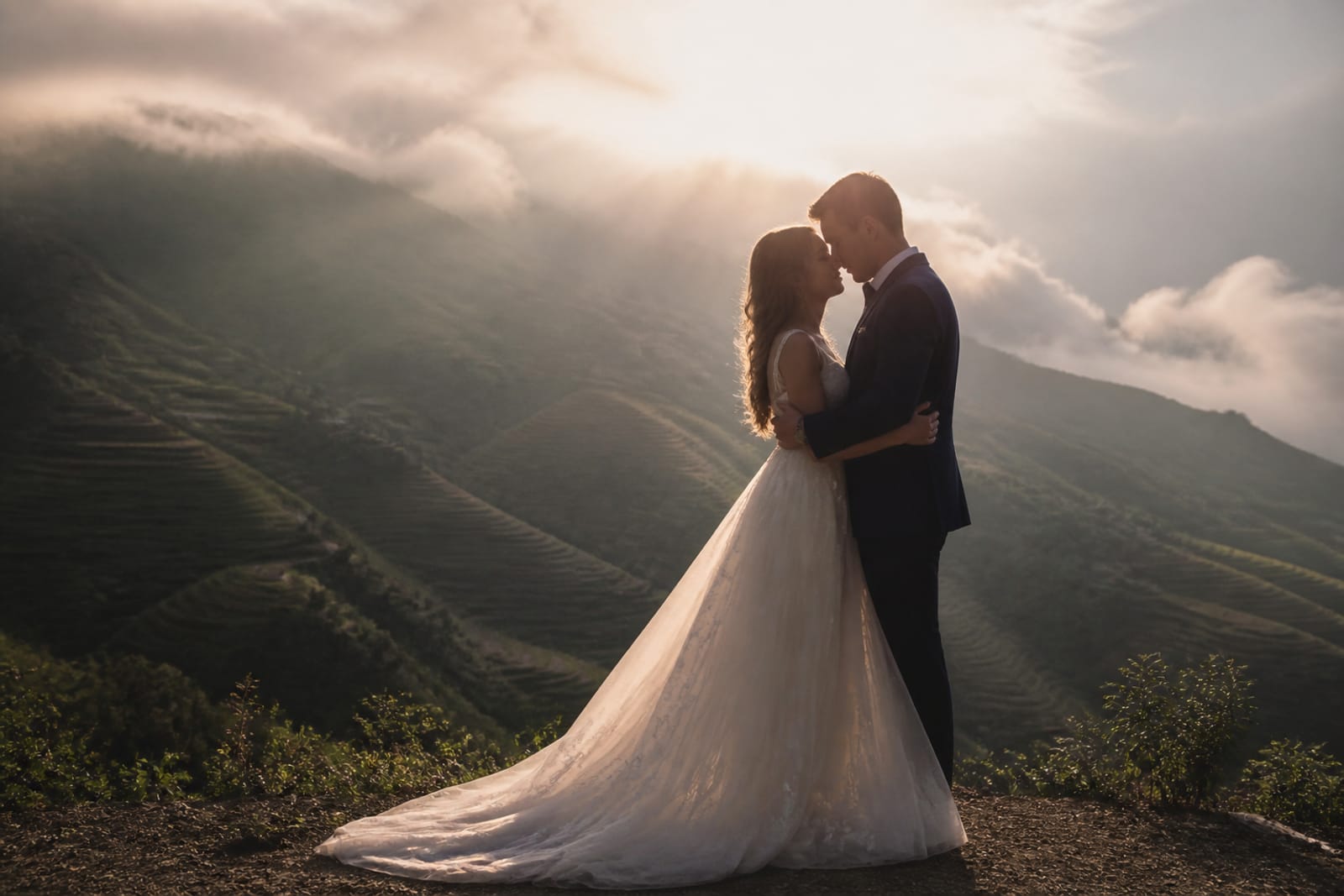
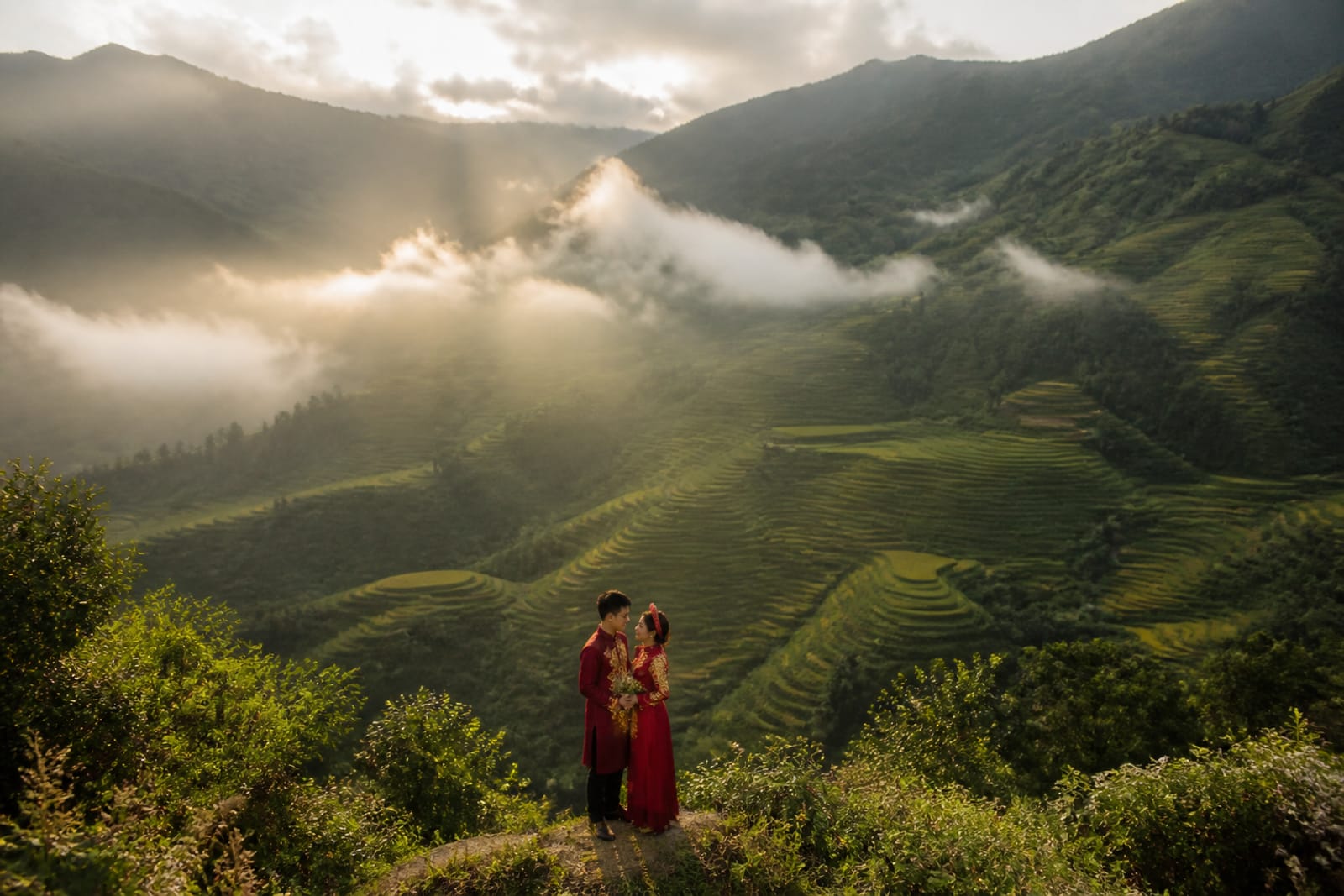
Dry season (March–May, September–November) has clear skies, sharp shadows and golden late-afternoon light—premium booking windows where photographers charge top rates and slots fill weeks ahead. Terraces are golden in September–October (harvest) and water-filled in May; both are photogenic but visually different.
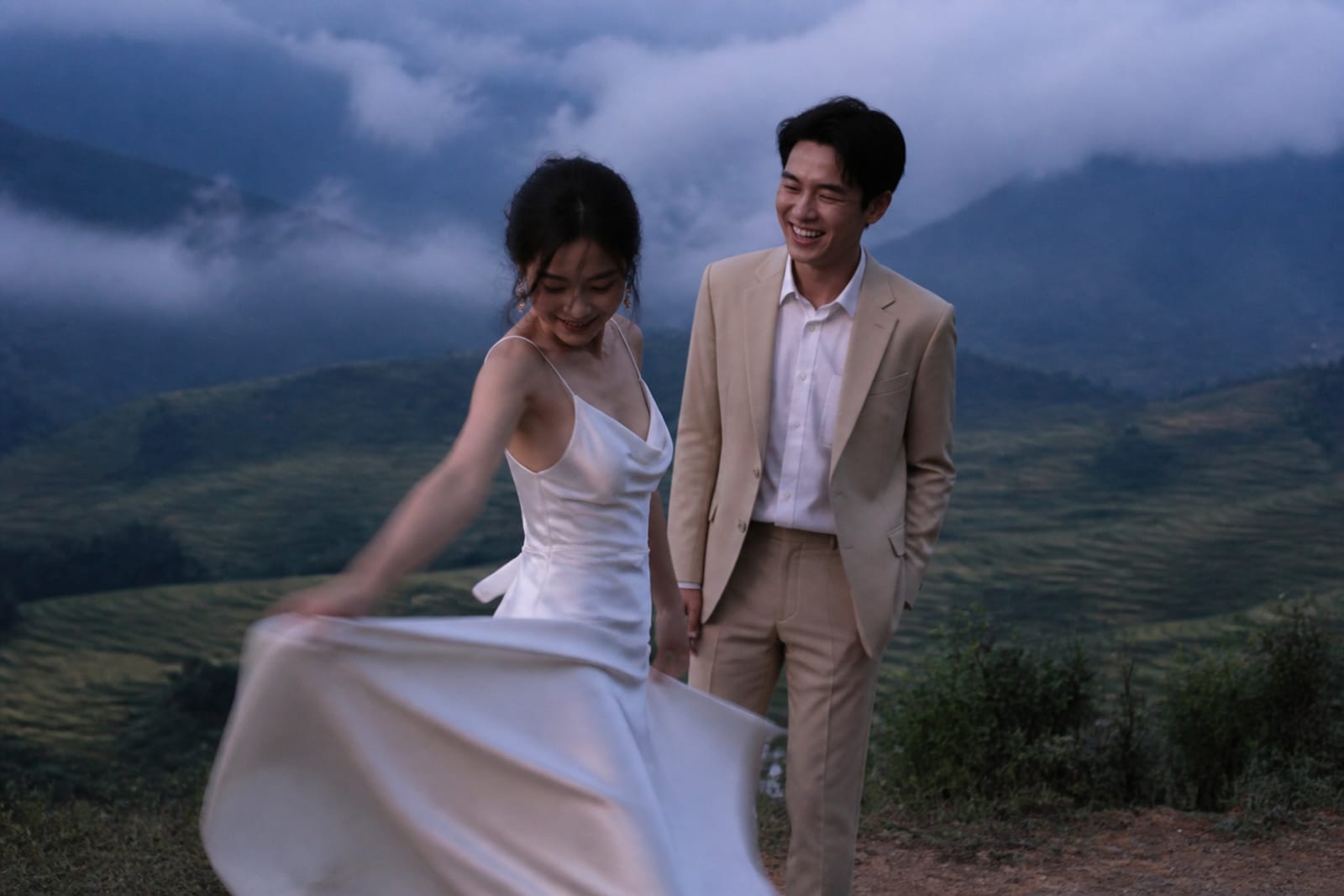
Wet season (December–February) brings fog, grey light and muddy trails; fewer couples book, so prices drop, but you'll need waterproof gear, backup indoor venues (hotels, local homestays), and guides who know safe routes. Cold temperatures (Dec–Feb can near 0°C) mean thick layers under your ao dai, complicating traditional styling.
Shoulder months (Jun–Aug, mid-Nov to early Dec) split the difference: afternoon rain often clears by dusk, light softens beautifully, and rates fall between peak and low. Book based on the aesthetic you want, not just budget—a rainy-season mist can be romantic if you're prepared for it.
Should you hire a local Sapa photographer or fly a team from Hanoi?
| Option | Best for | Key trade-off | Why choose it |
|---|---|---|---|
| Local Sapa photographer | Budget-conscious, flexible on styling | No makeup/hair coordination; limited portfolio for couples | Lower travel cost; fast local knowledge |
| Hanoi day-trip photographer | Couple wanting styling + photography | 9+ hours travel; higher overall cost; one-day energy crunch | Unified vision; professional makeup/hair; consistent branding |
| Hanoi studio with Sapa stay-over (e.g., Cáo Studio) | Full vision control; ao dai rental; all services one team | Premium cost; requires 2–3 day commitment | Single booking handles outfit, styling, shoot & 48-hr edit; no vendor juggling |
A local photographer knows Sapa's light and terrain but won't coordinate makeup, outfits or hair—you hire separately, risking disconnected aesthetics. A Hanoi photographer spends 4–5 hours traveling, tiring before the shoot and eating into daylight. A Hanoi-based studio that stations a team in Sapa (or travels with you) combines local expertise with cohesive styling—one message, one team, one invoice. This costs more upfront but eliminates vendor gaps.
What outfit changes add to the total cost?
Each outfit change extends shoot time: one ao dai is 2–3 hours; adding a Western wedding dress means 4–5 hours or a second day. Photographers charge per hour or per day; more outfits = longer booking = higher cost.
If you rent or bring outfits locally, factor in alteration time (1–2 days) and backup if something doesn't fit mountain light or the terrain you've chosen. Studios like Cáo Studio include ao dai or wedding dress coordination in some packages, saving you rental hunting. Others just photograph what you bring—clarify before booking.
Pro tip: One carefully chosen outfit (ao dai for tradition, or a simple Western dress) in premium light often yields stronger frames than three rushed changes in fading sun. Pick quality over quantity.
How do guide, porter and permit costs factor in?
Many Sapa rice-terrace shoots require a guide (mandatory for safety and local etiquette in certain areas); fees run per half-day or full-day and go to the guide, not the photographer. Porters (if you're hiking remote routes) carry equipment and sometimes assist styling. Entry permits for some terrace areas are required—check with your photographer or a local tourism office for current rules.
These costs sit outside the photographer's fee but affect your total budget. Ask your photographer upfront: "Are guides, porters or permits included in your quote, or quoted separately?" A transparent answer tells you whether you're comparing like with like.
What happens if weather forces a reschedule, and how does that affect cost?
Sapa's weather changes fast—clear dawn can fog by 9 am, or afternoon rain can wash out an evening shoot. Most photographers offer rescheduling options (same or new date); some charge a small fee if you cancel on short notice, others don't.
Ask before booking: "If we reschedule due to weather, do we lose the booking fee, or does it roll to a new date?" Couples who book a multi-day Sapa package (shoot one day, weather backup the next) pay for accommodation but gain certainty—worth it if you've traveled far or Sapa's your only window.
Comparison: Booking styles and what to check before you commit
Direct local booking (Instagram message to a Sapa photographer):
- Check their portfolio for couple shoots (not just landscapes or group tours).
- Ask who handles makeup/hair, or confirm you're sourcing it separately.
- Request a written quote (date, time, duration, outfit count, included files, revision rounds, delivery timeline).
- Verify rescheduling and cancellation terms in writing.
Through a Hanoi agency or studio:
- Confirm they've shot in Sapa before (ask for references or portfolio images from Sapa locations).
- Clarify if travel/accommodation is billed separately or bundled.
- Ask if styling (makeup, hair, ao dai rental) is included or add-on.
- Check the editing timeline (48 hours? one week? longer?).
- Confirm delivery format (digital files, prints, video, album).
Via a Hanoi studio with a Sapa team or travel option (e.g., Cáo Studio):
- One invoice covers photography, styling, and coordination—ask for exact inclusions on WhatsApp.
- Confirm whether they include guide, porter or permit in their quote.
- Ask how they handle weather reschedules.
- Verify they've shot your preferred terrace locations and time of year.
Cost factors you control—and ones you don't
You control:
- Season (book May or late Sep for premium light; Dec–Feb for lower cost).
- Outfit count (one ao dai vs. three outfits = shorter/longer shoot).
- Shoot location (iconic terraces near town vs. remote trails needing porter).
- Booking lead time (last-minute books often have no photography slots, or higher rush fees).
You don't control:
- Weather (rain, fog, cold—plan for reschedule buffer).
- Photographer availability (peak season books months ahead).
- Guide, porter and permit fees (set by local authorities and logistics).
- Photographer's base (Sapa vs. Hanoi vs. studio-based).
What to ask a photographer before signing a quote
- Is the guide/porter fee included or separate? (Budget clarity.)
- Do you charge a reshoot or rescheduling fee if weather cancels us? (Risk management.)
- What's your editing turnaround, and does rush cost more? (Timeline expectations.)
- Are makeup and hair included, or should we book separately? (Vendor coordination.)
- What formats do we receive—digital files only, prints, video, album? (Deliverables.)
- Have you shot our desired location and season before? (Portfolio proof.)
- If we want a second ao dai or dress, does that add hours or cost? (Outfit economics.)
Getting it right: A step-by-step checklist
- [ ] Choose your season based on light, weather risk, and budget trade-offs (dry = premium & clear; wet = affordable & moody).
- [ ] Decide: local Sapa photographer, Hanoi day-trip, or studio with coordination.
- [ ] Request written quotes from 2–3 options; compare inclusions, not just fees.
- [ ] Confirm guide, porter, permit and travel costs are listed (separately or bundled).
- [ ] Ask for portfolio images from Sapa shoots in your chosen season.
- [ ] Clarify styling (makeup, hair, ao dai rental): included or separate vendors?
- [ ] Check rescheduling and cancellation terms in writing.
- [ ] Book guides and accommodation well ahead (peak season fills fast).
- [ ] Plan 2–3 backup dates (weather changes fast in mountains).
- [ ] Verify final deliverables (files, timeline, video, prints) 1–2 weeks before the shoot.
📸 Book on WhatsApp — pre-wedding & elopement
---
For Sapa shoots, transparency beats surprises. A solid photographer or studio lays out every cost factor—travel, styling, guides, timeline—before you book. If a quote is vague ("starting from a low number"), ask what's excluded; often travel, styling and permits aren't listed.
Cáo Studio operates primarily in Hanoi and Ho Chi Minh City, with shoots in Hoi An by appointment. For a Sapa pre-wedding shoot, we can coordinate with a trusted local photographer and handle your ao dai rental and styling remotely—or book you a full 2–3 day package that brings our team to the mountain. Ask us on WhatsApp for a Sapa planning guide and a local recommendation.
If you're shooting in Hanoi instead, explore our ao dai photoshoot, couple & family sessions, and makeup & hair at your hotel services. Check our lookbook and pricing page for more options, or browse the FAQ.
💄 Makeup & hair at your hotel | 🌸 See the lookbook | 🤵 Suit & groom outfit rental
---
#
FAQ
Does Cáo Studio shoot pre-wedding photos in Sapa?
Cáo Studio operates in Hanoi, Ho Chi Minh City and Hoi An. For Sapa shoots, we recommend trusted local photographers and can coordinate ao dai styling remotely. Ask on WhatsApp for a Sapa planning guide and local referrals.
What's the best time of year for a Sapa pre-wedding shoot?
March–May and September–November offer clear skies, sharp light and dry trails. September–October terraces are golden (harvest); May is water-filled. December–February is cheaper but foggy, rainy and cold. Pick based on the mood you want and weather risk you'll accept.
Should I book a local Sapa photographer or fly a team from Hanoi?
Local photographers save travel cost but don't coordinate makeup or hair. Hanoi studios bring unified styling but add 4–5 hours travel. A studio with Sapa expertise or travel capacity combines both—one team, one message, one invoice. Compare portfolios and inclusions before deciding.
What hidden costs should I budget for in Sapa?
Guides (mandatory for many terraces), porters (if hiking remote routes), permits, travel to/from Hanoi, and accommodation often sit outside the photographer's fee. Ask upfront whether these are included or separate. Weather reschedules may incur small rescheduling fees—clarify before booking.
How many outfits should we plan, and does each add cost?
One carefully chosen ao dai in great light often outshines three rushed changes. Each outfit adds 1–2 hours to the shoot; photographers charge per hour or day. Prioritize quality light over outfit count. Clarify whether outfit rentals and styling are included in your photographer's quote.
What happens if it rains on our Sapa shoot day?
Most photographers offer rescheduling to a new date at no fee. Some charge a small rescheduling fee if you cancel last-minute. Ask the policy upfront. Booking a 2–3 day package gives you a weather backup day—worth it if Sapa's your only window.
Can Cáo Studio handle makeup and hair for a Sapa pre-wedding shoot?
Our makeup & hair service operates in Hanoi and Ho Chi Minh City. For Sapa shoots, we can coordinate ao dai rental and styling notes remotely, or include them in a multi-day package. Ask on WhatsApp for options.
FAQ
Does Cáo Studio shoot pre-wedding photos in Sapa?
Cáo Studio operates in Hanoi, Ho Chi Minh City and Hoi An. For Sapa shoots, we recommend trusted local photographers and can coordinate ao dai styling remotely. Ask on WhatsApp for a Sapa planning guide and local referrals.
What's the best time of year for a Sapa pre-wedding shoot?
March–May and September–November offer clear skies, sharp light and dry trails. September–October terraces are golden (harvest); May is water-filled. December–February is cheaper but foggy, rainy and cold. Pick based on the mood you want and weather risk you'll accept.
Should I book a local Sapa photographer or fly a team from Hanoi?
Local photographers save travel cost but don't coordinate makeup or hair. Hanoi studios bring unified styling but add 4–5 hours travel. A studio with Sapa expertise or travel capacity combines both—one team, one message, one invoice. Compare portfolios and inclusions before deciding.
What hidden costs should I budget for in Sapa?
Guides (mandatory for many terraces), porters (if hiking remote routes), permits, travel to/from Hanoi, and accommodation often sit outside the photographer's fee. Ask upfront whether these are included or separate. Weather reschedules may incur small rescheduling fees—clarify before booking.
How many outfits should we plan, and does each add cost?
One carefully chosen ao dai in great light often outshines three rushed changes. Each outfit adds 1–2 hours to the shoot; photographers charge per hour or day. Prioritize quality light over outfit count. Clarify whether outfit rentals and styling are included in your photographer's quote.
What happens if it rains on our Sapa shoot day?
Most photographers offer rescheduling to a new date at no fee. Some charge a small rescheduling fee if you cancel last-minute. Ask the policy upfront. Booking a 2–3 day package gives you a weather backup day—worth it if Sapa's your only window.
Can Cáo Studio handle makeup and hair for a Sapa pre-wedding shoot?
Our [makeup & hair service](/makeup-and-hair) operates in Hanoi and Ho Chi Minh City. For Sapa shoots, we can coordinate ao dai rental and styling notes remotely, or include them in a multi-day package. Ask on WhatsApp for options.
Ao dai, makeup, hair and a local photographer in Hanoi or Saigon — one WhatsApp message.