/pre-wedding-photoshoot
What to Wear for a Pre-Wedding Photoshoot in Hanoi
Pre-wedding photoshoots in Hanoi typically involve three to five outfit changes—usually an ao dai (Vietnamese silk tunic), a Western wedding dress or groom suit, and casual couple wear—each suited to different venues and light. Hanoi's shoots span Old Quarter markets, lakeside parks, French colonial streets, and temples; autumn (Oct–Nov) and spring (Mar–Apr) offer the clearest skies and softest shadows, while winter (Dec–Feb) is cool and grey. Sessions at Cáo Studio – Makeup & Photoshoot run full-day with professional styling, makeup, and hair included in your quote; the studio books outfits through partner rental services or you bring your own. Plan for fabric that moves (ao dai silk folds beautifully in wind), layers you can shed in humidity, and shoes that survive cobblestones—avoid heavy Western gowns in May–Sep heat unless you're committing to indoor and shaded venues. Ask on WhatsApp +84 338 762 340 for seasonal outfit recommendations and to confirm what rental options Cáo Studio partners offer. --- Pre-wedding photoshoots in Hanoi are a two-part decision: what you wear and when. Your outfit choice determines how fast you move between locations, how you look in Hanoi's light, and whether the shots feel authentic to your story. This guide walks through the outfit types, seasonal fit, and how to plan what you'll actually wear on the day.
What are the main outfit options for a Hanoi pre-wedding shoot?
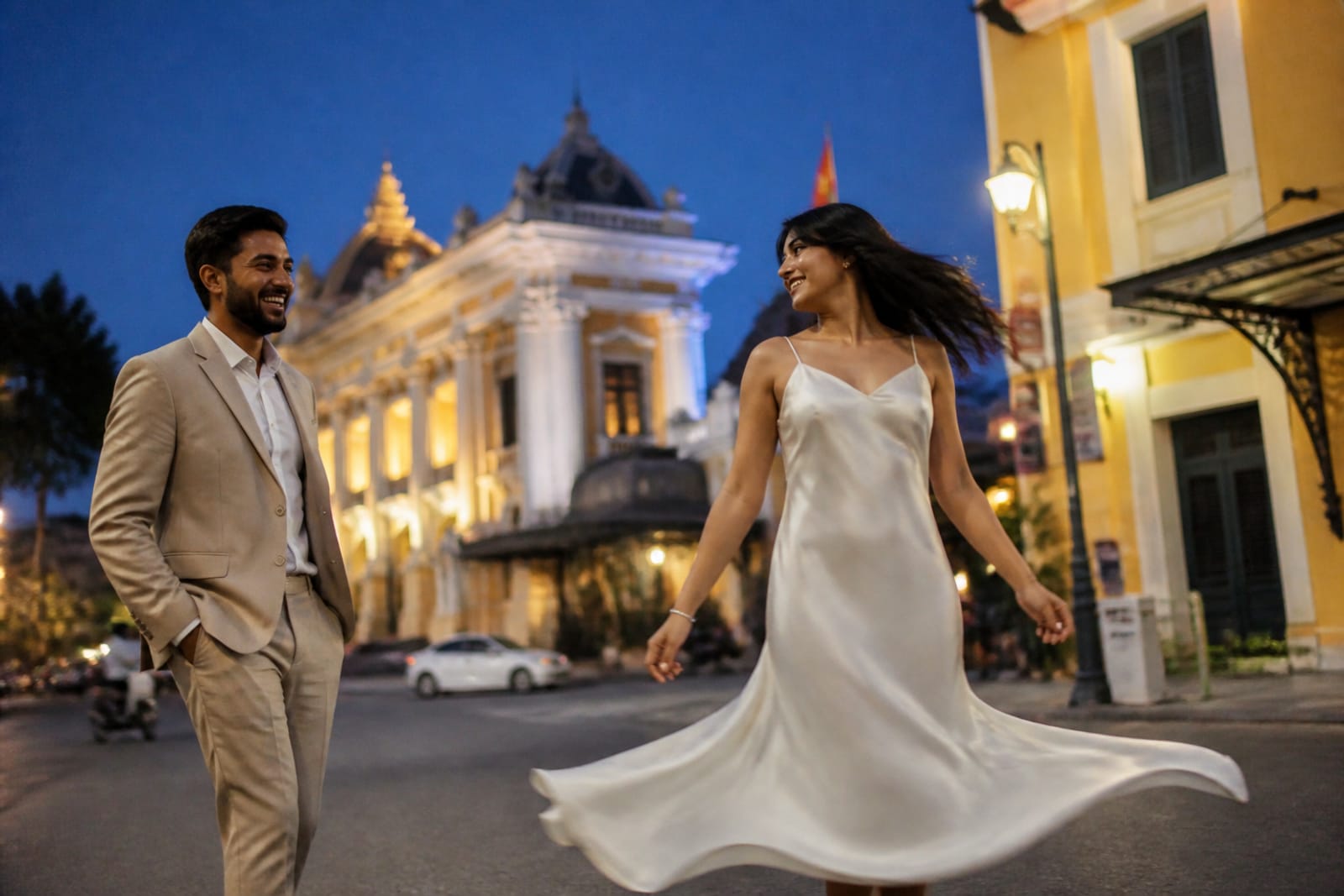
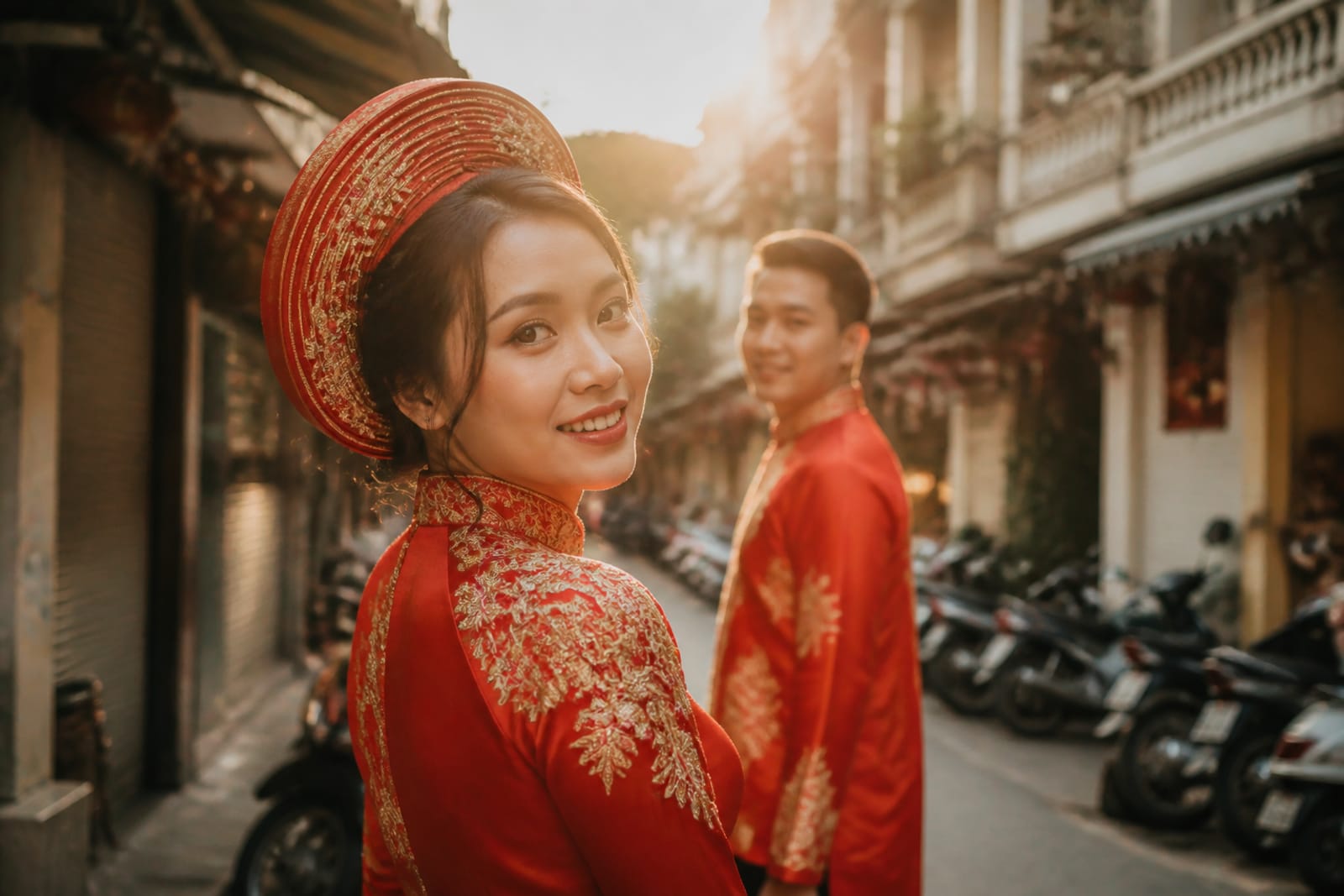
Most Hanoi pre-wedding shoots include an ao dai (Vietnamese long tunic over high-waisted trousers), a Western wedding dress or suit, casual couple wear for relaxed moments, and often a second cultural outfit or bold color. The ao dai is typically a flowing silk tunic that sits below the knee, paired with white or patterned trousers; it moves gracefully in wind and photographs beautifully on bridges, in parks, and near water. Western gowns work best on structured backgrounds—French colonial mansions, hotel courtyards, grand staircases—while casual looks (linen shirts, refined jeans, light dresses) suit intimate alley walks and street-food markets. A second outfit (evening ao dai, qipao, or bold jewel-toned dress) adds variety without doubling time; many couples swap one gown for a second color rather than add a fourth outfit. The total depends on your session length and energy—ask Cáo Studio on WhatsApp what's typical for your booking window.
📸 Book on WhatsApp — pre-wedding photoshoot | 💄 Makeup & hair at your hotel
Should you rent or bring your own outfit?
Renting offers fit flexibility and reduces luggage; bringing your own ensures it fits perfectly and carries sentimental value. Hanoi has established ao dai rental shops (hundreds across Old Quarter and Hoan Kiem), Western gown rentals near Tay Ho and the French Quarter, and suit tailors on Hang Dao Street. Rental timings vary—collect the day before or morning-of; return within one to three days. If you bring a gown, allow extra packing space (a compressed gown wrinkles; humidity will require touch-up pressing at your hotel), and confirm your hotel offers steaming or ironing. Cáo Studio partners with rental services; WhatsApp the team to ask which suppliers they recommend, which sizes they've worked with, and whether they handle collection and return logistics on shoot day. If you're flying in, renting saves two suitcase slots and stress; if you've dreamed of wearing your grandmother's ao dai, bringing it creates irreplaceable meaning in the final images.
How does season affect what you'll wear comfortably?
Season shapes fabric weight, moisture-wicking needs, and how long you'll comfortably stand in full dress. Autumn (Oct–Nov) is Hanoi's shooting sweet spot—cool, dry, soft light, no humidity struggles—so silk ao dai, Western gowns with layers, and formal shoes all work without discomfort. Spring (Mar–Apr) is mild but increasingly humid with afternoon haze; lightweight fabrics breathe better, and ao dai wins because its loose drape handles sweat without clinging. Winter (Dec–Feb) is cool (10–20°C, often drizzly); ao dai over thermal layers keeps you warm, Western gowns need pashminas or shrugs, and indoor shoots (hotel lobbies, cafes, covered markets) avoid wetness. Summer (May–Sep) is the wild card: intense heat (often 35°C+), unpredictable downpours, and typhoon-remnant risk mean short, light fabrics (linen, cotton blends) and potentially indoor or early-morning shoots. Your outfit choice directly sets your comfort and the shoot's pace—ask Cáo Studio which season suits your planned outfits so the photographer can adjust lighting and timing.
🌸 See the lookbook | 👗 Browse ao dai rental
How do location backdrops influence outfit choices?
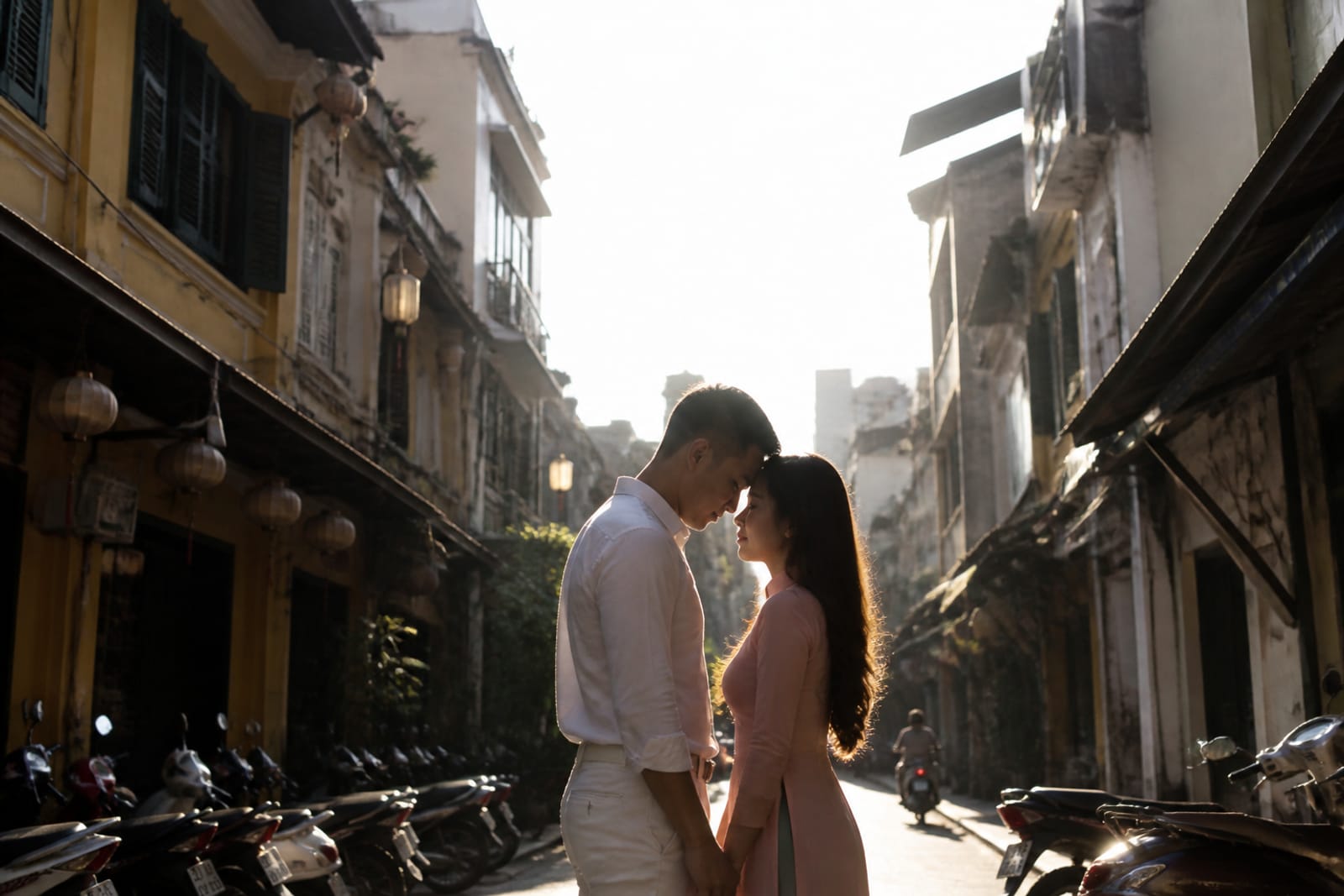
Different Hanoi venues demand different outfit energy. The Old Quarter—narrow lanes, market stalls, street color—suits casual wear and ao dai; Western gowns risk catching on vendor carts and look overdressed against weathered brick. French colonial villas (Tay Ho mansions, Hanoi Daewoo hotel grounds, St. Joseph's Cathedral forecourt) are made for formal gowns, suits, and romantic ao dai; casual wear feels underdressed. Hoan Kiem Lake's parks and bridges work with all three outfit types—formal for the lakeside promenade, casual for shaded tree paths, ao dai for symmetrical monument shots. Temple shoots (if permitted for pre-wedding photography) require modest, respectful dress—ao dai is perfect; Western gowns should have sleeves and knee coverage; avoid flesh-toned fabrics that read bare. Rice paddies in the countryside (Ninh Binh, reachable for a day trip) suit earthy tones and flowing fabrics; Western gowns can drag in mud, so consider casual wear or outdoor-ready outfits. Ask Cáo Studio which venues they're shooting on your date and plan one outfit per main location to avoid rushed outfit changes and sweating through layers.
| Venue Type | Ao Dai | Western Gown | Casual Wear | Logistics |
|---|---|---|---|---|
| Old Quarter alleys | Ideal—moves freely | Risk catching on stalls | Best—fits the vibe | Worn shoes matter; narrow lanes |
| French colonial villa | Stunning contrast | Perfect match | Underdressed feel | High heels on gravel; bring backups |
| Lakeside parks & bridges | Photogenic on water | Works in formal zones | Great for tree shade | Long dresses drag on damp grass |
| Temple grounds | Respectful, expected | Needs sleeves & knees | May offend | Ask permission; modest colors help |
| Countryside/rice fields | Earthy colors shine | Hem risk; mud splash | Ideal choice | Flat shoes essential; don't plan more than two changes |
What practical details should you confirm before your shoot?
Check fabric durability against Hanoi's conditions: will your chosen gown survive morning dew, cobblestones, and vendor-area dust? Confirm if Cáo Studio provides undergarment support (shapewear, slip, adhesive stickers) or if you bring your own—crucial for ao dai fit and no-slip moments. Ask whether the photographer has backup outfit suggestions if your rental delays or if weather forces a venue swap. Verify shoe logistics: do you need flat backups for uneven ground, or will the photographer time shots to hide heels on rough streets? Discuss makeup timing—full makeup takes 45–90 minutes, so if you're changing outfits quickly, you might refresh between looks rather than redo from scratch. Confirm return deadlines if renting: a rental due at 18:00 means you need to wrap by 17:00. Ask about humidity-sensitive fabrics—silk ao dai and certain silks wrinkle in moisture; if your shoot spans midday heat, plan outfit changes to air-dry any damp hems. Finally, request a shot list: are there non-negotiable poses or backdrops for each outfit? This prevents the team wasting time on unmapped locations and keeps energy high.
📸 Book on WhatsApp +84 338 762 340 | 💄 Makeup & hair at your hotel
How do you avoid common outfit mistakes on shoot day?
Bring a steamer or rely on hotel pressing the night before—wrinkled ao dai silk and gown hems photograph poorly and take 20 minutes to fix on-site. Wear your undergarments on the shoot day itself (try the slip under your ao dai, the strapless bra under your gown at home) so there are no surprises. Avoid new shoes; break them in on cobblestones beforehand or bring two pairs. Don't pack jewelry or accessories inside your garment bag; transport them separately to avoid snagging folds. Skip dangling earrings for fast outfit changes—they tangle in fabric. If you're renting, collect garments 48 hours before, not the morning-of, so you have time to spot fit issues and arrange backups. Eat a light breakfast and hydrate before the shoot; you won't eat again for 6–8 hours, and hunger makes outfit patience thin. Finally, avoid last-minute outfit swaps—stick to your planned looks unless weather forces a change; too many decisions on the day slow momentum and stress you both.
---
What to check before you book
Before finalizing your pre-wedding photoshoot with Cáo Studio, confirm these outfit and logistics points on WhatsApp:
- Rental partnerships: Which ao dai and Western gown rental shops does the studio work with? Can they guarantee sizes and delivery timing?
- Outfit inclusions: Does your package include makeup and hair for all outfit changes, or only some?
- Season-based recommendations: Does the photographer have specific outfit suggestions for your chosen month, given Hanoi's humidity and light?
- Venue list: Which backdrops are booked, and which outfits work best for each?
- Time allowance per outfit: How many minutes per location for full outfit changes and touch-ups?
- Backup plans: If a rental doesn't fit or weather strikes, what's the contingency?
- Accessory and shoe guidance: Are flats, sandals, or formal heels best for the booked locations?
Cáo Studio operates in Hanoi with three branches and also covers Ho Chi Minh City and Hoi An by appointment. Every session includes professional styling consultation on WhatsApp before the shoot. Reach out to finalize your outfit plan and confirm session details—the team books fast during autumn (Oct–Nov) season, so book early.
Also explore related services: ao dai photoshoots, couple and family sessions, makeup and hair at your hotel, proposals and anniversaries, and the lookbook for inspiration.
FAQ
Can I wear the same ao dai for multiple outfit changes?
Yes—a single ao dai works across venues, but pair it with different jewelry, backdrop changes, or casual layers to show variety. Many couples rent one stunning ao dai rather than two mediocre ones.
What if my Western gown is too heavy for Hanoi heat?
Plan an indoor or early-morning shoot (before 09:00) to avoid peak heat, wear a lightweight linen shawl, or ask Cáo Studio about swapping one formal gown for a second ao dai or lighter cocktail dress.
Do I need to bring backup shoes?
Yes. Flat sandals or backup heels help during outfit changes and on uneven Old Quarter lanes; formal shoes alone risk blisters over six-plus hours.
How long does a full outfit change take?
10–15 minutes if you're changing on-site (bathroom at a cafe or shop) and makeup is just a touch-up; 30–45 minutes if hair is restyled. Plan conservatively.
Should I rent or buy my ao dai?
Rent if you're traveling (saves luggage) and want to try styles. Bring your own if it's a family heirloom or if you plan to wear it again after the shoot.
What if my rental outfit is damaged during the shoot?
Ask the rental shop about damage waivers before collection. Inform the photographer immediately if anything tears; most rental shops are forgiving of minor wear from professional shoots.
FAQ
Can I wear the same ao dai for multiple outfit changes?
Yes—a single ao dai works across venues, but pair it with different jewelry, backdrop changes, or casual layers to show variety. Many couples rent one stunning ao dai rather than two mediocre ones.
What if my Western gown is too heavy for Hanoi heat?
Plan an indoor or early-morning shoot (before 09:00) to avoid peak heat, wear a lightweight linen shawl, or ask Cáo Studio about swapping one formal gown for a second ao dai or lighter cocktail dress.
Do I need to bring backup shoes?
Yes. Flat sandals or backup heels help during outfit changes and on uneven Old Quarter lanes; formal shoes alone risk blisters over six-plus hours.
How long does a full outfit change take?
10–15 minutes if you're changing on-site (bathroom at a cafe or shop) and makeup is just a touch-up; 30–45 minutes if hair is restyled. Plan conservatively.
Should I rent or buy my ao dai?
Rent if you're traveling (saves luggage) and want to try styles. Bring your own if it's a family heirloom or if you plan to wear it again after the shoot.
What if my rental outfit is damaged during the shoot?
Ask the rental shop about damage waivers before collection. Inform the photographer immediately if anything tears; most rental shops are forgiving of minor wear from professional shoots.
Ao dai, makeup, hair and a local photographer in Hanoi or Saigon — one WhatsApp message.